Difference Between Blank Cards and Pre-Printed Cards Explained
Table of Contents []
- Blank Cards vs. Pre-Printed Cards: What Plastic Card ID Wants You to Know Before You Order
- What Exactly Is a Blank Plastic Card?
- What Is a Pre-Printed Card and When Does It Make More Sense?
- The Hidden Flexibility of Blank Cards: A Closer Look
- Choosing the Right Card Type for Your Program
- Why Plastic Card ID Is the Right Partner for Any Card Program
Blank Cards vs. Pre-Printed Cards: What Plastic Card ID Wants You to Know Before You Order
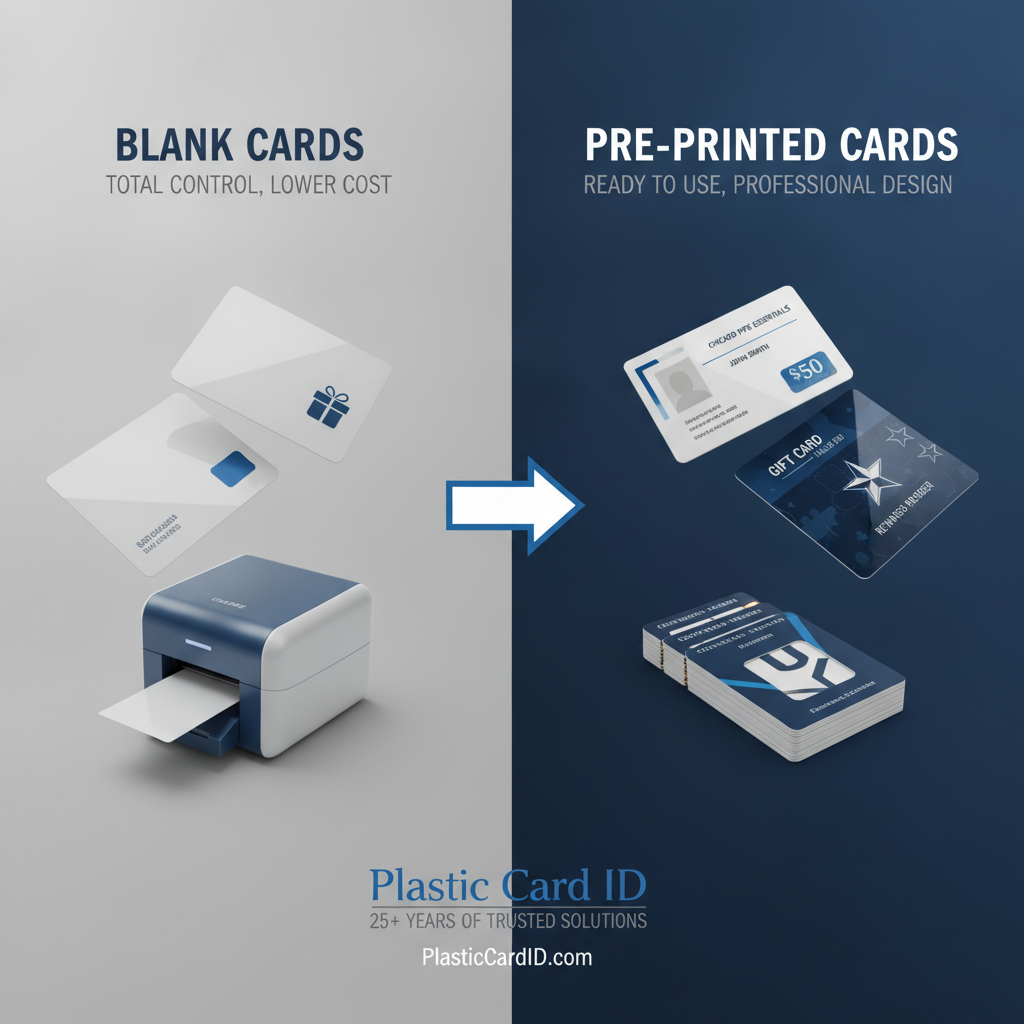 Here's a question that comes up constantly - and it's a good one: should you order blank cards or pre-printed cards for your business? The answer isn't as simple as "it depends." It's a strategic decision that affects your costs, your timeline, your flexibility, and ultimately, how professional your card program looks and performs. Let's dig into the real differences, the real tradeoffs, and what kind of buyer each option actually suits.
Most businesses, when they're setting up a card program for the first time, don't realize how different these two paths actually are. Blank cards and pre-printed cards share a physical format - CR80, 30 mil, ISO 7810 standard - but in terms of workflow, cost structure, and long-term scalability, they operate in completely different universes. Understanding that distinction up front can save you money, time, and a whole lot of frustration down the line.
| Feature | Blank Cards | Pre-Printed Cards |
|---|---|---|
| Design Control | Full, in-house | Fixed at order time |
| Per-Card Cost | Lower long-term | Higher per unit |
| Upfront Investment | Card printer needed | No printer required |
| Personalization | Card-by-card possible | Batch-level only |
| Minimum Order Qty | As low as 100 | Often 250-500 |
| Reorder Flexibility | Very high | Requires reproof |
What Exactly Is a Blank Plastic Card?
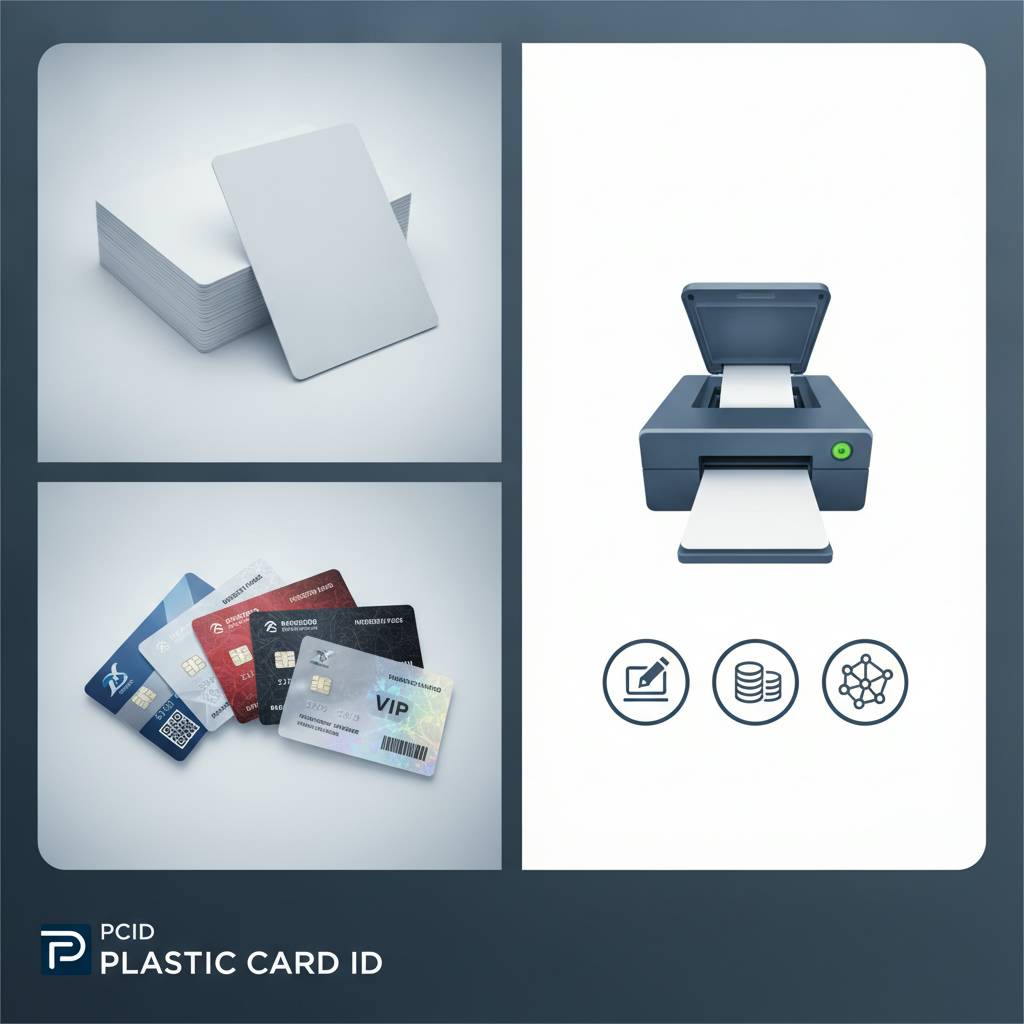 A blank card is precisely what it sounds like - a plain, unprinted plastic card that conforms to the CR80 standard (3.375 inches by 2.125 inches, 30 mil thick). But don't let the word "blank" fool you into thinking it's a lesser product. Blank cards are the foundation of some of the most sophisticated card programs in the country. They're manufactured to strict tolerances, available in white PVC or a range of stock colors, and ready to accept printing from any compatible card printer.
The blank card is a starting point, not an endpoint. Once it comes off CPE's shelves and into your facility, it can become an employee ID badge, a membership card, a loyalty card, an access credential, a hotel key card, or a casino player card - all depending on what your card printer lays down on its surface. The substrate itself is engineered for that purpose. It's not just white plastic; it's a receptive, durable surface designed to hold dye-sublimation or direct-to-card prints with crisp, lasting fidelity.
Types of Blank Cards Available
The blank card category is far broader than most buyers initially expect. At CPE, the catalog includes standard white PVC, colored stock cards, clear and frosted cards, magnetic stripe cards in both HiCo and LoCo configurations, RFID and proximity cards, smart chip cards, and specialty formats. Each of these arrives blank in terms of printed design - but they carry embedded functionality baked into the card itself.
A blank HiCo magnetic stripe card, for example, is ready to be encoded with data the moment you run it through a printer equipped with an encoding module. A blank RFID card is already carrying its chip and antenna - it just needs to be printed and potentially programmed. This is the nuance that separates a sophisticated card buyer from a first-timer: blank doesn't mean featureless.
Who Should Be Buying Blank Cards
Organizations that issue cards on a rolling basis - schools, employers, healthcare facilities, gyms, hotels - are natural fits for blank card programs. You're not printing 5,000 cards once and calling it a year; you're printing 30 or 300 cards every week as people join, renew, or replace lost credentials. That kind of ongoing need makes in-house printing with blank card stock extraordinarily cost-effective over time.
Retailers running in-house gift card or loyalty programs also benefit enormously. Businesses that switch from paper-based systems to plastic card programs often see sales increases of 35-50% - not because plastic is magical, but because plastic cards live in wallets, get used repeatedly, and signal permanence in a way that a punched piece of paper simply never can. Blank cards plus an in-house printer is the engine that makes that program run economically.
The Card Printer Connection
There's one requirement for using blank cards: you need a card printer. Plastic Card ID carries a comprehensive lineup from Evolis, Zebra, and Fargo - three of the most trusted names in ID and card printing. Entry-level desktop printers can handle 50-150 cards per day comfortably, while mid-range and high-volume models scale into the thousands. Printer ribbons, cleaning kits, and maintenance supplies are all available through CPE as well.
Call 800.835.7919 to speak with someone who can help match the right printer to your card volume. The conversation takes about ten minutes and can prevent a costly mismatch between your printer capacity and your actual program needs. It's worth doing before you commit to hardware.
What Is a Pre-Printed Card and When Does It Make More Sense?
A pre-printed card arrives at your door already designed, branded, and finished. The artwork is laid down during production - full color, high resolution, often with laminate overlays for durability - and what you receive is a stack of finished cards ready for distribution or encoding. For certain use cases, this is exactly the right approach, and there's no need to complicate it.
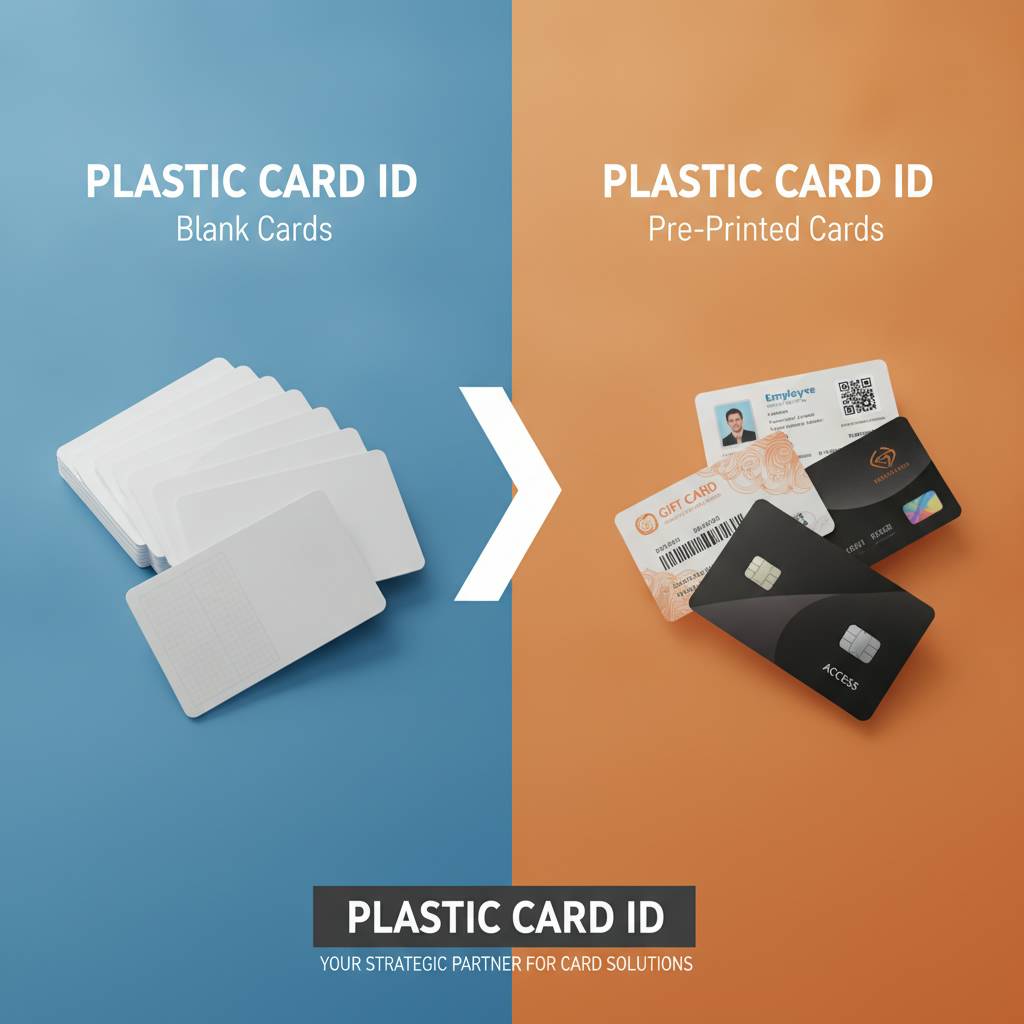
Pre-printed cards shine when you have a stable design that won't change for a meaningful period, when you're ordering in sufficient volume to justify the setup, and when you don't want to invest in a card printer or manage in-house printing logistics. Large-scale gift card launches, branded membership programs with a fixed card design, and event credentials for major conferences are all examples where pre-printed cards make clean operational sense.
Design Commitments and Minimums
One important reality of pre-printed cards is that your design is locked at the time of production. Any rebranding, address change, phone number update, or logo refresh means a new print run - with the associated costs and minimum quantity requirements. For organizations that update their branding frequently or issue cards with variable information, this rigidity can create real problems.
Most pre-printed card programs carry minimum order quantities in the range of 250-500 cards per design, sometimes higher for specialty finishes. If your program only needs 75 cards right now, a pre-printed order may force you to buy more than you need and sit on excess inventory. Blank cards, by contrast, can often be ordered in quantities as low as 100 and printed exactly as needed.
Cost Structure of Pre-Printed vs. Blank
Here's where the math gets interesting. Pre-printed cards carry a higher per-card cost that includes design, color printing, and production overhead. In small quantities, that cost can be substantial - sometimes $0.75-$2.50 per card or more depending on features and finishes. Blank cards, especially in volume, might run $0.08-$0.35 per card, with printing costs added per card through your ribbon and printer overhead.
Over time, the in-house model tends to win economically for programs issuing cards continuously. The break-even point shifts depending on your volume, your printer model, and your ribbon costs - but for programs printing 200 cards per month consistently, the blank card plus in-house printer model typically produces significant savings within the first 12-18 months.
Pre-Printed Cards for Specific Scenarios
- Large retail gift card launches with thousands of identical cards
- Conference or trade show credentials in high volume with a single design
- Branded loyalty cards for franchise locations with uniform branding
- Promotional marketing cards distributed as inserts or mailers
- Hotel key card programs at scale where design is stable long-term
Each of these scenarios shares a common thread: high volume, stable design, and distribution rather than ongoing issuance. If your use case fits this profile, pre-printed cards may be exactly what you need. CPE can help you evaluate that fit before you commit to either path.
The Hidden Flexibility of Blank Cards: A Closer Look
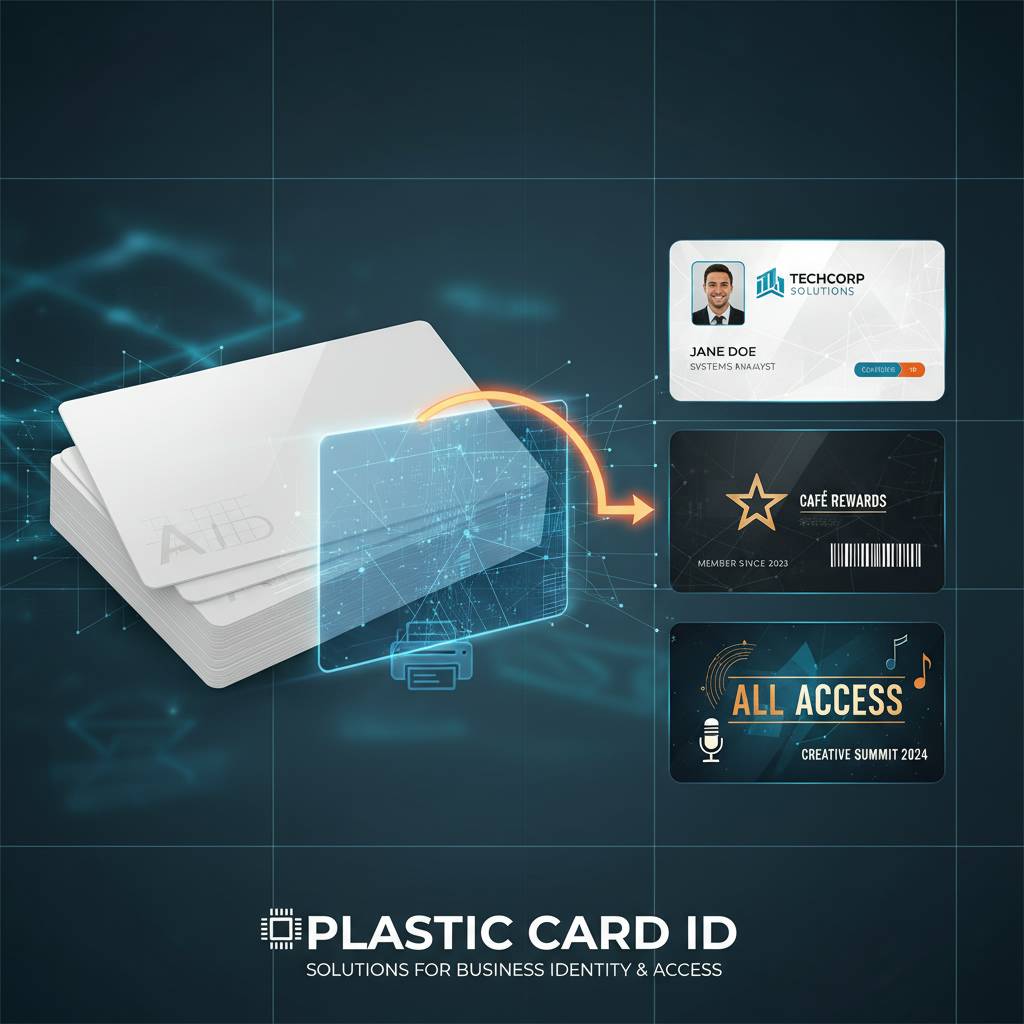 One of the most underappreciated advantages of blank cards is the level of personalization they enable. With a card printer, you can print every single card differently - different names, different photos, different employee numbers, different expiration dates, different access levels. This kind of individual-level personalization is simply not possible with pre-printed cards, which are printed as identical copies of a single design.
For employee ID programs, student ID systems, membership databases, and healthcare credentialing, individual card personalization isn't a luxury - it's a fundamental requirement. Blank cards are the only practical substrate for this kind of use case unless you're prepared to manage a complicated and expensive variable-data offset print run, which makes sense only at very large scales.
Encoding Flexibility on Blank Cards
Magnetic stripe cards, RFID cards, and smart chip cards can all be sourced in blank format and encoded as needed during printing. A blank HiCo magnetic stripe card can have data written to its stripe at the moment of issuance - making it a gift card, an access credential, or a loyalty identifier depending on what your system writes to it. This flexibility is enormously valuable for organizations managing multiple card types or programs that evolve over time.
RFID and proximity cards at CPE include options with MIFARE DESFire and other contactless technologies. These arrive as blank cards, ready to be printed and programmed. Casino player cards, hotel key systems, and secure access control programs all leverage this model. The card is the platform; the programming is the application.
Specialty Blank Card Formats
- Clear and frosted PVC cards for premium visual presentation
- Colored stock cards in a range of standard colors
- Custom die-cut shapes for distinctive marketing applications
- Luxury metal cards in stainless steel, brass, and gold for high-value programs
- Smart chip and RFID blanks with embedded contactless technology
Each of these formats opens a different design and functional possibility. A frosted card with a color logo printed on top creates a premium, layered visual effect that a standard white card simply can't replicate. A metal card communicates exclusivity and permanence in a way that plastic - however excellent - never quite matches. The point is that "blank" doesn't constrain your outcome; it gives you the raw material to shape it.
Reorder Simplicity That Pre-Printed Programs Can't Match
When you run out of blank cards, you reorder blank cards. Same part number, same quick turnaround, no design file submission, no proof approval cycle, no minimum quantity friction. For programs where continuity matters - a hospital that issues new staff IDs weekly, a school that enrolls students throughout the year - this reorder simplicity is genuinely valuable and often underestimated until someone has lived through the alternative.
Pre-printed reorders require revisiting the original artwork, confirming the design is still current, approving proofs, and waiting for a production run. None of that is catastrophic, but it adds days or weeks to a timeline. Blank card programs operate at the speed of your printer - which is almost always faster than any outside production cycle.
Choosing the Right Card Type for Your Program
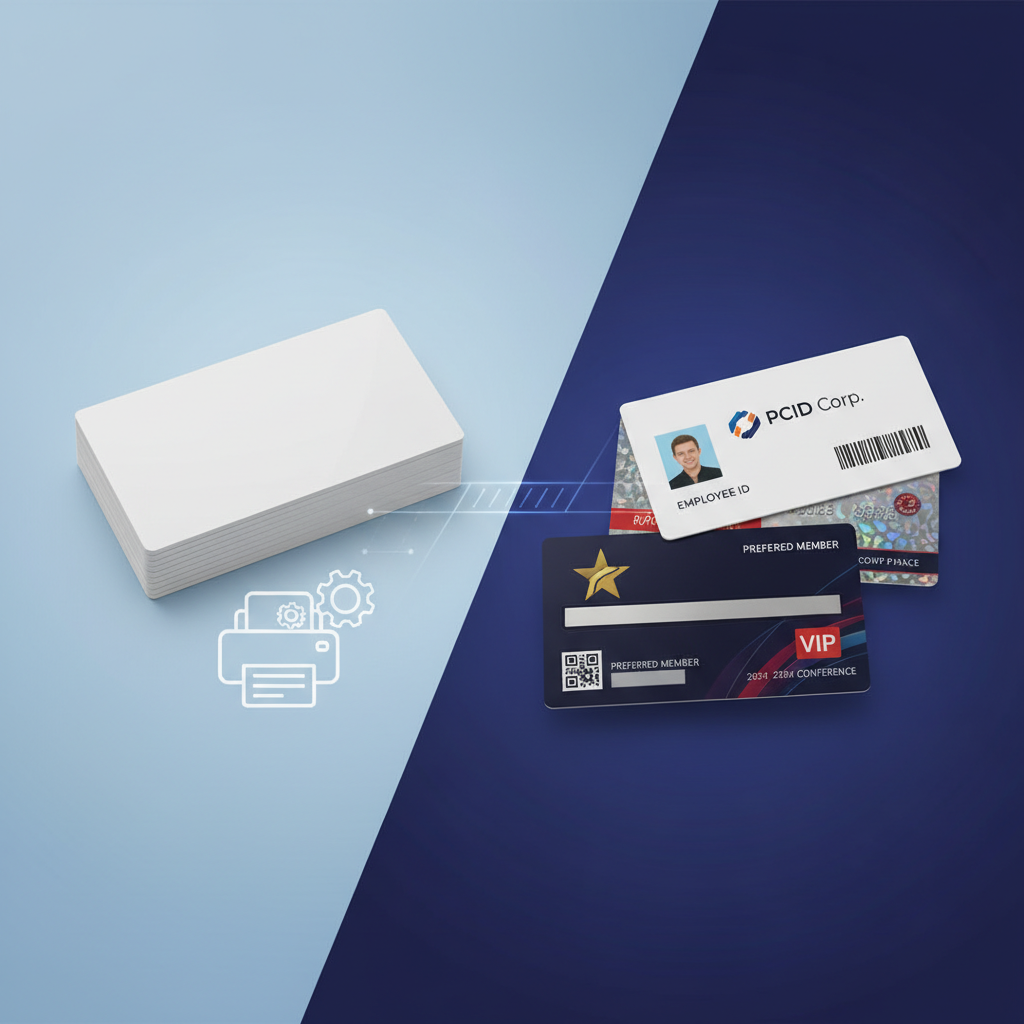 The honest answer is that most card programs benefit from one of three configurations: purely blank cards with in-house printing, purely pre-printed cards for mass distribution, or a hybrid model where the base card is blank and pre-stocked while personalized information is added in-house at time of issuance. That third model is actually the most common among sophisticated programs - and it's exactly what CPE is built to support.
Think about a gym chain: the card stock is plain white PVC, ordered in bulk as blanks. When a member signs up, the front desk prints their name, photo, and member number in 30 seconds. The cards are uniform in format but personalized in content. The economics are excellent, the workflow is fast, and the program scales across locations without any coordination nightmare. That's the power of a well-designed blank card program.
Matching Card Type to Use Case
Employee ID and access control programs almost universally benefit from blank cards - the need for individual personalization, photo printing, and variable encoding makes any alternative impractical. Loyalty and membership programs that issue cards on an ongoing basis lean heavily blank as well. Gift card programs, on the other hand, often use pre-printed cards because the design is static and volume runs are large enough to justify the setup.
Event credentials sit in the middle. A one-time conference with 3,000 attendees might favor pre-printed batch production. A recurring events company that runs 20 events a year in varying formats will usually prefer blank card stock with in-house printing for the flexibility. Use case drives the decision - and getting that decision right from the start avoids a lot of retrofitting later.
Questions to Ask Before You Order
- How many cards do you need per month - and is that number stable or variable?
- Does every card need individual personalization (name, photo, number)?
- How often does your branding or design change?
- Do you have, or are you willing to invest in, a card printer?
- What is your per-card budget, and how does it change at volume?
- Do the cards need encoding - magnetic stripe, RFID, or smart chip?
These six questions will narrow your options considerably. Most buyers who work through them honestly arrive at a clear answer. If the answer is still unclear, that's what 800.835.7919 is for - experienced guidance without pressure, tailored to your specific situation.
Why Plastic Card ID Is the Right Partner for Any Card Program
Twenty-five years and more than 50 million cards sold is not a statistic - it's a pattern of trust. Across all 50 states, from single-location businesses running 50 cards a month to national chains managing card programs in the tens of thousands, CPE has been the supplier behind programs that work. The difference between a card vendor and a card partner is the depth of guidance that comes with the transaction.
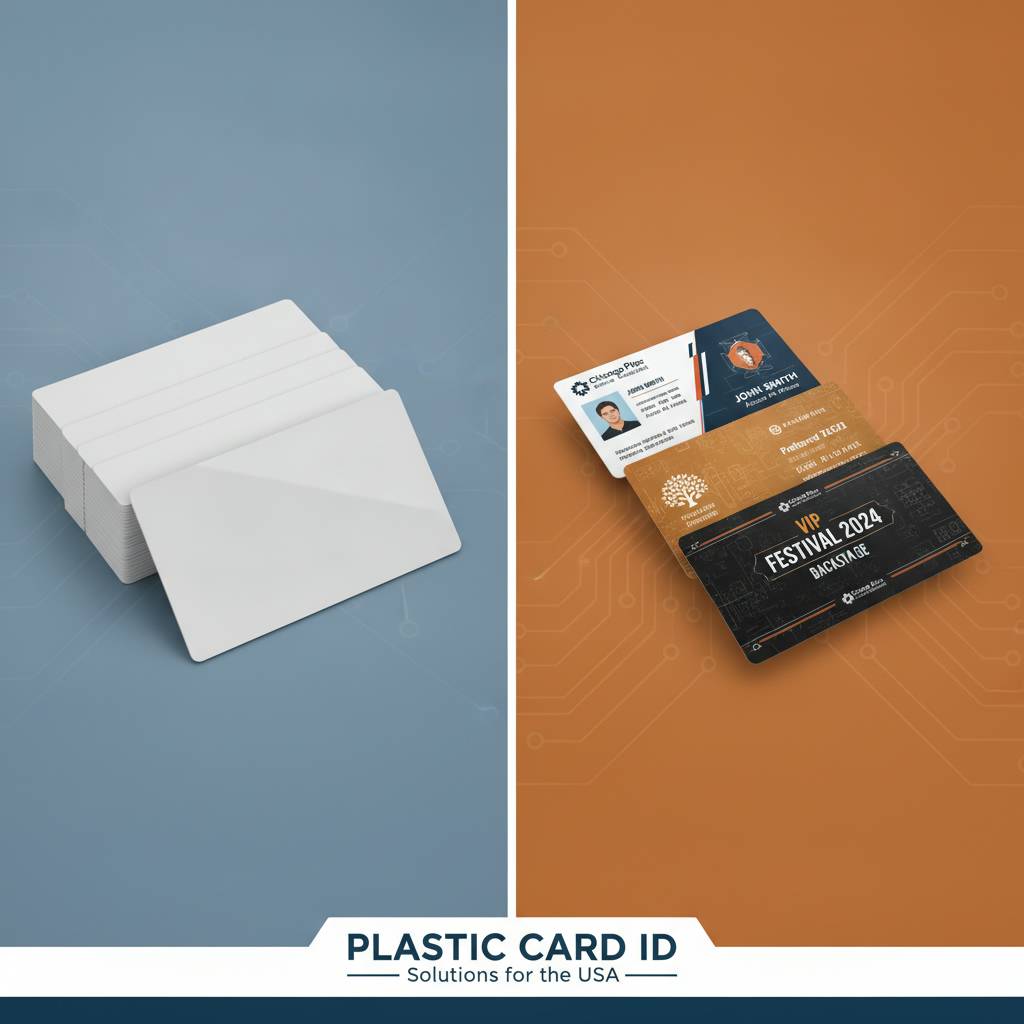
The catalog covers the full spectrum: blank PVC cards in every format, magnetic stripe options in HiCo and LoCo, RFID and proximity cards with advanced contactless capabilities, smart chip cards, clear and frosted specialty formats, colored stock, die-cut custom shapes, and luxury metal cards. Printers from Evolis, Zebra, and Fargo round out the hardware side. Ribbons, cleaning kits, card carriers, sleeves, and card affixing and mailing services mean you're never sourcing from multiple vendors when one will do.
Support That Goes Beyond the Sale
Buying a card printer without knowing how to optimize ribbon usage or manage card stock storage can undermine the economics of an otherwise smart program. CPE provides the kind of practical operational guidance that keeps programs running efficiently - not just at the point of initial purchase, but over months and years of ongoing operation. That long-term relationship is what distinguishes a strategic supplier from a one-time transaction.
Over 100,000 customers have built that relationship. The breadth of industries served - healthcare, education, retail, hospitality, gaming, corporate, government, events - means that whatever your use case, there's a depth of relevant experience behind every conversation. You are not the first person to face your card program challenge, and you don't have to figure it out alone.
Value-Added Services That Complete Your Program
Beyond cards and printers, CPE offers card carriers, protective sleeves, lanyard accessories, and card affixing and mailing services that turn a stack of printed cards into a complete, mail-ready delivery. For organizations launching loyalty programs, membership campaigns, or gift card initiatives, this end-to-end fulfillment capability removes a significant logistical burden from internal teams.
Every piece of the card program ecosystem - from the blank substrate through to the finished, packaged, addressed card in your customer's hands - can be sourced and coordinated through one relationship. That kind of integration reduces errors, saves time, and keeps your program running at its best.
Ready to Start? Here's What to Do Next
If you've read this far, you're serious about getting your card program right. Whether you're leaning toward blank cards for in-house printing flexibility or pre-printed cards for a large-scale branded launch, the next step is a conversation. Bring your volume estimate, your use case, and your questions. CPE will bring the experience and the options.
Call 800.835.7919 today and let a card program specialist help you make the right call - blank, pre-printed, or the hybrid approach that works best for your unique situation.
The best card programs are built on the right foundation. That foundation starts with understanding the difference between blank and pre-printed cards - and knowing which one, or which combination, fits what you're actually trying to accomplish. Plastic Card ID has been helping businesses across the United States make that decision correctly for over 25 years. Call 800.835.7919 and add your program to that track record.
Previous Page