Signature Panels on Blank Plastic Cards: Uses and Benefits
Table of Contents []
- Signature Panels on Blank Plastic Cards: What They Are and Why They Matter - Plastic Card ID
- How Signature Panels Interact With Card Printers and Ribbons
- Choosing the Right Blank Card With a Signature Panel for Your Program
- Sourcing Blank Plastic Cards With Signature Panels at the Right Volume
- Frequently Asked Questions About Signature Panels on Blank Plastic Cards
- Building a Complete Card Program Around Signature Panel Cards - Plastic Card ID
Signature Panels on Blank Plastic Cards: What They Are and Why They Matter - Plastic Card ID
 Most people have swiped a card, flashed a badge, or handed over a membership card without giving a second thought to that small white strip on the back. That strip - the signature panel - is one of the most underestimated features in card design. Whether you are building an employee ID program, a retail loyalty initiative, or a membership system from scratch, understanding signature panels can save you from costly misprints and card reprints down the line.
At Plastic Card ID, we have spent over 25 years helping organizations across the United States make smart decisions about blank plastic cards - including the often-overlooked details that determine whether a card program performs flawlessly or creates daily headaches. Signature panels are one of those details. They seem minor. They are not.
This page walks you through everything - what signature panels are, how they interact with card printing, when to use them, and how to source the right blank card stock for your specific program needs.
Defining the Signature Panel
A signature panel is a specialized white or off-white coated strip applied to the back of a plastic card, typically positioned in the lower-right area of the reverse face. Unlike the glossy PVC surface surrounding it, this panel is treated with a slightly rough, matte coating that accepts pen ink - ballpoint, gel, or fine-tip - cleanly and permanently.
Standard CR80 cards (85.6mm x 54mm, 30 mil thickness) conforming to ISO 7810 may include a full-width or abbreviated signature panel. The panel is not simply painted white. It is a bonded layer engineered to hold ink without smearing, bleeding, or peeling away from the card surface over repeated handling.
The functional elegance of a signature panel is that it transforms a passive card into an authenticated document. Once a cardholder signs, that card becomes individually tied to its owner - a subtle but powerful security feature that costs almost nothing to implement at the card-sourcing stage.
Signature Panels vs. Plain PVC Backs
If you try to sign a plain PVC card with a ballpoint pen, you will likely get a faint, smearable line that fades or disappears entirely within weeks. PVC is a non-porous material - ink sits on the surface rather than bonding to it. A signature panel solves this by providing a micro-textured receptor layer specifically designed for ink adhesion.
Organizations sometimes assume they can add a signature panel after card production - perhaps by applying a sticker or label. This approach rarely holds up. Aftermarket adhesive strips tend to peel at the edges, especially in wallet environments where cards experience constant friction and slight bending. The panel needs to be part of the card's construction, not an afterthought.
Choosing between a card with or without a signature panel is a decision that should happen before you place your blank card order, not after the first batch arrives. CPE keeps both options in stock so your program can pivot quickly when specifications change.
Security Features Embedded in Signature Panels
Many signature panels include a subtle "VOID" pattern - a latent print that appears if someone attempts to lift the panel or tamper with the signature beneath it. This is a common anti-fraud feature on financial and access cards. For general business cards, standard white panels without void protection are typically sufficient, but knowing the option exists is useful if your card program carries any elevated security requirements.
Tamper-evident panel technology is not just for banks. Hotels, healthcare facilities, and corporate campuses have all adopted void-signature panels on employee ID and access cards to deter credential sharing or alteration. The cost difference between a standard panel and a void-protected panel is negligible at volume, yet the security dividend is real.
When evaluating blank card stock for a new program, ask specifically whether the signature panel includes any latent security patterning - or whether you want a clean white panel for a simpler card design. Both are valid choices, and both are available through Plastic Card ID.
| Card Type | Signature Panel | Best Use Case | Security Level |
|---|---|---|---|
| Standard Blank PVC CR80 | Optional | ID, Loyalty, Membership | Basic |
| Magnetic Stripe (HiCo/LoCo) | Common Inclusion | Access, Gift, Loyalty | Moderate |
| RFID / Proximity Card | Optional | Access Control, Casino | High |
| Smart Chip Card | Often Included | Secure ID, Healthcare | High |
| Clear / Frosted PVC | Specialty Application | VIP, Luxury, Branding | Variable |
How Signature Panels Interact With Card Printers and Ribbons
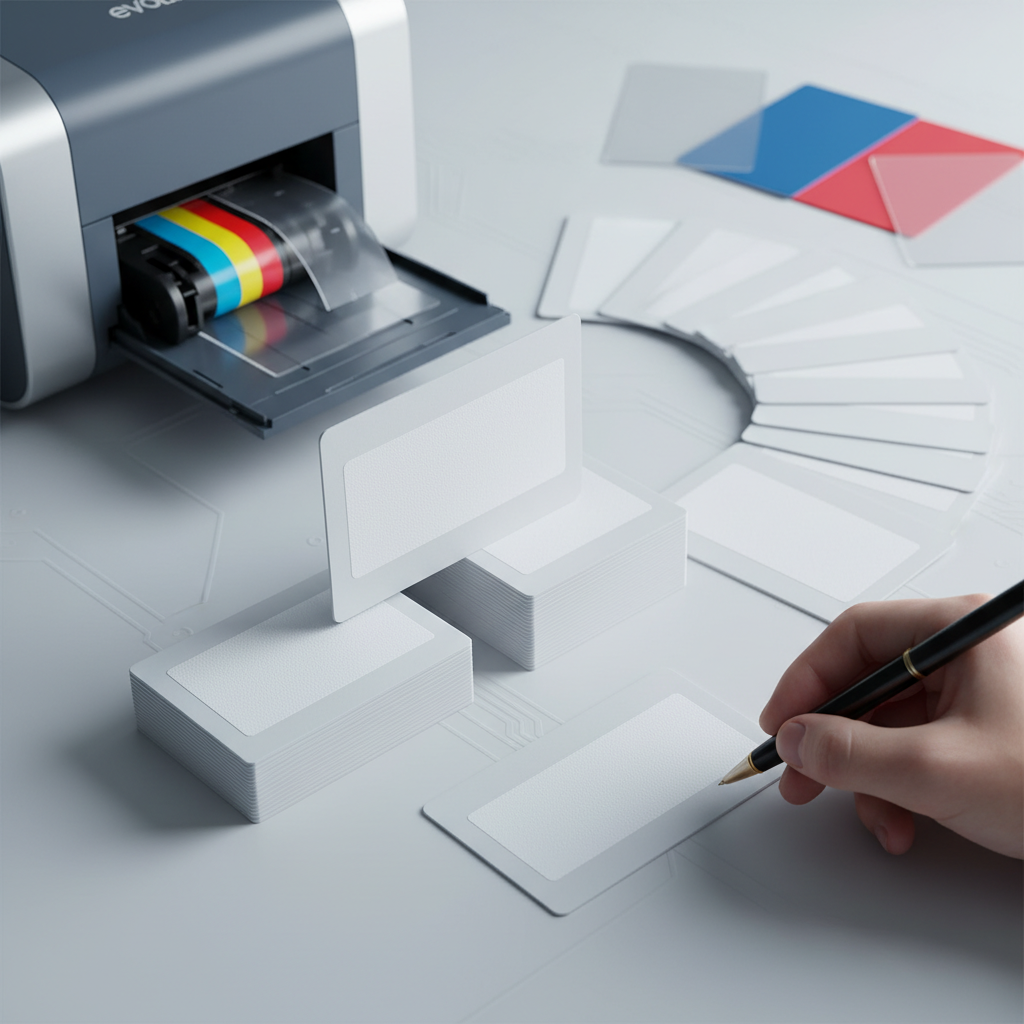 Here is something that catches first-time card program managers off guard: not every card printer ribbon plays nicely with every signature panel formulation. The interaction between the ink panels in your ribbon - YMCKO, YMCK, or monochrome - and the receptor coating on a signature panel can produce wildly different results depending on the card stock brand and the printer model you are using.
Evolis, Zebra, and Fargo printers - all of which are available through CPE - are calibrated for specific card stock tolerances. Using off-brand or mismatched card stock with these printers can cause blistering, color bleeding across the panel boundary, or adhesion failure where printed color bleeds into the white panel area. This is not a printer defect. It is a compatibility issue that proper sourcing prevents entirely.
Ribbon Selection for Cards With Signature Panels
YMCKO ribbons - Yellow, Magenta, Cyan, Black, and Overlay - are the most commonly used ribbons for full-color card printing. The "O" panel, the overlay, is a critical consideration when printing cards with signature panels. A full-coverage overlay applied over the signature panel will seal the ink-receptor coating, making it impossible to sign the card afterward.
The solution is simple but must be intentional: configure your printer software to mask the overlay panel so that it does not print over the signature panel area. Most Evolis, Zebra, and Fargo printer drivers support overlay masking natively - but the setting must be enabled manually. If you are new to configuring card printers, Plastic Card ID offers guidance and support to ensure your setup is correct from the first print run.
Monochrome ribbons - black resin, for example - are commonly used for printing variable data like names and ID numbers on pre-printed card stock. When printing on cards with signature panels using a monochrome ribbon, the same overlay masking principle applies. A resin black overlay over the panel will compromise sigability, so keep that zone clear.
Printer Models and Panel Compatibility
Different printer lines handle signature panel areas with varying degrees of precision. Higher-end models from Zebra's ZXP series and Fargo's HDP line offer edge-to-edge printing with tighter registration control, which is especially important when the design layout requires printing very close to - but not over - the signature panel boundary.
Entry-level Evolis printers like the Primacy or Badgy series are excellent for small-to-medium programs and handle signature panel masking well when configured correctly. The key is ensuring that your card template in the printer driver accurately reflects the card's physical layout, including the exact position and dimensions of the signature panel.
If you are unsure which printer is right for your card program - particularly if signature panels are part of your card specification - reaching out to CPE before purchasing is the smartest move you can make. Buying the wrong printer for your card stock is an expensive mistake that proper consultation prevents.
Card Stock Quality and Long-Term Panel Performance
Not all blank card stock is manufactured to the same tolerances. Discount card stock sourced from unverified suppliers may have signature panels that yellow prematurely, delaminate under normal wallet stress, or fail to hold ballpoint ink after six to twelve months. For a card program that runs continuously - employee badges refreshed annually, loyalty cards distributed in the thousands - panel durability is not a cosmetic concern. It is a functional one.
The blank CR80 cards stocked by Plastic Card ID meet ISO 7810 standards for dimensional accuracy and are tested for compatibility with the major printer platforms they sell. Consistency from card to card matters enormously in high-volume programs where a single bad batch can mean thousands of reprints and program delays that ripple outward into real business disruption.
Pair quality card stock with genuine OEM ribbons and manufacturer-recommended cleaning kits - all available through CPE - and the signature panel on your cards will remain clean, legible, and signable for the full lifespan of the card.
Choosing the Right Blank Card With a Signature Panel for Your Program
The decision to include a signature panel on your blank cards depends on the type of program you are running, the level of personalization required, and whether cardholder authentication adds value to your use case. Not every card needs a signature panel. But for the ones that do, the difference it makes is immediate and lasting.
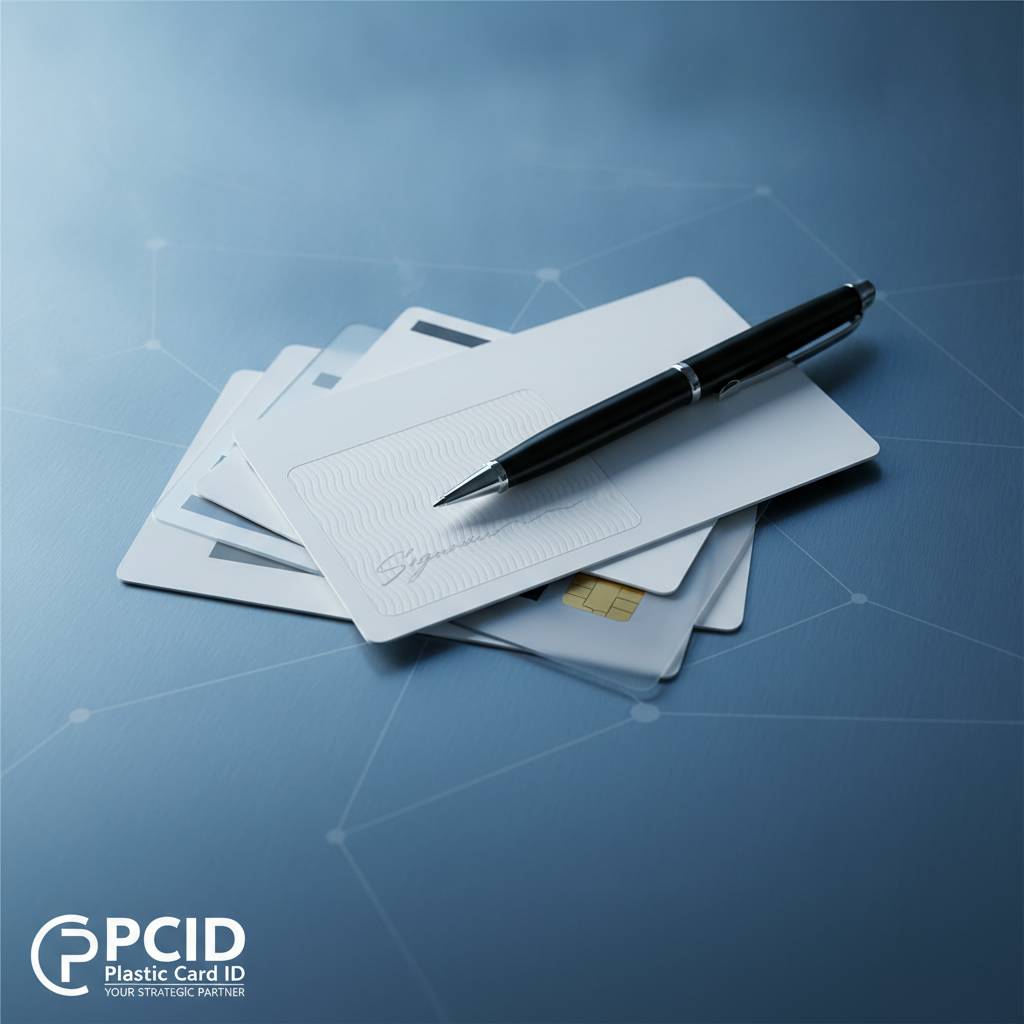
Retail loyalty cards, gym memberships, club cards, employee badges, and event credentials all represent scenarios where a signed card creates a stronger bond between the card and its holder. A signed card is a claimed card - and that psychological shift in ownership translates to better card retention, fewer replacements, and stronger program engagement metrics over time.
Loyalty and Membership Card Applications
Loyalty programs that use plastic cards with signature panels see measurably different outcomes than those that do not. Cardholders who sign their cards are more likely to carry them, more likely to use them, and less likely to hand them off to someone else - all of which improves data integrity in your loyalty platform. For retailers transitioning from paper punch cards to plastic, the signature panel is one small feature that accelerates the behavioral shift in customers.
Membership cards for gyms, clubs, professional associations, and religious organizations benefit similarly. When a new member signs their card, they are completing a subtle initiation ritual - one that reinforces commitment to the organization. This is not abstract psychology. Card programs that include signatures consistently report lower churn and higher perceived membership value among cardholders surveyed at renewal time.
Blank CR80 cards with signature panels are available through Plastic Card ID in quantities ranging from small starter packs to tens of thousands of cards for enterprise-scale programs. Whether you are printing 50 cards a month or 50,000, the unit cost decreases substantially at volume, making it easy to justify the upgrade from plain-back cards.
Employee ID and Access Card Applications
For employee badge programs, the signature panel serves a dual purpose: authentication and accountability. An employee badge with a signed panel is immediately recognizable as issued to a specific individual - a detail that matters during routine security checks, especially in facilities where badge sharing is a risk.
Access control programs that use proximity cards or smart chip cards alongside a printed photo ID benefit from including a signature panel even when the card's primary authentication is electronic. Physical badges are checked visually at checkpoints, presented to visitors, and worn externally - the signature panel adds a layer of human-readable authentication that complements the technology embedded in the card.
Organizations managing large employee populations can order blank signature panel cards in bulk, print variable data in-house using their Evolis, Zebra, or Fargo printer, and maintain full control over issuance timing and card content. This in-house flexibility is one of the core reasons businesses choose to build their own card programs rather than outsourcing issuance entirely.
Event Credentials and Temporary Card Uses
- Conference and trade show credentials - attendee cards with signature panels deter badge sharing between registered and unregistered attendees, protecting your event's access integrity.
- VIP and backstage passes - for concerts, sporting events, and private functions, a signed plastic card is far harder to forge or pass along than a paper wristband or printed ticket.
- Temporary employee or contractor badges - facilities with rotating contract workers benefit from signature-panel cards that can be individually assigned and visually authenticated without requiring a card reader at every checkpoint.
- Day passes and visitor credentials - front desk teams can issue a signed visitor card in seconds, creating a simple chain of custody record for building security purposes.
- Training program certificates on card - organizations that issue wallet-size training credentials can include a signature panel to authenticate the individual named on the card.
For all of these event and temporary use cases, the blank card with a signature panel is the most cost-effective foundation. Print what you need in-house, issue on demand, and reclaim or retire cards at the conclusion of the event or engagement period.
Sourcing Blank Plastic Cards With Signature Panels at the Right Volume
 Volume is one of the most important variables in any card program sourcing decision. The per-card cost of blank CR80 cards with signature panels drops significantly as order quantities increase - and understanding where the meaningful price breaks occur helps you plan your inventory strategy intelligently rather than reordering reactively at inconvenient moments.
Plastic Card ID has worked with programs running as few as 50 cards per month and as large as hundreds of thousands of cards per year. In both cases, the goal is the same: matching the right card specification to the right volume tier so that the program runs cleanly, on budget, and without supply interruptions that force last-minute compromises on card quality.
Volume Tiers and Pricing Considerations
Small programs - running 50 to 500 cards per month - benefit most from keeping a modest safety stock on hand rather than reordering constantly. For signature panel cards specifically, it is worth ordering a slightly larger quantity upfront to account for the test prints and calibration runs that any new printer setup requires before reaching production quality.
Mid-volume programs processing 500 to 5,000 cards per month should be thinking about ribbon consumption alongside card stock. YMCKO ribbons for color printers typically yield 200 to 500 prints per ribbon depending on the model. Pairing your card order with a ribbon order ensures your print capacity matches your card inventory - avoiding the frustrating situation of having thousands of blank cards and no ribbon to print them with.
Enterprise-scale programs in the tens of thousands of cards per month benefit from dedicated account support, something CPE makes available to clients whose programs warrant it. Bulk pricing, scheduled shipments, and guaranteed card stock consistency across batches are all negotiable at this level - and they make a meaningful difference in program operating costs year over year.
Magnetic Stripe Cards With Signature Panels
Many loyalty, access, and gift card programs require magnetic stripe encoding in addition to printed card content. HiCo (High Coercivity) magnetic stripe cards are the standard for programs where the card will experience regular wear, wallet storage, and repeated swiping over months or years. LoCo (Low Coercivity) cards are appropriate for shorter-duration applications like hotel key cards or temporary event credentials.
Blank magnetic stripe cards are available with signature panels as a combined specification - you do not need to choose between them. The stripe runs along the upper back of the card while the signature panel occupies the lower portion of the reverse face. Both features coexist on the same card without compromising each other's function, provided the card stock is manufactured to ISO standards. This combination is the backbone of professional loyalty and membership card programs across every retail and hospitality vertical.
When ordering magnetic stripe cards with signature panels from Plastic Card ID, confirm whether your application requires HiCo or LoCo encoding. The difference matters - using LoCo cards in a high-wear program will result in stripe degradation and cardholder complaints within months of launch.
Frequently Asked Questions About Signature Panels on Blank Plastic Cards
 Over 25 years and more than 100,000 customers served, certain questions come up again and again. The answers below reflect real situations that card program managers encounter - not hypothetical scenarios. If your question is not covered here, speaking directly with the team at Plastic Card ID is always the fastest path to a definitive answer.
Can I Add a Signature Panel to Cards I Already Have?
Technically, adhesive signature panel strips exist as an aftermarket product. In practice, they are unreliable for professional card programs. The adhesive layer between the strip and the PVC card surface is the failure point - it peels, bubbles, or detaches entirely under the mechanical stress that wallet storage creates. If a professional program look and long-term panel durability are priorities, reordering cards with the panel built in is the correct solution, not an aftermarket workaround.
The cost difference between blank cards with and without signature panels is minimal at most volume tiers. Skipping the panel upfront to save a fraction of a cent per card rarely makes financial sense when weighed against the cost of reprinting a batch because the aftermarket fix failed in the field.
What Pen Types Work Best on Plastic Card Signature Panels?
Ballpoint pens are the most universally reliable option for signing plastic card panels. The mild pressure required to deposit ballpoint ink is well-matched to the receptor coating's mechanical properties. Gel pens work on most panels but can smear briefly after signing - allow five to ten seconds of drying time before placing the card back in a wallet or card holder.
Fine-tip permanent markers like Sharpies will write on signature panels but often produce a slightly fuzzy line due to the felt tip's larger contact area. For programs where the signature is a security feature rather than a decorative touch, ballpoint is the preferred instrument for producing clean, tamper-evident signatures that remain legible for the life of the card.
Avoid oil-based paint markers or broad felt-tip markers entirely - these do not dry on the panel surface and will smear immediately and persistently. The panel's receptor coating is optimized for pen-type instruments, not brush-style applicators.
Do Clear and Frosted Cards Support Signature Panels?
Clear plastic cards and frosted PVC cards present a unique design challenge for signature panels. Standard white panels on a clear card are visible from both sides, which can conflict with the premium transparent aesthetic these cards are often selected for. Some programs use a smaller, condensed panel positioned discreetly, while others opt for a frosted panel on a frosted card for a more cohesive visual result.
Specialty clear and frosted cards with custom panel placement are available through Plastic Card ID for programs where visual design and card functionality need to coexist without compromise. Luxury VIP cards, exclusive club memberships, and high-end retail programs frequently run on clear or frosted card stock precisely because the material communicates premium value in a way that standard white PVC simply cannot.
Building a Complete Card Program Around Signature Panel Cards - Plastic Card ID
A card program is not just the cards. It is the printer, the ribbons, the software, the card holders, the sleeves, the lanyards, and in many cases the mailing infrastructure that gets cards into cardholders' hands. Plastic Card ID supports every layer of this stack - not just the card stock itself - which is why organizations that start with a single card order often grow into long-term partners who run their entire program through a single trusted supplier.
Starting with the right blank card specification - including the signature panel decision - sets the entire downstream program up for success. The foundation of a professional card program is a deliberate, well-sourced card specification that was chosen with the end use case in mind rather than whatever happened to be cheapest or easiest to find at reorder time.
Accessories That Complete the Signature Panel Card Experience
Card sleeves and cardholders protect the card - and the signature panel - from the abrasion and contamination that accumulates during daily carry. A signature panel that has been scratched or contaminated with pocket debris is harder to read and harder to verify. Protective sleeves are an inexpensive addition to any card issuance package that preserves card quality for the program's full duration.
Card affixing and mailing services through CPE allow organizations to ship signed or unsigned cards directly to cardholders without handling individual mail pieces in-house. For loyalty programs distributing cards at launch, or membership organizations issuing renewal cards annually, this service eliminates a significant logistical burden while ensuring professional presentation at the point of receipt.
Cleaning kits for card printers are another often-overlooked accessory with a direct impact on signature panel print quality. Dirty printer rollers transfer debris to the card surface during printing - contaminating the signature panel area before a cardholder ever receives the card. Regular cleaning cycles, using manufacturer-approved kits, keep print quality consistent and protect the panel surface throughout the printer's operational life.
When to Call Before You Order
Some card program decisions benefit from a brief conversation before the order is placed. If your program involves any of the following, speaking with Plastic Card ID before ordering blank signature panel cards will save time, money, and frustration:
- You are transitioning from paper or laminated card stock to PVC plastic cards for the first time.
- Your card design places printed content very close to the signature panel boundary and you are unsure whether your printer can maintain clean separation.
- You need cards with both a magnetic stripe and a signature panel and are unsure whether HiCo or LoCo is appropriate for your application.
- You are evaluating RFID or proximity cards with signature panels for an access control program.
- Your program requires a custom card size or shape - such as a die-cut card - and you want to understand whether signature panels are available for non-standard form factors.
- You are running a casino player card or hotel key card program and need to match card spec to specific back-end encoding requirements.
These are not edge cases. They are common scenarios that arise regularly in programs of all sizes - and getting the answers right before production begins is infinitely easier than troubleshooting a mismatched card spec after 10,000 cards have been printed and distributed.
Contact Plastic Card ID to Start Your Card Program
Reaching the right supplier at the right time is sometimes the difference between a card program that runs smoothly for years and one that causes recurring operational headaches. Plastic Card ID has supported over 100,000 customers across the United States - programs of every scale, every industry, and every use case imaginable.
Call 800.835.7919 to speak with someone who understands blank plastic cards, signature panels, printer compatibility, and card program logistics from the inside out. There is no script and no sales pressure - just knowledgeable conversation aimed at helping your program get off the ground correctly the first time.
Ready to source blank plastic cards with signature panels for your program? Call Plastic Card ID today at 800.835.7919 and let our team match you with the right card stock, the right printer, and the right accessories to run a card program that works - from day one and for years to come.
Previous Page