Blank Plastic Card Materials Compared: Full Buyers Guide
Table of Contents []
- Blank Plastic Card Materials Compared: What Every Buyer Should Know Before Ordering with Plastic Card ID
- Standard PVC Cards: The Workhorse of Blank Card Programs
- Composite Cards: When Durability and Technology Converge
- Clear and Frosted Plastic Cards: Specialty Materials That Command Attention
- Metal Cards and Luxury Substrates: Premium Programs Deserve Premium Materials
- Choosing the Right Blank Card Material: A Buyer's Decision Framework
- Partner with Plastic Card ID for Expert Blank Plastic Card Material Guidance - Call 800.835.7919 Today
Blank Plastic Card Materials Compared: What Every Buyer Should Know Before Ordering with Plastic Card ID
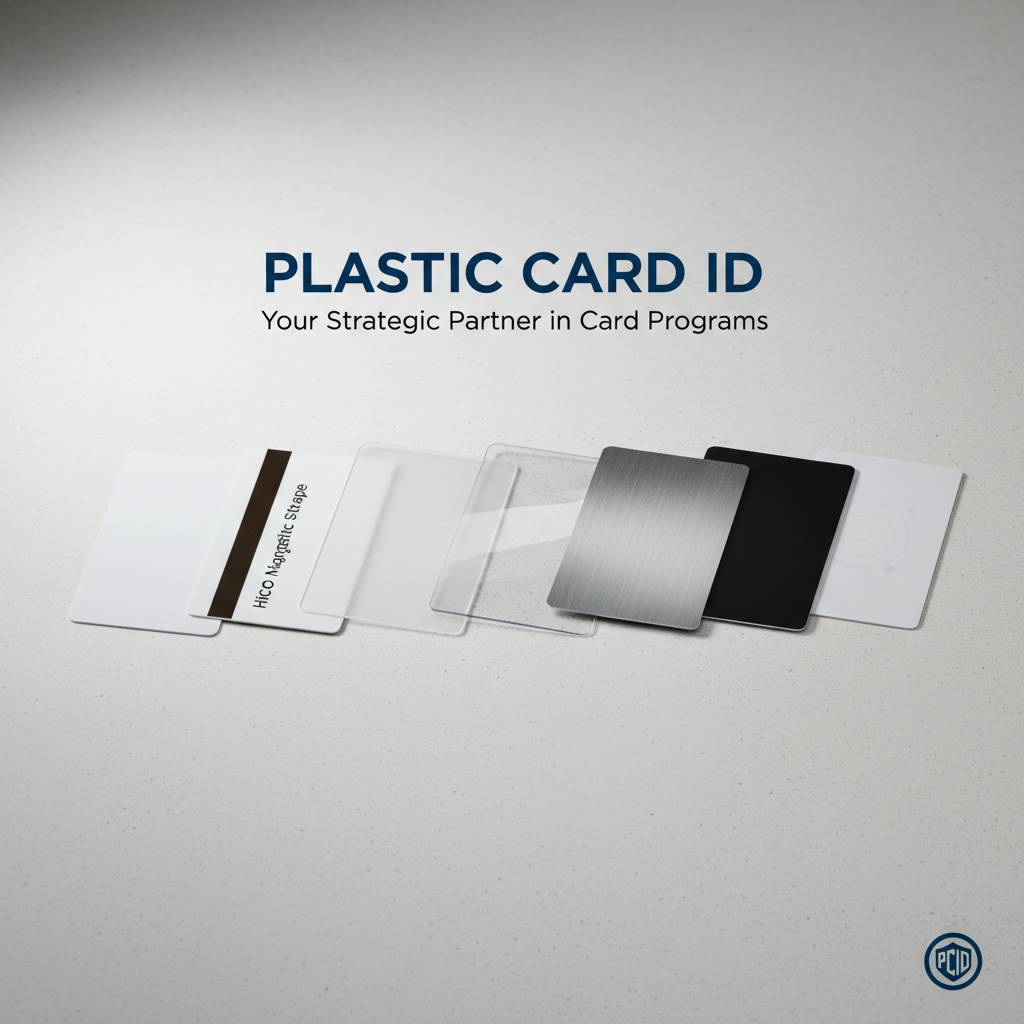 Walk into any modern office, hotel, gym, or retail store and you'll find plastic cards doing quiet, essential work. Employee badges. Loyalty cards. Access credentials. Key fobs. What most buyers don't realize - until they've ordered the wrong thing - is that not all blank plastic cards are made from the same materials, built to the same specs, or suited to the same applications. Choosing the right substrate before you print a single card can mean the difference between a program that runs smoothly for years and one that generates headaches and reprints.
Plastic Card ID has spent over 25 years supplying blank and custom plastic cards to businesses across the United States. That depth of experience translates into something genuinely useful for buyers: straightforward guidance on what materials actually matter, and why. Whether you're evaluating standard PVC, composite cards, clear plastic, or technology-embedded options, this guide lays it out with precision.
Why Card Material Is More Than a Spec Sheet Detail
Most buyers focus on quantity and price. That's natural. But the material composition of a blank card determines how it encodes, how it prints, how long it lasts, and whether it performs reliably in the hardware you're using. A card that warps in a wallet, fades under a laminator, or fails in an access control reader isn't a bargain at any price.
Material choice shapes every downstream outcome in your card program. The printer you select, the ribbon type you use, the encoding technology you need - all of it connects back to the card substrate. Understanding the options isn't a technical exercise; it's practical buying intelligence that saves money and prevents program failures.
The CR80 Standard: A Foundation Shared Across Materials
Before comparing materials, it's worth grounding the conversation in what stays constant. The CR80 format - 3.375 inches by 2.125 inches, 30 mil thick - is the ISO 7810 standard shared by nearly every card type in this guide. Whether you're holding a standard PVC card, a composite card, or a frosted clear card, the physical footprint is almost certainly CR80.
That standardization matters because it means cards across different material types can often run through the same printer hardware. The differences that drive material selection come from what's inside the card, how its surface accepts ink or resin, and what functional layers it carries beneath that consistent exterior dimension.
What Happens When You Choose Wrong
A loyalty program that switches from paper punch cards to plastic typically sees a 35-50% increase in gift card sales alone - the durability and wallet presence of plastic changes customer behavior in measurable ways. But if those plastic cards are poorly suited to the printing or encoding method chosen, the operational costs climb fast. Card jams, failed encodes, cracked surfaces, and delamination are all symptoms of a material mismatch.
Getting the material right from the start is the single best investment you can make in your card program's long-term cost structure. Plastic Card ID helps clients navigate exactly these decisions, whether they're ordering 50 cards a month or running mass production in the tens of thousands.
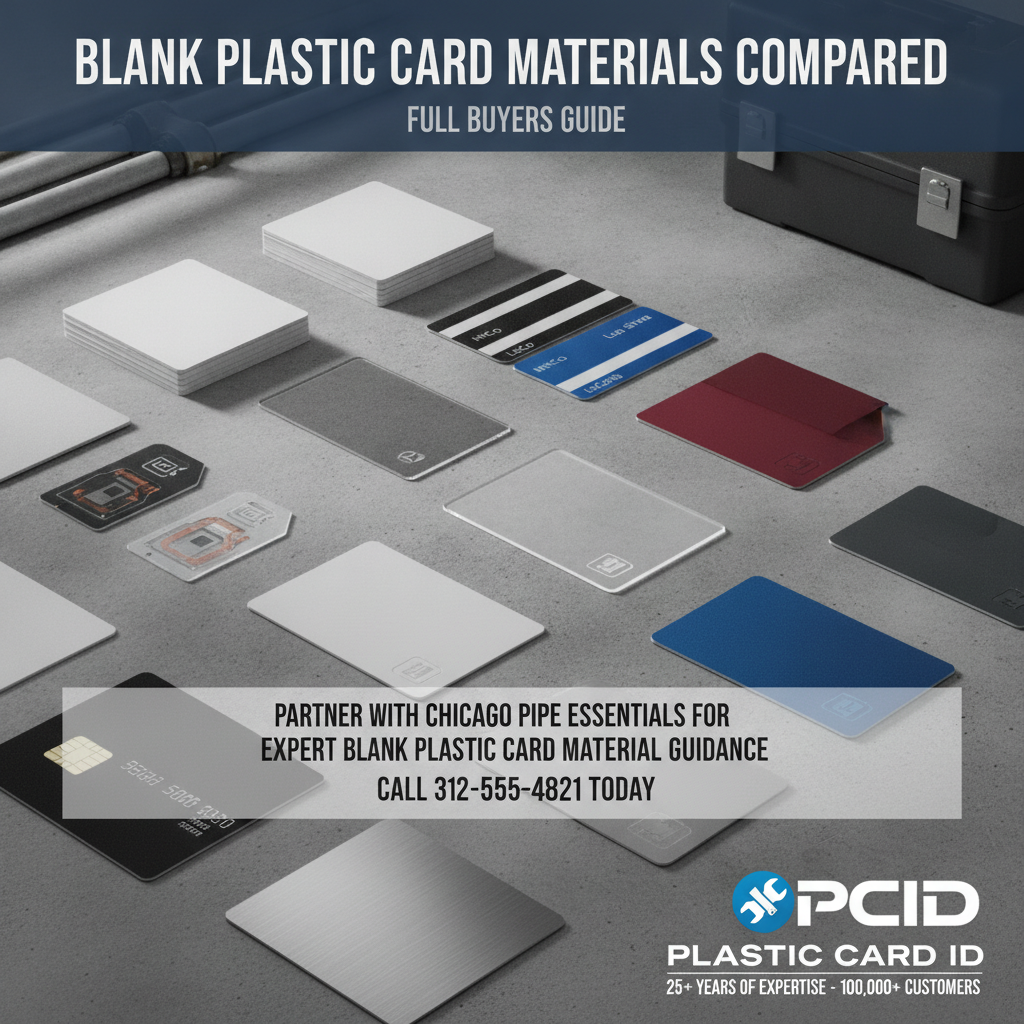
| Card Material | Best Use Cases | Print Compatibility | Encoding Options | Durability Level |
|---|---|---|---|---|
| Standard PVC | Loyalty, membership, ID, events | Dye-sublimation, direct-to-card | Magnetic stripe, RFID overlay | High |
| Composite PVC/PET | Access control, employee badges | Retransfer printers preferred | Smart chip, proximity, RFID | Very High |
| Clear / Frosted PVC | VIP, luxury, specialty programs | UV printing, screen printing | Magnetic stripe compatible | High |
| Metal (Stainless/Brass/Gold) | Premium loyalty, executive programs | Laser engraving, etching | Limited; overlay possible | Exceptional |
| RFID/Smart Chip Embedded | Access control, cashless systems | Standard DTC or retransfer | MIFARE, HID, contactless | Very High |
Standard PVC Cards: The Workhorse of Blank Card Programs
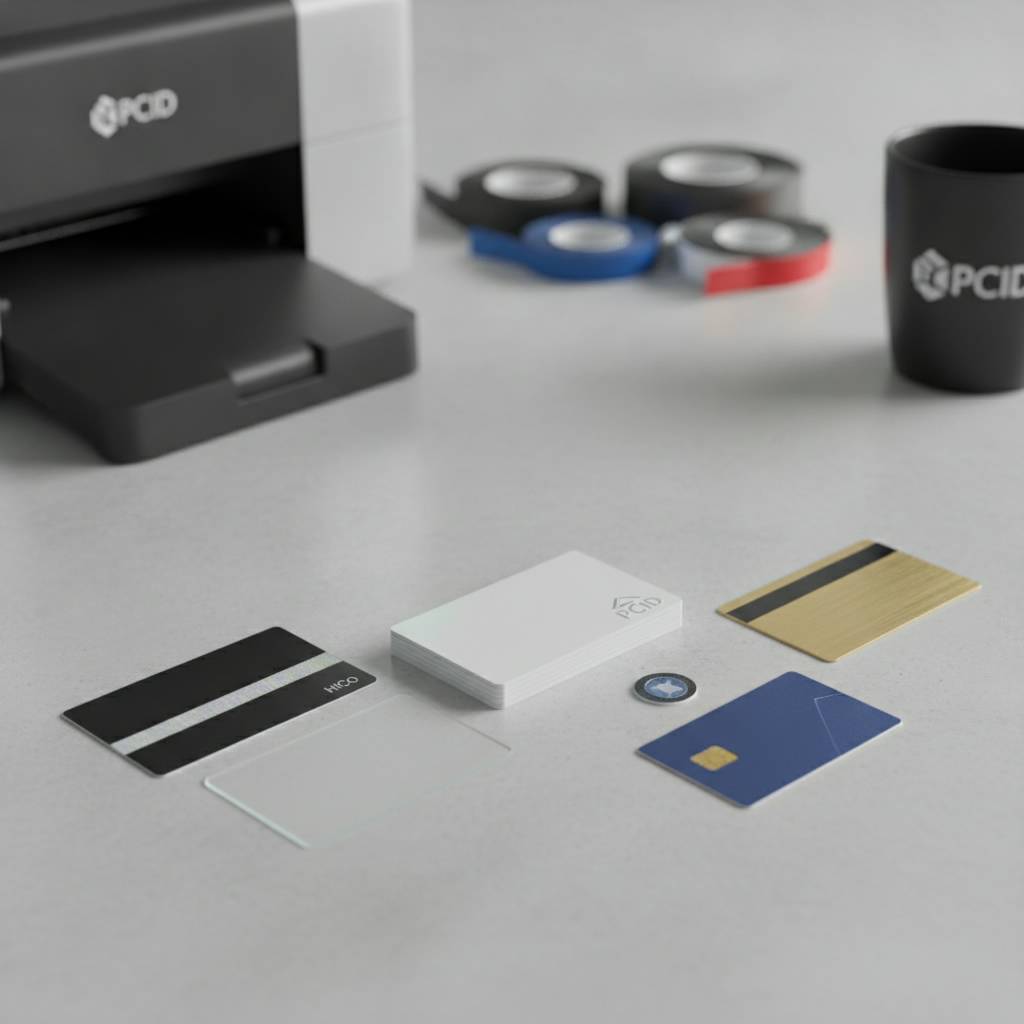 Standard PVC - polyvinyl chloride - is the material most people picture when they think of a plastic card. It's the backbone of the industry, and for good reason. PVC cards print beautifully, encode reliably, and hold up to everyday use with minimal fuss. For organizations running loyalty programs, membership cards, ID badges, event credentials, and general-purpose internal programs, standard PVC blank cards deliver exceptional performance at the lowest per-card cost in the category.
The 30 mil thickness of a standard CR80 PVC card is carefully chosen. It's rigid enough to resist casual bending, flexible enough to survive the stress of daily wallet use, and precisely calibrated to feed correctly through direct-to-card and dye-sublimation card printers. When you're buying blank cards in volume, that consistency across the batch matters as much as the individual card quality.
Surface Options: Glossy vs. Matte PVC
Standard PVC blank cards come in glossy and matte surface finishes, and the choice affects both print output and tactile experience. Glossy PVC surfaces produce vivid, high-contrast images with saturated color - ideal for loyalty and gift card programs where visual impact drives cardholder engagement. Matte surfaces produce a softer, more professional look that reads well in access control and corporate ID applications.
The surface you choose should match the visual language of your organization and the functional demands of your program. Glossy cards show fingerprints more readily; matte cards can sometimes appear to print slightly less vibrantly under certain ribbon types. Neither is universally better - but knowing the tradeoff lets you make a deliberate choice rather than a default one.
Magnetic Stripe Variants: HiCo vs. LoCo
Blank PVC cards with magnetic stripes come in two flavors: High Coercivity (HiCo) and Low Coercivity (LoCo). The distinction is about how much magnetic force is required to write and read data on the stripe. HiCo cards use a stronger magnetic field - measured at 2750 Oe or higher - making them more resistant to accidental erasure from everyday magnetic interference. LoCo cards operate at 300 Oe and are more easily encoded and erased.
For most permanent or semi-permanent card programs - employee badges, access cards, loyalty and membership cards - HiCo is the standard recommendation. LoCo cards have a role in short-term applications like hotel key cards and event passes where data is written and discarded frequently. CPE offers both formats across its blank PVC card inventory, with same-day shipping available on many standard configurations.
Choosing the wrong coercivity is one of the most common and easily avoidable mistakes in new card program setups. If your encoder is calibrated for LoCo and you feed it HiCo cards, encoding will fail consistently. Match the card spec to the encoder spec before you place your first order.
Colored PVC Stock: Beyond White Cards
Not every card program needs to start from a blank white canvas. Plastic Card ID carries pre-colored blank PVC stock in a range of core colors - options that give printed designs a built-in visual foundation without requiring a full-color print on the card's primary background. A black PVC card with a white or gold overprint reads completely differently from a white card with a black border, even when carrying the same information.
Colored stock cards are particularly useful for visual differentiation within a multi-tier program - color-coding access levels, membership tiers, or department assignments without relying solely on printed text. They also tend to disguise surface wear slightly better than white cards in high-use environments. For event credentials and short-cycle programs, pre-colored stock is a fast and cost-effective customization layer. Contact Plastic Card ID at 800.835.7919 to discuss which colors are in stock and available for fast fulfillment.
Composite Cards: When Durability and Technology Converge
Composite cards blend PVC with polyester (PET) to create a substrate that is significantly more durable and dimensionally stable than standard PVC alone. The typical composite card is constructed as a PVC/PET/PVC laminate - a polyester core sandwiched between PVC outer layers. This construction dramatically reduces warping, cracking, and delamination under thermal stress, which makes composite cards the preferred substrate for retransfer card printers and for programs that demand long service life under demanding conditions.

If your program involves smart chips, proximity technology, or RFID inlays, composite construction is almost always the correct choice. The PET core provides dimensional stability that protects embedded electronic components from the flexing and thermal expansion that would damage chips in a pure PVC substrate.
Why Retransfer Printers Demand Composite Cards
Retransfer card printers - like high-end models from Fargo and Zebra in the Plastic Card ID lineup - print onto a clear film that is then thermally fused to the card surface. This process runs hotter than direct-to-card printing, and standard PVC can warp or blister under that heat. Composite cards handle retransfer printing without distortion, producing edge-to-edge, over-the-edge print quality that direct-to-card printers physically cannot match.
If you're investing in a retransfer printer for premium card output, you need composite card stock - it's not optional. Organizations that try to save money by running standard PVC through a retransfer printer quickly discover the cost of replacement cards and wasted ribbon. CPE carries composite blanks in multiple configurations, including versions pre-loaded with RFID inlays, smart chip interfaces, and proximity antenna arrays.
Smart Chip and RFID-Embedded Composite Cards
Smart card technology embedded in composite substrates opens up a range of access control, cashless payment infrastructure, and loyalty program functionality that magnetic stripe cards simply cannot match. MIFARE DESFire EV1 and EV2 chips - among the most widely deployed contactless smart card technologies in the world - are available in composite card blanks from Plastic Card ID. These cards communicate with readers at 13.56 MHz and support encrypted, application-specific data storage.
For casino player cards, hotel key card systems, campus access programs, and corporate security infrastructure, contactless smart cards deliver both the security and the convenience that modern programs require. The embedded antenna and chip are factory-laminated into the composite substrate, meaning there are no external components that can snag, break, or be deliberately tampered with. This is durable technology built for real-world deployment.
Proximity Cards for Access Control
Proximity cards - commonly called prox cards - operate at 125 kHz and are among the most widely deployed access control credential types in North America. They're read by simply passing near a reader, without contact, and they carry a fixed ID number that access control systems use to grant or deny entry. For organizations already running HID-compatible access infrastructure, blank proximity card stock allows in-house programming of new credentials without replacing readers or controllers.
Plastic Card ID supplies proximity cards in composite construction for durability, available in standard CR80 format compatible with most enterprise access control systems. Whether you're issuing 50 credentials to a small office or rolling out hundreds of cards across a multi-site facility, the blank prox card format gives your IT or security team complete encoding control.
Clear and Frosted Plastic Cards: Specialty Materials That Command Attention
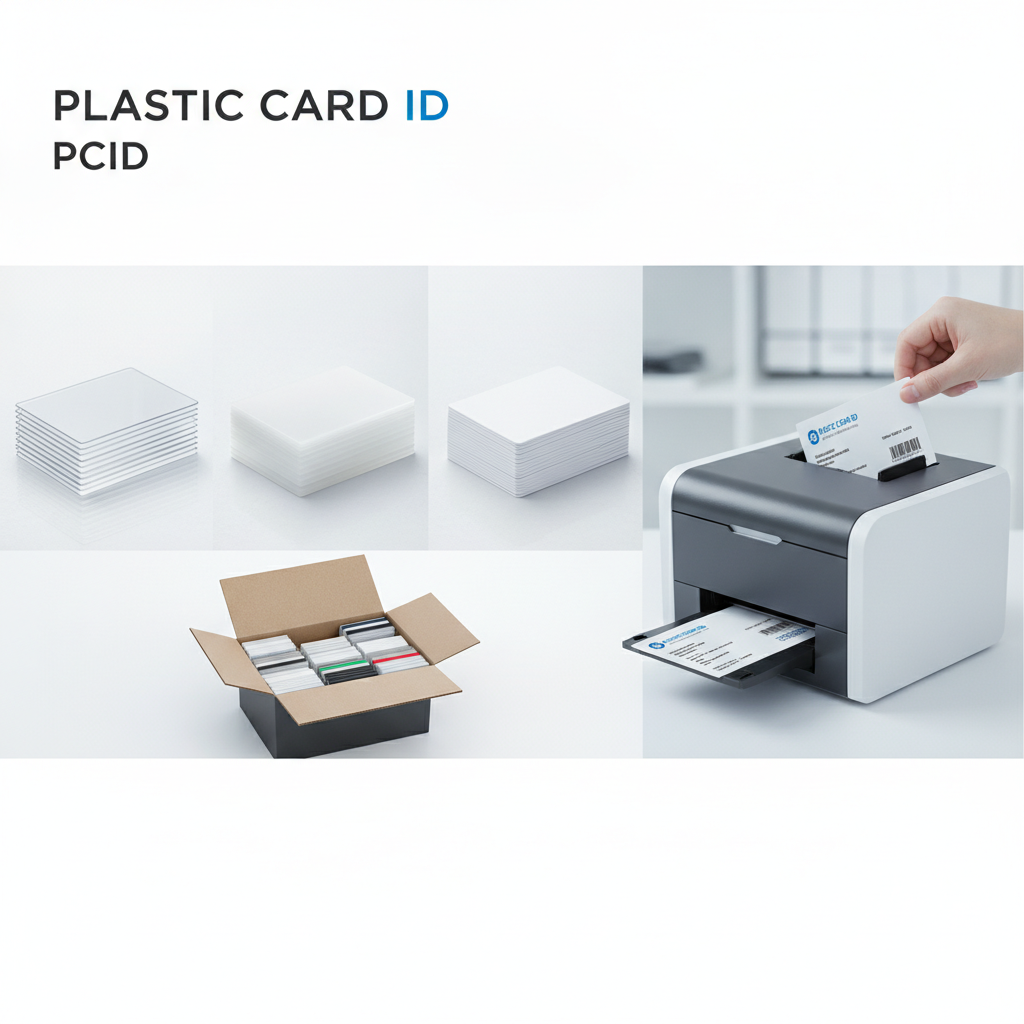 There's a moment when a standard white card simply isn't the right message. Luxury retail programs, VIP membership tiers, premium hotel properties, executive clubs - these contexts call for a card that communicates exclusivity before it's even printed. Clear and frosted PVC cards do that work immediately and viscerally. The transparency of a clear card, or the soft luminous quality of a frosted surface, signals a level of program sophistication that white stock cannot replicate.
Clear and frosted cards are among the most visually distinctive blank card substrates in the entire product catalog. They accept UV printing, screen printing, and certain dye-sublimation processes to produce designs that float visually within or on top of the material rather than sitting on a flat white background. The effect is genuinely striking, and in loyalty and membership applications, striking cards get kept - which is exactly the behavioral outcome you're engineering.
Print Techniques That Work on Clear Stock
Not every printer handles clear card stock the same way. Dye-sublimation and direct-to-card processes deposit color onto the card surface, and on clear stock, areas of the design that aren't printed remain transparent - a deliberate design feature in many applications. UV flatbed printing and screen printing are often used for clear cards when the design calls for opaque color fields combined with transparent windows.
Before ordering clear or frosted stock in volume, it's worth confirming compatibility with your specific printer model and ribbon type. Plastic Card ID can advise on which blank clear and frosted card formats pair best with which printer hardware in the current lineup. Reach the team directly at 800.835.7919 for a quick compatibility check before you commit to a large order.
Frosted Cards and the Tactile Advantage
Frosted cards offer a slightly different value proposition than fully clear stock. Where a clear card emphasizes visual transparency, a frosted card emphasizes texture. The matte, slightly translucent surface is pleasant to handle in a way that glossy cards never quite achieve, and it photographs distinctively - an important quality in an era when loyalty and membership cards are frequently shared on social media by enthusiastic program members.
The tactile quality of a frosted card creates a physical memory that reinforces brand association every time the cardholder reaches into their wallet. That's not a trivial benefit for loyalty and membership programs where cardholder engagement is the primary metric. Frosted cards consistently outperform standard white PVC cards in qualitative cardholder satisfaction surveys across hospitality, fitness, and retail program contexts.
Metal Cards and Luxury Substrates: Premium Programs Deserve Premium Materials
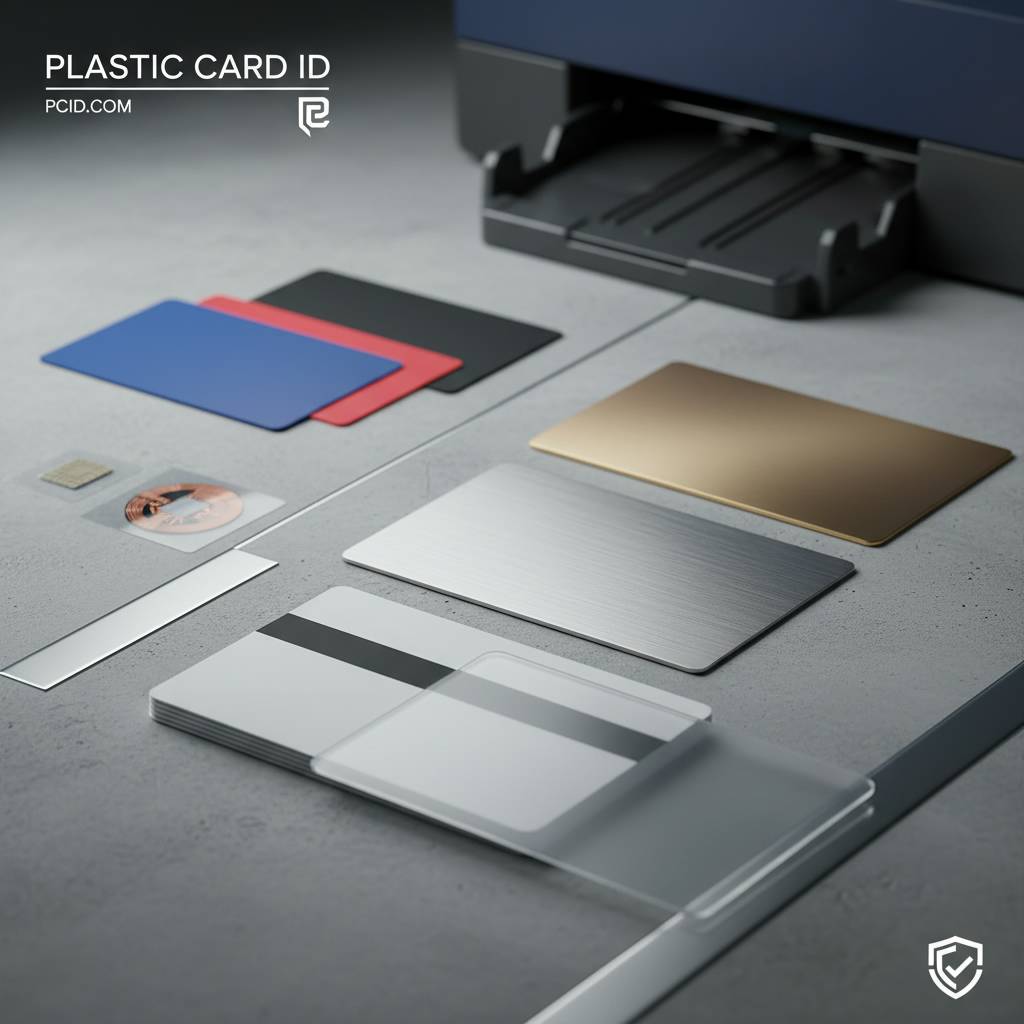 At the far end of the material spectrum - in terms of both cost and impact - are metal cards. Plastic Card ID offers luxury card options in stainless steel, brass, and gold-toned metal, in standard CR80 dimensions that fit standard wallets and carry sleeves. These are serious cards for serious programs: executive loyalty tiers, elite membership clubs, corporate gifting initiatives, and high-net-worth client relationship programs where the card itself is a statement of value.
Metal cards are not printed in the conventional sense. They are laser engraved, chemically etched, or screen printed with specialty inks to produce designs that are permanent in a way that dye-sublimation printing on PVC will never quite match. A metal card doesn't fade, doesn't scratch easily, and doesn't feel like anything else a recipient has in their wallet. That differentiation is the entire point.
When Metal Cards Make Economic Sense
The per-card cost of metal is significantly higher than PVC, composite, or even clear plastic. So the question every buyer reasonably asks is: when does the premium make sense? The answer involves the lifetime value calculation of the cardholders being served. If your top-tier loyalty members generate $5,000-$50,000 annually in revenue per cardholder, the cost difference between a PVC card and a metal card is economically trivial relative to the relationship signal the metal card sends.
- Elite loyalty tier differentiation - Metal cards make high-value customers feel recognized at a tactile level that no paper mailer or digital notification can replicate.
- Corporate gifting and partner programs - A metal card in a premium card carrier is a business gift that recipients keep and show others.
- Executive access credentials - For C-suite or board-level employees, a metal badge or access card communicates organizational investment in their identity.
- Premium membership launches - First impressions matter. Launching a premium program with metal cards establishes the program's positioning immediately.
- Anniversary and milestone issuances - Issuing a metal card at a customer's 5-year or 10-year loyalty anniversary creates a memorable moment in the relationship.
Practical Considerations for Metal Card Programs
Metal cards are thicker and heavier than PVC cards - typically 0.8mm or more - and they will not run through standard card printers. Design and personalization for metal cards requires different workflows, and organizations deploying metal cards for the first time often benefit from starting with a hybrid approach: a PVC card for everyday functional use paired with a metal card for ceremonial or statement purposes.
Plastic Card ID works with clients on metal card programs with the same strategic partnership approach applied to volume PVC card programs. The goal is always a card that performs its intended function flawlessly while creating the impression the program needs it to create. Call CPE at 800.835.7919 to discuss specifications, minimum order quantities, and lead times for metal card programs.
Choosing the Right Blank Card Material: A Buyer's Decision Framework
By now, the landscape of blank plastic card materials is considerably clearer than it was at the top of this page. But clarity about what exists is different from knowing what to choose. The decision framework for most buyers comes down to five questions answered in a specific order: What is the card's primary function? What printer and encoder will produce it? How long must it last? What impression should it create? And what volume justifies what per-card cost?
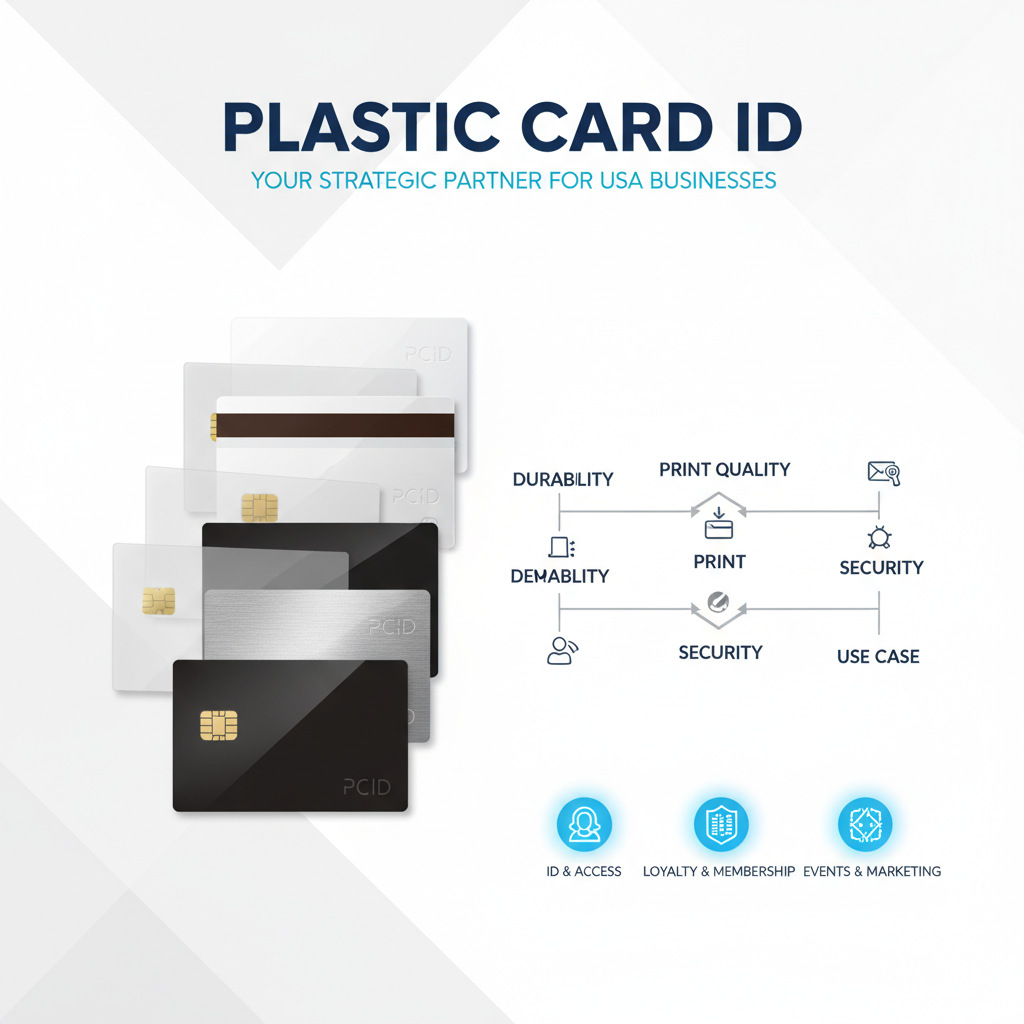
Those five questions, answered honestly, almost always point directly to one or two material options. Standard PVC handles the majority of loyalty, membership, event, and ID applications at the best price point. Composite cards are the right answer the moment smart chips, RFID, or retransfer printing enter the picture. Clear and frosted stock elevates the visual program when white stock feels inadequate. Metal cards are reserved for programs where the card itself is a premium deliverable, not just a functional credential.
Matching Card Material to Printer Capability
One of the most preventable errors in card program procurement is ordering card stock that is incompatible with the printer already installed or being considered. Direct-to-card printers from Evolis, Zebra, and Fargo - all carried by Plastic Card ID - perform best with standard PVC stock. Retransfer models in those same product families require composite stock to handle the elevated thermal transfer temperatures without substrate distortion.
Your printer specification and your card stock specification must be selected together, not independently. Buying a retransfer printer and then ordering standard PVC stock, or vice versa, creates immediate operational problems that cost more to fix than the savings from mixing and matching specifications would ever generate. CPE offers full printer and consumables packages that eliminate this risk by pairing hardware with the right card stock from the start.
Volume and Cost: What Changes at Scale
Blank card per-unit pricing drops with volume - a principle that applies across all material types but produces the most dramatic savings in standard PVC, where the base material cost is lowest and quantity pricing tiers are steepest. Organizations ordering 500 cards look at very different pricing than organizations ordering 50,000, and the material selection can shift slightly based on what volume makes the economics work.
- Standard PVC blank cards: Most competitive per-unit pricing; volume discounts apply at 500, 1,000, and 5,000 quantities.
- Composite PVC/PET cards: Higher base cost offset by longer service life and reduced replacement frequency in demanding applications.
- RFID and smart chip embedded cards: Per-card technology cost scales down meaningfully at 1,000 quantities; setup and inlay costs are amortized over larger orders.
- Clear and frosted PVC: Specialty pricing above standard PVC but below composite in most configurations.
- Metal cards: Premium pricing with minimum order quantities that reflect the manufacturing process; most cost-effective in the 100-500 card range per production run.
Value-Added Services That Support Every Material Type
The material is the foundation, but the program infrastructure around it determines operational success. Plastic Card ID supplies printer ribbons calibrated to specific card materials and printer models, ensuring that color output quality matches the card substrate's surface properties. Cleaning kits maintain print head performance and card feed accuracy across high-volume production runs. Card carriers and sleeves protect finished cards during mailing and storage.
Card affixing and mailing services complete the loop from blank card to cardholder delivery without requiring any internal fulfillment infrastructure. For organizations that need to issue cards at scale without building an in-house card production operation, this end-to-end service model is the most efficient path from card order to cardholder possession. Every material type in the Plastic Card ID catalog is supported by this full-service infrastructure.
Partner with Plastic Card ID for Expert Blank Plastic Card Material Guidance - Call 800.835.7919 Today
 The difference between a card program that works and one that doesn't often comes down to a conversation that happened - or didn't happen - before the first order was placed. Plastic Card ID has served over 100,000 customers and shipped more than 50 million cards across 25 years of operation. That depth of experience is available to every buyer, at every volume, for every material type covered in this guide.
Whether you're launching a new loyalty program, upgrading an existing employee badge system, exploring contactless access credentials, or designing a premium membership experience with metal cards, the material decision is the right place to start. Plastic Card ID makes that decision easier, faster, and more accurate than navigating spec sheets alone. Call 800.835.7919 today to speak with a card program specialist who can match the right blank card material to your exact application, budget, and volume requirements.