Bulk Plastic Card Order Turnaround Times: What to Expect
Table of Contents []
- What Every Business Should Know Before Placing a Bulk Plastic Card Order with Plastic Card ID
- Understanding the Variables That Drive Bulk Card Order Turnaround Times
- Blank PVC Cards: The Fastest Path to an In-House Card Program
- Advanced Card Technologies and What to Expect from Their Timelines
- Printers, Ribbons, and Supplies: Keeping Your In-House Card Program Running Without Interruption
- Buyer Tips: How to Get the Fastest Possible Turnaround on Your Bulk Card Order
- Why Plastic Card ID Has Been the Right Partner for Over 100,000 Businesses Across the USA
What Every Business Should Know Before Placing a Bulk Plastic Card Order with Plastic Card ID
 Timing matters. Whether you are launching a loyalty program, replacing expired employee badges, or stocking up for a seasonal gift card push, knowing exactly how long your order will take - and what factors influence that timeline - is the difference between a smooth rollout and a last-minute scramble. At Plastic Card ID, we have spent more than 25 years helping over 100,000 businesses navigate this exact question.
The answer is rarely a single number. Turnaround times for bulk plastic card orders depend on card type, quantity, customization level, and whether you need encoding, printing, or mailing services bundled in. This page breaks it all down so you can plan with confidence and order with clarity.
| Card Type | Quantity Range | Standard Turnaround | Rush Available? |
|---|---|---|---|
| Blank PVC CR80 Cards | 500-50,000 | 1-3 business days | Yes |
| Magnetic Stripe Cards (HiCo/LoCo) | 250-25,000 | 2-5 business days | Yes |
| RFID and Proximity Cards | 100-10,000 | 3-7 business days | Inquire |
| Smart Chip Cards | 100-5,000 | 5-10 business days | Inquire |
| Clear and Frosted Specialty Cards | 250-10,000 | 3-6 business days | Yes |
| Luxury Metal Cards | 50-2,500 | 7-14 business days | Limited |
Understanding the Variables That Drive Bulk Card Order Turnaround Times
 No two bulk orders are identical. A retailer ordering 10,000 blank white PVC cards ships on a very different schedule than a hotel brand ordering 5,000 RFID key cards with custom artwork and encoding. Understanding the core variables is the first step to setting a realistic production and delivery timeline for any card program, large or small.
At CPE, we have seen it all - from urgent reorders triggered by a lost supply and a conference starting in 72 hours, to meticulously planned annual loyalty card refreshes that allow weeks of lead time. Both scenarios are manageable when you know what drives production speed and what slows it down.
Card Complexity and Technology
Plain blank PVC cards are production-floor ready almost immediately. There is no encoding to configure, no chip to program, no stripe to magnetize. That simplicity translates directly into faster ship times. The moment you introduce a magnetic stripe - especially a HiCo stripe used in access control or hotel key applications - the card passes through an additional manufacturing stage.
RFID cards and smart chip cards require programming, verification, and in some cases, encoding with specific data files supplied by the client. Each additional layer of technology adds legitimate production time that cannot be rushed without compromising reliability. Factor that into your planning, especially for access control or casino player card programs where failure is not an option.
Order Quantity and Production Batching
Counterintuitively, very large orders do not always take longer. Production runs are batched, and a large order may slot neatly into an existing high-volume production run. Smaller custom orders, however, sometimes require dedicated setup that can add a day or two. The sweet spot for fastest turnaround is often mid-range quantities - 1,000 to 5,000 units - where setup costs are absorbed and throughput is high.
For businesses with ongoing card needs, establishing a repeat order program with CPE can significantly compress lead times. When your card specs are already on file and your account is established, reorders process faster with less back-and-forth. Strategic buyers who plan ahead consistently get better turnaround performance than reactive purchasers.
Artwork, Proofing, and Approval Cycles
Here is an often-overlooked truth: the longest delay in many bulk card orders is not production - it is the approval cycle. Artwork submitted with incorrect bleed margins, low-resolution logos, or mismatched color profiles triggers revision requests. Every revision request adds hours. Multiple rounds of revisions can add days before a card even enters production.
Submitting clean, print-ready artwork the first time is the single highest-leverage action a buyer can take to accelerate turnaround. Plastic Card ID provides artwork guidelines and templates to help you get it right from the start. Customers who use the templates and review the checklist before submitting consistently experience faster approvals and faster ship dates.
Blank PVC Cards: The Fastest Path to an In-House Card Program
Sometimes the fastest, most flexible card solution is also the simplest one. Blank CR80 PVC cards - the ISO 7810 standard size used in virtually every card printer on the market - give organizations complete control over what goes on the card, when, and how. No waiting on custom print runs. No minimum artwork revisions. Just cards, ready to print in-house the moment they arrive.
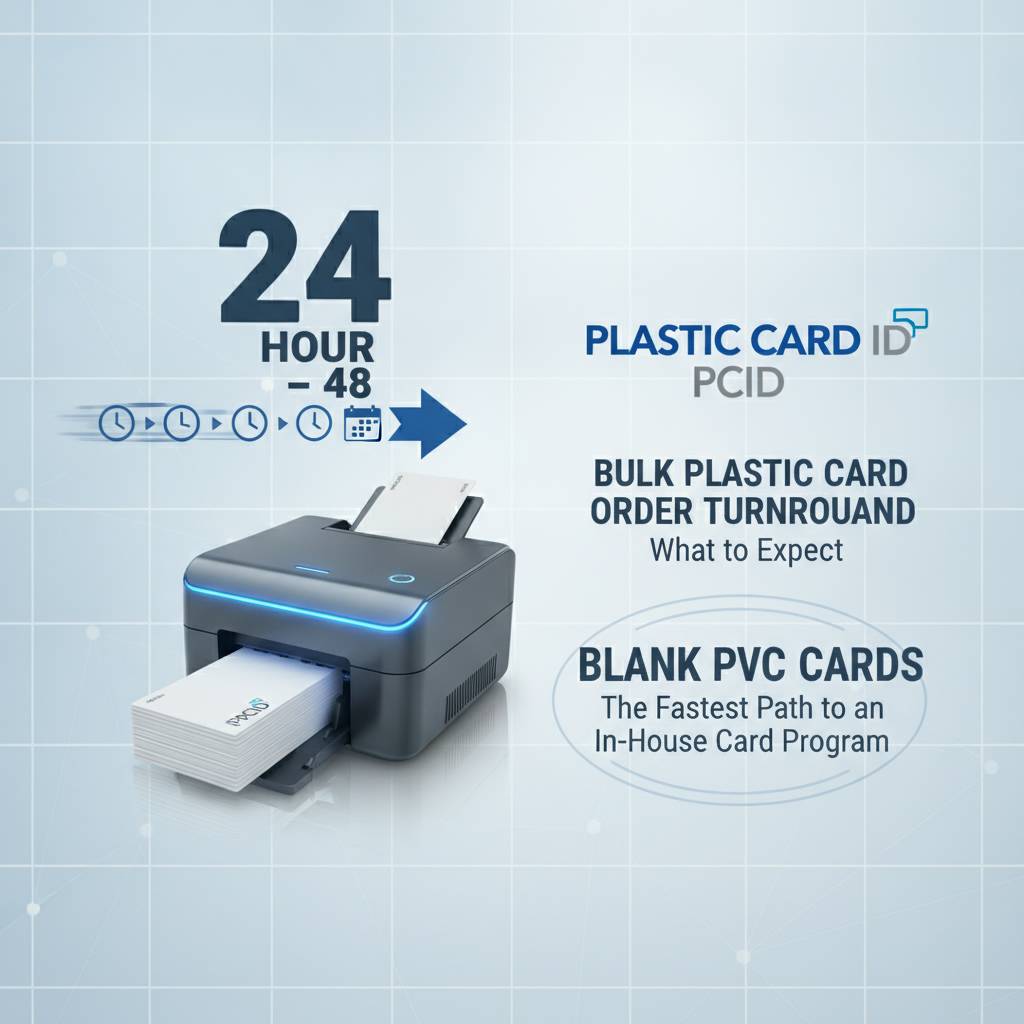
For businesses running ongoing card programs - employee badging, event credentials, student ID cards, access tokens - blank cards paired with a quality in-house printer from Evolis, Zebra, or Fargo represent a genuinely powerful operational model. You control timing. You control design updates. And your per-card cost drops substantially over time compared to ordering fully printed custom cards for every batch.
Why 30 Mil Thickness Matters
The standard 30 mil card thickness is not arbitrary. It is the specification that ensures compatibility with every CR80-format card printer, slot reader, and card holder accessory available in the market. Cards that are thinner warp, jam printers, and wear out faster. Cards at the proper 30 mil spec slide cleanly through printers, sit flat in wallets, and present a professional image at every touchpoint.
The physical durability of a properly spec'd PVC card is one of its most underrated business advantages. Loyalty cards that live in customer wallets for months or years maintain brand presence in a way that paper punch cards and digital-only solutions simply cannot replicate. When your card is in a wallet, your brand is in a wallet.
Blank Magnetic Stripe Cards for Flexible Encoding
Blank cards with HiCo or LoCo magnetic stripes open up a wide range of use cases without requiring fully custom-printed cards. A HiCo stripe - with its higher coercivity rating - is appropriate for applications requiring durability and resistance to accidental demagnetization. LoCo stripes work for shorter-term applications where cost is a priority. Plastic Card ID carries both, and ordering in bulk keeps your per-card cost highly competitive.
Businesses that encode cards in-house using their own card printer have maximum flexibility. Need to issue a new employee badge, gift card, or access card on the spot? With blank pre-striped cards on the shelf and an in-house printer loaded with fresh ribbon, that card is ready in minutes. That kind of operational agility is a genuine competitive advantage that organizations running manual or paper-based systems simply do not have.
Colored Stock and Clear Cards for Departmental or Program Differentiation
Not every card needs to be white. Plastic Card ID stocks colored PVC cards in a range of solid hues, plus clear and frosted options that lend a premium aesthetic to membership, VIP, and loyalty applications. Using colored stock for different departments, clearance levels, or program tiers is an effective visual system that requires no additional printing investment.
Clear and frosted cards photograph exceptionally well in marketing materials and product displays. Hospitality brands, fitness clubs, and upscale retail programs increasingly use them to distinguish their card programs from generic alternatives. The visual impact of a clear card in a customer's wallet is immediate and memorable - and ordering them in bulk keeps the per-unit cost manageable even for smaller programs.
Advanced Card Technologies and What to Expect from Their Timelines
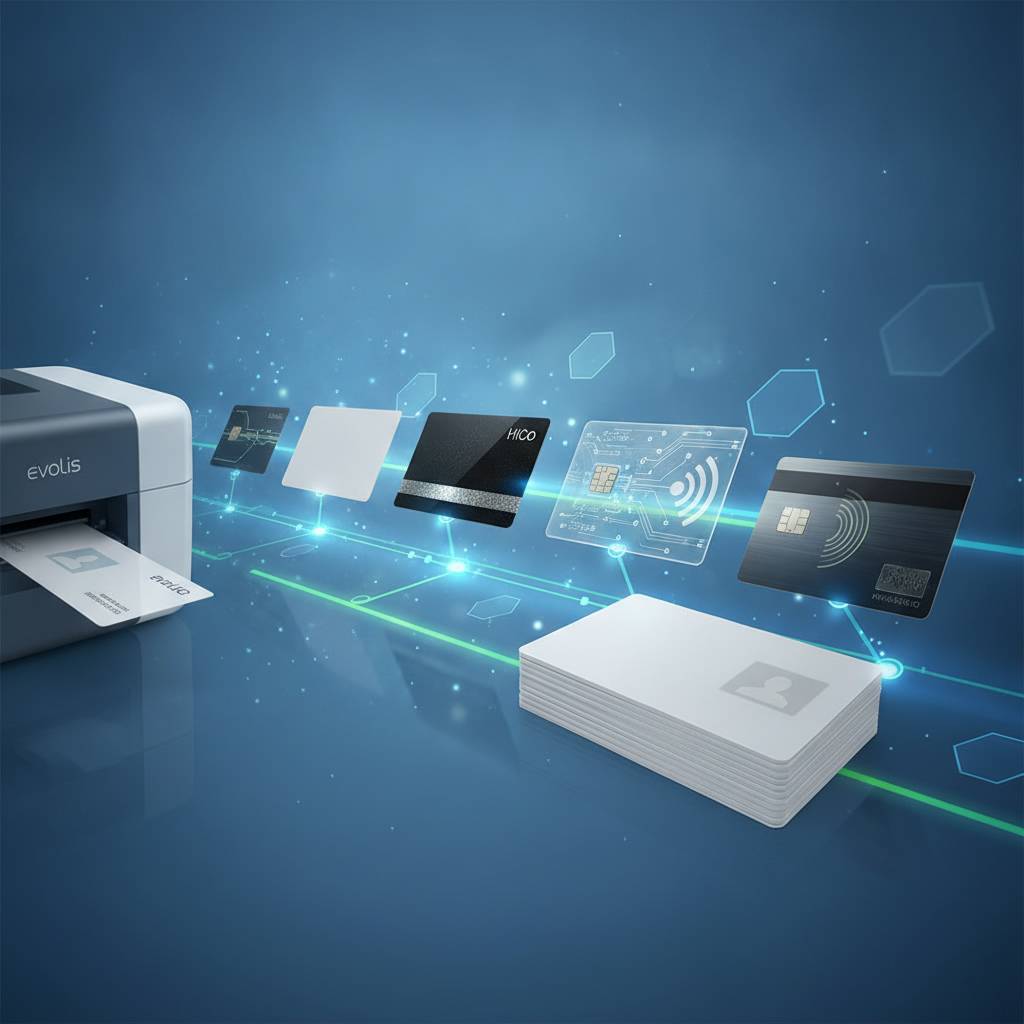 Beyond the standard blank and magnetic stripe card, CPE supplies a full spectrum of advanced card technologies that serve sophisticated programs in access control, hospitality, gaming, and enterprise identity management. These products carry longer production timelines, and for good reason - the technology inside demands precision.
Planning an RFID access control rollout, a casino player card program, or a hotel key card deployment? Give yourself runway. Engage your card supplier early, provide data files and encoding specifications upfront, and build in time for testing before full deployment. The organizations that treat advanced card programs as a technology project - with proper planning stages - consistently outperform those that treat them as a simple purchase order.
RFID and Proximity Cards for Access Control
RFID proximity cards operate at 125 kHz and are the workhorses of corporate and institutional access control. They are read at close range by compatible card readers and do not require physical contact. For organizations managing employee access to buildings, parking facilities, or restricted areas, proximity cards represent a proven and highly scalable technology.
Production timelines for proximity cards typically run 3-7 business days depending on quantity and any custom encoding requirements. For straightforward blank proximity cards that your facility management team will encode in-house using a compatible encoder, turnaround runs toward the shorter end of that range. Organizations adding pre-encoded data to large card batches should plan for the longer end of the window.
Smart Chip Cards and MIFARE DESFire Technology
Smart chip cards operate on a completely different principle than magnetic stripe or proximity cards. The embedded microprocessor chip can store significantly more data, support encrypted communication, and participate in multi-factor authentication schemes. MIFARE DESFire cards in particular - running at 13.56 MHz - are widely deployed in high-security access control, transit, and cashless payment within closed-loop systems like casino floors and campus programs.
These are not impulse purchases. Smart chip card programs require coordination between the card supplier, the reader hardware, and the software platform managing credentials. Turnaround times of 5-10 business days reflect that complexity. Buyers who come prepared with their encoding specifications and system compatibility requirements move through the process far faster than those discovering requirements mid-order.
Casino Player Cards and Hotel Key Cards
Casino player cards combine loyalty program function with player tracking technology, often incorporating magnetic stripes, barcodes, or chip encoding in a single card. The specifications for these programs are typically defined by the casino management system in use, and cards must conform precisely to those specs. Plastic Card ID has deep experience supplying casino-grade player cards and can coordinate production around your system requirements.
Hotel key cards are similarly exacting. A key card that fails to reliably unlock a guest room door is a service failure with immediate, tangible consequences. CPE takes hotel key card quality seriously at every production stage, which is why we maintain strict quality control checkpoints rather than trading reliability for speed. When consistency matters most, proper production time is not overhead - it is quality assurance.
Printers, Ribbons, and Supplies: Keeping Your In-House Card Program Running Without Interruption
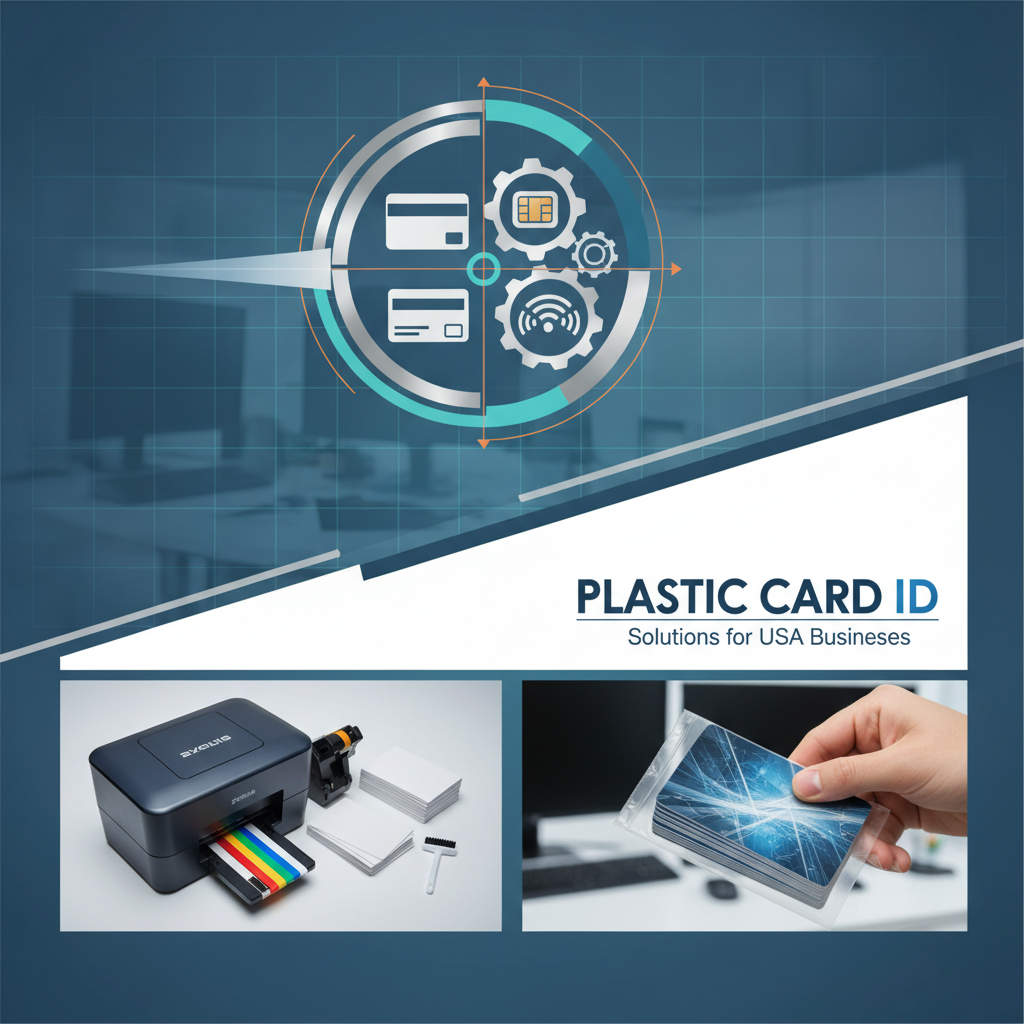 A bulk card order without the supplies to print them is a problem waiting to happen. Plastic Card ID is a one-stop shop not just for cards but for the full ecosystem of products that keep in-house card programs running: card printers from Evolis, Zebra, and Fargo; printer ribbons in a full range of color and monochrome configurations; cleaning kits that protect printer longevity; card carriers; sleeves; and affixing and mailing services for high-volume issuance programs.
Ribbon stock availability directly affects how quickly your in-house program can respond to card demand. Keeping a buffer supply of ribbons on hand - especially for programs that experience seasonal spikes in card issuance - is a simple operational practice that prevents frustrating production gaps. Order ribbons in the same buying cycle as your blank card stock and you will almost never run short.
Choosing the Right Printer for Your Volume
Entry-level card printers from Evolis and Fargo are appropriate for programs issuing up to a few hundred cards per month. Mid-range printers handle higher throughput with features like dual-sided printing and lamination. For programs issuing thousands of cards per month, production-grade printers with hopper capacity and automated encoding capabilities are the right tools. Matching printer capability to program volume is the foundation of a cost-effective in-house card operation.
Printer selection also affects your per-card cost. A printer purchased at a lower price point but paired with a ribbon that yields fewer cards per panel is not necessarily the budget option it appears to be. Total cost of ownership - cards plus ribbons plus maintenance plus printer amortization - is the number that actually matters when evaluating in-house card printing economics.
When to Use Card Affixing and Mailing Services
Not every organization has the staff or infrastructure to handle high-volume card mailings in-house. For programs distributing loyalty cards, membership cards, or gift cards to hundreds or thousands of customers by mail, Plastic Card ID's card affixing and mailing services eliminate the logistical burden entirely. Cards are professionally affixed to carriers, packaged, and mailed on your behalf.
This service is particularly valuable for seasonal programs - back-to-school membership card deployments, holiday gift card promotions, annual renewal mailers - where volume spikes and timing pressure coincide. Outsourcing the mailing operation to a partner who handles it routinely means faster execution and fewer errors. It is the kind of value-added service that turns a card supplier into a genuine program partner.
Cleaning Kits: The Maintenance Step Most Buyers Skip
Card printer maintenance is the single most common factor in premature printhead failure and card jamming. Cleaning kits - typically consisting of isopropyl alcohol cleaning cards and swabs - remove debris and residue from the card path and printhead before they accumulate into performance problems. Most printer manufacturers recommend a cleaning cycle every 500-1,000 cards printed.
Organizations that skip this step often find themselves replacing printheads or entire printers years before necessary. A cleaning kit costs a fraction of what a printhead replacement costs. Incorporating regular printer maintenance into your card program operations is one of the highest-return investments in your card program's total cost of ownership.
Buyer Tips: How to Get the Fastest Possible Turnaround on Your Bulk Card Order
After 25 years and more than 50 million cards shipped, certain patterns are undeniable. Buyers who consistently get their orders fastest share a set of common habits that have nothing to do with luck and everything to do with preparation. Here is what the best-prepared buyers do differently.
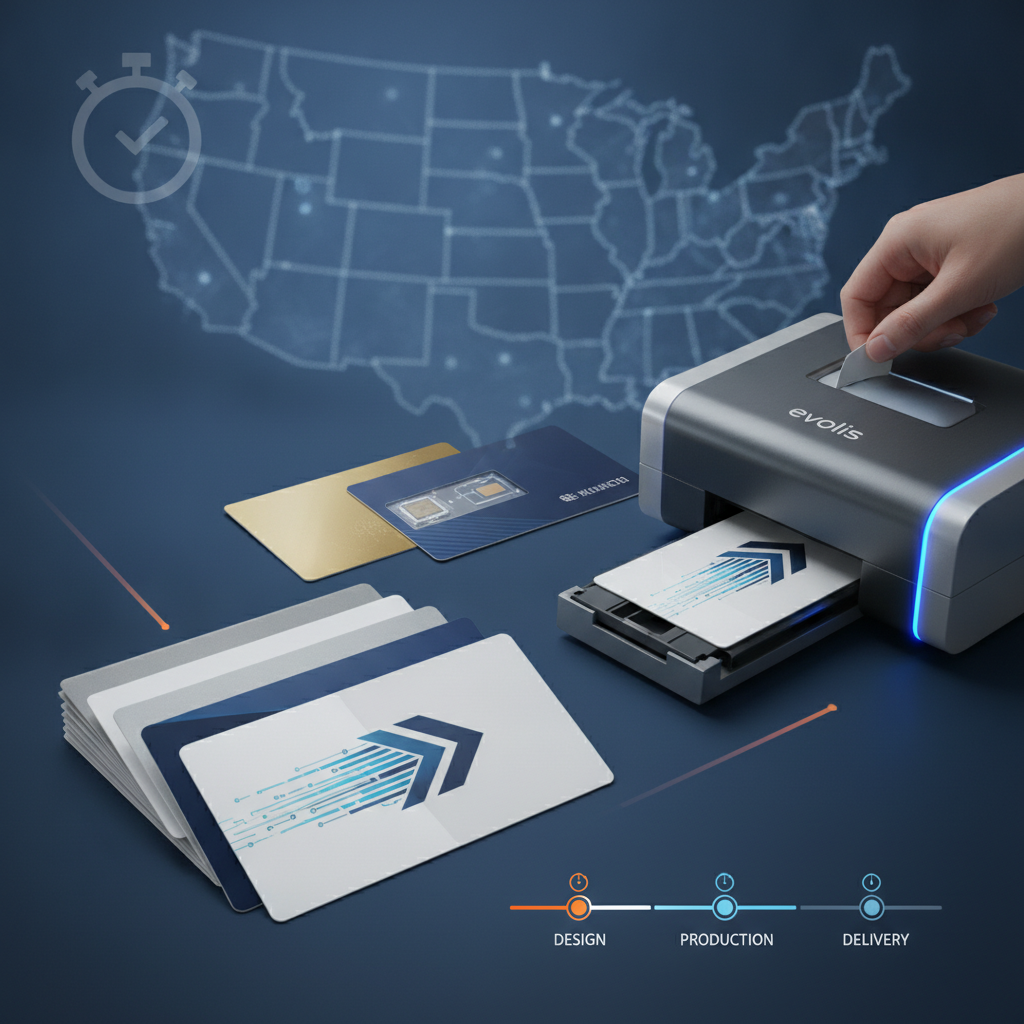
Speed is a collaboration, not just a production floor capability. The time between placing your order and holding finished cards in your hands is shaped by decisions you make before you even submit the order. The following tips are drawn from real patterns observed across a customer base of more than 100,000 businesses served.
Pre-Order Checklist for Bulk Card Buyers
- Know your card spec before you call - quantity, card type, stripe configuration, chip technology if applicable, and any encoding requirements.
- Submit artwork in the correct format with proper bleed, resolution, and color profile as specified in the supplier's artwork guide.
- Confirm your ship-to address and any delivery deadline upfront - not after the order is placed.
- Order ribbons and cleaning kits at the same time as cards to avoid a supply gap when cards arrive.
- If your program involves encoding, have your data file or encoding specification ready before order placement.
- Establish an account early if you have recurring card needs - reorders on established accounts process significantly faster.
- Communicate your actual deadline, not an artificially compressed one - accurate timelines produce better outcomes than pressure-based ones.
Understanding Rush Order Options
Rush orders are available for most standard card types and can compress standard turnaround times significantly. Blank PVC cards and magnetic stripe cards in particular are strong candidates for rush fulfillment. Smart chip cards and luxury metal cards have production constraints that limit how much timeline can realistically be compressed, but expedited shipping can often recover time on the back end.
When requesting a rush, be specific about your drop-dead date rather than simply asking for the fastest available option. A supplier who knows you need cards by a specific Thursday afternoon can sometimes thread the production and logistics needle more precisely than one working against a vague "as fast as possible" directive. Specificity produces faster results than urgency alone. To discuss rush options directly, call 800.835.7919 and speak with a card program specialist.
Planning for Seasonal Card Program Surges
Retail gift card programs, annual membership renewals, and event credential programs all share one characteristic: predictable volume spikes. A loyalty card program that needs 500 cards per month may need 5,000 in November. An event credentialing program that runs quietly most of the year may need 10,000 cards in March. Anticipating these surges and ordering ahead of the spike rather than into it is the single most reliable way to avoid a turnaround time crisis.
Working with CPE to project your seasonal volume and schedule production accordingly is not complicated - but it does require a modest amount of forward planning. Organizations that share their program calendar with their card supplier consistently experience smoother seasonal transitions than those who call in panic mode two weeks before their busiest season of the year.
Why Plastic Card ID Has Been the Right Partner for Over 100,000 Businesses Across the USA
 There is no shortage of card suppliers. What is genuinely rare is a partner with 25 years of operational depth, a catalog that covers every meaningful card technology and format, and a service model built around making your program successful rather than simply processing your transaction. That distinction is the foundation of every customer relationship at Plastic Card ID.
From a gym in Phoenix ordering 200 membership cards per month to a regional retailer launching a 50,000-card gift card program, the approach is the same: understand the program, match the right product to the right need, and support the buyer through every stage of the order. More than 50 million cards shipped is not just a statistic - it is a track record built one successful order at a time.
A Catalog Built for Real Business Programs
The Plastic Card ID catalog is deliberately comprehensive because real card programs have diverse needs that evolve over time. A customer who starts with blank PVC cards and an entry-level printer may grow into magnetic stripe encoding, then RFID access control, then a full loyalty program with card affixing and mailing. Having a supplier who can scale with that growth without requiring you to start over with a new vendor is a structural business advantage.
The full catalog spans blank PVC cards in standard and colored stock, HiCo and LoCo magnetic stripe cards, RFID and proximity cards, MIFARE DESFire smart chip cards, clear and frosted specialty cards, custom die-cut shapes, and luxury metal cards in stainless steel, brass, and gold. Paired with card printers from Evolis, Zebra, and Fargo, plus ribbons, cleaning kits, card carriers, sleeves, and mailing services, the catalog is as close to a complete card program infrastructure as a single supplier can offer.
Serving Programs of Every Scale
Scale matters differently depending on the program. A 50-card monthly order for a boutique fitness studio matters to that business owner every bit as much as a 50,000-card quarterly order matters to the regional retail chain. Plastic Card ID operates across that entire spectrum without treating small programs as less deserving of responsiveness and expertise. Every customer gets the benefit of 25 years of card program knowledge regardless of order volume.
For programs in early growth phases, that expertise can be especially valuable. Knowing which card type to start with, which printer to invest in, and how to structure a card program that scales cleanly is knowledge that comes from experience - not just a product catalog. Buyers who tap into that advisory capacity early tend to build better programs than those who treat card procurement as a purely transactional exercise.
Identity, Access, Loyalty, and Beyond: Use Cases That Prove the Value of Plastic
Physical plastic cards drive measurable results across a remarkable range of applications. Retailers who switch from paper-based gift card programs to plastic see sales increases in the range of 35-50%. Loyalty programs that put a card in a customer's wallet achieve sustained engagement that digital-only alternatives rarely match. Membership organizations that issue plastic ID cards project legitimacy and permanence that paper alternatives cannot replicate.
Employee ID badges, event credentials, access tokens, hotel keys, casino player cards, student IDs, library cards, and club membership cards all share a common thread: the physical card creates a tangible, durable relationship between the issuing organization and the cardholder. That tangible relationship is worth investing in - and with the right card supplier, it does not have to be expensive or complicated to create.
Ready to place your bulk order or get a fast quote? Call Plastic Card ID today at 800.835.7919 and speak with a specialist who will help you find the right card, the right quantity, and the fastest possible turnaround for your program.
Previous Page