How Proximity Cards Work for Building Security Explained
Table of Contents []
- How Proximity Cards Work for Building Security - Plastic Card ID
- The Science Behind the Swipe - How Proximity Cards Communicate
- Proximity Card Types - Choosing the Right Technology for Your Facility
- Building a Complete Access Control Card Program - Step by Step
- Security Vulnerabilities and How to Mitigate Them
- Industries That Rely on Proximity Cards for Daily Operations
- Frequently Asked Questions About Proximity Cards and Building Security
- Partner With Plastic Card ID for Your Proximity Card Access Control Program
How Proximity Cards Work for Building Security - Plastic Card ID
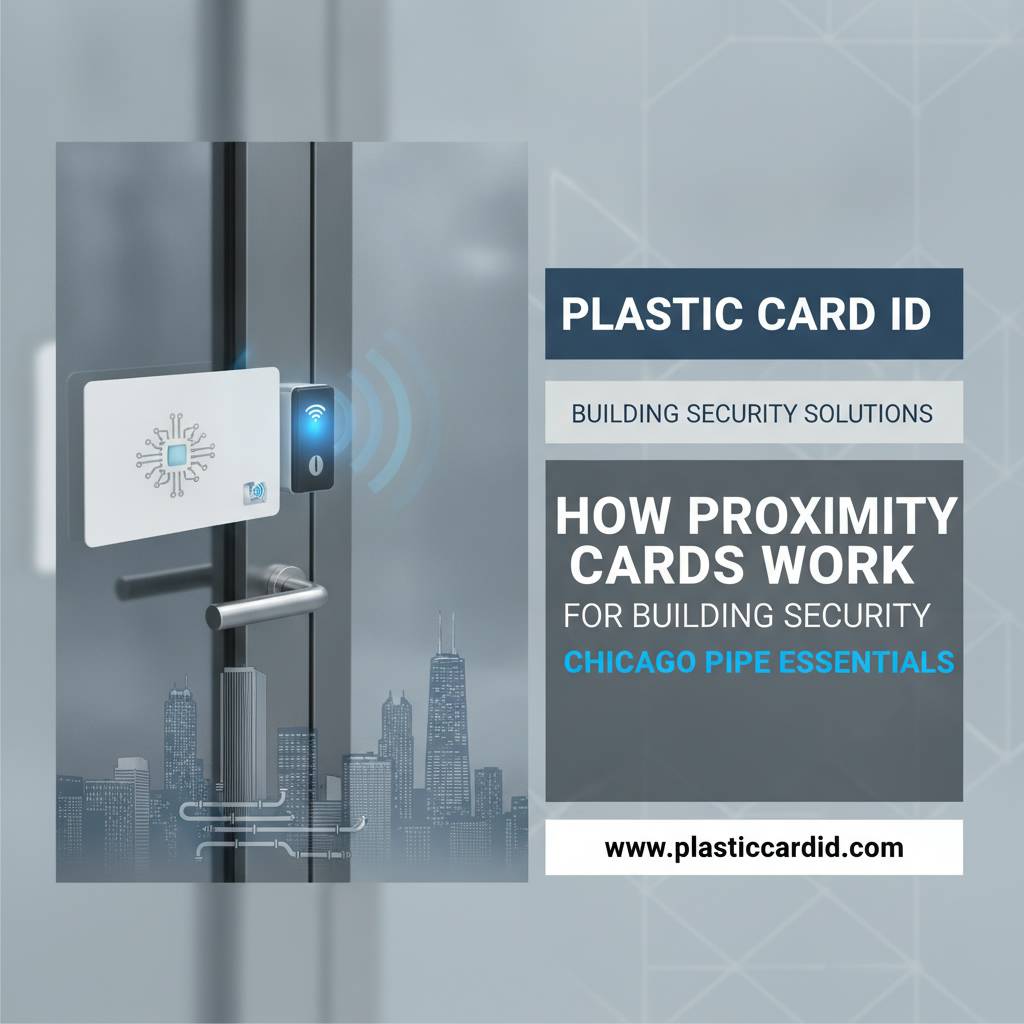 Walk up to a secured door, hold a small card near a reader, and hear the click of a lock releasing. It feels almost magical - but the technology behind it is surprisingly elegant, well-established, and remarkably reliable. Proximity cards have quietly become one of the most widely deployed access control tools in commercial real estate, healthcare, education, government facilities, and corporate campuses across the United States.
Understanding how these cards actually function - not just that they work, but why they work - puts your organization in a far stronger position when making purchasing decisions. Whether you're planning a 50-card rollout for a small office or managing access credentials for thousands of employees across multiple locations, the fundamentals remain the same. And CPE has spent over 25 years helping organizations at every scale get this right.
| Card Type | Frequency | Read Range | Common Use Case |
|---|---|---|---|
| Standard Proximity Card | 125 kHz | Up to 6 inches | Office access control |
| MIFARE Smart Card | 13.56 MHz | Up to 4 inches | Secure multi-application |
| HID iCLASS | 13.56 MHz | Up to 6 inches | Government and enterprise |
| MIFARE DESFire | 13.56 MHz | Up to 4 inches | High-security, encrypted access |
| Long-Range RFID | 125 kHz / 915 MHz | Up to 30 feet | Parking, vehicle access |
The Science Behind the Swipe - How Proximity Cards Communicate
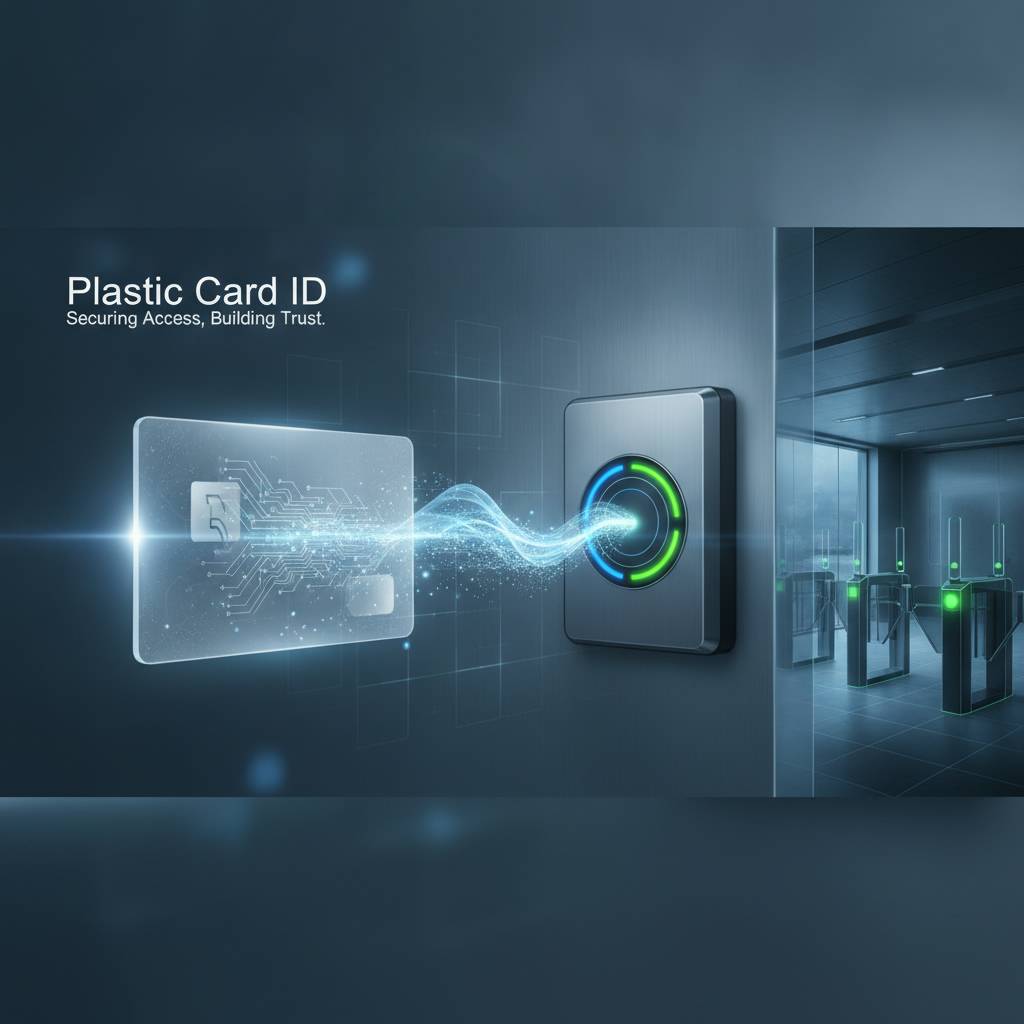 There are no batteries inside a proximity card. None. That surprises people, especially when they realize these cards can transmit data reliably thousands of times over years of daily use. The power source is invisible - it comes from the reader itself, transmitted as a low-frequency radio wave that the card's internal antenna harvests and converts into just enough electrical energy to respond.
This process is called inductive coupling. The reader continuously broadcasts an electromagnetic field. When a proximity card enters that field - typically within a few inches - the embedded antenna coil absorbs energy from the field, powers the microchip inside the card, and triggers the chip to broadcast its stored credential data back to the reader. The whole exchange happens in milliseconds.
The Antenna Coil and How It Harvests Power
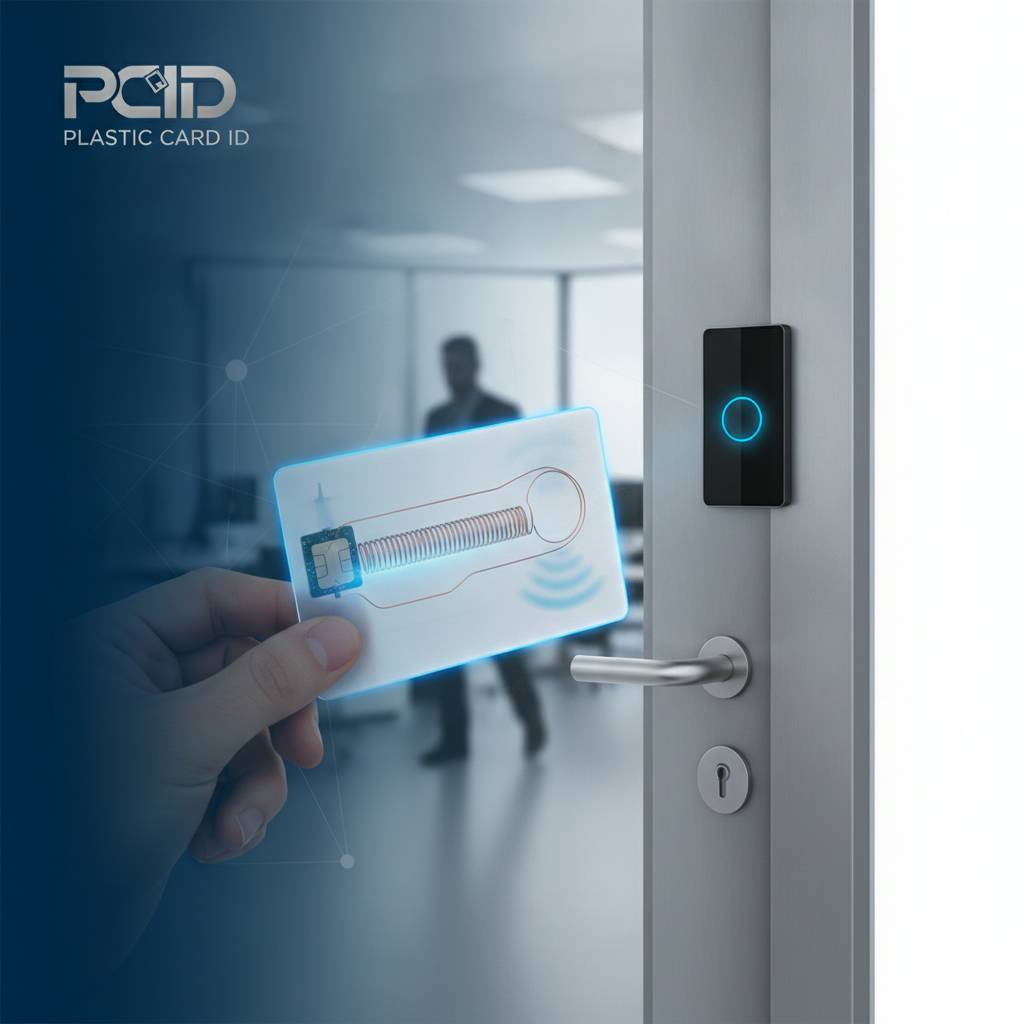
Inside every proximity card, wound in tight loops between the PVC layers, sits a copper or aluminum antenna coil. This coil is engineered specifically for the operating frequency of the card - typically 125 kHz for standard prox cards, or 13.56 MHz for higher-end contactless smart cards. The coil's design determines how efficiently it captures electromagnetic energy from the reader field.
The harvested energy powers the card's integrated circuit for a fraction of a second - long enough for the chip to wake, retrieve its stored identification number, and transmit that data via load modulation back through the antenna. It is a beautifully self-contained system that requires zero maintenance, zero charging, and zero user action beyond holding the card near the reader.
What Data Gets Transmitted - and How It Is Structured
Standard proximity cards typically transmit a Wiegand data format - a protocol that has dominated access control for decades. The data includes a facility code (identifying your organization's credential set) and a card number (unique to each individual card). Together, these two values create a credential that the access control panel checks against its database before deciding whether to unlock a door.
More sophisticated cards, like those using MIFARE DESFire technology, transmit encrypted data packets rather than simple number strings. This encryption layer makes credential cloning exponentially more difficult and is increasingly required by enterprise and government security standards. The reader and card engage in a mutual authentication handshake before any sensitive data is exchanged.
Reader Infrastructure and the Access Control Panel
The card reader is only the front end of a larger system. After capturing the credential from the card, the reader passes that data to an access control panel - a controller that manages door locks, tracks entry events, and enforces the rules you've programmed. Which employees can access which doors? At what times? After how many failed attempts should an alarm trigger? All of that logic lives in the panel.
Readers connect to panels via Wiegand protocol wiring in legacy systems, or via network connections in modern IP-based access control platforms. Understanding this architecture helps your team select cards that are compatible not just with today's readers, but with the broader system infrastructure you're building or upgrading.
Proximity Card Types - Choosing the Right Technology for Your Facility
Not all proximity cards are created equal, and choosing the wrong type for your environment is a costly mistake that organizations make more often than you'd expect. The distinction between a basic 125 kHz prox card and an encrypted 13.56 MHz smart card is not merely technical - it's a security decision with real-world consequences. Matching the card technology to your threat model and operational requirements is the starting point of any serious access control deployment.
CPE carries a comprehensive lineup of proximity and RFID cards, giving clients the flexibility to start with cost-effective standard options or step up to high-assurance smart card technology based on their specific needs. The right card is the one that fits your system, your security requirements, and your budget - not simply the most expensive option on the shelf.
Standard 125 kHz Proximity Cards
These are the workhorses of the access control world. Operating at 125 kHz, standard proximity cards are compatible with the vast majority of legacy readers deployed in commercial buildings across the United States. They are cost-effective, highly durable, and simple to program. For environments where security requirements are moderate and budget is a consideration, 125 kHz cards remain an entirely sensible choice.
The limitation worth knowing: credential data on 125 kHz cards is not encrypted. A determined attacker with inexpensive equipment can capture and clone the card's Wiegand data. This vulnerability is well-documented. For facilities where that risk is unacceptable - data centers, healthcare facilities handling protected information, government installations - the upgrade to encrypted smart card technology is not optional, it is essential.
13.56 MHz Contactless Smart Cards and MIFARE Technology
Operating at 13.56 MHz, contactless smart cards represent a generational leap in access card capability. MIFARE Classic, MIFARE Plus, and the top-tier MIFARE DESFire EV2 and EV3 variants offer increasing levels of data encryption, mutual authentication, and multi-application support. A single smart card can simultaneously manage building access, cafeteria payments, time-and-attendance tracking, and computer login - each application secured independently.
MIFARE DESFire cards in particular have become the gold standard for high-security deployments, thanks to their AES-128 encryption and sector-level application isolation. Each application on the card operates in its own encrypted memory space, meaning a compromise of one application does not expose the others. For organizations managing genuinely sensitive facilities, this architecture is worth the incremental cost per card.
Proximity Card Form Factors and Print Options
Proximity cards are manufactured in the standard CR80 format - the same dimensions as a credit card, compliant with ISO 7810. This means they fit standard card holders, lanyards, badge reels, and wallet sleeves without any special accommodations. They can be printed with full-color graphics, employee photos, logos, names, and titles using the same card printers used for standard PVC ID cards.
Organizations that want a visually polished access credential rather than a generic white card will find that proximity cards accept dye-sublimation printing beautifully. CPE offers a full lineup of Evolis, Zebra, and Fargo card printers capable of printing directly on proximity and smart card stock, letting you produce professional photo ID badges that double as access credentials in a single print pass.
Building a Complete Access Control Card Program - Step by Step
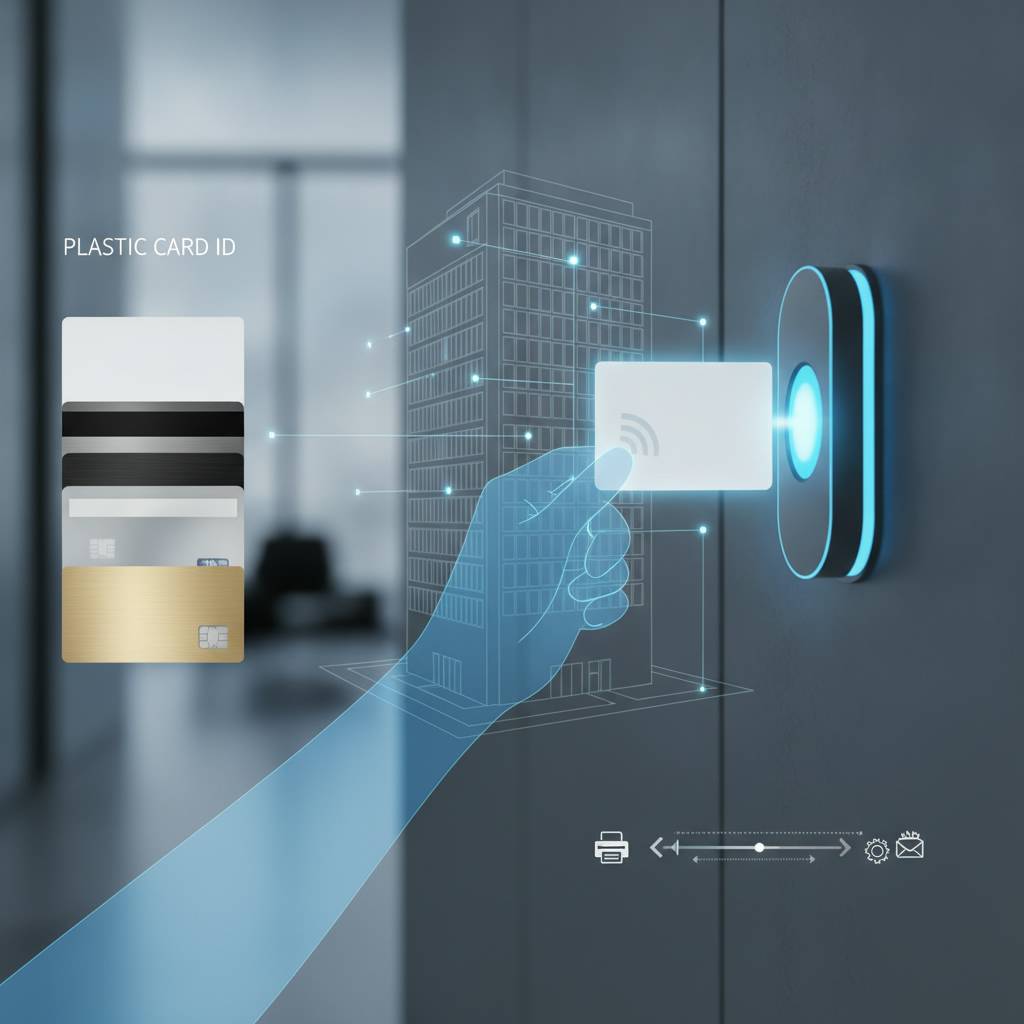 Deploying proximity cards across a facility is a project with distinct phases, and organizations that try to shortcut the planning stage reliably encounter preventable problems during rollout. The good news: the process is well-understood, and with the right supplier relationship in place, each phase flows naturally into the next. CPE has supported thousands of these deployments and understands what makes them succeed.
From selecting the correct card technology to programming credentials, printing badges, and managing ongoing replacements, every step matters. A poorly planned card program costs significantly more to fix than it would have cost to plan correctly from the start. The sections below walk through each phase with practical clarity.
Step 1 - Auditing Your Existing Reader Infrastructure
Before ordering a single card, determine what reader technology is already installed in your facility. Most commercial buildings built before 2015 use 125 kHz Wiegand-protocol readers. Newer installations are increasingly 13.56 MHz multi-technology readers capable of reading both legacy prox cards and modern smart cards. The cards you purchase must match your readers - or you'll need to budget for reader upgrades alongside your card order.
Pull the model numbers off your existing readers and cross-reference with your access control vendor. Many modern multi-technology readers can read both 125 kHz and 13.56 MHz cards simultaneously, giving you a migration path where employees can carry either card type during a transition period. This flexibility significantly reduces the disruption of upgrading to higher-security smart card technology.
Step 2 - Programming and Encoding Cards
Proximity cards arrive from the manufacturer pre-programmed with a unique facility code and card number, or they can be ordered blank and encoded in-house using an appropriate smart card encoder. Standard 125 kHz prox cards are typically factory-encoded and cannot be reprogrammed - the credential is fixed at manufacturing. Smart cards like MIFARE DESFire, by contrast, can be field-programmed and reconfigured by authorized system administrators.
In-house encoding gives organizations maximum control over their credential issuance process. Rather than waiting for factory-encoded batches, your security team can program, print, and issue a new card the same day an employee is hired. Card printers from Evolis, Zebra, and Fargo that incorporate smart card encoders can print and encode simultaneously - a significant time-saver at scale.
Step 3 - Badge Design, Printing, and Issuance
The visual identity of your access badge matters more than organizations typically assume. A well-designed badge communicates authority, enables visual verification by security staff, and creates a professional impression. At minimum, employee badges should display the individual's name, photo, job title, and department. Color-coding by department or access tier adds a fast visual verification layer that security teams appreciate.
Printing proximity card badges in-house using a dedicated card printer gives your team complete control over issuance timing, design updates, and replacement. Consider printers with lamination modules for badges that will see heavy daily handling - the overlay dramatically extends print life and adds a layer of tamper-resistance to the card surface.
Security Vulnerabilities and How to Mitigate Them
 No access control technology is perfectly immune to attack, and intellectual honesty about proximity card vulnerabilities is a mark of a mature security program. The risks are real but manageable. Understanding the specific attack vectors that threaten proximity-based access control allows security teams to implement targeted countermeasures rather than either dismissing the risks entirely or abandoning the technology unnecessarily.
The threat landscape for proximity card systems has evolved substantially over the past decade, driven by the wide availability of inexpensive RFID capture and emulation devices. Organizations running older 125 kHz unencrypted card systems should treat this threat as active, not theoretical, particularly if their facilities have high-value assets or sensitive data.
Skimming and Card Cloning - The Primary Threat
Because 125 kHz proximity cards broadcast their credential data without encryption, a reader concealed in a backpack or briefcase positioned near an unsuspecting cardholder can capture the credential within inches. Inexpensive devices capable of doing exactly this are commercially available online. The captured credential can then be written to a blank card and used to impersonate the victim at any reader in the system.
Mitigation strategies include: upgrading to encrypted smart card technology, deploying multi-factor authentication at high-value entry points (card plus PIN), and implementing behavioral analytics in your access control software to flag unusual access patterns. RFID-blocking card sleeves can also protect individual cards when not in active use - CPE carries card sleeves and carriers designed for exactly this purpose.
Credential Management and Termination Procedures
The weakest link in many access control programs is not the card technology itself - it is the human process of credential lifecycle management. Cards issued to former employees that remain active in the system represent an ongoing vulnerability. Establishing a disciplined credential termination process is as important as choosing the right card technology.
At the moment an employee separates from the organization, their card credential should be deactivated at the access control panel - regardless of whether the physical card is returned. This simple administrative step eliminates the risk that an unreturned card poses. Regular audits of active credentials against current employee rosters catch the gaps that termination procedures inevitably miss.
Physical Card Security and Anti-Tamper Measures
Beyond electronic vulnerabilities, the physical card itself can be a target. Printed cards without overlay lamination are susceptible to photo substitution attacks, where a bad actor peels the printed surface and replaces the photo. Holographic overlaminates and void-pattern lamination films make this form of tampering visually obvious and physically difficult.
- Apply holographic laminate overlays to all photo ID badges used for physical access
- Use UV-reactive ink features visible only under ultraviolet light for additional verification
- Incorporate microtext or guilloche patterns in badge designs as forgery deterrents
- Require cardholders to wear badges visibly and report lost or stolen cards within 24 hours
- Implement a mandatory card replacement cycle - typically every two to three years
- Store blank card stock in a secured, access-controlled location with inventory tracking
Industries That Rely on Proximity Cards for Daily Operations
Proximity-based access control is not a niche technology reserved for government facilities or technology companies. It is woven into the daily operations of organizations across virtually every sector of the American economy. The common thread is the need to control who enters which spaces, when, and with what level of accountability - a requirement that spans far more industries than most people initially consider.
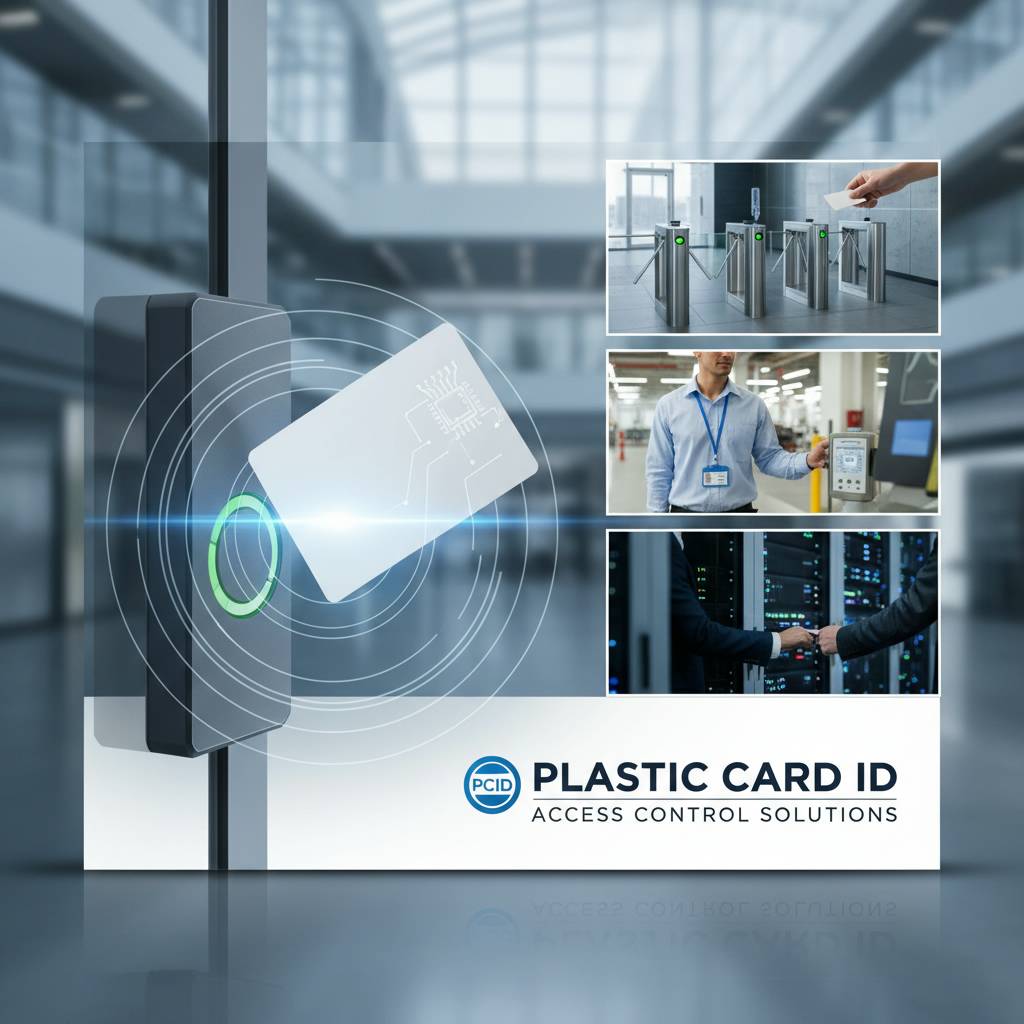
CPE serves clients across all of these sectors and understands that each industry brings its own operational rhythms, compliance requirements, and card volume patterns. A hospital system replacing thousands of cards annually operates very differently from a small law firm managing 30 employee badges. Both deserve a supplier relationship that scales appropriately to their needs.
Healthcare and Medical Facilities
Hospitals present one of the most complex access control environments imaginable. Different wings, floors, and rooms require different access permissions for nurses, physicians, administrators, maintenance staff, and vendors. Proximity cards with granular permission structures allow security administrators to define precisely which doors each credential opens, and during which hours. In healthcare, access control is not just a security measure - it is a patient safety measure.
HIPAA compliance adds another layer of urgency to healthcare credential management. Access to areas where protected health information is stored or discussed must be restricted and logged. Modern access control systems integrated with smart card credentials provide the audit trails that compliance programs require - timestamped records of every access event, by card, by door, by time.
Corporate Offices and Multi-Tenant Buildings
Large corporate campuses and multi-tenant commercial buildings typically manage hundreds or thousands of access credentials across populations that change frequently - new hires, contractors, visitors, and departing employees create constant credential issuance and termination events. Proximity card programs at this scale depend heavily on efficient in-house issuance capability, typically anchored around a dedicated card printer workstation managed by HR or facilities teams.
Multi-tenant buildings face the additional challenge of managing credentials across multiple organizations sharing the same reader infrastructure. Card programs must be configured to isolate each tenant's credential set while allowing common-area access for all. This is precisely the scenario where encrypted smart cards with application-level security segmentation - particularly MIFARE DESFire - outperform simple 125 kHz prox cards in meaningful, operational ways.
Hotels and Hospitality Venues
Hotel key cards are among the most familiar proximity card applications in everyday life. Guests carry them for three days or three weeks, tap them against door readers hundreds of times, stuff them in wallets next to magnetic-stripe cards and smartphones, and frequently lose them. The operational demand for cards that survive this abuse while functioning reliably until checkout is significant.
Beyond guest room access, hotel proximity card programs manage staff access to back-of-house areas, service corridors, linen storage, and administrative offices - each requiring different permission sets managed through the property management system. CPE supports hospitality clients with hotel key card stock compatible with major hotel lock systems, enabling on-site card encoding and rapid replacement for lost keys.
Frequently Asked Questions About Proximity Cards and Building Security
 Organizations evaluating proximity card technology for the first time - or reconsidering their existing card program - tend to surface the same core questions. The answers below reflect the real-world experience of decades of access card deployments across every type of American organization.
Can Proximity Cards Work Through Walls or at Long Range?
Standard CR80 proximity cards operating at 125 kHz are designed for close-range reading - typically one to six inches from the reader face. They do not read through walls, and they do not activate at a distance sufficient to allow hands-free passage through a door in most implementations. This is by design. The short read range is a feature, not a limitation - it ensures that credential capture requires deliberate card presentation by the cardholder.
Long-range RFID systems do exist and are commonly used for vehicle access control in parking structures and gated facilities. These systems use different frequencies and larger antenna configurations capable of reading credentials at distances of ten to thirty feet. They are appropriate for vehicle-based access scenarios but not typically used for personal building access where read-range specificity matters for accountability.
How Many Cards Should I Order - and What Is the Cost Range?
Card volume planning depends on your current headcount, your expected turnover rate, and how aggressively you want to manage your spare card inventory. A general rule of thumb is to maintain a stock level equivalent to 10-15% of your active card population as replacements for lost, damaged, or expired credentials. Organizations with high turnover - hospitality, healthcare, retail - should carry a proportionally larger buffer.
Proximity card pricing varies based on card technology and order volume. Standard 125 kHz prox cards typically range from $1-$4 per card in moderate quantities, while MIFARE DESFire smart cards may run $3-$8 per card depending on memory configuration and volume. Ordering in larger quantities consistently drives per-card cost down - a fact worth factoring into your annual budget planning rather than placing small, frequent reorders at higher unit costs.
What Card Printers Work Best for Proximity Card Badge Programs?
Card printers capable of printing on proximity card stock need to be specifically equipped for RFID or smart card encoding in addition to standard card printing. Not every printer supports this - it requires either an integrated smart card encoder module or an inline encoding station. Evolis, Zebra, and Fargo all manufacture printers with these capabilities across a range of price points suitable for organizations from small offices to enterprise operations.
To speak with a knowledgeable product specialist about selecting the right printer for your proximity card program, contact Plastic Card ID directly at 800.835.7919. The team can assess your card type, volume, and encoding requirements and recommend the specific printer model that fits your workflow without over-specifying hardware you don't need.
Partner With Plastic Card ID for Your Proximity Card Access Control Program
 Proximity cards for building security are not a commodity purchase. The technology choice, the card quality, the encoding compatibility, the printer selection, and the ongoing supply relationship all have downstream consequences for your security program's effectiveness and your operational budget. Getting those decisions right from the start is considerably easier with a supplier that has navigated these decisions thousands of times across a client base exceeding 100,000 organizations.
CPE brings that depth of experience to every client engagement - whether you're rolling out 50 cards for a small office or managing a multi-site enterprise deployment in the tens of thousands. The difference between a supplier and a strategic partner is whether they help you get it right, not just get it shipped. That distinction defines how Plastic Card ID approaches every client relationship, and it is why so many organizations have trusted CPE with their card programs for years and decades.
Ready to build or upgrade your proximity card program? Contact Plastic Card ID today at 800.835.7919 and put 25 years of access card expertise to work for your organization. From card selection to printer configuration to ongoing supply, Plastic Card ID is the partner your security program deserves.