Preventing Counterfeit Plastic ID Cards: Proven Security Methods
Table of Contents []
- Why Plastic Card ID Takes Counterfeit Prevention Seriously
- Magnetic Stripe Encoding as a Foundation for Card Security
- RFID and Smart Card Technology: The High End of Counterfeit Resistance
- Specialty Card Materials That Resist Visual Duplication
- Building an In-House Card Program With Security Built In
- Frequently Asked Questions About Preventing Counterfeit Plastic ID Cards
- Partner With Plastic Card ID to Protect Your Card Program
Why Plastic Card ID Takes Counterfeit Prevention Seriously
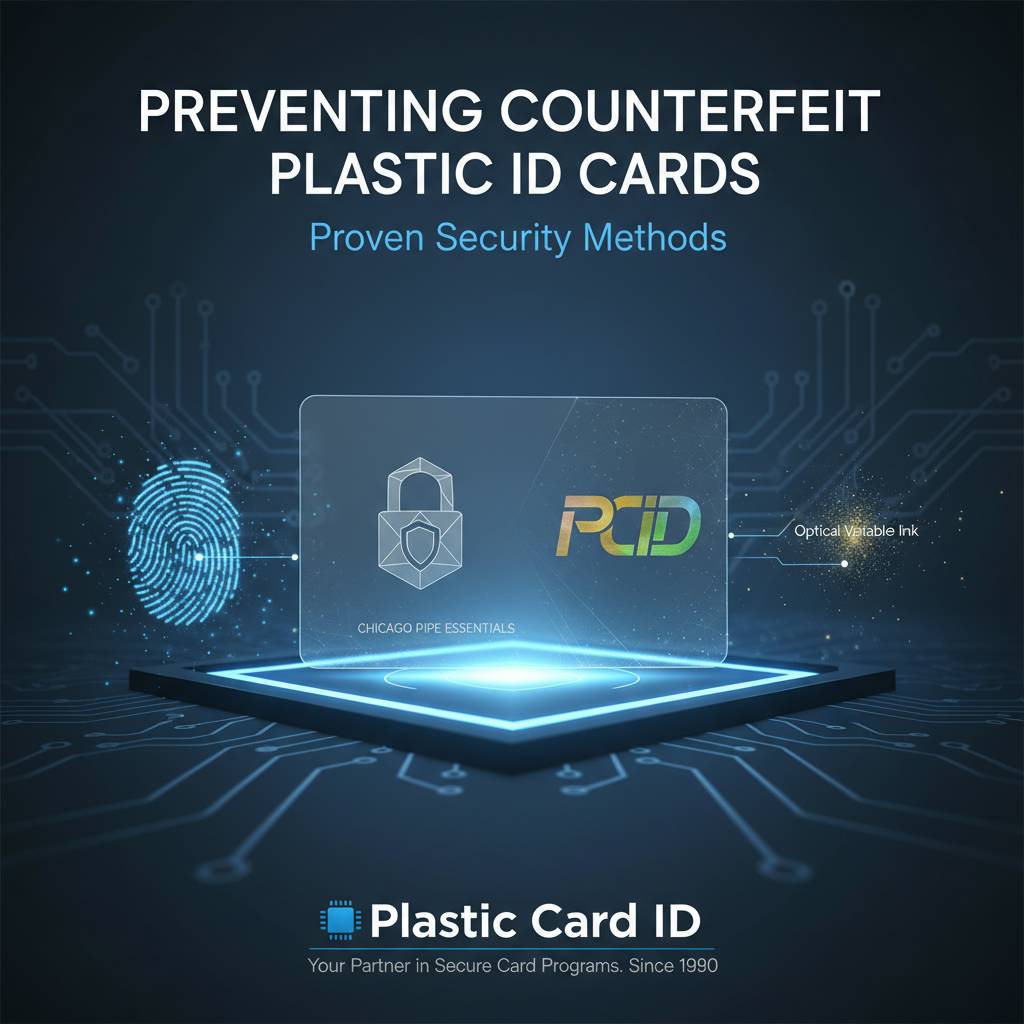 Counterfeit plastic ID cards are not a hypothetical threat - they are a documented, growing problem that affects businesses, schools, healthcare facilities, government agencies, and event organizers across the United States every single year. Whether it is a fake employee badge slipping someone into a restricted server room or a fraudulent membership card draining loyalty rewards, the consequences of inadequate card security reach further than most organizations expect.
At Plastic Card ID, supplying cards to more than 100,000 customers over the past 25 years has given us an unusually clear view of where card programs succeed and where they fail. Failure almost always shares a common thread: underestimating the sophistication of people motivated to replicate or misuse your cards. That experience shapes everything about how we advise clients on building card programs that are genuinely difficult to duplicate.
This page breaks down the real mechanics of counterfeit prevention - the materials, encoding technologies, printing strategies, and program design choices that collectively make your plastic ID cards substantially harder to fake. Not every program needs every layer of security. But every program needs to think about this deliberately, not as an afterthought.
The True Cost of a Counterfeited Card
Organizations often underestimate how much a single counterfeit event can cost. When someone presents a fake ID card to gain access, the immediate breach is only the beginning. There are investigative costs, potential liability exposure, program overhaul expenses, and - perhaps most damaging - the erosion of trust among the legitimate cardholders your program is designed to serve.
Retailers who have switched from paper to plastic gift and loyalty cards report sales increases of 35-50%. That uplift only holds as long as the program maintains integrity. A counterfeited loyalty card drained by fraud does not just cost the redemption value - it undermines confidence in the entire program. Protecting your card infrastructure is protecting your revenue.
What Makes a Card Easy to Counterfeit
Plain white PVC cards with inkjet-printed designs and no encoding are, functionally, trivial to reproduce with consumer-grade equipment. If your card security relies solely on a printed logo and a cardholder name, a determined bad actor with a desktop printer and laminator can produce a convincing replica in under an hour. That is not alarmism - that is the practical reality of how basic card programs are exploited.
Cards become meaningfully harder to fake when they combine physical material features, encoded data layers, and verification infrastructure that a counterfeiter cannot replicate without access to specialized equipment. Security is always a stack of layers, never a single feature. Understanding which layers matter most for your specific application is exactly where working with an experienced card program partner pays dividends.
How CPE Advises Clients on Risk Level
Not every card program carries the same risk profile. An internal employee ID at a 12-person accounting firm faces different threats than an access card for a data center, or a loyalty card for a chain with 200 locations. Part of what makes Plastic Card ID different is that we actually engage with clients about their specific risk exposure rather than defaulting to a one-size catalog recommendation.
We help clients map their use case to the appropriate security features - magnetic stripe encoding, RFID technology, smart chip integration, or specialty printing - and build programs that are right-sized for their actual threat environment. Over-engineering a low-risk program wastes budget. Under-engineering a high-risk one invites exploitation. The goal is calibrated, practical security.
| Card Type | Security Layer | Best Use Case | Counterfeit Resistance Level |
|---|---|---|---|
| Blank PVC CR80 | Design printing only | Internal low-security badges | Basic |
| HiCo Magnetic Stripe | Encoded data card design | Loyalty, membership, access | Moderate |
| Proximity / RFID Card | Contactless encoded UID | Access control, time tracking | Strong |
| Smart Chip (MIFARE DESFire) | Encrypted contactless data | Casino, hospitality, secure access | Very Strong |
| Specialty / Metal Card | Material encoding | Premium membership, VIP | Extremely High |
Magnetic Stripe Encoding as a Foundation for Card Security
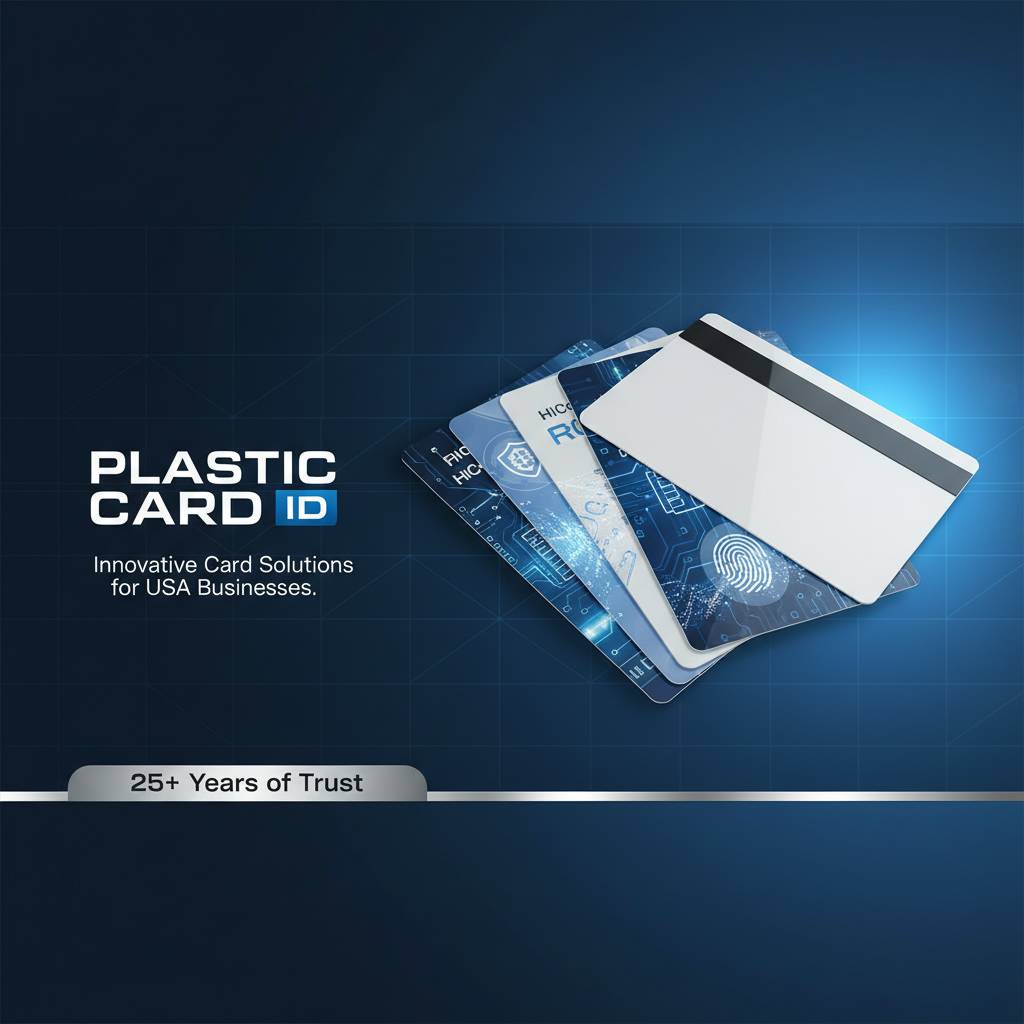 Magnetic stripe technology has been part of card security infrastructure for decades, and for good reason - it works. A properly encoded magnetic stripe card carries data that is invisible to the naked eye and completely inaccessible without a card reader. That immediately separates it from a purely visual card, which can be duplicated by anyone with a photo printer.
At Plastic Card ID, we offer both High Coercivity (HiCo) and Low Coercivity (LoCo) magnetic stripe cards. HiCo cards are significantly more resistant to accidental erasure from exposure to everyday magnetic fields, making them the preferred choice for cards that will live in wallets alongside phones and other magnetic devices. LoCo cards have specific appropriate applications - hotel key cards being the classic example - where temporary data storage is acceptable.
HiCo vs. LoCo: Choosing the Right Stripe for Security
High Coercivity magnetic stripes require a stronger magnetic field to encode and, critically, a stronger field to corrupt. This makes HiCo cards far more reliable in real-world use where cards routinely share pocket space with smartphones, transit cards, and other magnetic sources. For loyalty programs, employee ID systems, and membership cards intended for long-term use, HiCo is almost always the right answer.
LoCo cards encode at lower field strength, making them easier to write and rewrite - which suits temporary applications but represents a meaningful vulnerability in any program where card persistence matters. A counterfeiter with access to a basic LoCo encoder can overwrite card data without sophisticated equipment. Choosing HiCo is not overkill - it is standard practice for serious card programs.
What Data Gets Encoded and Why It Matters
The power of magnetic stripe security is not just in the presence of the stripe - it is in what you encode onto it and how your verification system reads and validates that data. Encoding a unique card number that is cross-referenced against a live database means a cloned or counterfeited card with a fabricated number will fail verification instantly. That is a security system, not just a feature.
Organizations that encode simple, predictable sequential numbers without database validation lose most of the security benefit. The combination of encoded data plus active verification infrastructure is what makes magnetic stripe cards genuinely counterfeit-resistant. CPE provides the cards and encoding expertise; building the back-end validation layer is a program design decision your team or technology partner manages.
Printer Technology and Encoding Accuracy
Encoding accuracy matters. Cards encoded sloppily - with misaligned write heads, worn encoder components, or incorrect encoding parameters - create operational problems and potential security gaps. The card printers available through Plastic Card ID from Evolis, Zebra, and Fargo are engineered for precise, consistent magnetic stripe encoding alongside high-resolution card printing, ensuring every card in your batch meets the same standard. Call us at 800.835.7919 to discuss which printer configuration is right for your encoding needs.
In-house printing with the right equipment also means you control the encoding environment. Cards never pass through an external production facility where data security cannot be guaranteed. For organizations handling sensitive employee or member data, that control has real value beyond convenience.
RFID and Smart Card Technology: The High End of Counterfeit Resistance
If magnetic stripe technology represents a solid foundation for card security, RFID and smart chip technology represents the reinforced upper floors. These technologies move card authentication from data that is read passively to data that is processed through encrypted communication protocols - a fundamentally different security architecture that is extraordinarily difficult to replicate without the original card credentials.
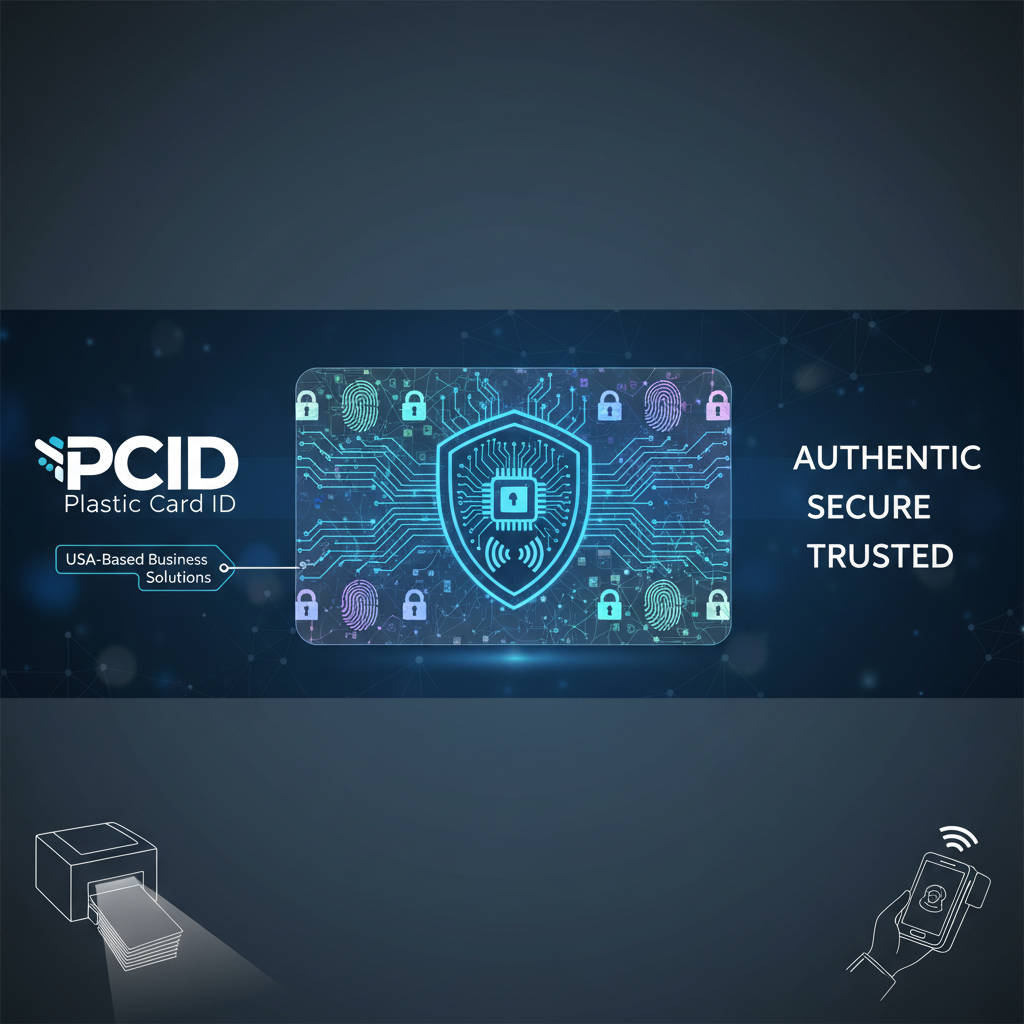
Proximity access cards and RFID smart cards communicate wirelessly with reader infrastructure. The card does not hand over raw data the way a magnetic stripe does. In advanced implementations like MIFARE DESFire, the card and reader engage in a mutual authentication process using encrypted keys that never travel across the communication channel in a form that can be intercepted and replicated. This is cryptographic security applied to your physical card program.
Proximity Cards for Access Control Programs
Proximity cards are the workhorse of commercial access control. They operate at 125 kHz, transmit a unique identifier to a compatible reader, and allow or deny access based on whether that identifier is authorized in the connected system. The barrier to counterfeiting a proximity card is substantially higher than visual or magnetic stripe cards because the UID encoded into the card's chip is not something that can be read or reproduced with consumer equipment.
For employee access programs, visitor management, time-and-attendance tracking, and facility security, proximity cards represent a significant leap in security over non-encoded alternatives. Plastic Card ID supplies proximity cards in standard CR80 format compatible with the major access control infrastructure brands deployed across U.S. commercial facilities.
MIFARE DESFire and Advanced Smart Card Encryption
MIFARE DESFire represents a meaningful step beyond standard proximity technology. Operating at 13.56 MHz with advanced encryption and mutual authentication, DESFire cards are used in casino player programs, secure facility access, transit systems, and high-value loyalty programs where the cost of a counterfeit event justifies the investment in superior card security infrastructure.
The encryption architecture of DESFire cards makes cloning attacks technically impractical with equipment available outside highly specialized environments. For organizations running programs where a single successful counterfeit event could mean significant financial or security harm, this technology level is worth serious consideration. Our team can walk you through application scenarios and system compatibility.
Hotel Key Cards and Hospitality Applications
Hotel key cards represent one of the more nuanced counterfeit-prevention use cases. The threat is not typically external fraud - it is unauthorized key duplication and guest access management. RFID-based hotel key systems address this by encoding time-limited credentials that expire at checkout, rendering duplicated cards useless after a defined window.
Plastic Card ID supplies hotel key cards compatible with the major hospitality lock systems in use across U.S. properties. The combination of RFID technology and time-limited credential encoding gives hospitality operators a security layer that physical key duplication simply cannot replicate. Expired credentials are automatically invalid - no action required from staff.
Specialty Card Materials That Resist Visual Duplication
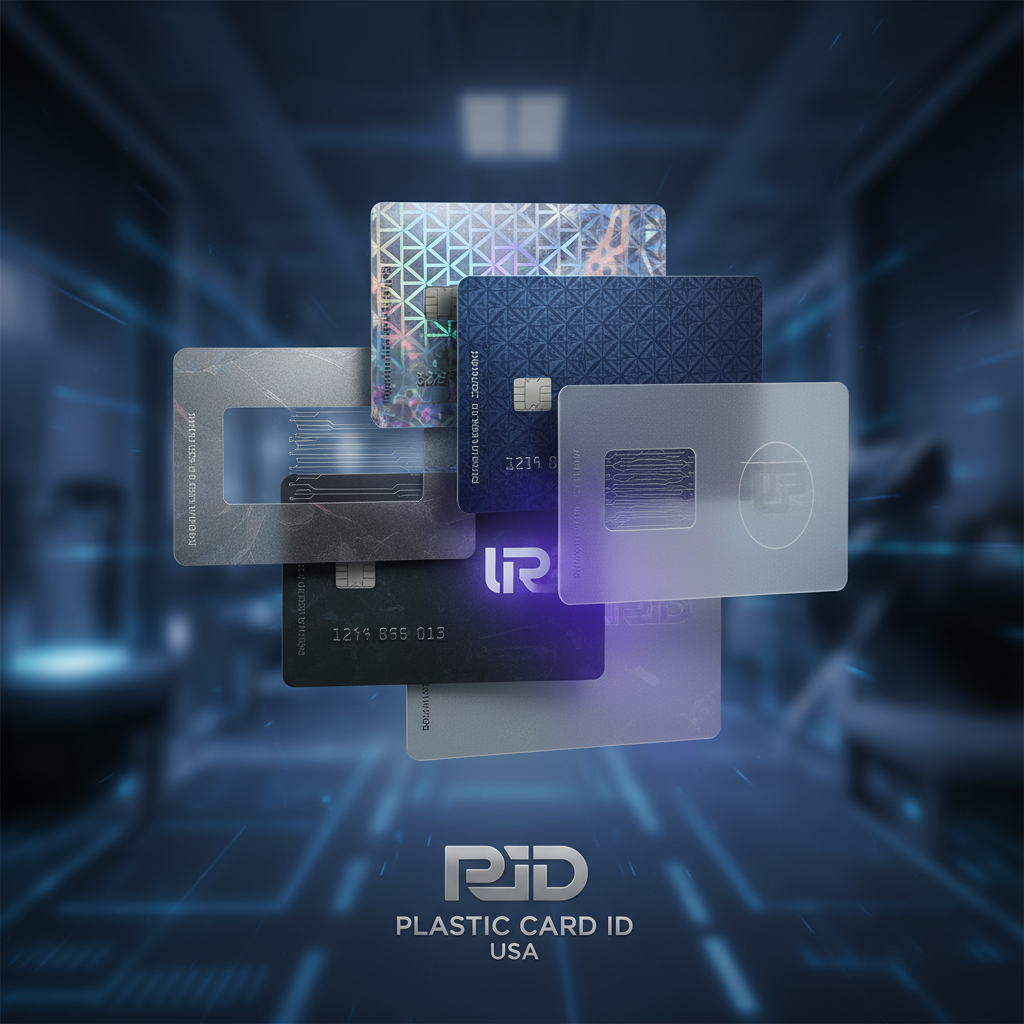 Beyond encoding technology, the physical material of a card contributes meaningfully to counterfeit resistance. Clear plastic cards, frosted cards, and luxury metal cards in stainless steel, brass, or gold present fabrication challenges that go well beyond a standard white PVC card. Someone attempting to duplicate a clear PVC card with a visible interior printed layer faces a manufacturing process that consumer equipment simply cannot replicate.
Material choice also communicates something important to the card recipient - and to anyone who might attempt to fake one. A metal membership card or a custom die-cut card communicates permanence, investment, and program seriousness. A counterfeiter's calculus changes when the target card requires specialized materials and fabrication. Raising that barrier is a legitimate security strategy, not just an aesthetic choice.
Clear and Frosted Cards: Visual Authentication at a Glance
Clear plastic cards with printed elements are immediately visually distinctive. The transparency itself is a security feature - reproducing the precise visual interplay between printed layers and card transparency requires equipment and expertise that is not accessible to casual counterfeiters. When combined with a unique design, holographic overlay, or encoded data layer, clear cards become a genuinely robust counterfeit deterrent.
Frosted cards offer similar distinctiveness with a matte translucent finish that produces a premium, unusual visual appearance. Organizations looking to make their cards instantly recognizable - and harder to fake with off-the-shelf materials - find frosted card stock an effective component of their security strategy alongside encoding.
Luxury Metal Cards and Premium Membership Programs
Metal cards in stainless steel, brass, and gold represent the upper end of physical card security through material exclusivity alone. The manufacturing process for metal cards involves precision laser engraving, chemical etching, or CNC machining - none of which are available to someone attempting a casual counterfeit with consumer hardware. The weight, finish, and structural integrity of a metal card are immediately and unmistakably authentic.
For VIP programs, premium loyalty tiers, exclusive membership organizations, and high-value event credentials, metal cards serve dual purposes: they signal status to legitimate cardholders and they present a fabrication barrier that is effectively insurmountable without industrial equipment. No inkjet printer in the world produces a convincing stainless steel card.
Custom Die-Cut Shapes as a Security Feature
Standard CR80 cards are rectangular. Departing from that standard with a custom die-cut shape immediately differentiates your card from anything a counterfeiter can produce with a generic card and a desktop printer. Custom shapes require custom tooling and production runs that are simply not available through the consumer channels a bad actor would access.
Die-cut cards work especially well for event credentials, specialty membership programs, and promotional card applications where visual distinctiveness serves both brand and security goals simultaneously. Combined with encoded data, a custom-shaped card with a unique data layer creates a two-factor authentication problem for anyone attempting to replicate it without authorization.
- Clear PVC cards - transparent material that cannot be replicated with standard card printers
- Frosted card stock - distinctive matte finish immediately distinguishable from standard white PVC
- Metal cards - stainless steel, brass, or gold construction requiring industrial fabrication
- Custom die-cut shapes - non-standard geometry requiring specialized production tooling
- Dual-layer printing - front and back design complexity that multiplies reproduction difficulty
Building an In-House Card Program With Security Built In
 For organizations that print cards in-house, security is a function of program design choices made before the first card is printed. The blank CR80 card is the starting point - a 30 mil, ISO 7810 standard PVC card that gives your organization complete control over what gets printed, encoded, and distributed. That control is itself a security asset, but only if the program is designed thoughtfully from the start.
Plastic Card ID has supported in-house card programs of every scale imaginable, from small nonprofits printing 50 membership cards a month to multi-location retail chains producing tens of thousands of loyalty cards per production run. The security principles are the same regardless of scale - the implementation details change, but the layered approach does not.
Selecting the Right Card Printer for Security Features
Not every card printer supports every security feature. Entry-level card printers handle single-sided printing on blank PVC stock beautifully. Mid-range and professional-grade printers from Evolis, Zebra, and Fargo add magnetic stripe encoding, dual-sided printing, holographic laminate overlay capability, and smart card encoding options. Selecting the right printer means thinking about which security features your program requires now and which it may need as it grows.
The card printers available through Plastic Card ID are matched to specific use cases, and our team actively helps clients select the right configuration rather than defaulting to the most expensive option. A well-selected printer running properly is more secure than an over-specified printer that your team does not fully utilize.
Ribbons, Overlaminates, and Tamper-Evidence
The ribbon and overlaminate choices for card printing are not just quality decisions - they are security decisions. Holographic overlaminate panels applied during the printing process create a tamper-evident surface layer that cannot be removed and replaced without visibly destroying the card. This is a low-cost security addition that dramatically raises the bar for anyone attempting to alter a legitimately issued card.
Security-grade ribbons with UV-reactive ink layers add another visual authentication tool that requires a UV light source to verify - invisible under normal light, unmistakable under UV. These features are available through the ribbon and supply catalog at Plastic Card ID and are compatible with the major card printer lines we carry. Contact our team at 800.835.7919 to identify which ribbon configurations support the security features you need.
Card Carrier and Distribution Controls
Physical security does not end when a card rolls off the printer. How cards are stored, transported, and distributed to cardholders represents the last mile of your security infrastructure - and it is frequently overlooked. Cards shipped loose in envelopes or stored in open trays are vulnerable to interception and substitution. Card carriers and sleeves provide a tamper-evident delivery mechanism that signals to recipients whether their card has been handled before reaching them.
Plastic Card ID offers card carriers, sleeves, and card affixing and mailing services that integrate cleanly into card distribution workflows. For organizations that need to mail cards to distributed recipients, this service eliminates an entire category of handling risk. Secure distribution is the final layer of a complete counterfeit-prevention program.
Frequently Asked Questions About Preventing Counterfeit Plastic ID Cards
Over 25 years and more than 50 million cards shipped, CPE has fielded a consistent set of questions from organizations thinking seriously about counterfeit prevention. The questions below represent the most common and practically important ones - answered directly, without unnecessary complexity.
Can a Magnetic Stripe Card Be Cloned?
In theory, yes - magnetic stripe data can be read with commercially available readers and written to a blank stripe card with a compatible encoder. This is why magnetic stripe security should always be paired with back-end database validation. A cloned stripe number that does not match an active, authorized record in your system is useless. The stripe alone is not the security - the stripe plus validation infrastructure is.
HiCo encoding raises the bar meaningfully against casual duplication attempts. And when the card design includes additional security layers - holographic overlaminates, UV printing, or material distinctiveness - even a technically cloned stripe number fails to produce a card that passes visual inspection. Layered security makes successful counterfeiting exponentially harder, not just linearly harder.
What Is the Most Counterfeit-Resistant Card for Access Control?
For access control applications, MIFARE DESFire smart cards represent the current practical ceiling for counterfeit resistance in commercially available card technology. The mutual authentication and encryption architecture makes cloning attacks technically impractical with any equipment available outside nation-state-level resources. For most commercial access control applications, standard RFID proximity cards provide strong protection at lower cost per card.
The right answer depends on the value of what you are protecting. A mid-scale office building with standard personnel access needs is well-served by proximity card technology. A facility handling sensitive data, controlled substances, or high-value assets is a candidate for DESFire. Our team helps clients make this determination based on their actual risk profile rather than upselling on technology for its own sake.
How Do Small Organizations Afford Counterfeit-Resistant Cards?
This is where the economics of plastic card programs genuinely work in organizations' favor. The per-card cost of HiCo magnetic stripe cards, proximity cards, and even certain smart card options is lower than many organizations expect - especially when purchased in appropriate volumes. A small nonprofit ordering 500 membership cards with HiCo magnetic stripes is accessing meaningful security technology at a per-card cost that fits realistic budgets.
- Order in quantities that unlock volume pricing without excessive overstock
- Prioritize security features that address your specific threat, not every possible threat
- Invest in one quality card printer rather than multiple entry-level devices
- Use holographic overlaminates for visual tamper-evidence at low incremental cost
- Implement database validation - a software investment that multiplies the value of any encoding technology
- Start with HiCo magnetic stripe if budget limits RFID - it is a substantial step up from unencoded cards
Partner With Plastic Card ID to Protect Your Card Program
 Counterfeit prevention is not a product you buy once and forget. It is an ongoing program design discipline that requires the right materials, the right technology, and a supply partner who actually understands card security at a practical level. That is the kind of relationship Plastic Card ID has built with clients across the United States for more than 25 years - not transactional, but genuinely strategic.
Whether you are launching a new card program and want to build security in from the start, or you are evaluating an existing program that may have vulnerabilities you have not fully assessed, we bring the product depth and program experience to help you make the right decisions. Fifty million cards gives you a perspective on what works that no catalog can replicate. We have seen programs succeed and we have seen programs fail, and we bring that knowledge to every client conversation.
What a Conversation With Our Team Looks Like
There is no sales script and no one-size-fits-all recommendation. When you contact CPE, the conversation starts with your program - what you are issuing cards for, what population you are serving, what infrastructure you have, and what your actual risk concerns are. From there, we recommend the appropriate card type, encoding technology, printing equipment, and supply configuration that addresses your specific situation.
We serve programs from 50 cards per month to mass production in the tens of thousands, and we treat both with the same seriousness. A well-designed 200-card employee badge program deserves the same thoughtfulness as a 50,000-card loyalty rollout. Scale changes the implementation details, not the commitment to getting it right.
Getting Started Is Easier Than You Think
The first step is a conversation, not a purchase order. Reach out to Plastic Card ID with your use case - even if you are still in early planning stages and have more questions than answers. Our team is genuinely useful in the thinking phase, not just the ordering phase. We would rather help you design the right program upfront than supply the wrong components and have you discover the gaps later.
Call Plastic Card ID today at 800.835.7919 - let's build a card program that counterfeits cannot touch.
Reach out now to speak with a card program specialist at Plastic Card ID - we are ready to help you protect what you have built.