Encoding Blank Plastic Cards for Secure Access: Step-by-Step
Table of Contents []
- Encoding Blank Plastic Cards for Secure Access - Plastic Card ID
- Why Blank CR80 Cards Are the Foundation of Every Smart Access Program
- Magnetic Stripe Encoding - HiCo vs. LoCo for Secure Applications
- RFID and Proximity Card Encoding for Contactless Secure Access
- Smart Chip Cards - When Maximum Data Security Is Non-Negotiable
- Building a Complete In-House Card Encoding Program
- Specialty Access Card Applications Across Industries
- Get Started with Plastic Card ID - Your Partner in Secure Card Encoding
Encoding Blank Plastic Cards for Secure Access - Plastic Card ID
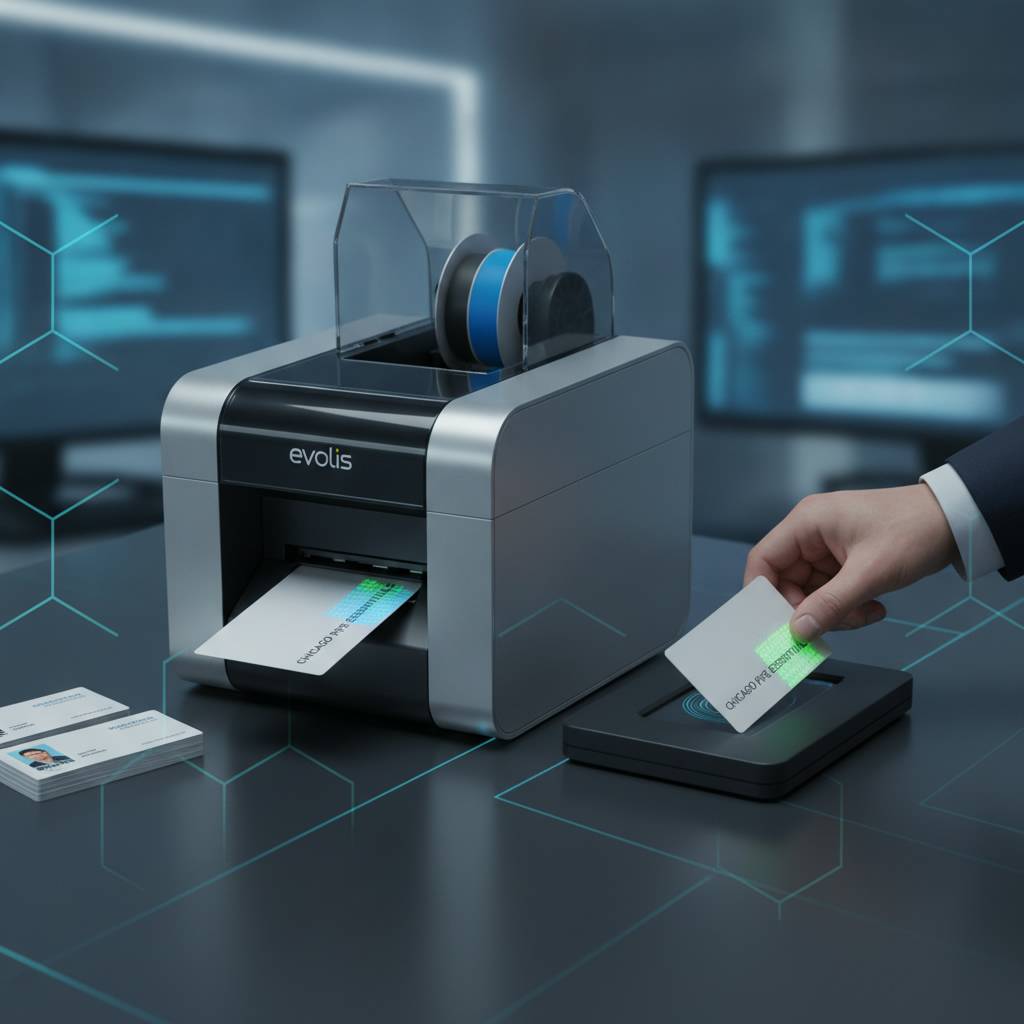 What turns a plain white rectangle of PVC into something that unlocks doors, tracks attendance, verifies identity, and protects restricted areas? Encoding. The process of encoding blank plastic cards for secure access is more nuanced - and more powerful - than most organizations realize when they first start building a card program. Done right, it becomes one of the most reliable security investments a business can make.
Plastic Card ID has spent over 25 years at the center of this conversation, supplying blank and custom plastic cards to more than 100,000 customers across every industry in the United States. With over 50 million cards sold, the team understands what organizations actually need - not just card stock, but the right card stock, matched to the right encoding technology, supported by the right equipment.
Whether you are running a small office with 50 employees or managing access control across a multi-site enterprise, this guide covers everything you need to know about encoding blank plastic cards for secure access - the technologies, the card types, the hardware, and the strategy that makes programs succeed long-term.
| Technology | Read Range | Security Level | Best Use Case |
|---|---|---|---|
| Magnetic Stripe (HiCo) | Contact | Moderate | Employee ID, time tracking, loyalty |
| Magnetic Stripe (LoCo) | Contact | Basic | Short-term hotel keys, event passes |
| Proximity (125 kHz) | Up to 6 inches | Moderate-High | Building access, parking gates |
| RFID Smart Card (13.56 MHz) | Up to 4 inches | High | Multi-application, encrypted access |
| MIFARE DESFire | Up to 4 inches | Very High | Campus, government, enterprise |
| Smart Chip (Contact) | Contact | Very High | Secure ID, stored data programs |
Why Blank CR80 Cards Are the Foundation of Every Smart Access Program
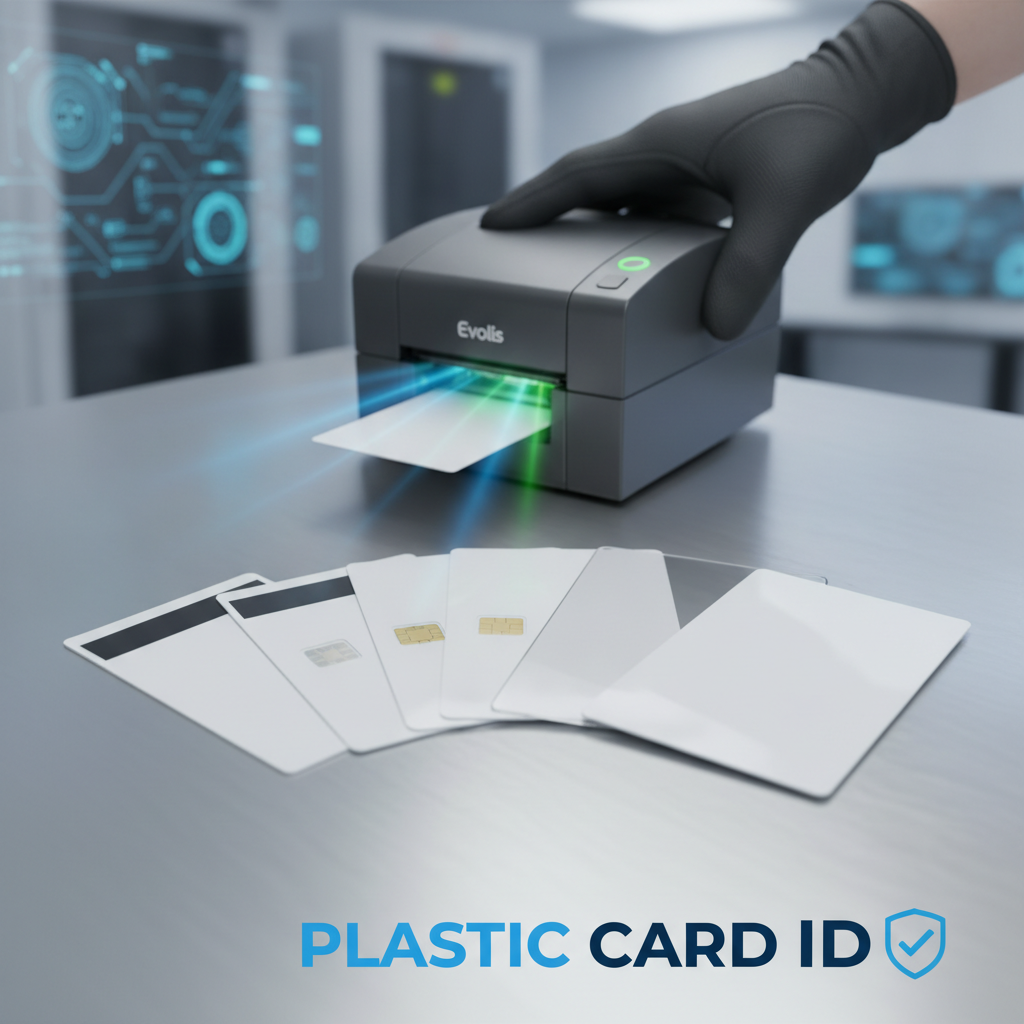 The CR80 standard - 3.375 inches by 2.125 inches, 30 mil thick - exists for a reason. It is the same size as a standard credit card, meaning it fits every wallet, every card holder, every lanyard clip, and every card reader slot on the market. When you start with a blank CR80 card, you are starting with a platform that integrates seamlessly with virtually every piece of existing infrastructure your organization already uses.
Blank cards give organizations something custom pre-printed cards cannot always offer: flexibility. Needs change. Staff turnover happens. Access levels shift. When you print and encode in-house, you respond immediately rather than waiting on reorder lead times. The ability to issue a new access card within minutes, not days, is a competitive operational advantage that compounds over time.
The Mechanics of a Blank Card Becoming a Secure Credential
A blank PVC card is raw material. The transformation into a secure credential happens in two stages: printing and encoding. Printing applies the visual identity - name, photo, department, logo, color-coded access tier. Encoding writes the machine-readable data that the card reader actually authenticates. Some programs require both; others rely on encoding alone.
The separation of these two processes is actually a security feature. Even if someone obtains a physical card, the encoded data is invisible to the naked eye and cannot be duplicated without specific equipment and the correct encoding keys. A well-encoded blank card is far more secure than a visually elaborate paper credential for precisely this reason.
Card Stock Grades and Why They Matter for Encoding
Not all blank PVC cards are created equal. Standard 30 mil PVC is the go-to for most access programs - durable, rigid, and compatible with all major card printers. Composite PVC cards (a blend of PVC and polyester) offer enhanced durability for high-use environments like manufacturing floors or outdoor checkpoints where cards take physical abuse daily.
Card stock grade affects print quality, ribbon adhesion, and the integrity of embedded encoding components like magnetic stripes or RFID chips. CPE supplies cards pre-tested for compatibility with Evolis, Zebra, and Fargo printers, which eliminates the guesswork that trips up organizations sourcing cards from random suppliers who cannot vouch for compatibility.
Matching Card Format to Access Infrastructure
Before ordering blank cards, organizations need to audit their existing access control infrastructure. What frequency does your reader operate on? What data format does your system expect? These questions determine whether you need a standard magnetic stripe card, a 125 kHz proximity card, a 13.56 MHz RFID smart card, or a contact chip card - each suited to a different class of reader hardware.
Mismatching card format to reader infrastructure is one of the most common and costly mistakes in access card program setup. Plastic Card ID works with clients to identify the right card format before orders are placed, preventing expensive reprints and reorders that derail program timelines.
Magnetic Stripe Encoding - HiCo vs. LoCo for Secure Applications
Magnetic stripe technology has been in service for decades, and for good reason - it works, it is cost-effective, and it integrates with an enormous installed base of existing readers worldwide. For secure access applications, the choice between High Coercivity (HiCo) and Low Coercivity (LoCo) magnetic stripe cards is not trivial. Each has a specific role, and choosing wrong leads to real operational problems.
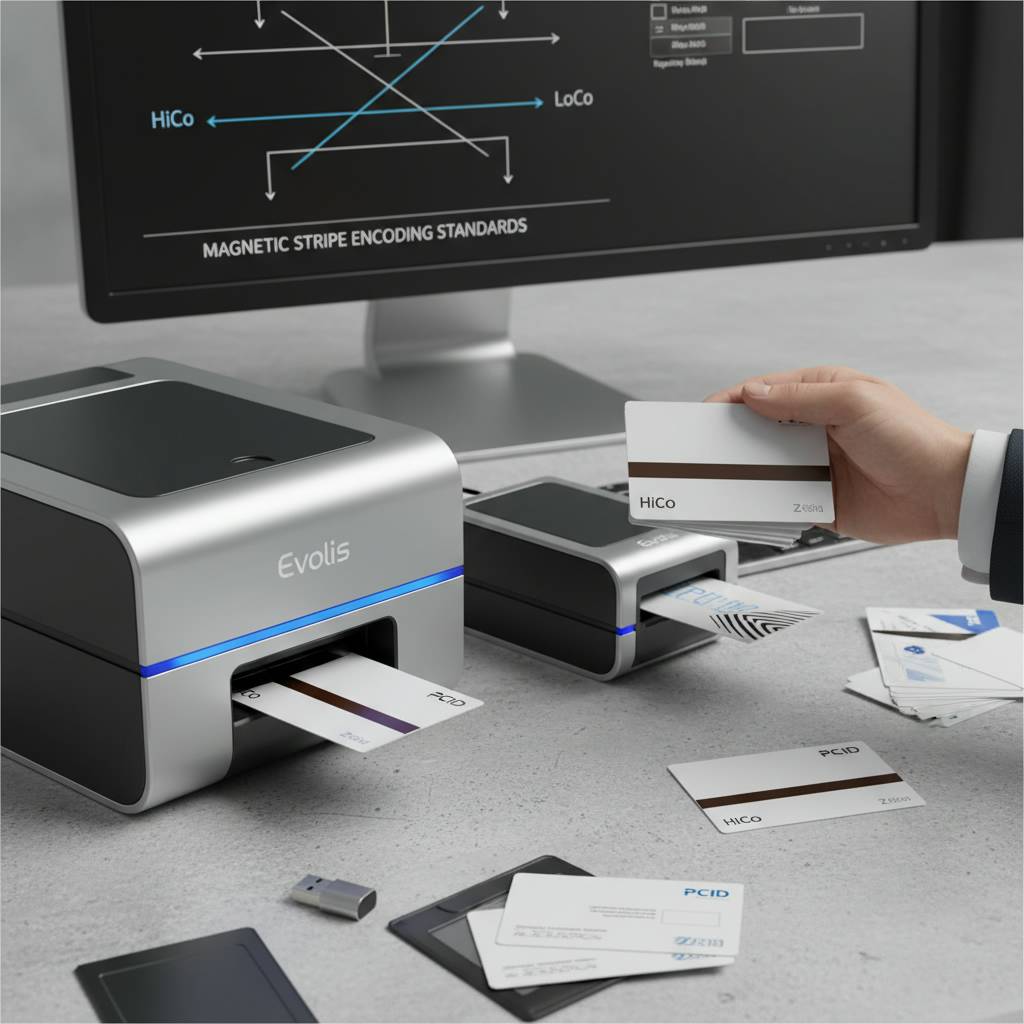
HiCo magnetic stripes, measured at 2750 Oe, resist demagnetization from everyday environmental exposure - proximity to other magnets, electromagnetic interference, repeated handling. For employee badges, access control cards, and any credential intended to last months or years, HiCo is the appropriate specification. LoCo cards, at 300 Oe, are designed for short-term use where durability is less critical than cost efficiency - hotel room keys being the most recognizable example.
What Gets Encoded on a Magnetic Stripe
A standard magnetic stripe card contains up to three tracks of data. Track 1 holds alphanumeric data - names, account identifiers, custom fields. Track 2 is numeric only and is the track most commonly read by access control systems. Track 3 is less commonly used but supports read/write operations, making it useful for stored-value or time-stamping applications in attendance systems.
For secure access, most organizations encode a unique employee or cardholder ID number on Track 2. The reader compares this number against an access control database in real time. The card itself holds no sensitive personal data - just the identifier. This means a lost or stolen card can be deactivated in the system immediately, rendering it useless without replacing hardware or changing physical locks.
In-House Magnetic Stripe Encoding with Card Printers
The Zebra ZC300, Evolis Primacy 2, and Fargo HDP6600 all support magnetic stripe encoding modules, allowing organizations to print and encode cards in a single pass. This is the operational model CPE recommends for any organization issuing more than a handful of cards per month. The per-card cost drops substantially when encoding is handled in-house, and turnaround time compresses from days to minutes.
Card printer ribbons and cleaning kits are part of the supply chain that Plastic Card ID maintains as a comprehensive catalog. Running out of ribbon mid-batch is a frustrating disruption that proper supply planning eliminates entirely. Establishing a replenishment schedule alongside your card order cadence is a simple operational habit that prevents avoidable delays. Call 800.835.7919 to set up a recurring supply arrangement that keeps your program running without gaps.
Encoding Multiple Tracks for Complex Access Scenarios
Some organizations need a single card to serve multiple functions - unlocking doors, logging time and attendance, and authorizing access to secure digital systems. Multi-track magnetic stripe encoding handles this by assigning different data types to different tracks on the same card. An employee ID on Track 2 can coexist with a department identifier on Track 1 that triggers different permission sets in the access control software.
The practical value of multi-function cards is significant. Fewer cards in a wallet means fewer cards to manage, fewer credentials to issue and revoke, and a cleaner administrative experience for HR and IT teams alike. One well-encoded card replacing three separate credentials is not just convenient - it is a measurable reduction in security surface area.
RFID and Proximity Card Encoding for Contactless Secure Access
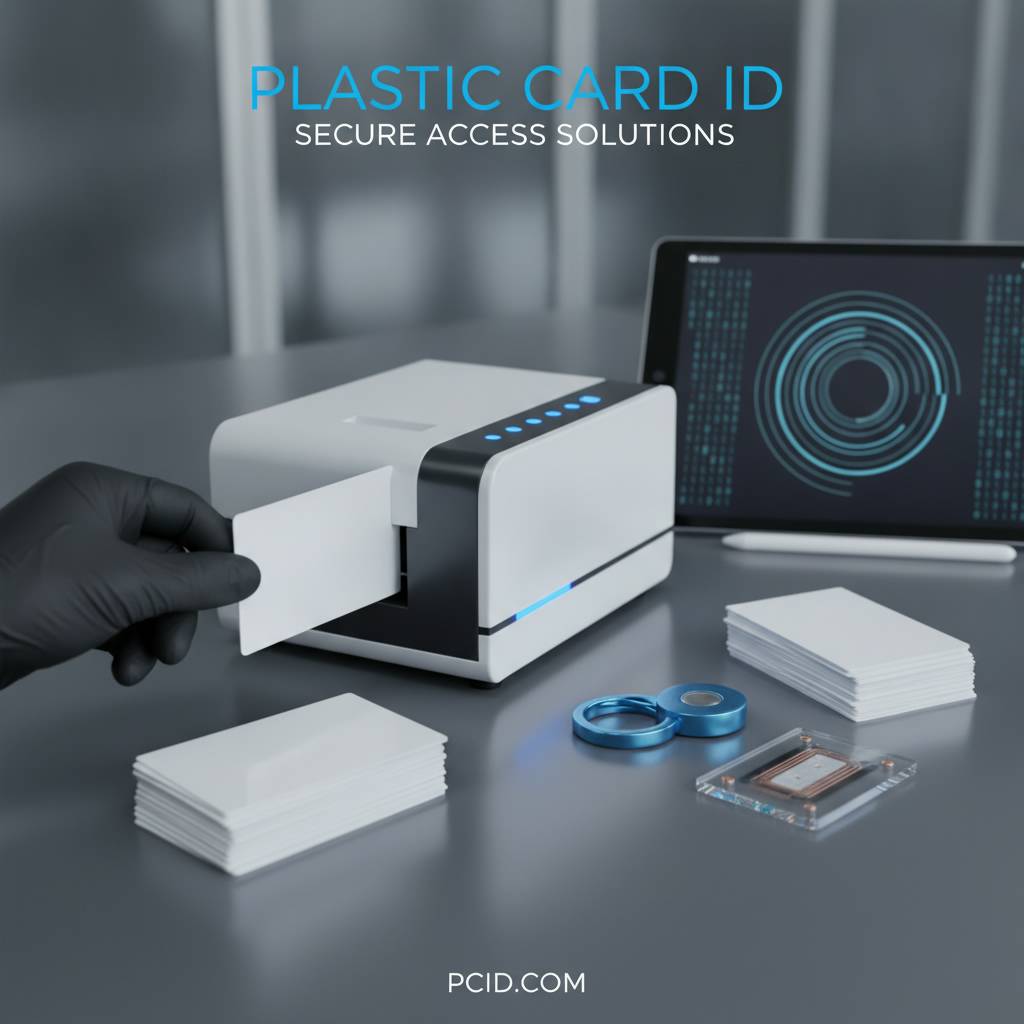 Contactless access is no longer an advanced feature - it is the expected standard in modern facilities. Proximity cards operating at 125 kHz and RFID smart cards at 13.56 MHz represent different generations of the same fundamental idea: a card that communicates with a reader without physical contact. Speed, convenience, and reduced wear on both card and reader hardware are the practical payoffs.
The distinction matters for security programs. Proximity cards are simpler and widely deployed, but the 125 kHz standard offers limited encryption capability. RFID smart cards at 13.56 MHz support full encryption, mutual authentication, and multi-application functionality. For organizations building new access programs from the ground up, starting with 13.56 MHz smart card infrastructure is the forward-looking choice that avoids an expensive upgrade cycle later.
MIFARE DESFire - Enterprise-Grade Contactless Security
MIFARE DESFire EV1 and EV2 cards represent the current benchmark for contactless smart card security in enterprise, campus, and government applications. DESFire uses AES 128-bit encryption, supports mutual authentication between card and reader, and allows multiple independent applications to run on a single card with separate security keys for each. It is the architecture that universities, hospital systems, and corporate campuses increasingly specify by name.
The DESFire platform enables scenarios that simpler card technologies cannot support. A single campus card can unlock dormitory doors, authorize cafeteria purchases, log library checkouts, and enable computer lab access - all with independent encryption layers protecting each application. This is not theoretical capability - it is the real-world deployment model that Plastic Card ID helps organizations implement with the right blank RFID card stock and supporting hardware.
Proximity Cards for Established Access Control Systems
Hundreds of thousands of facilities across the United States run access control on 125 kHz proximity infrastructure - HID-compatible readers, Wiegand protocol controllers, door strikes that have operated reliably for years or decades. For these organizations, proximity-format blank cards that match their existing reader specifications are the practical and cost-effective choice rather than a complete infrastructure overhaul.
CPE carries proximity cards in the formats that major access control brands and integrators specify. Facility managers ordering replacement credentials, expanding a card program to a new wing, or onboarding large staff cohorts find that having a reliable domestic supplier who understands the technical specifications - and actually has inventory - eliminates the procurement headaches that delay real operations.
Encoding RFID Cards In-House vs. Pre-Encoded from the Factory
Organizations have two paths for RFID card encoding: factory encoding where data is written at the manufacturing stage, or in-house encoding using a card printer equipped with a smart card encoder module. Factory encoding is appropriate when all cards in a batch carry the same or sequentially predictable data. In-house encoding is essential when card data is individualized - unique employee IDs, specific permission profiles, or dynamic enrollment into an active access control database.
The Evolis Primacy 2 and Fargo HDP6600 both support contact and contactless smart card encoding modules. A single desktop printer becomes a complete card issuance workstation. The capital investment in a card printer with encoding capability pays for itself quickly when measured against the per-card cost of outsourcing encoding and the operational flexibility gained from issuing credentials on demand.
| Printer Model | Mag Stripe | Smart Card | Contactless RFID |
|---|---|---|---|
| Evolis Primacy 2 | Yes | Yes | Yes |
| Zebra ZC300 | Yes | Yes | Optional |
| Fargo HDP6600 | Yes | Yes | Yes |
Smart Chip Cards - When Maximum Data Security Is Non-Negotiable
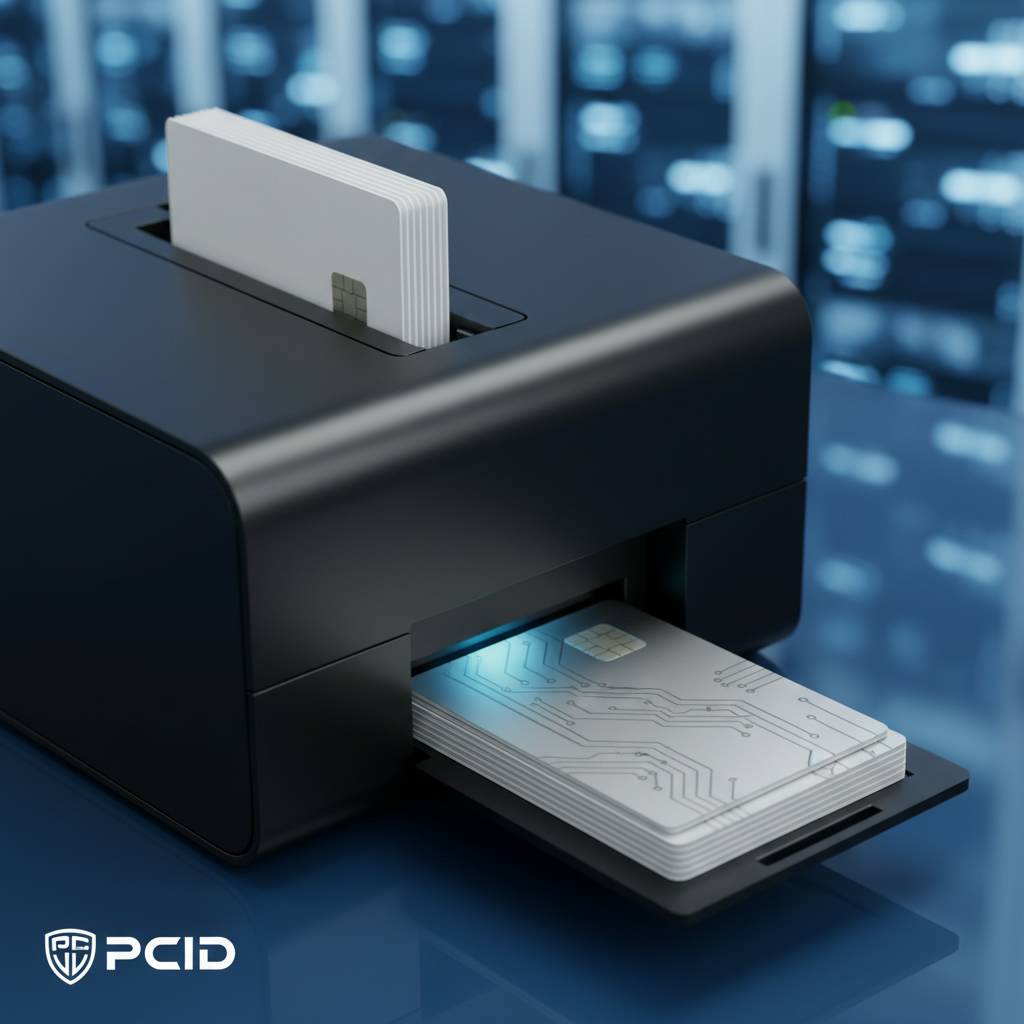 Contact smart chip cards carry an embedded integrated circuit that stores and processes data with a level of security that magnetic stripe and proximity technologies simply cannot match. The chip communicates only when physically inserted into a reader and authenticated through a multi-step handshake. For high-security environments - government facilities, financial back-office operations, healthcare record access, legal and compliance-sensitive departments - smart chip cards define the minimum acceptable standard.
The capacity of a smart chip card is far greater than a magnetic stripe. Where a magnetic stripe holds a few hundred bytes of data across three tracks, a smart chip card can hold kilobytes of structured data - biometric templates, digital certificates, multiple application containers, audit logs of card usage history. This is the technology that bridges physical access control and digital identity management into a unified credential architecture.
Smart Card Applications Beyond Physical Door Access
An organization that issues smart chip cards for building access is often underutilizing the available technology. The same card can authenticate a user's login to a workstation, digitally sign documents, encrypt email, and verify identity at healthcare kiosks - all from the same physical credential. Deploying this multi-application capability requires planning, but the infrastructure investment is a one-time cost that delivers ongoing operational returns.
Hospitals, universities, and enterprise technology companies have been operating on this model for years. The blank smart card stock Plastic Card ID supplies is compatible with major middleware platforms and card management systems, meaning organizations do not have to rebuild their software infrastructure to take advantage of the hardware. The card is the credential - and the credential can do far more than open a door.
Specialty Card Formats for High-Profile Access Programs
Not every access card is a standard white CR80. Casino player cards, VIP credentials, executive access badges, and luxury membership programs often require something that communicates premium status alongside functional encoding. CPE carries clear plastic cards, frosted translucent stock, custom die-cut shapes, and metal cards in stainless steel, brass, and gold finishes - all of which can be combined with magnetic stripe or RFID encoding.
A metal card with embedded RFID encoding is not a novelty - it is a deliberate design choice that signals status, durability, and permanence. For high-end private clubs, executive access programs, and VIP tiers in loyalty or membership systems, the physical quality of the card communicates the value of the program to the cardholder every time it is handled. This psychological dimension of card design is an underestimated driver of cardholder engagement.
Hotel Key Cards and Hospitality Access Programs
Hotel key cards occupy a specific niche in the access card ecosystem. They are issued daily in high volumes, used intensively for short periods, and then discarded or reused. LoCo magnetic stripe cards and RFID smart cards are both widely used in hospitality access systems, with the choice depending on the property management and door lock system installed.
Plastic Card ID supplies hotel key card stock compatible with the major hospitality lock platforms, in both LoCo magnetic stripe and contactless RFID formats. Properties running high card volumes benefit substantially from in-house issuance capability - the front desk encodes each key at check-in, sets an expiration tied to departure date, and deactivates the key on checkout. The operational efficiency compared to outsourced key encoding is dramatic and immediate.
Building a Complete In-House Card Encoding Program
The decision to bring card encoding in-house is not just a purchasing decision - it is an operational strategy. Organizations that make this transition consistently report faster credential issuance, lower per-card costs, greater design flexibility, and improved security through tighter control over the credential lifecycle. The question is not whether in-house encoding delivers value; the data is clear that it does. The question is how to set up the program correctly from the start.

CPE serves as a strategic partner in this process. Beyond supplying card stock and hardware, the team helps organizations map their encoding requirements to the right card technology, identify compatible printer models, and establish a supply chain that maintains consistent inventory of cards, ribbons, and consumables. A card program that runs out of supplies stops running - and that failure has real security and operational consequences.
Essential Supplies for a Functioning Card Encoding Station
- Blank plastic cards in the correct format (mag stripe, RFID, smart chip, proximity) and appropriate stock grade
- Card printer with the encoding module matching your card technology (magnetic stripe encoder, contact smart card encoder, or contactless RFID encoder)
- Printer ribbons matched to your specific printer model - full-color YMCKO for photo ID cards, monochrome for high-volume text-only badges
- Cleaning kits - card printer rollers collect dust and debris that degrade print quality and cause encoder errors; regular cleaning is not optional maintenance
- Card carriers and sleeves for distributing finished credentials without surface contamination or damage
- Card affixing and mailing supplies for programs where credentials are mailed to cardholders rather than distributed in person
- Access control software that manages the credential database, permission assignments, and audit logging
Scaling from Small Programs to Enterprise Volume
Plastic Card ID serves organizations at every point on the volume spectrum - from a nonprofit issuing 50 volunteer credentials a month to a manufacturing company badging thousands of contractors across dozens of sites. The card program architecture is fundamentally the same at both scales; what changes is the hardware capacity, the inventory management approach, and the degree of automation in the issuance workflow.
Entry-level card printers like the Zebra ZC300 handle low-to-moderate volumes with excellent print quality and reliable encoding performance. High-volume operations step up to the Fargo HDP6600 or Evolis Primacy 2, which support automated card feeders, dual-sided printing, lamination overlays, and higher-throughput encoding modules. Choosing the right printer tier from the start avoids premature equipment upgrades that interrupt programs at the worst possible moments.
Frequently Asked Questions About Encoding Blank Cards for Access
Can I encode a blank card myself, or does it need to be done by the supplier? Most organizations encode their own cards using a card printer with the appropriate encoding module. Pre-encoded cards from the factory are available for specific applications where all cards carry identical or sequential data, but in-house encoding is the standard model for access control programs where each card is individualized. Contact 800.835.7919 to discuss which approach fits your program.
What is the difference between a proximity card and an RFID smart card? Proximity cards operate at 125 kHz and typically store only a fixed ID number with no encryption. RFID smart cards operate at 13.56 MHz, support encryption and mutual authentication, and can host multiple independent applications. For new installations, smart card infrastructure is the recommended choice. For existing 125 kHz systems, compatible proximity card stock from CPE maintains continuity without requiring a full infrastructure replacement.
Specialty Access Card Applications Across Industries
 Secure access card programs are not limited to corporate office buildings. Across healthcare, education, hospitality, manufacturing, government, entertainment, and retail, the same fundamental technology - a plastic card encoded with machine-readable identity data - solves access control and credential management challenges that no other format addresses as efficiently or reliably.
Industry-specific requirements shape the card specification. Healthcare facilities prioritize smart chip encoding for dual physical and digital access control. Universities deploy MIFARE DESFire campus cards that serve dormitory, library, dining, and IT authentication functions from a single credential. Casinos issue player cards with magnetic stripe encoding tied to loyalty and gaming management systems. Each application starts with the same blank card - and diverges based on how it is encoded and deployed.
Healthcare and Government High-Security Credentials
Healthcare organizations face strict access control requirements driven by patient privacy regulations and controlled substance management. Smart chip cards with biometric template storage are increasingly deployed to ensure that the person presenting the card is the person it was issued to - not just someone who found or borrowed it. This two-factor model, combining something you have (the card) with something you are (biometric data stored on the chip), is the gold standard in healthcare access security.
Government facilities operating under physical security standards similarly specify smart card technology, often MIFARE DESFire or equivalent, for all employee and contractor access credentials. Plastic Card ID supplies the blank smart card stock and hardware that integrators and internal IT teams use to build these programs, with compatibility across the major card management and access control platforms in current deployment.
Campus, Event, and Membership Access Programs
Universities and large campuses have driven some of the most sophisticated single-card, multi-application deployments in the country. A single encoded campus card controls dormitory access, grants dining plan authorization, enables library borrowing, unlocks computer lab doors, and authenticates network login - all from a 30 mil piece of PVC smaller than a wallet. The complexity lives in the encoding and the middleware, not in the card itself.
Event credentials represent a different profile entirely - high volume, short lifecycle, fast issuance, and visual differentiation by access tier. Colored PVC card stock from CPE - available in multiple colors as standard inventory - enables instant visual identification of credential tiers without relying exclusively on printed artwork. A green card goes to general admission, a red card to backstage, a clear card to VIP. Fast, unambiguous, and backed by magnetic stripe or RFID encoding for reader-verified authentication.
Retail, Loyalty, and Membership Card Programs That Double as Access Credentials
Retail organizations and membership clubs increasingly build dual-function card programs where a loyalty or membership card also serves as an access credential. A gym membership card opens the turnstile. A private club membership card unlocks the locker room and the parking gate. A corporate dining program card authenticates at the cafeteria reader. Retailers who have switched from paper-based programs to plastic card credentials consistently report engagement improvements that translate directly into revenue.
The investment in plastic card infrastructure - printer, blank card inventory, encoding capability - delivers returns that compound over time. Cards that live in wallets generate repeated access and usage touchpoints. They signal legitimacy and permanence that paper cannot approximate. And when they are encoded with machine-readable data, they plug into the analytics and automation infrastructure that modern program management demands.
Ready to build, upgrade, or scale your access card program? Call Plastic Card ID today at 800.835.7919 to speak with a specialist who understands your industry and your infrastructure.
Get Started with Plastic Card ID - Your Partner in Secure Card Encoding
 Encoding blank plastic cards for secure access is both a technical discipline and a strategic decision. The right card format, matched to the right encoding technology, deployed on the right hardware, supported by a reliable supply chain - these are the elements that determine whether an access card program runs smoothly for years or creates constant operational friction. Getting the foundation right is not complicated, but it requires a supplier who understands the full picture.
Plastic Card ID brings over 25 years of hands-on experience, a catalog spanning every card type and encoding format relevant to modern access control, and a service model built around long-term partnership rather than one-time transactions. From 50 cards a month to tens of thousands, from basic magnetic stripe employee badges to enterprise-grade MIFARE DESFire campus programs, the team has seen the full range of what organizations build with plastic cards - and what separates programs that succeed from those that stumble.
Contact Plastic Card ID today at 800.835.7919 and let an experienced specialist help you select the right blank cards, encoding technology, and hardware for your specific access program. Fifty million cards sold. Over 100,000 customers served. Your program is next.