Custom vs Pre-Printed Blank Cards: Which Is Better?
Table of Contents []
- Custom vs Pre-Printed Blank Cards: Which Is Better for Your Business? - Plastic Card ID
- Understanding Blank PVC Cards and What They Actually Do
- Custom Pre-Printed Cards: When Professional Production Wins
- In-House Card Printing: Printers, Ribbons, and the Full Setup
- Advanced Card Technologies: RFID, Smart Chips, and Beyond
- How to Decide: A Practical Framework for Buyers
- Partner With Plastic Card ID for Every Card Your Business Needs
Custom vs Pre-Printed Blank Cards: Which Is Better for Your Business? - Plastic Card ID
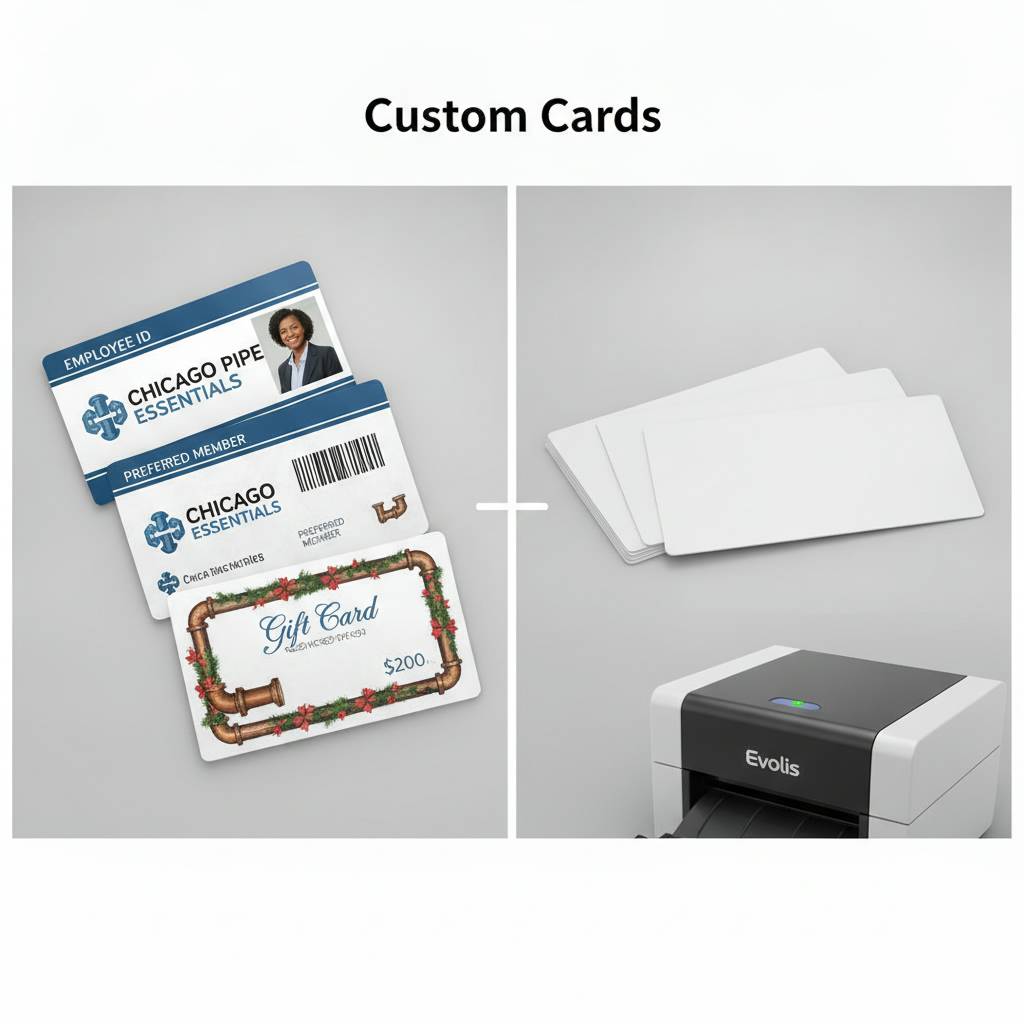 Walk into any busy retail store, hotel lobby, or corporate office and you will find plastic cards doing serious work - scanning at doors, earning points at registers, unlocking rooms, and identifying employees. But here is where most organizations get stuck: should you order fully custom pre-printed cards or stock up on blank PVC cards and print in-house? The answer depends on your volume, timeline, budget, and how much design flexibility you actually need.
This is not a simple either-or question. Both approaches have distinct advantages, and choosing the wrong path can cost your organization real money, real time, and real credibility. CPE has helped over 100,000 customers across the United States navigate exactly this decision - and what we have learned over 25 years is that context is everything.
| Feature | Blank Cards (In-House Print) | Custom Pre-Printed Cards |
|---|---|---|
| Design Flexibility | Total on-the-fly control | Fixed at print time |
| Per-Card Cost at Scale | Lower over time | Lower at large quantities |
| Turnaround Speed | Immediate, on demand | Requires lead time |
| Personalization | Easy, card by card | Batch personalization only |
| Minimum Order | Very low (50 cards) | Often 250-500 cards |
| Upfront Investment | Printer supplies needed | No equipment required |
Understanding Blank PVC Cards and What They Actually Do
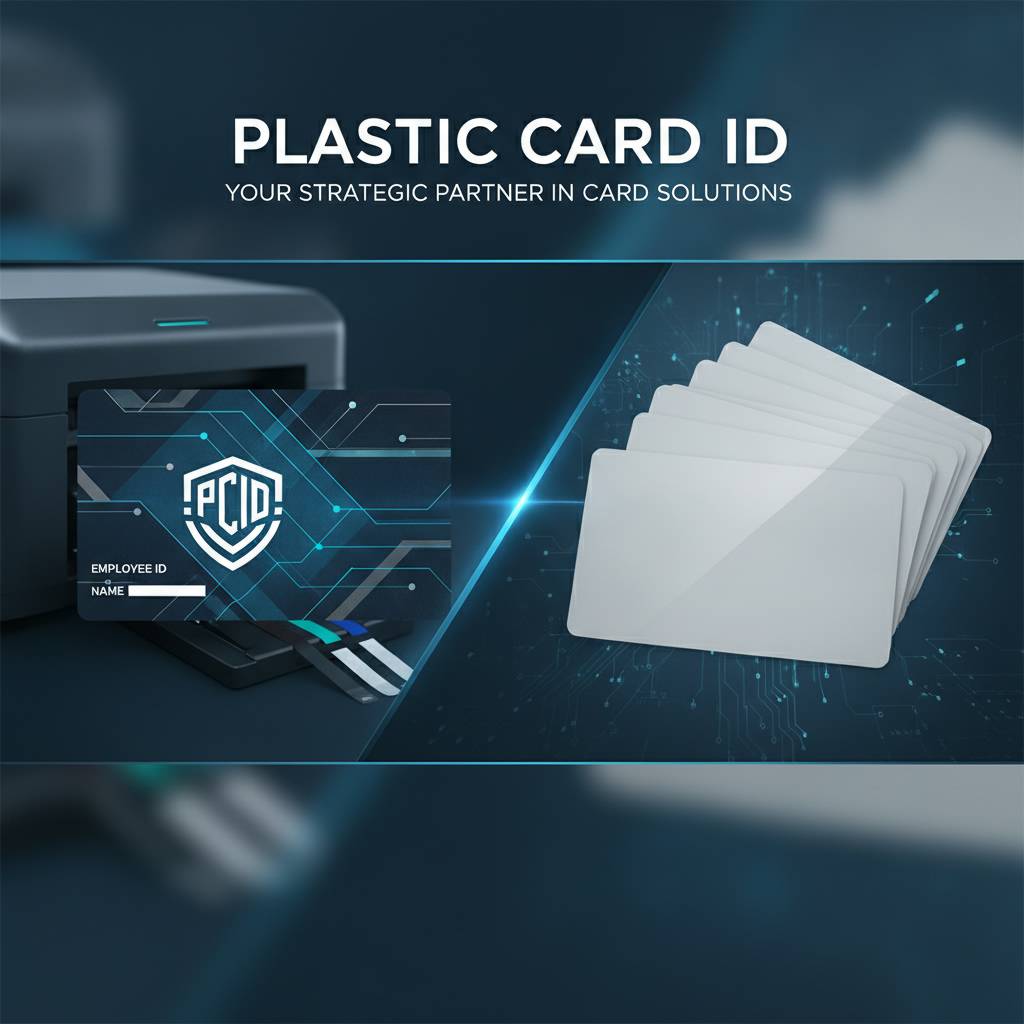 A blank CR80 card does not look like much on its own. White, smooth, 30 mil thick - it fits exactly into a standard wallet slot. But that unremarkable surface is a blank canvas ready to become an employee badge, a loyalty card, an event credential, or an access token. The CR80 format is the global ISO 7810 standard, which means it works in every standard card printer, every badge holder, and every wallet manufactured to that specification.
Blank cards are the foundation of any in-house card program. Organizations that need to issue cards regularly - think HR departments printing new employee IDs, schools issuing student credentials, or gyms enrolling new members weekly - find that owning a card printer and keeping a stock of blanks is far more practical than waiting on external print runs. The ability to print one card on a Tuesday morning without placing a bulk order is genuinely powerful.
The CR80 Standard: Why Size and Thickness Matter
Every blank card in CPE's catalog is built to the CR80 specification: 3.375 inches by 2.125 inches, 30 mil thick. That consistency is not arbitrary. Cards outside this standard will jam printers, fail badge holders, and frustrate cardholders. Whether you are buying 500 cards or 50,000, knowing your stock is ISO-compliant removes one very real variable from your program.
Thickness matters more than people realize. Standard 30 mil cards handle everyday use in wallets and lanyards without cracking or warping. Thinner cards can delaminate under heat or repeated flexing. The durability of a properly manufactured blank PVC card means your printed output will hold up for years of real use - not just a few months.
Specialty Blank Stock Options
Not every program needs a plain white card. CPE stocks blank cards in a range of specialty formats, including clear and frosted PVC, pre-colored stock, and cards with pre-applied magnetic stripes in both HiCo (high coercivity) and LoCo (low coercivity) formats. Clear and frosted blanks allow printed designs to interact with the card's transparency for striking visual results.
Pre-colored blank stock in gold, silver, black, and other tones gives organizations a head start on premium-looking card programs without the cost of custom printing every card. These are especially popular with membership clubs, executive programs, and event credential systems where perceived value matters as much as function.
Magnetic Stripe Blanks: HiCo vs LoCo Explained
Magnetic stripe blank cards come in two varieties. HiCo stripes, encoded at 2750 Oersteds, are resistant to accidental erasure from everyday magnetic fields - making them the right choice for hotel keys, access control, and any card that will spend time near other cards, phones, or magnetic closures. LoCo stripes, encoded at 300 Oersteds, suit lower-security applications like short-duration event passes or gift cards where the data lifespan is naturally limited.
Choosing the wrong coercivity can cause real headaches. A LoCo card used in an environment with frequent magnetic interference will drop data unexpectedly, frustrating both staff and cardholders. When in doubt, HiCo is the safer default for any program intended to last more than a few days per card.
Custom Pre-Printed Cards: When Professional Production Wins
Custom pre-printed cards arrive ready to distribute - full-color fronts, branded backs, sequential numbering, encoded magnetic stripes, or embedded RFID chips all done before the cards reach your hands. For retailers launching gift card programs, hotels deploying key cards, or organizations issuing member cards in high volumes, this approach eliminates the need for any internal printing infrastructure whatsoever.
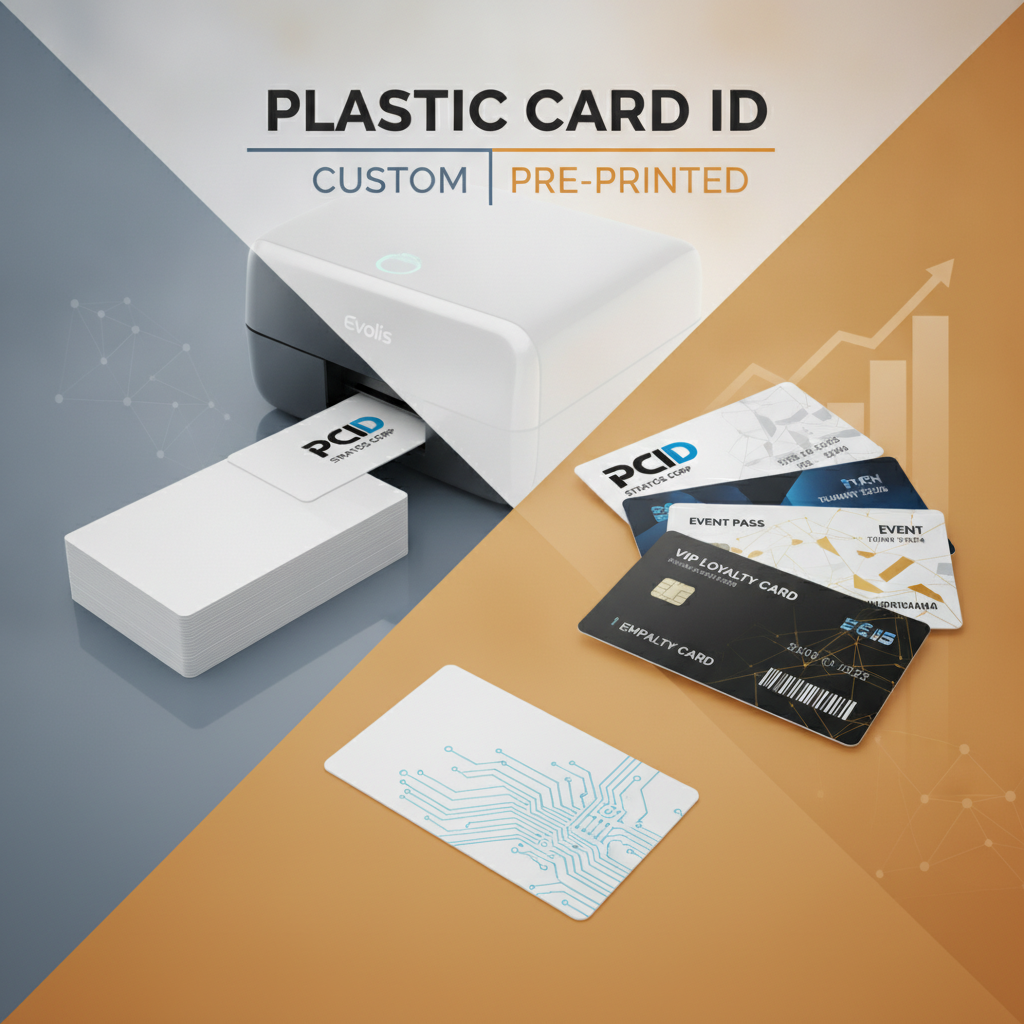
The visual quality of professionally printed cards is also genuinely different. Full-bleed edge-to-edge color, photographic image quality, and precision laminate finishes are difficult to replicate on most desktop card printers. If your brand requires that level of polish - and for many businesses, it absolutely does - custom pre-printed cards deliver something that in-house printing cannot easily match at comparable per-card cost in large runs.
Gift Cards, Loyalty Cards, and the Case for Pre-Printed
Retailers who have made the switch from paper to plastic gift cards report sales increases of 35-50%. That is not a rounding error. A plastic gift card on a display rack sells itself in a way that a paper certificate never will. Pre-printed gift cards with consistent branding, barcodes, and magnetic stripes look authoritative, spark impulse purchases, and integrate cleanly with most point-of-sale systems.
Loyalty programs tell a similar story. A plastic loyalty card that lives permanently in a cardholder's wallet outperforms a paper punch card in nearly every measurable way - from redemption rates to brand recall. Pre-printed loyalty cards with your logo, color scheme, and program details communicate longevity and commitment. Customers keep them. That is the whole point.
Volume Thresholds and Cost Breakpoints
Custom pre-printed cards typically become cost-competitive at quantities of 250-500 cards and genuinely economical at 1,000 and above. Below those thresholds, the setup and production costs can push per-card prices to a point where an in-house printing solution becomes cheaper over any extended period. Understanding your actual monthly volume is the single most important variable in this decision.
For organizations running programs of 50-200 cards per month, the math almost always favors blank cards plus a card printer. For organizations issuing thousands of identical branded cards in a single batch - seasonal gift card restocks, annual membership renewals - custom pre-printed orders offer clear economies of scale. CPE can help you map this out precisely before you commit to either path.
Card Personalization at Scale
Modern card production technology allows for variable data printing - meaning each card in a custom print run can carry a unique name, number, barcode, or photo while sharing the same branded background. This is how large employers issue photo ID cards, how universities print student credentials, and how loyalty programs assign unique account numbers to each member card in a single production run.
Variable data personalization on custom pre-printed cards combines the polish of professional production with the individual specificity that programs actually require. It is not an either-or between beautiful and functional - at the right volume, you get both.
In-House Card Printing: Printers, Ribbons, and the Full Setup
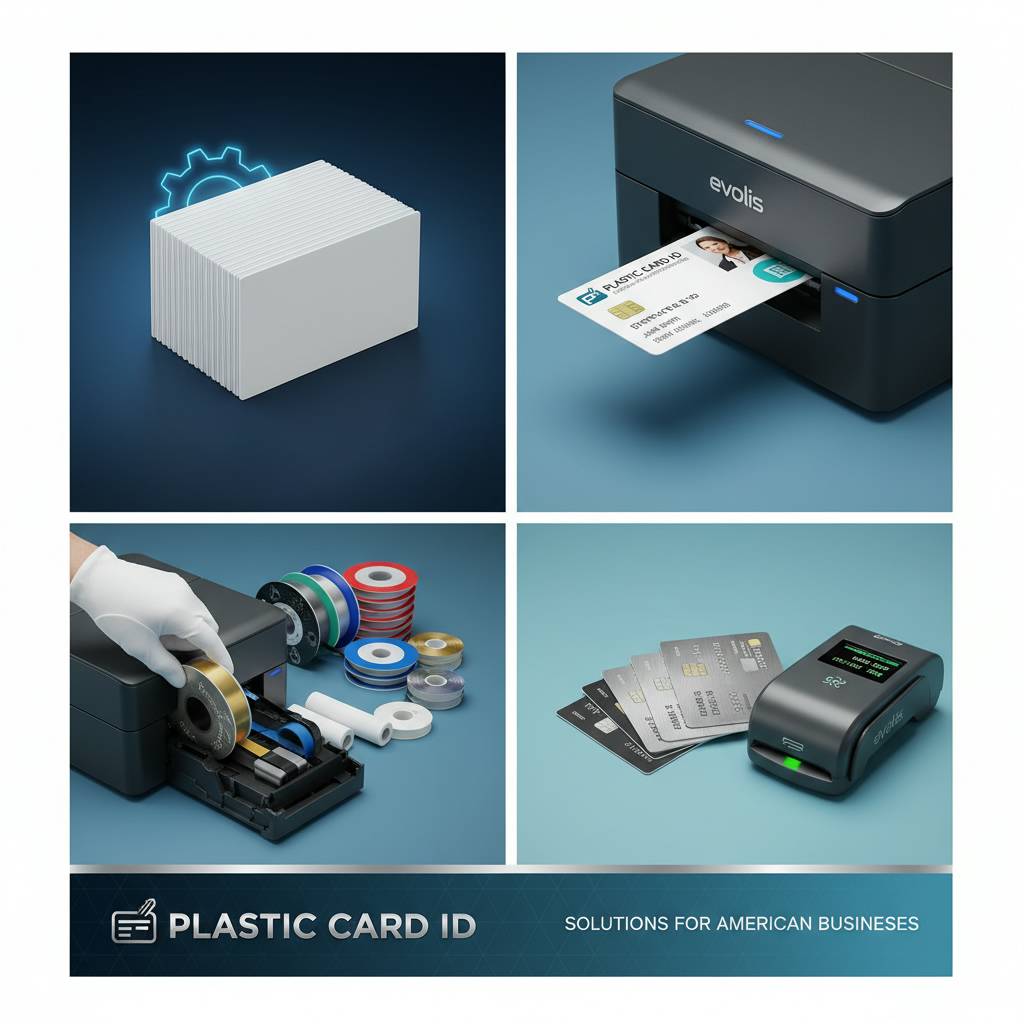 Committing to an in-house card program means more than buying blank cards. You need a capable card printer, the right ribbon for your output type, a regular cleaning schedule, and a clear workflow for your staff. Done well, in-house printing gives you unmatched flexibility and long-term cost efficiency. Done carelessly, it produces faded, streaky, or jammed cards that embarrass your brand.
CPE supplies card printers from three industry leaders: Evolis, Zebra, and Fargo. Each brand has distinct strengths across different volume tiers, connectivity types, and encoding capabilities. Matching the right printer to your program volume and feature requirements is something Plastic Card ID takes seriously - because the wrong printer wastes both money and time.
Choosing the Right Card Printer for Your Volume
Entry-level desktop card printers from Evolis and Fargo handle programs running 50-500 cards per month efficiently. They are compact, reliable, and cost-effective for HR departments, schools, small membership organizations, and similar low-to-medium volume users. Mid-range and high-volume printers from Zebra are built for programs running thousands of cards per month, with faster throughput, larger ribbon capacity, and more robust encoding options.
Never buy more printer than you need, but never buy less. An underpowered printer grinding through high-volume runs will wear out prematurely and deliver inconsistent output. Oversized industrial printers sitting idle most of the month represent unnecessary capital expenditure. The right match saves money on both ends. Call 800.835.7919 if you are unsure which printer tier fits your actual program.
Ribbons, Cleaning Kits, and Consumables
A card printer is only as good as the ribbon loaded into it. YMCKO ribbons (yellow, magenta, cyan, black, overlay) produce full-color output with a protective topcoat that resists scratching and fading. Monochrome black ribbons are used for single-color text and barcode printing on pre-colored card stock. Resin ribbon panels matter for encoding text that needs to read reliably under scanner or UV light.
Cleaning kits are not optional. Skipping the cleaning cycle is the single fastest way to shorten a card printer's lifespan and degrade print quality. CPE stocks cleaning cards, swabs, and full kit systems for every major printer model. Scheduling a cleaning run every 1,000 cards printed - or after every ribbon change - is the simplest maintenance habit any in-house program can adopt.
Card Carriers, Sleeves, and Mailing Services
Issuing a card is only half the job. Getting it to the cardholder - securely, professionally, and promptly - completes the process. Card carriers are folded paper inserts that hold a card for direct mail distribution, welcome kits, or in-store handout packages. Card sleeves provide protective storage and give single-card distributions a polished presentation without the bulk of a full carrier.
For organizations that mail cards in volume, CPE offers card affixing and mailing services that handle the physical work of attaching cards to carriers and processing outbound mail. This is especially valuable for seasonal campaigns, annual renewal programs, or any high-volume distribution scenario where internal staff time is the bottleneck.
Advanced Card Technologies: RFID, Smart Chips, and Beyond
 Not every card program lives at the basic print-and-scan level. Access control, cashless payment in closed environments, loyalty tracking with contactless tap, and casino player programs all require card technology that goes beyond a magnetic stripe. CPE supplies a full range of advanced card products to meet these specialized demands.
RFID and proximity cards operate at various frequencies - 125 kHz for standard proximity access and 13.56 MHz for smart card applications including MIFARE DESFire, one of the most widely deployed secure contactless platforms in the world. Choosing the right technology for your access control or smart card application is a decision that deserves careful attention, because installing the wrong frequency card into an existing reader system simply will not work.
Proximity Access Cards and RFID Smart Cards
Proximity cards are the workhorses of physical access control. Tap the card to a reader, the credential is verified, and the door unlocks. Organizations ranging from small office suites to large corporate campuses rely on proximity access because it is fast, reliable, and requires no PIN entry or physical key. CPE stocks both clamshell and standard CR80 format proximity cards for compatibility with virtually all major access control systems.
RFID smart cards with embedded chips offer an additional layer of security and data capacity. MIFARE DESFire cards, for example, support encrypted sector-level data storage, making them appropriate for high-security environments where data integrity matters. Hotels, universities, transit systems, and government facilities are among the most common deployers of DESFire and similar smart card technologies.
Casino Player Cards and Hotel Key Cards
Casino player cards are a specialized product category combining magnetic stripe encoding, RFID capability, and high-durability construction to withstand constant handling on busy gaming floors. These cards track play activity, link to loyalty tiers, and often function as access credentials within the property as well. CPE supplies casino-grade player cards to gaming operations of all sizes across the United States.
Hotel key cards are one of the highest-turnover card products in the industry - a property issuing thousands of check-ins per month will go through enormous quantities of key cards. Getting the coercivity, encoding format, and card thickness right is critical to maintaining lock system reliability and guest experience. Pre-encoded hotel key cards from CPE ship ready to load into your front desk encoder.
Specialty Cards: Clear, Die-Cut, and Luxury Metal Options
When a standard CR80 white PVC card is not the right tool, CPE offers specialty options that open new possibilities. Clear plastic cards and frosted PVC cards produce visually striking results when combined with printed or foil-stamped designs. Custom die-cut shapes - rounded cards, cards with punched holes, non-standard aspect ratios - allow marketing and event programs to create truly memorable card products.
Luxury metal cards in stainless steel, brass, and gold represent the premium tier of card production. These are not novelties - they are serious credentials for executive programs, premium membership clubs, VIP event access, and high-end loyalty programs where the physical weight and permanence of a metal card communicates exclusivity that plastic cannot replicate. The card itself becomes part of the value proposition.
How to Decide: A Practical Framework for Buyers
After 25 years and more than 50 million cards shipped, certain patterns in buyer decision-making appear consistently. Organizations that thrive with in-house blank card programs share specific characteristics. So do the ones that benefit most from custom pre-printed cards. Recognizing which description fits your situation is the fastest path to the right decision.
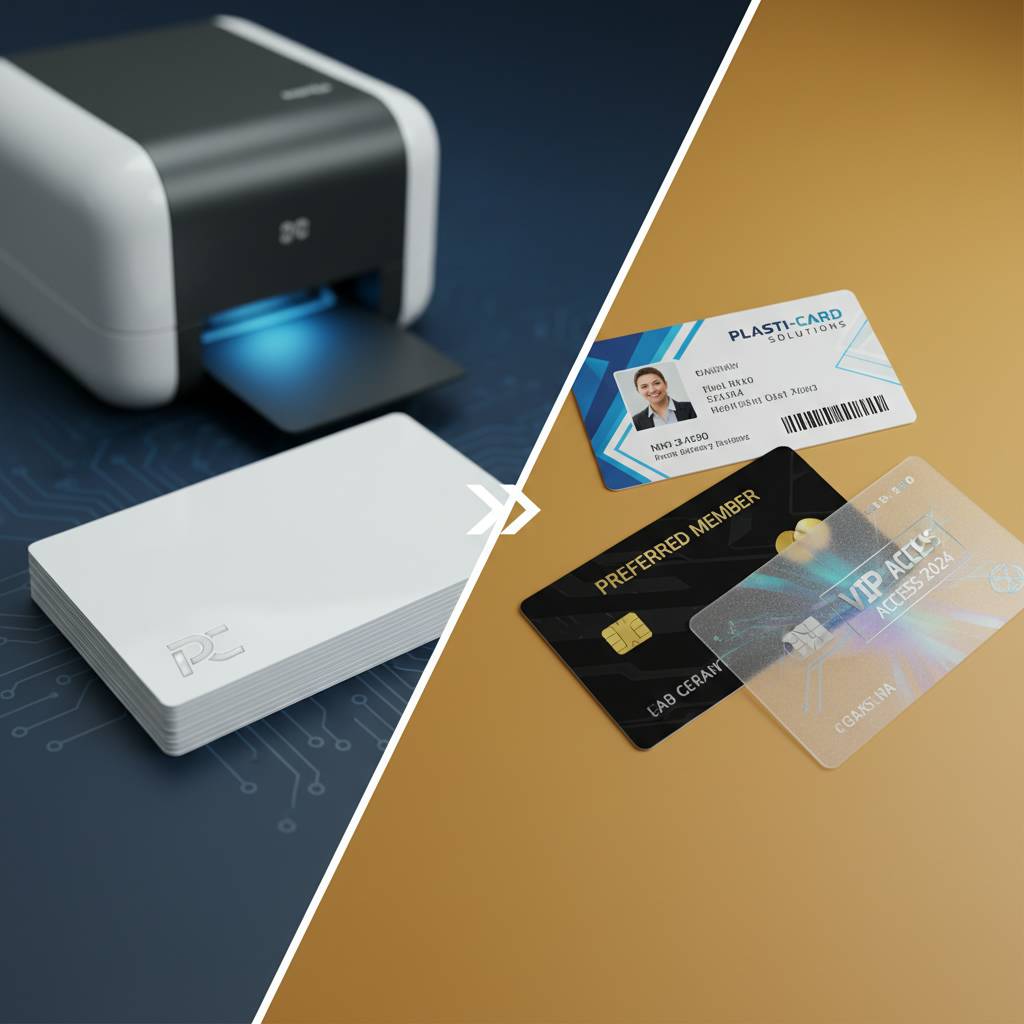
Ask yourself honest questions about your program before committing budget. How many cards do you actually issue per month - not in a peak scenario, but on a typical month? How often does your card design change? Do you need to personalize individual cards with names, photos, or unique numbers? How quickly do you need to issue cards when someone new joins, arrives, or requests a replacement?
Signs You Should Go With Blank Cards and In-House Printing
- You issue cards on an ongoing basis throughout the month rather than in single large batches.
- Your card design changes frequently - seasonally, by department, or as your brand evolves.
- You need to personalize each card with a name, photo, or employee number.
- You need replacement cards within hours, not days or weeks.
- Your monthly volume is 50-500 cards and steady enough to justify a printer investment.
- You have staff capable of managing a simple print operation and basic printer maintenance.
- You want long-term control over per-card cost and production timing.
Signs You Should Order Custom Pre-Printed Cards
Custom pre-printed cards make the most sense when your design is stable, your quantities are high, and your distribution happens in concentrated bursts rather than continuous trickles. Seasonal gift card launches, annual membership renewals, large event credential runs, and hotel key card restocks are all scenarios where professional pre-printing delivers real advantages over in-house production.
- Your card design is fixed and unlikely to change for 12 months or more.
- You need 500 or more identical cards at a time.
- Professional edge-to-edge full-color printing quality is essential to your brand.
- You do not have staff, space, or budget for card printing equipment and consumables.
- Your card program includes RFID or smart chip technology requiring factory-level encoding.
- You are distributing cards by direct mail and need affixing and mailing services handled for you.
When the Answer Is Both
Here is the option that surprises many buyers: running both approaches simultaneously is often the smartest move. A retailer might order pre-printed gift cards in large seasonal batches while maintaining a desktop card printer and blank stock for issuing employee ID cards on an ongoing basis. A hotel might use factory-encoded key cards while printing staff credential cards in-house. The two approaches are not mutually exclusive - they serve different needs within the same organization.
CPE is specifically set up to support this kind of hybrid approach. Because we supply both blank card stock in every variety and custom pre-printed production, you can consolidate all your card sourcing with a single strategic partner rather than managing multiple vendors across different parts of your program. That simplicity has real operational value.
Partner With Plastic Card ID for Every Card Your Business Needs
 Whether your program calls for 50 blank white CR80 cards a month or a custom run of 50,000 full-color loyalty cards with magnetic stripes, Plastic Card ID is built to serve it. Over 25 years and more than 100,000 customers across the United States, we have developed the kind of product depth and operational experience that turns a card supplier into a genuine strategic partner. We do not just ship boxes of cards - we help you build programs that work.
From blank PVC stock to RFID smart cards, from desktop Evolis printers to high-volume Zebra systems, from individual card sleeves to full-scale mailing services, everything your card program needs is available from a single source. That breadth is not accidental - it reflects the reality that successful card programs require more than just the card itself. They require the right technology, the right infrastructure, and a supplier who understands the full picture.
Ready to make the right call for your card program? Contact Plastic Card ID today at 800.835.7919 and let our team help you choose the approach - blank cards, custom pre-printed, or both - that fits your volume, your budget, and your goals. The best card program for your business is one conversation away.
Previous Page