What Is a HiCo Magnetic Stripe Card: Full Overview
Table of Contents []
- What Is a HiCo Magnetic Stripe Card? Everything You Need to Know - Plastic Card ID
- The Science Behind the Stripe: HiCo Explained
- Applications Where HiCo Magnetic Stripe Cards Deliver Real Value
- Blank HiCo Magnetic Stripe Cards: The Case for In-House Card Programs
- Advanced Magnetic Stripe and Hybrid Card Technologies
- Frequently Asked Questions About HiCo Magnetic Stripe Cards
- Ready to Build a Better Card Program? Start With Plastic Card ID
What Is a HiCo Magnetic Stripe Card? Everything You Need to Know - Plastic Card ID
 Swipe a card at a gym front desk, hand it to a hotel concierge, or tap it against a reader at a warehouse door - and somewhere inside that smooth plastic rectangle, a thin strip of iron oxide particles is quietly doing its job. That strip is a magnetic stripe, and the difference between a high-coercivity (HiCo) card and its lower-powered counterpart can mean the difference between a card program that runs flawlessly and one that fails at the worst possible moment. If you have ever asked "what is a HiCo magnetic stripe card," you are asking exactly the right question before launching or scaling any card-based program.
Plastic Card ID has spent more than 25 years answering that question - and the thousands that follow it - for businesses ranging from small regional retailers to large-scale enterprise organizations across the United States. Understanding magnetic stripe technology is not a technical luxury; it is a practical necessity for anyone making purchasing decisions about plastic cards.
| Feature | HiCo Magnetic Stripe | LoCo Magnetic Stripe |
|---|---|---|
| Coercivity Level | 2750 Oe (Oersteds) | 300 Oe (Oersteds) |
| Resistance to Demagnetization | High - resists everyday magnets | Low - vulnerable to common fields |
| Typical Applications | Employee IDs, loyalty, access, gift cards | Hotel key cards, short-term use |
| Durability | Long-term, heavy use | Short-term or controlled environments |
| Read/Write Equipment Cost | Slightly higher encoder requirements | Lower encoder requirement |
| Stripe Color | High-coercivity (usually dark brown/black) | Low-coercivity (usually lighter brown) |
The Science Behind the Stripe: HiCo Explained
 Magnetic stripe cards work by encoding data onto a strip of ferromagnetic material - tiny particles that can be polarized to represent binary information. Coercivity measures how strongly those particles resist being re-magnetized by an external magnetic field. High-coercivity cards, measured at approximately 2750 Oersteds (Oe), require a much stronger field to write data - and consequently, they resist accidental erasure with remarkable tenacity.
Think about what a card endures during its lifetime: a wallet packed next to a phone, a purse with magnetic clasps, the occasional proximity to a speaker or security tag. LoCo cards, rated at roughly 300 Oe, are considerably more vulnerable to these everyday encounters. HiCo cards shrug them off. That resilience is not incidental - it is engineered into the material at the molecular level, and it is why HiCo magnetic stripe cards are the default choice for any program where reliability over time is non-negotiable.
Tracks, Data, and How Encoding Works
A standard magnetic stripe card contains up to three data tracks - Track 1, Track 2, and Track 3. Each track occupies a defined position on the stripe and supports a specific format. Track 1 holds alphanumeric data and is used for cardholder names and account numbers. Track 2 is purely numeric and is the track most commonly used in retail and loyalty applications. Track 3 is less commonly used in modern card programs but remains available for specialized applications.
Encoding is performed at the point of card printing or by a standalone card encoder. When you order HiCo magnetic stripe cards from CPE, they arrive blank and ready for your printer or encoder to write whatever data your program requires. This gives organizations complete control over what goes onto each card - a critical feature for businesses that personalize cards at scale or on-demand at the point of issuance.
Why Coercivity Matters in Real Environments
Consider a loyalty card handed to a customer at a busy retail register. That card goes into a wallet, gets scanned dozens of times over the course of a year, and lives alongside smartphones, keys, and magnetic closures. A LoCo card in that environment is a liability waiting to become a customer complaint. A HiCo card? It just keeps working. Swipe after swipe. Month after month.
The practical implications extend beyond customer experience. Card failure drives operational costs upward - staff time spent re-encoding or replacing cards, customer frustration, and loss of transaction data. Organizations that invest in HiCo magnetic stripe cards from the start spend measurably less on card replacement over time. That is a financial argument as much as a technical one, and it is why Plastic Card ID consistently recommends HiCo for any program designed to last.
HiCo vs. LoCo: Choosing the Right Stripe for Your Program
The choice is not always HiCo by default - context matters. Hotel room key cards, for instance, are traditionally encoded with LoCo stripes because they are short-lived (guests return them or they are reprogrammed between stays), and hotel encoding systems are specifically designed for low-coercivity media. LoCo has its place; HiCo simply has a wider and more demanding one.
For employee ID programs, retail loyalty cards, membership cards, gift card programs, access control credentials, and event badges intended for multi-day use, HiCo is almost universally the correct specification. If you are uncertain which stripe type your existing card readers require, CPE can walk you through the compatibility questions before you place a single order. Contact Plastic Card ID at 800.835.7919 to speak with a knowledgeable card specialist today.
Applications Where HiCo Magnetic Stripe Cards Deliver Real Value
Theory is useful, but application is where HiCo magnetic stripe cards genuinely prove their worth. Across industries - healthcare, hospitality, retail, education, corporate facilities, entertainment - these cards handle data reliably under conditions that would compromise lesser technology. Every swipe is a moment of trust between your card program and the people it serves.
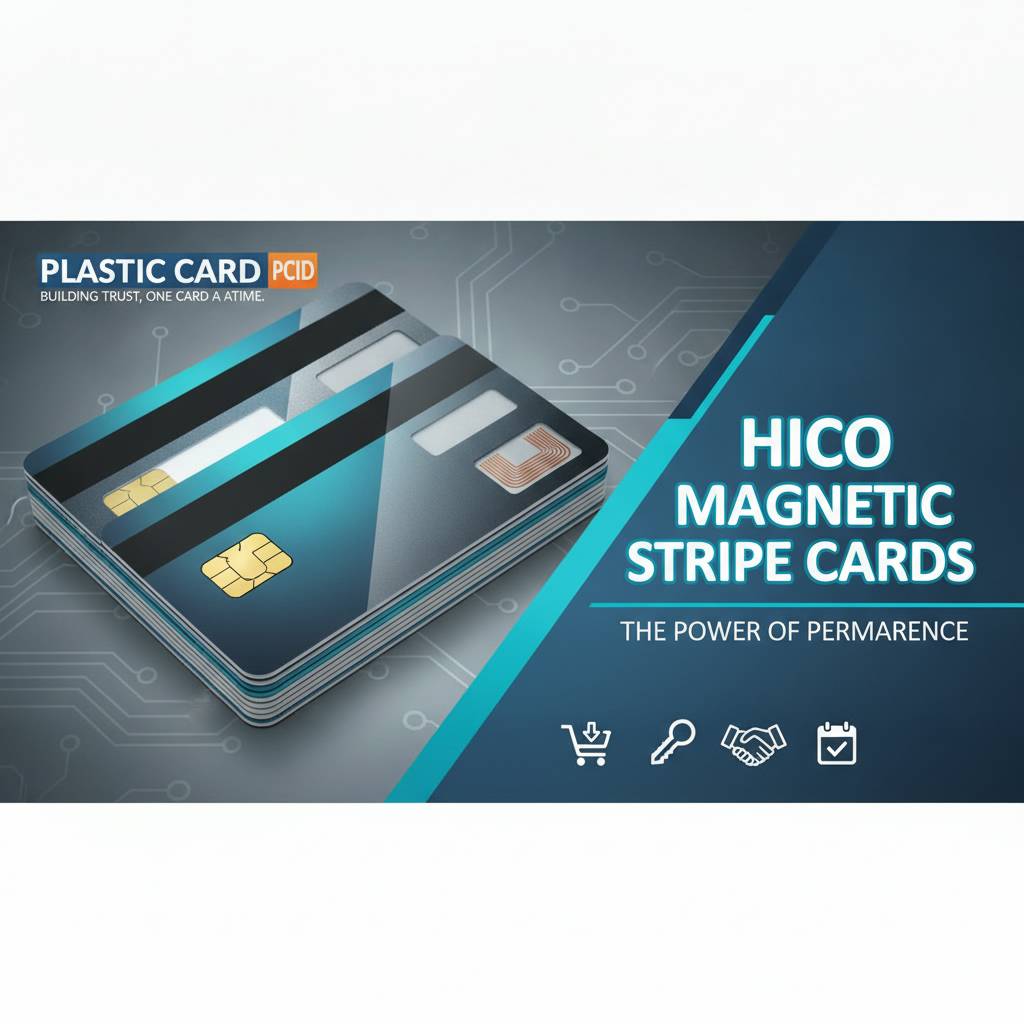
The breadth of use cases is part of what makes HiCo cards so central to Plastic Card ID's catalog. From a regional gym chain issuing membership cards across dozens of locations to a corporate campus running a multi-building access control system, the underlying requirement is always the same: data that survives long-term real-world use.
Retail Loyalty and Gift Card Programs
Retailers have discovered - sometimes dramatically - that the format of a loyalty card shapes customer behavior. Businesses switching from paper punch cards or digital-only systems to physical plastic loyalty cards report stronger top-of-wallet presence, more frequent use, and higher average transaction values. Plastic loyalty cards that live in wallets outperform paper alternatives not just in durability - they outperform them in revenue impact.
Gift cards represent one of the most data-critical card applications. A gift card stripe must maintain its encoded value data across unpredictable storage conditions, sometimes for months before redemption. HiCo encoding ensures that data integrity survives wherever the card travels. Retailers who have switched to plastic gift cards report sales increases in the range of 35-50% compared to paper-based alternatives - a figure that transforms the economics of a card program entirely.
Employee ID and Access Control
In an office environment, an employee badge might be swiped fifty times a day. In a manufacturing or warehouse setting, it might interact with multiple readers across an eight-hour shift. The cumulative stress on a magnetic stripe over a year of that use is substantial - and that is before accounting for the physical abuse of being clipped to a lanyard, dropped, bent slightly, and occasionally laundered in a pants pocket.
HiCo magnetic stripe cards built to CR80 ISO 7810 standard dimensions (30 mil thickness) handle this punishment and keep encoding intact. Organizations running employee ID programs that use magnetic stripe data for time-and-attendance, cafeteria purchases, or access logging cannot afford data loss. HiCo is the specification that makes in-house badge programs operationally dependable.
Event Credentials and Membership Programs
Multi-day conferences, trade shows, and entertainment venues use magnetic stripe cards to manage access across sessions, validate meal entitlements, or track continuing education credits. A card that fails on day two of a three-day event creates problems that are both logistical and reputational. HiCo encoding holds up through the entire event cycle, even as cards pass through pockets, lanyards, and repeated reader contact.
Membership programs - health clubs, professional associations, country clubs, co-working spaces - rely on cards that members will use for months or years. A membership card that fails communicates unreliability about the organization itself. Physical plastic cards, properly encoded in HiCo, signal legitimacy and permanence that paper or digital alternatives simply cannot replicate. That perception matters to members and to the organizations that serve them.
Blank HiCo Magnetic Stripe Cards: The Case for In-House Card Programs
 Blank CR80 cards with HiCo magnetic stripes are among the most versatile tools in any organization's operational toolkit. They arrive as clean slates - ready to be printed, encoded, and deployed however your program demands. Buying blank HiCo cards and printing in-house gives organizations the lowest per-card cost over time and the greatest flexibility for on-demand issuance.
This model is especially powerful for growing organizations. A small business starting with 50 cards a month can scale to thousands without changing suppliers or workflows. CPE supports card programs at every stage of that growth, providing blank HiCo magnetic stripe cards in quantities that match actual operational needs rather than forcing unnecessary minimums.
What to Look for When Buying Blank HiCo Cards
- CR80 standard dimensions (3.375" x 2.125") for compatibility with all standard card printers and readers
- 30 mil thickness - the ISO 7810 standard that ensures consistent feed through printers without jams
- High-coercivity stripe rated at 2750 Oe for maximum data retention across real-world use conditions
- Track availability - confirm whether cards support Track 1 only, Tracks 1 and 2, or all three tracks depending on your encoding requirements
- Consistent card quality - surface smoothness and uniform coating affect print quality; variation between batches creates inconsistent results
- Bulk pricing tiers that reward volume without forcing over-purchase for programs with variable monthly needs
- Supplier reliability - a card program stalls when inventory runs out; partnering with a supplier who has depth in stock and responsive fulfillment is not optional
Pairing HiCo Cards with the Right Card Printer
A HiCo magnetic stripe card is only as good as the encoder that writes to it. Card printers from Evolis, Zebra, and Fargo all offer magnetic stripe encoding modules - but they must be configured for HiCo media. Using a LoCo encoder on a HiCo card will produce a stripe that cannot be read reliably, if at all. Matching your encoder specification to your card specification is fundamental, not optional.
When you source both cards and printers through Plastic Card ID, compatibility is verified before anything ships. That end-to-end accountability is part of what makes CPE a strategic partner rather than a transactional supplier. The printer ribbons, cleaning kits, and maintenance supplies are part of that same ecosystem - keeping your card program running cleanly and consistently over time.
Managing a HiCo Card Program at Scale
Programs that issue cards at high volume - mass-production runs in the tens of thousands - have different operational considerations than small in-house programs. Encoding accuracy, batch consistency, quality control checks, and inventory management all become more complex as scale increases. Plastic Card ID has the experience and infrastructure to support programs at both ends of that spectrum, from 50 cards a month to enterprise-scale production runs.
For organizations that want cards encoded and ready to distribute - rather than handling encoding in-house - pre-encoded options and card affixing and mailing services remove that burden from internal teams. A complete card program solution means the card arrives in the right hands without your team managing every step of the fulfillment chain.
Advanced Magnetic Stripe and Hybrid Card Technologies
 HiCo magnetic stripe is not always a standalone technology. Modern card programs frequently combine magnetic stripes with other data-carrying technologies to create multi-function credentials that handle complex access and identification requirements. Understanding where HiCo fits in this broader landscape helps organizations make smarter long-term technology decisions.
Plastic Card ID carries a full spectrum of advanced card technologies - and the expertise to help organizations determine when a simple HiCo card is sufficient and when a hybrid or contactless solution better serves the program's goals.
Combining HiCo Stripes with Smart Chip Technology
Combo cards carry both a magnetic stripe and an embedded smart chip (contact or contactless), allowing a single card to interact with both legacy stripe readers and modern chip-based systems. This is particularly valuable during technology transitions - when an organization is upgrading its reader infrastructure but still needs to support existing stripe-based access points. Combo cards protect existing investments while enabling forward progress.
Smart chip cards can store significantly more data than a magnetic stripe, support encryption, and enable two-way communication with readers. MIFARE DESFire and other contactless standards open the door to sophisticated applications including multi-building access, cashless payment within a closed campus environment, and time-and-attendance systems that require audit-level security. When these capabilities need to coexist with stripe-based systems, combo cards are the answer.
RFID and Proximity Cards in the HiCo Context
RFID and proximity cards operate without physical contact - a key advantage in high-throughput access control environments where speed matters. These cards communicate via radio frequency with compatible readers, and like HiCo cards, they are built for longevity and repeated daily use. Some programs pair RFID credentials with a magnetic stripe for environments where both reader types exist.
Casino player cards represent a particularly interesting hybrid application. Casino loyalty programs demand cards that can survive aggressive daily use while maintaining encoding accuracy for point accumulation and player tracking. HiCo magnetic stripes handle the data integrity requirements while RFID or smart chip technology supports the contactless interactions that modern casino floor management systems require.
Specialty Card Options That Complement HiCo Technology
Beyond the standard PVC white card, CPE offers specialty substrates and formats that can carry HiCo magnetic stripes. Clear and frosted PVC cards create visually distinctive credentials while maintaining full magnetic stripe functionality. Custom die-cut shapes give event or marketing cards a memorable physical presence. Luxury metal cards in stainless steel, brass, or gold deliver a premium sensory experience that standard plastic cannot match.
These specialty formats are not novelties - they serve specific program goals. A VIP membership card in brushed stainless steel with a HiCo stripe communicates exclusivity while maintaining full operational compatibility with standard readers. When the card itself is part of the brand experience, material choices matter as much as encoding specifications.
Frequently Asked Questions About HiCo Magnetic Stripe Cards
After decades of conversations with customers across virtually every industry, Plastic Card ID has encountered the same questions about HiCo magnetic stripe cards again and again. The answers below reflect real-world experience - not theoretical specifications.
Can HiCo Cards Be Read by Standard Magnetic Stripe Readers?
Yes - with the correct reader configuration. Most commercial magnetic stripe readers are switchable or auto-detecting between HiCo and LoCo. Before deploying a HiCo card program, verify that your point-of-sale terminals, access control readers, or enrollment stations are configured for high-coercivity media. This is a simple configuration step for most modern readers, and it is one that Plastic Card ID can help you verify before you invest in card inventory.
Some older readers are fixed to a single coercivity setting. In those cases, the card specification must match the reader - introducing HiCo cards to a LoCo-only reader will result in read failures. Compatibility verification before purchase is not optional - it is the first step of responsible program planning. Call Plastic Card ID at 800.835.7919 and let an experienced specialist walk through your existing infrastructure before you commit to a card specification.
How Many Swipes Can a HiCo Magnetic Stripe Card Withstand?
Under normal conditions, a quality HiCo magnetic stripe card is rated for several thousand swipes before any meaningful degradation in read reliability. In practical terms, most card programs retire cards due to physical wear on the card body - surface scratching, edge wear, or a program update - long before the magnetic stripe itself becomes the failure point. HiCo encoding outlasts the card in most real-world applications.
Longevity is also influenced by storage conditions. Cards stored away from strong magnetic fields, excessive heat, and direct sunlight maintain encoding integrity for years. For most loyalty, membership, and employee badge programs, a HiCo card issued today should still be fully functional two to three years from now under typical use patterns.
What Quantities Can I Order and What Should I Expect to Pay?
HiCo magnetic stripe blank cards are available in quantities ranging from small starter packs suitable for a new program launch all the way to bulk orders supporting enterprise-scale deployment. Pricing scales with volume - larger orders produce meaningfully lower per-card costs, which significantly improves the economics of high-volume programs over time.
Exact pricing depends on card type, quantity, and any additional specifications such as track configuration or combined technologies. What Plastic Card ID can offer that no price list fully captures is strategic guidance on order quantities that match your actual program cadence - avoiding over-investment in slow-moving inventory while ensuring you never face a card shortage at a critical moment. Smart buying strategy is part of the value a 25-year partner brings to the table.
Ready to Build a Better Card Program? Start With Plastic Card ID
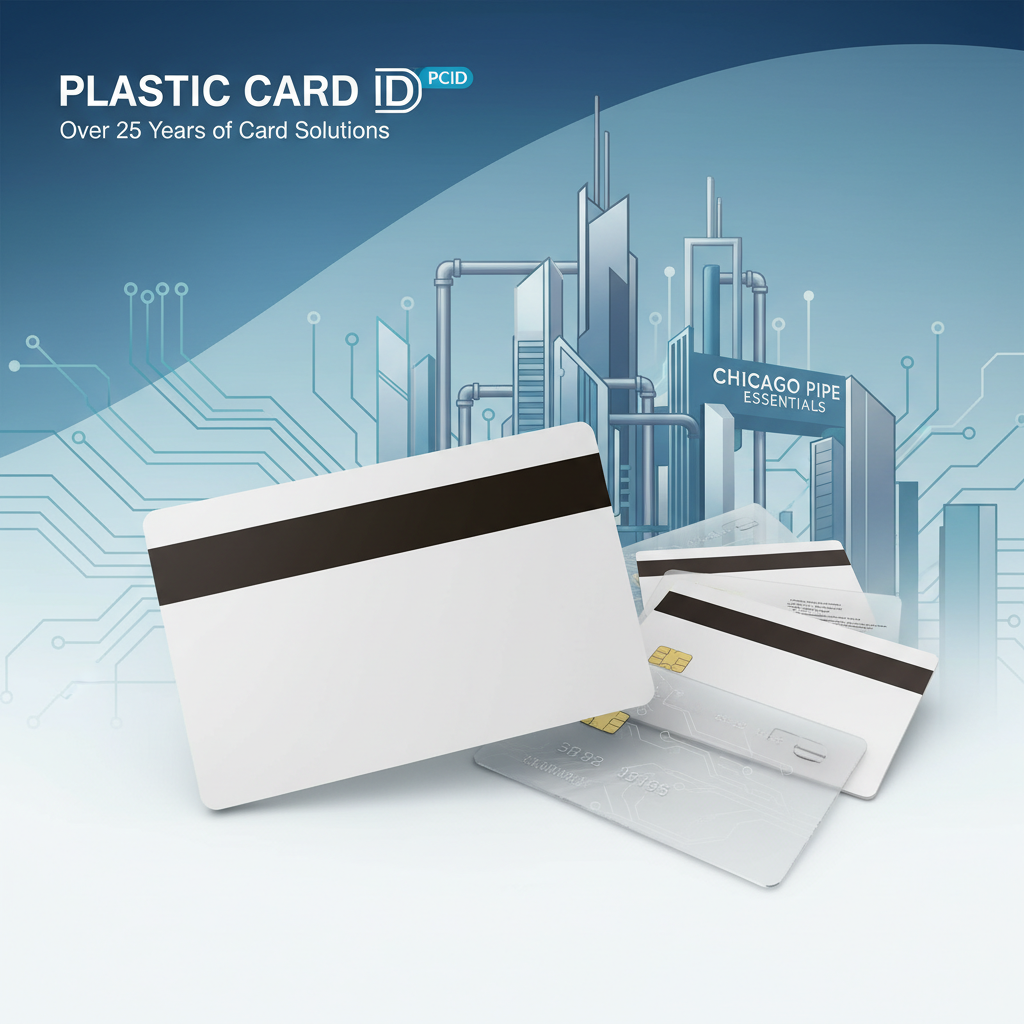 A HiCo magnetic stripe card is not simply a piece of plastic with a brown stripe on the back. It is a durable, data-secure, operationally dependable credential that has powered loyalty programs, access control systems, employee badge programs, gift card initiatives, and membership platforms for decades. Understanding what separates HiCo from its alternatives is the foundation of building a card program that works - reliably, scalably, and cost-effectively.
Plastic Card ID has helped more than 100,000 customers across the United States navigate exactly these decisions. With over 50 million cards sold and a catalog that spans blank PVC cards, advanced hybrid credentials, card printers, ribbons, cleaning supplies, and complete fulfillment services, CPE is positioned to support your program from the very first card through every stage of growth.
Contact Plastic Card ID today at 800.835.7919 - and discover what a true card program partner looks like.