Access Control Levels with Plastic Cards: A Practical Guide
Table of Contents []
- Access Control Levels with Plastic Cards: How Plastic Card ID Helps You Build a Smarter Security Program
- Understanding Access Control Levels and Why Card Selection Is Critical
- Card Technologies Available Through CPE: A Closer Look
- Building Your In-House Access Card Program: Equipment and Supplies
- Specialty Access Cards for Specific Industries and Environments
- Frequently Asked Questions About Access Control Cards
- Why Plastic Card ID Is the Right Partner for Your Access Card Program
Access Control Levels with Plastic Cards: How Plastic Card ID Helps You Build a Smarter Security Program
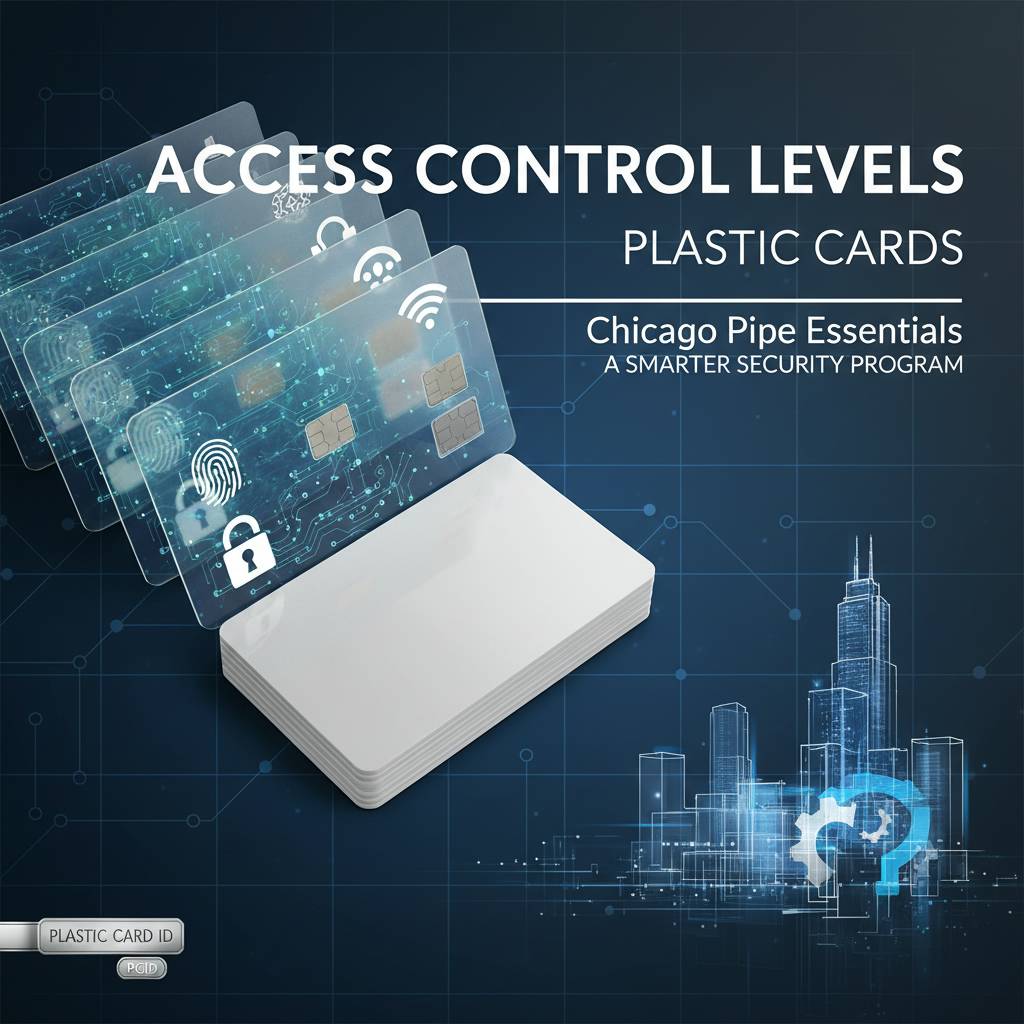 Walk into almost any modern office building, hospital, university, or manufacturing facility and you will notice something consistent: people carrying plastic cards that open doors, log them into systems, and signal exactly who they are and where they are allowed to go. Access control levels with plastic cards are the backbone of physical security for organizations of every size - and yet many businesses still underestimate how much the card itself determines the success of the entire system.
The technology encoded inside a card, the material it is made from, the encoding standard it uses - these choices define whether your security program holds up or falls apart at the door. Whether you are running a small office with basic keycard entry or a multi-building campus with tiered clearance zones, the right card partner makes all the difference. That is where CPE comes in, with over 25 years of experience and more than 50 million cards delivered to businesses across the United States.
| Card Type | Technology | Best Use Case | Access Level Suitability |
|---|---|---|---|
| Proximity Cards | 125 kHz RFID | General building entry | Low to mid-tier |
| MIFARE Smart Cards | 13.56 MHz contactless | Multi-zone access, data storage | Mid to high-tier |
| MIFARE DESFire Cards | 13.56 MHz, AES encryption | High-security environments | High-tier, enterprise |
| HiCo Magnetic Stripe | 2750 Oe magnetic stripe | Hotel keys, gym access | Low to mid-tier |
| Blank PVC CR80 Cards | No encoding (print-ready) | In-house badge programs | Customizable |
Understanding Access Control Levels and Why Card Selection Is Critical
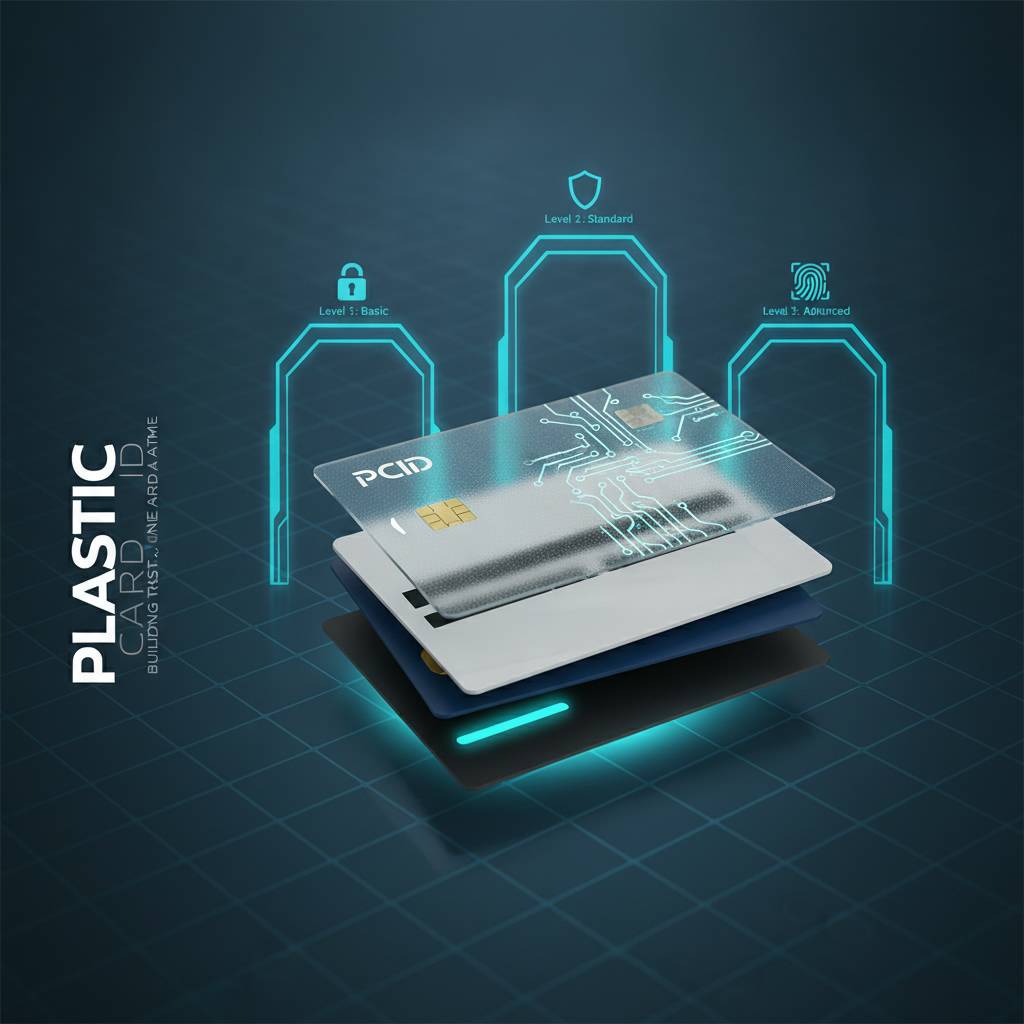 Access control is rarely a one-size-fits-all proposition. A front lobby requires a different security response than a server room, a laboratory, or an executive suite. Tiered access control with plastic cards allows organizations to define precisely who can enter which areas, when, and under what conditions - without relying on physical keys that can be copied, lost, or handed off casually.
Most organizations structure their access levels in tiers ranging from general public zones at the lowest level up through restricted zones, sensitive areas, and high-security clearance environments at the top. Each tier requires cards with specific capabilities. Getting that match right - card technology to security tier - is the foundational decision that everything else builds upon.
Level 1: General Access Cards for Public and Common Areas
At the most basic tier, access control cards simply identify someone as authorized to be in the building or facility. These cards might open main entrances, allow use of shared amenities, or serve as visible identification that staff can quickly recognize. Blank PVC CR80 cards printed in-house are an excellent solution here, giving organizations total design flexibility and low per-card costs.
Basic magnetic stripe cards in LoCo (300 Oe) format work well for general access applications where data does not need to survive near magnetic fields. Simple proximity cards at 125 kHz are another reliable option for general entry - inexpensive, widely compatible, and easy to issue and deactivate when someone leaves.
Level 2: Intermediate Access for Department or Role-Based Zones
The second tier is where most employee access programs live. A card grants entry to specific wings, floors, or departments based on the cardholder's role. HiCo magnetic stripe cards with 2750 Oe encoding are a strong choice at this level - they resist accidental erasure from common magnetic fields and can store enough data to interact with most mid-tier access management software.
RFID proximity cards are also widely deployed at this level. They are contactless, quick, and compatible with a wide range of readers. Employees tap or wave their card within range of a reader panel and entry is either granted or denied based on the system's configuration. This frictionless experience keeps workflow moving without sacrificing control.
Level 3: High-Security Access for Restricted and Sensitive Environments
For environments where the stakes are highest - data centers, pharmaceutical labs, financial back offices, secure government facilities - cards must offer significantly more than simple read/write capability. MIFARE DESFire smart cards with AES encryption represent the current standard for serious high-security access control. They store multiple encrypted data sets, resist cloning attacks, and can carry multiple application layers on a single card.
At this level, the card itself becomes a sophisticated security device. It is not just unlocking a door - it is authenticating identity, logging the access event, potentially interacting with time-and-attendance software, and resisting attempts at duplication or spoofing. The investment in higher-capability cards is entirely justified by the risk profile of the environments being protected.
Card Technologies Available Through CPE: A Closer Look
What separates a real card program from a makeshift one is access to the full spectrum of card technologies - not just one or two product lines. CPE stocks and supplies the complete range, from the simplest blank white PVC card up through contactless smart cards with advanced encryption. That breadth means your program can start simple and scale up without ever changing suppliers.
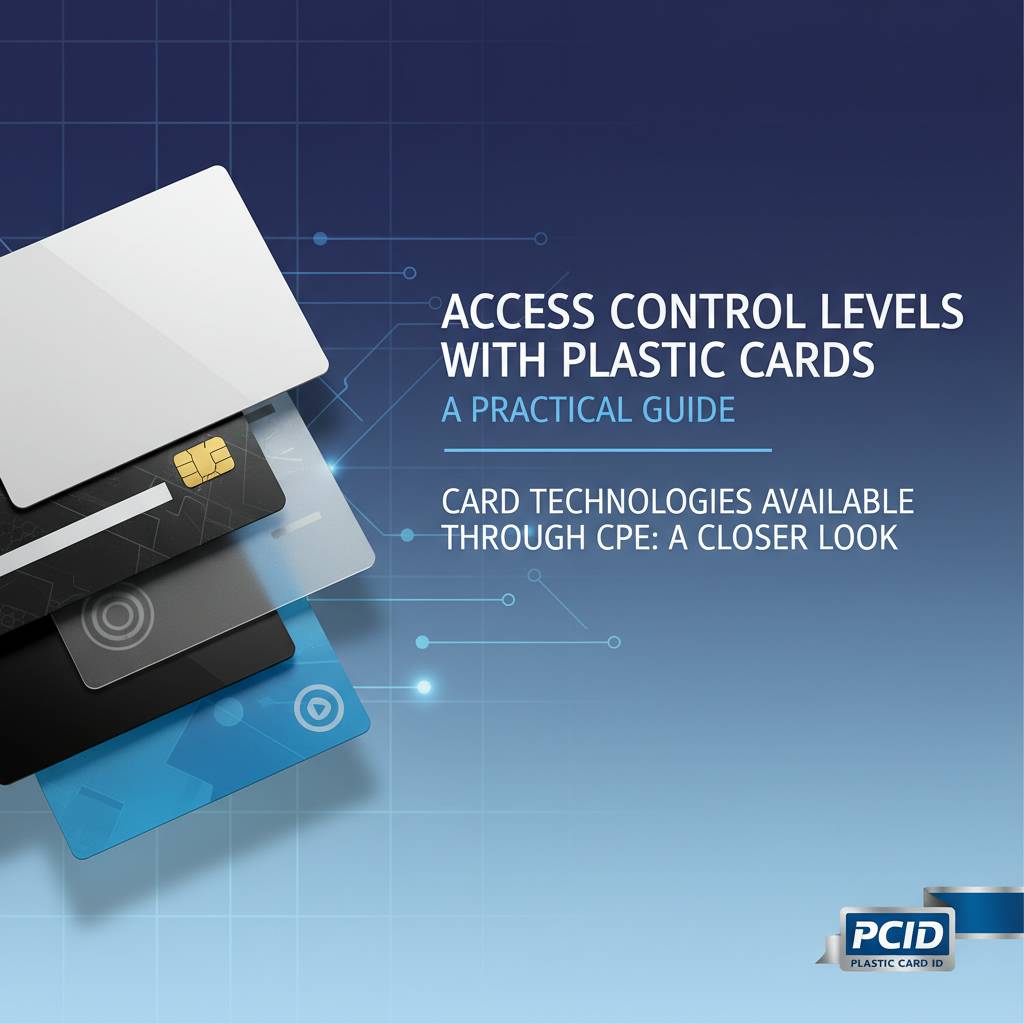
Technology choices are not just about capability - they are about compatibility. The cards you choose must work with the readers and access control panels already installed or planned for your facility. CPE can help you navigate that compatibility landscape with confidence born from over 100,000 customers served across a staggering range of industries and environments.
Proximity Cards: The Reliable Workhorse of Building Access
Proximity cards operating at 125 kHz have been the dominant format in commercial access control for decades, and for good reason. They are durable, contactless, and compatible with virtually every legacy reader system on the market. Cards at this frequency are readable at distances of a few inches, making them fast and convenient for high-traffic entry points.
For organizations managing hundreds or thousands of cardholders across multiple locations, proximity cards offer an excellent balance of cost and capability. They are easy to reprogram when access rights change, and easy to deactivate instantly when a card is reported lost or an employee departs. That administrative simplicity has real operational value.
Smart Chip Cards and MIFARE Technology
Smart chip cards operating at 13.56 MHz offer a significant leap in capability. These cards can store multiple kilobytes of data, support multiple access applications on a single card, and communicate using encrypted protocols that make unauthorized reading or cloning extremely difficult. MIFARE DESFire EV2 and EV3 cards represent the gold standard in contactless smart card security.
Beyond access control, smart cards in this category can simultaneously serve as loyalty cards, transit passes, cashless payment tools for on-site cafeterias, and employee ID cards. That convergence of functions on a single card reduces the number of credentials each person must carry while actually increasing security through better data management and audit trails.
Call 800.835.7919 to discuss which smart card format is compatible with your existing readers and access management software. The right answer depends heavily on your infrastructure, and the team at CPE has the expertise to guide you to it.
Magnetic Stripe Cards: HiCo vs. LoCo for Access Applications
Magnetic stripe cards remain relevant in access control, particularly in hospitality environments. Hotel key cards are perhaps the most familiar application - guests receive a card encoded at check-in and it expires at checkout. HiCo cards with 2750 Oe encoding are far more resistant to accidental demagnetization than LoCo cards, making them the right choice for cards that will be carried alongside smartphones and other magnetic field sources.
LoCo magnetic stripe cards (300 Oe) are suitable for shorter-term, lower-stakes applications where the risk of demagnetization is controlled. Event access badges, short-term visitor passes, and promotional credentials are appropriate use cases. Knowing which encoding level fits your application saves you money and prevents operational headaches from prematurely failing cards.
Building Your In-House Access Card Program: Equipment and Supplies
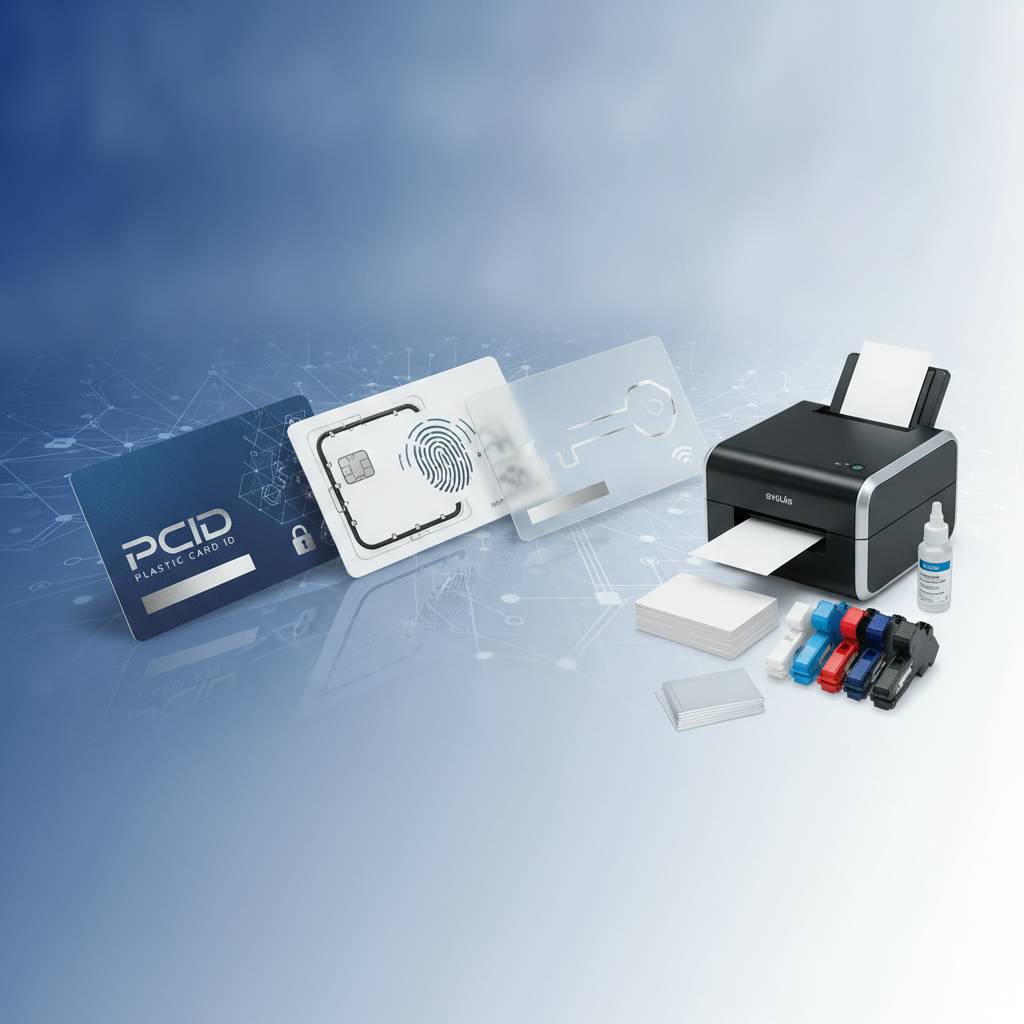 Many organizations reach a point where outsourcing every card print run becomes inefficient. When you are issuing new employee badges weekly, updating access rights regularly, or producing cards on demand for visitors and contractors, an in-house printing setup pays for itself quickly. The total cost of ownership calculation almost always favors in-house production once volume and flexibility are properly accounted for.
CPE supplies not just the blank and pre-encoded cards, but the complete ecosystem of printers, ribbons, cleaning kits, and accessories needed to run a smooth in-house program. This is genuinely a one-stop shop - you are not piecing together compatible components from five different vendors.
Card Printers from Evolis, Zebra, and Fargo
Choosing the right printer is as important as choosing the right card. CPE carries a full lineup of card printers from three of the most respected names in the industry: Evolis, Zebra, and Fargo. Each brand has a range of models suited to different volume needs, encoding requirements, and budget levels - from desktop single-sided units for small offices up to high-speed dual-sided printers for enterprise HR departments.
When selecting a printer for an access card program, it is essential to match the printer's encoding module capabilities to the card technology you plan to use. Proximity and smart card encoding typically requires dedicated modules. Magnetic stripe encoding is more universally available. The team at CPE can match you with the exact printer configuration your program requires.
Ribbons, Cleaning Kits, and Consumables That Keep Quality Consistent
A printer is only as good as the consumables running through it. Low-quality ribbons produce faded badges, misaligned color panels, and cards that look unprofessional - undermining the legitimacy signal that a well-produced access card is supposed to deliver. Genuine manufacturer-grade ribbons from CPE ensure crisp, consistent output every single time.
Cleaning kits are an often-overlooked necessity. Dust and debris inside a card printer accumulate over time and degrade print quality progressively. Regular cleaning cycles using proper cards and swabs extend the life of print heads and rollers significantly, protecting your equipment investment and maintaining the standard of output your program depends on.
Card Accessories: Carriers, Sleeves, and Mailing Services
Once cards are produced, they need to reach their intended users. CPE offers card carriers, protective sleeves, and a full card affixing and mailing service that handles the physical distribution side of your program. Professional presentation at the point of delivery reinforces the value and seriousness of the credential being issued.
Sleeves extend card life by protecting against surface scratches and wear - important for cards that will be handled daily for months or years. Carriers allow cards to be mailed safely and presented alongside printed instructions or welcome materials. These finishing details distinguish a polished card program from a purely functional one.
Specialty Access Cards for Specific Industries and Environments
 Standard card formats serve most access control applications reliably. But certain industries and environments demand something beyond standard - whether that means a card shape tailored to specific hardware, materials engineered for harsh environments, or credentials that communicate premium status as much as access rights.
The specialty card catalog at CPE covers these needs comprehensively. From luxury metal cards in stainless steel, brass, and gold for executive credentials to clear frosted cards for design-forward organizations to custom die-cut shapes for unique brand experiences - the options extend well beyond the ordinary plastic rectangle.
Hotel Key Cards and Hospitality Access Programs
Hospitality access is a high-volume, high-turnover application. Hotels issue and deactivate hundreds or thousands of cards every day. Speed, reliability, and low per-card cost are the defining priorities for any hotel key card program. Magnetic stripe cards in HiCo format remain the dominant technology in this space, though many newer properties are transitioning to RFID-based systems for contactless guest experience.
The volume requirements of hotel programs make in-house printing and encoding almost universal. CPE supports hotel programs with bulk blank card supply, compatible printer systems, and the ribbons and consumables to keep production flowing without interruption. Consistency across thousands of cards per month is the standard CPE delivers to.
Casino Player Cards and VIP Access Credentials
Casino environments blend access control with loyalty tracking in ways few industries replicate. A player card must survive constant handling, encode player identity and tier status, and stand up to the wear of frequent use in a physically demanding environment. Casino player cards from CPE are built for exactly this combination of demands.
VIP and high-roller tiers often warrant premium card materials - metal cards in particular convey status and permanence that plastic cannot fully replicate. A cardholder who receives a stainless steel or gold-finish VIP credential feels the difference immediately, and that tangible premium experience translates directly to loyalty and perceived value.
RFID Cards for Multi-Zone Campus Access
University campuses, corporate headquarters with multiple buildings, and healthcare systems with numerous facilities all share a common access challenge: different zones with different access requirements, all served by a single credential in the cardholder's wallet. Multi-application RFID smart cards solve this elegantly, carrying the permissions for every zone on a single card managed by a central access control system.
Campus environments also benefit from the dual-use capability of smart cards - the same card that opens dormitory doors might load meal plan credits, log library access, or authenticate logins to campus computer systems. That consolidation reduces administrative complexity, improves user experience, and creates a far more coherent identity management picture for the institution.
Frequently Asked Questions About Access Control Cards
After more than 25 years and over 100,000 customers, the team at CPE has fielded nearly every question a card program manager can ask. The ones below come up most reliably - and the answers reflect the practical wisdom accumulated from decades of real-world card program support.
What Is the Difference Between RFID and Proximity Cards?
Both proximity and RFID cards operate without physical contact, which causes frequent confusion between the terms. Proximity cards typically operate at 125 kHz and use simpler read-only technology. RFID smart cards, on the other hand, most commonly operate at 13.56 MHz and support read/write capability, encryption, and multi-application use. Proximity cards are adequate for general access; smart RFID cards are required for higher-security or multi-function deployments.
The practical implication for a buyer is that these two card families are not interchangeable - readers designed for 125 kHz proximity cards will not read 13.56 MHz smart cards and vice versa. Before selecting cards, confirming the operating frequency and protocol supported by your reader infrastructure is essential. The CPE team can help you identify your reader specifications and match cards accordingly.
How Many Cards Should I Order at Once?
CPE serves programs ranging from 50 cards per month up to mass production runs in the tens of thousands. The right order quantity depends on your program size, storage capacity, and how frequently your card design or encoding configuration changes. For access cards where encoding happens at the time of issuance via your own printer, ordering larger quantities of blank cards upfront is almost always cost-effective.
- Programs issuing under 100 cards per month: order 500-1,000 blank cards at a time for efficient per-unit cost
- Mid-size programs (100-500 cards monthly): quantities of 1,000-5,000 typically balance cost and flexibility
- Enterprise and campus programs: bulk orders of 10,000 deliver the lowest per-card cost and simplify procurement
- Specialty encoded cards (pre-programmed RFID or magnetic): order based on projected 3-6 month usage to avoid obsolescence
- Hotel and high-turnover programs: maintain buffer stock of at least 30 days' supply to prevent operational gaps
Can I Reach Your Team Directly for Custom Program Advice?
Absolutely. 800.835.7919 connects you directly with the CPE team, which has supported card programs across virtually every industry vertical in the United States. Whether you are starting a new access control program from scratch, upgrading from an older technology, or trying to consolidate multiple card types into a single credential, the conversation starts with understanding your specific environment and goals.
No two access control programs are identical, and the best guidance is always tailored. Speaking directly with someone who has seen hundreds of programs similar to yours is a far more efficient path to the right solution than trying to reverse-engineer it from product specifications alone.
Why Plastic Card ID Is the Right Partner for Your Access Card Program
 The card supplier you choose shapes your program in ways that go well beyond the initial purchase order. Consistency of supply, breadth of product range, technical knowledge available when configurations change, and responsiveness when something unexpected happens - these are the dimensions that define a true strategic partnership versus a transactional vendor relationship.
Plastic Card ID has built its reputation over 25-plus years on exactly this kind of partnership. More than 100,000 customers and 50 million cards later, the depth of experience is simply not replicable by newer or narrower-focused suppliers. When your access control program grows, changes technology, or needs to scale fast, you want a partner who has already navigated that exact situation dozens of times before.
Consistent Supply for Programs of Any Scale
One of the most disruptive things that can happen to an access card program is running out of blank cards when there are employees to badge or guests to credential. Supply reliability is not an afterthought at CPE - it is a core operational commitment. Programs that depend on consistent card availability rely on CPE to deliver, and that expectation is met day after day.
Whether you need 50 cards or 50,000, the fulfillment process is designed to ship quickly and accurately. For high-volume programs, establishing a standing order relationship with predictable delivery schedules eliminates the purchasing overhead and supply uncertainty that plague organizations managing cards through ad-hoc ordering.
A Complete Catalog Under One Roof
The operational efficiency of sourcing cards, printers, ribbons, cleaning kits, sleeves, and mailing services from a single supplier is substantial. No compatibility guesswork, no split invoices, no finger-pointing between vendors when something does not work as expected. Everything in the CPE catalog is selected to work together, and the team understands how each component interacts with the rest of your program.
This catalog depth also means your program can evolve without switching suppliers. Starting with basic blank cards and a desktop printer, then adding RFID encoding capability a year later, then moving to metal credentials for executive tiers - each step is available within the same supplier relationship you already have. That continuity has real value that compounds over time.
Expertise That Comes from 25 Years in the Field
There is no substitute for time in a technical field. The card technology landscape has shifted dramatically over the past quarter century - from purely magnetic stripe systems to proximity cards to the sophisticated MIFARE smart card ecosystem that defines high-security access today. CPE has been at the center of that evolution, supplying cards at every stage and accumulating practical expertise that classroom training cannot replicate.
That expertise is available to you as a customer. Questions about compatibility, encoding standards, reader protocols, card specifications, or printer configurations are answered by people who have worked through those exact questions with hundreds of clients. The value of that knowledge access should not be underestimated when you are building or upgrading a program that your organization's security depends on.
Ready to build or upgrade your access card program? Contact Plastic Card ID today at 800.835.7919 and put 25 years of card program expertise to work for your organization. From blank PVC cards and proximity access cards to advanced MIFARE DESFire smart cards and complete in-house printing systems, everything your program needs is one call away.
Previous Page