How to Start an In-House ID Card Printing Program
Table of Contents []
- How to Start an In-House ID Card Printing Program with Plastic Card ID
- Why In-House Card Printing Makes Strategic Sense
- Choosing the Right Card Printer for Your Program
- Understanding Blank PVC Cards and Your Options
- Setting Up Your Card Design and Issuance Workflow
- Accessories, Supplies, and Ongoing Program Maintenance
- Frequently Asked Questions About Starting an In-House ID Card Program
- Start Your In-House Program Today with Plastic Card ID
How to Start an In-House ID Card Printing Program with Plastic Card ID
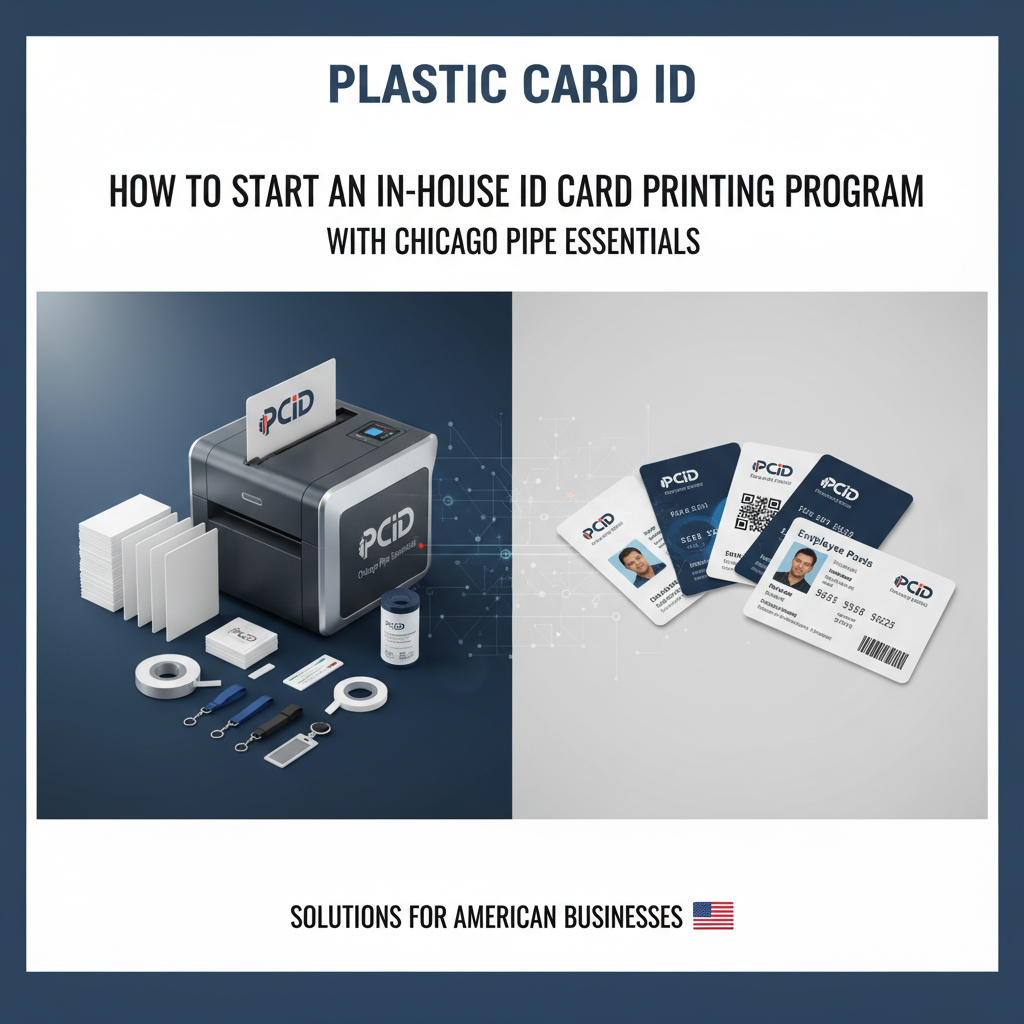 Somewhere between your third trip to an outside print vendor and the moment you realized your employee badges still hadn't arrived, the idea probably crossed your mind: what if we just did this ourselves? It's a reasonable question - and the answer is more accessible than most people expect. Starting an in-house ID card printing program doesn't require a massive budget, a dedicated IT department, or a degree in graphic design. What it requires is the right information, the right equipment, and the right partner.
That partner matters more than people realize. CPE has spent over 25 years supplying plastic cards and card printing equipment to businesses of every size, from single-location nonprofits printing 50 cards a month to large enterprises running tens of thousands. The depth of that experience means you're not navigating this alone - you're drawing on a knowledge base that's been tested against virtually every use case imaginable.
This guide walks you through everything: what equipment you need, which cards to stock, how to encode and personalize at scale, and what separates a mediocre card program from one that genuinely elevates your organization's professionalism and efficiency.
| Component | What You Need | Why It Matters |
|---|---|---|
| Card Printer | Evolis, Zebra, or Fargo model | Produces professional-quality, personalized cards on demand |
| Blank PVC Cards | CR80, 30 mil, ISO 7810 | Industry-standard size, durable, printer-compatible |
| Printer Ribbons | YMCKO or monochrome, brand-matched | Ensures consistent color output and card longevity |
| Encoding Options | Magnetic stripe, RFID, smart chip | Adds functionality for access, loyalty, or data storage |
| Accessories | Cleaning kits, sleeves, card carriers | Protects equipment and cards, extends lifespan |
Why In-House Card Printing Makes Strategic Sense
 Organizations that rely on outside vendors for ID cards are always at a disadvantage. Lead times, minimum order requirements, and the inability to update card data quickly can make even routine card programs frustrating. Bringing your card production in-house flips that dynamic entirely. You control the timeline. You control the design. You can issue a card in minutes rather than waiting days or weeks.
The financial argument is equally compelling. Once the initial printer investment is made, the per-card cost drops dramatically compared to outsourcing. Blank CR80 PVC cards are inexpensive in volume, ribbons are predictable costs, and you eliminate rush fees, shipping markups, and vendor margins. Over a year or two, the savings often cover the cost of the printer several times over.
Control and Speed: The Twin Advantages
Imagine a new employee starting Monday. With an in-house setup, their ID badge is ready before they walk through the door. On-demand card printing is a genuine operational advantage that affects security, onboarding, and employee experience simultaneously. No more waiting on vendors, no more batch orders, no more gaps in access control.
Speed matters in event credentialing too. Whether you're running a conference, a sporting event, or a multi-day trade show, being able to print credentials on-site and on-demand is the difference between a smooth check-in process and a chaotic one. CPE works with event organizers regularly and understands exactly what equipment and card stock delivers under those conditions.
Cost Efficiency Over Time
The economics of in-house printing improve steadily as volume increases. A basic card printer can be acquired for well under $500, while professional-grade dual-sided models with encoding capabilities range from $800-$2,500. Against an ongoing card program that would otherwise cost $1.50-$3.00 per card through an outside vendor, the math resolves quickly in favor of ownership.
Blank PVC cards purchased through Plastic Card ID in quantities of 500 or more bring the per-card cost down significantly. Combine that with in-house ribbons and maintenance supplies, and your monthly card program budget becomes predictable, controllable, and efficient. That's not a sales pitch - it's arithmetic.
Professionalism That Paper Cannot Replicate
There's something immediate and undeniable about a well-made plastic ID card. It communicates permanence. It signals that an organization is serious, established, and invested in its people and processes. Paper credentials, laminated or not, simply don't carry the same weight - and in environments where access control or brand identity are important, that gap is consequential.
Plastic membership and ID cards outlast paper alternatives by years, surviving wallet wear, humidity, and daily handling without degrading. That durability isn't incidental - it's the point. Cards that stay in circulation longer reduce reissuance costs and maintain consistent brand presence across your customer or employee base.
Choosing the Right Card Printer for Your Program
The printer is the centerpiece of any in-house card program, and choosing the wrong one can create bottlenecks, quality issues, or unnecessary expense. The good news: the three major brands CPE carries - Evolis, Zebra, and Fargo - each excel in specific scenarios, and matching your needs to the right model is straightforward once you understand the variables.
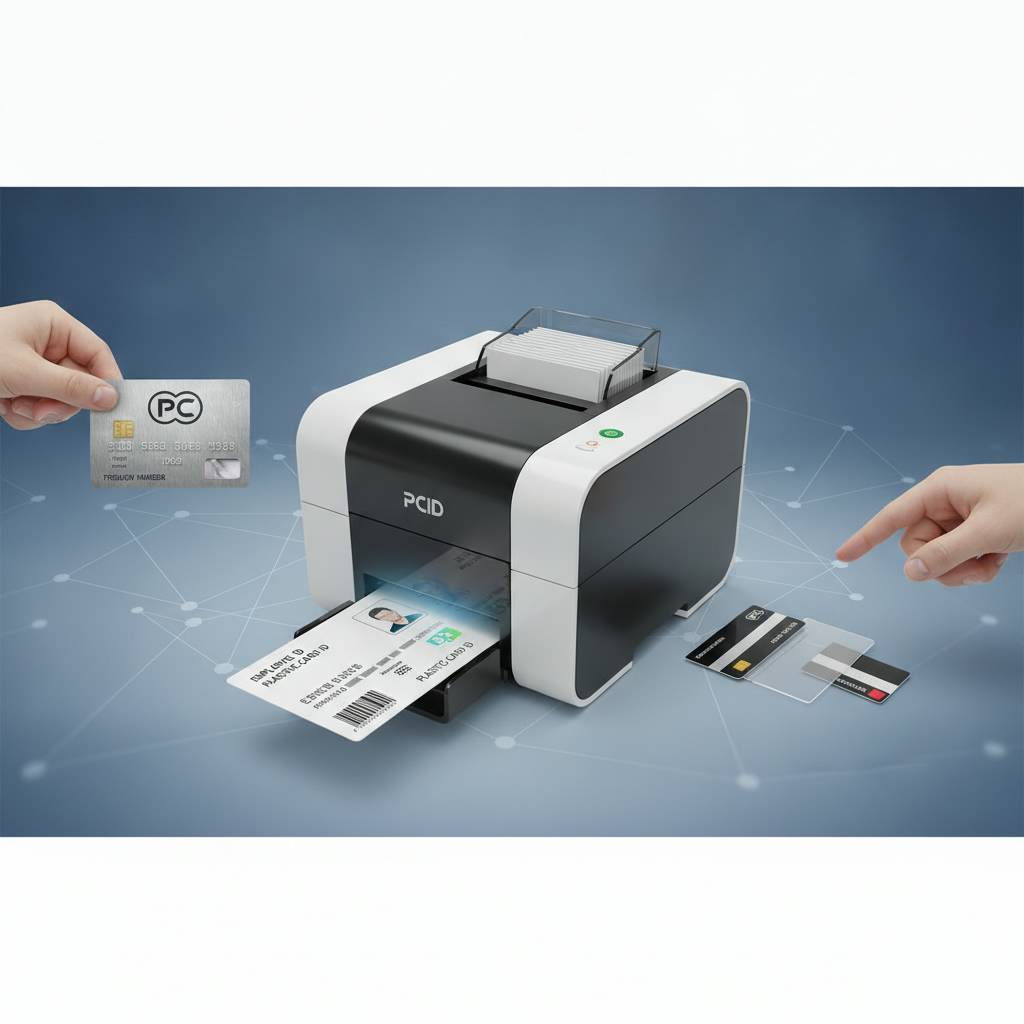
Key factors include your monthly volume, whether you need single or dual-sided printing, what encoding capabilities you require (magnetic stripe, RFID, smart chip), and whether you'll be printing in full color or monochrome. Each of these has a meaningful impact on which printer serves you best.
Evolis Printers: Elegant Performance for Mid-Volume Programs
Evolis printers are widely regarded as some of the most user-friendly professional card printers on the market. Their compact footprint, intuitive software, and consistent output quality make them a favorite among organizations running ID programs without dedicated print-room staff. Evolis is a particularly strong choice for offices, schools, and membership organizations that need reliable performance without complexity.
Models like the Evolis Primacy and Zenius handle full-color printing with precision, and optional encoding modules can be added for magnetic stripe or smart chip functionality. Ribbon compatibility and cleaning cycle reminders keep maintenance simple and consistent.
Zebra Printers: High-Volume Reliability
When volume is a primary consideration - hundreds or thousands of cards per month - Zebra printers are often the professional's choice. Built for durability and throughput, Zebra models like the ZC300 and ZC500 series are engineered to handle demanding print schedules without compromising output quality. Zebra's encoding options are among the most comprehensive available, supporting magnetic stripe, contact smart card, and contactless RFID in a single unit.
Large enterprises, government agencies, and healthcare systems often gravitate toward Zebra for the combination of speed, reliability, and integration with existing access control infrastructure. If your card program is expected to scale, starting with a Zebra printer means you won't outgrow your equipment quickly. Call 800.835.7919 to discuss which Zebra model fits your anticipated volume.
Fargo Printers: Trusted Workhorses with Deep Feature Sets
Fargo printers, now part of the HID Global family, have built a decades-long reputation for dependable, high-quality card printing across industries. Their DTC series offers exceptional value for organizations that need professional output without enterprise pricing, while the HDP series uses high-definition printing technology that produces photo-realistic image quality ideal for secure ID badges.
Fargo's lamination-capable models add an extra layer of security and card durability, making them a popular choice for government IDs, student credentials, and healthcare worker badges where card integrity is non-negotiable. CPE stocks Fargo ribbons, cleaning supplies, and accessories to support these printers across their operational lifespan.
Understanding Blank PVC Cards and Your Options
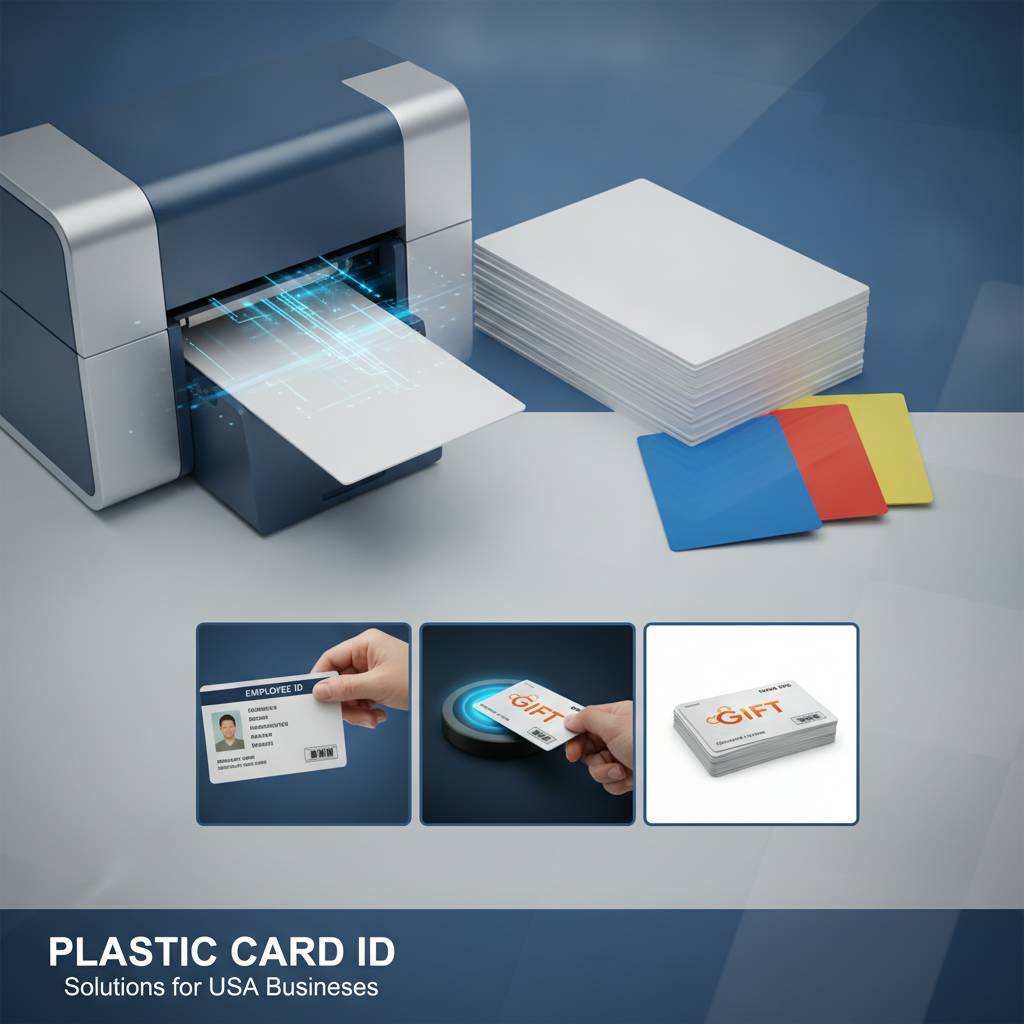 The blank card is where your program begins. Not all cards are identical, and understanding the differences between available formats, thicknesses, and technologies will help you make smart purchasing decisions from day one. The CR80 format - 3.375 inches by 2.125 inches, 30 mil thick - is the ISO 7810 standard and the compatible format for virtually every card printer on the market.
Choosing the right card stock is as important as choosing the right printer. The card you select determines what can be printed on it, what can be encoded into it, and how long it will survive in daily use. Plastic Card ID stocks an extensive range to match every application and budget.
Blank White PVC Cards: The Versatile Foundation
Standard blank white CR80 cards are the workhorse of in-house card programs. Their clean white surface accepts full-color printing beautifully, making them suitable for employee badges, event credentials, membership cards, loyalty cards, and virtually any other application. Buy them in volume and your per-card cost drops to a fraction of what outsourcing costs.
These cards are available with or without magnetic stripes, in HiCo (high coercivity) and LoCo (low coercivity) magnetic formulations. HiCo stripes are more resistant to accidental erasure and are the preferred choice for any card that will live in a wallet alongside other magnetic items. LoCo cards are appropriate for short-term or controlled-environment applications like hotel key cards.
Specialty Card Stock: Clear, Frosted, and Colored Options
For organizations that want their cards to stand out visually, specialty card stock opens up a world of design possibilities. Clear and frosted PVC cards create a striking, premium aesthetic that photographs exceptionally well and communicates quality at first glance. Colored stock - available in a variety of pre-pigmented options - can replace printed color fills and reduce ribbon usage.
These specialty formats are particularly popular for VIP membership cards, corporate loyalty programs, and any application where visual differentiation reinforces brand value. CPE can help identify the right card format for your specific design intent and printer compatibility requirements.
RFID, Proximity, and Smart Chip Cards
When your card program needs to do more than display information - when it needs to open doors, store data, or interact with readers - the card technology itself becomes critical. Proximity cards operating at 125kHz are the traditional choice for access control and remain widely deployed. RFID smart cards at 13.56MHz, including MIFARE DESFire variants, offer higher security and greater data capacity for sophisticated applications.
- Proximity cards (125kHz): Compatible with most legacy access control systems, reliable and cost-effective
- MIFARE Classic: Entry-level contactless smart card technology, suitable for basic loyalty and access programs
- MIFARE DESFire: Advanced encryption and multi-application capability, preferred for high-security environments
- Contact smart chip cards: Physical chip contact for applications requiring data read/write operations
- Dual-interface cards: Support both contact and contactless interaction for maximum flexibility
Plastic Card ID stocks all of these formats and can advise on compatibility with your existing infrastructure or planned system deployment. Making the right technology choice at the card procurement stage prevents expensive mistakes downstream.
Setting Up Your Card Design and Issuance Workflow
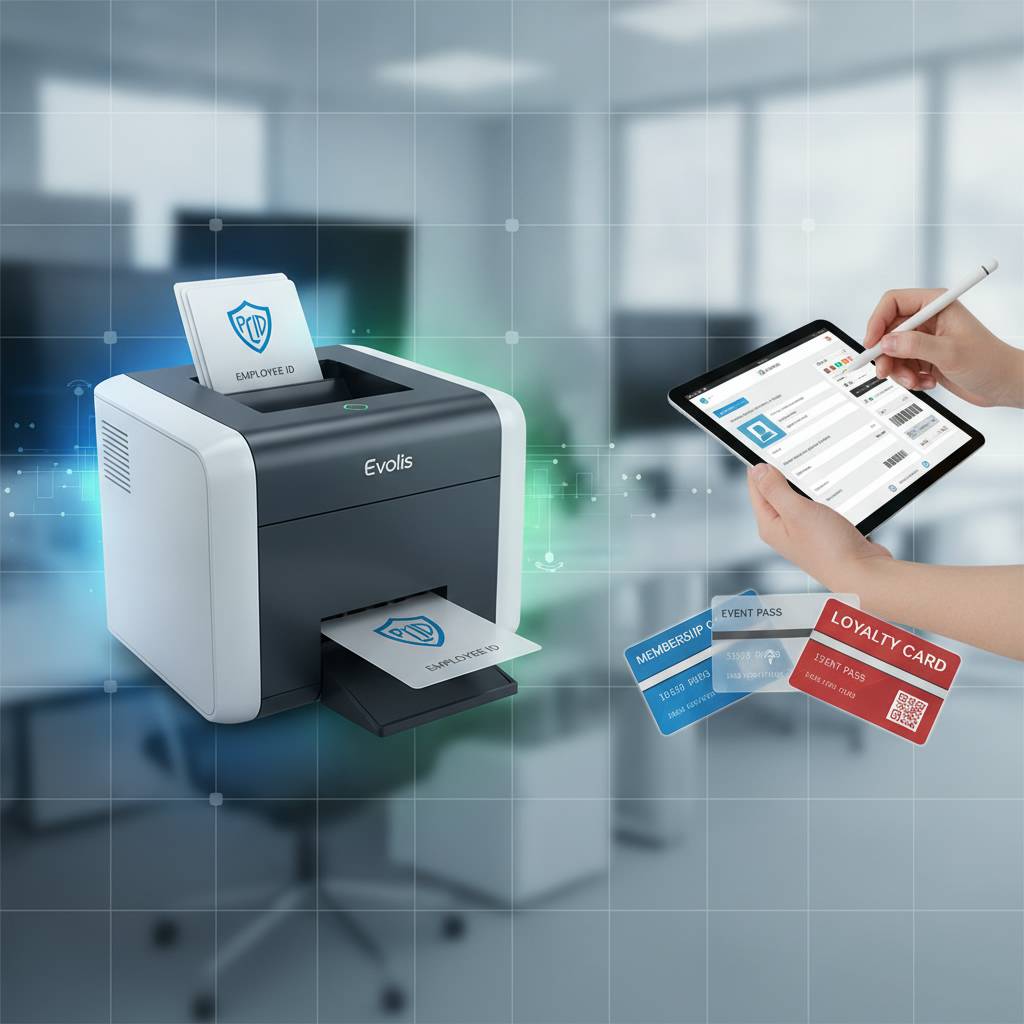 Hardware and card stock are only part of the equation. A successful in-house ID program also requires a clear, repeatable workflow for designing cards, collecting cardholder data, and issuing finished credentials. Getting this right from the beginning prevents the bottlenecks and inconsistencies that plague poorly planned programs.
The workflow question has three components: design software, data management, and physical issuance. Each printer brand offers bundled or compatible software, and most integrate with common data sources like spreadsheets, HR systems, and databases. A well-designed workflow can reduce card issuance time to under two minutes per card - including photo capture, data import, and print.
Card Design Software Essentials
Most professional card printers ship with entry-level card design software, which is sufficient for straightforward single-template programs. For organizations with multiple card types, variable data fields, or complex branding requirements, dedicated ID software like CardStudio, ID Works, or Asure ID provides significantly more power and flexibility.
Good card design software handles template management, photo import and cropping, barcode generation, magnetic stripe encoding instructions, and print queue management from a single interface. Investing a modest amount in the right software pays dividends in time savings and output consistency, particularly as your program scales.
Data Collection and Cardholder Management
The data that goes onto a card has to come from somewhere. For employee ID programs, that's typically an HR system or onboarding form. For membership cards, it might be a CRM or registration database. For event credentials, it could be an event management platform. Understanding your data sources before you configure your workflow saves significant rework.
Most ID software supports CSV and database imports, allowing you to batch-print cards from existing records without re-entering data manually. Photo management is equally important - establish a standard for photo capture (resolution, background, cropping) early, and enforce it consistently to maintain a professional appearance across all issued cards. Call 800.835.7919 if you need guidance on workflow setup specific to your printer model.
Card Issuance, Delivery, and Tracking
Once cards are printed, they need to reach their recipients efficiently. For employee badge programs, issuance typically happens at HR or security. For loyalty and membership programs, Plastic Card ID offers card affixing and mailing services that handle fulfillment on your behalf - printed cards inserted into carrier letters and mailed directly to cardholders without you touching a single envelope.
Card tracking is an often-overlooked but important element of program management. Knowing who has been issued a card, when it was issued, and whether it needs replacement or update keeps your program clean and your access control accurate. Simple spreadsheet tracking is adequate for small programs; dedicated cardholder management systems are worth the investment once you exceed a few hundred active cards.
Accessories, Supplies, and Ongoing Program Maintenance
A card printer without a reliable supply chain is a liability waiting to happen. Running out of ribbon mid-program, using cleaning kits infrequently, or letting a printer fall out of calibration all introduce quality and reliability problems that undermine the value of your in-house setup. Stocking the right supplies and maintaining a regular maintenance schedule keeps your program running smoothly.
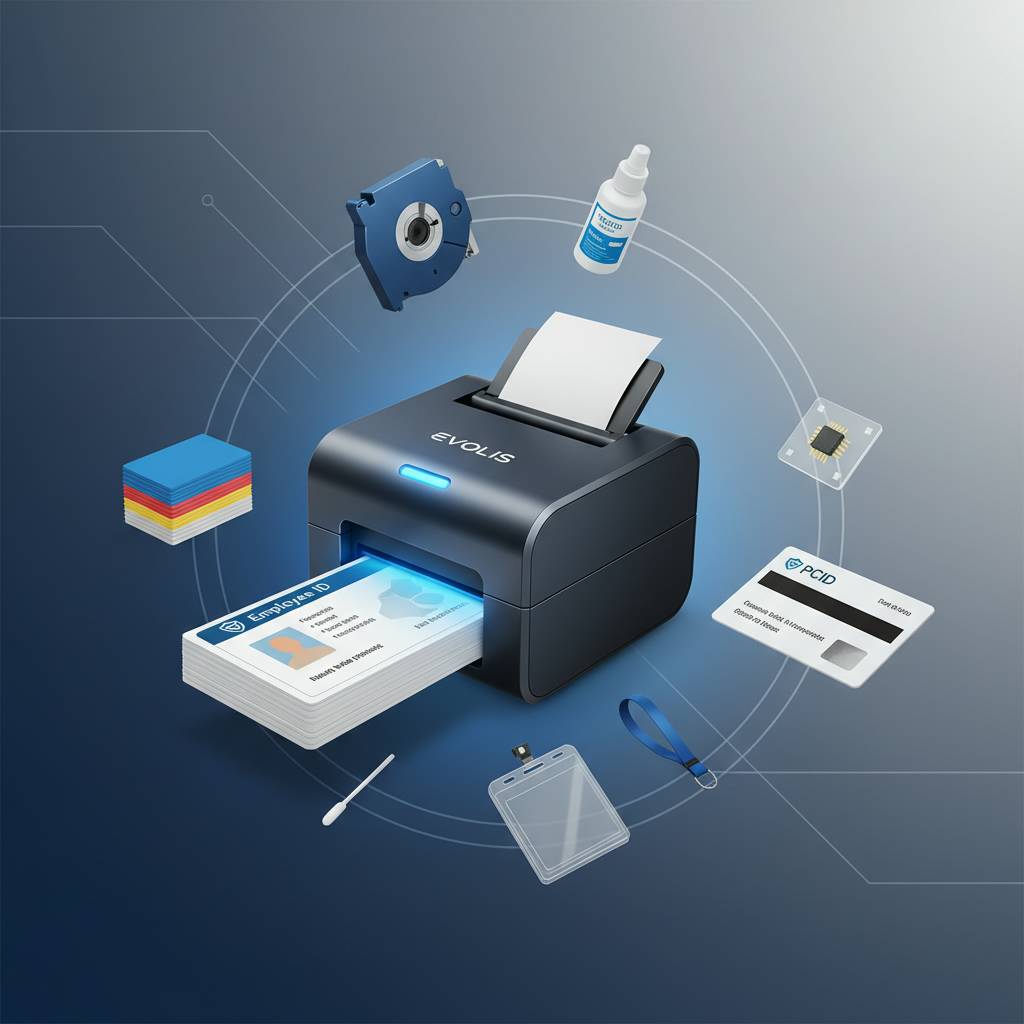
CPE functions as a true one-stop shop for everything your card program requires - not just the printer and cards, but every consumable and accessory that supports ongoing operations. Buying from a single supplier with deep inventory means fewer reorder delays and better cost management.
Printer Ribbons: Match Matters
Using off-brand or mismatched ribbons with professional card printers is one of the most common and costly mistakes organizations make. Printer ribbons are engineered to work with specific print head temperatures and mechanical tolerances - and substituting cheap alternatives frequently results in color banding, poor adhesion, voided warranties, and premature print head failure.
Plastic Card ID stocks OEM and approved-equivalent ribbons for all Evolis, Zebra, and Fargo printer models. YMCKO ribbons (yellow, magenta, cyan, black, and overlay) are the standard choice for full-color ID card printing. Monochrome ribbons in black, white, or custom colors are available for single-tone applications where cost reduction is a priority.
Cleaning Kits and Preventive Maintenance
Card printer manufacturers universally recommend cleaning cycles at defined intervals - typically every 500-1000 cards printed, or at ribbon replacement. These cycles remove dust, adhesive residue, and card debris that accumulate on rollers and print heads, preventing print defects and extending equipment life significantly. A $15 cleaning kit can prevent a $400 print head replacement. That math is easy.
Cleaning kits typically include pre-saturated cleaning cards formatted to CR80 size, cleaning swabs for targeted maintenance, and sometimes cleaning film for print head care. CPE stocks cleaning supplies for all major printer models and can advise on appropriate cleaning schedules based on your print volume.
Card Sleeves, Carriers, and Protective Accessories
The card's lifespan doesn't end when it leaves the printer - it's only just beginning. Card sleeves protect credentials from scratching during daily handling, clear holders make cards easier to read while keeping them clean, and card carriers provide professional presentation when distributing cards by mail or in-person. These small investments measurably extend card lifespan and improve cardholder experience.
For card programs that include physical mailing - membership renewals, loyalty program launches, event credential distribution - card carriers serve the additional function of providing space for messaging, instructions, and branding that reinforces your program's value. Plastic Card ID stocks a range of sleeve and carrier options compatible with standard CR80 cards.
Frequently Asked Questions About Starting an In-House ID Card Program
 Before committing to an in-house setup, most organizations have a handful of questions that arise consistently. The answers are straightforward, but getting them right at the outset saves time, money, and frustration. Here are the most common questions CPE encounters from organizations at this decision point.
What Is the Realistic Startup Cost?
For a basic single-sided, full-color employee ID program, expect to invest $300-$600 in a printer, $75-$150 in an initial ribbon supply, and $30-$80 for a box of 500 blank CR80 cards. Total startup costs for a modest program frequently fall in the $400-$800 range - a figure that most organizations recover within the first few months of operation compared to outsourced alternatives.
More sophisticated programs with encoding requirements, dual-sided printing, or lamination add cost at each step - but the comparative savings relative to vendor pricing scale proportionally. A mid-range program printing 200-400 cards per month with dual-sided encoding capability might require an initial investment of $1,500-$3,000, recovering costs within six to twelve months at typical outsourced card pricing.
Do I Need Special Technical Expertise?
Not significantly. Modern card printers from Evolis, Zebra, and Fargo are designed for non-specialist users. Installation is typically plug-and-play, driver installation takes minutes, and the learning curve for basic card design and printing is measured in hours, not days. Most organizations are printing professional-quality cards within a day of receiving their equipment.
Where expertise becomes more relevant is in configuring encoding for magnetic stripe or RFID applications, integrating with existing access control systems, or managing complex multi-template card programs. Plastic Card ID provides support across these more technical scenarios and can connect you with configuration guidance specific to your setup. Contact 800.835.7919 for personalized program consultation.
How Many Cards Should I Keep in Stock?
A practical rule is to maintain at minimum a two-month supply of blank cards based on your average monthly issuance. This buffer accounts for unexpected demand spikes, shipping delays, and seasonal surges without forcing last-minute orders. For magnetic stripe or RFID cards - which have longer lead times than plain PVC stock - maintaining a three-month buffer is prudent.
Volume purchasing also has a direct cost benefit. Buying 1,000 cards instead of 100 typically reduces per-card cost by 30-50%. For a program that will run continuously, the math on larger initial orders almost always favors the higher quantity, as long as card type and format are well-established before ordering in bulk.
Start Your In-House Program Today with Plastic Card ID
 There's a point in every organization's card program history where the question shifts from "should we do this ourselves?" to "why didn't we do this sooner?" Plastic Card ID has guided thousands of organizations through that transition over the past 25-plus years, and the outcome is consistently the same: more control, lower costs, faster issuance, and a card product that genuinely reflects organizational quality.
Whether you're issuing 50 employee badges a month or scaling a loyalty program across dozens of locations, CPE has the products, the expertise, and the commitment to make your program work. From blank CR80 PVC cards to advanced RFID credentials, from entry-level printers to enterprise-grade encoding solutions, everything you need is available from a single trusted supplier with a two-decade-plus track record serving businesses across the United States.
Ready to take the first step? Call Plastic Card ID at 800.835.7919 today and speak directly with someone who understands your application, your scale, and your goals. Your in-house card program starts with one conversation - make it the right one.
Previous Page