What Is a LoCo Magnetic Stripe Card: Quick Guide
Table of Contents []
- What Is a LoCo Magnetic Stripe Card? Your Complete Guide from Plastic Card ID
- Understanding LoCo: The Science Behind the Stripe
- Primary Use Cases: Where LoCo Magnetic Stripe Cards Shine
- Choosing Between LoCo and HiCo: A Practical Buyer's Guide
- LoCo Cards in Action: Real Program Scenarios
- The Plastic Card ID Catalog: LoCo Cards and Everything Your Program Needs
- Frequently Asked Questions About LoCo Magnetic Stripe Cards
What Is a LoCo Magnetic Stripe Card? Your Complete Guide from Plastic Card ID
 Most people have swiped a card without ever thinking about what actually lives on that dark stripe running across the back. But if you're building a card program for your business - a loyalty system, a membership club, an employee ID setup - understanding the difference between LoCo and HiCo magnetic stripe cards could save you money, prevent headaches, and help you choose the right product the first time. Let's get into it.
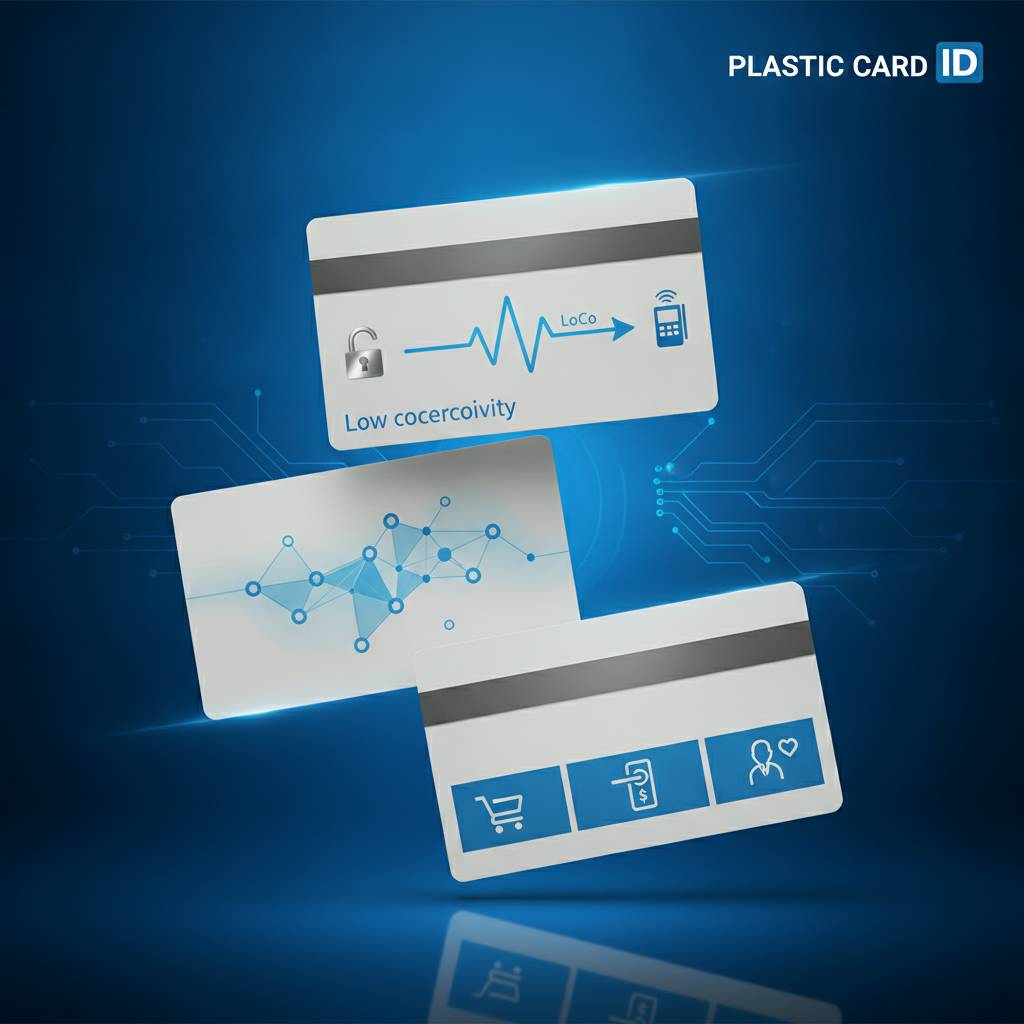
The magnetic stripe on a plastic card stores encoded data. That data gets read by a card reader, triggering whatever action you've set up - unlocking a door, pulling up a customer's account, checking in an event attendee. Simple enough in concept. But not all magnetic stripes are created equal, and the distinction between low coercivity and high coercivity matters more than most buyers initially realize.
| Feature | LoCo (Low Coercivity) | HiCo (High Coercivity) |
|---|---|---|
| Magnetic Strength (Oersteds) | 300 Oe | 2750 Oe |
| Durability | Moderate - ideal for short-term use | High - built for daily, long-term use |
| Stripe Color | Brown/Tan | Black |
| Common Use Cases | Hotel keys, gift cards, event passes | ID cards, loyalty cards, access badges |
| Re-encodable? | Yes, easily | Yes, with proper encoder |
| Sensitivity to Magnets | Higher sensitivity | Lower sensitivity |
Understanding LoCo: The Science Behind the Stripe
 Coercivity is a measure of a magnetic material's resistance to demagnetization. Stated plainly: the higher the coercivity value, the harder it is to scramble or wipe the data stored on the stripe. A LoCo magnetic stripe card operates at approximately 300 Oersteds (Oe), which means it can be encoded and re-encoded using relatively low magnetic field strength. That's both a feature and a limitation - depending entirely on how you plan to use it.
Here's something many buyers don't initially consider: because LoCo stripes require less energy to write, standard hotel key card encoders and many older magnetic stripe terminals are designed specifically for LoCo use. The stripe itself is typically brown or tan in color, which makes it visually distinguishable from its HiCo counterpart. CPE carries both types, and our team can help you select the right stripe technology before you commit to a large order.
The Physics of Low Coercivity Encoding
When data is written to a LoCo stripe, the encoder uses a lower-powered magnetic head to align the magnetic particles embedded in the stripe's coating. Because those particles are more easily influenced, the write process is fast and energy-efficient. This same property means that accidental demagnetization - from a hotel safe, another card's stripe, or a strong magnet - is more of a real concern than with HiCo cards.
That said, in controlled environments where cards are handled carefully and not stored near strong magnetic fields, LoCo cards perform reliably and consistently. The key is matching the stripe type to the use case - not defaulting to one option without evaluating your operational context.
How LoCo Differs From HiCo at the Track Level
Magnetic stripe cards are organized into three data tracks - Track 1, Track 2, and Track 3 - each capable of storing different types of encoded information. LoCo cards can be encoded across all three tracks just like HiCo cards. The difference isn't in the data structure; it's in the strength required to write and the resilience of that data once written.
LoCo cards are the go-to choice for applications where the card has a limited lifespan - think hotel room access where the card gets used for two or three nights, then discarded or re-encoded for the next guest. In these scenarios, the lower cost and easy re-encodability of LoCo is a genuine operational advantage, not a compromise.
Visual Identification: Spotting a LoCo Card
One of the fastest ways to identify a LoCo card is to look at the stripe itself. LoCo stripes appear brown or amber in color, while HiCo stripes are a deep black. This isn't just cosmetic - the color difference reflects the actual composition and density of the magnetic material used in each type. Experienced card program managers learn to identify stripe type on sight within seconds.
If you're inheriting an existing card program and aren't sure which stripe type your current cards use, this visual check is your quickest diagnostic tool. When ordering replacements, confirming stripe type upfront ensures your new cards are compatible with your existing readers and encoders. Our specialists at CPE are always available to walk you through this identification process.
Primary Use Cases: Where LoCo Magnetic Stripe Cards Shine
The question isn't just "what is a LoCo magnetic stripe card" - it's "where does it make the most sense?" And the answer involves looking at use cases where cards are either short-term by nature or operating within environments that already use LoCo-compatible equipment. The sweet spot for LoCo is broad, covering several high-volume industries.
The hotel and hospitality industry runs almost entirely on LoCo technology. Every time a front desk agent programs a room key in under 10 seconds, that's a LoCo encoder doing its job. The card gets used for a few days, returned or discarded, and the cycle repeats. Efficiency, speed, and re-encodability are the priorities - not long-term durability. LoCo nails all three.
Hotel Key Cards and Short-Term Access
Hotel key card programs represent the most iconic LoCo use case in North America. The entire operational model is built around rapid re-encoding: a card that was programmed for Room 214 this morning can be cleaned, re-encoded, and issued to a different guest in Room 312 tomorrow. This reusability dramatically reduces per-card costs over time and makes LoCo a financially savvy choice for properties of all sizes.
Beyond hotels, short-term access use cases include conference credentials, event badges, temporary employee passes, and visitor management cards. Any scenario where you need a functional, encoded card that doesn't need to survive years of daily use is a natural fit for LoCo technology. CPE supplies blank LoCo cards by the box or by the case to operations of every scale.
Gift Cards and Retail Loyalty Programs
Retail gift card programs and short-to-medium cycle loyalty programs frequently use LoCo magnetic stripe cards. The data encoded on a gift card - typically a card number that links to a balance in your POS system - doesn't require the extreme durability of a HiCo stripe. Retailers who switch from paper gift certificates to plastic LoCo cards routinely see 35-50% increases in gift card sales, largely due to improved perceived value and ease of use.
Loyalty cards designed for moderate use - customers who shop once or twice a month, for instance - can work well with LoCo stripes, especially when the cards are being replaced or refreshed on a seasonal or annual schedule. The cost savings on LoCo cards over HiCo can be reinvested in card design, packaging, or higher print quality to elevate the unboxing experience for customers.
Event Credentials and Temporary ID Programs
Trade shows, festivals, corporate conferences, and multi-day events regularly issue encoded plastic cards as credentials or access passes. LoCo magnetic stripe cards are a smart choice here because they're functional, professional, and appropriate for a use case that ends when the event does. Encoding each card with an attendee ID, session access level, or meal credit balance is straightforward with any LoCo-compatible encoder.
For organizations that run recurring events - an annual conference, a quarterly trade expo - having a supply of blank LoCo cards on hand means you can print and encode credentials in-house, on demand, without waiting on external vendors. Paired with a desktop card printer from Evolis, Zebra, or Fargo, a compact in-house card program can handle hundreds of credentials per day with minimal overhead.
Choosing Between LoCo and HiCo: A Practical Buyer's Guide
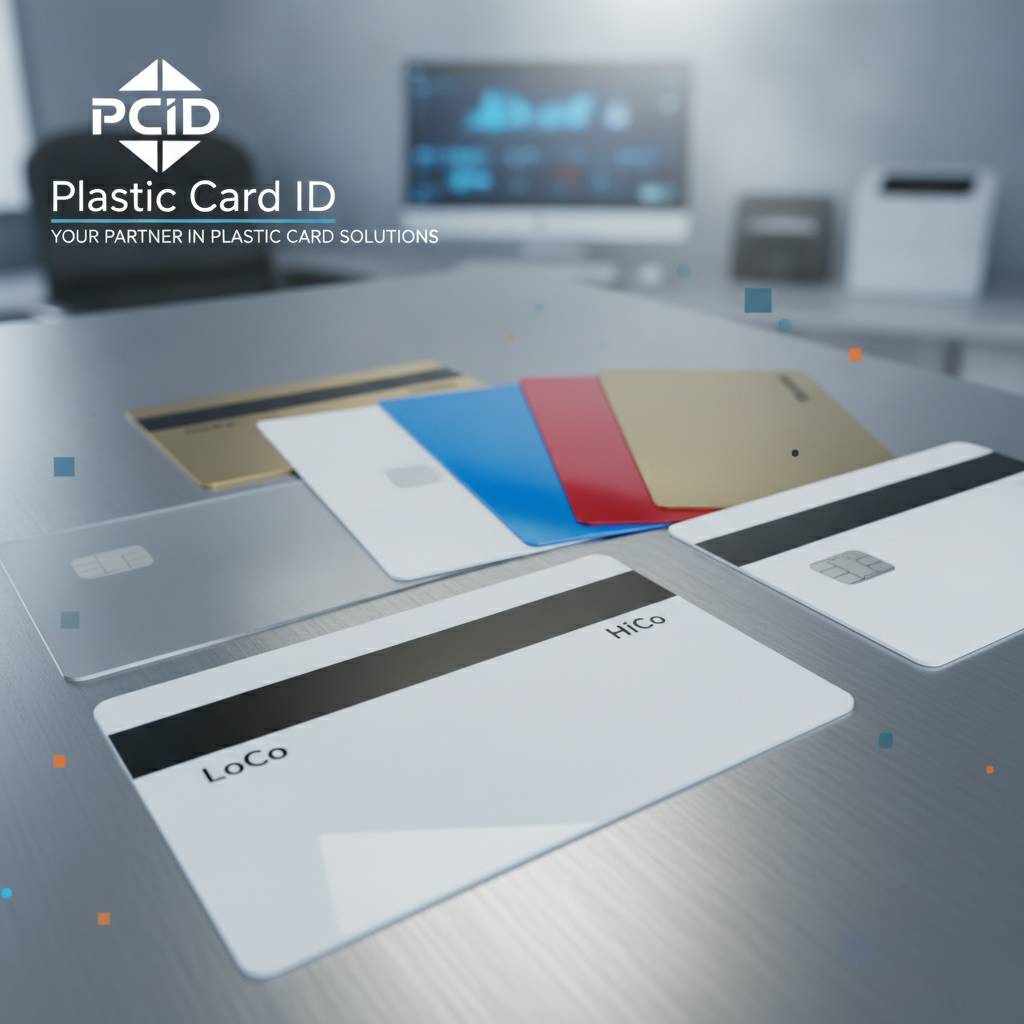 This is where a lot of buyers get stuck - not because the decision is technically complex, but because they aren't sure which factors to weigh. Here's a practical framework to help you make the right call for your specific card program. Think through your use case, your equipment, and your card lifecycle before defaulting to one stripe type.
The single biggest deciding factor is card lifespan. If your cards will be swiped or read multiple times every single day for years - employee badges, high-traffic membership programs, frequent-use loyalty cards - HiCo is the more resilient choice. If your cards have a defined expiration, get recycled, or are used only occasionally, LoCo offers real cost and operational advantages that add up quickly across large volumes.
Evaluating Your Equipment Compatibility
Before ordering any magnetic stripe cards, verify what your existing card readers and encoders support. Most hotel property management systems are calibrated for LoCo encoding. Many retail POS terminals and loyalty card readers support both stripe types, but it's worth confirming. Using a HiCo card in a system designed for LoCo encoding can result in poorly written data, read errors, and frustrated customers or staff.
Compatibility between your cards and your readers is non-negotiable. If you're setting up a new card program from scratch, this is actually an advantage - you can choose your stripe type first, then select equipment that supports it. CPE works with programs of all sizes, from 50 cards a month to tens of thousands, and can advise on encoder and reader selection to match your chosen card type.
Cost Considerations Across Order Volumes
LoCo cards are generally priced at a slight premium over plain blank PVC cards but are comparable to or slightly lower than HiCo cards, depending on order volume and supplier. At scale - ordering thousands of cards per run - the per-card difference between LoCo and HiCo may be minimal in absolute terms but can represent meaningful savings across a full year's supply.
- Small programs (50-500 cards/month): LoCo savings per card are modest; select based on use case first.
- Mid-size programs (500-5,000 cards/month): Cost differences begin to compound; calculate annual spend for both options.
- Large programs (5,000 cards/month): Even small per-card savings multiply significantly; LoCo vs. HiCo selection has real budget impact.
- Re-encodable programs: LoCo re-encoding costs less energy per write; relevant for hotel-style programs with high card turnover.
- Replacement frequency: If LoCo cards need replacing more often than HiCo in your environment, factor in total cost of ownership, not just unit price.
When HiCo Is the Smarter Choice
There are scenarios where defaulting to HiCo is simply the right answer, regardless of cost. Employee ID cards that need to survive daily badge-in/badge-out use for three to five years. Frequent-shopper loyalty cards carried in wallets, exposed to friction, other cards, and occasional magnetic interference. Access control cards for secure facilities where data integrity is mission-critical. In these cases, the higher coercivity of HiCo cards provides meaningful protection against data degradation.
Many organizations run parallel card programs - LoCo for visitor or temporary passes, HiCo for permanent staff credentials. This layered approach lets you optimize costs while ensuring card performance matches the demands of each user category. CPE makes it easy to stock both types and order each in the quantities your program actually needs.
LoCo Cards in Action: Real Program Scenarios
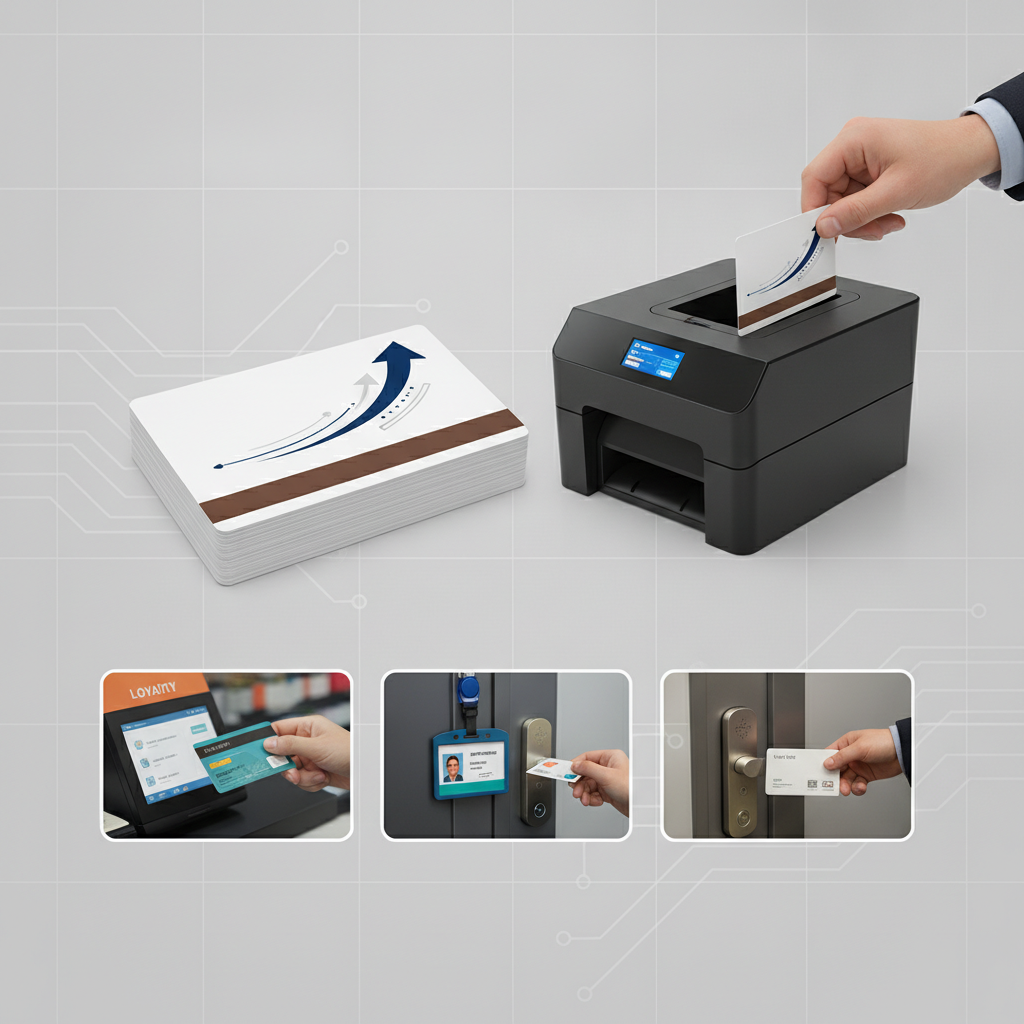 Abstract specifications only go so far. What does a LoCo magnetic stripe card program actually look like when it's running well? Here are a few scenarios that illustrate how different organizations use LoCo technology to solve real operational problems efficiently and cost-effectively.
A regional hotel chain with 12 properties across the Southeast operates a centralized card supply program. Each property receives monthly shipments of blank LoCo cards. The front desk encodes cards at check-in using the property management system's built-in LoCo encoder. Cards are returned at checkout, inspected, and re-encoded for the next guest - a cycle that repeats hundreds of times per card before the card is retired. The cost-per-transaction is extraordinarily low, and the guest experience is seamless.
Retail Gift Card Launch Using LoCo Cards
A regional clothing boutique with five locations decides to launch a gift card program ahead of the holiday season. They order 2,500 blank LoCo PVC cards from CPE, print custom designs in-house using a desktop Evolis printer, and encode each card with a unique number linked to their POS system. The result is a professional, branded gift card that feels premium in a customer's hand. Within the first holiday season, gift card sales outperform paper certificate sales by 40%.
The following year, the boutique re-orders with an updated seasonal design - printing and encoding in batches as needed, maintaining a lean inventory without overcommitting budget. This in-house model is exactly what blank LoCo cards enable: design flexibility, cost control, and the ability to scale production up or down based on actual demand.
Conference Credential Program at Scale
A national professional association runs an annual conference attended by 3,000 members. Each attendee receives a LoCo magnetic stripe card encoded with their registration number, session access permissions, and a meal credit balance. Readers at session entrances and food service stations decode the card in under a second, creating a frictionless attendee experience while generating real-time attendance data for organizers.
The association orders blank LoCo cards 60 days before the event, prints and encodes them in-house using a Zebra card printer, and uses the leftover supply for regional events throughout the year. The program pays for itself through reduced check-in labor costs and the elimination of paper ticket fraud within the first event cycle.
The Plastic Card ID Catalog: LoCo Cards and Everything Your Program Needs
Sourcing plastic cards is one thing. Sourcing everything your card program needs from a single, reliable partner is something different entirely. CPE has spent over 25 years building a catalog designed to support complete card programs - not just the card itself. From blank LoCo and HiCo magnetic stripe cards to printers, ribbons, cleaning kits, card carriers, sleeves, and fulfillment services, the full picture is here.
With over 100,000 customers served and more than 50 million cards sold across the United States, Plastic Card ID understands that a card program is a system, not just a product order. When you call or reach out, you're connecting with people who have helped programs of every size - from a single-location gym issuing 50 membership cards a month to multi-site enterprises printing tens of thousands of cards across distributed locations.
Blank LoCo Cards and Stock Options
The standard blank LoCo magnetic stripe card is a CR80-size, 30 mil PVC card - the same dimensions as a standard credit card, conforming to ISO 7810 specifications. This is the foundation of in-house card programs everywhere. You control the design, you control the timing, and you control the encoding. Blank cards give you maximum flexibility at the lowest long-term per-card cost.
CPE also carries colored stock LoCo cards, frosted and clear LoCo options, and specialty formats for programs that need something beyond the standard white card. Whether your card program leans utilitarian or premium, the catalog has the base card to support it. Need help selecting the right stock? Reach out to our team at 800.835.7919 for expert guidance.
Card Printers for LoCo Encoding Programs
A blank LoCo card only becomes a functional program card when it's printed and encoded. Plastic Card ID carries a full lineup of desktop and mid-volume card printers from Evolis, Zebra, and Fargo - three of the most trusted names in the card printing industry. Each brand offers models with integrated magnetic stripe encoders, making it possible to print a full-color card and encode the LoCo stripe in a single pass through the printer.
Choosing the right printer depends on your monthly volume, your encoding requirements, and whether you need single-sided or dual-sided printing. Entry-level desktop printers handle programs producing hundreds of cards per month comfortably. Mid-volume models support programs in the thousands. Our team can walk you through the options and help you match the right hardware to your actual production needs - no overselling, no unnecessary upgrades.
Supplies, Accessories, and Fulfillment Services
Running out of printer ribbon in the middle of a card production run is the kind of operational disruption that slows programs down and frustrates staff. CPE stocks ribbons, cleaning kits, and maintenance supplies for all major printer models, so you can keep your equipment running at peak performance without sourcing from multiple vendors. Card carriers, sleeves, and protective holders round out the physical card experience for end users.
For organizations that prefer outsourced fulfillment, card affixing and mailing services are available - ideal for programs that need to distribute cards by mail to members, customers, or employees at scale. The ability to handle card production and distribution under one roof is a genuine operational advantage that reduces coordination overhead and accelerates time-to-wallet for your cardholders.
Frequently Asked Questions About LoCo Magnetic Stripe Cards
 After 25 years in the industry, certain questions come up again and again. Here are straightforward answers to the most common LoCo-related questions from buyers building or upgrading card programs.
Can LoCo Cards Be Re-Encoded Multiple Times?
Yes. One of the defining features of LoCo magnetic stripe cards is their easy re-encodability. Because the magnetic particles in the stripe respond to relatively low magnetic field strengths, a standard LoCo encoder can overwrite existing data with new data quickly and reliably. This is why hotel key card programs, which re-encode cards dozens or hundreds of times over their operational lifespan, run almost exclusively on LoCo technology.
There is a practical limit to re-encoding cycles - after significant use, the physical card itself may show wear even if the stripe remains functional. For programs that re-encode frequently, monitoring card condition and replacing worn cards before they cause reader errors is a standard best practice. CPE makes it easy to maintain a reserve supply of blank LoCo cards so you're never caught short.
Will a LoCo Card Work in a HiCo Reader?
Generally, yes - but with an important caveat. Most modern magnetic stripe readers are designed to read both LoCo and HiCo cards without issue. The reader simply detects the magnetic signal from the stripe; whether that signal was written at 300 Oe or 2750 Oe doesn't affect readability in most contemporary equipment. The issue arises primarily on the encoding side, not the reading side.
Attempting to encode a LoCo card with a HiCo encoder may result in incomplete or corrupted data, because the HiCo encoder applies more magnetic force than the LoCo stripe's particles are designed to receive optimally. Always confirm encoder settings match your card's stripe type before production runs, especially if your setup supports both formats.
What Industries Use LoCo Cards Most Frequently?
The hospitality industry - hotels, resorts, motels, and extended-stay properties - is the largest single category of LoCo card users in the United States. Retail gift card programs, short-cycle loyalty programs, and event credentialing represent the next largest segments. Healthcare visitor management, campus visitor programs, and temporary employee access programs also rely heavily on LoCo technology for its ease of re-encoding and cost efficiency.
If your organization operates in any of these spaces, there's a strong likelihood your existing infrastructure is already LoCo-compatible. Ordering blank LoCo cards from Plastic Card ID ensures you're working with cards engineered to the same specifications your equipment expects - no guesswork, no compatibility surprises, no wasted production runs.
Ready to build or upgrade your card program? Contact Plastic Card ID today at 800.835.7919 and speak with a card program specialist who can help you select the right LoCo cards, printers, and supplies for your exact needs.
From 50 cards a month to mass production runs in the tens of thousands, Plastic Card ID has the inventory, the expertise, and the commitment to make your program work. Call 800.835.7919 now and let's get started.