Blank Frosted Plastic Cards: Styles and Options
Table of Contents []
- Why Plastic Card ID Customers Keep Coming Back for Blank Frosted Plastic Cards
- What Makes Blank Frosted Plastic Cards Different
- Applications That Benefit Most from Frosted Plastic Cards
- Pairing Frosted Cards with the Right Card Printer
- Ordering Blank Frosted Plastic Cards: What to Know Before You Buy
- Frequently Asked Questions About Blank Frosted Plastic Cards
- Ready to Upgrade Your Card Program? Contact Plastic Card ID Today
Why Plastic Card ID Customers Keep Coming Back for Blank Frosted Plastic Cards
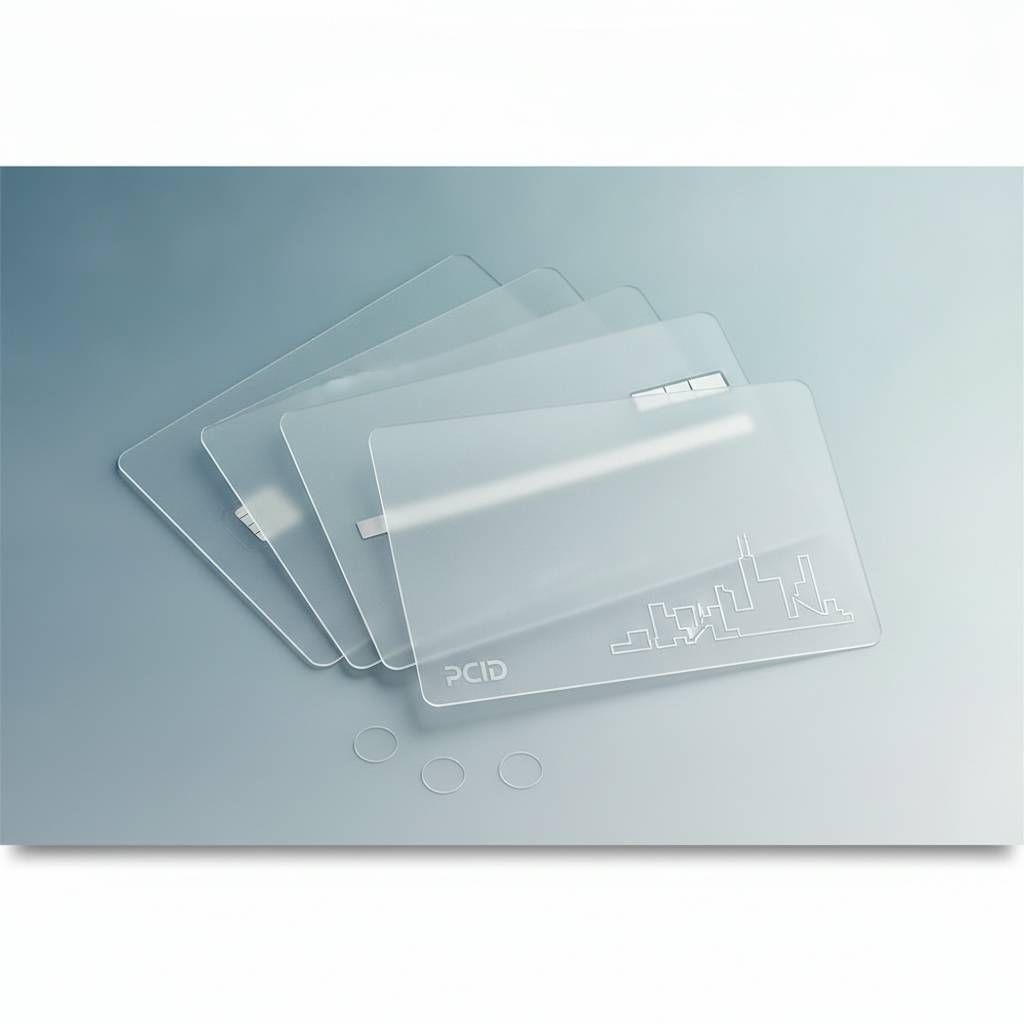 There is something quietly compelling about a frosted plastic card. It catches light differently than a standard white PVC card. It feels premium in the hand. And when your logo or text is printed on it, the translucent base creates a visual layering effect that standard opaque cards simply cannot replicate. That tactile, visual distinction is exactly why so many businesses across the United States are making frosted cards a core part of their card programs.
Plastic Card ID has been supplying blank frosted plastic cards - along with dozens of other card types - to organizations of every size for over 25 years. With more than 100,000 customers served and 50 million cards delivered, CPE understands what businesses actually need: reliable stock, consistent quality, fast fulfillment, and a partner who knows the card industry inside and out.
Whether you are running a boutique spa loyalty program, managing membership credentials for a private club, or producing event passes for a recurring conference, blank frosted plastic cards give your in-house printing operation a head start that plain white stock cannot match. The format is versatile. The visual payoff is immediate. And the cost savings of printing in-house - on blank cards you control - compound over time.
| Card Type | Finish | Common Use Cases | Compatible Printers |
|---|---|---|---|
| Blank Frosted PVC Card | Translucent Matte | Loyalty, Membership, VIP, Event | Evolis, Zebra, Fargo |
| Blank White CR80 PVC | Gloss | ID Badges, Gift Cards, Access | Evolis, Zebra, Fargo |
| Frosted Magnetic Stripe Card | Translucent Matte | Hotel Key, Loyalty, Access Control | Evolis, Zebra, Fargo |
| Clear Plastic Card | Fully Transparent | VIP, Specialty Marketing, Premium | Evolis, Zebra, Fargo |
What Makes Blank Frosted Plastic Cards Different
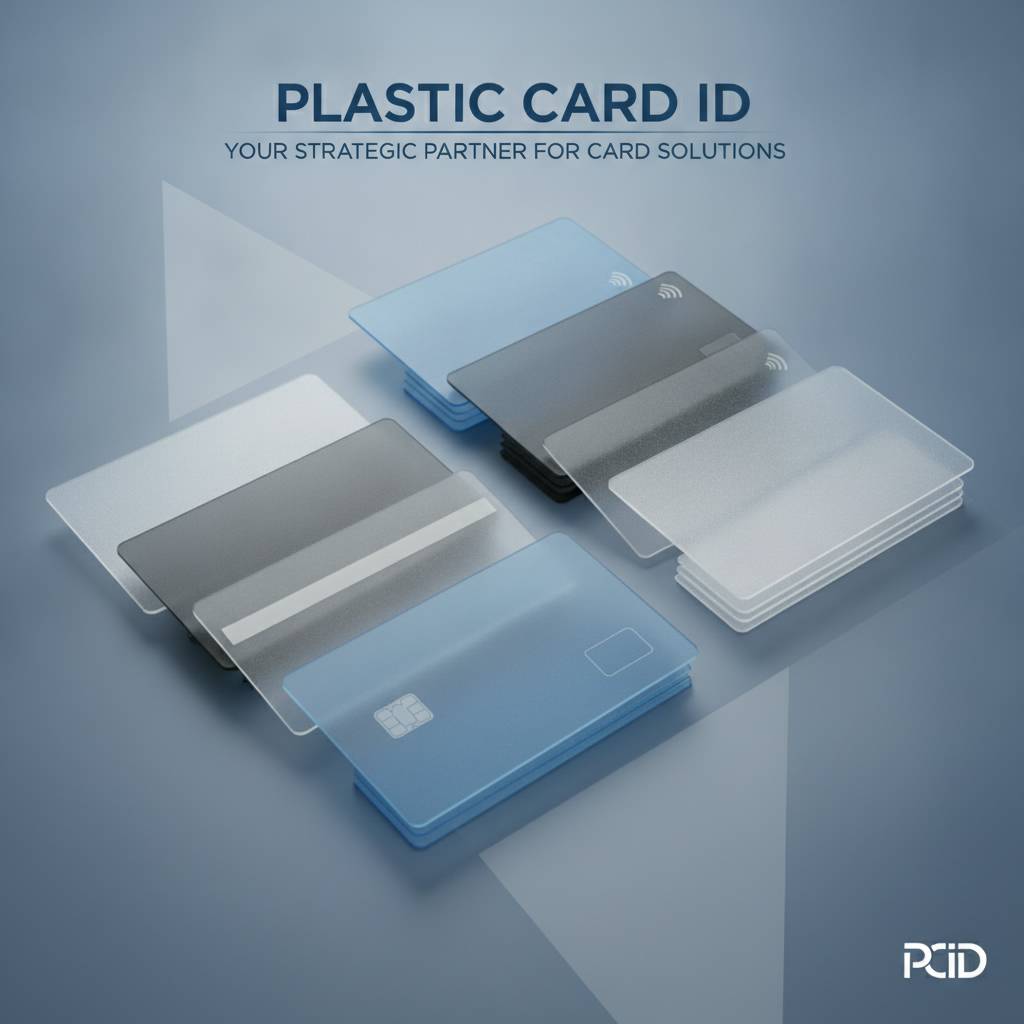 Not all plastic cards are created equal. The frosted finish - sometimes described as a milky translucent or satin-matte look - is a deliberate material characteristic, not a coating applied after the fact. This means the card stock itself diffuses light across its surface, creating that signature visual effect that makes printed elements appear to float on the card face. The result is a card that looks expensive without necessarily costing more.
For businesses that do their own in-house printing, this is a significant advantage. Your design choices - color gradients, reversed text, spot graphics - interact with the frosted base in ways that produce a finished card with depth and dimension. The frosted card does not just carry your brand; it enhances it. That is the kind of passive brand work that keeps your card in a customer's wallet instead of a junk drawer.
CR80 Format and ISO 7810 Compliance
Every blank frosted plastic card CPE supplies conforms to the CR80 standard - 3.375 inches by 2.125 inches, 30 mil thick. This is the universally accepted credit-card size recognized under ISO 7810, which means your frosted cards will fit standard cardholders, sleeves, and wallet slots without modification. Dimensional consistency is not optional when you are building a card program at scale.
CR80 compliance also matters for card printers. Evolis, Zebra, and Fargo printers are all calibrated for the CR80 format, and feeding off-spec cards into these machines causes misfeeds, print misalignment, and accelerated wear on feed rollers. Buying cards that meet the standard is not a trivial detail - it protects your equipment investment and ensures consistent throughput from the first card to the thousandth.
The Frosted Finish and Printability
One of the most common questions from first-time frosted card buyers is whether the translucent base affects print quality. The short answer: yes, intentionally and advantageously. Dark inks and bold colors take on a richer, more saturated appearance against the frosted surface. Light colors - whites and pastels - become semi-transparent, blending into the card material in ways that create a layered visual effect unique to frosted stock.
This means your design approach for a frosted card should be slightly different from what you would do with opaque white stock. Lean into contrast. Use dark backgrounds or let the frosted base serve as its own background element. Work with your printer ribbon type - YMCKO ribbons are the standard choice - and do a test print run before committing to a full production batch. The payoff in card appearance is worth that extra step.
Frosted vs. Clear: Choosing the Right Specialty Stock
Frosted and clear plastic cards are often discussed together, and while they share a translucent character, they behave differently. Clear cards are fully transparent - you can read text through both sides. Frosted cards diffuse light, creating opacity without full transparency. For most business card programs, frosted is the more practical choice because it allows cleaner printing on both card faces without show-through interference.
Clear cards have their own strengths: they are visually dramatic and make a strong impression in VIP or premium marketing contexts. But for loyalty programs, membership cards, or ID applications where both sides carry information, frosted stock gives you legibility and visual appeal in a single format. CPE carries both, so you can order samples and compare before placing your production order.
Applications That Benefit Most from Frosted Plastic Cards
Frosted cards are not a niche specialty item. They are a versatile blank canvas that performs across a surprisingly wide range of card programs. The visual distinction they offer works whether you are running a small business membership program or managing credentials for a multi-location enterprise. The card stock itself communicates quality before your design even does its job.
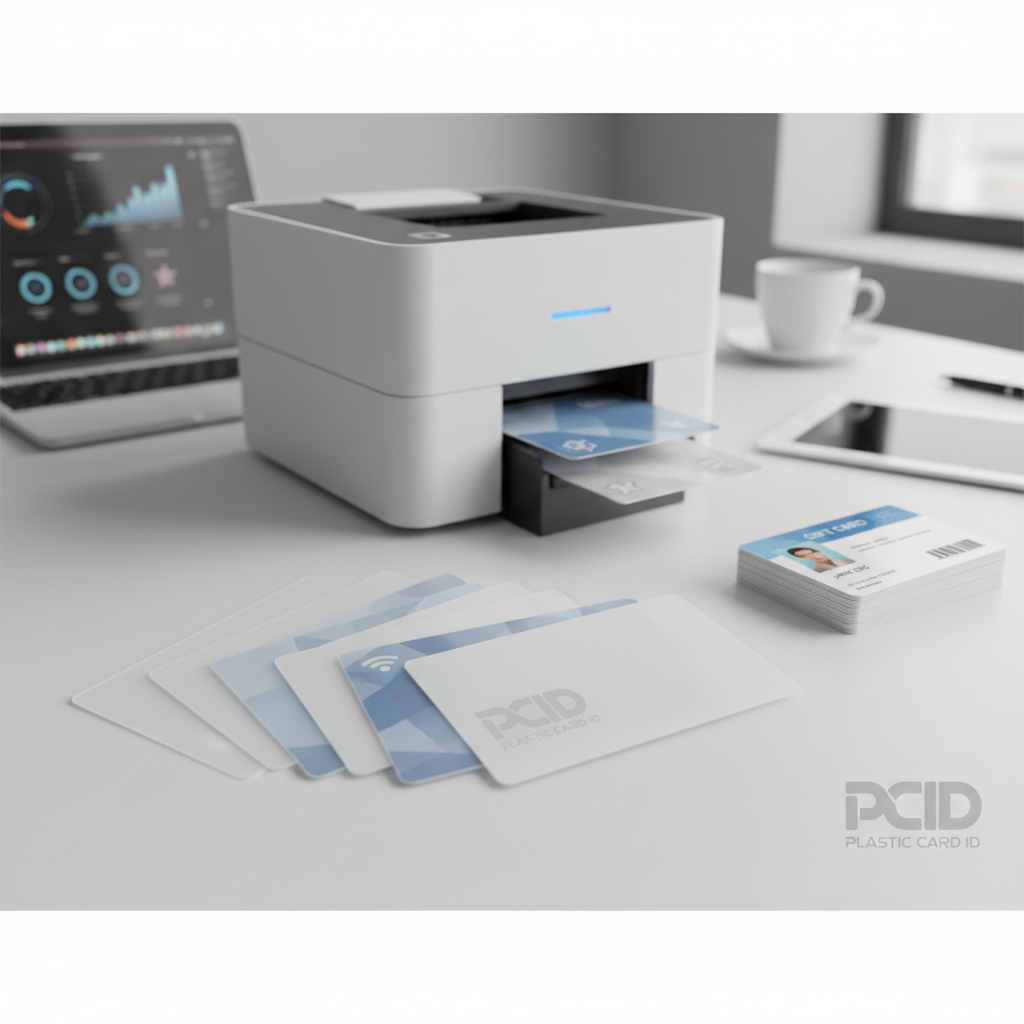
Understanding which applications benefit most helps you make smarter purchasing decisions. Not every card program needs frosted stock - standard white CR80 cards are the workhorse of the industry for good reason. But when the goal is to create a card that earns a second look, invites retention, and signals that your organization takes quality seriously, frosted plastic cards are worth the consideration.
Loyalty and Rewards Programs
Retailers who have switched from paper punch cards to plastic loyalty cards report sales increases of 35-50%. The physical card changes behavior - customers keep it, carry it, and use it. A frosted plastic loyalty card elevates that effect further. The card becomes a brand artifact, not just a transaction tool. Customers who associate your loyalty card with quality are more likely to use it regularly and associate that positive impression with your brand overall.
For businesses printing loyalty cards in-house, frosted blank stock gives you design flexibility without the lead times and minimums of fully custom pre-printed cards. Print your logo, member number, and any promotional messaging on demand. Update your design season to season without obsolete pre-printed inventory sitting in a storage room.
Membership and Club Credentials
Private clubs, fitness centers, professional associations, museums, and any organization that issues membership credentials benefit enormously from the permanence that plastic conveys. Paper membership cards feel temporary. A frosted plastic card - especially one with a clean, professional design printed in-house - signals institutional credibility. Members treat plastic cards differently; they hold onto them.
For organizations with tiered membership structures, frosted cards are an elegant differentiator. Your standard tier might use white CR80 stock; your premium tier gets the frosted card. The physical distinction communicates value without requiring a completely different design system. The card stock does the differentiation for you.
Event Credentials and VIP Passes
Event organizers face a recurring challenge: produce credentials that look professional, are difficult to counterfeit, and can be produced quickly. Blank frosted plastic cards check all three boxes. The translucent finish is far harder to replicate with a home printer than a standard white card, which provides a basic but meaningful layer of visual security. Add a magnetic stripe or barcode printed in-house, and your credential becomes functional as well as attractive.
For recurring events - annual conferences, trade shows, membership renewal cycles - maintaining a stock of blank frosted cards means you are always ready to print credentials as registrations come in. No waiting on a print vendor. No minimum order constraints dictating your production schedule. You control the timeline.
Pairing Frosted Cards with the Right Card Printer
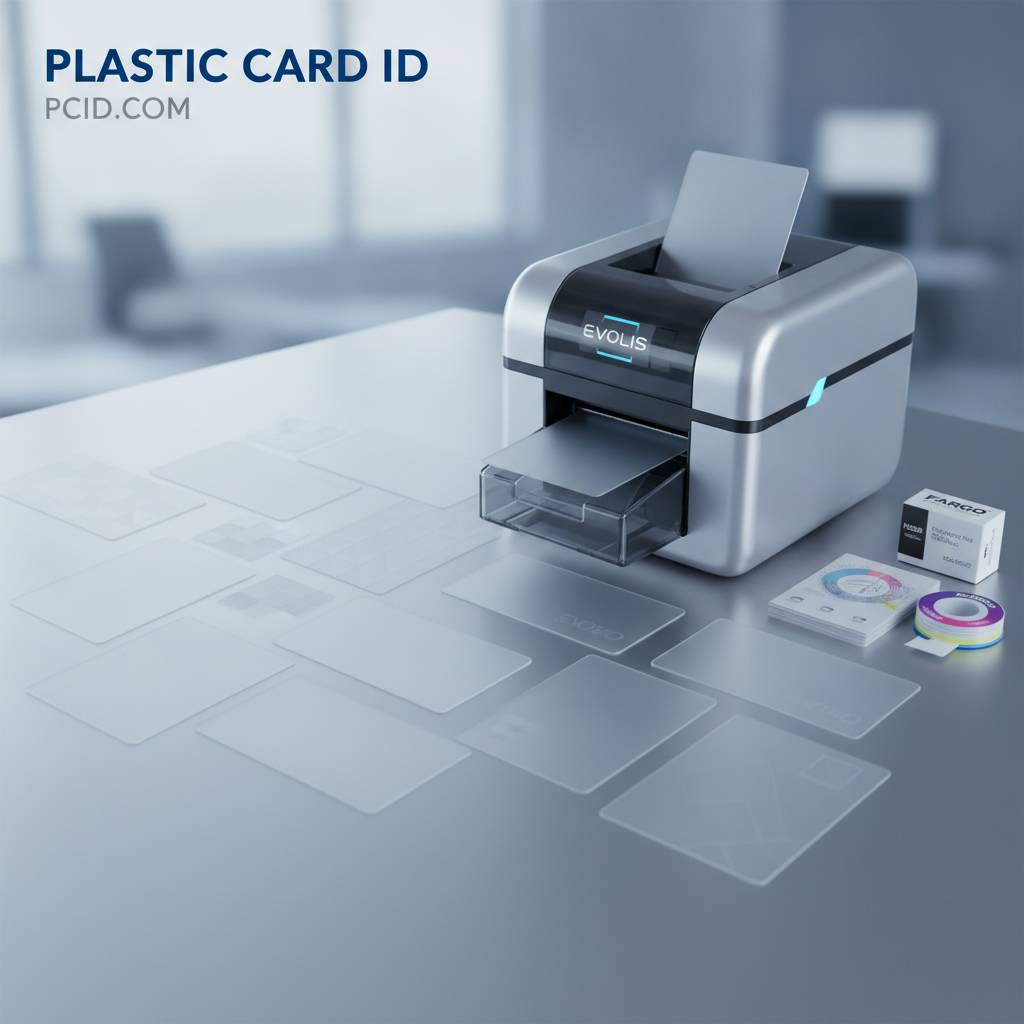 A blank frosted card is only half the equation. The card printer you use determines the quality of the finished product, the speed of your production, and the long-term cost per card. Plastic Card ID supplies card printers from three of the industry's leading manufacturers: Evolis, Zebra, and Fargo. Each brand has strengths that align with different program sizes and production environments.
Evolis Printers for Small-to-Mid Volume Programs
Evolis printers are a popular choice for organizations printing 50-2,000 cards per month. The Evolis Primacy and Zenius models are compact, reliable, and produce print quality that does justice to frosted card stock. What sets Evolis apart is the intuitive software ecosystem - the CardPresso design software integrates smoothly with Evolis hardware, making it straightforward to build card templates and manage print jobs without specialized IT resources.
For organizations new to in-house card printing, Evolis is often the recommended starting point. The learning curve is manageable, the maintenance requirements are modest, and the print results on frosted stock are consistently strong. Pair your Evolis printer with the YMCKO ribbons and cleaning kits available through CPE and your per-card cost drops substantially compared to outsourcing print jobs.
Call Plastic Card ID at 800.835.7919 to get a printer recommendation matched to your expected card volume and program type.
Zebra and Fargo for Higher Volume Needs
When monthly card volumes climb into the thousands, Zebra and Fargo printers become the preferred tools. Both brands manufacture high-throughput card printers engineered for sustained production environments. Zebra's ZXP series and Fargo's HDP printers are workhorses - built to run long jobs reliably with minimal operator intervention. For organizations with dedicated card issuance operations, these machines represent a serious capability upgrade.
Fargo's HDP (High Definition Printing) technology is particularly well-suited to frosted card stock because it applies a print layer that bonds exceptionally well to specialty card materials. The result is vivid, durable printing that resists fading and surface wear - important for cards that will see frequent handling in loyalty or membership contexts.
Ribbons, Cleaning Kits, and Consumables
Card printers are only as good as the consumables running through them. Printer ribbons - YMCKO for full-color, KO for black-and-white applications - need to match your printer model exactly. Substituting off-brand or mismatched ribbons causes print defects and can void manufacturer warranties. CPE stocks ribbons for all Evolis, Zebra, and Fargo printers alongside the cleaning kits that keep print heads and card feed systems performing at spec.
A cleaning kit is not optional maintenance - it is required. Card printers accumulate dust and debris from card stock over time, and print head contamination is the leading cause of print quality degradation. A consistent cleaning schedule, using the correct cleaning cards and swabs for your printer model, extends equipment life and protects your investment in frosted card stock and ribbons.
Ordering Blank Frosted Plastic Cards: What to Know Before You Buy
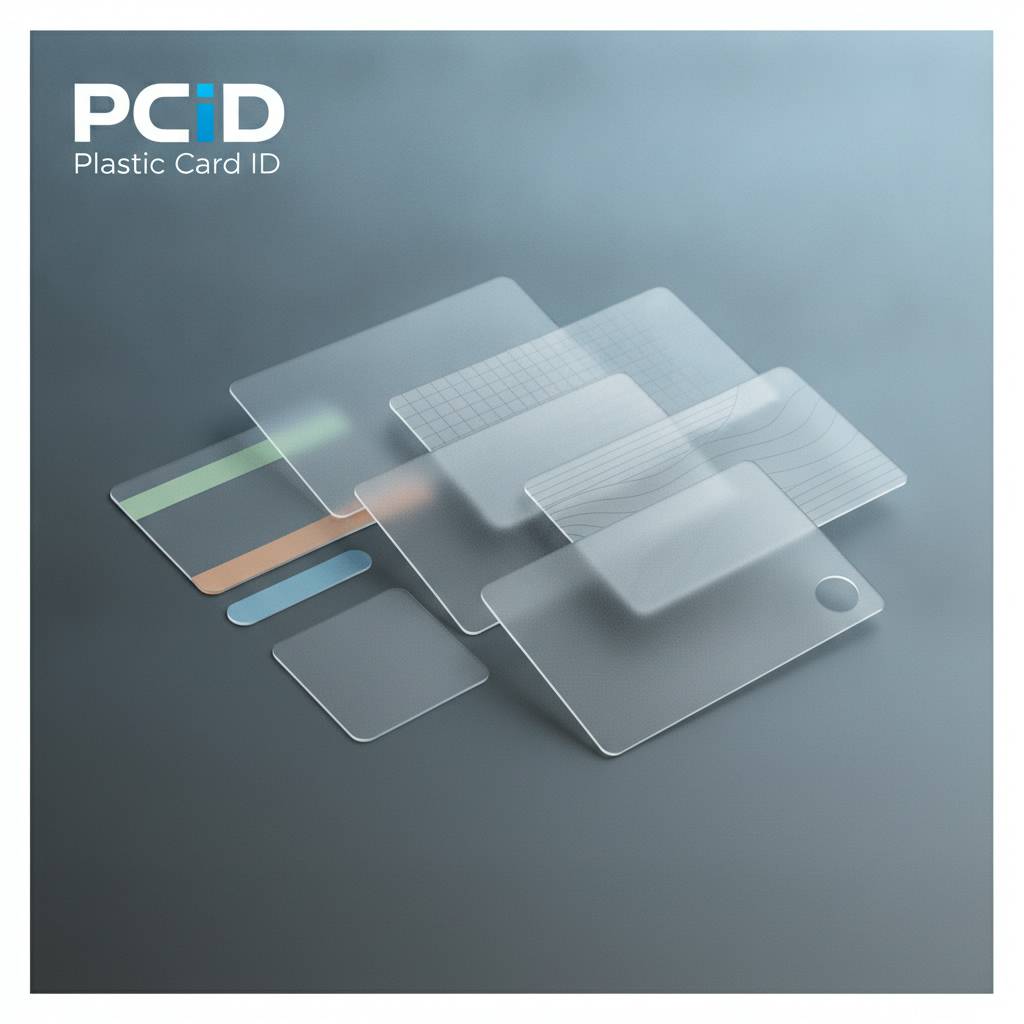 Purchasing blank frosted cards is straightforward when you know what to look for. The key variables are card thickness, finish consistency, packaging, and quantity breaks. Plastic Card ID supplies frosted cards in quantities that work for small organizations printing a few hundred cards per month and large operations running tens of thousands. There is no minimum order that prices out small programs - and volume pricing rewards organizations that plan ahead.
Quantity Tiers and Volume Pricing
Blank frosted plastic cards are typically priced in quantity tiers. Smaller orders - 100-500 cards - carry a higher per-card cost. As order quantities increase into the 1,000-5,000 range and beyond, the per-card cost drops meaningfully. For organizations with predictable card usage, ordering in larger quantities is almost always the smarter financial decision. Calculate your 6-12 month usage estimate and order accordingly to capture the best per-card rate.
Volume orders also reduce the frequency of reorder cycles, which has its own operational value. Fewer orders mean fewer shipping events, less administrative overhead, and a more predictable supply chain. CPE can help you model your usage and recommend an order cadence that balances cost savings with inventory management.
Packaging and Storage
Blank frosted plastic cards are typically packaged in shrink-wrapped stacks of 100, with multiple stacks per case depending on the total order quantity. Proper storage matters: cards should be kept in a climate-controlled environment, away from direct heat sources and excessive humidity. Improper storage can cause cards to warp slightly, which creates feed problems in card printers and affects print registration.
Most office and retail environments are perfectly suitable for card storage as-is. If you are storing large quantities, keep cards in their original packaging until ready for use, stack flat, and avoid placing heavy objects on top of card stock. These are basic precautions that protect the quality of your investment from the warehouse to the printer tray.
Add-On Options: Magnetic Stripe, Chip, and More
Blank frosted plastic cards can be ordered with pre-encoded magnetic stripes - either HiCo (high-coercivity) or LoCo (low-coercivity) - for programs that require swipe-based data reading. HiCo magnetic stripes are more durable and resistant to demagnetization from everyday exposure, making them the preferred choice for frequent-use applications like loyalty or access cards. LoCo stripes are suitable for short-term or single-use applications where longevity is less critical.
Beyond magnetic stripe, frosted cards are also available with RFID chips for contactless applications. Whether your program requires proximity access control, MIFARE DESFire encoding, or smart card technology for multi-function credentials, CPE can supply the right frosted card configuration. The visual appeal of frosted stock combined with embedded technology creates a credential that is both functional and impressive.
Frequently Asked Questions About Blank Frosted Plastic Cards
New buyers often have specific questions before committing to frosted card stock. The following covers the most common points of uncertainty - practical answers that help you make a confident purchasing decision without having to rely on guesswork.
Can I Print on Both Sides of a Frosted Card?
Yes. Blank frosted plastic cards support dual-sided printing with any duplex-capable card printer. Evolis Primacy, Zebra ZXP Series, and Fargo HDP models all offer dual-sided printing configurations. Keep in mind that the frosted finish affects how colors render on both faces - test prints are recommended before finalizing your design, particularly if you are using light ink colors that may be affected by the translucent base.
Dual-sided frosted cards are common in membership and ID applications where one side carries the member's photo and personal information, and the reverse side carries program terms, a barcode, or contact information. The format is fully functional and widely used in professional card programs across industries.
What Is the Difference Between Frosted and Matte-Finish Cards?
This is a common point of confusion. Matte-finish cards are typically opaque white cards with a surface treatment that reduces glare and gives a softer look and feel. Frosted cards, by contrast, are translucent - the card material itself allows light to pass through partially, creating the characteristic diffused appearance. Frosted cards have a fundamentally different optical character than matte-finish cards, even though both share a non-glossy aesthetic.
If you are looking for the visual distinction and translucency of frosted stock, matte cards will not deliver the same effect. The two formats serve different design purposes. If you are unsure which is right for your program, CPE can provide samples of both so you can compare directly before placing a production order.
How Many Cards Can I Print Per Ribbon?
Ribbon yield depends on the ribbon type and your print coverage per card. A standard YMCKO ribbon for an Evolis Primacy typically yields 200-500 single-sided prints. Full-coverage designs - cards where color fills most of the card face - consume ribbon faster than designs with white space or minimal color. Calculating your ribbon cost per card is an important part of understanding your total in-house print cost.
- YMCKO ribbons: full-color printing with a clear overlay protective coat
- KO ribbons: black resin printing for monochrome text and barcode applications
- YMCKOK ribbons: full-color front, black resin back - ideal for dual-sided ID cards
- Cleaning cards: included in most ribbon kits; use per manufacturer schedule
- Overlay panels: extend card surface durability and protect printed information
Matching your ribbon type to your card design and printer model ensures you get the yield and quality the manufacturer specifies. CPE stocks ribbons for all supported printer models and can help you identify the right ribbon for your specific application.
Ready to Upgrade Your Card Program? Contact Plastic Card ID Today
 Blank frosted plastic cards represent one of the most effective ways to elevate the perceived value of your card program without a dramatic increase in per-card cost. The translucent finish, the premium hand feel, the way printed designs interact with the frosted base - these are qualities that your cardholders will notice, even if they cannot articulate exactly why your card feels more substantial than a competitor's.
Plastic Card ID has spent more than two decades helping businesses across the United States build card programs that work. From the first 50 cards a small business orders to the tens of thousands that larger organizations run monthly, CPE brings product knowledge, reliable inventory, and genuine strategic partnership to every account. You are not just buying blank cards - you are buying access to 25 years of card program expertise.
The catalog goes beyond frosted stock. Blank white PVC, colored stock, clear cards, HiCo and LoCo magnetic stripe cards, RFID and proximity cards, smart chip cards, casino player cards, hotel key cards, and luxury metal cards in stainless steel, brass, and gold - every card format your program might ever need, backed by card printers, ribbons, cleaning kits, sleeves, card carriers, and card affixing and mailing services. This is what a true one-stop card program partner looks like.
Do not settle for a supplier who only knows how to take an order. Work with a partner who understands your program, your goals, and your growth trajectory. Plastic Card ID is ready to help you get there. Call 800.835.7919 today and speak with a card program specialist who can match you with the right frosted card stock, printer, and consumables for exactly what you need.
Previous Page