How Many Blank Plastic Cards Do I Need to Order
Table of Contents []
- How Many Blank Plastic Cards Do I Need to Order? A Practical Guide from Plastic Card ID
- Understanding Card Types and How They Affect Your Order Quantity
- Key Factors That Change Your Required Order Quantity
- Common Mistakes Buyers Make When Estimating Card Quantities
- How Card Program Type Should Shape Your Ordering Strategy
- Specialty Cards: When to Order More and When to Order Carefully
- Working with Plastic Card ID to Get Your Order Right
How Many Blank Plastic Cards Do I Need to Order? A Practical Guide from Plastic Card ID
 It sounds like a simple question. It rarely is. Figuring out exactly how many blank plastic cards to order involves more variables than most buyers expect - turnover rates, program growth, printer capacity, storage conditions, and the very real cost of running out at the worst possible moment. Get it wrong in either direction and you are either scrambling to reorder or sitting on surplus that ties up budget.
This guide is built to help you think through those variables clearly, whether you are launching your first card program or optimizing an operation that has been running for years. CPE has helped over 100,000 customers across the United States solve exactly this problem, and the patterns are consistent enough to offer real, actionable guidance.
Why the Answer Is Never "Just Order What You Need Right Now"
Reactive ordering feels safe but costs more. Every time you place a small order, you pay a higher per-card rate, absorb shipping fees, and risk a gap in your program if the reorder arrives late. Strategic ordering saves money and keeps programs running smoothly, especially for organizations that use cards daily.
Consider a mid-sized gym issuing membership cards. They onboard roughly 80 new members a month, replace lost or damaged cards at a rate of about 10-15% of active members annually, and run periodic promotions that require fresh card stock. If they only order 100 cards at a time, they are constantly reordering, paying premium pricing, and risking a two-day gap that leaves new members waiting. Ordering 500-1,000 cards at a stretch changes that math entirely.
Usage Rate: The Foundation of Any Smart Order Calculation
Start with a simple number: how many cards does your organization issue per month? Include new issuances, replacements, and any cards used for testing or printer setup. That last category surprises people - a card printer requires test prints and calibration cards, which consume stock faster than expected during setup or maintenance cycles.
Once you have a monthly usage rate, multiply by the number of months you want to keep in inventory. Most programs benefit from a 3-to-6 month buffer. High-volume operations - hospitality, retail, healthcare - often maintain 6-to-12 months of stock on hand. The slightly larger upfront investment is offset by lower per-card costs and the operational peace of mind that comes from never running dry.
Growth Projections Matter More Than You Think
A loyalty card program that starts with 200 active members in January is rarely still at 200 by July. Plan for program growth when calculating your order quantity, not just current demand. Ordering to your current baseline and then scrambling for more when the program gains traction is a pattern CPE sees frequently - and one that is entirely avoidable.
If your program is in a growth phase, add 20-30% to your baseline usage calculation. If you are launching a new program cold, estimate conservatively but order enough to avoid a gap in your first 90 days. Running out of cards during a launch is a credibility problem, not just a logistics one.
| Program Type | Monthly Usage Est. | Recommended Order Qty | Reorder Frequency |
|---|---|---|---|
| Small Business / Startup | 25-75 cards | 200-500 cards | Every 3-6 months |
| Mid-Size Organization | 100-300 cards | 500-1,500 cards | Every 4-6 months |
| Retail / Loyalty Program | 300-800 cards | 2,000-5,000 cards | Every 3-6 months |
| Enterprise / High-Volume | 1,000 cards | 10,000-50,000 cards | Every 6-12 months |
Understanding Card Types and How They Affect Your Order Quantity
 Not all blank plastic cards are interchangeable. The type of card you need - plain PVC, magnetic stripe, RFID, smart chip - affects not just pricing but lead times and minimum order considerations. Ordering the right card type in the right quantity is a two-part equation, and getting either part wrong creates friction downstream.
Standard CR80 blank PVC cards at 30 mil thickness are the baseline - the ISO 7810 standard that fits every major card printer on the market. They are the most affordable and most flexible option, accepting full-color printing, laminate overlays, and any encoding format you add. If your program is just getting started, these are your starting point.
Blank PVC Cards: Volume Tiers and What They Mean for Pricing
Pricing on blank PVC cards scales with volume in meaningful ways. The per-card cost at 100 units is noticeably higher than at 500, and the jump from 500 to 2,000 cards often represents the most significant per-unit savings in the entire pricing curve. Most programs find their sweet spot between 500 and 5,000 cards per order, balancing cost efficiency with storage practicality.
For a small nonprofit issuing volunteer ID badges, 200-500 cards might last a full year. For a regional hotel chain using cards as key cards and staff credentials simultaneously, 5,000 cards could be a three-month supply. Know your number before you shop - and when in doubt, ask. CPE works with clients at every scale, from 50 cards a month to mass-production runs in the tens of thousands.
Magnetic Stripe Cards: HiCo vs. LoCo and Quantity Implications
If your program requires magnetic stripe encoding - gift cards, access cards, loyalty programs with swipe terminals - you need to decide between HiCo (high coercivity) and LoCo (low coercivity) before ordering. HiCo cards are far more durable and resistant to accidental erasure, making them the industry standard for cards that see daily use.
LoCo cards cost slightly less per unit and work fine for short-term applications like hotel room keys, which are replaced frequently by design. Because these two types serve different use cases, mixing them accidentally in a single order is a mistake that costs time and money to unwind. Confirm your stripe specification before placing any volume order.
RFID, Proximity, and Smart Chip Cards: Order Carefully
Technology cards - RFID, proximity, MIFARE DESFire, and smart chip cards - carry a higher per-unit cost and often require system compatibility checks before you commit to volume. Ordering 5,000 proximity cards that are not compatible with your access control readers is an expensive lesson in the importance of specification verification.
For these card types, a smaller initial test order is often worth the slightly higher per-card cost. Verify compatibility, confirm encoding requirements with your system vendor, and then scale your order quantity based on validated specifications. CPE can help you navigate these decisions to avoid costly mismatches.
Key Factors That Change Your Required Order Quantity
Even with a clear usage rate and card type in mind, several situational factors can shift your ideal order quantity up or down significantly. Experienced card program managers account for all of them. New buyers often miss one or two, which is how they end up short at the wrong time.
Think of your order quantity not as a snapshot of current need but as a living estimate that accounts for time, change, and probability. The goal is to keep your card program running without interruption at the lowest total cost over time.
Attrition and Replacement Rates
Cards get lost. They get demagnetized, scratched, or handed to someone who leaves the organization. Depending on your program type, replacement demand can add 10-25% to your baseline usage rate. Employee ID programs at organizations with high turnover may see replacement demand that rivals new issuance volume.
Factor this into your calculation explicitly. If you issue 200 cards a month to new members but replace 40 lost or damaged cards on top of that, your real monthly consumption is 240 cards - not 200. Over six months, that gap is 240 cards you did not order, and it will catch up with you.
Seasonal Demand Spikes
Many card programs experience predictable seasonal surges that catch underprepared buyers off guard. Retailers ramp up gift card distribution in Q4. Universities issue student and faculty ID cards at the start of each semester. Event venues need credential cards for conference season. Plan for these surges by front-loading your inventory before the peak, not during it.
A practical rule: if you know a surge is coming in the next 60-90 days, order enough to cover both your standard usage and the anticipated spike before prices and lead times are affected by everyone else doing the same thing at the last minute. Being early is almost always cheaper than being urgent.
Printer Capacity and Card Stock Compatibility
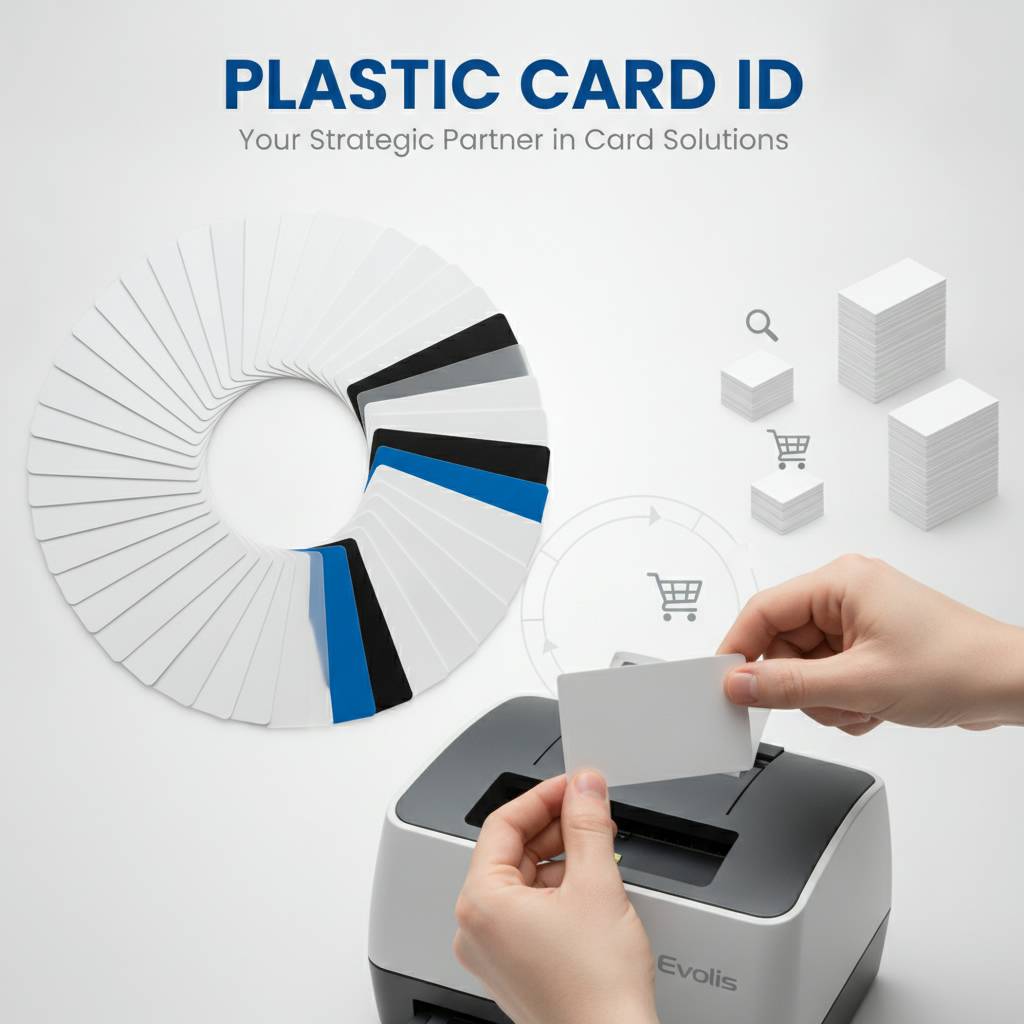
Your card printer is not just a printing device - it is a throughput constraint. A single-sided desktop printer from Evolis or Fargo processes cards at a very different rate than a dual-sided high-volume unit from Zebra. If your printer can handle 150 cards per hour and you are trying to issue 1,000 cards in a single day, something has to give.
Match your order quantity to your actual print capacity and your real-world issuance schedule. Also confirm that the card stock you order is rated for your specific printer model. Most CR80 30 mil PVC cards are universally compatible, but specialty cards - clear, frosted, colored stock - may have different feed or print characteristics worth confirming before ordering thousands.
- Check your printer's recommended card thickness - most accept 30 mil standard CR80 cards without issue
- Verify that clear or frosted cards are compatible with your specific printer model before ordering in volume
- Account for test prints and calibration cards in your monthly usage estimate
- Consider whether you need single-sided or dual-sided printing capability when selecting your card stock
- If you run multiple printers, calculate combined throughput before estimating how fast you will consume stock
Common Mistakes Buyers Make When Estimating Card Quantities
 After serving over 100,000 customers and moving more than 50 million cards, CPE has seen the same ordering mistakes appear across industries, organization sizes, and program types. Knowing what those mistakes look like is often the fastest path to avoiding them.
None of these errors are difficult to prevent once you know to look for them. The challenge is that most first-time buyers do not know what they do not know - and that is precisely why having an experienced supplier as a strategic partner, rather than just a vendor, makes a measurable difference.
Underestimating Replacement Demand
The single most common error is ordering only for new issuances and completely ignoring replacement volume. This creates a deceptively accurate initial estimate - it works just long enough to feel right, then falls apart when replacement requests start accumulating faster than expected.
Build replacement demand into your formula from day one. Even a conservative 10% annual replacement rate translates to real monthly card consumption that must be planned for. A card program that runs out of stock is a card program that loses credibility with the members, employees, or customers it is supposed to serve.
Ordering Too Small to Save Money in the Short Term
Buying 100 cards when you need 400 over the next quarter feels conservative and budget-friendly. It is neither. You pay a higher per-card rate, absorb shipping costs multiple times, and spend staff time placing and processing multiple orders when one would have done the job. Small, frequent orders are almost always more expensive in total than a single well-planned bulk order.
Do the math explicitly: compare the total cost of four orders of 100 cards against one order of 500. Include shipping in both scenarios. The answer usually makes the right choice obvious. If storage is a concern, note that cards in original packaging store well in a cool, dry environment without degrading - so volume ordering is practical even for smaller operations.
Ignoring Lead Times During High-Demand Periods
Card suppliers - like all product suppliers - experience demand spikes during certain periods of the year. Q4 retail seasons, back-to-school periods, and conference seasons create higher-than-normal order volumes across the industry. If you wait until you need cards urgently during one of these periods, you may face longer lead times and limited stock on specialty card types.
The solution is simple but requires discipline: set a reorder trigger point, not a run-out point. When your inventory hits 30% of your target stock level, place your next order - not when you hit zero. That buffer is your operational insurance policy, and it costs nothing extra if you have planned your quantities correctly from the start.
Ready to get your order quantity right? Call Plastic Card ID at 800.835.7919 and let our team help you calculate the right volume for your specific program.
How Card Program Type Should Shape Your Ordering Strategy
 A hospital issuing employee ID badges has fundamentally different ordering needs than a coffee shop running a loyalty card program. The card type may be similar - both might use standard CR80 PVC cards - but the issuance pattern, replacement rate, and program timeline are entirely different. Your ordering strategy should reflect your specific program type, not a generic average.
Below are the most common program types CPE serves across the United States, along with practical guidance on what each typically requires from an ordering standpoint. Use these as reference points, not rigid rules - your situation will always have nuances worth discussing directly.
Loyalty and Gift Card Programs
Retail loyalty programs and gift card programs tend to have high initial issuance volumes followed by a more moderate ongoing replenishment rate. The launch phase - when you are distributing cards to your existing customer base or making them available at point of sale - often requires 2-5 times your expected monthly steady-state volume. Order for the launch separately and clearly.
Gift card programs in particular benefit from having surplus stock available at all times, since gift card demand is often spontaneous and unpredictable. Retailers who switch from paper punch cards to plastic loyalty cards typically see sales increases of 35-50%, meaning your program may grow faster than your initial projections suggest. Build that upside into your inventory planning.
Employee ID and Access Control Programs
Employee ID programs have a more predictable issuance pattern based on headcount and turnover rates, but they require careful attention to replacement logistics. Lost or damaged ID cards in a secure facility are not just inconvenient - they are a security gap that needs immediate resolution. Maintaining an adequate on-hand buffer ensures replacements happen same-day, not after a reorder cycle.
For organizations with 100-500 employees and moderate turnover, a 6-month supply of cards on hand is typically the right balance between cost efficiency and operational readiness. Larger organizations or those in industries with higher turnover should consider maintaining up to 12 months of stock to avoid repeated rush orders.
Event Credentials and Temporary Programs
Event credentials - conference badges, venue access cards, trade show passes - have a sharply defined lifecycle that makes quantity planning more straightforward than ongoing programs. You know your attendee count, you know your event dates, and you know you need cards in hand at least a week before the event begins.
Order 10-15% more than your confirmed attendee count to account for walk-ins, VIP additions, replacement for damaged credentials, and staff cards. After the event, remaining stock can often be repurposed if it is unprinted or stored cleanly. Specialty cards like clear plastic or custom die-cut shapes for event use should be ordered with extra lead time given their non-standard nature.
Specialty Cards: When to Order More and When to Order Carefully
Specialty card types - clear PVC, frosted, colored stock, custom die-cut shapes, luxury metal cards, and casino player cards - carry different ordering dynamics than standard white PVC. They often have longer production lead times, higher per-unit costs, and less flexibility for last-minute additions. Specialty card orders reward careful planning and penalize urgency.
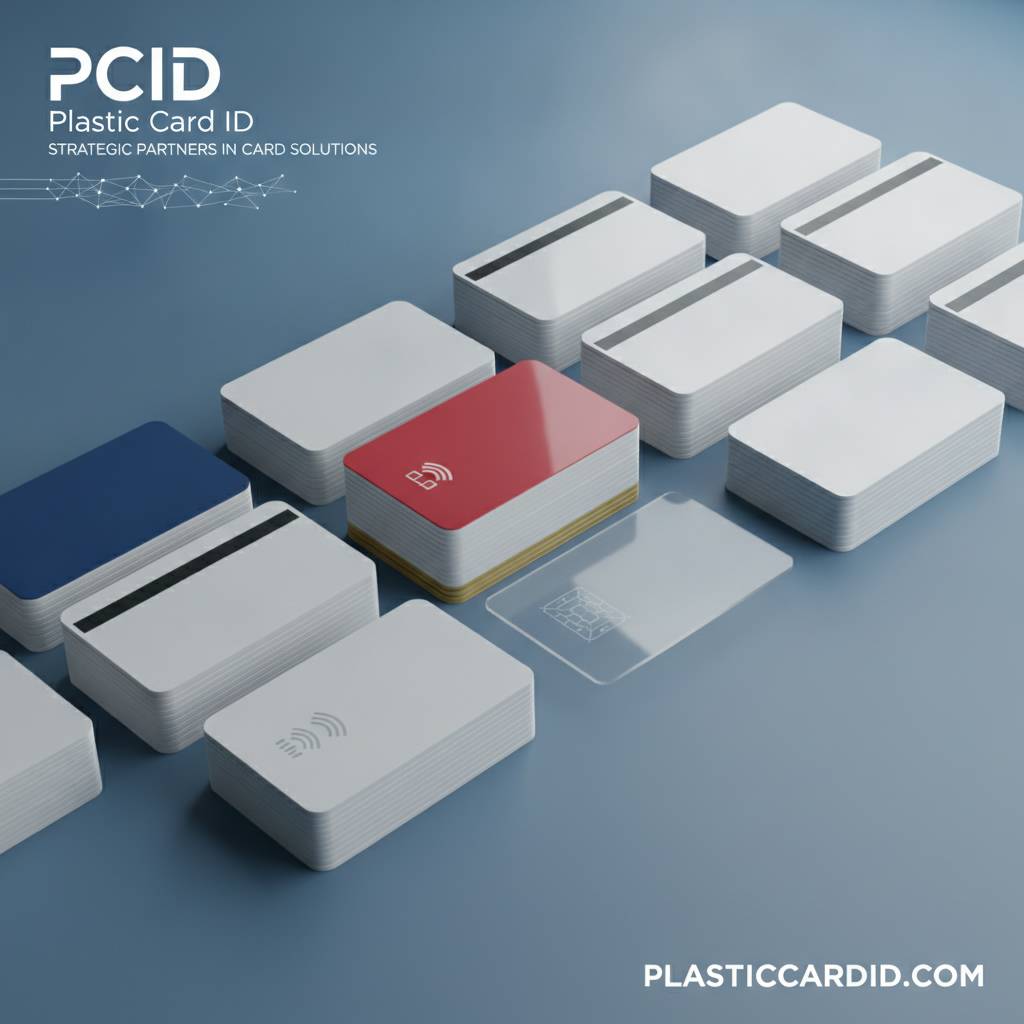
Hotel key cards, casino player cards, and RFID smart cards using MIFARE DESFire technology each have compatibility requirements that must be confirmed before placing a large volume order. This is not an area where buying extra "just in case" is always the right strategy - unlike standard PVC stock, specialty cards may have system-specific encoding that limits their reusability across different applications.
Clear and Frosted Cards
Clear and frosted PVC cards create a premium visual impression that makes them popular for membership programs, VIP cards, and brand-forward loyalty applications. They print differently than standard white PVC, and not all card printers handle them equally well. Before ordering 2,000 clear cards, print 50 on your specific printer and confirm the output meets your expectations.
Once you have validated the print quality and printer compatibility, order volume with the same logic as standard cards - based on usage rate, replacement demand, and a 3-to-6 month buffer. The slightly higher per-card cost makes conservative initial ordering more defensible, but do not under-order to the point where you are reordering monthly at premium pricing.
Luxury Metal Cards and Custom Die-Cut Shapes
Stainless steel, brass, and gold metal cards occupy a distinct tier - they are prestige items designed to make a statement, typically used for premium membership programs, VIP access, or high-end loyalty applications. These are not impulse purchases; they require thoughtful quantity decisions. Over-ordering luxury metal cards ties up significant capital in inventory that may not turn over quickly.
For most programs, metal card quantities are measured in hundreds rather than thousands. Start with a quantity that covers your initial distribution plus a modest reserve, then reorder as the program's demand becomes clear. Custom die-cut cards follow similar logic - unique shapes are memorable and effective, but they carry production minimums and lead times that require advance planning.
Working with Plastic Card ID to Get Your Order Right
 Calculating the right blank plastic card order quantity is not a one-size-fits-all exercise, and it does not have to be a guessing game. CPE has spent over 25 years helping organizations across the United States build card programs that work - from the first order through years of ongoing operation. The expertise is available, and it costs nothing to tap into it before you place your order.
Whether you need 50 cards a month or 50,000, the same principles apply: know your usage rate, account for replacements and growth, match your card type to your application, and order enough to avoid the cost and disruption of constant small reorders. Get those variables right and your card program runs smoothly, looks professional, and serves its purpose without interruption.
Our Full Product Range Supports Every Program Type
CPE carries the full spectrum of blank and specialty card stock - standard CR80 PVC, HiCo and LoCo magnetic stripe cards, RFID and proximity cards, MIFARE DESFire smart chip cards, clear and frosted PVC, colored card stock, and premium metal cards in stainless steel, brass, and gold. Every card type in the catalog ships to USA-based businesses and organizations.
Beyond the cards themselves, Plastic Card ID supplies the complete card program ecosystem: Evolis, Zebra, and Fargo card printers, printer ribbons, cleaning kits, card carriers and sleeves, and card affixing and mailing services. You can build and operate your entire card program through a single trusted supplier - one that has been doing this for over a quarter century and shows it in every interaction.
Getting a Custom Quote for Your Volume
Every program is a little different, and pricing scales with volume in ways that make a conversation more useful than a generic price list. Contact Plastic Card ID directly to get a volume-based quote that reflects your specific card type, quantity needs, and program timeline. The team is experienced, knowledgeable, and genuinely invested in helping you get the math right.
Reach the Plastic Card ID team at 800.835.7919 to discuss your card program needs, get a quote, or work through any questions about card types, quantities, or printer compatibility before you order.
Why Businesses Across the USA Choose CPE as a Long-Term Partner
Over 100,000 customers have trusted CPE with their card programs. More than 50 million cards have been supplied through those partnerships. The reason is not just competitive pricing or deep inventory - it is the combination of product expertise, program knowledge, and genuine commitment to helping clients succeed that turns a supplier relationship into a strategic partnership.
When you call with a question about how many cards to order, you get a real answer grounded in real experience - not a push toward the largest possible order for its own sake. That kind of honest engagement is why programs that start small with CPE tend to stay and grow. Your card program deserves a partner who understands it as well as you do.
Do not leave your card program to guesswork. Contact Plastic Card ID today at 800.835.7919 and let over 25 years of card program expertise work for your organization.
Previous Page