Blank Colored Plastic Cards: Color Options Available
Table of Contents []
- Blank Colored Plastic Cards: Color Options That Work Hard for Your Brand - Plastic Card ID
- Why Colored Card Stock Changes Everything Before You Print a Single Line
- The Full Spectrum: Navigating Colored Card Stock Options
- Blank Colored Cards Across Every Industry and Use Case
- Encoding and Technology Options on Colored Blank Cards
- Card Printers and Ribbons for Colored Stock Programs
- Frequently Asked Questions About Blank Colored Plastic Cards
- Partner With Plastic Card ID for Your Colored Blank Card Program
Blank Colored Plastic Cards: Color Options That Work Hard for Your Brand - Plastic Card ID
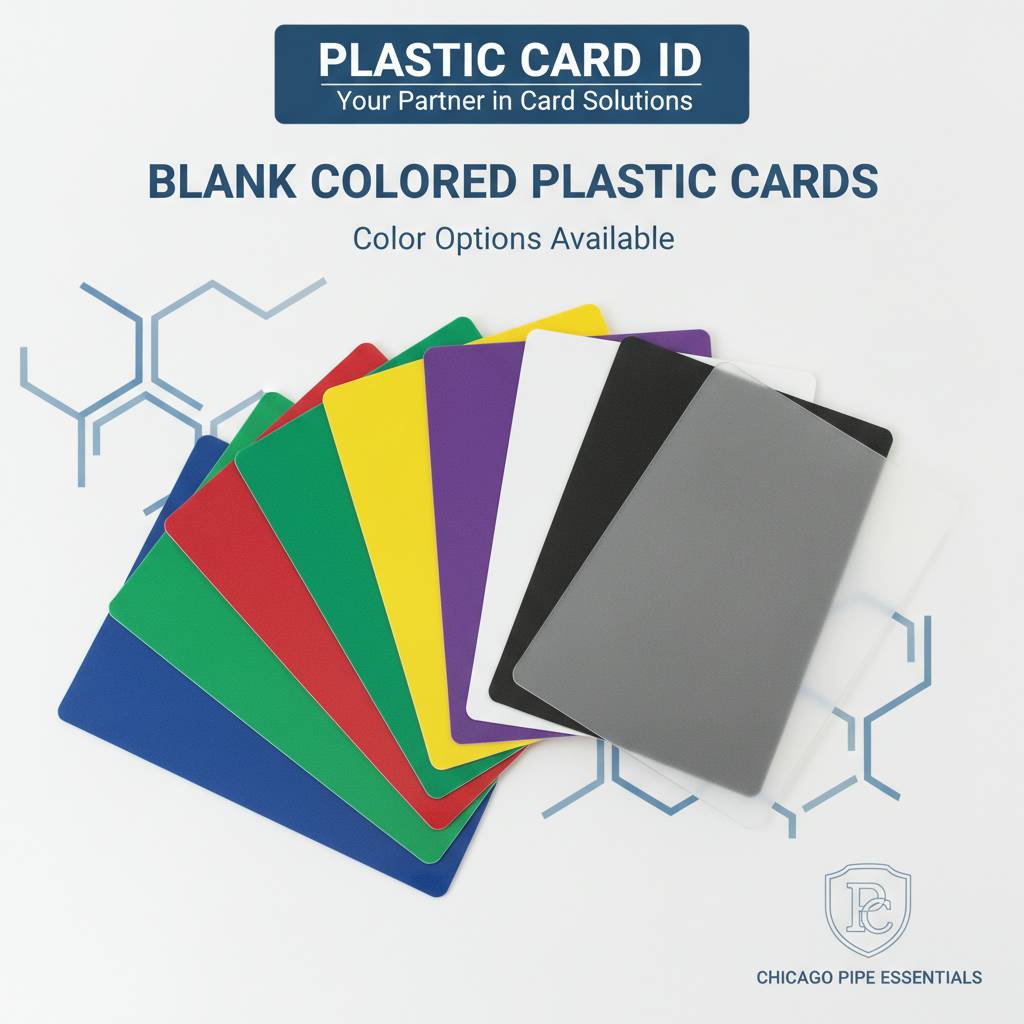 Walk into any busy retail checkout and watch what happens when a cashier hands a customer a vivid, color-saturated plastic card. There is a moment - brief but real - where the customer actually looks at it. That moment is worth more than most businesses realize. Color is not decoration. It is signal, identity, and memory all compressed into a CR80 rectangle sitting in someone's wallet.
Plastic Card ID has spent more than 25 years understanding exactly what that moment means for businesses across the United States. With over 100,000 customers served and more than 50 million cards shipped, the team has watched colored plastic cards outperform paper alternatives in virtually every measurable category. The difference starts before a single logo is printed - it starts with the card stock itself.
| Card Color / Type | Best Use Case | Print Compatibility |
|---|---|---|
| Standard White PVC | ID, loyalty, membership | Full-color dye-sublimation |
| Black PVC | Premium membership, VIP | Foil, UV, edge printing |
| Clear / Frosted PVC | Luxury retail, hospitality | Selective overlay, spot color |
| Red / Blue / Green Stock | Events, clubs, departments | Monochrome or full-color |
| Gold / Silver Metallic | Rewards tiers, casinos | Selective color, embossing |
Why Colored Card Stock Changes Everything Before You Print a Single Line
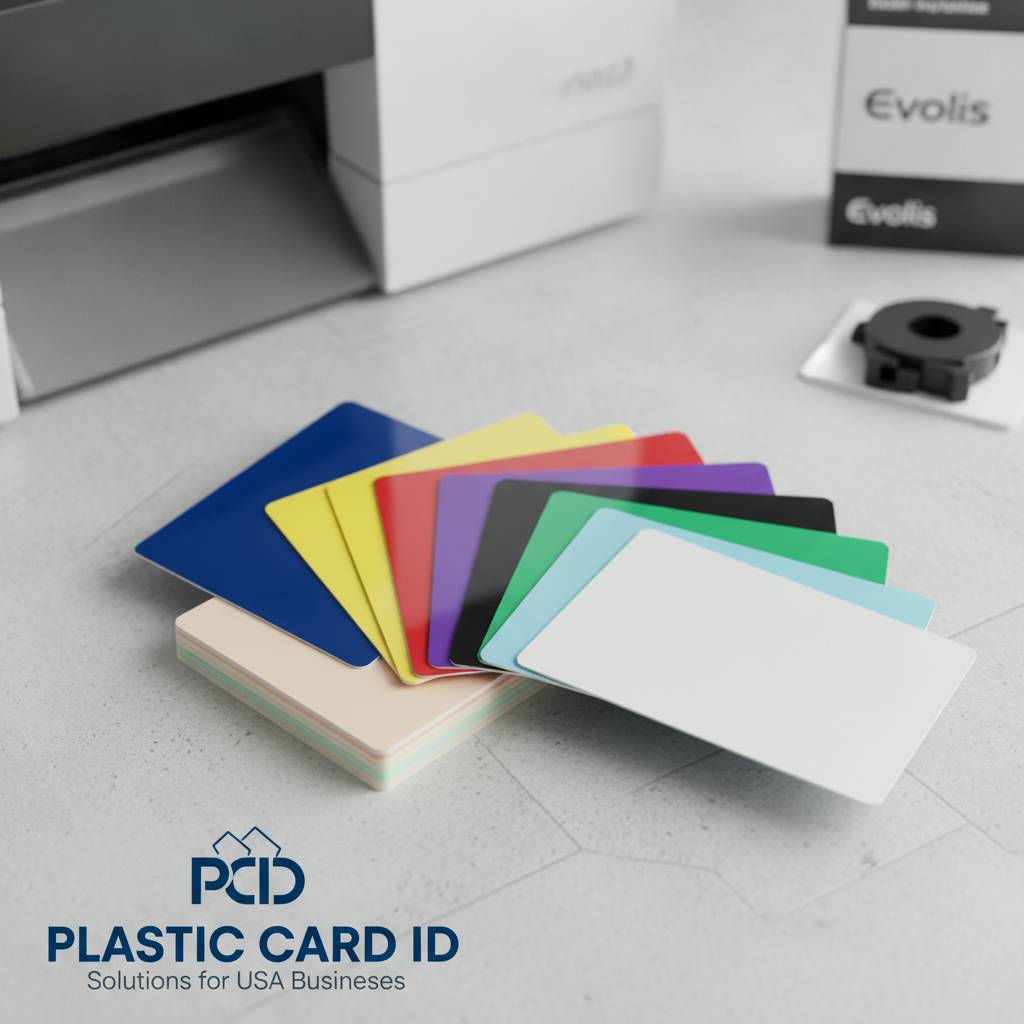 There is a common misconception that colored card stock is purely aesthetic - a cosmetic upgrade that adds cost without adding value. That framing gets it exactly backwards. Colored card stock is a strategic tool that shapes perception, drives program differentiation, and in many cases reduces the complexity of your in-house printing workflow. When the card's base color does visual work on its own, your design overhead shrinks.
Consider a fitness club running three membership tiers. Printing full-color designs on white stock for every tier requires a complex print run and careful color calibration across batches. Switching to tiered colored stock - say, blue for standard, silver metallic for premium, black for VIP - lets the card itself communicate status instantly, even when held across a front desk counter. That visual hierarchy is built in before your printer runs a single pass.
The CR80 Standard and Why It Matters for Colored Blanks
Every blank colored card in the Plastic Card ID catalog is manufactured to the CR80 ISO 7810 standard: 3.375 x 2.125 inches, 30 mil thickness. This is the same specification used for standard credit cards, ID cards, and access credentials worldwide. Consistency at this level means your colored stock will load reliably into any compatible card printer without jamming, misfeeding, or causing calibration headaches.
The 30 mil thickness is not arbitrary. Thinner cards flex under normal wallet use and can develop micro-cracks at encoding tracks or chip contacts over time. At 30 mil, a colored PVC card survives daily pocket wear, frequent swipes, and real-world handling without degrading. That durability is part of what makes plastic the material of choice for programs that need longevity - not just a good-looking launch day.
How Colored Stock Interacts With Card Printer Ribbons
Printing on colored stock requires a different mental model than printing on white. White stock is a blank canvas where full-color dye-sublimation ribbons produce predictable, true-to-design results. Colored stock, by contrast, influences every color printed on top of it - which is actually a feature when used deliberately. Dark stock paired with monochrome white or silver resin ribbons can produce striking, high-contrast results that feel premium at a fraction of full-color ribbon cost.
For programs printing in-house at CPE, understanding ribbon-to-stock compatibility is essential. A YMCKO ribbon on black PVC stock will not yield the same white panel reproduction as it would on white stock. In those cases, YMCKOK ribbons with a dedicated black resin panel, or purpose-designed monochrome ribbons, are typically the better call. The Plastic Card ID team has matched thousands of clients with the right ribbon-stock combinations over the years.
Frosted and Clear Cards: A Color Category of Their Own
Clear and frosted PVC cards occupy an interesting niche in the colored stock conversation. They are not white, not colored in the traditional sense, but they produce visual effects that solid colors cannot replicate. A frosted card with spot-color printing creates a diffused, softened aesthetic that reads as sophisticated rather than loud - ideal for spas, boutique hotels, upscale restaurants, and retail brands that want distinction without visual noise.
Clear cards, printed with selective color panels, allow the card holder's contents to show through in strategic areas - a visual trick that makes a gift card feel like a premium object rather than a disposable token. These specialty materials are fully compatible with standard CR80 printer trays and encode just as readily as standard white PVC. The design possibilities they unlock are genuinely broader than most buyers initially expect.
The Full Spectrum: Navigating Colored Card Stock Options
The range of colored blank card stock available through Plastic Card ID covers far more ground than most buyers initially imagine. Beyond the obvious choice between white and black lies a full palette of options - each with distinct use cases, printing behaviors, and program associations that experienced card buyers learn to leverage strategically. Getting familiar with the range before you commit to a card program design pays dividends at every reorder.

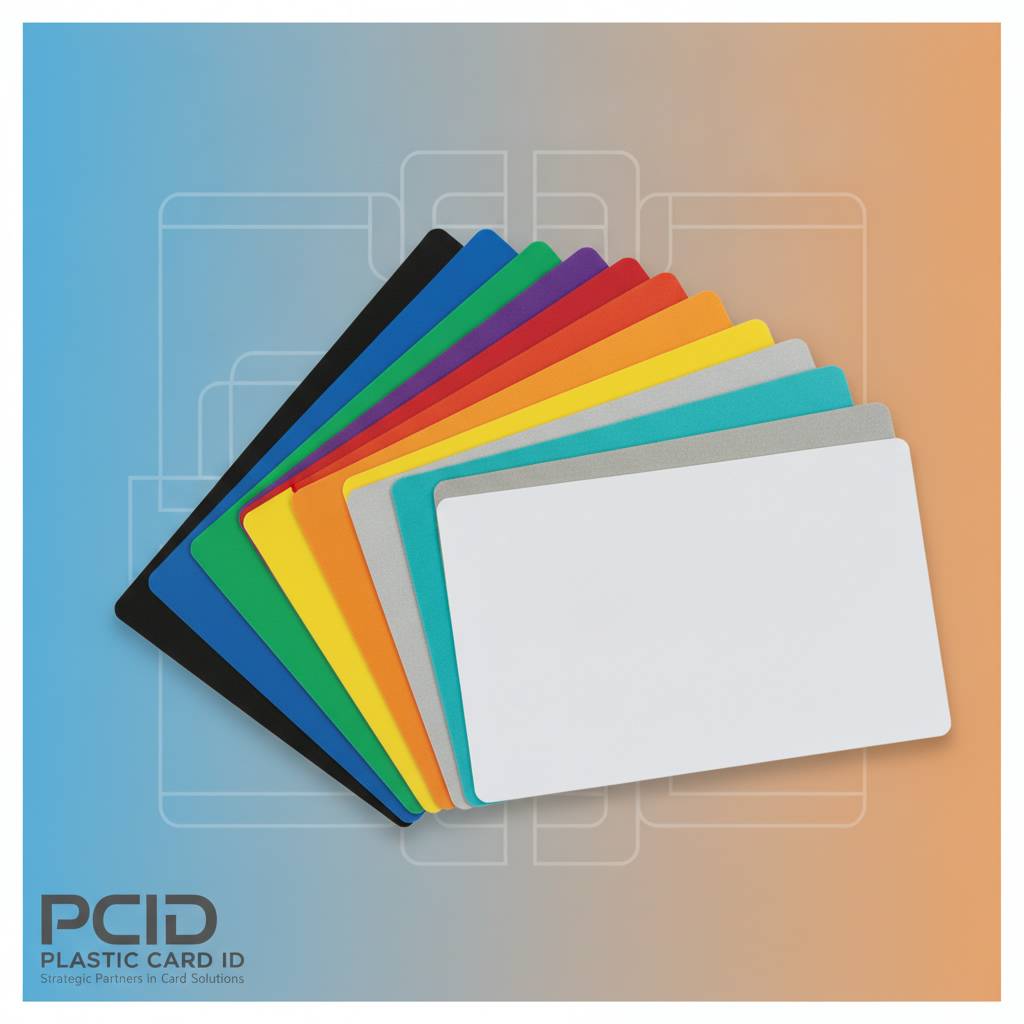
Color stock categories broadly divide into solid colors, metallic finishes, and specialty transparent materials. Within solid colors, you find the full range from standard white through warm and cool tones - red, blue, green, yellow, and beyond. Metallic stock introduces gold, silver, and holographic finishes that elevate perceived value without requiring premium printing processes. Each category serves different audiences and program types.
Solid Color Card Stock: Reds, Blues, Greens, and Beyond
Solid colored PVC card stock is manufactured with the color integrated throughout the card material - not painted or coated on the surface. This means the color is consistent at the edges, resistant to surface abrasion, and will not flake, fade, or peel under normal conditions. A solid red card stays red through hundreds of swipes and years of wallet use. That consistency matters for brand programs where color is part of identity.
Red cards are frequently used for gift card programs, emergency access credentials, and high-visibility event passes where quick identification matters. Blue stock is popular among healthcare organizations, educational institutions, and corporate ID programs. Green cards appear frequently in environmental program contexts, sports clubs, and loyalty programs. Yellow stock works well for temporary credentials, visitor badges, and day-pass programs where quick visual differentiation is the primary goal.
- Red PVC blanks - high visibility, gift programs, event credentials
- Blue PVC blanks - corporate ID, healthcare, membership programs
- Green PVC blanks - clubs, loyalty, sports organizations
- Yellow PVC blanks - temporary passes, visitor ID, day credentials
- Black PVC blanks - VIP, premium membership, executive access
- White PVC blanks - universal base for full-color dye-sublimation printing
Metallic and Foil-Finish Stock: When Standard Color Is Not Enough
Gold and silver metallic card stock occupy the upper tier of blank colored options for programs where perceived value is central to the card's function. Casino player cards, hotel VIP credentials, premium loyalty tier cards, and collector membership programs all benefit from a metallic stock that communicates exclusivity before a single word is read. The material itself becomes part of the brand message.
Metallic stock is not a printed finish - it is the base material itself, with a metallic sheen baked into the card substrate. This distinction matters for durability. A printed metallic effect will eventually show wear at high-contact areas like the card edges and the print surface. A metallic stock card maintains its finish because the appearance is structural, not surface-applied. For programs issuing cards intended to last three to five years or more, this difference is significant.
Choosing the Right Color for Your Program
Choosing card stock color is not an arbitrary design decision - it is a program architecture decision. The color your cardholders receive shapes their expectations, their perception of the program's quality, and even how carefully they treat the card. Research in retail consistently shows that physical cards treated as higher-value objects are retained longer and used more frequently, which directly impacts program ROI.
A useful framework: match color to program tier and audience expectation. Entry-level programs can use bold solid colors that feel energetic and accessible. Mid-tier programs benefit from subdued, professional tones - navy, charcoal, dark green. Premium and VIP programs warrant metallic stock, black matte, or clear/frosted materials that feel deliberately elevated. Mixing stock colors across tiers within a single program creates visual hierarchy that cardholders intuitively understand.
Blank Colored Cards Across Every Industry and Use Case
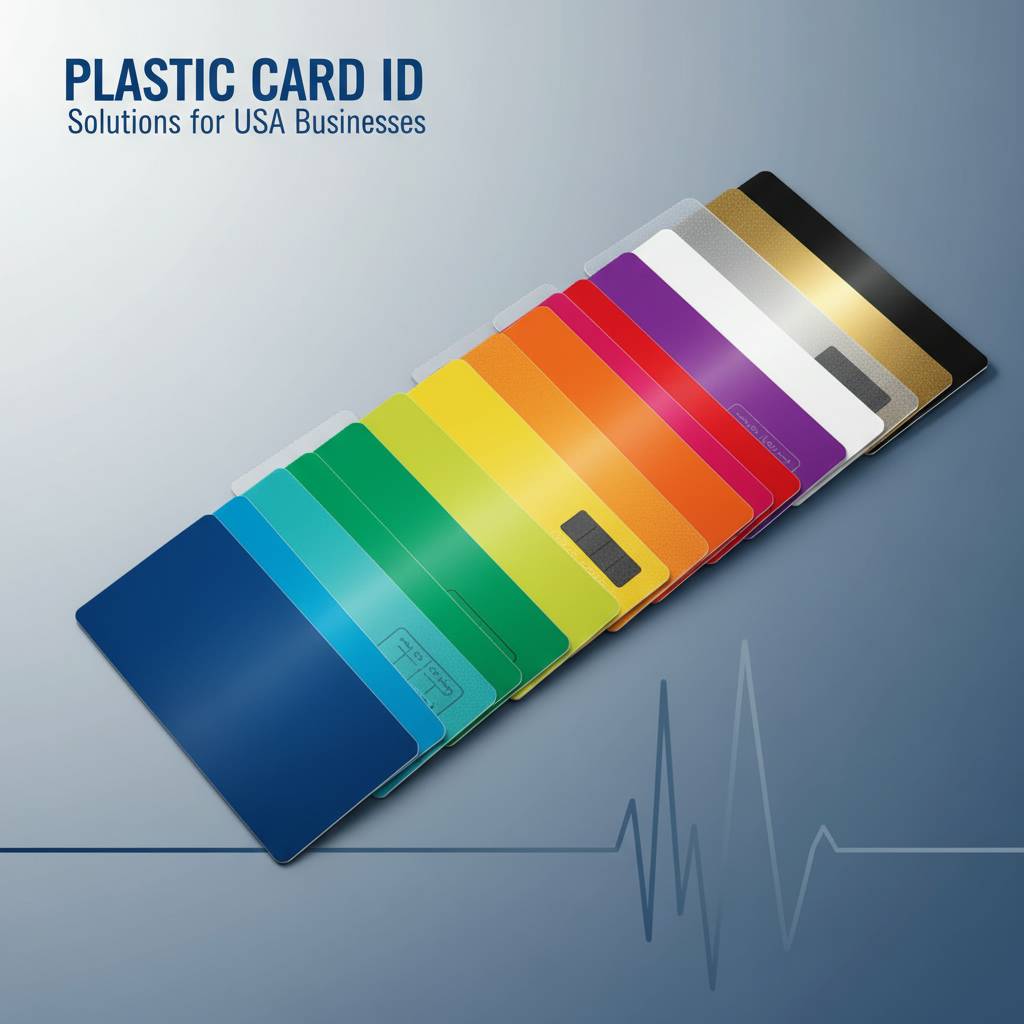 The flexibility of blank colored plastic card stock is one of its most underappreciated qualities. The same black CR80 blank that serves as a VIP membership card for a nightclub can become an employee access badge for a corporate headquarters or a premium gift card for a luxury retailer. What distinguishes each application is what gets printed or encoded onto it - not the base card itself. That versatility makes colored blanks a powerful inventory asset.
Plastic Card ID serves clients across retail, hospitality, healthcare, education, corporate, events, and government sectors - all of whom find specific use cases where colored blank stock outperforms alternatives. The common thread is that physical cards drive behavior in ways digital alternatives consistently fail to replicate. A card in a wallet is a recurring brand impression. A digital pass in an app folder is easily ignored.
Retail and Gift Card Programs
Retailers switching from paper gift certificates to plastic colored cards have documented sales increases of 35-50% in gift program revenue. The reason is not mysterious: plastic cards feel like real value. Customers keep them. Customers display them. Customers give them as gifts with pride rather than as afterthoughts. A $50 gift card on metallic gold stock feels like a $75 gift in the recipient's hand, and that perceived value premium drives both purchase frequency and load amounts.
For retail programs, red and gold stock are consistently strong performers. Red has associations with celebration, urgency, and generosity - all useful connotations for gift programs. Gold reads as premium and rewards-oriented. Many retailers running tiered gift-and-loyalty hybrid programs use both, with gold reserved for higher load values or loyal customer tiers to create aspirational differentiation.
Corporate ID, Access Control, and Employee Badges
Corporate environments use color-coded card stock as a practical access management tool. Colored blanks allow organizations to assign specific hues to departments, security clearance levels, or employee status categories - making unauthorized access visually obvious at a glance. A contractor carrying a yellow card in a building where employees carry blue instantly signals status without any technology interaction required.
For organizations using magnetic stripe or proximity encoding, colored blanks work seamlessly with HiCo and LoCo magnetic stripe configurations as well as 125kHz proximity and 13.56MHz smart card technologies. The color of the card does not affect its encoding capability - a black proximity card encodes identically to a white one. This means security programs can implement color-coded access hierarchies without any compromise on technical function.
Membership, Loyalty, and Club Programs
Loyalty programs built on plastic colored cards outperform paper punch card alternatives by virtually every metric that matters - retention rate, redemption frequency, and average transaction value. The physicality of a wallet-resident plastic card maintains program visibility in a way that paper simply cannot. Customers who carry the card are reminded of the program at every wallet interaction, not just when they are already at point of sale.
Club and membership organizations - gyms, associations, professional groups, sports leagues - find that colored stock assignment communicates membership tier without requiring staff to interpret printed text at distance. A silver card presented at the front desk of a gym immediately signals tier to the staff member processing access, reducing friction and speeding throughput. At scale, this kind of visual shorthand has measurable operational value.
Encoding and Technology Options on Colored Blank Cards
 Color and technology are not competing priorities in card program design - they coexist without compromise. Every colored blank in the Plastic Card ID catalog is available with the same encoding configurations as standard white stock: magnetic stripe in HiCo (2750 Oe) or LoCo (300 Oe) configurations, proximity chip (125kHz), and smart card chip options including MIFARE DESFire and other 13.56MHz formats. The color of the card substrate has no meaningful effect on any of these technologies.
Choosing between HiCo and LoCo magnetic stripe depends on your application environment. HiCo cards are significantly more resistant to demagnetization from proximity to everyday magnets - phone cases, bag clasps, other cards - making them the default choice for most serious card programs. LoCo cards cost marginally less and are appropriate for short-use credentials like single-event access passes where demagnetization resistance is less critical.
RFID and Proximity Cards in Color
Proximity cards and RFID smart cards are available in the same colored stock options as standard PVC blanks. A blue proximity card operates identically to a white one at the reader - the color is purely an organizational and aesthetic choice for the issuing organization. This makes color-coded RFID programs for multi-site access management or tiered facility access straightforward to implement.
For organizations deploying contactless smart card technology - MIFARE DESFire EV2, EV3, or other 13.56MHz variants - colored stock provides an additional layer of visual security. Cardholders holding a card that does not match the expected color for their credential type present an immediate visual flag that is independent of the electronic verification system. Layering visual and electronic verification creates a more robust security posture with no additional infrastructure investment.
Magnetic Stripe Colored Cards: HiCo vs. LoCo Explained
The magnetic stripe on a colored card is applied as a functional overlay during manufacturing - typically in a standard black stripe, though clear or colored stripe variants exist for specialty applications. HiCo stripes hold encoded data more reliably in real-world wallet environments and are strongly recommended for any program expecting cards to be in active use for more than a few weeks. The cost difference between HiCo and LoCo stock is minimal at realistic program volumes.
LoCo magnetic stripe colored cards are appropriate in specific scenarios: short-duration event credentials, temporary visitor passes, single-use gift cards that are expected to be used and retired quickly. For these applications, the slightly lower cost of LoCo stock can be meaningful at volume. For everything else - loyalty programs, membership cards, employee credentials - HiCo is the right default. The Plastic Card ID team can help determine the right configuration for your specific program at 800.835.7919.
Smart Chip and Contactless Technology on Colored Blanks
Smart card technology embedded in colored PVC blanks opens applications that magnetic stripe alone cannot serve: multi-application credentials, encrypted access control, secure identity verification, and contactless payment-adjacent programs. While Plastic Card ID does not supply financial payment cards, the smart card technology that underlies those systems - MIFARE DESFire, MIFARE Classic, and ISO 14443 compatible formats - is available in colored blank stock for access, identity, and loyalty applications.
Hotels deploying colored key cards for tiered room categories, casinos issuing colored player cards with embedded chip tracking, and corporate campuses using colored access cards with multi-area chip credentials all benefit from the combination of visual color coding and smart card functionality. The card that looks premium and works premium delivers a consistent brand experience at every access or verification point.
Card Printers and Ribbons for Colored Stock Programs
Running an in-house card printing program on colored stock requires attention to printer and ribbon compatibility that many buyers underestimate at program launch. The Plastic Card ID catalog includes card printers from Evolis, Zebra, and Fargo - three of the most respected names in direct-to-card and retransfer printing technology. Each brand has models optimized for different volume ranges and print quality requirements, and each works with colored stock with the right ribbon selection.
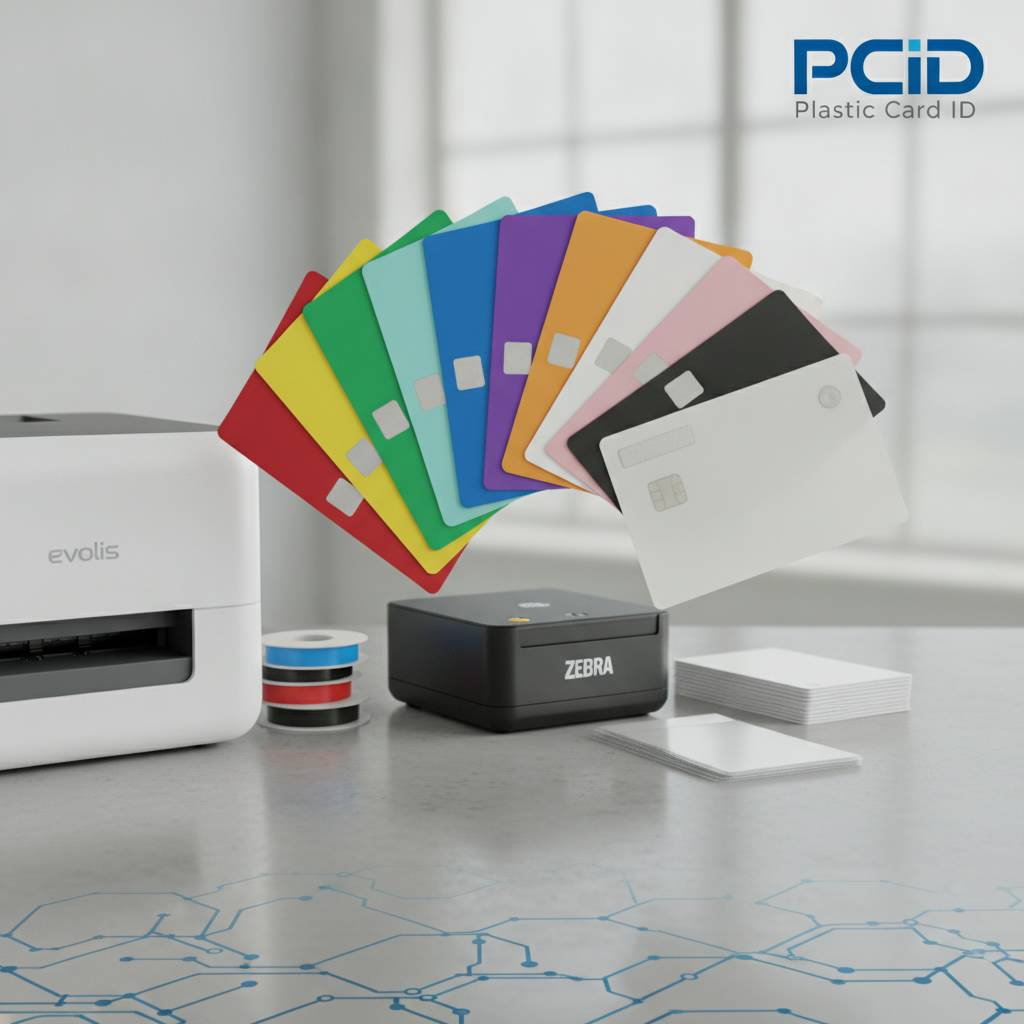
Retransfer printers - which print to a film that is then laminated to the card surface rather than printing directly - generally produce superior results on dark and colored card stock because the transfer film creates a consistent print surface regardless of the base card color. Direct-to-card printers are faster and more economical for lighter volume programs on lighter colored stock. Understanding this distinction before selecting your printer saves significant cost and frustration later.
Selecting Ribbons for Colored Card Stock
YMCKO ribbons (Yellow, Magenta, Cyan, Black, Overlay) are the standard choice for full-color printing on white stock. On colored stock, color accuracy requires adjustment - darker base colors absorb dye layers differently, and the overlay panel behaves differently on textured or specialty surfaces. For many colored stock applications, monochrome resin ribbons in white, silver, or gold produce cleaner, more reliable results than attempting full-color reproduction on saturated base colors.
For programs printing variable data - names, numbers, barcodes, photos - on colored stock, the specific ribbon type needs to match both the printer model and the card color. CPE can supply printer ribbons for all major printer models in the Evolis, Zebra, and Fargo lineups, along with cleaning kits that extend printer life and maintain print quality consistency across long runs on colored stock. These consumables are stocked for fast delivery to keep your card program running without interruption.
Volume Considerations: From 50 Cards to Tens of Thousands
One of the genuine advantages of working with Plastic Card ID is that the program support scales with your needs rather than forcing you into a category. Small organizations running 50 cards a month get the same attention to configuration and compatibility as enterprise clients processing tens of thousands. Colored blank stock is available in quantities appropriate for any volume tier, with pricing structures that reward consistent ordering relationships.
For high-volume programs, ordering colored blank stock in larger batches and printing in-house delivers the lowest per-card cost over time. For lower-volume programs or programs with highly variable demand, ordering in smaller quantities with predictable reorder cycles keeps inventory lean. The Plastic Card ID team has mapped out this kind of program architecture for clients across industries and can provide guidance that is specific to your volume profile and color requirements.
Frequently Asked Questions About Blank Colored Plastic Cards
 Buyers new to colored card stock often arrive with a consistent set of questions that reflect reasonable uncertainty about how color choices interact with printing, encoding, and long-term program management. The following covers the most common points of confusion based on real conversations CPE has had with clients over decades of card program support.
Will Color Affect My Printer or Encoding Equipment?
No - the color of PVC card stock does not affect printer mechanics, encoding equipment, or reader compatibility. Card printers feed and process cards based on physical dimensions and thickness, not color. Magnetic stripe readers interact with the encoded stripe regardless of card color. RFID and proximity readers communicate with the embedded chip via radio frequency, which is entirely unaffected by the color of the PVC surrounding the chip.
The only meaningful equipment consideration with colored stock is ribbon selection for the visual print layer, as described earlier. Beyond that, colored blank cards load into your printer tray, run through your laminator, and encode at your encoding station exactly as white stock does. Color is a design and program architecture decision, not a technical constraint.
What Quantities Are Available and What Do They Cost?
Colored blank card stock is available in a range of quantities designed to serve programs of all sizes. Entry quantities are appropriate for small organizations, pilot programs, and organizations testing a new color before committing to larger inventory. Volume pricing becomes meaningfully favorable at quantities of 500 cards and above for most stock types, with further breaks at 1,000, 2,500, and higher tiers. Contact Plastic Card ID directly for current pricing on specific colors and configurations.
As a general reference point, blank white CR80 PVC cards at volume are among the most economical card products in the market. Colored stock carries a modest premium over standard white, with specialty materials like clear, frosted, and metallic stock priced higher than solid colors. Metal card options in stainless steel, brass, and gold occupy a separate premium tier. Budgeting $75-$200 per 500 cards covers most standard colored PVC blank configurations at current market pricing, though exact pricing varies by color and configuration.
Can I Mix Colors in a Single Order?
Yes - Plastic Card ID supports mixed-color orders for clients running multi-tier programs that require different stock colors in a single replenishment cycle. This is common for organizations managing VIP, standard, and provisional membership tiers simultaneously, or corporate campuses running multiple department color codes. Minimum quantity requirements apply per color selection, but ordering multiple colors in a single transaction is standard practice for clients managing complex card programs.
Planning your full color architecture before placing your first order is strongly recommended. Organizations that establish their tier-to-color assignments up front and order all colors simultaneously benefit from consistent batch quality and simplified inventory management. Ad hoc color additions later in a program's life can create subtle consistency challenges that careful up-front planning avoids entirely.
Partner With Plastic Card ID for Your Colored Blank Card Program
 Color is one of the most powerful and most underutilized tools in card program design. Whether you are building a tiered loyalty program that uses color to communicate membership status, a corporate access control system that leverages color-coded credentials for instant visual verification, or a retail gift program where a metallic gold card elevates the perceived value of every transaction - the right colored blank card stock is a foundational investment that pays returns far beyond its cost.
At Plastic Card ID, the combination of deep catalog depth, 25-plus years of program experience, and a genuine orientation toward client success rather than transactional selling makes the difference when you are making decisions that will shape your card program for years. Over 100,000 businesses across the United States have built their card programs on this foundation. The team understands not just what cards to supply, but how to match the right materials, technologies, and quantities to programs of every scale and type.
Ready to explore your colored blank card options? Plastic Card ID is ready to help you build a card program that works as hard as your business does. Call 800.835.7919 today and speak with a card program specialist who will match your program goals to exactly the right materials, quantities, and configurations.
Previous Page