Blank Smart Chip Cards Overview: Key Facts
Table of Contents []
- Blank Smart Chip Cards: Everything You Need to Know - Plastic Card ID
- What Makes a Smart Chip Card "Smart"
- The Business Case for Blank Smart Chip Cards
- Choosing the Right Blank Smart Card for Your Program
- Advanced Smart Card Options in the Plastic Card ID Catalog
- Frequently Asked Questions About Blank Smart Chip Cards
- Your Next Step Starts with Plastic Card ID - Call 800.835.7919 Today
Blank Smart Chip Cards: Everything You Need to Know - Plastic Card ID
 Smart chip cards are not a new technology - but the way businesses are deploying them has changed dramatically. Organizations that once relied on magnetic stripe cards or basic proximity tokens are now moving toward chip-based solutions because the functionality gap has simply become too wide to ignore. Whether you are running an access control system, a loyalty program, a campus ID operation, or a hospitality card program, blank smart chip cards give you something that paper and magstripe rarely can: layered, programmable, cryptographically secure identity infrastructure at a per-card cost that makes serious programs viable at almost any scale.
Plastic Card ID has been in the business of supplying plastic cards to American organizations for over 25 years - serving more than 100,000 customers and shipping more than 50 million cards across virtually every industry imaginable. The company understands, perhaps better than anyone, that the right card format is the one that fits your exact program requirements - and for a growing number of those programs, blank smart chip cards are the right answer.
| Card Type | Memory / Chip Standard | Common Use Cases | Read/Write |
|---|---|---|---|
| Blank Contact Smart Card | ISO 7816 (various) | ID Programs, Campus Credentials | Read/Write |
| MIFARE Classic | 1KB / 4KB NXP | Access Control, Loyalty | Read/Write |
| MIFARE DESFire EV2/EV3 | 2KB-16KB NXP | Casino Cards, Transit, Security | Read/Write (Encrypted) |
| Proximity (125kHz) | EM4100 / HID Compatible | Door Access, Employee Badges | Read Only |
| Dual Interface Smart Card | Contact Contactless | Multi-Application Programs | Read/Write |
What Makes a Smart Chip Card "Smart"
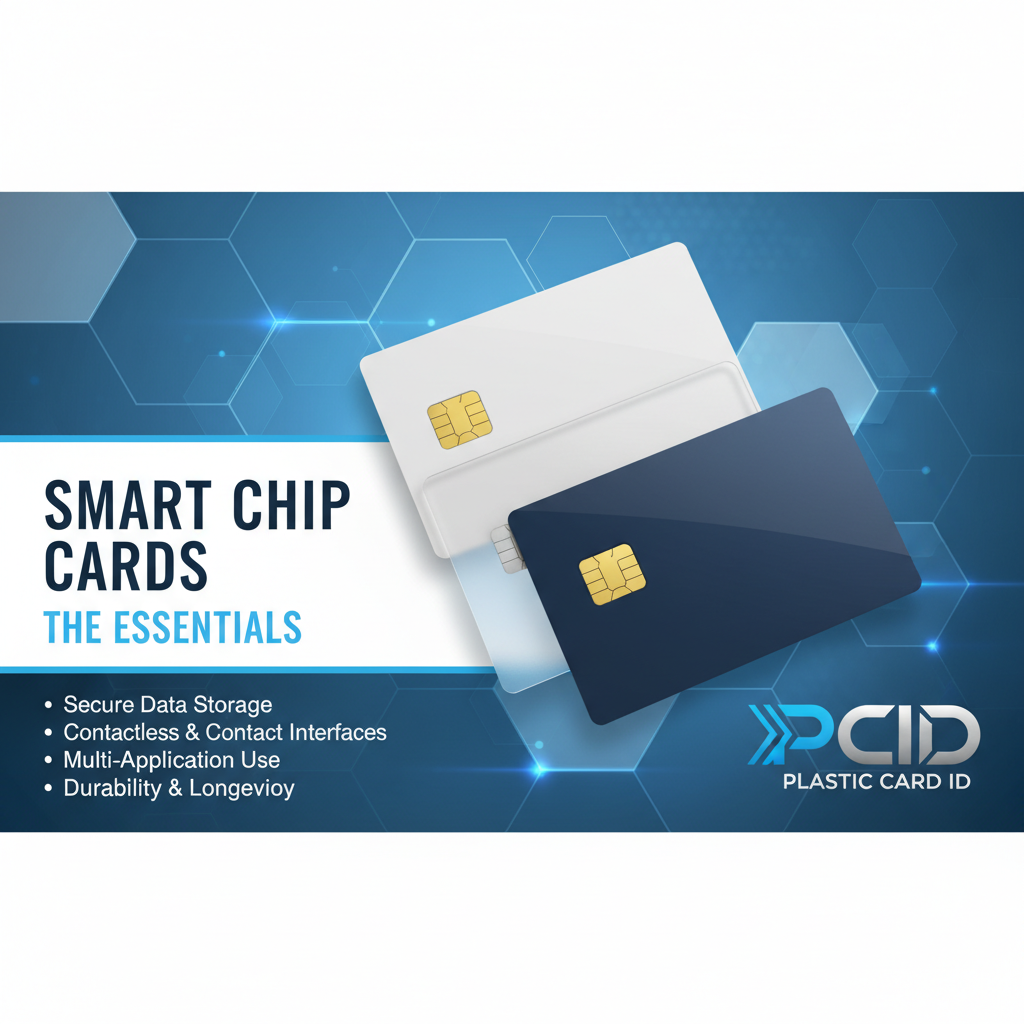 Strip away the jargon and a smart chip card is simply a plastic card embedded with an integrated circuit - a microchip that can store data, perform calculations, and in more advanced versions, run cryptographic authentication protocols. That is a fundamentally different capability than a magnetic stripe, which can only hold a passive string of encoded data waiting to be read. The chip is active. It responds, validates, and in many configurations, refuses to cooperate with unauthorized readers entirely.
For organizations running programs where security, data integrity, or multi-application functionality matter, that distinction is not academic. It is operational. A smart chip card is not just a better credential - it is an entirely different class of tool. Understanding what sits under the surface helps buyers make smarter purchasing decisions, and that is exactly what this page is designed to support.
Contact vs. Contactless: The Core Division
Contact smart cards communicate through a gold-plated pad on the card surface - physically inserted into a reader that makes an electrical connection. Contactless smart cards, sometimes called RFID or proximity cards, transmit data wirelessly using radio frequency induction. Both formats are available as blank CR80 PVC cards built to the ISO 7810 standard - the same 3.375" x 2.125" format as a standard driver's license.
The choice between contact and contactless often comes down to use case speed and environment. High-throughput door access systems almost universally prefer contactless - a tap-and-go transaction that takes under a second. Campus lab access, hotel room keys, employee badge systems, and loyalty cards at point-of-sale terminals frequently fall into the contactless category for the same reason: speed, convenience, and reduced wear on both card and reader.
Dual Interface Cards and Multi-Application Flexibility
Dual interface smart cards carry both a contact chip pad and an embedded contactless antenna in a single card body. This sounds like a luxury feature, but for organizations running complex programs - think a university that needs both building access and library database login from one credential - it is genuinely practical. One card, two interaction modes, a unified identity across systems.
Dual interface cards are among the most versatile credentials available in the blank card market today. When purchased blank in volume, they give issuers the flexibility to program each card for their precise environment without being locked into a single reader ecosystem. CPE supplies these across multiple chip standards to match existing infrastructure.
Chip Standards That Actually Matter to Buyers
Not all smart chips are created equal. MIFARE Classic (from NXP Semiconductors) remains widely deployed in legacy access control systems. MIFARE DESFire, particularly EV2 and EV3 variants, represents the current standard for high-security applications - it uses AES encryption and supports multiple independent applications on a single card, making it popular for casino player cards, transit credentials, and regulated-environment access systems.
For buyers, chip standard selection should begin with the reader infrastructure already in place. If your door readers are programmed for EM4100 proximity format, buying MIFARE DESFire cards is an expensive mismatch. Matching your card's chip standard to your existing reader system is the single most important technical decision in any blank smart card purchase. When in doubt, Plastic Card ID can help you identify the right format before you order.
The Business Case for Blank Smart Chip Cards
Buying blank cards - rather than pre-encoded or pre-printed custom cards - gives organizations meaningful advantages in cost, control, and operational agility. The blank format puts the encoding workflow in-house, which means you control exactly what goes on each card, when it goes on, and who receives it. For programs that issue cards on demand rather than in large batches, in-house encoding is often the only logical approach.
The economics also shift favorably over time. Custom-printed, pre-encoded cards ordered from an outside vendor carry per-unit cost premiums that compound quickly across a large program. Organizations managing hundreds or thousands of active credentials per year often find that the investment in blank card inventory and a compatible encoder pays for itself within the first few thousand cards issued.
Industries That Rely on Blank Smart Cards
The use cases for blank smart chip cards span a wide range of industries, and the breadth might surprise buyers who think of smart cards as primarily a corporate IT security tool. Hospitality operations use blank contactless cards as hotel room keys, encoding them at check-in for the duration of each guest's stay. Healthcare facilities issue smart chip employee badges that integrate with logical access control for electronic health records systems.
Casinos represent one of the more technically demanding smart card environments - casino player cards built on MIFARE DESFire must support encrypted multi-application data including player tier information, points balances, and access privileges, all on a single card that must survive heavy daily use. Universities issue student ID cards that serve simultaneously as building access credentials, library cards, campus transit passes, and meal plan tokens.
Loyalty and Membership Programs at Scale
Plastic loyalty cards consistently outperform paper-based alternatives in customer retention and program engagement. Research-backed data in the retail sector shows that businesses switching from paper punch cards or paper gift cards to plastic see sales increases in the range of 35-50% - and a loyalty card that lives in someone's wallet is a brand impression that paper simply cannot replicate.
Smart chip loyalty cards take that performance advantage even further by enabling secure, tamper-resistant point balances stored on the card itself - eliminating the need for back-end lookup on every transaction in some deployment models. For membership organizations, smart chip cards signal a level of credibility and permanence that paper cards cannot communicate. The card is the brand, and the chip is the infrastructure behind the promise.
Access Control and Physical Security
Physical access control is perhaps the most mature market for smart chip cards - and for good reason. Contactless smart credentials offer a combination of speed, security, and auditability that older technologies cannot match. Unlike basic proximity cards that broadcast a static ID number to any compatible reader, MIFARE DESFire and similar high-security chip formats require cryptographic mutual authentication before any data is exchanged.
That means a cloned or spoofed card will not work - the reader and card must authenticate each other using shared secret keys that never leave the chip. For facilities managing sensitive spaces - server rooms, research labs, executive floors, or regulated storage areas - this level of security is not optional. It is the baseline expectation.
Choosing the Right Blank Smart Card for Your Program
 Walking through a smart card purchase without a clear framework can be disorienting - the terminology is dense, the chip variants are numerous, and the compatibility considerations are real. But the decision tree is actually fairly simple once you know the key questions. Start with your reader infrastructure. Then consider your security requirements. Then think about your volume and your encoding workflow.
Most buyers fall into one of two broad categories: organizations replacing or expanding an existing smart card program, and organizations setting up a smart card infrastructure from scratch. Both are legitimate starting points. The blank card purchase strategy differs meaningfully between these two scenarios, and understanding which category you are in shapes every subsequent decision.
Questions to Ask Before You Order
- What chip standard does your existing reader infrastructure support? (MIFARE Classic, DESFire, HID iCLASS, EM4100 proximity, ISO 7816 contact, etc.)
- What memory capacity do you need - are you storing just a UID, or multi-application data?
- Do you need contact, contactless, or dual-interface cards?
- What is your monthly or annual card issuance volume - and does it vary seasonally?
- Are you encoding cards in-house, or outsourcing encoding to a bureau service?
- Do you need the card surface blank, or will you be printing on it with an in-house card printer?
- What security tier does your application require - basic ID only, or encrypted mutual authentication?
Working through these questions in sequence almost always produces a clear card specification. CPE recommends running this checklist with your IT security team or facilities manager before placing any smart card order - the right card format the first time saves significant cost and rework compared to discovering a compatibility issue after cards arrive.
Volume Considerations and Pricing Tiers
Blank smart chip cards are sold in volume tiers, and the per-card price drops meaningfully as quantity increases. Entry-level orders are typically appropriate for organizations running smaller programs - employee ID deployments of 50-250 cards per run, for instance - while high-volume buyers stocking inventory for programs issuing thousands of credentials per month will qualify for substantially better per-unit economics.
Stocking blank card inventory is a common strategy for high-velocity programs - having cards on hand eliminates lead time delays and allows on-demand issuance without reorder lag. Plastic Card ID supports programs of every scale, from the organization issuing 50 cards a month to the enterprise operation running mass production in the tens of thousands.
Pairing Blank Smart Cards with the Right Printer
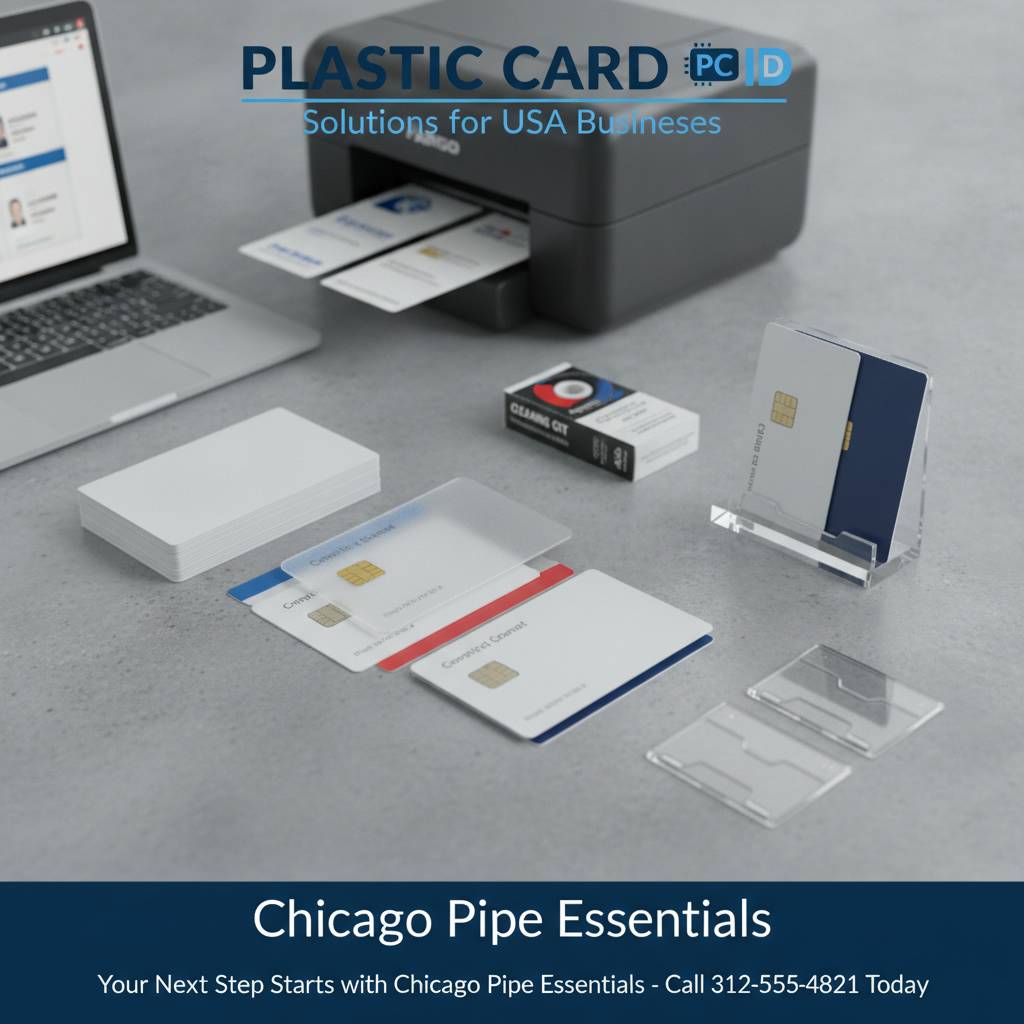
If you plan to print on your blank smart cards in addition to encoding them, printer selection matters enormously. Not all card printers can encode smart chip cards - you need a model with the appropriate encoder module built in or available as an add-on. Plastic Card ID carries a full lineup of card printers from Evolis, Zebra, and Fargo - brands that span the full range from entry-level single-sided desktop units to high-volume dual-sided printers with integrated smart card encoding modules.
Matching your printer to your card format prevents encoding errors and mechanical damage to chip cards during printing. Using a printer not rated for smart cards on a chip card stock is a fast way to destroy inventory. The team at Plastic Card ID can help match printer and card specifications to your exact program setup - and stocks the ribbons, cleaning kits, and maintenance supplies to keep your printer operating at peak performance.
Advanced Smart Card Options in the Plastic Card ID Catalog
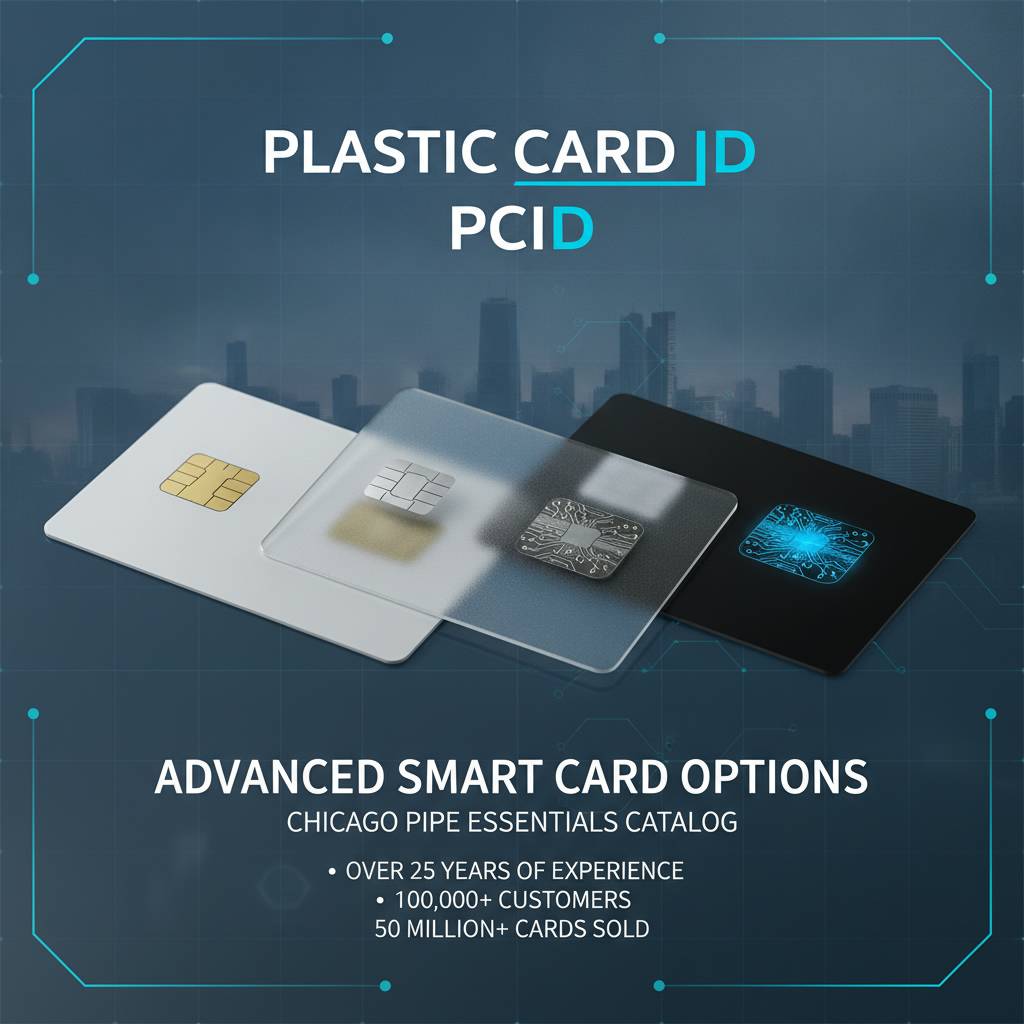 Beyond standard MIFARE and proximity cards, Plastic Card ID offers a range of advanced blank smart card formats for specialized applications. MIFARE DESFire EV2 and EV3 cards provide the highest available security tier in the contactless smart card space - AES-128 encryption, anti-tearing protection, and multi-application partitioning make them suitable for regulated environments and high-value program deployments. These are the cards powering casino floors, secure government facilities, and transit systems.
Specialty card body options extend the catalog further. Clear and frosted PVC smart cards give designers a unique visual canvas for printed credentials that stand out in any wallet. Custom die-cut shapes are available for promotional and marketing applications where standard CR80 dimensions are intentionally broken. And for organizations that want to make the most premium possible brand statement, luxury metal smart cards - available in stainless steel, brass, and gold finishes - combine the durability and aesthetic of metal card construction with embedded smart chip functionality.
Hotel Key Cards and Hospitality Smart Cards
Hotel key cards represent one of the highest-volume contactless smart card applications in the United States. The typical mid-size hotel issues thousands of key cards per month - encoding each one at check-in for the duration of a single guest stay. Blank MIFARE-compatible contactless cards are the standard format for most modern hospitality lock systems. CPE supplies these in the quantities and formats compatible with the leading hotel lock platforms currently in operation across American properties.
Hospitality programs benefit enormously from maintaining blank card inventory on-site - running out of key cards during peak occupancy periods is a front desk nightmare that is entirely avoidable with adequate stock. Plastic Card ID makes reordering simple, with fast fulfillment and consistent card quality across every order.
Casino Player Cards Built on Smart Technology
Casino player loyalty programs are among the most data-intensive smart card applications in commercial use. A casino player card must carry encrypted player tier data, track points or credits, and potentially manage access to VIP areas and premium amenities - all while surviving the physical rigors of a casino floor environment. MIFARE DESFire is the dominant chip standard for this application, providing the memory capacity and security architecture that casino management systems require.
Blank DESFire cards ordered in volume give casino operators the flexibility to encode each card within their proprietary management platform at issuance, rather than relying on pre-encoded stock that limits customization. The result is a tighter, more secure player card program with lower per-card cost at scale.
Campus and Multi-Application Credential Programs
University and corporate campus programs are natural candidates for dual-interface or high-memory smart cards. A single card that functions as a photo ID, door access credential, library token, transit pass, and meal plan card is not an exotic concept - it is a well-established deployment model running on thousands of campuses and corporate campuses across the United States right now.
The key to making a multi-application smart card program work is chip capacity and application partitioning. MIFARE DESFire's ability to host multiple independent applications - each with its own security keys and data space - is precisely what makes it the preferred chip for these programs. Buying blank DESFire cards in volume and encoding them through a campus card management system is the standard approach for new and expanding credential programs.
Frequently Asked Questions About Blank Smart Chip Cards
Buyers new to smart card procurement consistently arrive with the same set of questions - and they are good ones. The smart card category has enough technical depth to be genuinely confusing without a clear guide. Below are the questions Plastic Card ID hears most often, answered plainly.
Can I Print on a Blank Smart Chip Card?
Yes - blank smart chip cards are fully printable on both sides using a compatible card printer. The chip is embedded inside the card body and does not interfere with surface printing. What matters is using a card printer model rated for smart card stock - certain encoding modules require specific card positioning during the print cycle, and printers not designed for smart cards may not handle the card correctly through the feed path.
Evolis, Zebra, and Fargo all offer printer models with integrated smart card encoder options. These printers are designed specifically to handle the card-print-then-encode or encode-then-print workflow depending on configuration. Plastic Card ID carries compatible printers, ribbons, and cleaning supplies to support a complete in-house card issuance setup. Contact the team at 800.835.7919 to identify the right printer-card combination for your program.
Are Blank Smart Cards Compatible with My Existing Readers?
Compatibility is the critical variable in any smart card purchase. The chip standard embedded in a blank smart card must match the protocol your reader infrastructure is configured to accept. A MIFARE Classic card will not communicate with a reader configured exclusively for DESFire. An EM4100 proximity card will not work with an HID iCLASS reader. These are not bugs - they are deliberate security and protocol distinctions.
Before purchasing blank smart cards, always confirm your reader's supported chip standards with your access control vendor or IT team. If you are starting a new program and selecting readers simultaneously, the choice of chip standard is yours to make from scratch - and Plastic Card ID recommends leaning toward MIFARE DESFire EV2 or EV3 for any new high-security deployment given its superior encryption and longevity in the market.
What Quantities Are Available and How Fast Can I Get Them?
Blank smart chip cards are available in a range of order quantities - from smaller runs appropriate for pilot programs or low-volume issuance operations up through large-volume orders for enterprise programs or hospitality operations maintaining substantial on-site inventory. Pricing adjusts by tier, and CPE recommends planning orders around realistic 60-90 day usage forecasts to take advantage of volume pricing without carrying excessive dormant inventory.
Fulfillment speed is a consistent priority at Plastic Card ID - after more than 25 years and 50 million cards shipped, the operational infrastructure to fulfill orders accurately and quickly is thoroughly established. Fast, reliable fulfillment is not a marketing claim here - it is the foundation of long-term client relationships that keep customers coming back program cycle after program cycle.
Your Next Step Starts with Plastic Card ID - Call 800.835.7919 Today
 Whether you are building a new smart card program from the ground up, expanding an existing credential deployment, or simply restocking blank smart chip card inventory for an ongoing issuance operation, Plastic Card ID is the partner built for that work. With over a quarter century of experience, a catalog that spans every major smart card format, and a team that knows the difference between MIFARE Classic and DESFire EV3 without reaching for a manual - the expertise is here, and it is available to you.
The right blank smart chip card, matched to your reader infrastructure and program requirements, ordered in the right volume - that is the formula for a card program that runs smoothly and costs less per credential over time. Plastic Card ID has helped more than 100,000 American businesses and organizations get that formula right. The combination of product depth, technical knowledge, and genuine commitment to client program success is what separates a strategic partner from a simple card vendor.
Contact Plastic Card ID now at 800.835.7919 and speak with a card program specialist who will help you identify the exact blank smart chip card format, quantity, and supporting equipment your program needs. Do not leave credential program decisions to guesswork - call Plastic Card ID and get it right the first time.
Previous Page