Blank Clear Plastic Cards Uses and Applications
Table of Contents []
- What Are Blank Clear Plastic Cards and Why Does Your Business Need Them?
- Top Blank Clear Plastic Cards Uses Across Industries
- Encoding Options Available on Blank Clear Plastic Cards
- Choosing the Right Card Printer for Clear Plastic Stock
- Blank Clear Plastic Cards: Buyer Tips and Common Mistakes to Avoid
- Why Plastic Card ID Is the Right Partner for Your Clear Card Program
What Are Blank Clear Plastic Cards and Why Does Your Business Need Them?
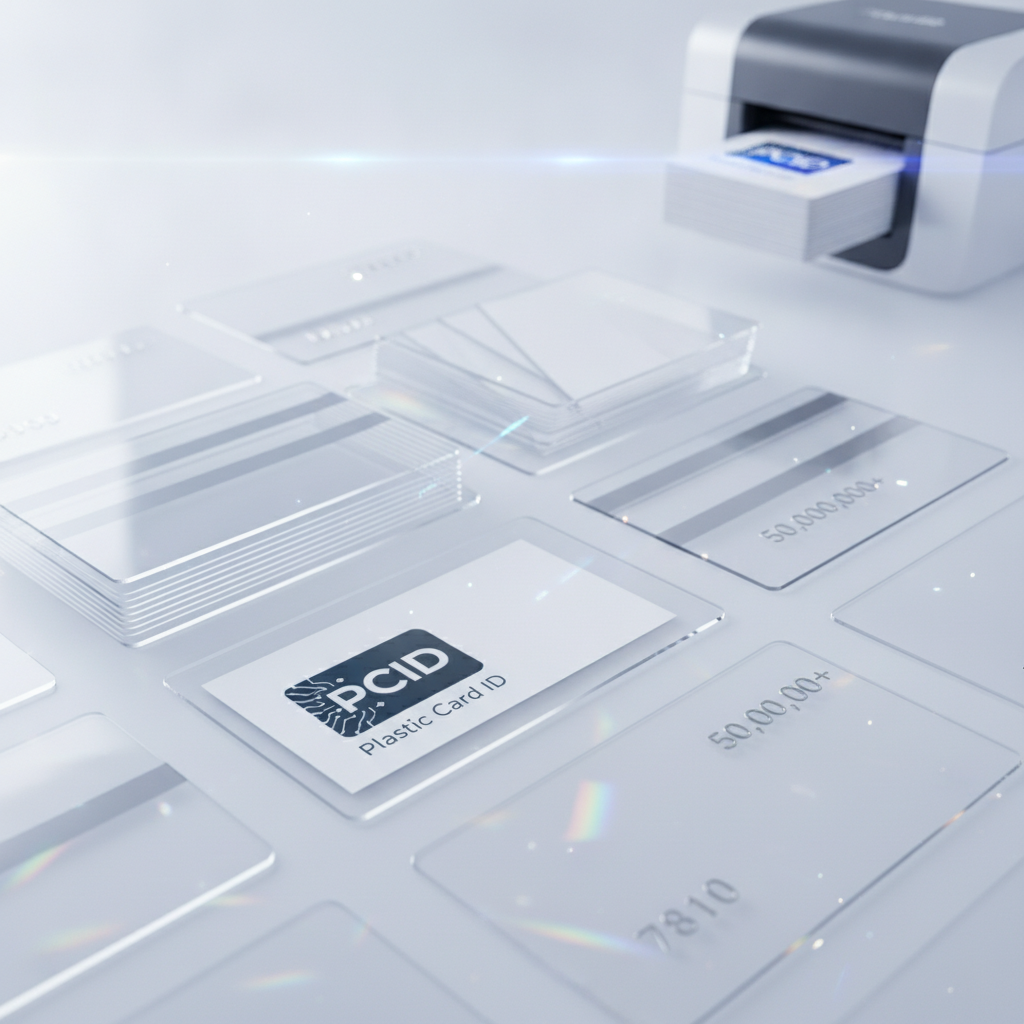 Walk into any mid-sized company's storage room and you might find a drawer full of plastic cards in various states of customization. But the ones that often surprise newcomers - the ones with no printing, no branding, just a clean, transparent sheet of PVC - those are the unsung workhorses driving some of the most creative card programs in the country. Blank clear plastic cards occupy a unique and versatile niche that most businesses never fully explore until they realize how much they've been leaving on the table.
At their core, blank clear plastic cards are standard CR80-sized (or custom-dimensioned) PVC cards that arrive with no ink, no magnetic stripe unless ordered, and no printed design. They conform to ISO 7810 standards, measuring 3.375 x 2.125 inches at 30 mil thickness - the same dimensions as a driver's license or standard loyalty card. The difference is transparency: both sides reveal a glass-like clarity that opens up design possibilities paper and opaque stock simply cannot replicate.
Plastic Card ID has spent over 25 years supplying blank cards of every stripe - pun very much intended - to businesses ranging from boutique fitness studios to regional hospital networks. If your operation involves cards of any kind, understanding how clear plastic blanks can expand your program is worth a serious look.
The Physical Properties That Make Clear Cards Different
Standard white PVC cards are manufactured with titanium dioxide to produce that crisp, opaque white finish. Clear cards skip this step entirely, leaving the base material in its natural transparent state. The result is a card that's dimensionally identical but visually distinct from any other card type in your card printer's output tray. When printed on, the design appears to float - backgrounds show through, layered effects become achievable, and the card itself becomes part of the visual message.
Durability doesn't take a hit here. Clear PVC cards maintain the same resistance to cracking, bending, and moisture that makes plastic the preferred choice over paper or cardstock for any serious card program. They run through standard card printers - Evolis, Zebra, Fargo, and others - without special handling. The one variable to account for is ink adhesion: dye-sublimation printers produce the most vibrant, durable results on clear stock, though direct-to-card models handle them adequately for many applications.
CR80 Standard vs. Custom Dimensions
Most buyers default to CR80 because it fits wallets, badge holders, lanyards, and card printers universally. That's a sound default. But blank clear plastic cards are also available in custom die-cut shapes - rounded rectangles, circles, key-tag sizes, and completely bespoke forms - for applications where standard dimensions don't serve the design vision. A boutique hotel might want a key card shaped to suggest a keyhole; a nightclub might want a VIP credential that stands out when pulled from a pocket.
The trade-off with custom shapes is minimum order quantities tend to climb, and per-card cost rises with the complexity of the cut. For most programs starting out, CR80 blanks in bulk remain the cost-efficient path. As volume grows and the program matures, specialty shapes become economically viable. CPE can walk you through break-even points for custom shapes versus standard stock based on your projected monthly volume.
Thickness Options and What They Signal
Standard 30 mil thickness is the benchmark. It's what credit cards feel like in the hand, what badge holders are designed to fit, and what gives a card that satisfying weight when set on a counter. But clear plastic cards are also available in thinner 10 mil and 20 mil configurations for applications where flexibility or layering is required - think card overlays, protective laminate inserts, or specialty combo-cards that sandwich a printed layer between clear sheets.
Thicker doesn't always mean better. For RFID or smart chip applications, the chip and antenna inlay determine much of the card's final thickness, and the surrounding PVC is sized to maintain ISO compliance. For purely decorative or credential applications, 30 mil clear stock hits the sweet spot between premium feel and standard compatibility.
Top Blank Clear Plastic Cards Uses Across Industries
 If someone handed you a stack of transparent plastic cards and asked what they were for, the honest answer covers more ground than most people expect. Blank clear plastic cards uses span virtually every industry that issues credentials, rewards customers, or manages access - from healthcare to hospitality, retail to real estate. The transparency isn't gimmick; it's functional design freedom.
Industries that rely on visual identity, layered printing, or high-end card aesthetics tend to gravitate toward clear stock first. But practical applications - access control, event management, membership tracking - are equally well served. The card doesn't care what it's used for; your printer and encoding equipment determine its ultimate function.
| Industry | Primary Use | Key Feature Leveraged |
|---|---|---|
| Retail and Gift | Gift cards, loyalty programs | Visual impact at point of sale |
| Hospitality | Hotel key cards, VIP passes | Premium aesthetic, RFID encoding |
| Healthcare | Patient ID, staff badges | Durable, printable on-site |
| Events and Entertainment | Credentials, VIP laminates | Distinctive appearance |
| Corporate and Education | Access control, employee badges | Encodes easily, professional look |
| Casino and Gaming | Player loyalty cards | Magnetic stripe, premium feel |
Retail Gift and Loyalty Card Programs
Retailers who have made the switch from paper punch cards to plastic loyalty cards often report a 35-50% increase in gift card sales. Clear plastic adds another layer of perceived value - a gift card that looks like it was designed by someone who cares about presentation says something about the brand before the recipient even spends it. Printed over clear stock, even a simple design takes on depth and sophistication that opaque white backgrounds can't replicate.
Loyalty programs benefit similarly. A clear plastic loyalty card tucked into a wallet becomes a quiet, persistent advertisement every time the wallet opens. Paper punch cards curl, fade, and get lost. Plastic does not. The longevity of the medium is a measurable advantage in customer retention programs where out-of-sight reliably means out-of-mind.
Event Credentials and VIP Access
Event producers who issue credentials face a persistent tension: make the pass look impressive enough to feel exclusive, but keep production costs manageable across potentially thousands of units. Blank clear plastic cards resolve this tension neatly. A clear card printed with event branding and loaded with a magnetic stripe or RFID chip reads like a premium credential at a fraction of what custom-printed specialty passes cost through traditional print houses.
The visual effect at check-in matters more than event planners sometimes acknowledge. When an attendee receives a clear plastic badge or access card, the implicit message is that the organizer invested thought and resources in the experience. That first impression cascades through the rest of the event's perceived quality. For VIP tiers especially, the card itself signals membership in something worth belonging to.
Corporate Access Control and Employee Badging
Access control is one of the most straightforward and highest-volume applications for blank clear plastic cards in corporate settings. Print a photo, encode a proximity chip, add a magnetic stripe, and the same card becomes both a visual ID and a physical access token. Clear stock allows the background to show through subtly - a useful effect when a department-specific color or pattern needs to appear on a card without printing an opaque background layer first.
Organizations with high staff turnover benefit most from in-house card programs built on blank stock. Rather than sending badge designs to an outside vendor, waiting for turnaround, and paying per-unit premiums, an in-house printer loaded with clear PVC blanks can produce a badge in under two minutes. The control, the speed, and the cost reduction over time make blank card programs standard practice for any HR department managing more than a few dozen employees at once.
Encoding Options Available on Blank Clear Plastic Cards
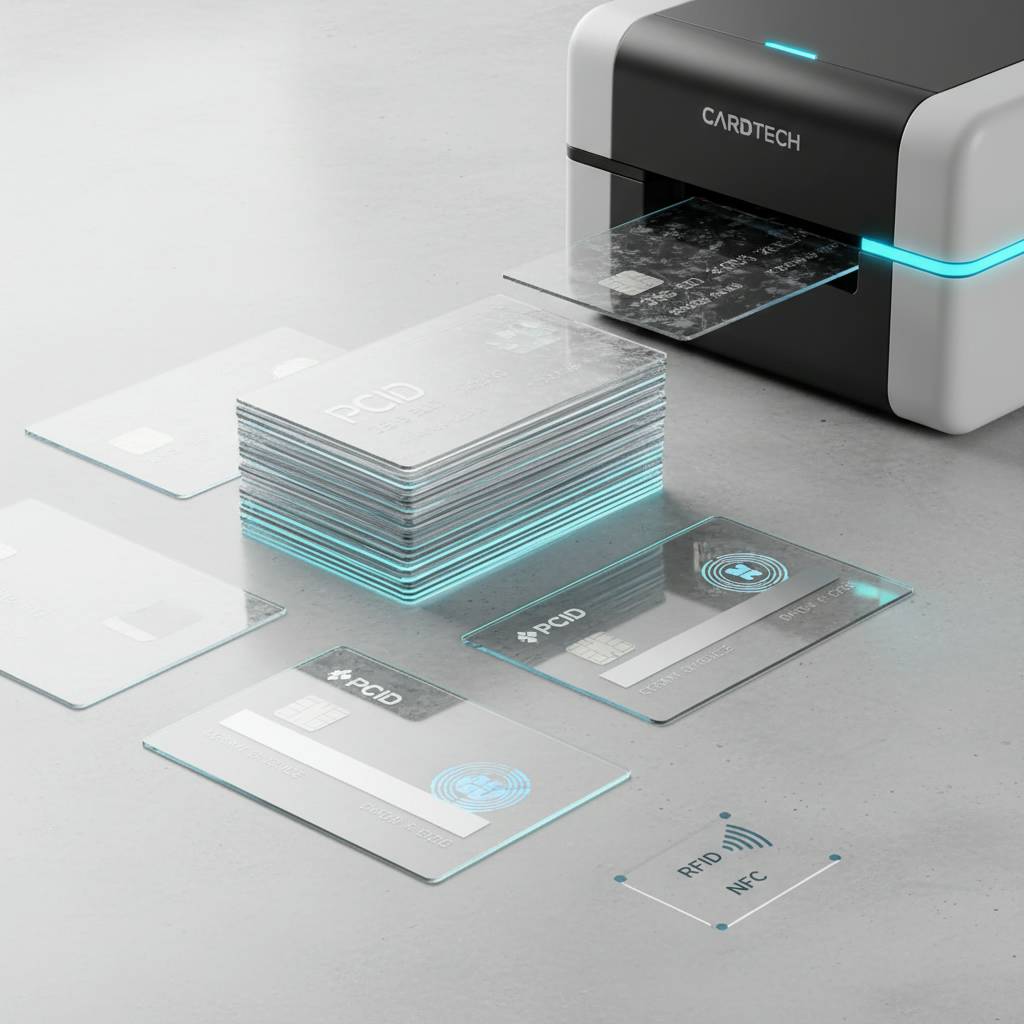
A blank clear card isn't just a visual statement - it's a functional platform. Depending on what's encoded into or onto the card before or during printing, the same transparent PVC can become a hotel room key, a casino player card, an employee access badge, or a loyalty points tracker. The encoding options available span the full range of modern card technology, and Plastic Card ID stocks options across every major format.
Magnetic Stripe Options: HiCo vs. LoCo
Magnetic stripes come in two coercivity ratings that matter for how and where the card gets used. HiCo (high coercivity) stripes require more energy to encode and are correspondingly more resistant to accidental erasure from magnets, equipment proximity, and everyday handling wear. HiCo is the right choice for cards that will be used frequently - loyalty cards scanned multiple times a day, access cards swiped at turnstiles, hotel keys cycled through dozens of check-in and check-out sequences.
LoCo (low coercivity) stripes are easier to encode with lower-cost equipment and work fine for short-term or lower-use applications: event passes, promotional gift cards with a limited redemption window, temporary visitor badges. The stripe reads the same to most point-of-sale equipment regardless of coercivity rating, so the choice comes down to expected card lifespan and usage frequency.
RFID and Proximity Card Technology
Contactless cards - proximity cards operating at 125 kHz and RFID smart cards operating at 13.56 MHz - embed an antenna and chip into the card body itself. For clear plastic cards, this introduces an interesting visual element: in certain lighting, the antenna coil is faintly visible through the transparent PVC. This is a feature, not a flaw - it communicates the sophistication of the card to anyone who notices it.
MIFARE DESFire chips represent the higher end of this spectrum, offering encrypted, multi-application capability appropriate for environments where security matters as much as convenience - corporate campuses, healthcare facilities, government buildings. For simpler read/write proximity applications, 125 kHz HID-compatible cards handle the vast majority of access control readers already installed in commercial buildings across the United States.
Smart Chip Cards for Secure Applications
Contact smart chip cards - the kind with the gold or silver chip pad visible on the card face - add a layer of encrypted authentication that magnetic stripes simply cannot match. For programs involving stored value, secure identity verification, or multi-system integration, smart chip cards offer the most robust technical foundation available in standard card form factor. They are not credit or debit cards; CPE strictly serves identification, access, loyalty, and membership applications.
The chip pad on a clear card creates a striking visual contrast - metallic contact points floating against a transparent background. Organizations looking to communicate security and sophistication through the card's appearance often find clear smart chip cards serve both the functional and aesthetic goals simultaneously.
Choosing the Right Card Printer for Clear Plastic Stock
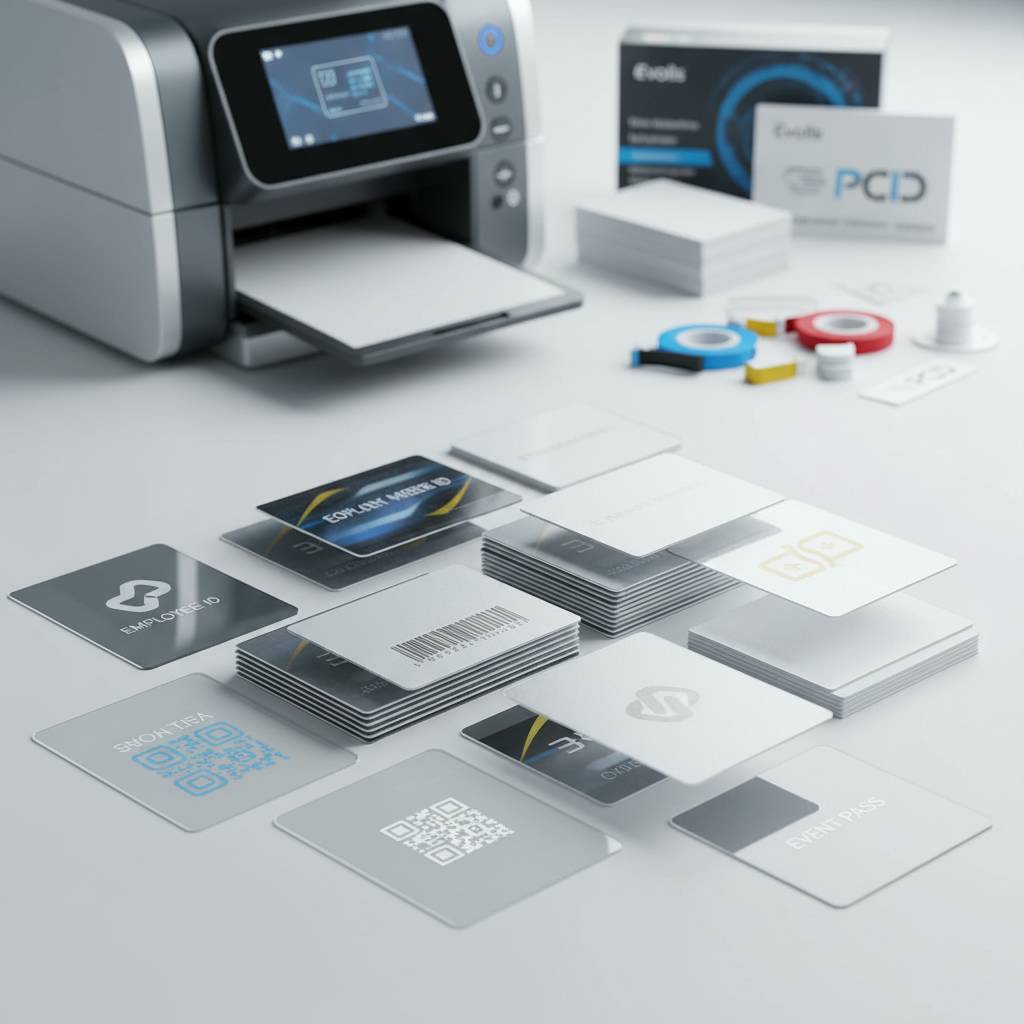 Owning the blank cards is only half the equation. Producing finished credentials in-house requires a printer calibrated for clear stock - and not every card printer handles transparency the same way. Getting the printer selection right before purchasing bulk clear card stock saves considerable frustration downstream.
Dye-Sublimation vs. Direct-to-Card Printing
Dye-sublimation printers - the technology behind Evolis Primacy, Zebra ZC300, and Fargo HDP series units - transfer dye via heat into the card surface rather than depositing ink on top of it. On clear stock, this produces sharper color, better adhesion, and a finish that doesn't peel or scratch. For any program printing full-color images or photo IDs on clear cards, dye-sublimation is the correct choice.
Direct-to-card printers are more affordable and faster for simple applications - monochrome text, barcodes, basic badge layouts. They work on clear stock with appropriate ribbon selections, but color vibrancy and durability are noticeably inferior to retransfer/dye-sublimation output. Match the printer to the card program's quality requirements, not just its volume requirements.
Ribbon Selection for Clear Card Printing
Standard YMCKO ribbons (Yellow-Magenta-Cyan-blacK-Overlay) perform well on clear cards but require awareness of one variable: the white panel. Many designs on opaque white cards rely on the card's white background to make colors read accurately. On clear stock, a YMCKO-W ribbon that includes a white panel becomes essential for designs requiring opaque background elements.
Without the white panel, colors printed over clear PVC appear translucent - intentional in some designs, problematic in others. Planning the design around the stock - rather than treating clear cards as a drop-in replacement for white cards - produces the best results and avoids wasted ribbon and reprints. CPE supplies compatible ribbons for all major printer brands alongside the card stock itself.
Printer Maintenance for Long-Term Clear Card Quality
Card printers are precision instruments that degrade in output quality when maintenance is neglected. Cleaning kits - swabs, cards, and cleaning rollers - remove the adhesive residue and microscopic debris that accumulate during normal operation. On clear stock especially, contamination on the print head or transport rollers shows up as streaks or smudges that opaque white cards can partially conceal but transparency cannot.
Establish a cleaning schedule tied to ribbon changes - most manufacturers recommend a cleaning cycle every time a ribbon roll is replaced. Protective card sleeves and carriers extend the life of printed clear cards post-production, preventing scratching during storage and distribution. 800.835.7919 connects you with the full range of maintenance supplies and guidance on keeping any card printing setup producing clean, professional output across its full operational lifespan.
Blank Clear Plastic Cards: Buyer Tips and Common Mistakes to Avoid
 Buying blank clear plastic cards without a clear picture of what you actually need is one of the more common and easily avoided mistakes in running a card program. The cards themselves are straightforward; the complications arise from mismatched expectations about compatibility, quantity thresholds, and encoding requirements. A few targeted buyer tips can prevent costly course corrections after the first order arrives.
Understand Your Volume Before You Order
Clear plastic card programs scale differently than opaque stock programs. Because the visual effect of clear cards is the primary differentiator, programs using them tend to concentrate in prestige applications - which often means lower volume per SKU but higher per-card investment in print quality. Order minimums and per-card pricing break points vary meaningfully between 50-card and 500-card quantities.
- Identify your projected monthly card usage before setting up inventory levels
- Factor in spoilage from test prints, misfeeds, and design iterations - typically 3-5% of total stock
- Order buffer stock to avoid program interruptions from shipping delays
- Evaluate whether a standing reorder schedule makes more economic sense than single large purchases
- Confirm encoding requirements - magnetic stripe, RFID, chip - before selecting a card type, as these cannot be added post-manufacture
Design Considerations Specific to Clear Stock
Designs that work beautifully on white cards can look washed out, muddy, or unintentionally translucent on clear stock without appropriate adjustment. The most successful clear card designs either fully embrace the transparency - using it as a visual element - or include a white panel print layer to create controlled opaque zones where needed. Ignoring this distinction is the single most common reason programs that switch to clear stock are disappointed with initial print results.
Test print before committing to a large run. Most in-house card printing setups can output 5-10 test cards with minimal waste. Adjust color saturation, verify that barcodes and QR codes scan reliably through the transparent substrate, and confirm that magnetic stripe encoding reads correctly before beginning production.
Frequently Asked Questions About Blank Clear Plastic Cards
Buyers new to clear plastic stock typically arrive with a short list of recurring questions. Here are the ones that come up most consistently:
- Can clear cards be used in any standard card printer? Yes, with attention to ribbon selection and print head settings. Verify compatibility with your specific printer model before ordering in bulk.
- Are clear cards the same thickness as standard white cards? Standard 30 mil clear CR80 cards are dimensionally identical to white CR80 stock.
- Do magnetic stripes show through the card? A magnetic stripe applied to clear stock is visible as a dark band - a common and accepted characteristic of clear magnetic stripe cards.
- Can RFID chips be embedded in clear cards? Yes. The antenna coil may be faintly visible, which many buyers find visually appealing.
- What is the minimum order quantity? Minimums vary by card type and encoding option; Plastic Card ID supports programs starting at 50 cards per month.
Why Plastic Card ID Is the Right Partner for Your Clear Card Program
There is a meaningful difference between a supplier who ships cards and a strategic partner who helps you build a program that delivers consistent, measurable results over years of operation. Over 100,000 customers and 50 million cards sold across the United States represent a depth of operational knowledge that no catalog description can fully convey. The right question is never just "what card do I need?" - it's "what card program do I need, and how do I build it efficiently?"
Plastic Card ID operates at the intersection of those questions. Blank clear plastic cards are one entry point into a broader ecosystem of card stock, printers, ribbons, cleaning supplies, card carriers, and encoding services that support programs from 50 cards a month to production runs in the tens of thousands. Every component is stocked, every service is available, and the expertise to connect the pieces is a phone call away.
A True One-Stop Supply Relationship
The operational friction of managing multiple vendors for card stock, printer supplies, and encoding services is real and underappreciated. When a ribbon runs out and a card order ships from different suppliers on different schedules, card programs stall at the worst possible times. CPE eliminates that friction by stocking everything a card program needs under one relationship, with shipping to any US address and reorder schedules calibrated to actual usage patterns.
From Evolis Primacy printers to Fargo HDP5000 retransfer units, from MIFARE DESFire RFID cards to 30 mil clear PVC blanks, from printer ribbons to card affixing and mailing services - the full supply chain runs through a single partner relationship. That's not convenience for its own sake; that's operational resilience built into the program's foundation.
Serving USA-Based Businesses at Every Scale
Whether you're a regional gym chain launching a new membership card, a multi-property hotel group standardizing key card stock across locations, or a corporate HR department replacing an outdated badge vendor, the scale of the program shapes the solution. No program is too small to merit strategic attention, and no program is too large to outgrow what Plastic Card ID can supply.
25 years of program-building experience means the patterns are familiar - what works at 100 cards a month, what breaks at 5,000, where the transition points are, and how to set up a program today that scales cleanly as the organization grows. That institutional knowledge is the real value of a long-term supply partnership, and it's what distinguishes a strategic partner from a transactional vendor.
Getting Started With Your Clear Card Program
Starting a blank clear plastic card program is straightforward when the supply relationship is already established. The first decision is always encoding: do the cards need a magnetic stripe, proximity chip, smart chip, or are purely visual credentials sufficient for the application? That decision narrows the card selection immediately and points toward the right printer configuration.
From there, design planning, volume estimation, and printer selection follow naturally. The full range of blank clear plastic card uses opens up quickly once the infrastructure is in place - and a program built on the right card stock and printing equipment from the start avoids the costly retrofitting that comes from outgrowing an underpowered setup too quickly. Reach out, describe what you're building, and the right configuration becomes clear fast.
Ready to explore what blank clear plastic cards can do for your program? Plastic Card ID is here to help - call 800.835.7919 and speak with a card program specialist today.
Build a better card program with Plastic Card ID - your strategic partner for blank clear plastic cards, printers, ribbons, and everything your program needs to run at its best. Call 800.835.7919 now.
Previous Page