Blank Plastic Cards for Library Cards: Options and Features
Table of Contents []
- Blank Plastic Cards for Library Cards: Why Plastic Card ID Is the Partner Your Library Needs
- The Real Case for Plastic: What Blank Cards Do for Libraries
- RFID and Smart Cards: The Next Level for Modern Libraries
- Building Your Library Card Program: A Practical Buyer's Guide
- Specialty Cards That Add Dimension to Library Programs
- Frequently Asked Questions: Blank Plastic Cards for Library Cards
- Why Plastic Card ID Is the Right Partner for Your Library Card Program
Blank Plastic Cards for Library Cards: Why Plastic Card ID Is the Partner Your Library Needs
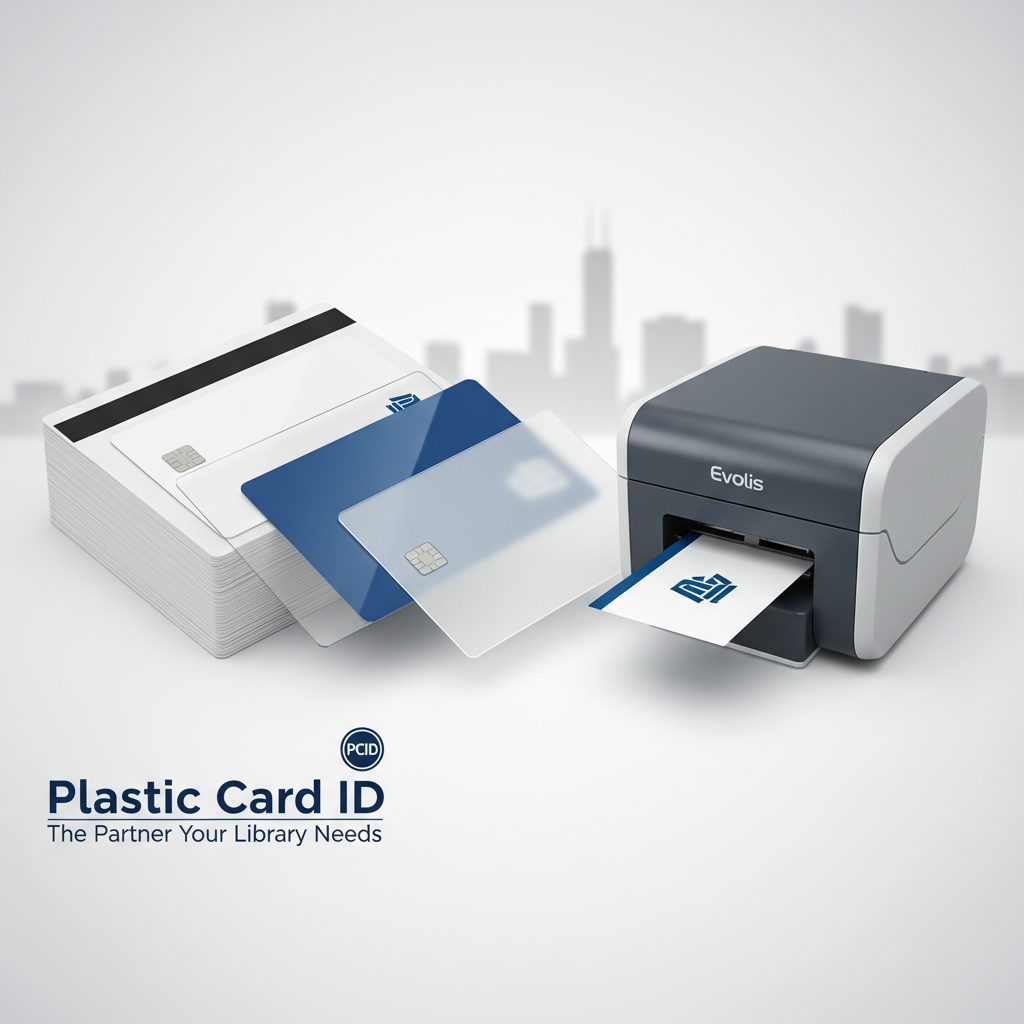 Libraries are quiet powerhouses of community infrastructure - and the cards that represent them matter more than most administrators realize. A flimsy piece of paper or a laminated slip says something about your institution, whether you intend it to or not. Blank plastic cards for library cards send a different message entirely: professional, permanent, and trustworthy.
That's exactly where CPE enters the picture. With more than 25 years supplying plastic cards to organizations across the United States, a client base exceeding 100,000 customers, and over 50 million cards sold, this is not a company guessing at what works. They know - because they've built programs that outlast trends, budget cycles, and staff turnover.
| Card Type | Common Library Use | Key Feature |
|---|---|---|
| Blank CR80 PVC Card | Standard patron card | ISO 7810 standard, 30 mil thickness |
| Magnetic Stripe (HiCo) | Circulation system integration | High-coercivity, durable encoding |
| Barcode-Ready Blank Card | ILS compatibility | Print-ready surface, full design control |
| RFID / Proximity Card | Contactless access and checkout | Contactless technology, fast read speed |
| Frosted / Clear PVC Card | Premium patron tiers | Distinctive visual identity |
The Real Case for Plastic: What Blank Cards Do for Libraries
 Consider what a library card actually does in a single week: it gets scanned at checkout, tucked into a wallet, pulled out at a self-service kiosk, and maybe handed to a child for the first time. Durability is not optional in that scenario. Paper degrades. Laminated cards peel. But a standard CR80 PVC card - 30 mil thick, built to ISO 7810 standards - holds up across thousands of uses without fading or warping.
Beyond physical resilience, there's an institutional credibility argument that librarians and administrators understand instinctively. When a patron receives a plastic card, it registers as something worth keeping. It signals that your library is serious, that membership means something. That psychological difference translates directly into patron retention and program engagement.
CR80 Blank Cards: The Industry Standard Explained
The CR80 format - the same size as a standard credit card - exists because it fits wallets. It fits cardholders. It fits the world your patrons already navigate. When libraries issue CR80-sized plastic cards, they integrate seamlessly into everyday life, which means the card stays accessible and the library stays top of mind.
Blank CR80 cards from CPE are manufactured to consistent tolerances, ensuring reliable performance in any card printer. Whether your library uses an Evolis, Zebra, or Fargo printer, these cards feed cleanly, print crisply, and encode accurately every single run.
Why Blank Cards Give Libraries Control
Buying pre-printed cards locks you into a design. Blank cards don't. Your library's branding can evolve - new logos, new colors, new messaging for special programs - without discarding existing inventory. Design flexibility at the card level is an underappreciated operational advantage that saves both money and headaches over time.
In-house printing also means faster issuance. A patron walks in, fills out a form, and leaves with a card that same visit. No waiting on fulfillment. No batch delays. Just a smooth, professional experience that reflects well on your institution from the very first interaction.
Magnetic Stripe Cards for Library Circulation Systems
Most integrated library systems - ILS platforms like Polaris, Koha, Sierra, and Destiny - support magnetic stripe input. HiCo (high-coercivity) magnetic stripe cards are the preferred choice for environments where cards will be used frequently over long periods. HiCo stripes resist accidental erasure from proximity to everyday magnets far better than LoCo alternatives.
Libraries processing hundreds of checkouts daily need that reliability. A card that demagnetizes halfway through its useful life creates staff frustration and patron inconvenience - two things no library director wants on their plate. Starting with the right card stock eliminates that problem at the source.
Call CPE at 800.835.7919 to discuss which magnetic stripe specification best fits your library's circulation software and usage volume.
RFID and Smart Cards: The Next Level for Modern Libraries
Not every library is ready to move beyond magnetic stripe, and that's completely fine - there's no pressure to over-engineer what's working. But for libraries exploring contactless patron experiences, RFID and proximity cards open up meaningful possibilities that flat-swipe technology simply cannot match.

Contactless checkout, access-controlled study rooms, self-service locker systems - these are no longer science fiction for public libraries. RFID-enabled patron cards make all of this possible without adding significant per-card cost when ordered at appropriate volumes. And since the card itself looks identical to a standard CR80 card, patrons experience no learning curve.
Understanding RFID Card Options for Libraries
Proximity cards operate at 125kHz and are primarily used for physical access control - think secured stacks, staff-only areas, or after-hours study spaces. RFID smart cards, including those using MIFARE DESFire technology, operate at 13.56MHz and support more complex data interactions, including integration with self-checkout systems and digital lending platforms.
The right choice depends entirely on your library's infrastructure and ambitions. CPE carries both formats and can help you identify which specification aligns with your existing hardware. Getting this decision right at the procurement stage saves significant integration headaches later.
Blank RFID Cards vs. Pre-Encoded Cards
Blank RFID cards allow your library to encode patron data in-house, maintaining full control over what's stored and how. This is important for institutions with privacy obligations - and most public libraries certainly have those. Encoding locally means patron data never passes through a third-party fulfillment system.
Pre-encoded cards have their place in large-scale deployments where a library is issuing thousands of cards at once and needs factory-level consistency. CPE supports both approaches, tailoring the recommendation to your program's actual scale and security requirements.
Proximity Cards for Access Control in Library Facilities
Many libraries now serve as community centers - open late, managing multiple spaces, staffed by a mix of full-time employees and volunteers. Access control through proximity cards creates security layers without adding operational complexity. Staff cards can be programmed to access server rooms or cash offices, while patron cards grant access only to appropriate public areas.
This layered approach is scalable. A small branch library can start with a simple proximity system and expand as needs grow. Because the cards themselves are standardized, additional cards can be ordered and encoded at any time without replacing existing infrastructure.
Building Your Library Card Program: A Practical Buyer's Guide
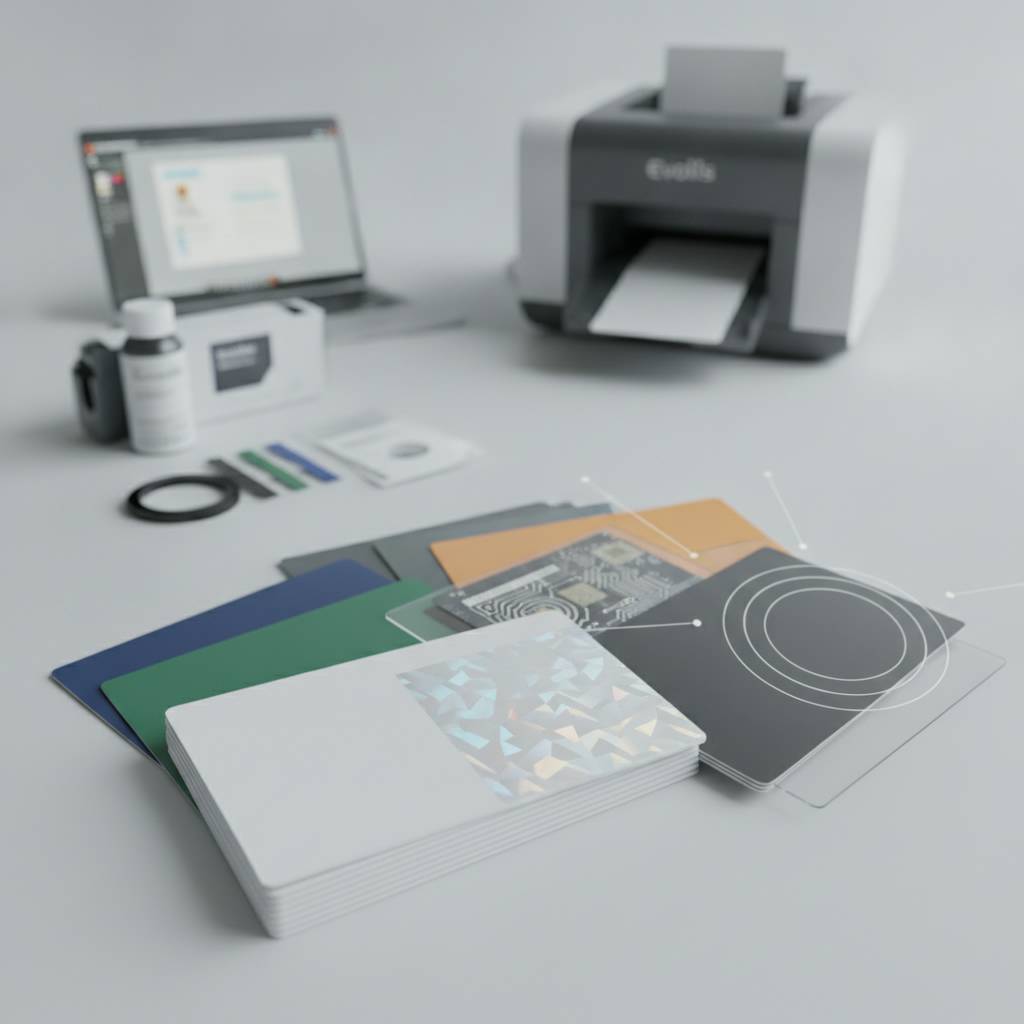 Library directors and systems administrators sometimes underestimate how much planning goes into a card program that actually runs smoothly. The card is just one piece - you also need printing equipment, supplies, a workflow, and a replacement strategy. Getting all four right from the start is the difference between a program that hums along and one that creates constant small fires.
Volume, budget, and in-house capability are the three variables that shape every good card program. Libraries issuing 50 cards a month have different needs than branches processing 500 new patron registrations weekly. CPE serves both ends of that spectrum and every point in between.
Choosing the Right Card Printer for Your Library
Card printers vary significantly in speed, ribbon yield, encoding capability, and maintenance requirements. Entry-level Evolis printers are excellent for low-to-moderate volume libraries that need reliability without complexity. Zebra and Fargo models offer higher throughput and more advanced encoding options for busier systems.
CPE carries a full lineup across all three brands. Buying your printer and cards from the same source simplifies support and ensures compatibility - no troubleshooting mismatches between card stock and printer specifications when something goes sideways.
Ribbons, Cleaning Kits, and Supplies: Don't Overlook Them
A card program is only as reliable as its consumables. Print quality degrades when ribbons are stretched beyond their rated yield or when printer rollers accumulate dust from card stock. Cleaning kits designed for card printers are inexpensive and dramatically extend equipment life.
- YMCKO ribbons produce full-color prints with a clear overlay for durability
- KO ribbons handle monochrome printing at lower cost per card
- Cleaning cards and swabs should be used at every ribbon change at minimum
- Card sleeves and cardholders protect finished cards during handling and issuance
- Card carrier mailers allow libraries to mail cards to patrons who register remotely
CPE stocks all of these consumables, so your library isn't scrambling for supplies from multiple vendors. One order, one invoice, one relationship. That operational simplicity compounds into real time savings over a year of running a card program.
Estimating Your Library's Annual Card Volume
A reasonable planning formula: take your active patron count, multiply by your estimated annual card replacement rate (typically 15-25% for most public libraries), and add your projected new registration volume. That gives you a baseline annual card order number - and helps you determine whether bulk pricing makes sense.
Ordering in larger quantities almost always reduces per-card cost meaningfully. A library that issues 2,000 cards annually might find that ordering a 5,000-card lot covers two and a half years at a noticeably lower unit price. CPE helps libraries model this math so procurement decisions are grounded in real numbers, not guesswork.
Specialty Cards That Add Dimension to Library Programs
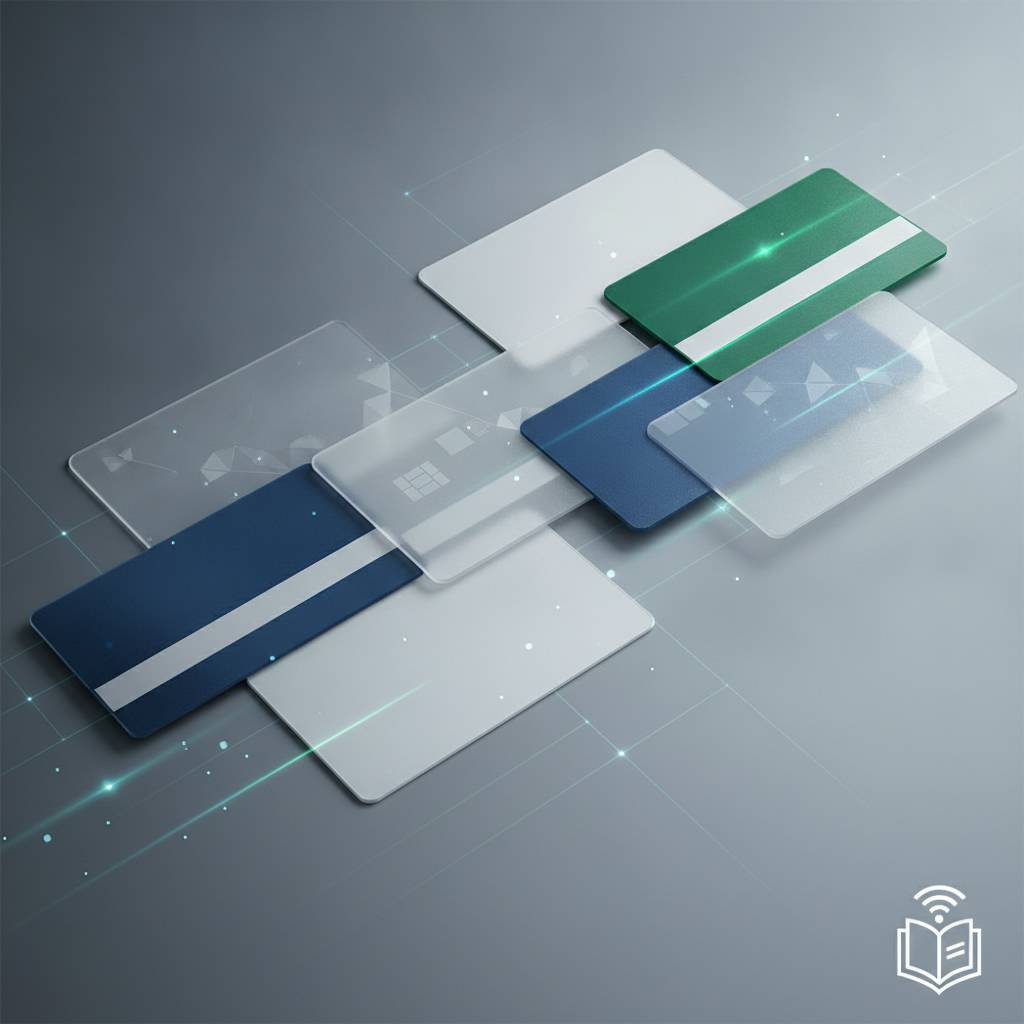 Standard white PVC cards are the workhorse - reliable, versatile, economical. But libraries doing interesting things with their card programs sometimes want cards that look interesting too. Specialty card formats create visual differentiation that patrons notice, and in some cases, that noticeability directly supports program goals.
Consider a library launching a premium membership tier with access to special collections, private events, or extended checkout privileges. Issuing a visually distinct card for that tier communicates the value of membership instantly, without printing a word. The card itself does the talking.
Frosted and Clear Plastic Cards for Libraries
Frosted and clear PVC cards are among the most visually striking options in the CPE catalog. Printed with the right design, a clear card allows background colors or patterns to show through the card itself, creating a layered visual effect that standard white stock cannot produce.
For libraries with strong visual identities - particularly those in academic or special collections contexts - these formats offer a way to make the patron card feel like a deliberate design object rather than a functional afterthought. When a card looks good, patrons keep it longer - which means your library stays in their wallet and in their mind.
Custom Die-Cut Shapes for Special Programs
Standard CR80 dimensions work for wallet storage, but not every library card program is constrained to the wallet. Event credentials, reading challenge badges, summer program ID cards, and youth library cards can take advantage of custom die-cut shapes that depart from the standard rectangle.
A children's library issuing a card in the shape of an open book or a star creates a tactile, memorable experience that resonates with young patrons and their parents. These are still durable PVC cards - just cut to a shape that serves the program's specific purpose. CPE supports custom die-cut orders for programs ready to think beyond the standard format.
Colored Card Stock for Visual Organization
Beyond white, CPE stocks a range of colored PVC card blanks. Libraries running multiple card tiers, branch systems, or age-segmented programs can use color to create immediate visual differentiation at the circulation desk. Staff can identify card type at a glance, reducing processing time during busy periods.
Gold, silver, red, blue, green, and black stock are among the available options. Using colored blanks doesn't require changing your printer settings or workflow - just load a different card tray and print as normal. Simple, effective, and operationally zero-cost to implement once you have the stock on hand.
Ready to explore specialty card options for your library? Reach out to CPE and discover what's possible for your program.
Frequently Asked Questions: Blank Plastic Cards for Library Cards
Libraries often come to CPE with very specific questions - not just "what cards do you sell" but "will these work with our specific ILS" and "what's the minimum order quantity for our small rural branch." These are the right questions to ask, and they deserve direct answers.
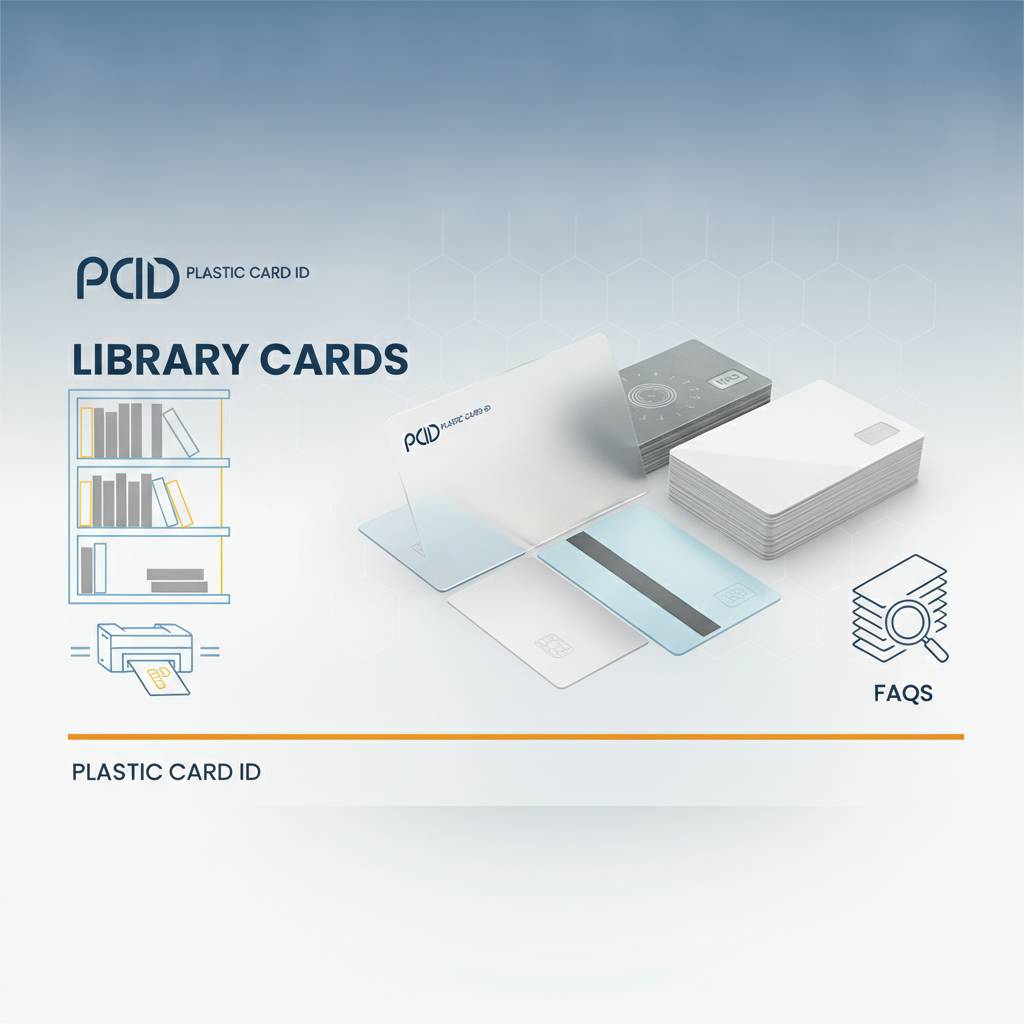
Getting the details right before ordering saves time, money, and frustration. The FAQ below addresses the most common questions libraries raise during the procurement process.
Minimum Orders, Pricing, and Delivery
Blank PVC card orders can be placed in quantities as small as a single box - typically 500 cards - making CPE accessible to small community libraries without forcing bulk commitments. Volume pricing kicks in at higher quantities, with meaningful per-card savings at 1,000, 5,000, and 10,000-card thresholds.
Pricing varies by card type, with standard white CR80 blanks representing the most economical option and specialty formats like RFID or clear PVC priced higher. Rough ranges: standard blank CR80 cards might run $15-$45 per 100 depending on volume, while HiCo magnetic stripe cards typically fall in a $25-$75 per 100 range at moderate quantities.
Compatibility With Library Software and Hardware
The cards themselves are agnostic - a blank CR80 PVC card works in any card printer designed for CR80-format stock. The encoding layer (magnetic stripe, RFID chip) must match your ILS's input specifications, which is why discussing your specific software platform with CPE before ordering is valuable. Compatibility is a solvable problem when addressed at the ordering stage.
For libraries using Koha, Polaris, Destiny, Sierra, or other major ILS platforms, HiCo magnetic stripe cards are typically the correct choice for patron identification. For RFID-enabled systems, the chip frequency and protocol matter - and CPE can help you match card specifications to system requirements accurately.
What About Card Affixing and Mailing Services?
Some libraries issue cards remotely - mailing them to patrons who registered online or by phone. CPE offers card affixing and mailing services that allow libraries to outsource that fulfillment step entirely. Cards arrive in cardholders, ready for the patron, without your staff handling individual mailings.
This service is particularly valuable for large urban library systems managing high registration volumes, or for academic libraries serving student populations spread across a wide geographic area. The economics typically pencil out clearly when staff time is factored in alongside postage and supply costs.
Why Plastic Card ID Is the Right Partner for Your Library Card Program
 There are card vendors. And then there are partners who understand what a card program actually requires over time. CPE has spent more than 25 years earning the second designation - building relationships with organizations that return year after year because the experience consistently delivers what it promises.
Libraries represent a specific kind of client: mission-driven, budget-conscious, operationally complex, and deeply committed to the patrons they serve. Plastic Card ID understands that intersection and brings a depth of product knowledge and program experience that translates into real value at every stage - from initial setup through ongoing replenishment and program evolution.
A Track Record That Speaks Directly
More than 100,000 customers. More than 50 million cards sold. These aren't marketing numbers pulled from thin air - they're the cumulative record of a company that has shown up reliably for clients across every industry, including public libraries, academic institutions, and special collections. Scale matters because it means the supply chain is stable, the stock is consistent, and the expertise is deep.
When a library needs to reorder mid-program because registration exceeded projections, CPE can fulfill quickly. When a library wants to upgrade from magnetic stripe to RFID, there's institutional knowledge guiding that transition. That continuity of support is genuinely rare in the card supply industry.
One Source for Everything Your Program Needs
Cards, printers, ribbons, cleaning kits, card sleeves, card carriers, mailing services - CPE supplies the full stack. Libraries that consolidate procurement with a single trusted vendor reduce administrative overhead, simplify vendor management, and gain a single point of contact for troubleshooting when something needs attention.
That one-stop-shop structure isn't just convenient - it's strategically sound. Programs running on mismatched supplies from multiple vendors accumulate compatibility problems over time. A unified supply source keeps everything optimized and accountable.
Getting Started Is Simple
Whether your library is launching a card program from scratch, upgrading from paper to plastic, or scaling an existing program to meet growing demand, the starting point is the same: a conversation with someone who knows this space inside and out.
Contact Plastic Card ID today at 800.835.7919 to discuss your library's specific needs, get a quote, and take the first step toward a card program that works as professionally as your institution deserves. Your patrons carry your card - make sure it represents you well.
Previous Page