Blank Plastic Cards for Time and Attendance Systems Explained
Table of Contents []
- Blank Plastic Cards for Time and Attendance Systems - Plastic Card ID
- Why the Card Itself Matters More Than You Think
- Magnetic Stripe Cards for Swipe-Based Time and Attendance
- Proximity and RFID Cards for Contactless Time Tracking
- Building a Complete In-House Card Program
- Common Questions About Blank Cards for Time and Attendance
- Partner With Plastic Card ID for Your Time and Attendance Card Supply
Blank Plastic Cards for Time and Attendance Systems - Plastic Card ID
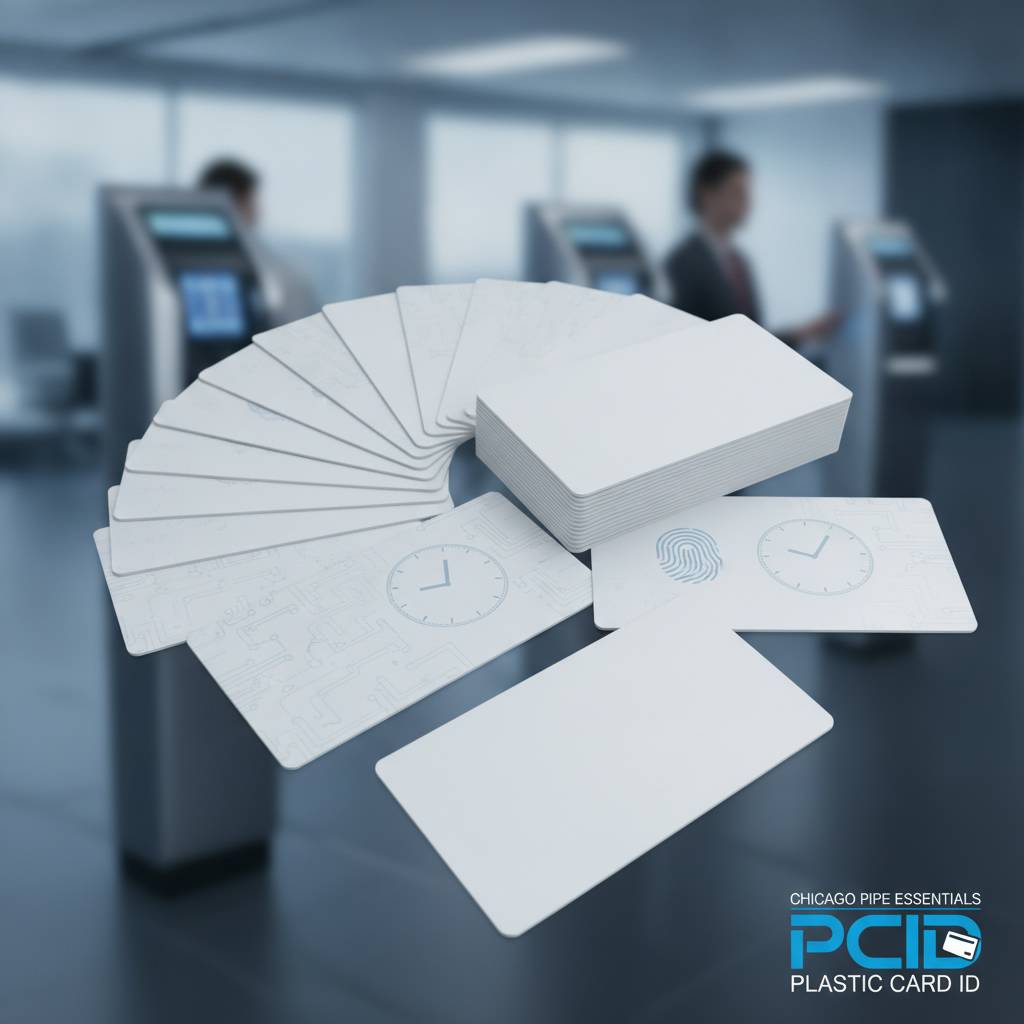 Time is money. It's a clich because it's true - and nowhere is that truth more measurable than in workforce management. When employees badge in and out using durable, reliable plastic cards, the data flows cleanly. When they don't? Errors pile up, payroll disputes multiply, and the administrative cost of fixing it all quietly drains resources every single pay cycle.
Blank plastic cards for time and attendance systems are the physical foundation of any badge-based workforce tracking program. They're not glamorous. They don't get celebrated at team meetings. But they are the silent infrastructure that makes accurate timekeeping possible - and Plastic Card ID has spent over 25 years making sure businesses across the United States never run short on them.
| Card Type | Common Use in Time & Attendance | Encoding Option | Best For |
|---|---|---|---|
| Blank PVC CR80 | Employee ID badge, printed in-house | None (print only) | Visual identification |
| Magnetic Stripe HiCo | Swipe-based clock-in terminals | HiCo magnetic stripe | High-traffic environments |
| Magnetic Stripe LoCo | Low-volume swipe systems | LoCo magnetic stripe | Standard office environments |
| Proximity / RFID Card | Contactless tap-to-clock-in | 125kHz or 13.56MHz | Fast throughput, secure access |
| Smart Chip Card | Multi-function badge data storage | Contact or contactless chip | Enterprise-level programs |
Why the Card Itself Matters More Than You Think
 Most organizations shopping for time and attendance solutions focus on the software - the dashboard, the integrations, the reporting. Reasonable priorities. But a surprisingly common source of system failure isn't the software at all. It's the card. Low-quality, off-spec plastic warps, cracks, or fails to read consistently - and every failed swipe or tap costs someone time and creates data gaps.
The standard for any card used in a time and attendance system is the CR80 form factor at 30 mil thickness - identical in size to a standard credit card, governed by ISO 7810 specifications. This isn't arbitrary. Time and attendance terminals, card printers, and badge holders are all engineered around this precise standard. Deviation introduces problems. Consistency eliminates them.
The CR80 Standard Explained
CR80 dimensions are 3.375 inches by 2.125 inches - the same dimensions you'll find in your wallet right now. At 30 mil (0.030 inches) thick, these cards have the rigidity to feed cleanly through printers, slide smoothly through magnetic readers, and survive years of daily handling without bending or delaminating.
Plastic Card ID supplies CR80 cards manufactured to ISO 7810 standards, which means every card in a batch performs the same as the first one. Batch consistency is critical in time and attendance programs where cards may be used interchangeably across multiple readers and terminals throughout a facility.
Material Quality and Daily Wear
Time and attendance cards are handled every single workday - sometimes multiple times per shift. That means edges take impacts, surfaces accumulate oils, and the card's structure is tested repeatedly. Premium PVC composition resists cracking at corners and maintains structural integrity even when cards are stored in wallets, clipped to lanyards, or jammed into pockets.
What sets CPE apart in this space is the deliberate focus on sourcing cards that perform under real-world conditions - not just in a controlled demonstration. Cards that fail during a high-volume shift create administrative chaos that software alone cannot resolve.
Compatibility Across Leading Time Clock Brands
Time and attendance terminals from manufacturers like Kronos, ADP, Lathem, uAttend, and others are all designed around standard CR80 specifications. Magnetic stripe tracks, proximity chip placements, and contact chip positions are standardized so that a card purchased from Plastic Card ID will work with your existing system right out of the box.
That said, always verify your system's reader type before ordering. Magnetic stripe terminals require either HiCo or LoCo cards depending on the reader's coercivity spec. Proximity systems require 125kHz or 13.56MHz RFID cards depending on the reader frequency. Call us at 800.835.7919 if you need help matching card type to your terminal before placing your order.
Magnetic Stripe Cards for Swipe-Based Time and Attendance
For decades, the magnetic stripe swipe has been the workhouse of time and attendance tracking. Employees line up, swipe their cards, and the terminal logs the timestamp. It's fast, reliable, and familiar - and magnetic stripe technology continues to dominate many industries precisely because it works without friction, network dependency, or user training.
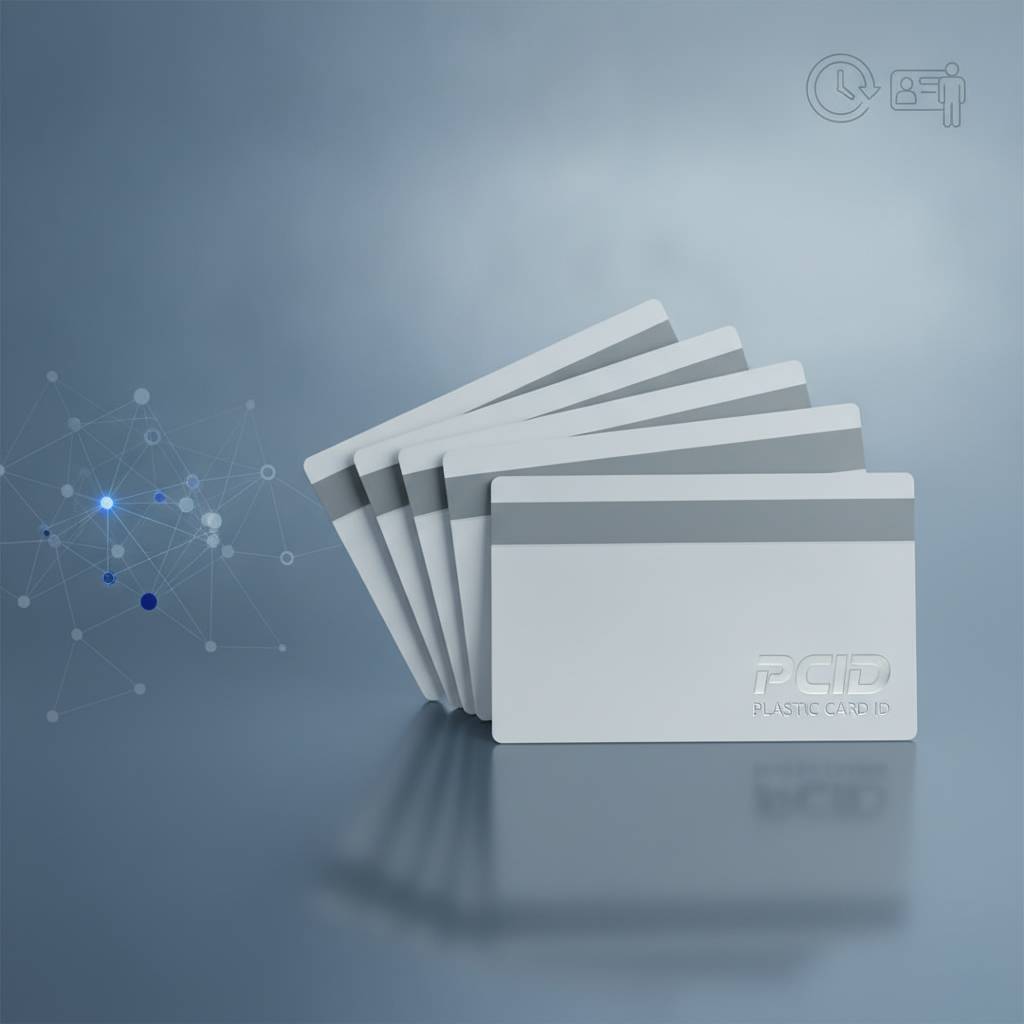
Choosing between HiCo and LoCo magnetic stripe cards comes down to your terminal's specifications and your environment. High-coercivity (HiCo) cards resist magnetic interference and are recommended for manufacturing floors, warehouses, hospitals, and any environment with significant electromagnetic activity. Low-coercivity (LoCo) cards work well in standard office environments with typical terminal equipment.
HiCo vs. LoCo: A Practical Comparison
HiCo cards require approximately 4,000 oersteds to encode and are far more resistant to accidental erasure from everyday magnets - phone cases, bag clasps, other cards. LoCo cards encode at around 300 oersteds, which makes them slightly less expensive but more vulnerable to erasure in environments with incidental magnetic exposure.
For time and attendance applications, HiCo is almost always the smarter investment. The modest price difference between HiCo and LoCo is trivially small compared to the cost of replacing erased cards and dealing with missed punches from damaged stripes. Order HiCo unless your terminal manufacturer specifically requires LoCo.
Encoding In-House or Pre-Encoded
Blank magnetic stripe cards ship unencoded - the stripe is ready to receive data, but it contains nothing until you encode it using a card printer equipped with a magnetic stripe encoder. This gives organizations complete control over what data is written to each card, making it possible to assign employee IDs, department codes, and other identifiers exactly as your software requires.
Many organizations already own card printers capable of encoding magnetic stripe data while simultaneously printing the badge. If you're setting up a new program, Plastic Card ID carries Evolis, Zebra, and Fargo card printers - complete systems that print and encode in a single pass. An in-house printing setup gives you the flexibility to issue, replace, and update cards on demand without waiting for a vendor.
Volume Flexibility for Any Organization Size
CPE understands that workforce sizes vary dramatically. A single-location restaurant tracking 20 employees has entirely different needs than a regional healthcare system managing thousands of staff across multiple facilities. Both deserve efficient, cost-effective card supply.
Orders scale from small quantities for new programs to tens of thousands of cards for mass deployment. The per-card cost decreases as volume increases, making it practical to maintain an inventory buffer so replacements are always on hand when an employee loses a card or a card is damaged. Never being out of stock on employee badges keeps your attendance system running smoothly.
Proximity and RFID Cards for Contactless Time Tracking
 Contactless card technology has grown dramatically in adoption, and for good reason. Proximity and RFID cards eliminate the wear associated with swipe-based systems - no magnetic stripe degrading from thousands of reads, no reader slot collecting debris. An employee simply holds their card near the reader, and the timestamp is logged in milliseconds.
This is particularly valuable in environments where gloved workers, high traffic volumes, or hygiene considerations make physical swipe contact undesirable. Healthcare facilities, food production plants, and clean rooms all benefit from the no-contact nature of RFID-based time tracking. Contactless systems reduce reader maintenance costs because there are no moving parts and no stripe-to-head contact.
125kHz Proximity Cards
The 125kHz proximity card is the standard for legacy access control and time and attendance systems. These cards operate on a read-only basis in most time and attendance applications - the card broadcasts a fixed ID number when powered by the reader's electromagnetic field, and the terminal logs that ID against a timestamp. Setup is simple and the technology is thoroughly proven.
These cards are compatible with the vast majority of proximity readers currently installed in U.S. facilities, making them the default choice when replacing cards in an existing system. Plastic Card ID stocks 125kHz proximity cards in quantities suitable for both small organizations and large enterprise deployments.
13.56MHz Smart RFID Cards
Operating at 13.56MHz, smart RFID cards offer significantly more capability than 125kHz proximity cards. They support read-write operations, meaning data can be updated on the card itself, not just read from it. Technologies like MIFARE DESFire provide encrypted communication, making these cards appropriate for high-security environments that require both time tracking and access control on the same credential.
A single smart RFID card can serve as an employee's time and attendance credential, access control badge, and secure data carrier simultaneously - reducing the number of cards an employee must carry and simplifying program management for administrators. Contact CPE at 800.835.7919 to discuss which RFID frequency and technology is right for your system.
Dual-Technology Cards for Complex Environments
Some organizations run multiple reader technologies across different areas - legacy proximity readers in one building, newer RFID readers in another, and magnetic stripe terminals in a third location. Rather than issuing employees multiple cards, dual-technology cards embed more than one credential type in a single card body.
These cards are a more sophisticated solution, and Plastic Card ID can walk you through the available configurations. Consolidating multiple credentials onto one card reduces employee confusion and lost-card incidents, both of which create administrative burden and potential security gaps in your time and attendance data.
Building a Complete In-House Card Program
 Purchasing blank cards is only part of the equation for organizations that print and manage their own employee badges. The real efficiency gain comes from treating card supply, printing hardware, and consumables as a coordinated system rather than a collection of independent purchases. Plastic Card ID is structured precisely to support that approach.
Consider what a self-sufficient in-house card program actually requires: the right blank cards for your reader technology, a card printer capable of handling those cards, the correct ribbon for print quality and durability, and cleaning supplies to maintain printer performance over time. Every one of those components is available from a single source - which simplifies reordering, ensures compatibility, and eliminates the vendor coordination headache.
Card Printers from Evolis, Zebra, and Fargo
The three printer brands stocked by Plastic Card ID represent the leading options for ID card and badge printing in the U.S. market. Evolis printers are known for compact footprint and ease of use - ideal for HR departments issuing a steady stream of employee badges. Zebra printers offer robust throughput and integration capabilities suited for enterprise environments. Fargo printers deliver exceptional card surface quality for programs where badge appearance matters.
Selecting the right printer depends on your volume, encoding requirements, and whether you need single-sided or dual-sided printing. A properly matched printer-and-card combination produces badges that feed cleanly, print sharply, and encode reliably every single time - which is the foundation of a trouble-free time and attendance program.
Ribbons, Cleaning Kits, and Consumables
A card printer running on a worn or incompatible ribbon produces faded, streaky badges that look unprofessional and may fail to encode correctly. Printer ribbons are consumable items that need to match both the printer model and the card surface for optimal results. Plastic Card ID stocks ribbons for all major printer models carried in its catalog.
Cleaning kits are often overlooked until a printer starts producing defects - at which point the damage to cards already printed may require reprinting an entire batch. A regular cleaning schedule using proper cleaning cards and swabs extends printer life significantly and maintains consistent print and encoding quality across thousands of cards.
Card Carriers, Sleeves, and Mailing Services
For organizations distributing time and attendance cards to employees at remote locations, multiple facilities, or who are hired prior to their first on-site day, Plastic Card ID offers card carriers and mailing services. Cards can be protected in sleeves and carriers that prevent surface damage during transit, ensuring the card arrives in the same condition it left the facility.
The card affixing and mailing service is particularly useful for large organizations onboarding new employees in bulk. Rather than managing individual card distribution internally, the process is handled efficiently - each employee receives their credential ready to use, without requiring in-person pickup or adding steps to HR's workload.
Common Questions About Blank Cards for Time and Attendance
Organizations setting up or scaling a card-based time and attendance program tend to run into the same practical questions. Understanding the answers before placing an order prevents compatibility issues, unnecessary returns, and delays in getting a program running.
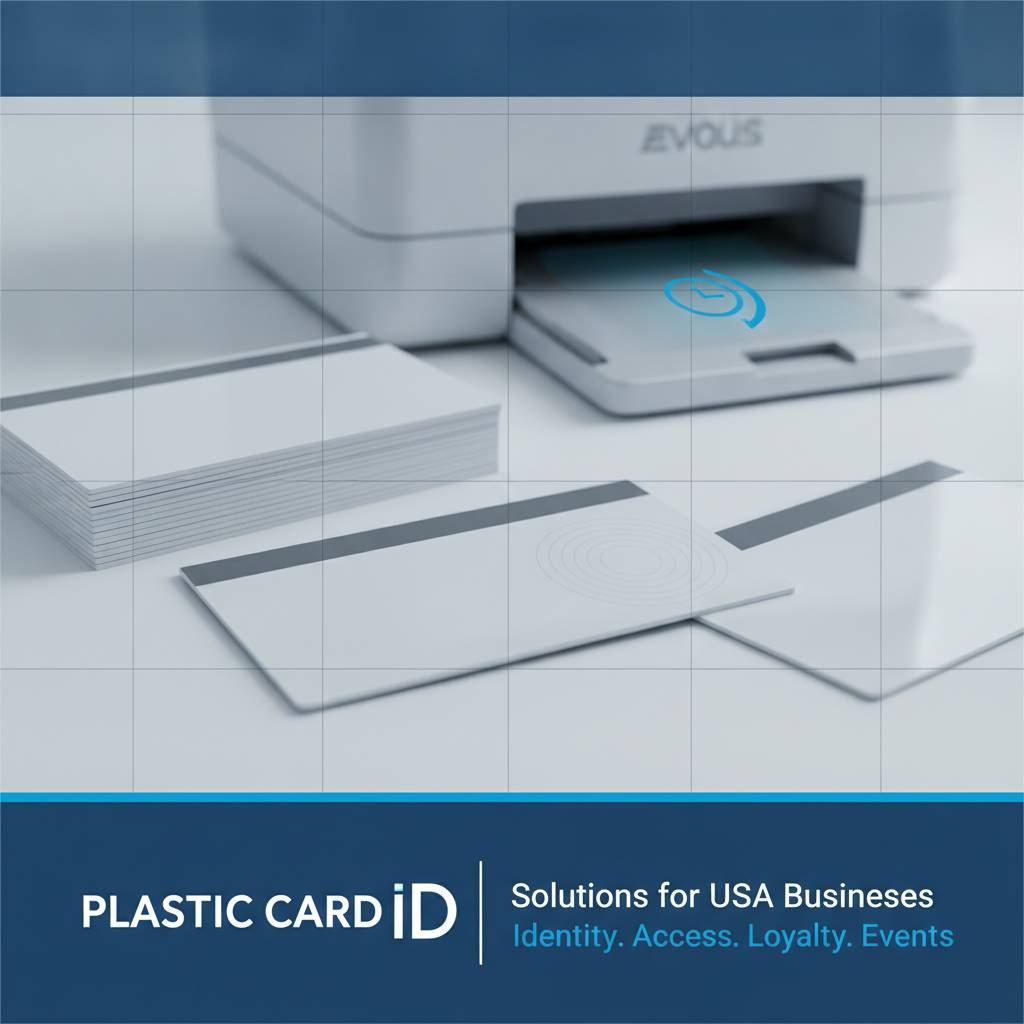
Below are the questions CPE hears most frequently from customers in the workforce management space, along with clear, practical guidance.
Frequently Asked Questions
- What card type does my time and attendance terminal require? Check your terminal's documentation for reader type - magnetic stripe (HiCo or LoCo), proximity (125kHz), or RFID (13.56MHz). The manual or manufacturer's website will specify coercivity for magnetic stripe systems.
- Can I print on magnetic stripe or RFID cards? Yes. Magnetic stripe, proximity, and RFID cards are available in printable white PVC stock. Your card printer will handle printing on the card surface while a separate encoder module handles the electronic credential.
- How many cards should I keep in inventory? A general rule is maintaining a buffer equal to 10-15% of your active card count to cover replacements from loss, damage, and new hires without waiting on reorder lead times.
- Are blank CR80 cards compatible with all ID card printers? Standard 30 mil CR80 cards are compatible with all major card printer brands. Avoid cards sold in non-standard thicknesses or dimensions, as these can cause feed errors or damage print heads.
- What is the difference between contact and contactless smart cards? Contact smart cards require insertion into a reader slot for communication via a gold chip pad on the card surface. Contactless smart cards communicate via antenna at 13.56MHz without physical insertion.
- Does Plastic Card ID supply financial credit or debit cards? No. Plastic Card ID supplies identity, access control, loyalty, membership, and attendance cards strictly for U.S. businesses and organizations. Payment processing cards are outside the scope of this catalog.
Buyer Tips Before You Order
Identify your terminal's reader technology before selecting a card type. If your current system uses magnetic stripe readers, verify whether HiCo or LoCo is specified in your terminal's documentation. Ordering the wrong coercivity is a common and easily avoidable mistake. When in doubt, HiCo is the safer default for most environments.
Order a small test quantity before committing to a large volume purchase if you are implementing a new card type or switching suppliers. Test cards through your actual readers and printers under real working conditions before scaling. The small upfront cost of a test run prevents the much larger cost of discovering an incompatibility after receiving 5,000 cards.
Scaling Up from Small to Large Programs
Organizations often start with modest card programs - fifty cards for a small team, ordered once or twice a year. As the organization grows, the program needs to scale without disruption. The advantage of working with CPE from day one is that the same supplier handles orders of fifty cards and orders of fifty thousand with equal reliability and consistency.
Program managers who establish a reliable card supply relationship early avoid the scramble of finding a new supplier when volume suddenly spikes - a common scenario during rapid hiring periods, facility expansions, or system upgrades. A consistent card supply partner is as important as the time and attendance software itself when workforce management is a business-critical function.
Partner With Plastic Card ID for Your Time and Attendance Card Supply
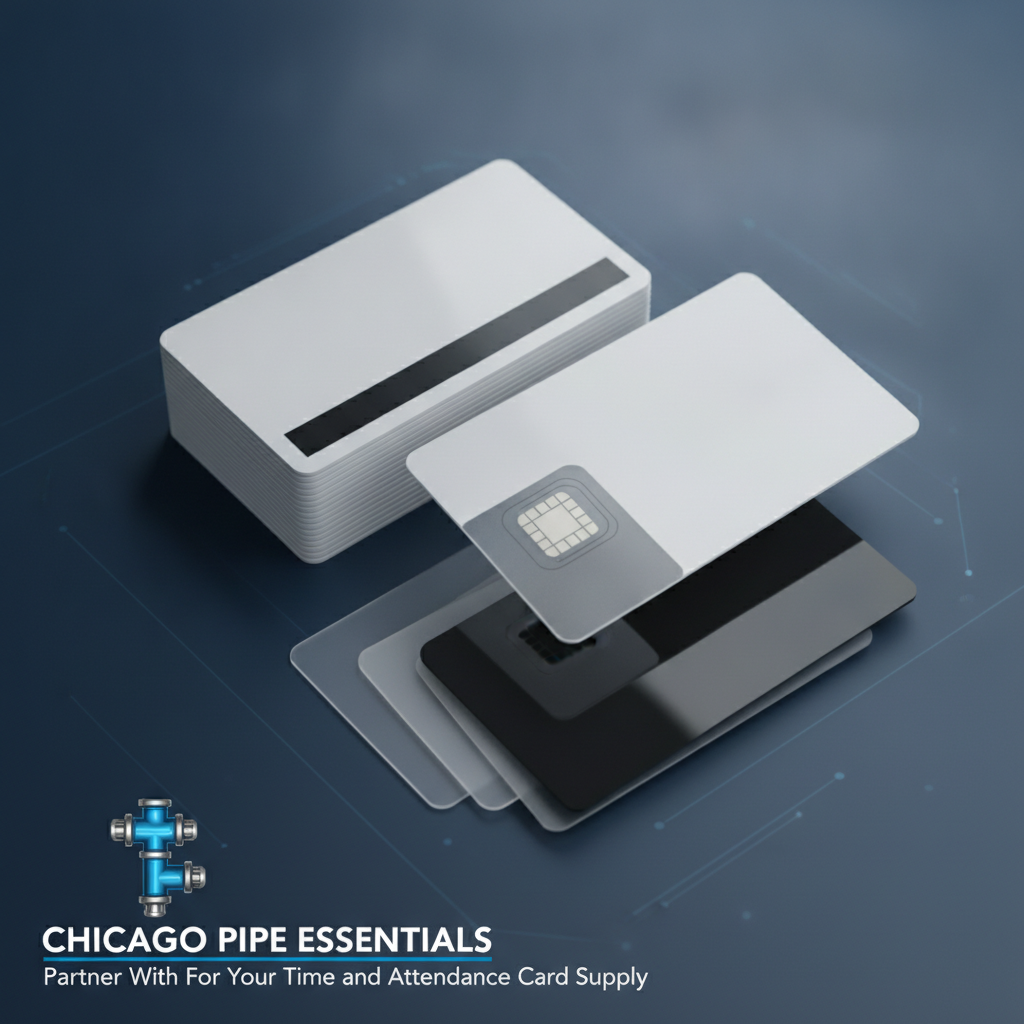 Over 100,000 customers and 50 million cards later, the core principle at Plastic Card ID has not changed: businesses should never have to worry about whether their cards will work. Reliable cards, expert guidance, and a full-catalog approach to card program support - that's what keeps customers ordering year after year rather than starting over with someone new.
Whether your organization needs a few hundred magnetic stripe cards for a single-location operation or thousands of RFID credentials for a multi-site enterprise workforce, the catalog depth, volume flexibility, and product consistency at CPE make it the right call. Time and attendance programs run on data, and that data starts with a card that reads correctly every time.
Getting Started Is Simple
New customers are often pleasantly surprised by how straightforward the ordering process is. Identify your card type, confirm your quantity, and place your order. The Plastic Card ID team is available to help match card specifications to your existing system if you have any uncertainty about which product to select. No one should have to guess when expert guidance is a phone call away.
For organizations setting up a new in-house card program from scratch, the team can walk through a complete configuration - blank cards, printer selection, ribbons, cleaning supplies, and accessories - so everything arrives together and works together from day one. It's the kind of support that turns a complicated procurement decision into a simple, confident one.
Contact Plastic Card ID Today
Your time and attendance program is only as reliable as the cards powering it. Every swipe, every tap, every badge scan represents a data point that feeds payroll, compliance reporting, and workforce analytics. That data depends on cards that perform consistently, every shift, every day.
Call 800.835.7919 now to speak with a card specialist at Plastic Card ID and get your time and attendance card program running on a foundation that won't let you down.
Previous Page