What Is a CR80 Card: Standard Size Guide
Table of Contents []
- What Is a CR80 Card? Everything You Need to Know - From Plastic Card ID
- The CR80 Standard - Defined, Decoded, and Demystified
- What Can a Blank CR80 Card Actually Become?
- CR80 Card Variations - Beyond the Standard Blank White
- Printing on CR80 Cards - What You Need to Know Before You Buy
- Frequently Asked Questions About CR80 Cards
- Why Plastic Card ID Is the Right Partner for Your Card Program
What Is a CR80 Card? Everything You Need to Know - From Plastic Card ID
 Pull a card out of your wallet right now. Chances are excellent that what you are holding is a CR80 card. That rectangular piece of plastic with the slightly rounded corners - the one that fits perfectly in every card slot, wallet pocket, and badge holder ever manufactured - has a name, a standard, and a very specific set of dimensions that the entire world quietly agreed upon decades ago. Yet most people who use them, print them, or hand them out have never once asked: what exactly is a CR80 card?
The answer matters far more than you might expect, especially if you are running a business card program, ordering employee ID badges, setting up a loyalty system, or planning any kind of credential-based operation. Getting the spec wrong means incompatible printers, wasted money, and headaches that compound fast. Getting it right means a seamless, professional program that just works.
| Specification | CR80 Standard |
|---|---|
| Width | 3.375 inches (85.6 mm) |
| Height | 2.125 inches (53.98 mm) |
| Thickness | 0.030 inches (30 mil / 0.76 mm) |
| ISO Standard | ISO 7810 ID-1 |
| Corner Radius | 3.18 mm |
| Material | PVC (Polyvinyl Chloride) |
| Common Uses | ID badges, gift cards, loyalty cards, access cards |
The CR80 Standard - Defined, Decoded, and Demystified
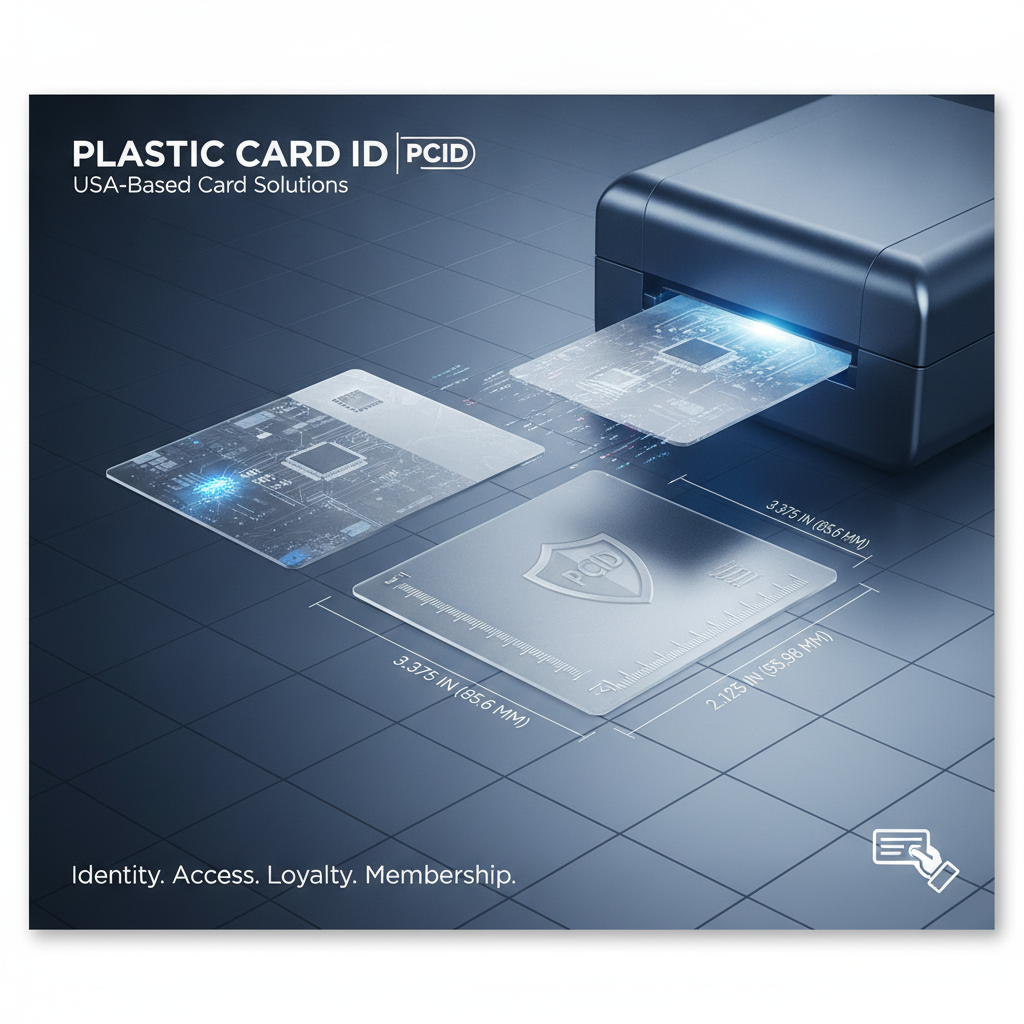 CR80 is not a brand name or a proprietary format. It is a globally recognized identification card size defined by the ISO 7810 ID-1 standard. Every blank PVC card you have ever received from a doctor's office, gym, hotel, or employer almost certainly conforms to this spec. The "CR" stands for "Credit Card," and "80" refers to its placement within a hierarchy of card sizes that range from the tiny CR50 all the way up to larger form factors used in specialty applications.
What makes the CR80 so dominant is elegantly simple: it fits. It fits card printers. It fits wallets. It fits badge holders, ID card holders, lanyard clips, and card readers. The entire ecosystem of card-related hardware was designed around this one standard, which means that once you commit to CR80, you are buying into a globally compatible infrastructure that requires no custom accommodations.
The ISO 7810 Connection
ISO 7810 is the international standard that governs identification cards. It defines four sizes - ID-1, ID-2, ID-3, and ID-000 - with CR80 mapping directly to ID-1. This is the same size as your bank card, your driver's license, and virtually every corporate ID badge in existence. The standard ensures dimensional consistency so that card-reading hardware, card printers, and card wallets all interoperate without modification.
Compliance with ISO 7810 is not just a bureaucratic formality. It is a practical guarantee. When CPE supplies blank CR80 cards to a business, that business can confidently load them into an Evolis, Zebra, or Fargo printer - knowing the feed, print head alignment, and lamination settings are all calibrated for exactly this size. Compatibility is built into the standard itself.
30 Mil Thickness - Why It Matters
The "30 mil" thickness specification refers to thirty thousandths of an inch - 0.030" or approximately 0.76 mm. This is the thickness that makes a plastic card feel substantial, professional, and durable in the hand. It is thick enough to resist casual bending, thin enough to slide through card readers without jamming, and precisely calibrated for the rollers inside card printers.
Some cheaper alternatives come in at 20 mil or 25 mil. They feel flimsy, they print inconsistently, and they can damage printer rollers over time. Full 30 mil CR80 cards are the only spec worth using for any serious card program, whether you are printing 50 cards a month or 50,000.
PVC as the Material of Choice
The overwhelming majority of CR80 cards are made from PVC - polyvinyl chloride - a material chosen for its precise combination of flexibility, printability, and durability. PVC cards accept dye-sublimation printing beautifully, producing vibrant, full-color images that resist fading and scratching under normal use conditions. The surface takes inks and overlaminates predictably, which is why card printer manufacturers build their color profiles around PVC stock.
PVC cards also accept encoding. Magnetic stripes, RFID chips, smart chips, proximity antennas - all of these technologies are embedded into PVC substrates. The material's thermal properties allow it to be fused, laminated, and bonded without delamination, meaning a magnetic stripe card will hold its stripe reliably through thousands of swipes.
What Can a Blank CR80 Card Actually Become?
Here is the part that surprises a lot of first-time buyers: a blank CR80 card is not just a "credit card shape" waiting to become a credit card. In fact, CPE does not supply financial credit or debit cards at all, and neither does any legitimate blank card vendor. What a blank CR80 becomes depends entirely on what you print, encode, or program onto it - and that flexibility is precisely what makes it so powerful.
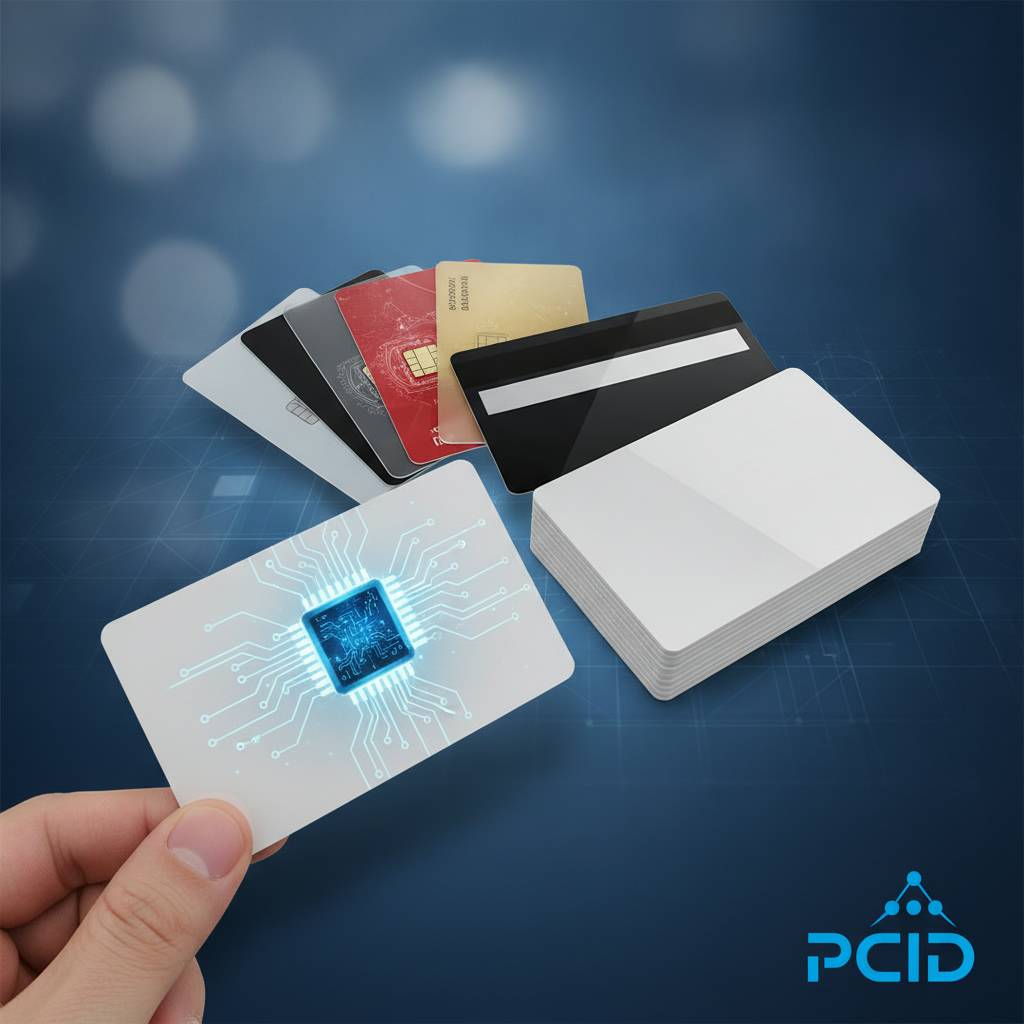
A single shipment of blank white PVC CR80 cards can simultaneously serve a hotel chain printing key cards, a gym issuing membership badges, a corporation creating employee ID credentials, and a boutique retailer launching a gift card program. The blank card is a platform, not a product - and the organizations that understand this use it to remarkable strategic advantage.
Employee ID Badges and Access Credentials
The most common use of blank CR80 cards in corporate environments is employee identification. Printed in-house using a direct-to-card or retransfer printer, these cards carry the employee's name, photo, job title, and department. Add a magnetic stripe or proximity chip and the same card becomes an access credential that unlocks doors, logs time and attendance, and controls elevator access in multi-floor facilities.
Organizations that print their own badges in-house using blank CR80 stock gain significant advantages. They can issue new credentials on the same day a hire starts, revoke lost cards instantly, and update designs without waiting on outside print vendors. Control, speed, and cost efficiency come together in a well-run in-house badge program.
Loyalty, Gift, and Membership Cards
Physical plastic loyalty cards that live in a customer's wallet are categorically more effective than paper punch cards that get lost, worn out, or forgotten. Retailers who switch from paper-based loyalty systems to plastic CR80 cards routinely report measurable lifts in repeat visit frequency and average transaction value. The card itself signals permanence - a customer holding your plastic card is carrying a physical representation of their relationship with your brand.
Gift cards present an even more compelling case. Retailers who make the switch from paper gift certificates to plastic gift cards typically see sales increases of 35-50%. The card's perceived value is higher, it is easier to reload and reuse, and it travels out of your store as a mobile marketing piece every time a customer tucks it into their wallet.
Event Credentials and Temporary Access Cards
Conferences, tradeshows, festivals, and corporate events have long relied on paper badges - but organizations running repeat events or multi-day programs are increasingly switching to plastic CR80 cards. A plastic event credential looks more professional, survives a full day in a lanyard without tearing, and can be encoded with RFID or magnetic stripe data for automated session tracking and access control.
Single-use event credentials do not need to be elaborate. A batch of blank white CR80 cards printed with a simple event logo, attendee name, and barcode produced in-house the morning of the event costs a fraction of what outsourced badge printing runs - and looks considerably more polished than anything printed on card stock.
CR80 Card Variations - Beyond the Standard Blank White
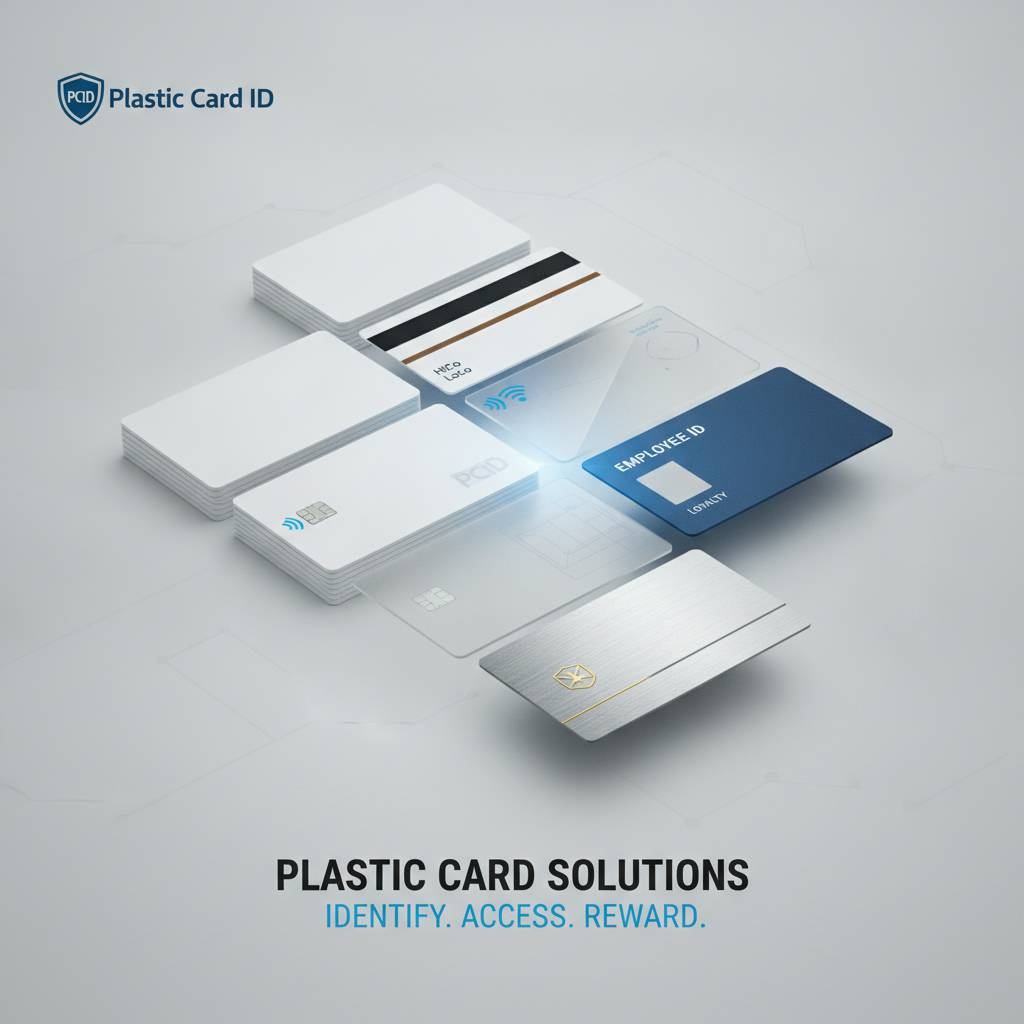 The blank white CR80 card is the industry workhorse, but it represents just one point on a very wide spectrum of card options. CPE stocks and supplies an extensive range of CR80-format cards with different features, encoding capabilities, and aesthetic finishes - all conforming to the same ISO 7810 ID-1 dimensional standard, which means they all work in the same printers and fit the same wallets.
Magnetic Stripe Cards - HiCo vs. LoCo
Magnetic stripe CR80 cards come in two varieties: High Coercivity (HiCo) and Low Coercivity (LoCo). The difference lies in the magnetic resistance of the stripe itself. HiCo stripes resist accidental erasure from everyday magnetic interference - proximity to phones, bag clasps, and magnetic closures - making them the correct choice for long-term use cases like employee badges, hotel key cards, and gift cards.
LoCo stripes are less resistant to interference and are best suited for short-term applications like event passes or single-use tickets where the card will not be in active use long enough for accidental erasure to become a problem. Choosing the right coercivity level is not a minor detail - it directly affects the reliability of your card program over time.
RFID, Proximity, and Smart Chip Cards
CR80-format RFID and proximity cards contain embedded antennas and chips that communicate wirelessly with readers at varying distances. Proximity cards (125 kHz) are the traditional access control workhorse, widely deployed in commercial buildings, parking facilities, and campuses. Contactless smart cards using higher-frequency RFID technology - including MIFARE DESFire variants - offer encrypted, read-write functionality suitable for logical access, cashless vending, and transit applications.
Smart chip cards embed a physical contact chip in the card surface for applications requiring direct reader contact. These are used in secure identity programs, healthcare credentialing, and government-adjacent applications where data integrity and encryption are non-negotiable requirements. All of these technologies live in the familiar CR80 form factor.
Specialty Finishes - Clear, Frosted, Colored, and Metal
Not every card program calls for standard white PVC. Clear plastic CR80 cards offer a distinctive, contemporary look - when printed with color graphics, the transparent substrate creates a floating-image effect that stands out dramatically from conventional credentials. Frosted cards provide a translucent, premium aesthetic that photographs especially well and feels noticeably different in the hand.
Colored PVC stock - available in a range of hues - eliminates the need to flood-coat a white card with background color, saving a color layer on the print ribbon and reducing per-card printing cost. For organizations that want maximum visual impact, luxury metal cards in stainless steel, brass, and gold provide a tactile weight and prestige that PVC simply cannot replicate - still in the CR80 form factor, still compatible with standard card holders and badge slots.
| Card Type | Best Use Cases | Key Feature |
|---|---|---|
| Blank White PVC | ID badges, loyalty cards, event passes | Maximum printability |
| HiCo Magnetic Stripe | Gift cards, hotel keys, employee IDs | Erasure-resistant stripe |
| Proximity (125 kHz) | Building access, parking, campuses | Contactless tap access |
| RFID Smart Card | Secure access, cashless vending | Encrypted read-write |
| Clear / Frosted PVC | Premium membership, VIP credentials | Distinctive visual impact |
| Metal Cards | Luxury membership, executive IDs | Prestige weight and finish |
Printing on CR80 Cards - What You Need to Know Before You Buy
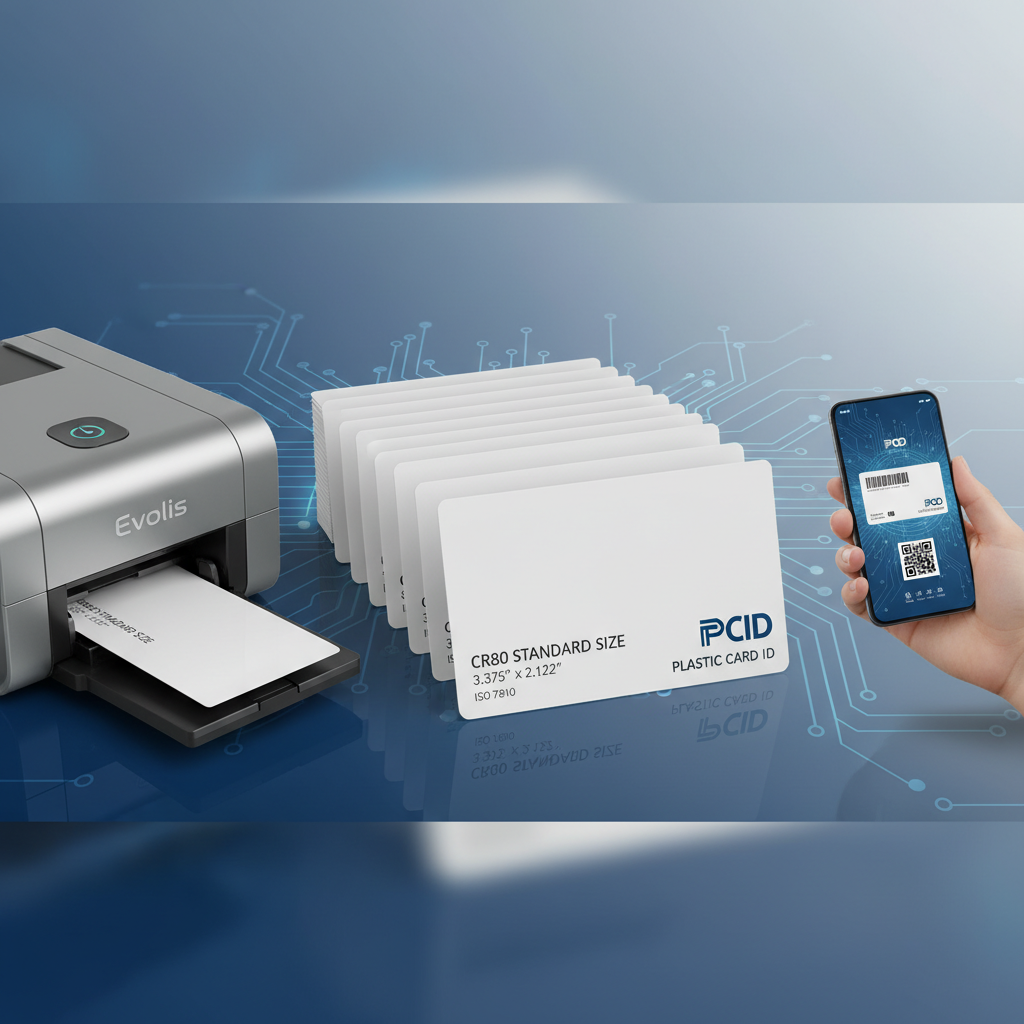 Blank CR80 cards are only half the equation. The printer you pair them with determines the quality, speed, and total cost of your in-house card program. Card printers are not inkjet printers - they use dye-sublimation or direct thermal technology and require specific ribbon consumables matched to the card type and finish. Understanding this pairing before you buy prevents expensive mistakes.
Card Printer Options - Evolis, Zebra, and Fargo
CPE carries a full lineup of card printers from three of the industry's most trusted manufacturers: Evolis, Zebra, and Fargo (HID). Each brand offers entry-level single-sided printers suited to small programs printing under 500 cards per month, mid-range dual-sided models for organizations with moderate volume, and high-capacity production printers for large-scale programs running tens of thousands of cards annually.
Printer selection should be driven by volume, encoding requirements, and desired card finish. An organization printing 50 employee badges per month has very different needs than a hotel issuing thousands of key cards weekly. Matching printer capacity to program volume is one of the most important purchasing decisions you will make - and one where CPE can provide direct, experienced guidance.
Ribbons, Cleaning Kits, and Supplies
Card printer ribbons are consumable - they deplete with each card printed and must be replaced regularly. Full-color YMCKO ribbons (yellow, magenta, cyan, black, and overlay) are the standard for photo-quality ID and membership cards. Monochrome black ribbons are used for simple text-only printing at significantly lower cost per card. Matching the ribbon to the card type and printer model is essential for optimal print quality.
Regular printer cleaning using manufacturer-approved cleaning kits extends printer life considerably and prevents print quality degradation from dust, debris, and ribbon residue. CPE supplies complete cleaning kits and replacement cleaning rollers alongside ribbons and blank card stock, meaning you can source your entire program's consumables from a single supplier without hunting across multiple vendors.
Card Carriers, Sleeves, and Mailing Services
Many organizations printing CR80 cards also need to distribute them - by mail, in new employee welcome kits, or in customer mailings for loyalty program launches. Card carriers and card sleeves protect finished cards during transit and present them professionally upon arrival. A plain card dropped into an envelope looks very different from a card tucked into a branded carrier with a welcome message printed above it.
For organizations that prefer to outsource distribution entirely, card affixing and mailing services handle the full fulfillment cycle. Cards are affixed to carriers, personalized inserts are included, and completed packages are mailed directly to recipients. This turnkey distribution service is a genuine time-saver for loyalty program launches, membership renewals, and employee onboarding cycles happening at scale. Reach the team directly at 800.835.7919 to discuss fulfillment options tailored to your program.
Frequently Asked Questions About CR80 Cards
Even experienced card program managers occasionally encounter questions they have not thought about before. The following FAQ addresses the most common points of confusion about CR80 cards, their variants, and their applications - drawn from over 25 years of customer interactions across more than 100,000 businesses and organizations served nationwide.
Are All Credit Card Size Cards CR80?
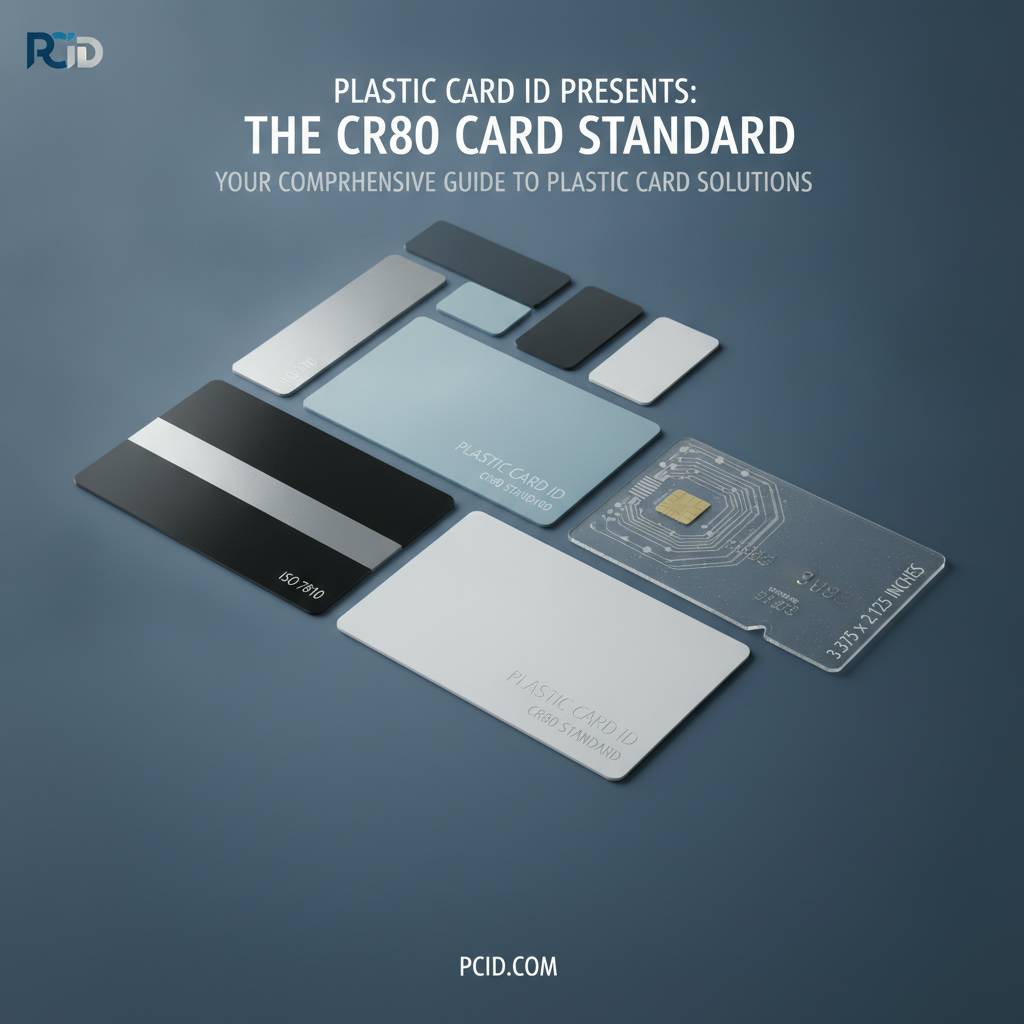
Essentially, yes - with rare exceptions. The CR80 ISO 7810 ID-1 standard is so universally adopted that virtually every card you encounter in daily life in the United States conforms to it. There are slightly thinner versions (20 mil, 25 mil) that maintain the same footprint but differ in thickness, and these will technically fit the same slots but perform differently in card printers and card readers. When in doubt, specify 30 mil CR80 and you will always be working within the standard.
The exceptions are specialty formats like CR79 cards (slightly smaller, used in some proximity card applications), CR100 cards (oversized, used for certain access control systems), and custom die-cut cards in non-rectangular shapes. These are purpose-specific products with defined use cases - they do not replace the CR80 as the default standard.
How Many Cards Should I Order?
This is one of the most frequent questions new card program buyers ask, and the answer depends on two variables: current need and anticipated volume over the next 12 months. Blank CR80 cards are priced on volume tiers, meaning the per-card cost drops significantly as order quantities increase. A business ordering 500 cards pays considerably more per card than one ordering 5,000 - even if the product is identical.
- Small programs (under 500 cards/month): Order in quantities of 500-1,000 to balance cost and storage convenience.
- Mid-size programs (500-2,000 cards/month): Consider 2,500-5,000 card orders to hit better per-unit pricing tiers.
- Large programs (2,000 cards/month): Bulk orders of 10,000 or more deliver the best per-card economics and reduce reorder frequency.
- Seasonal programs: Order 20-30% above projected need to account for spoilage, misprints, and unexpected demand spikes.
- New programs with uncertain volume: Start with a smaller quantity, measure actual consumption, and scale your next order accordingly.
The goal is never to run out mid-program - a gap in card availability creates real operational problems - without over-ordering to the point where cards sit unused for years. CPE can help you calculate the right order quantity based on your program parameters and growth trajectory.
Can I Use CR80 Cards in Any Card Printer?
Yes, with one important caveat: the card printer must be a dedicated card printer, not a standard desktop inkjet or laser printer. CR80 cards are designed for direct-to-card dye-sublimation printers or retransfer printers from manufacturers like Evolis, Zebra, and Fargo. These printers use heat to transfer dye from a ribbon onto the card surface, producing durable, full-color prints that do not smear, fade, or peel under normal handling conditions.
Attempting to run CR80 cards through a standard inkjet or laser printer will at best produce poor-quality output and at worst damage the printer. Card printers are a relatively modest investment - entry-level models start in the range of $300-$600 - and they pay for themselves quickly in programs printing even modest quantities of cards per month.
Why Plastic Card ID Is the Right Partner for Your Card Program
 The difference between a card supplier and a card program partner is significant. A supplier takes your order and ships product. A partner understands what you are trying to accomplish, helps you select the right card stock and printer configuration, anticipates your consumable needs, and stays available as your program evolves. That is the model CPE has operated under for over 25 years - and it is why the company counts more than 100,000 customers across every industry vertical in the United States.
From a single box of 500 blank white CR80 cards for a small business just launching its first loyalty program, to multi-year supply agreements supporting tens of thousands of cards per month for regional healthcare networks, hotel chains, and corporate campus programs - the scale of engagement varies enormously, but the quality of service does not. Every order, regardless of size, receives the same attention and the same product quality.
The Full Product Ecosystem
What sets CPE apart from generic card distributors is the completeness of the product ecosystem. Blank CR80 cards are the core, but a functional card program requires more than blank stock. Printers, ribbons, cleaning kits, card sleeves, card carriers, and mailing services are all available from a single source. This matters practically - it eliminates the vendor fragmentation that creates delays, compatibility headaches, and gaps in supply chain continuity.
The catalog spans blank PVC in white, colored, clear, and frosted finishes; magnetic stripe cards in HiCo and LoCo coercivities; proximity and RFID cards including MIFARE DESFire variants; smart chip cards; casino player cards; hotel key cards; and luxury metal cards in stainless steel, brass, and gold. Whatever your card program requires, it is almost certainly available - and if there is a question about the right fit, the team is equipped to work through it with you.
Serving USA-Based Organizations of Every Size
The entire operation is built around USA-based businesses and organizations. Supply chains, shipping timelines, pricing, and customer support are all calibrated for domestic programs - not routed through international fulfillment networks that add unpredictability to delivery windows. For organizations running time-sensitive card programs, this domestic focus is not a minor detail. It is a meaningful operational advantage.
Whether you are a single-location retailer issuing your first gift cards, a mid-size employer badging a growing workforce, or a national organization managing a distributed membership credential program, CPE operates at your scale. No program is too small to receive expert guidance, and no program is too large to be handled without strain.
Getting Started Is Straightforward
Starting a card program - or upgrading an existing one - does not require a lengthy procurement process. Most buyers can identify the right card type, quantity, and printer configuration in a single conversation. The team at CPE has worked through virtually every card program scenario imaginable over more than 25 years, which means your particular situation is almost certainly not novel territory. The path from first question to first order is typically very short.
The fastest way to get accurate answers is a direct conversation. Reach the team at 800.835.7919 to discuss your program requirements, get quantity recommendations, and confirm compatibility between card stock and printing equipment. There is no sales pressure and no minimum order requirement to qualify for expert advice.
Ready to build a card program that runs reliably and looks genuinely professional? Contact Plastic Card ID today at 800.835.7919 - your strategic card program partner for every scale, every industry, and every application across the United States.
Previous Page