What Is a CR79 Card: Everything You Need to Know
Table of Contents []
- What Is a CR79 Card? Everything You Need to Know Before You Buy
- The CR79 Defined: Dimensions, Thickness, and the Role It Plays
- Why CR79 Cards Are Used: Real Applications Across Industries
- CR79 vs. CR80: Choosing the Right Format for Your Program
- Frequently Asked Questions About CR79 Cards
- The Plastic Card ID Difference: More Than a Card Supplier
- Ready to Start? Contact Plastic Card ID Today
What Is a CR79 Card? Everything You Need to Know Before You Buy
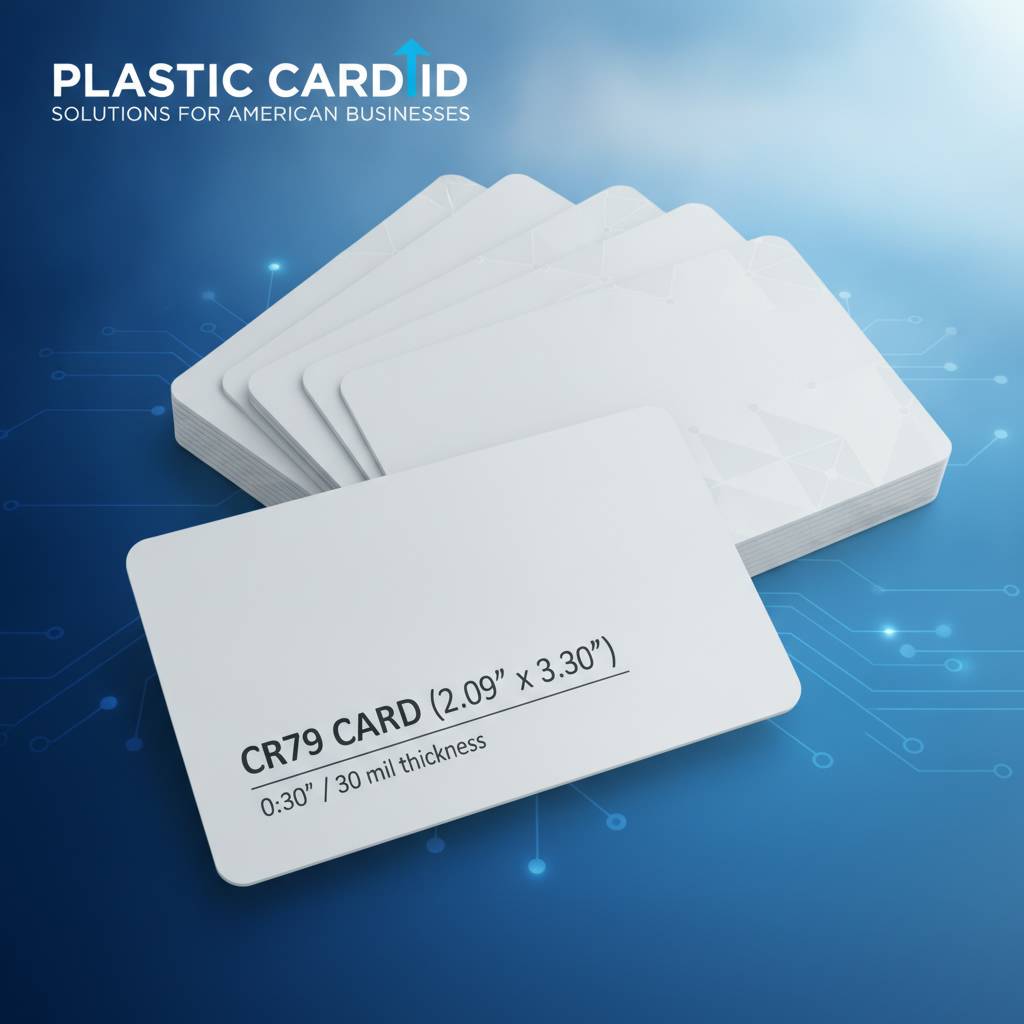 Most people have heard of CR80 cards - the standard credit-card-sized format found in virtually every wallet on the planet. But ask about a CR79 card and you'll get blank stares even from people who work with plastic cards regularly. That's a problem, because the CR79 specification solves a very specific and practical challenge that CR80 cards simply cannot address on their own. If you've ever tried to laminate an ID card or insert a plastic card into a slot designed for a thinner profile, you already know the pain point. CR79 cards exist precisely for that reason.
Plastic Card ID has supplied plastic cards to over 100,000 customers across the United States, and questions about card formats come up constantly. Understanding the difference between CR79 and CR80 isn't just academic trivia - it's the kind of knowledge that determines whether your card program runs smoothly or runs into avoidable problems. So let's break it down completely, from dimensions and thickness to real-world applications and how to decide which format is right for your organization.
| Specification | CR79 Card | CR80 Card |
|---|---|---|
| Width | 3.303 inches (83.9 mm) | 3.370 inches (85.6 mm) |
| Height | 2.051 inches (52.1 mm) | 2.125 inches (54.0 mm) |
| Thickness | 15 mil (0.015 inch) | 30 mil (0.030 inch) |
| Primary Use | Laminate overlay card core | Standalone ID, loyalty, access card |
| ISO Standard | Not ISO 7810 standard | ISO 7810 (ID-1) standard |
The CR79 Defined: Dimensions, Thickness, and the Role It Plays
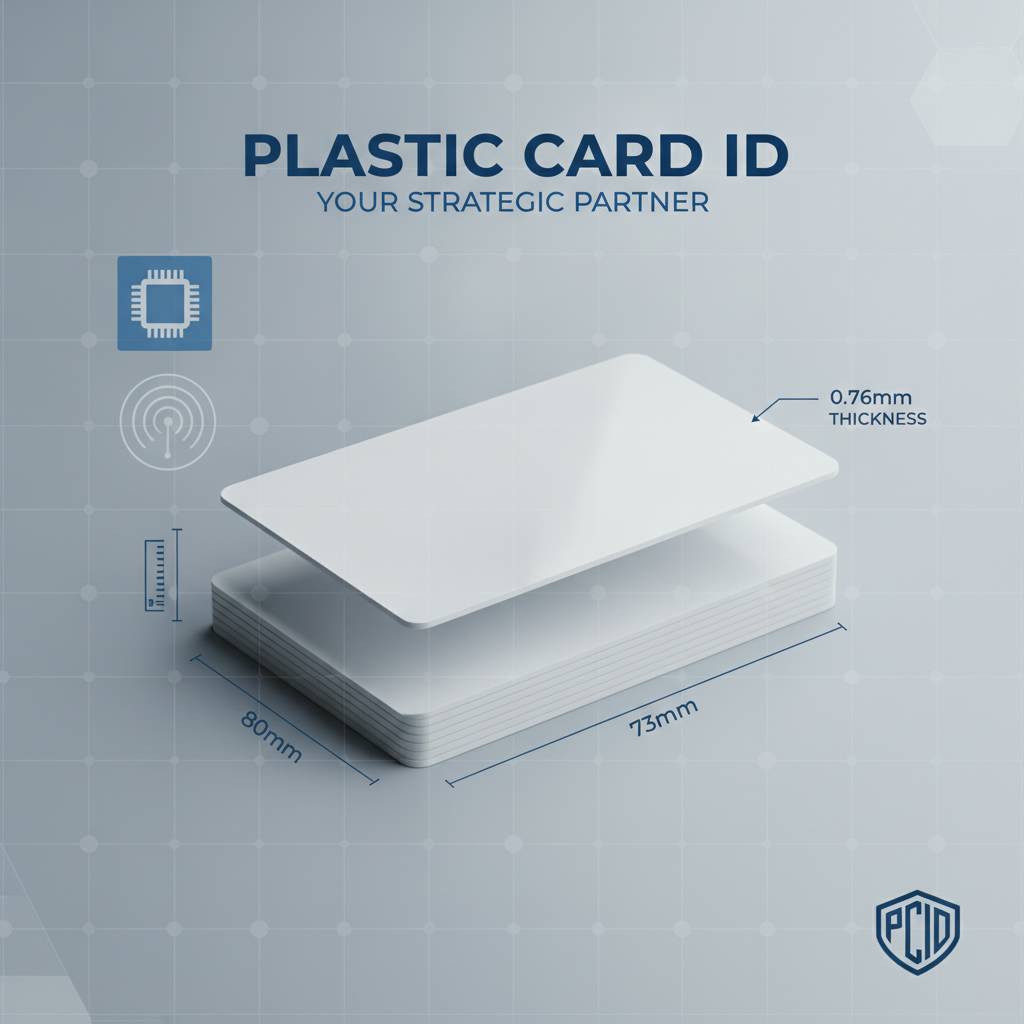 A CR79 card measures 3.303 inches wide by 2.051 inches tall, making it slightly smaller than the universal CR80 format most people are familiar with. But the more critical difference isn't the width or height - it's the thickness. Where a standard CR80 card clocks in at 30 mil (0.030 inches), a CR79 card is only 15 mil thick. That's exactly half. And that deliberate thinness is what makes the CR79 format so uniquely useful in laminating card applications.
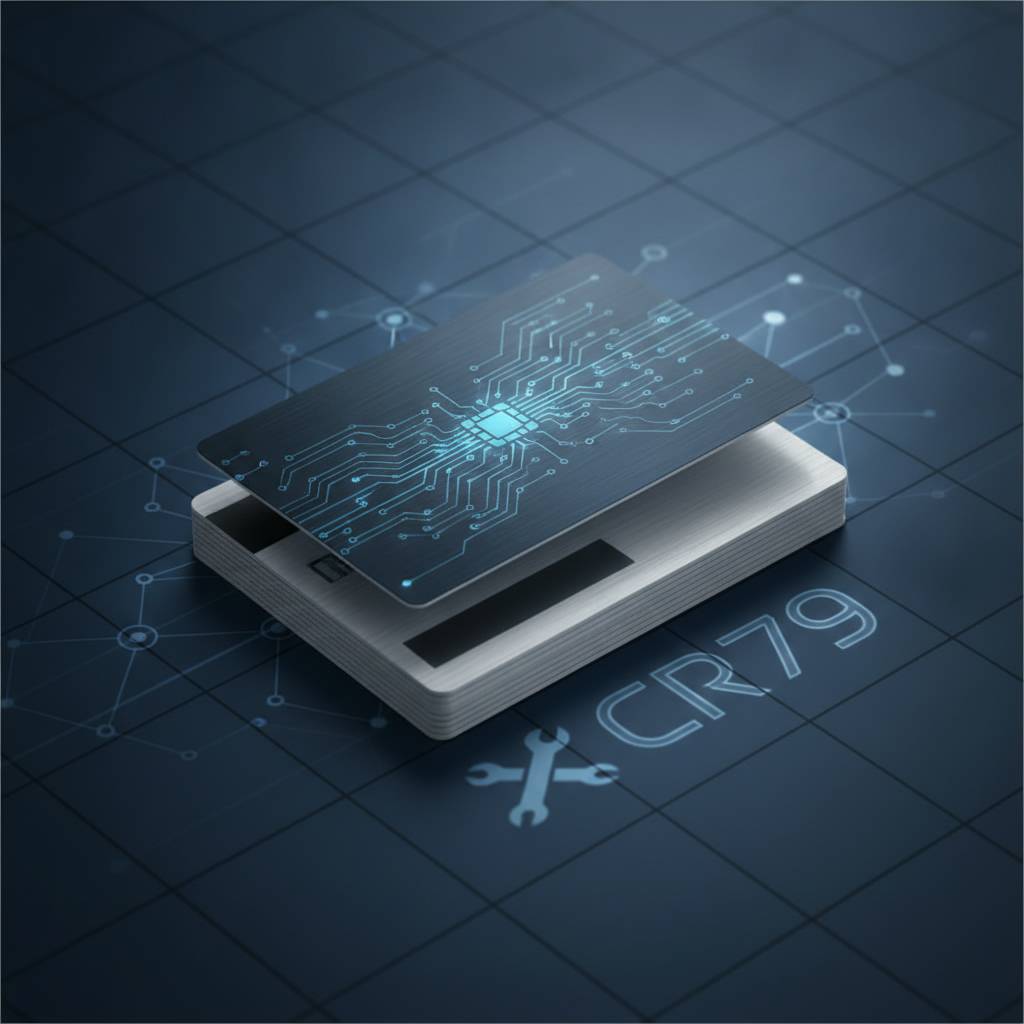
When a CR79 card is used as the core of a laminated ID card, two laminate overlays are applied - one to the front, one to the back. Each laminate overlay adds approximately 7-8 mil of thickness, and together they bring the finished card back to the standard 30 mil profile. The result is a finished laminated card that fits perfectly in standard card readers, badge holders, and wallets, just like any other CR80 card, but with a far more durable, tamper-evident surface layered on top.
Why the Size Difference Matters
The slightly reduced dimensions of the CR79 aren't accidental. When laminate overlays are applied to a card core, the laminate extends slightly beyond the edges of the core card. For a CR79 card, this overhang wraps around to the edge, creating a sealed border all the way around the finished card. This sealed edge is a key security feature, making it significantly harder to peel, tamper with, or delaminate the card compared to a laminate applied to a full-size CR80 card.
For organizations issuing high-security ID cards - government agencies, large enterprises, universities with sensitive access zones - this edge seal provides meaningful protection against credential tampering. The card core is effectively encased, and the printed surface is protected behind a hard, scratch-resistant laminate layer that stands up to daily handling far better than a bare PVC card.
The Lamination Process in Plain Terms
Laminating a CR79 card core involves feeding the printed card through a laminator - either a desktop unit or an integrated panel in a professional card printer - alongside laminate overlay pouches or rolls. The laminate is heat-bonded or pressure-bonded to the surface and edges of the card. The whole process takes seconds per card in modern machines, and the output is a finished ID card with a glossy, matte, or specialty surface depending on the laminate type selected.
Printers from Fargo, Zebra, and Evolis all offer laminating modules that work with CR79 cards, and CPE carries compatible supplies for all of them. This ecosystem approach - printer, ribbon, card core, and laminate all sourced from a single trusted supplier - is how organizations avoid the compatibility headaches that come from mixing and matching components from different vendors.
CR79 Cards and Card Printer Compatibility
Not every card printer on the market supports CR79 card stock. The laminating module on a printer must be configured to handle the thinner card core, and the card feeder must be adjusted to accommodate the slightly smaller dimensions. Before purchasing CR79 cards, it's worth confirming that your printer model and its laminating module are rated for CR79 input. Call 800.835.7919 and the team at Plastic Card ID can help you match card stock to your specific printer model without guesswork.
Organizations that haven't yet chosen a card printer are actually at an advantage here - they can select a system specifically designed around the CR79 workflow from the start, rather than retrofitting an existing setup. Fargo's HDP series, for example, is widely regarded as one of the best platforms for high-definition laminated card production using CR79 cores.
Why CR79 Cards Are Used: Real Applications Across Industries
The CR79 format is not a niche product for edge cases. It appears in some of the most credential-sensitive environments in the country, precisely because the laminated output it produces combines durability, security, and professional finish in a way that a bare PVC card cannot replicate on its own. When the stakes of card fraud or credential tampering are high, CR79-based laminated cards are often the format of choice.

From government-issued identification to corporate access badges and student IDs at large institutions, the CR79 card core quietly underpins a wide range of professional card programs. The person carrying the card rarely knows what format was used - they just know the card looks sharp, holds up well, and works reliably every time it's swiped, scanned, or inserted into a reader.
Government and High-Security Identification
Federal, state, and municipal agencies issuing employee credentials frequently use laminated card systems built on CR79 cores. The tamper-evident sealed edge makes unauthorized duplication or alteration significantly harder, and the laminate layer itself can incorporate security features like holographic overlays, ultraviolet (UV) reactive patterns, and micro-text printing - all invisible under normal lighting but immediately apparent under inspection.
These layered security features are available through specialty laminates that pair directly with CR79 card programs. Organizations in law enforcement, corrections, and regulated industries find that laminated CR79-based credentials carry an inherent credibility that paper or basic PVC cards simply do not project.
Corporate Access and Employee Badges
Large corporations with multiple campuses, restricted zones, or sensitive intellectual property to protect often run laminated badge programs on CR79 cores. The badges can be printed with full-color employee photos, department information, and access tier indicators, then laminated to a professional finish that holds up to the daily grind of being clipped to a lanyard, swiped through readers, and handled constantly by security personnel at entry points.
Adding a magnetic stripe or RFID chip to a CR79-based card is entirely possible - the card core can incorporate these technologies before lamination, resulting in a finished credential that functions as both a visual ID and an electronic access token simultaneously. CPE helps corporate clients spec these multi-functional cards regularly, matching the right card features to the right access control infrastructure already in place.
Student and Campus ID Programs
Universities and school districts operating at scale have long used laminated card systems for student and staff ID programs. The durability of a laminated card is simply unmatched - a well-made laminated student ID can survive four years of backpack life, cafeteria swipes, library scans, and recreational facility check-ins without significant visible wear. That's a meaningful difference compared to a bare PVC card that may show scratching and fading within the first year of heavy use.
Campus programs that combine photo ID with meal plan access, library privileges, and building access especially benefit from the CR79 laminated format. The card can carry a magnetic stripe for legacy readers and an RFID chip for newer contactless systems - all behind a protective laminate that preserves the card's function and appearance throughout its lifespan.
CR79 vs. CR80: Choosing the Right Format for Your Program
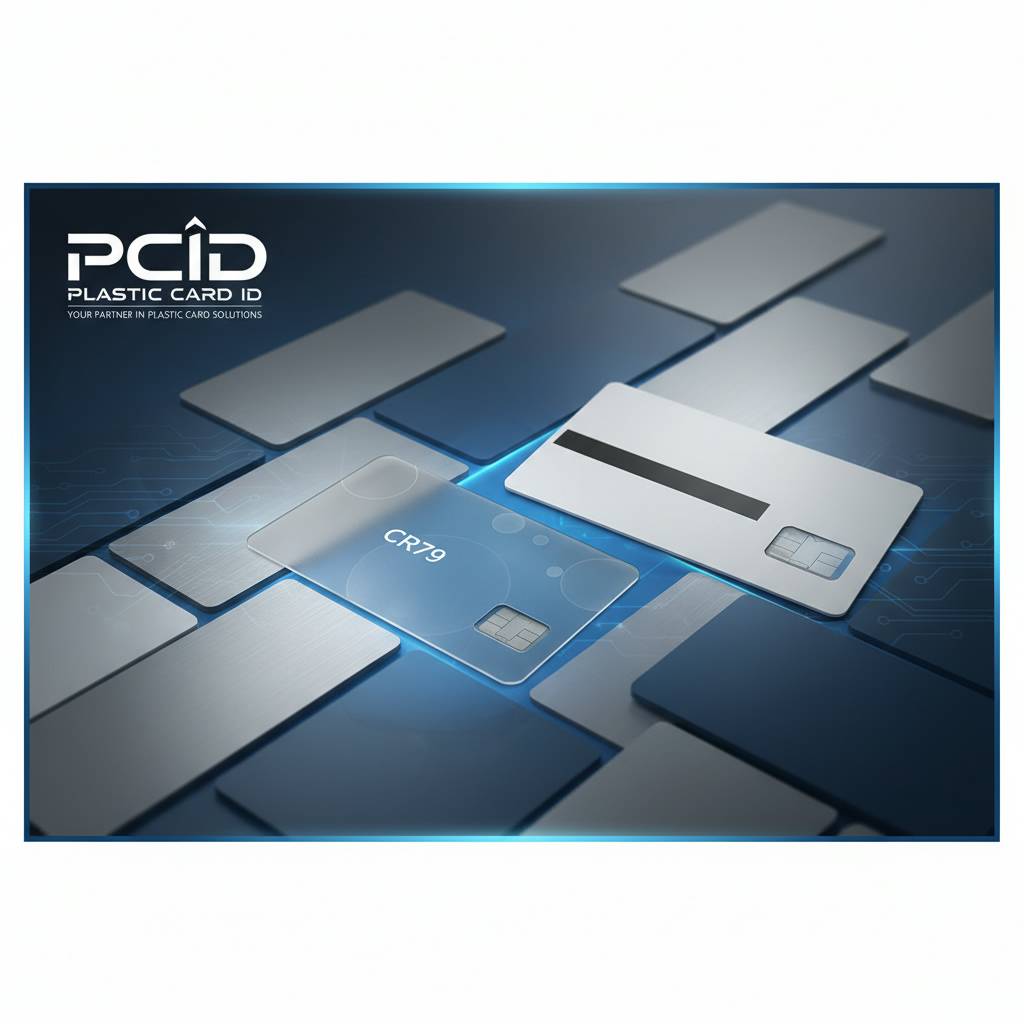 The choice between CR79 and CR80 isn't about which format is superior in some absolute sense - it's about matching the format to what your program actually requires. For most organizations running loyalty programs, membership clubs, gift card programs, or basic access systems, the CR80 is the correct and cost-effective choice. The 30 mil CR80 card is the industry standard for good reason: it works in virtually every card reader and printer on the market and delivers excellent results right out of the printer.
CR79 cards make sense when lamination is part of your production workflow, when your application demands tamper-evident credentials, or when you're operating in an environment where card durability and security are non-negotiable requirements. Choosing the wrong format doesn't just affect card quality - it can create real operational headaches down the line if cards don't fit readers, laminators, or badge holders the way they should.
When CR80 Is the Right Answer
Loyalty programs, gift card programs, event credentials, hotel key cards, library cards, and retail membership cards are almost universally better served by standard CR80 stock. The CR80 card prints beautifully on virtually every desktop card printer, costs less per unit than a CR79 card program that includes laminate overlays, and meets the ISO 7810 standard that ensures compatibility everywhere. For programs measured in speed and volume - think retailers printing hundreds of gift cards for a seasonal promotion - CR80 is the workhorse that gets the job done efficiently.
It's also worth noting that CR80 cards in specialty formats - clear PVC, frosted, colored stock, and pre-printed cards - offer significant design flexibility without the added step of lamination. For organizations where visual design and brand expression are the primary goals, CR80 specialty stock delivers tremendous results at a straightforward price point.
When CR79 Is the Better Choice
The decision to go CR79 comes down to a few clear criteria. If any of these apply to your program, a CR79-based laminated card system deserves serious consideration:
- High-security credentials where tamper evidence is a legal or regulatory requirement
- Long-lifespan cards that need to hold up to years of heavy daily use
- Photo ID programs where the printed image must remain crisp and fade-resistant
- Specialty laminate features like holograms, UV printing, or micro-text for added security
- Government or institutional issuance where credential credibility is paramount
- Combination credentials that include both printed identification and electronic access functions
If you're uncertain which format fits your specific program, that's exactly the kind of question CPE is built to answer. The team at Plastic Card ID has worked with organizations of every size and has navigated every possible combination of card format, printer model, laminate type, and application requirement.
Cost Considerations: CR79 vs. CR80 Programs
CR79-based laminated card programs do cost more per finished card than basic CR80 card programs. The card core, laminate overlays, and compatible printer with laminating module all add to the per-card cost. However, the math changes when you factor in the extended card lifespan and the reduction in credential replacement rates. A laminated card that lasts three to four years replaces multiple bare PVC cards that might need reprinting annually due to scratching, fading, or physical damage.
For high-security or long-duration programs, the total cost of ownership calculation frequently favors the CR79 laminated approach. For high-volume, short-duration programs - seasonal gift cards, event passes, single-use credentials - the CR80 format wins on per-unit economics every time. The right answer is always program-specific, which is why working with an experienced supplier matters as much as it does.
Frequently Asked Questions About CR79 Cards
 Over the course of working with tens of thousands of card program administrators, procurement professionals, and IT managers, certain questions about CR79 cards come up again and again. Here are the most common ones, answered directly.
Can I print directly on a CR79 card?
Yes - and in laminated card programs, you must print on the CR79 card core before lamination is applied. The card core accepts dye-sublimation printing in the same way a CR80 card does. After printing, the laminate overlay is applied over the printed surface, sealing it beneath a protective layer. This sequence - print, then laminate - is what produces the finished credential.
The print quality on a CR79 core is excellent, and because the laminate protects the image after printing, the finished card's colors and detail tend to be more durable than a bare CR80 card that is exposed directly to handling, UV light, and environmental wear. Laminated cards simply look better longer.
Do CR79 cards work with magnetic stripes and RFID?
Absolutely. CR79 card cores are available with high-coercivity (HiCo) and low-coercivity (LoCo) magnetic stripes, as well as embedded RFID chips and proximity card technology. The magnetic stripe or chip is incorporated into the card core, and the laminate is then applied on top. The finished card reads exactly as expected in standard card readers - the laminate layer does not interfere with magnetic stripe reads or contactless RFID communication.
This is one of the key reasons CR79 cards are popular in enterprise access control: the same card can carry a photo ID on the front, a magnetic stripe for legacy reader compatibility, and an RFID chip for modern contactless access points - all protected behind a durable, tamper-evident laminate.
Where do I order CR79 cards and laminate overlays?
800.835.7919 is the direct line to the Plastic Card ID team. CR79 card cores, compatible laminate overlays, and laminating-capable card printers from Evolis, Zebra, and Fargo are all available through CPE. Whether you need a small quantity for a pilot program or large-volume production stock, the catalog covers every quantity tier with consistent quality and competitive pricing. Getting the card core and laminate from the same supplier also eliminates compatibility uncertainty - everything is spec'd to work together.
The Plastic Card ID Difference: More Than a Card Supplier
There's a meaningful distinction between a vendor that ships boxes of cards and a partner that helps you build and run a successful card program. After 25 years and more than 50 million cards shipped to over 100,000 customers across the United States, Plastic Card ID operates firmly in the second category. The experience accumulated over that span of time - across industries, card formats, printer platforms, and program scales - is a genuine competitive advantage for the clients who access it.
Whether your program involves 50 cards a month or tens of thousands, the level of engagement and product expertise you receive is the same. Small programs get the same attention as large enterprise accounts, because the team understands that a 200-card employee badge program is just as mission-critical to the organization running it as a 50,000-card loyalty program is to a national retailer.
A Complete Product Ecosystem
CR79 and CR80 card stock represent just one corner of what CPE offers. The full catalog includes blank PVC cards, magnetic stripe cards in HiCo and LoCo, RFID and proximity cards, smart chip cards, clear and frosted cards, colored card stock, and specialty formats including custom die-cut shapes and luxury metal cards in stainless steel, brass, and gold. Casino player cards, hotel key cards, and MIFARE DESFire smart cards round out the advanced offerings.
Beyond the cards themselves, the product ecosystem includes card printers from Evolis, Zebra, and Fargo, along with printer ribbons, cleaning kits, card carriers, sleeves, and card affixing and mailing services. The ability to source every element of a card program from a single supplier isn't just convenient - it eliminates the vendor-coordination friction that slows down program launches and complicates ongoing operations.
Proven Results Across Card Program Types
The business case for plastic cards is well established. Retailers who switch from paper to plastic gift cards consistently see sales increases in the range of 35-50%. Loyalty programs built on plastic cards that live in wallets outperform paper punch cards in both redemption rates and customer retention metrics. Membership and ID programs that issue plastic cards instead of paper alternatives project legitimacy and permanence that directly influences how members and credential holders perceive the issuing organization.
Physical cards drive measurable outcomes - and the right physical card format, matched to the right program requirements, amplifies those outcomes significantly. That's the insight that 25 years of card program experience produces, and it's what the Plastic Card ID team brings to every client relationship.
Serving USA-Based Businesses and Organizations
Every customer CPE serves is based in the United States. The focus on domestic organizations means shipping is fast, customer service operates in the same time zones, and the team understands the regulatory and operational context that American businesses operate within. From small nonprofits issuing member cards to national retailers running loyalty programs across hundreds of locations, the customer base is as diverse as American business itself.
It's also worth being clear about what Plastic Card ID does not do: financial credit and debit card supply and payment processing are outside the scope of service. The focus is identity, access control, loyalty, membership, marketing, and event card solutions - and within that focused scope, the depth of expertise and product availability is genuinely unmatched.
Ready to Start? Contact Plastic Card ID Today
 Whether you're trying to understand whether CR79 or CR80 is right for your specific program, looking to upgrade your card printer to a laminating-capable system, or ready to place an order for card stock and supplies, Plastic Card ID is the partner that makes it straightforward.
Call 800.835.7919 to speak directly with a card program specialist who can walk through your requirements, recommend the right card format, and ensure your entire card program ecosystem - cards, printers, ribbons, and laminates - is spec'd correctly from day one.
Plastic Card ID has been doing this for over 25 years, serving over 100,000 customers with more than 50 million cards delivered. Put that experience to work for your organization. Reach out today at 800.835.7919 and let's build something that works.