CR80 Card Size Standard Guide: Dimensions and Uses
Table of Contents []
- CR80 Card Size Standard Guide: Everything You Need to Know - Plastic Card ID
- What Exactly Is the CR80 Standard?
- CR80 Card Types and What Each One Does
- CR80 Card Printers: Matching Hardware to the Standard
- Applications Driving Demand for CR80 Cards in the USA
- Buying CR80 Cards Smart: Practical Tips for Program Managers
- Why Plastic Card ID Is the Right Partner for Your CR80 Card Program
CR80 Card Size Standard Guide: Everything You Need to Know - Plastic Card ID
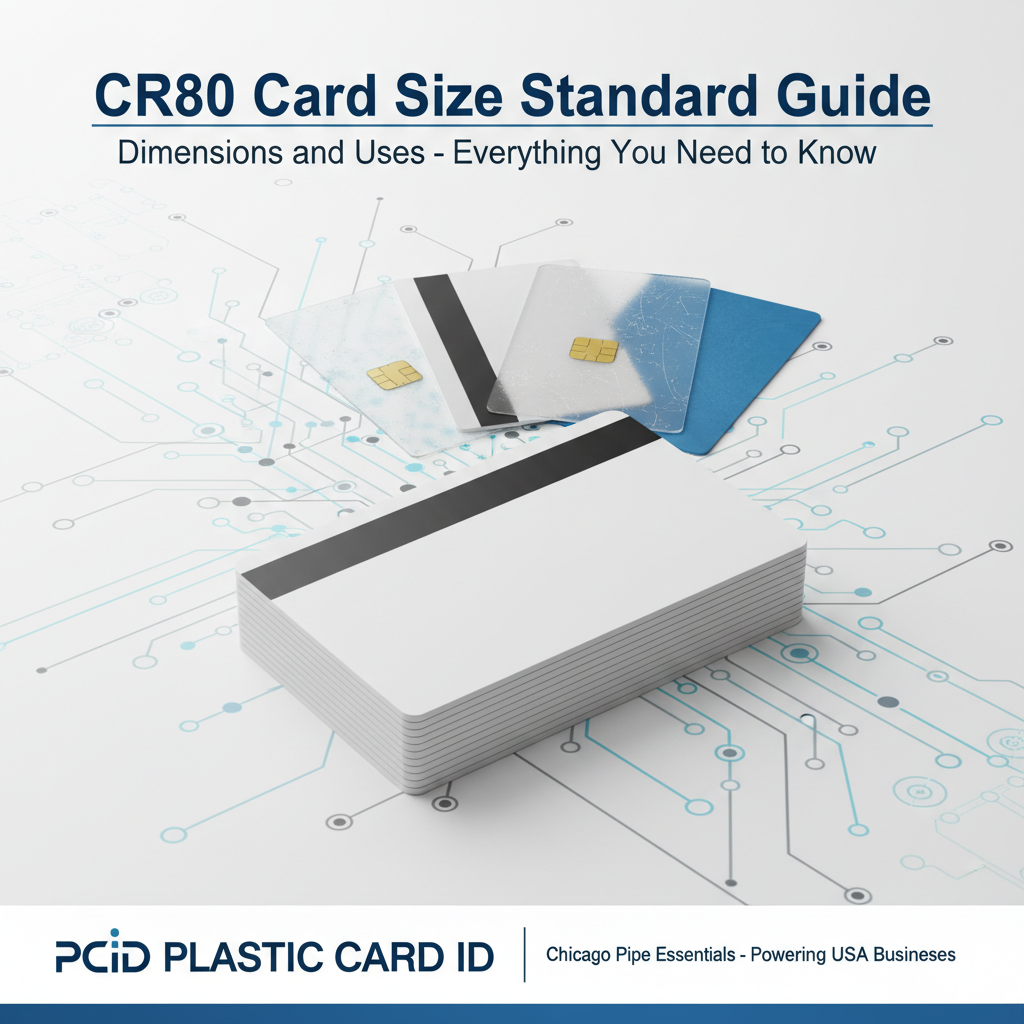 Pull a credit card from your wallet. That rectangle in your hand? That is a CR80. It is so universal that most people have never once stopped to think about the specification behind it - they just know it fits, slides, scans, and works. But for businesses building card programs, understanding exactly what CR80 means and why it became the global standard is the difference between ordering with confidence and second-guessing every decision.
This guide breaks down the CR80 card size standard in full - dimensions, thickness, material, applications, and how to match the right card to the right program. Whether you are printing employee badges in-house or sourcing thousands of loyalty cards, the CR80 specification is your starting point.
| Specification | CR80 Value |
|---|---|
| Width | 3.375 inches (85.6 mm) |
| Height | 2.125 inches (54 mm) |
| Thickness | 0.030 inches (30 mil / 0.76 mm) |
| ISO Standard | ISO/IEC 7810 ID-1 |
| Corner Radius | 0.125 inches (3.18 mm) |
| Material | PVC (standard) or composite |
| Typical Use | ID, loyalty, access, membership, event |
What Exactly Is the CR80 Standard?
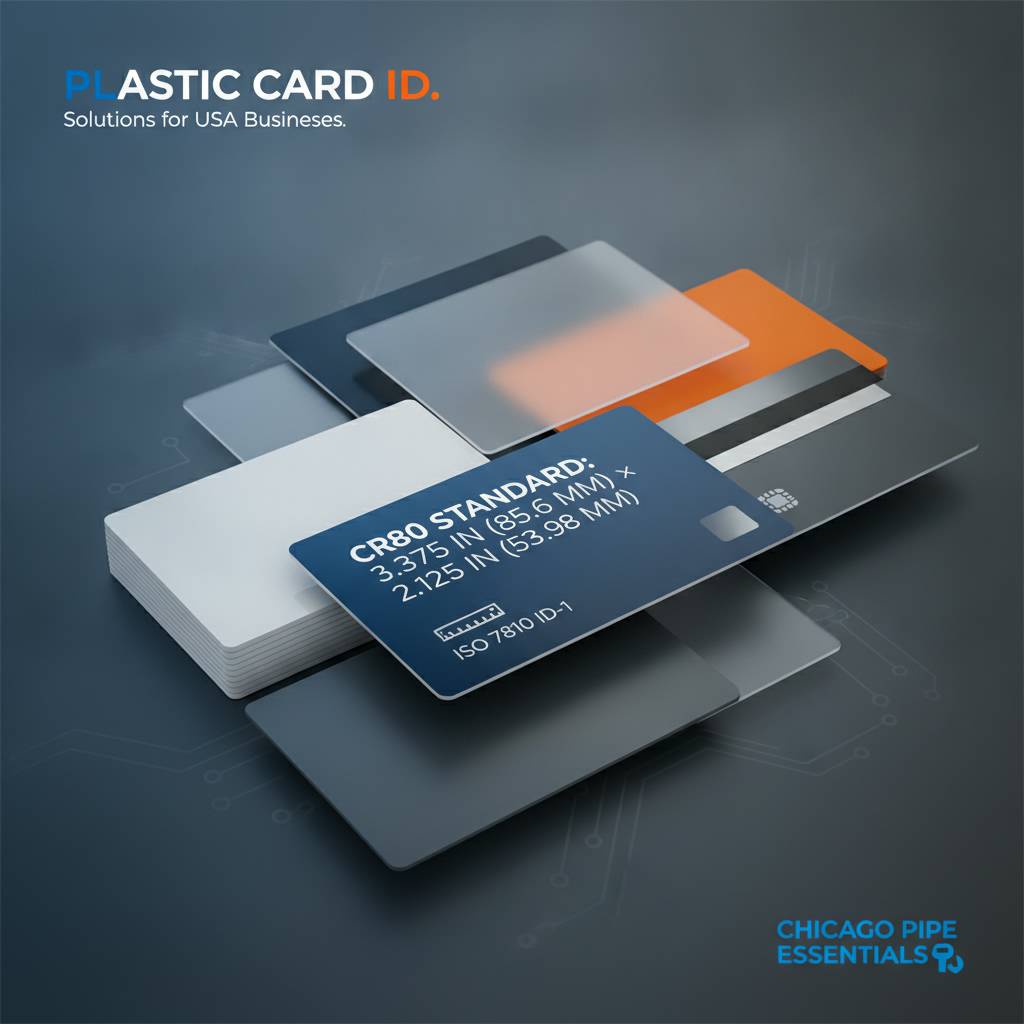
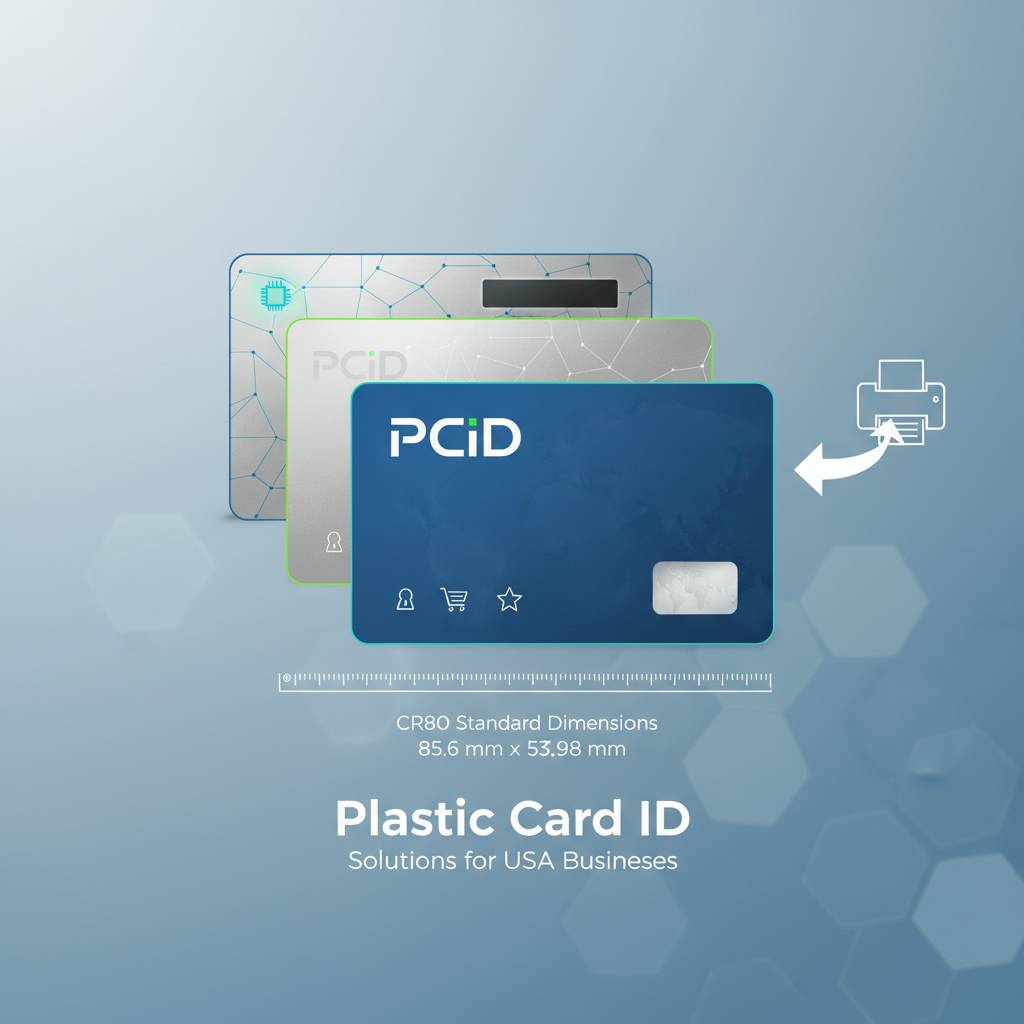 CR80 is the formal designation for the most common plastic card format in the world. Governed by ISO/IEC 7810, specifically the ID-1 category, the CR80 card measures exactly 3.375 inches wide by 2.125 inches tall with a thickness of 30 mil - that is 0.030 inches. The corner radius is standardized at 0.125 inches, and every compliant card printer, card reader, and card holder on the market is engineered around these exact dimensions.
The CR in CR80 stands for "credit card," a nod to the format's origin. But today the applications stretch far beyond financial transactions. Employee ID cards, hotel key cards, loyalty cards, membership credentials, event badges, and access control tokens - almost all of them live in the CR80 format. When you choose CR80, you choose compatibility with virtually every piece of card-related equipment ever manufactured.
The ISO 7810 ID-1 Framework
ISO/IEC 7810 is the international standard that defines physical characteristics for identification cards. Within that standard, ID-1 is the designation for the wallet-sized format - the CR80. This is not a loose guideline. It is a precise, testable specification that governs dimensional tolerances, flatness, and surface quality to ensure global interoperability.
Why does this matter to a business ordering cards? Because it guarantees that a card produced to CR80 spec by any compliant manufacturer will work in any CR80-compatible reader, printer, or holder. There is no guesswork. The specification exists precisely so that you never have to wonder whether your cards will fit.
Thickness: The 30 Mil Benchmark
Thirty mil - 0.030 inches or 0.76 mm - is the standard CR80 thickness. At this thickness, PVC cards strike the ideal balance between rigidity and workability. They resist bending, survive daily pocket and wallet life, and feed reliably through card printers without jamming. Thinner cards warp; thicker cards can bind in readers. Thirty mil is the sweet spot that decades of real-world use have validated.
Some specialty applications call for slightly different thicknesses. Composite cards - used in higher-security smart chip applications - may vary slightly. Hotel key cards sometimes run at 0.028 inches to suit specific lock system feeders. But for the vast majority of card programs, 30 mil CR80 PVC is the default, the dependable, the industry workhorse that CPE has been supplying since long before most competitors existed.
Why Standard Dimensions Protect Your Investment
When every card in your program conforms to the same dimensional standard, everything downstream becomes easier. Card holders, badge reels, lanyards, sleeves, and mailer carriers are all sized for CR80. Card printers from Evolis, Zebra, Fargo - their hoppers, rollers, and output trays are calibrated for CR80. Buying outside the standard introduces friction at every touchpoint in your card program.
The economic argument is equally strong. Because CR80 is universal, the supply chain is deep. More suppliers compete, prices stay competitive, and availability stays high. Specialty formats cost more and take longer to source. For most businesses, the smart move is to work within the standard unless a specific application absolutely demands otherwise.
CR80 Card Types and What Each One Does
Not every CR80 card is the same - the format is a container, and what goes inside that container varies enormously. A blank white PVC card and a MIFARE DESFire smart card are both CR80, but they serve completely different roles. Understanding the functional layers available within the standard helps you build a card program that actually performs the job you need it to do.
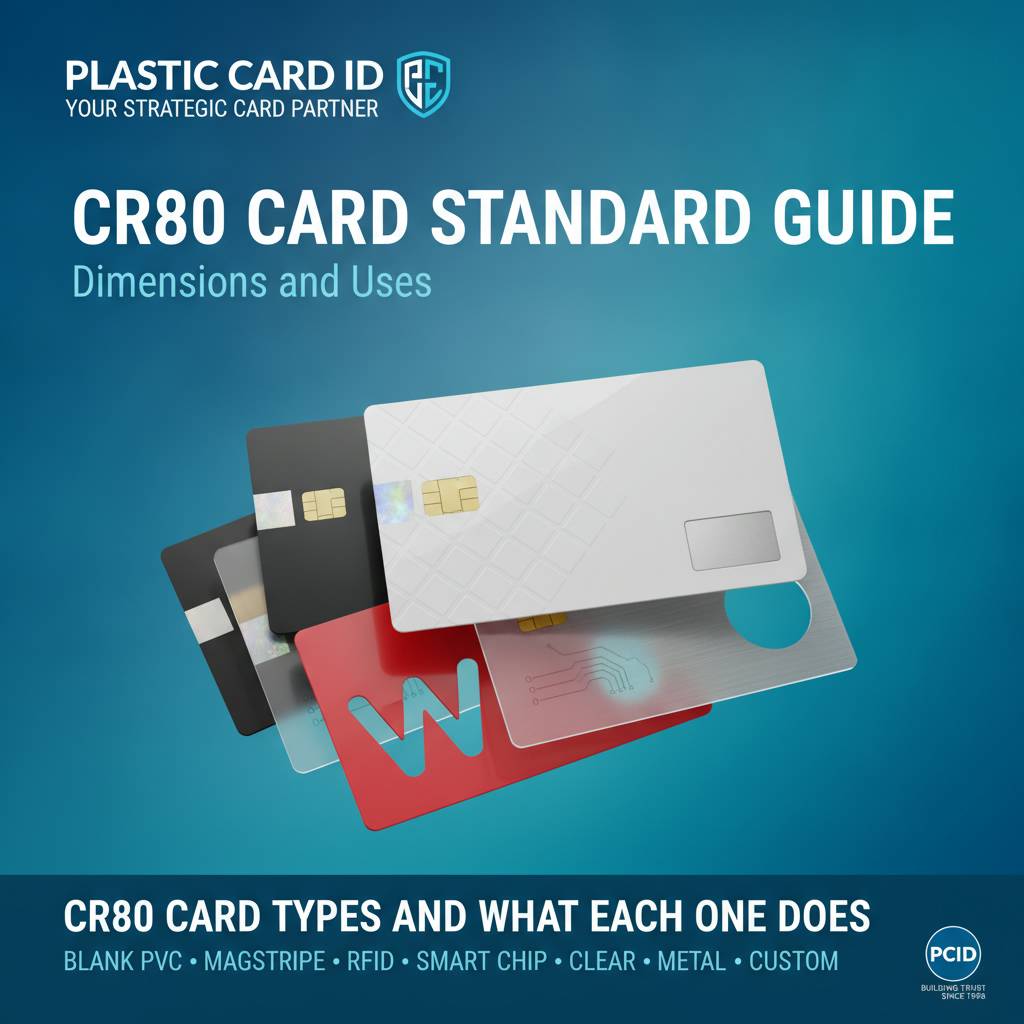
CPE maintains an extensive catalog of CR80 card types, from the simplest blank white stock to RFID-enabled smart cards with contactless technology. Matching the right card type to your program's requirements - not over-engineering and not under-speccing - is one of the strategic contributions that separates a knowledgeable supplier from a box-shifter.
Blank PVC CR80 Cards: The In-House Printing Foundation
Blank white CR80 cards are the foundation of any in-house card printing program. You purchase them by the box - 500 cards is a common unit - load them into your printer, and produce professional-looking cards on demand. Total design control, no minimum order artwork constraints, and lower per-card cost at scale are the three reasons organizations gravitate toward blank stock and in-house printing.
The applications are almost unlimited. Employee ID badges, visitor passes, event credentials, student IDs, membership cards - all of these start as a blank CR80 and become what you print onto them. Organizations that need to update card designs frequently, onboard employees unpredictably, or produce small batches on short notice benefit most from keeping blank stock on hand.
- White gloss CR80: the most common substrate for dye-sublimation printing
- White matte CR80: reduces glare, preferred for photo ID cards
- Colored blank stock: pre-colored PVC for rapid visual color-coding without printing
- Clear and frosted CR80: specialty aesthetic options for premium applications
- Composite PVC/PET cards: enhanced durability for high-security environments
Magnetic Stripe CR80 Cards: HiCo vs. LoCo
Add a magnetic stripe to a blank CR80 and you have a card that can store and transmit encoded data. Magnetic stripe CR80 cards are the backbone of loyalty programs, gift card systems, hotel key programs, and time-and-attendance applications. The stripe is read by swiping through a magnetic stripe reader - the same mechanism you have used at retail counters for decades.
The critical distinction is coercivity - the magnetic field strength of the stripe. HiCo (high coercivity, 2750 Oe) stripes resist demagnetization and are preferred for cards that must survive years of use near other magnetic sources. LoCo (low coercivity, 300 Oe) stripes are easier to encode and re-encode, making them cost-effective for hotel keys and short-lifespan applications. Choosing the wrong coercivity for your application leads to read errors and frustrated cardholders.
RFID and Proximity CR80 Cards: Contactless Access
RFID and proximity cards embed an antenna and microchip within the CR80 body. No swipe required - the card communicates wirelessly with a reader when brought within range. This contactless convenience is why access control systems overwhelmingly favor proximity and RFID cards over contact-based alternatives in modern installations.
Proximity cards (125 kHz) are the workhorse of physical access control. Smart RFID cards (13.56 MHz) - including MIFARE Classic, MIFARE DESFire, and other ISO 14443 standards - add encryption and multi-application capability. Casino player cards, secure facility access credentials, and multi-use campus cards all live in this space. The external dimensions remain standard CR80; the intelligence lives inside.
CR80 Card Printers: Matching Hardware to the Standard
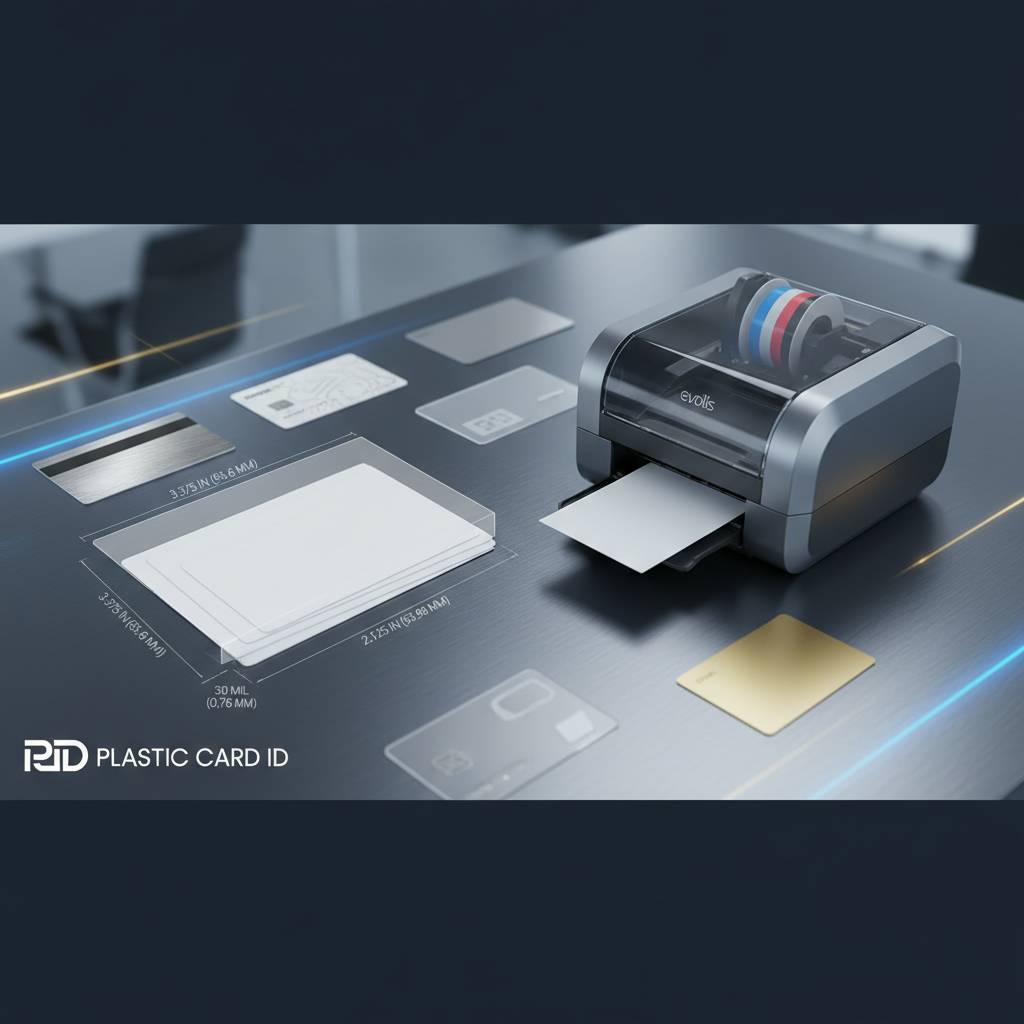 A CR80 card is only as useful as the printer that personalizes it. Card printers are precision instruments engineered around the CR80 specification - their feed mechanisms, ribbon systems, and encoding modules are calibrated for cards that measure exactly 3.375 by 2.125 inches at 30 mil. Using off-spec cards in a standard CR80 printer is a fast path to jams, misfeeds, and costly service calls.
The good news is that the right printer for your application is almost certainly available, and the decision framework is simpler than it first appears. Volume, encoding requirements, print quality needs, and budget are the four variables that determine which printer belongs in your card room.
Evolis, Zebra, and Fargo: The Three Pillars
Evolis, Zebra, and Fargo (HID) represent the three dominant families of CR80 card printers in the professional market. Each brand has its strengths. Evolis is celebrated for compact footprint and ease of use - the Primacy and Zenius lines are popular in small-to-medium card programs. Zebra's ZC series offers robust encoding options and high-volume throughput. Fargo's HDP series uses retransfer printing technology for edge-to-edge print quality on smart cards and specialty substrates.
All three brands accept standard CR80 cards - blank PVC, magnetic stripe, RFID, and smart chip - as long as the card matches the printer's specified thickness range. Ribbons and supplies from CPE cover all three platforms, meaning your printer support needs and your card supply needs resolve through a single relationship.
Single-Sided vs. Dual-Sided Printing
Single-sided printers print one face of the CR80 card per pass - economical, fast, and sufficient for ID cards where the back is left blank or pre-printed. Dual-sided printers flip the card automatically and print both faces, producing a fully finished card in one pass. Employee badges, membership cards, and loyalty cards almost always benefit from dual-sided printing - the back is valuable real estate for contact information, barcodes, or terms and conditions.
The cost difference between single and dual-sided printers is modest relative to the value of a finished two-sided card. For any program producing more than 200 cards per month, a dual-sided printer usually pays for itself quickly through reduced manual handling and a more professional finished product.
Choosing the Right Printer for Your Volume
Entry-level card printers handle 100-500 cards per month comfortably. Mid-range printers with higher-capacity hoppers and faster print speeds scale to 1,000-5,000 cards monthly. High-volume production printers - including models with integrated lamination - are built for tens of thousands of cards per month. Mismatching printer capacity to volume is one of the most common and most avoidable mistakes in card program setup.
- Under 500 cards/month: entry-level single or dual-sided desktop printer
- 500-2,000 cards/month: mid-range printer with larger hopper capacity
- 2,000-10,000 cards/month: high-throughput printer with ribbon-saving features
- Over 10,000 cards/month: production-grade printer or outsourced fulfillment
Applications Driving Demand for CR80 Cards in the USA
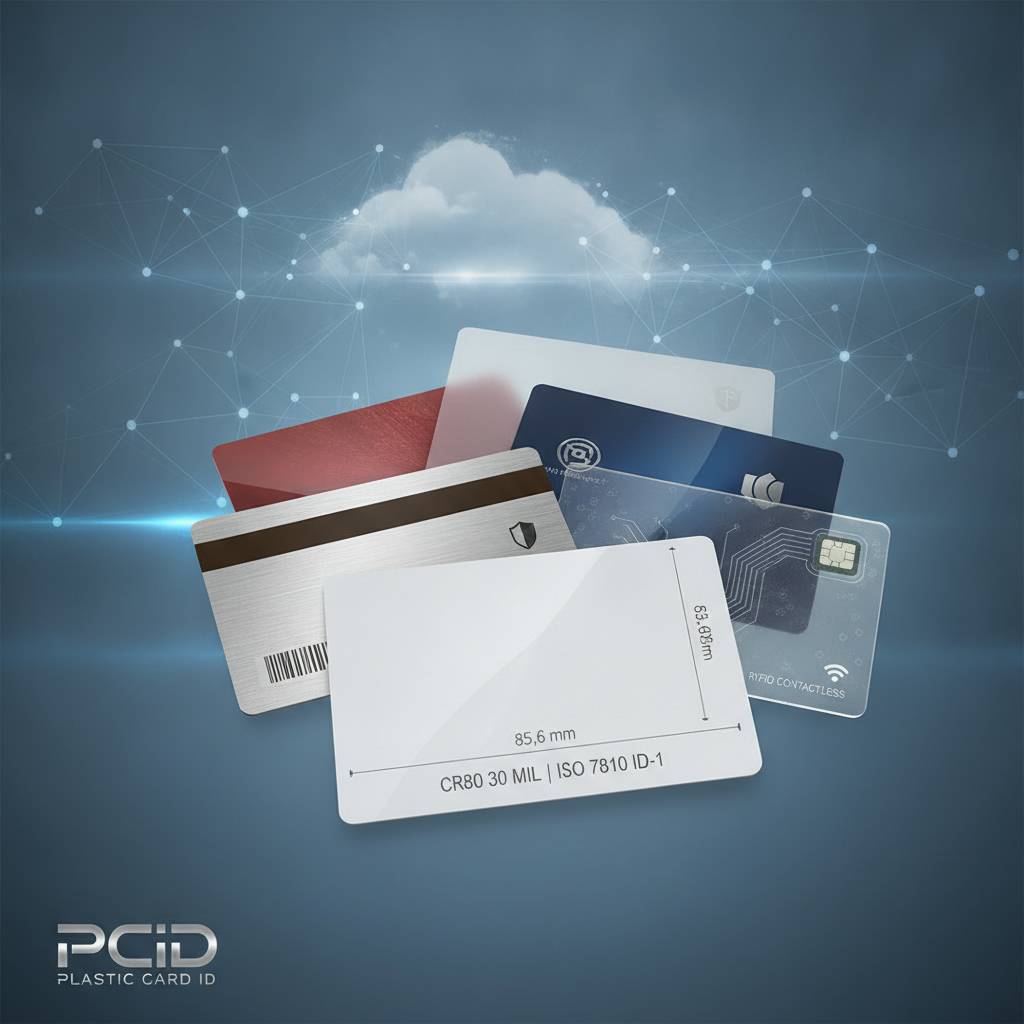 Walk through any American business and you will find CR80 cards at work - in lanyards around necks, tapped against readers by doorways, swiped at POS terminals, tucked into wallets alongside loyalty program cards. The CR80 format is the operational currency of identity, access, and engagement programs across virtually every industry vertical in the country.
Understanding which application category your program falls into helps you select the right card type, encoding technology, and printer configuration. The differences between a retail gift card program and a corporate access control system are significant, even though both use CR80 cards.
Employee ID and Access Control
Employee ID cards and access control credentials are the most common CR80 application in enterprise settings. A CR80 PVC card printed with a photo, name, title, and department - possibly encoded with a proximity chip for door access - is the standard employee credential across corporate America. The physical card signals legitimacy, belonging, and authorization in a way that a digital credential on a phone simply cannot replicate in all environments.
For organizations managing access across multiple buildings or security zones, smart RFID cards with MIFARE DESFire encryption add a layer of security that basic proximity cards do not provide. The card still looks like a standard CR80 - the difference is entirely in what the embedded technology can and cannot do when presented to a reader.
Loyalty, Gift, and Membership Cards
The business case for plastic CR80 loyalty and gift cards is well-documented. Retailers who upgrade from paper punch cards or paper gift certificates to plastic CR80 cards consistently report measurable increases in return visits and average transaction values. A card that lives in a wallet is a card that gets used - and it carries your brand into every transaction the cardholder makes, whether or not they use it that day.
Gift card programs on CR80 magnetic stripe stock work with virtually every modern POS system. Loyalty programs encoding customer IDs on the stripe or in an RFID chip enable data collection that paper programs cannot support. For membership organizations - gyms, clubs, professional associations - the plastic CR80 card signals permanence and value that a paper card or a digital membership simply does not project.
Event, Casino, and Hospitality Applications
Events, casinos, and hotels have specific CR80 card needs that go beyond standard PVC stock. Hotel key cards run on proximity or RFID technology encoded to a specific room and stay duration. Casino player cards track gaming activity and rewards points across a property - they are often printed on premium substrates with high-resolution graphics. Event credentials at large conferences or trade shows need to work at check-in kiosks, session scanners, and badge holders - the CR80 standard ensures compatibility across all of these touchpoints simultaneously.
Specialty options like clear plastic CR80 cards, custom die-cut shapes, and even luxury metal cards in stainless steel, brass, or gold serve premium hospitality and VIP programs where the card itself is part of the brand experience. The physical object communicates status. That is a function no paper or digital alternative can perform.
Buying CR80 Cards Smart: Practical Tips for Program Managers
Buying cards without a plan is how programs end up with the wrong stock, the wrong encoding, or not enough inventory when demand spikes. A few practical considerations before you place an order can save significant money and prevent operational headaches that interrupt your card program at the worst possible moment.
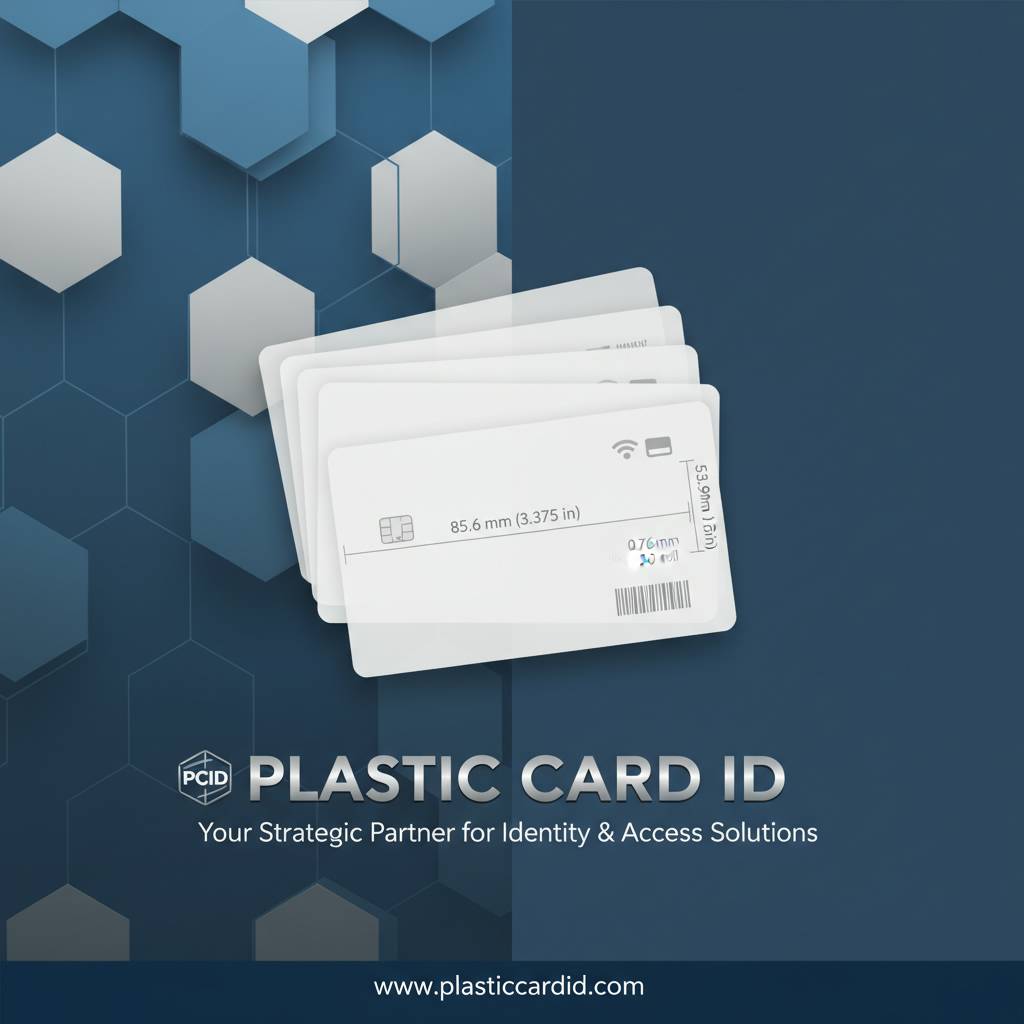
Program managers who work with CPE benefit from the institutional knowledge built over 25 years and more than 50 million cards. The guidance below reflects the most common questions and mistakes encountered across programs of every size, from a 50-card-per-month membership organization to a national retailer processing tens of thousands of gift cards.
Calculating Your CR80 Card Inventory Needs
Start with your monthly issuance volume, add a 15-20% buffer for reprints and replacements, then multiply by three to establish a 90-day inventory position. Running out of cards mid-program creates gaps - new employees without badges, members without credentials, gift card promotions without product. Maintaining a 60-90 day inventory cushion is the industry standard for well-managed card programs.
Bulk purchasing typically reduces per-card cost meaningfully. The break points vary by card type - blank PVC stock rewards volume most aggressively, while smart chip cards have higher per-unit floors but still reward larger orders. Understanding your volume position before ordering helps you hit the right price tier rather than paying premium rates for a quantity you will consume in 30 days anyway.
Matching Card Spec to Application - and Getting It Right the First Time
The most expensive mistake in card procurement is ordering the wrong card type for the application. Ordering LoCo magnetic stripe cards for a loyalty program that sits in wallets near smartphones - which generate magnetic fields - leads to read failures and frustrated customers. Ordering proximity cards without confirming reader frequency compatibility leads to access systems that simply do not work.
When in doubt, verify the spec requirements of your reader, POS terminal, or access control panel before ordering. CPE technical support can help you match card spec to application - that is exactly the kind of consultation that turns a potential ordering error into a smooth program launch. Call 800.835.7919 before you commit to a large order if you have any uncertainty about card type selection.
Ribbons, Supplies, and the Total Cost of Card Production
The printer is a one-time purchase; ribbons and supplies are an ongoing operational cost. A YMCKO ribbon (yellow, magenta, cyan, black, overlay) for a typical desktop card printer yields 200-300 full-color prints. Ribbon cost per card varies by printer model and ribbon type, but budgeting $0.20-$0.60 per card for ribbon consumption is a reasonable working assumption for full-color, single-sided printing on most desktop printers.
Cleaning kits are not optional - they are maintenance. Dirty rollers produce banding, streaking, and premature printhead failure. Regular cleaning at the manufacturer-recommended interval extends printhead life significantly, and printhead replacement on professional card printers runs $75-$200 or more. Card carriers and sleeves protect finished cards during distribution and in use, reducing replacement card frequency. All of these supplies are available through a single source, keeping your procurement simple.
Why Plastic Card ID Is the Right Partner for Your CR80 Card Program
 There is a meaningful difference between a supplier who ships you a box of cards and a partner who helps you build a card program that performs. Plastic Card ID has been that partner for over 100,000 customers across the United States - organizations ranging from single-location small businesses to multi-site national enterprises with complex card program requirements.
The catalog spans every CR80 card type you will ever need: blank PVC, magnetic stripe (HiCo and LoCo), proximity and RFID, smart chip, clear, frosted, colored stock, and specialty formats. Card printers from Evolis, Zebra, and Fargo. Ribbons, cleaning kits, card carriers, and mailing services. Everything a card program needs, from the card itself to the point of delivery, is available through one relationship with one supplier who knows your program.
Scale From 50 Cards to Tens of Thousands
Not every card program is a national retail rollout. A community gym issuing 50 membership cards per month has the same right to quality cards and reliable service as a hotel group ordering 20,000 key cards per quarter. Plastic Card ID serves both - and every program size in between - with the same commitment to card quality, order accuracy, and responsive support that has driven customer retention across 25 years of operation.
As programs grow, CPE grows with them. The supplier relationship that starts with blank PVC stock and a desktop printer can scale into magnetic stripe encoding, RFID integration, and fulfillment services as the program matures. That continuity - not having to re-qualify a new supplier every time your needs change - has real operational and financial value.
Expert Guidance on Every Order
Fifty million cards is a lot of institutional knowledge. The questions you have about coercivity, chip compatibility, lamination, encoding, and printer selection are questions CPE has answered thousands of times for customers in situations similar to yours. That experience is available to you - not buried in a chatbot or hidden behind a support queue, but accessible when you need it to make the right buying decision.
Whether you are setting up your first in-house card printing program or optimizing a program that has been running for years, working with a supplier who understands the CR80 standard at every level - from ISO 7810 dimensional spec to practical application matching - makes every stage of the process faster, less expensive, and less stressful. CPE is that supplier for businesses across the United States.
One-Stop Sourcing for the Entire Card Program
Sourcing cards from one vendor, printers from another, ribbons from a third, and card carriers from a fourth is operationally inefficient and creates accountability gaps when problems arise. Consolidating your card program sourcing through Plastic Card ID eliminates that friction. Cards, printers, ribbons, cleaning kits, card carriers, sleeves, and card affixing and mailing services - all of it from one supplier, one account, one point of contact.
The downstream value of that consolidation compounds over time. Faster ordering, consistent quality standards across your card supply chain, and a supplier relationship deep enough that your program's history and requirements are understood without re-explaining them on every call. That is what a strategic partnership in card supply looks like.
Ready to build or upgrade your CR80 card program? Plastic Card ID is standing by with expert guidance, comprehensive inventory, and 25 years of experience serving USA businesses.
Call 800.835.7919 today and let Plastic Card ID help you get the right cards, the right printers, and the right supplies for your program - ordered once, delivered right, and backed by a partner who has been doing this longer than most competitors have existed.
Previous Page