Blank Plastic Cards for Membership Programs: Top Options
Table of Contents []
- Why Plastic Card ID Is the Partner Your Membership Program Has Been Missing
- The Full Catalog of Blank Plastic Cards for Membership Programs
- Buyer's Guide: Choosing the Right Blank Card for Your Program
- How Membership Card Programs Drive Real Business Results
- Value-Added Services That Complete Your Card Program
- Frequently Asked Questions About Blank Plastic Cards for Membership Programs
- Get Started With Plastic Card ID Today
Why Plastic Card ID Is the Partner Your Membership Program Has Been Missing
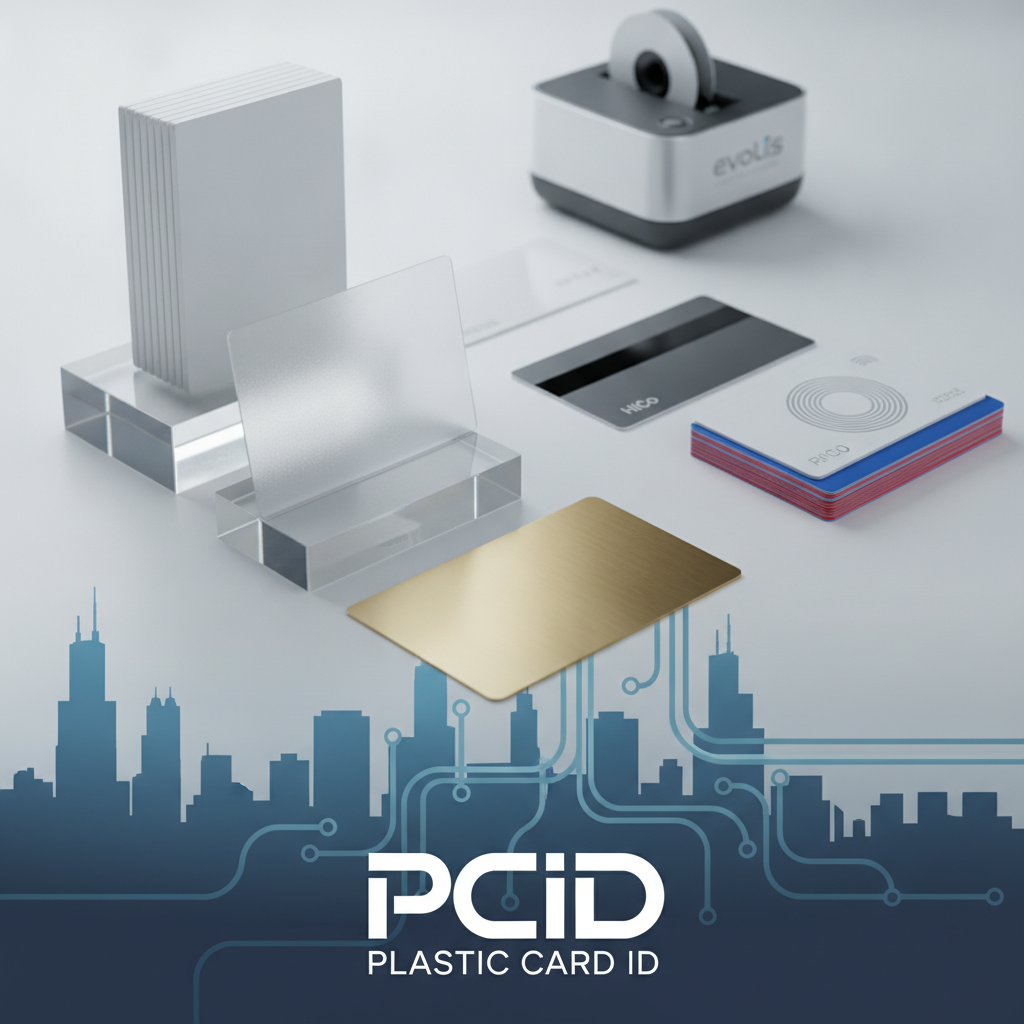 Most businesses discover the problem only after the damage is done - members flashing flimsy paper cards that tear, fade, or get tossed in a junk drawer within weeks. The moment you hand someone a crisp, professional plastic membership card, the entire perception of your organization shifts. It signals permanence. It signals that you take your program seriously, and so should they.
Plastic Card ID has spent over 25 years solving exactly this problem for businesses of every size across the United States. With more than 100,000 customers served and over 50 million cards shipped, the track record speaks for itself. Whether you are running a boutique gym with 200 members or a regional retail chain managing tens of thousands of loyalty accounts, the right blank plastic card is the foundation your program needs.
This page is your complete guide to blank plastic cards for membership programs - what to look for, how they work, what they cost, and why sourcing them from a knowledgeable strategic partner changes everything about how your card program performs long-term.
The Real Cost of Cheap or Paper-Based Membership Cards
Paper punch cards have a nostalgic charm, but they are quietly costing you members. Studies and real-world retailer data show that businesses switching from paper to plastic see loyalty program engagement increase dramatically - not because people are lazy, but because a card that lives in a wallet is a constant, passive reminder of your brand.
The math is simple. If a plastic card program costs a fraction of a cent more per card than paper but keeps members engaged months longer, the return on that investment is not marginal. It is transformational. Retailers switching from paper to plastic gift and loyalty cards have documented sales increases of 35-50%. That is not a rounding error - that is a business case.
What Makes a Blank CR80 Card the Smart Starting Point
The CR80 standard - 3.375 inches by 2.125 inches, 30 mil thick - is the same size as a credit card. It fits perfectly in every wallet, every cardholder, every badge clip. This is not a coincidence; it is the ISO 7810 standard, the international benchmark for ID-1 identification documents. When you start with a CR80 blank card, you are building on a foundation that fits seamlessly into your members' lives.
Blank cards give your organization total control over design, timing, and encoding. Print exactly what you need, when you need it, without waiting on minimum order runs for custom pre-printed stock. For organizations with evolving branding, seasonal promotions, or tiered membership levels, this flexibility is not a luxury - it is an operational advantage.
From Blank Canvas to Fully Functional Membership Card
A blank PVC card is a starting point, not a finished product. What transforms it into a membership card is what you add: printed graphics and member information, a magnetic stripe encoded with account data, an RFID chip for contactless access, or simply a clean, scannable barcode. The blank card is the substrate - everything built on top defines its function.
CPE supplies the full ecosystem to make this happen in-house. Card printers from industry leaders like Evolis, Zebra, and Fargo paired with the right ribbon and blank card stock let organizations print professional, durable membership cards on demand. No third-party print runs, no lead times, no minimum batch requirements holding your program hostage.
| Card Type | Best Use Case | Encoding Option |
|---|---|---|
| Blank PVC CR80 | General membership, ID badges | Print-only or printable |
| Magnetic Stripe (HiCo) | Loyalty, access, point-of-sale | Magnetic encoding |
| Proximity / RFID Card | Access control, contactless ID | RFID / contactless chip |
| Smart Chip Card | Secure member credentials | Embedded IC chip |
| Clear / Frosted PVC | Premium membership, specialty branding | Print-only or printable |
The Full Catalog of Blank Plastic Cards for Membership Programs
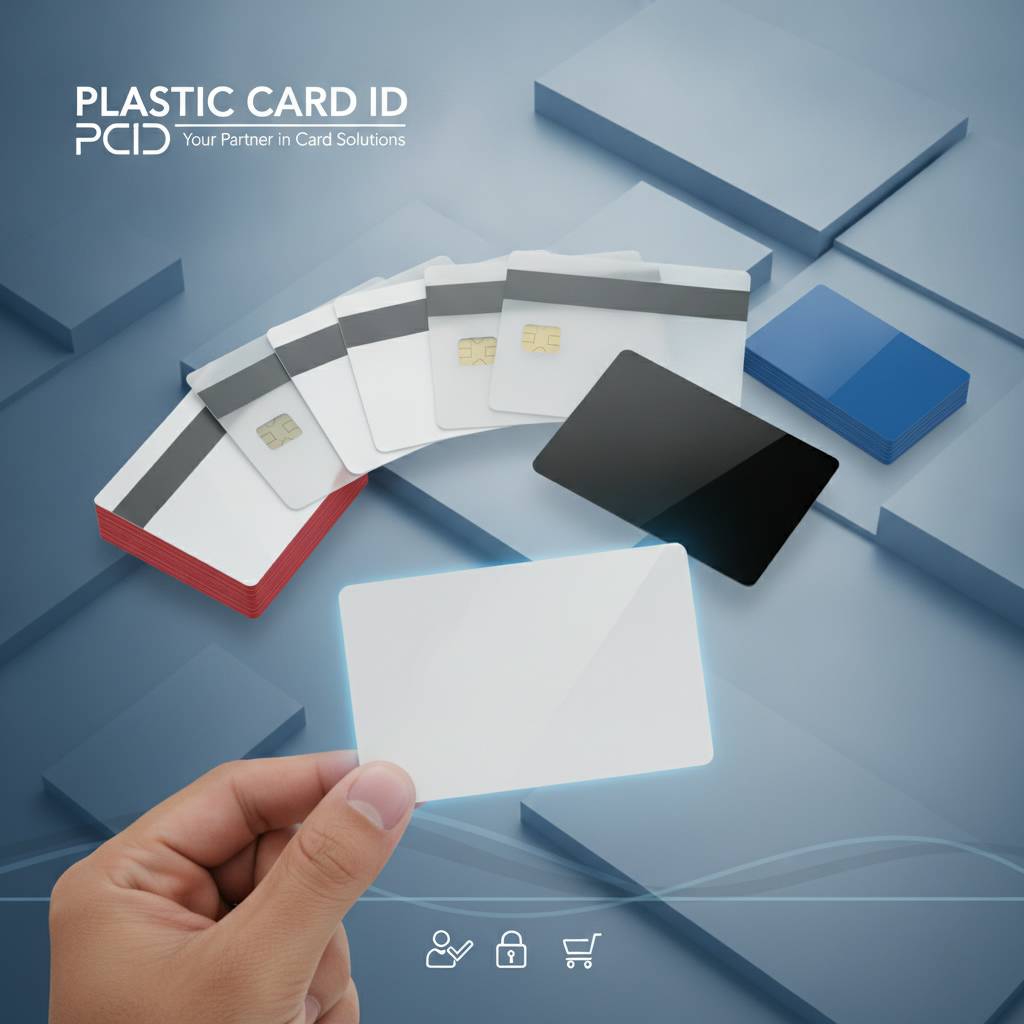 Not every membership program has the same requirements, and that is precisely why a broad, well-organized card catalog matters. Some programs need the simplest possible card - a clean white PVC blank ready for in-house printing. Others need HiCo magnetic stripes capable of surviving thousands of swipes in a busy retail environment. A few need contactless RFID technology for seamless tap-and-go member check-in.
Plastic Card ID stocks all of it. The depth of inventory means you are never forced to compromise on what your program actually requires just because a supplier's catalog runs shallow. Matching the right card specification to your specific program needs is a decision that pays dividends for years.
Blank PVC Cards: The Versatile Workhorse
Standard white PVC CR80 cards are the most popular item in any card program catalog for good reason. They print beautifully with any direct-to-card printer, accept full-color graphics and text, and hold up to daily handling without cracking, fading, or warping. For organizations printing membership cards in-house, white blank PVC is the reliable default that handles virtually every use case.
Beyond standard white, colored PVC stock opens up creative possibilities. Blue, red, green, black, and gold-toned blanks let organizations build visual tier distinctions into their membership hierarchy without requiring a full custom print run. A silver card for standard members and a black card for premium tier members communicates status before a single word is printed.
Magnetic Stripe Cards: HiCo vs. LoCo Explained
Magnetic stripe cards come in two varieties, and choosing wrong can create real-world headaches. HiCo (High Coercivity) stripes use stronger magnetic fields, making them far more resistant to accidental erasure from proximity to other magnets - the right choice for any card that will be used repeatedly over months or years. LoCo (Low Coercivity) stripes are suitable for short-term or single-use applications.
For membership programs where the card is the primary account identifier - scanned at the register, swiped at the gym entrance, or run through a POS terminal - HiCo magnetic stripe cards are almost always the correct specification. Starting with the wrong stripe type and discovering the problem after issuing thousands of cards is an expensive lesson. CPE helps you get this right from the start.
RFID, Proximity, and Smart Chip Cards for Advanced Programs
Contactless card technology has moved well beyond corporate IT departments. Gyms, coworking spaces, club facilities, and membership organizations with physical access points are increasingly adopting proximity cards and RFID-enabled membership credentials. The convenience factor alone drives higher member satisfaction - tap and go is a fundamentally better user experience than fumbling with a card swipe.
For organizations requiring the highest level of credential security, MIFARE DESFire smart cards offer encrypted contactless communication that significantly raises the bar against cloning or tampering. These are no longer niche products reserved for enterprise security teams. They are accessible, practical solutions for serious membership programs that need to control access reliably and securely.
Specialty Options: Clear, Frosted, and Premium Metal Cards
Clear and frosted PVC cards occupy a premium tier in visual impact. A frosted card with a printed logo creates an effect that standard white PVC simply cannot match - it catches light differently, feels different in hand, and communicates quality before the cardholder reads a word. For premium membership tiers or luxury brands, specialty card stock is a branding tool as much as it is a functional credential.
At the top of the material hierarchy sit metal membership cards - stainless steel, brass, and gold-finish options that make an immediate statement. These are for organizations where the card itself is part of the value proposition. When a new member receives a metal card, the unboxing moment becomes a loyalty moment. The card weight alone communicates that this membership is something worth keeping.
Buyer's Guide: Choosing the Right Blank Card for Your Program
With so many card types, specifications, and encoding options available, it is easy to feel paralyzed by choice. The best approach is systematic: start with how the card will be used, then match the specification to that use case. Buying the wrong card type is almost always more expensive than buying the right card slightly above budget.

Here is a structured framework for evaluating your blank card needs before placing an order. This guide covers the five decisions that determine the right card specification for virtually any membership program.
Decision One: How Will the Card Be Read or Scanned?
If the card only needs to be visually presented - shown at a counter, scanned with a barcode reader, or used as a simple ID - a plain printable PVC blank is the correct choice. No encoding required, lowest per-card cost, maximum simplicity. If the card needs to communicate data to a machine (POS terminal, access reader, loyalty system), you need a card with an appropriate data carrier: magnetic stripe, barcode, RFID chip, or contact chip.
Matching the card's data interface to your existing hardware is critical. A 125kHz proximity card will not work with a reader configured for MIFARE 13.56MHz. A LoCo stripe will fail on a HiCo-optimized encoder. These are not obscure technical edge cases - they are common mismatches that organizations encounter when sourcing cards without proper guidance. CPE helps clients navigate this before purchase, not after.
Decision Two: Volume and In-House vs. Outsourced Printing
Organizations printing fewer than 5,000 cards per year often find that in-house printing with a desktop card printer offers the best balance of cost control, turnaround speed, and flexibility. Buying blank cards in bulk and printing on demand eliminates minimum order requirements for pre-printed custom cards and allows for real-time data like member names and numbers to be added at issuance.
Higher-volume programs - think regional fitness chains, multi-location retailers, or large associations - may justify dedicated card printer hardware with lamination capabilities. Laminated card printing produces credentials that are significantly more durable, with enhanced resistance to fading and surface damage from daily handling. The right printer depends heavily on monthly volume and required card life expectancy.
- Under 500 cards/month: Entry-level single-sided printer, standard white PVC blanks
- 500-2,000 cards/month: Mid-range dual-sided printer, lamination optional
- 2,000-10,000 cards/month: High-capacity printer with lamination module recommended
- Above 10,000 cards/month: Dedicated production printer or outsourced card mailing service
- Variable data (names, numbers): Any printer with PC-connected software and proper ribbon
Decision Three: Card Quantity and Pricing Strategy
Blank PVC cards are priced on volume tiers, and the per-card cost difference between ordering 500 cards and 5,000 cards is substantial. For a membership program that expects steady ongoing issuance, buying in larger quantities significantly reduces per-card program costs over the course of a year. The cards do not expire sitting in a box - they wait until a new member joins.
Specialty cards - RFID, smart chip, metal - carry higher per-unit costs and should be evaluated against the specific value they add to the program. A standard gym membership may not justify RFID. A premium corporate club membership almost certainly does. Understanding cost per member acquisition in context makes the specialty card decision straightforward rather than intimidating.
How Membership Card Programs Drive Real Business Results
 There is a measurable business case behind every well-executed plastic card membership program. It is not simply about aesthetics, although professionalism matters enormously. The case is built on behavior: people who carry your card buy more often, return more reliably, and refer more consistently than those who do not. The card is a physical anchor for the relationship between your brand and your customer.
The mechanism is both psychological and practical. A plastic card in a wallet creates repeated visual impressions every time a member opens their wallet. It serves as a decision trigger at the point of purchase. It signals membership identity - an affiliation the cardholder has actively chosen. Paper cards go in a drawer. Plastic cards go in wallets. That difference in placement drives everything that follows.
Loyalty Programs: The ROI of Going Plastic
Businesses that have made the switch from paper-based loyalty punch cards to plastic magnetic stripe or barcode loyalty cards consistently report meaningful increases in repeat purchase frequency. The card is not magic - the program design matters - but the plastic card format makes the program more likely to be used, which is the single most important variable in loyalty program ROI.
Tracking member behavior through encoded cards also gives businesses data they simply cannot capture with paper. Swipe history, purchase frequency, average transaction value, redemption patterns - all of this flows from a properly implemented plastic loyalty card program. That data, accumulated over months and years, becomes a competitive asset that paper programs cannot generate.
Membership Organizations: Signaling Legitimacy and Permanence
For associations, clubs, professional organizations, and community groups, the membership card is a symbol of belonging. When a new member receives a professionally printed plastic card, the experience communicates that this organization is established, serious, and worth the investment. The card is the first tangible proof of the membership promise.
This effect is amplified when the card is issued with a card carrier - a folded stock envelope with welcome messaging and program details. CPE supplies card carriers and sleeves as part of a complete membership card fulfillment solution. The entire new-member experience can be packaged, mailed, and received as a cohesive branded moment rather than a transactional card drop.
Access Control and Secure Facility Entry
Membership programs tied to physical facilities - gyms, clubs, coworking spaces, private lounges - have a secondary requirement beyond branding: the card must function as a reliable access credential. RFID proximity cards and smart chip cards meet this requirement while simultaneously serving as the member's visual ID and loyalty identifier.
Multi-function cards reduce wallet clutter for members and reduce infrastructure complexity for operators. One card for check-in, one card for point-of-sale, one card for the member's identity - combining these functions onto a single credential is both a member experience win and an operational efficiency gain. The right card specification makes this possible without significant technical complexity.
Value-Added Services That Complete Your Card Program
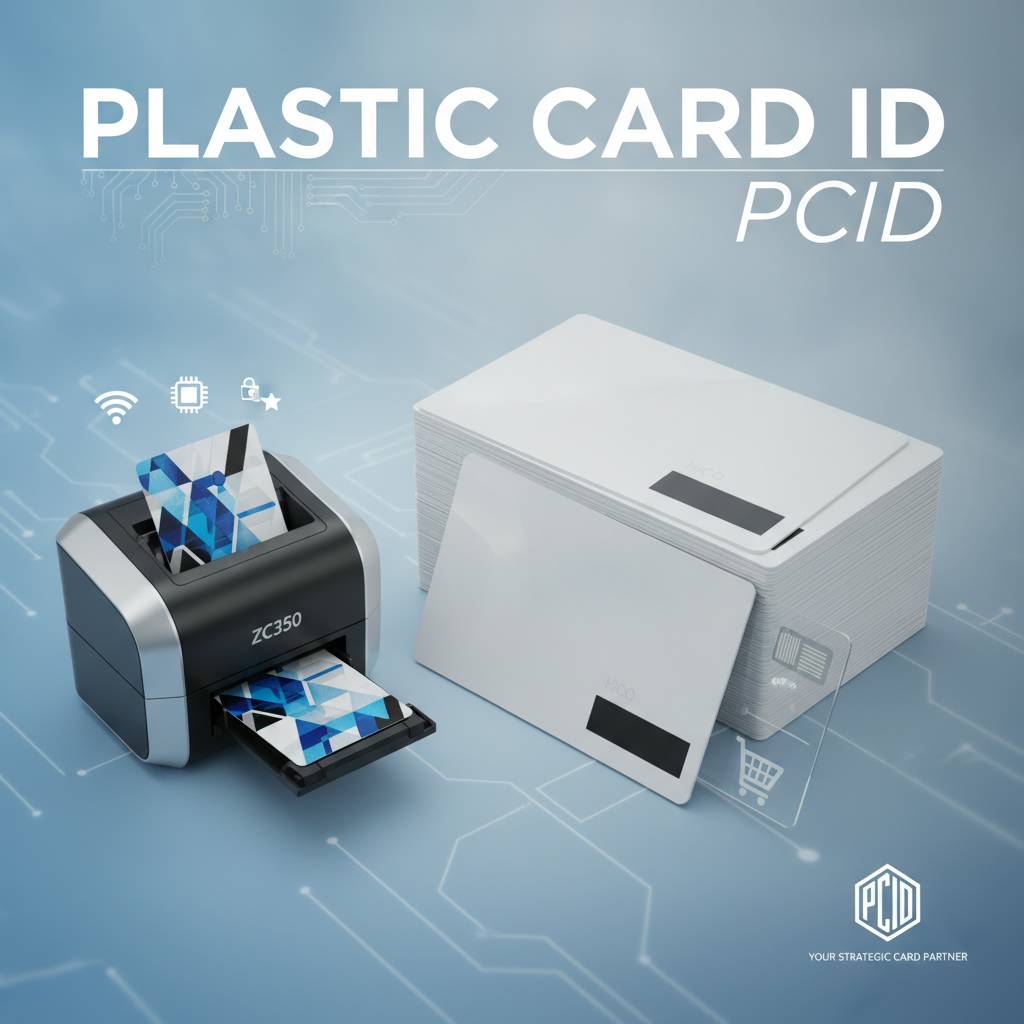 A blank plastic card is the beginning, not the end. Running a successful membership card program requires ribbons, cleaning kits, card printers, and sometimes fulfillment services. Sourcing all of these components from disconnected suppliers creates friction - incompatible ribbons, untested cleaning supplies, printers that arrive without the support needed to get them running smoothly.
Plastic Card ID operates as a one-stop shop for everything a card program requires. This is not a positioning statement - it is a practical reality reflected in the product catalog and the support that backs it up.
Printer Ribbons and Cleaning Kits
Card printer ribbons are not interchangeable across brands or even across models within a brand. Using an incorrect ribbon produces substandard print quality, premature printhead wear, and in some cases permanent damage to the printer. Sourcing ribbons from the same supplier as your printer hardware eliminates compatibility guesswork entirely.
Cleaning kits matter more than most operators realize. A dirty printer produces banded, streaked, or faded cards - the exact opposite of the professional impression a membership card is supposed to make. Regular cleaning with manufacturer-approved supplies extends printhead life and maintains consistent card output quality. CPE stocks cleaning kits for all major printer brands and can recommend maintenance schedules based on print volume.
Card Carriers, Sleeves, and Mailing Services
The moment a member receives their card matters. Sliding a bare card into an envelope is a missed opportunity. A card carrier - a professionally designed folded stock holder - elevates the delivery moment and provides a natural space for welcome messaging, program terms, and brand reinforcement. For organizations mailing cards in volume, card affixing and mailing services remove an entire operational burden from internal teams.
Card sleeves protect cards during mailing and ongoing use. A sleeve-protected card arrives without surface scratches or edge damage - a small detail that contributes meaningfully to first-impression quality. These are the kinds of considerations that distinguish a thoughtfully executed card program from a bare-minimum card issuance operation.
Contact CPE for Program Consultation
Building a card program is not always intuitive the first time. Questions about card specifications, printer compatibility, encoding standards, and volume pricing are normal - and getting the answers right before ordering prevents costly mistakes. Reach the team directly at 800.835.7919 for a straightforward consultation with people who have helped over 100,000 organizations navigate exactly these decisions.
There is no obligation in asking questions. There is, however, a real cost to ordering the wrong card type, incompatible hardware, or insufficient quantities for a program launch. The consultation call exists to prevent those outcomes.
Frequently Asked Questions About Blank Plastic Cards for Membership Programs
After 25 years and tens of millions of cards shipped, certain questions come up consistently. The answers below address the most common points of confusion for organizations building or expanding a membership card program for the first time - or the fifth time.

What Is the Minimum Order Quantity for Blank Cards?
Minimum order quantities vary by card type. Standard white PVC blanks are available in quantities suitable for small organizations running modest programs. Specialty cards - RFID, smart chip, metal - typically require higher minimums to justify the production setup. The practical answer for most membership programs is that ordering above the minimum threshold is almost always the better economic decision given the volume discounts available at higher quantities.
Organizations unsure of projected member volume in the first year are often better served by a modest initial order of blank cards combined with a capable in-house printer. This approach allows for controlled, on-demand issuance without over-committing to card inventory before program uptake is validated.
Can Blank Cards Be Encoded After Purchase?
Yes - with the right equipment. Magnetic stripe cards can be encoded at the time of printing using a printer equipped with a magnetic stripe encoder module. RFID and smart chip cards require compatible encoding hardware or readers. What cannot be added after the fact is the physical data carrier itself: a card purchased without a magnetic stripe cannot have one added later. Choosing the right card type upfront is a one-time decision that matters.
For organizations not yet ready to invest in encoding hardware, pre-encoded cards with sequential numbering or specific data are available as an option. This approach works well for programs where account data is assigned at the time of card issuance from a fixed batch rather than printed on demand.
How Long Do Plastic Membership Cards Typically Last?
A quality PVC card used under normal membership program conditions - carried in a wallet, swiped or scanned at a reader, handled daily - will typically last 2-5 years without significant degradation. Cards with lamination overlaminates last longer and resist surface scratching more effectively. HiCo magnetic stripes maintain data integrity reliably across thousands of swipes, far exceeding the lifespan requirements of most membership card programs.
Card longevity is directly tied to print and lamination quality, which is in turn tied to ribbon and printer selection. Investing in a quality printing setup at the outset produces cards that reflect well on the organization for the life of the card - rather than fading, peeling, or cracking within months.
Get Started With Plastic Card ID Today
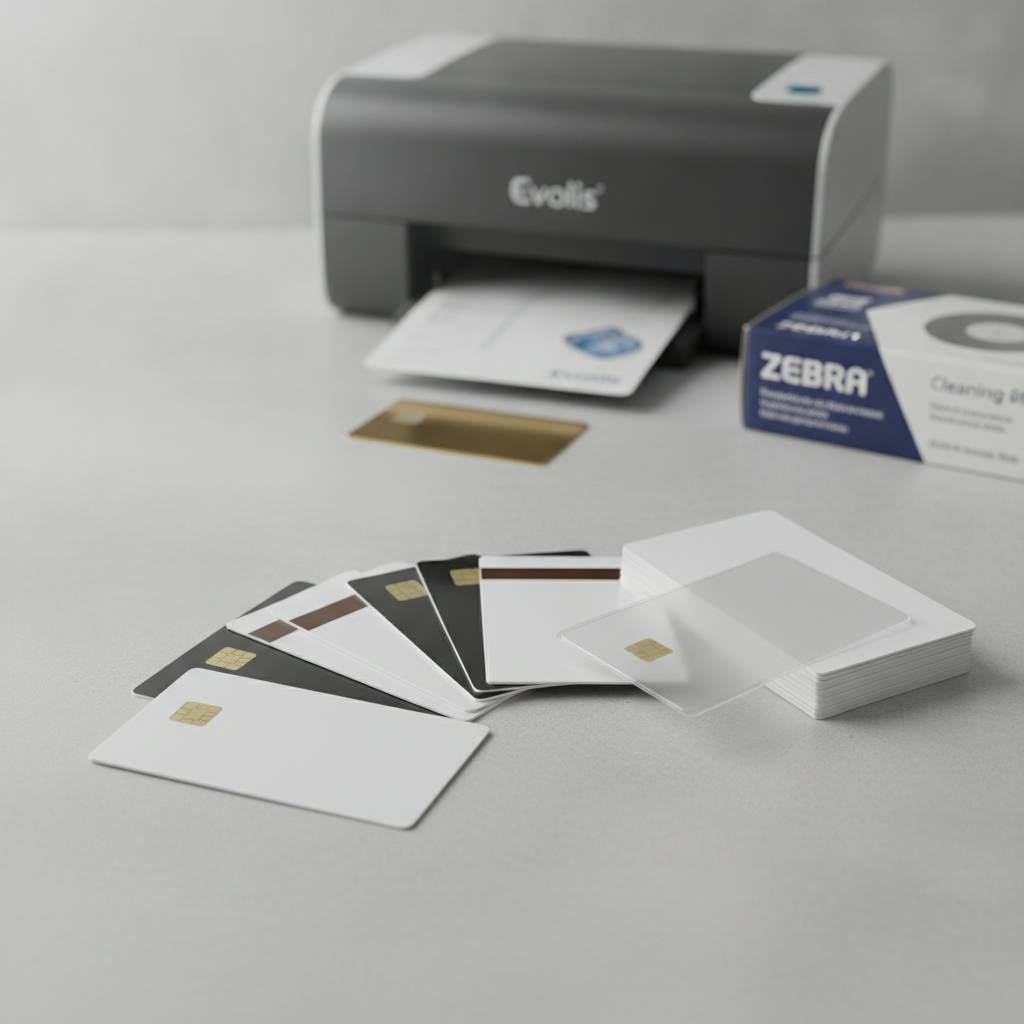 The gap between a membership program that retains members and one that struggles with disengagement is often smaller than organizations expect. It frequently starts with the card itself - its format, its quality, its function. A professional plastic membership card is not a luxury add-on. It is the tangible expression of what your program stands for and what you believe your members are worth.
Plastic Card ID has the card types, the printing hardware, the support infrastructure, and the 25-year track record to make your program work at any scale. From 50 cards a month to tens of thousands, the same expertise and product depth that serves enterprise clients is fully available to growing organizations just building their first card program.
Ready to build a membership card program that actually works? Call Plastic Card ID at 800.835.7919 and speak with a specialist who can match the right card, printer, and program setup to your specific needs. Every serious membership program starts with the right card - and the right partner to supply it.
Previous Page