Blank Plastic Cards for Magnetic Stripe Encoding Explained
Table of Contents []
- Blank Plastic Cards for Magnetic Stripe Encoding - Your Complete Source at Plastic Card ID
- What Makes a Blank Magnetic Stripe Card Worth Buying
- The Business Case for Blank Plastic Magnetic Stripe Cards
- Choosing the Right Blank Card for Your Encoding System
- Advanced Magnetic Stripe and Hybrid Card Technologies
- Frequently Asked Questions About Blank Magnetic Stripe Cards
- Why Plastic Card ID Is the Right Long-Term Partner for Your Card Program
Blank Plastic Cards for Magnetic Stripe Encoding - Your Complete Source at Plastic Card ID
 There's a moment every card program manager eventually faces: the realization that paper-based systems are quietly costing them money, credibility, and customer retention. Blank plastic cards with magnetic stripes exist precisely to solve that problem - and Plastic Card ID has been solving it for businesses across the United States for over 25 years. With more than 50 million cards sold and 100,000 customers served, this isn't guesswork. It's a proven track record.
Whether you're building a loyalty program from the ground up, upgrading an aging access control system, or simply looking for a reliable bulk card supplier who ships fast and answers the phone, this page covers everything you need to make an informed purchase decision. Magnetic stripe cards are deceptively simple objects that carry enormous operational weight - and choosing the right blank card stock is the foundation of getting that right.
| Card Type | Magnetic Stripe | Common Use | ISO Standard |
|---|---|---|---|
| Blank White PVC CR80 | HiCo or LoCo | Loyalty, ID, Access | ISO 7810 |
| Colored Stock PVC | HiCo or LoCo | Membership, Gift Cards | ISO 7810 |
| Frosted / Clear PVC | HiCo Available | VIP, Specialty Programs | ISO 7810 |
| Smart Chip Mag Stripe | HiCo | Secure Access, Casino | ISO 7810 / ISO 7816 |
What Makes a Blank Magnetic Stripe Card Worth Buying
 Not all blank plastic cards are built the same. Walk into any trade show and you'll find vendors selling cards that look identical on the surface but vary wildly in laminate quality, stripe consistency, and print receptivity. The difference between a good card and a great card shows up in the encoding booth and at the point of swipe - not in the packaging. Understanding what separates commodity cards from high-performance stock is what separates card programs that run smoothly from ones that generate constant support tickets.
The CR80 format - 3.375" x 2.125" at 30 mil thickness - is the universal standard. Cards that conform to ISO 7810 fit every standard card printer, wallet slot, and badge holder without modification. CPE sources cards that meet this standard without exception, meaning you can integrate new stock into existing workflows without recalibrating your printers or retraining staff.
HiCo vs. LoCo Magnetic Stripes - Choosing Correctly Matters
High coercivity (HiCo) stripes operate at 2750 Oe and are significantly more resistant to accidental erasure from everyday magnetic fields - purse closures, phone cases, and proximity to other cards. HiCo is the right choice for any card that will be carried daily, swiped frequently, or stored in environments where magnetic interference is possible. The vast majority of loyalty cards, employee badges, and access credentials should be HiCo.
Low coercivity (LoCo) stripes function at 300 Oe and are appropriate for short-lifecycle applications - event wristband alternatives, single-day passes, or hotel key cards that are programmed and discarded within days. LoCo cards typically cost marginally less per unit, which matters when you're issuing thousands for a single conference. The key is matching the stripe type to the actual use case rather than defaulting to the cheapest option.
One common mistake organizations make is purchasing LoCo cards for long-term loyalty or membership programs to save a small amount upfront, only to see elevated card failure rates and unhappy customers returning cards that no longer work. Investing in the correct stripe type from day one pays dividends in reduced card reissuance costs and customer satisfaction over the lifetime of the program.
Track Configuration and Data Capacity
Standard magnetic stripe cards include three tracks: Track 1, Track 2, and Track 3. Track 1 holds up to 79 alphanumeric characters, Track 2 holds up to 40 numeric characters, and Track 3 holds up to 107 numeric characters. Most commercial applications use Track 1 and Track 2 together - Track 1 for cardholder name and supplementary data, Track 2 for the primary account or ID number your system reads.
Understanding track configuration before purchasing blank cards helps ensure your encoder and card management software are aligned with the card stock. CPE carries blank cards compatible with all standard track configurations, and the team can walk you through which setup best matches your software environment if you're unsure. Getting the track configuration right before you place your first bulk order prevents costly reprints and encoding errors down the line.
Surface Quality and Print Receptivity
Blank cards destined for in-house printing need a surface that accepts dye-sublimation and direct-to-card printing without ghosting, color bleeding, or adhesion failure. Premium PVC card stock features a treated surface layer that locks in color and resists fading under daily handling conditions. Cards printed on low-quality stock may look acceptable the day they're printed but degrade rapidly with normal use.
Paired with the right ribbon from Evolis, Zebra, or Fargo printers, a high-quality blank card will produce sharp text, accurate color reproduction, and a professional finish that reinforces your brand identity every time a cardholder pulls it from their wallet. The card surface is, in a very real sense, a moving advertisement for your organization's attention to quality.
The Business Case for Blank Plastic Magnetic Stripe Cards
The numbers are hard to argue with. Retailers who transition from paper-based loyalty or gift card programs to plastic see sales increases in the 35-50% range - not because plastic is magic, but because plastic cards live in wallets. A wallet presence means repeat visibility, which means top-of-mind recall at the moment a purchase decision is made. Paper cards get lost, torn, and forgotten in junk drawers. Plastic cards get used.
For membership organizations, plastic cards signal legitimacy in a way paper cannot approximate. When a new member receives a crisp, professionally printed plastic card with a magnetic stripe, the psychological message is clear: this organization is established, serious, and invested in the member experience. That first impression sets the tone for the entire membership relationship. Blank cards printed in-house let you deliver that experience at a controlled cost.
Cost Control Through In-House Card Production
The economics of in-house card printing are compelling once you understand the full picture. Blank CR80 PVC cards with magnetic stripes purchased in bulk represent a fraction of the per-card cost of fully custom printed cards ordered from an outside vendor. When you add a card printer to your operation, you gain the ability to print on demand, personalize each card individually, and eliminate minimum order quantities that force you to stock more cards than you need.
A mid-range card printer from Evolis, Zebra, or Fargo runs in the $500-$2,500 range depending on throughput requirements and feature set. Combine that with bulk blank card purchases and the per-card cost drops substantially compared to outsourced production - especially once you factor in the time and shipping costs associated with reordering from external print vendors every time you need new cards.
Scalability from 50 Cards to 50,000
Plastic Card ID is built to serve programs of every scale without discrimination. A small gym with 200 members needs just as much attention and reliability as a regional grocery chain running a loyalty program with 40,000 active cardholders. The ability to scale your card program without switching suppliers - or renegotiating pricing structures from scratch - is a genuine operational advantage that saves time and administrative overhead.
Whether you're ordering 50 cards a month for a boutique studio or tens of thousands per quarter for a statewide organization, the same quality standards apply. Blank magnetic stripe card stock is available in quantities that make sense for your actual volume, not the volume a vendor wants to sell you.
Applications Across Every Industry Vertical
- Retail loyalty programs - Issue branded loyalty cards that customers carry alongside their credit cards, creating constant brand visibility.
- Healthcare and clinic ID cards - Patient identification with magnetic stripe encoding for system integration and quick check-in.
- Fitness and recreation memberships - Swipe-to-access systems for gyms, pools, and recreation centers that eliminate paper passes.
- Corporate employee ID badges - Combined photo ID and access credential on a single card, printed and encoded in-house.
- Casino player loyalty cards - Encoded player tracking cards that integrate with casino management systems for reward tracking.
- Event and conference credentials - Single-use or multi-day access cards for tradeshows, concerts, and corporate events.
- Hotel key cards - Encoded room access cards, available in LoCo configurations for short-cycle hotel programs.
- Library and institutional cards - Long-lasting cards for schools, universities, and public institutions requiring patron identification.
Choosing the Right Blank Card for Your Encoding System
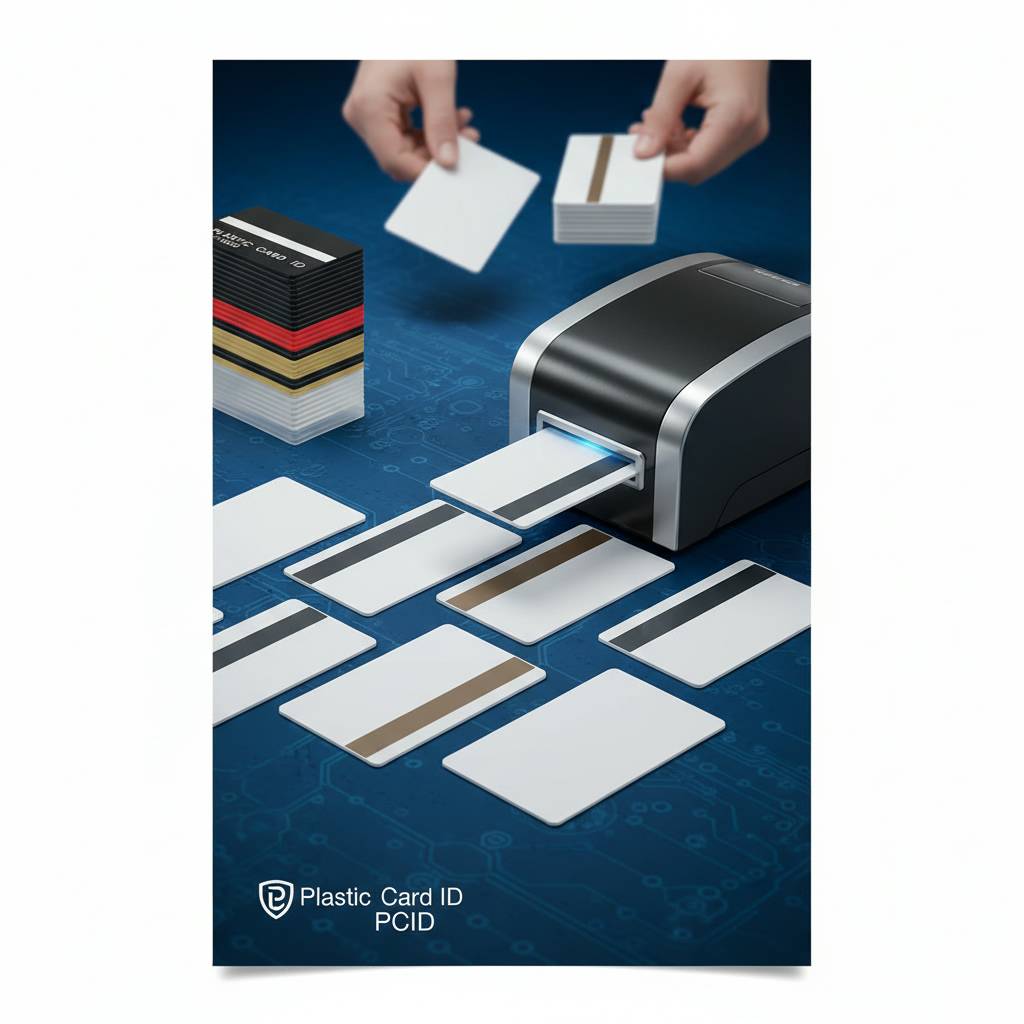 Purchasing blank magnetic stripe cards without first auditing your encoding hardware is one of the most common mistakes new program managers make. Your encoder - whether standalone or integrated into a card printer - has specific read/write requirements that must align with the coercivity of the card you're buying. Feeding a LoCo encoder with HiCo cards, or vice versa, produces unreliable encoding and high card failure rates.
A quick three-step audit before ordering saves significant headaches: identify your encoder's coercivity setting, determine which tracks your card management software writes to, and confirm the card thickness your printer's input hopper accommodates. Most standard card printers handle 30 mil CR80 cards without adjustment. If you're running specialty equipment, confirm compatibility with CPE before placing a bulk order.
Matching Card Stock to Printer Model
Evolis, Zebra, and Fargo printers each have slightly different ribbon and card stock preferences. Evolis printers, including the Primacy and Zenius lines, are particularly well-suited for high-resolution dye-sublimation printing on white PVC stock. Zebra ZXP series printers offer robust throughput and dual-sided printing that pairs well with employee ID programs requiring both a photo and a magnetic stripe. Fargo HDP printers use a reverse transfer process that produces exceptional edge-to-edge print quality on cards with magnetic stripes.
The good news is that Plastic Card ID supplies ribbons, cleaning kits, and card stock calibrated for all three manufacturer ecosystems. Buying your cards and consumables from the same supplier eliminates compatibility guesswork and ensures your printer runs at manufacturer-specified performance levels throughout its service life.
Contact Plastic Card ID for Program Consultation
If you're setting up a new card program or evaluating a switch from an existing supplier, talking to someone who has helped over 100,000 customers navigate the same decisions is genuinely useful. Call 800.835.7919 to speak with a card program specialist who can recommend the right card stock, coercivity, track configuration, and printer pairing for your specific application.
The consultation is straightforward and practical - no upselling, no jargon, no pressure. Just direct answers from people who understand card programs at every scale, from a single-location business to a multi-site enterprise operation.
Specialty Magnetic Stripe Options Beyond Standard White PVC
Blank magnetic stripe cards aren't limited to plain white stock. CPE carries colored PVC stock in a range of options that allow color-coding by department, access level, or membership tier - a practical organizational tool for large programs. Clear and frosted cards with magnetic stripes offer a premium aesthetic for VIP programs, executive memberships, and high-end loyalty tiers where visual differentiation matters.
For organizations requiring the ultimate in perceived value and durability, metal cards in stainless steel, brass, and gold finishes with magnetic stripe technology are available for luxury applications. Custom die-cut shapes beyond the standard CR80 rectangle are also possible for marketing-forward programs where the card itself is part of the brand experience.
Advanced Magnetic Stripe and Hybrid Card Technologies
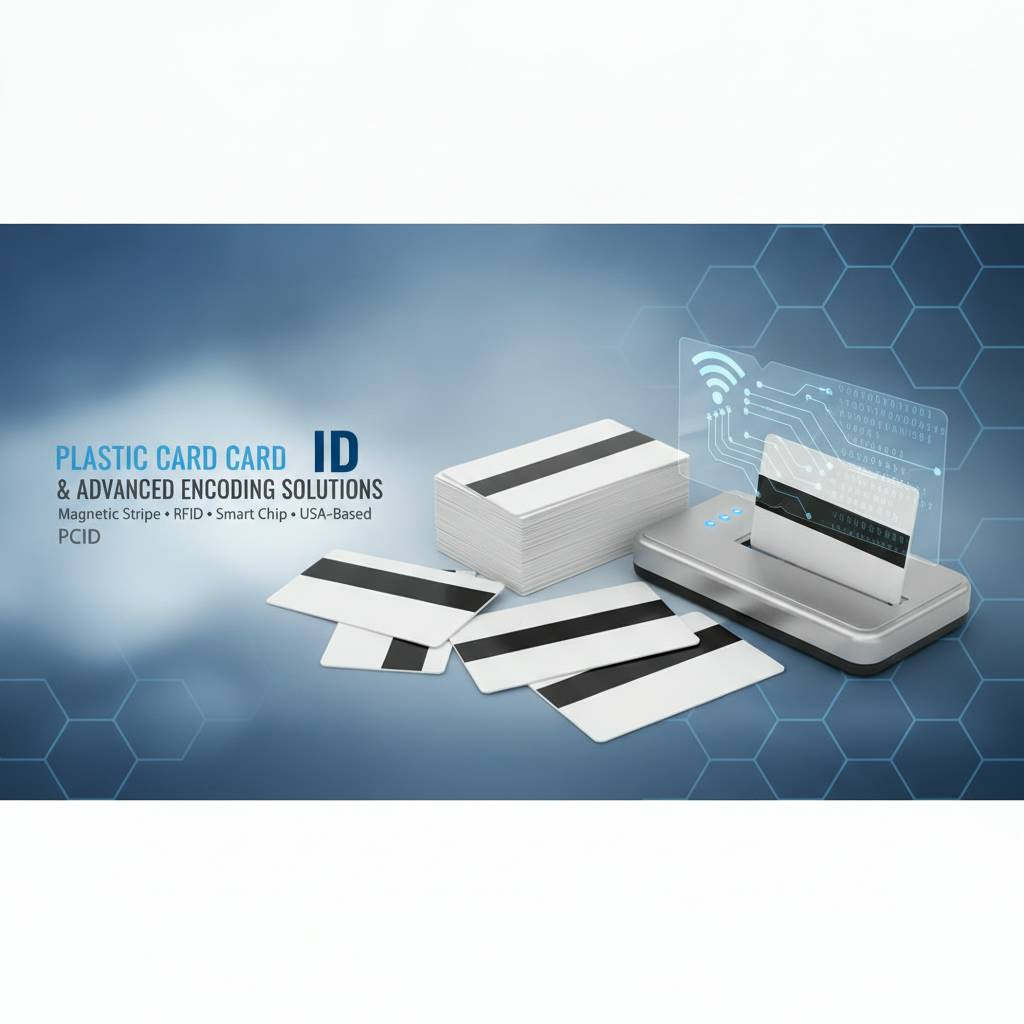 Magnetic stripe technology doesn't exist in isolation anymore. Many of today's most effective card programs combine a magnetic stripe with a smart chip, an RFID antenna, or both - creating a hybrid credential that serves multiple functions on a single card. An employee can swipe their card at a time clock (magnetic stripe), tap it at a door reader (proximity or MIFARE), and present it as a photo ID badge - all with one card.
Hybrid cards reduce wallet clutter for cardholders and administrative complexity for program managers. Instead of issuing separate credentials for each function, a single well-designed hybrid card handles the entire identity and access stack. Plastic Card ID supplies hybrid cards with various combinations of magnetic stripe, smart chip (ISO 7816), and contactless RFID including MIFARE DESFire for high-security applications.
RFID and Proximity Cards with Magnetic Stripes
Proximity cards operating at 125 kHz (HID-compatible formats) are the workhorses of commercial access control, offering a read range of a few inches that makes them practical for door access, parking gates, and time-attendance systems. When combined with a magnetic stripe, the same card can interface with both legacy swipe-based systems and modern contactless readers - a practical bridge for organizations in the middle of an infrastructure transition.
MIFARE DESFire cards operate at 13.56 MHz and support advanced encryption, making them appropriate for high-security environments including government facilities, financial institutions, and casino operations where data integrity is non-negotiable. The contactless read speed and security layer of MIFARE DESFire combined with a magnetic stripe backup creates a credential architecture that satisfies both security and convenience requirements.
Casino and Hospitality Program Cards
Casino player loyalty programs represent one of the most demanding use cases for magnetic stripe cards - high swipe volume, daily use, and data integrity requirements that directly impact revenue tracking. Casino player cards must encode and retain data reliably across thousands of swipe cycles without read errors that could misattribute points or fail to register play activity. HiCo stripes on quality PVC stock are non-negotiable in this environment.
Hotel key card programs represent the opposite end of the lifecycle spectrum - cards that are encoded on check-in, used for a few days, and returned or disposed of at checkout. LoCo white PVC stock in bulk quantities is the cost-effective solution here, and Plastic Card ID can supply the volume and consistency that hotel operations require without minimum order barriers that complicate inventory management.
Frequently Asked Questions About Blank Magnetic Stripe Cards
After 25 years and over 100,000 customers, certain questions come up repeatedly. The answers below reflect real-world experience with card programs at every scale and in virtually every industry vertical.
What is the difference between HiCo and LoCo cards visually?
Standard HiCo cards have a dark brown or black magnetic stripe on the back. LoCo cards typically feature a lighter brown stripe. While this visual distinction is a useful quick reference, it's always safer to verify coercivity specifications with your supplier rather than relying on visual inspection alone - especially with colored or specialty stock where the stripe color may vary.
When ordering from CPE, each product listing clearly specifies the coercivity so you're never guessing. Mixing HiCo and LoCo cards in the same printer hopper is a common source of encoding errors and should be avoided through clear labeling and organized storage.
Can I print on blank magnetic stripe cards with any card printer?
Most standard dye-sublimation card printers handle blank PVC magnetic stripe cards without modification. The critical variables are card thickness (30 mil CR80 is universal), surface coating compatibility with your ribbon type, and the printer's magnetic encoding module - not all printers include an encoder by default. Printers from Evolis, Zebra, and Fargo are available with optional or integrated encoding modules that write to HiCo or LoCo stripes.
If you're purchasing a printer and blank card stock together, Plastic Card ID can configure a complete package that includes the right printer, the matching ribbon, cleaning kit, and blank cards for your application. A matched system from a single supplier is the lowest-friction path to a functional card program, especially for organizations setting up from scratch. Reach CPE at 800.835.7919 to discuss a complete program package.
How many cards should I order at once?
- Small programs (under 500 cards/year): Order in quantities of 100-500 to maintain freshness and flexibility without over-investing in inventory.
- Mid-size programs (500-5,000 cards/year): Bulk orders of 500-1,000 cards typically hit the price-performance sweet spot, reducing per-card cost meaningfully.
- Large programs (5,000 cards/year): Volume pricing tiers apply at higher quantities - contact Plastic Card ID directly for custom pricing on large recurring orders.
- Event-based programs: Order based on projected attendance plus a 10-15% buffer for reprints, encoding errors, and last-minute additions.
Why Plastic Card ID Is the Right Long-Term Partner for Your Card Program
 There's a meaningful difference between a vendor who takes your order and a partner who helps your program succeed. Plastic Card ID has built its reputation over 25 years not by being the cheapest option in every category, but by being the most reliable - consistent product quality, fast fulfillment, expert support, and a catalog deep enough to serve a program through every stage of its evolution. The organizations that grow with CPE are the ones who stop thinking about card procurement as a problem and start treating it as a solved item on the operational checklist.
From the first order of 100 blank HiCo cards for a new loyalty program to a multi-year supply agreement for a statewide membership organization, the commitment to quality and service remains unchanged. Every blank magnetic stripe card that ships from Plastic Card ID meets the same ISO 7810 standards, the same coercivity specifications, and the same surface quality benchmarks - regardless of order size. That consistency is what card program managers depend on when their programs scale and the stakes get higher.
Complete Program Support Beyond Card Stock
Blank cards are the foundation, but a complete card program needs more. Plastic Card ID supplies the full stack: card printers from Evolis, Zebra, and Fargo; printer ribbons matched to your specific printer model; cleaning kits that extend printer service life; card carriers and sleeves for mailing and presentation; and card affixing and mailing services for organizations that need to distribute cards without handling fulfillment internally.
The convenience of sourcing your entire card program from one supplier cannot be overstated - fewer vendor relationships to manage, simpler reordering, and a single point of contact when something needs to be resolved quickly. For organizations running time-sensitive card programs where a supply disruption creates real operational pain, that single-source reliability is genuinely valuable.
Getting Started Is Simple
Starting or upgrading a card program with Plastic Card ID doesn't require a lengthy onboarding process or a minimum commitment. Browse the catalog online, identify the blank magnetic stripe card stock that matches your specifications, and place your first order. For programs with specific technical requirements or large volume needs, a quick call provides clarity and ensures your first order is exactly right.
CPE has helped businesses ranging from single-location retailers to multi-site enterprise operations build card programs that run efficiently, look professional, and deliver measurable results. The expertise is there whenever you need it, and the catalog is ready when you are.
Ready to build a card program that works? Call 800.835.7919 today and let Plastic Card ID put 25 years of card program expertise to work for your organization.
Previous Page