Blank Plastic Cards for RFID Access Systems: A Guide
Table of Contents []
- Blank Plastic Cards for RFID Access Systems - Plastic Card ID
- Understanding RFID Card Technology Before You Buy
- Blank CR80 PVC Cards as the Foundation of Any Card Program
- Card Printers, Ribbons, and the Complete In-House Issuance Ecosystem
- RFID Access Card Solutions by Industry and Use Case
- Buyer's Guide - Frequently Asked Questions About Blank RFID Access Cards
- Why Plastic Card ID Is the Right Partner for Your RFID Card Program
Blank Plastic Cards for RFID Access Systems - Plastic Card ID
 Walk into nearly any modern office building, hotel, hospital, or university campus and you will find the same quiet technology at work: a small plastic card held near a reader, a soft beep, a door unlocking. RFID access systems have become the backbone of physical security in the United States - and the blank plastic cards that power them are far more nuanced, varied, and strategically important than most buyers initially realize. If your organization is building, scaling, or upgrading a card-based access program, the decisions you make about your blank card stock will determine how well your entire system performs.
Plastic Card ID has spent over 25 years supplying blank and custom plastic cards to businesses, institutions, and organizations across the country. With more than 100,000 customers served and over 50 million cards delivered, CPE understands that access control is not a commodity purchase. It is an infrastructure decision - one that deserves real expertise and a supplier who functions as a genuine strategic partner rather than just a vendor processing orders.
| Card Type | Frequency | Read Range | Common Use Case |
|---|---|---|---|
| 125 kHz Proximity Card | Low Frequency (LF) | Up to 6 inches | Basic door access, time and attendance |
| 13.56 MHz Smart Card | High Frequency (HF) | Up to 4 inches | Secure access, cashless vending, multi-app |
| MIFARE DESFire EV2/EV3 | 13.56 MHz HF | Up to 4 inches | Government, campus, high-security environments |
| Blank PVC CR80 Base Card | N/A (printable base) | N/A | In-house printing, encoding, badging |
Understanding RFID Card Technology Before You Buy
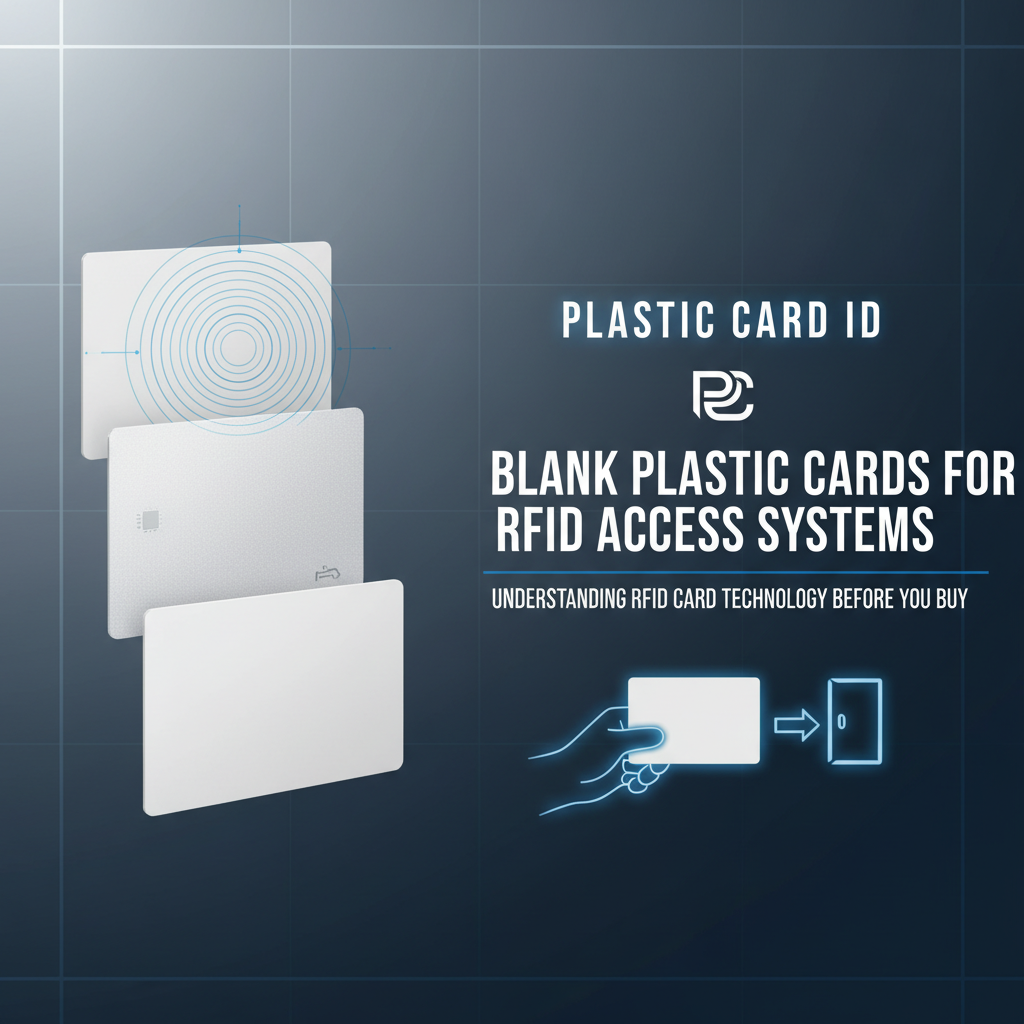 There is a temptation to treat all blank plastic cards as interchangeable - a stack of white rectangles that happen to open doors. That thinking leads to system failures, compatibility headaches, and expensive reprinting cycles. The technology embedded inside a blank RFID card determines everything about how it will perform in your environment, how securely your data is stored, and what your system can eventually grow to do.
RFID stands for Radio Frequency Identification, and the term covers a broad spectrum of communication standards, chip types, memory capacities, and encryption protocols. A buyer who understands even the basics of this spectrum makes dramatically better purchasing decisions - saving time, money, and operational friction down the road. CPE exists precisely to help clients navigate these distinctions with confidence.
Low Frequency vs. High Frequency Cards
Low frequency (LF) cards operating at 125 kHz are the classic proximity card - the technology that has secured office buildings for decades. They are simple, robust, and widely compatible with legacy readers from brands like HID and Honeywell. If your infrastructure already uses 125 kHz readers, matching your blank card stock to the correct frequency is non-negotiable.
High frequency (HF) cards at 13.56 MHz offer significantly more capability. They support encryption, store more data, enable multi-application use cases, and communicate faster. MIFARE Classic, MIFARE DESFire, and ISO 15693 cards all operate in this range. For organizations building new access systems from the ground up, HF is almost always the right architectural choice for long-term flexibility and security depth.
MIFARE DESFire - The Security Standard for Demanding Environments
Among 13.56 MHz options, MIFARE DESFire EV2 and EV3 represent the highest tier of practical card security available today. These chips support AES 128-bit encryption, mutual authentication, and diversified key management - meaning the data on each card is uniquely secured. Government agencies, universities, healthcare systems, and casinos consistently choose DESFire when the consequences of unauthorized access are serious.
Blank DESFire cards arrive un-programmed and ready for your system integrator to configure. Plastic Card ID stocks these cards in volume, making it straightforward to maintain inventory for large deployments or steady ongoing issuance programs without the delays that smaller suppliers routinely cause.
Proximity Cards for Legacy and Mixed-Use Systems
Not every organization is ready - or needs - to migrate to high-frequency smart cards. Proximity cards remain the workhorses of thousands of commercial, industrial, and institutional access systems across the United States. They are cost-effective, easy to issue, and essentially maintenance-free once enrolled in a reader system. For organizations managing 50 to 5,000 cardholders, a well-managed proximity card program is entirely sound strategy.
Compatibility matters deeply here. CPE can help you identify whether your readers use standard 26-bit Wiegand format, proprietary formats, or other protocols - and supply blank card stock that will encode correctly. Buying incompatible proximity cards is one of the most common and most avoidable purchasing mistakes in the access control space.
Blank CR80 PVC Cards as the Foundation of Any Card Program
Whether you are encoding RFID chips, printing employee badges, or building a hybrid card that does both, the physical substrate matters. CR80 PVC cards at 30 mil thickness are the ISO 7810 standard - the same dimensions as a credit card, engineered for durability, printer compatibility, and professional appearance. Blank CR80 stock is the foundation upon which your entire in-house card program is built.
The economics of blank card programs are compelling. Organizations that print and encode cards in-house gain complete design control, dramatically faster issuance cycles, and lower per-card costs at volume. A blank card that costs a fraction of a fully pre-printed card becomes a fully functional access credential, employee badge, or event pass the moment it moves through your card printer. Plastic Card ID supplies blank PVC cards in quantities from small runs to tens of thousands, scaling with your program seamlessly.
Why Card Thickness and Material Quality Matter
A 30 mil card feels substantial in the hand - because it is. Thinner cards flex and eventually crack at stress points, causing chip failures in RFID cards and print delamination in visual ID cards. Card quality directly affects the longevity of your investment in printer ribbons, encoding, and program administration. Cheap card stock creates a false economy that shows up in premature failures and re-issuance costs.
PVC construction at the CR80 standard ensures consistent caliper (thickness) across every card in a batch, which matters enormously for automated encoding equipment and card printer feeders. Inconsistent thickness causes jams, misprints, and encoder errors that bring issuance lines to a halt at the worst possible times.
Specialty Card Substrates for Specific Access Applications
Beyond standard white PVC, Plastic Card ID offers a range of specialty card substrates that serve specific operational needs. Clear and frosted PVC cards create a premium visual effect ideal for VIP access programs, executive credentials, or branded event badges where first impressions carry real weight. Colored stock cards in pre-dyed PVC let organizations use color as a quick visual access tier indicator without printing.
For extremely demanding physical environments - industrial facilities, outdoor venues, high-traffic hospitality settings - card durability becomes a security consideration, not just an aesthetic one. A card that degrades quickly forces more frequent re-issuance, introduces gaps in access control, and increases administrative overhead. Selecting the right substrate from the start reduces all of these friction points.
Combining RFID Technology with Visual Credentials on a Single Card
The most sophisticated access card programs combine contactless RFID functionality with printed visual identification on the same CR80 card. An employee badge that both opens secured doors via RFID and displays a printed photo, name, department, and barcode delivers layered security. Visual verification adds a human checkpoint that purely electronic systems cannot replicate. CPE supplies blank RFID PVC cards that are fully printable with standard dye-sublimation card printers.
This dual-function approach is now standard in hospitals, corporate campuses, universities, and government facilities. A single card that handles access control, identity verification, and potentially cashless transactions eliminates the need for employees to carry multiple credentials and dramatically simplifies program administration.
Card Printers, Ribbons, and the Complete In-House Issuance Ecosystem
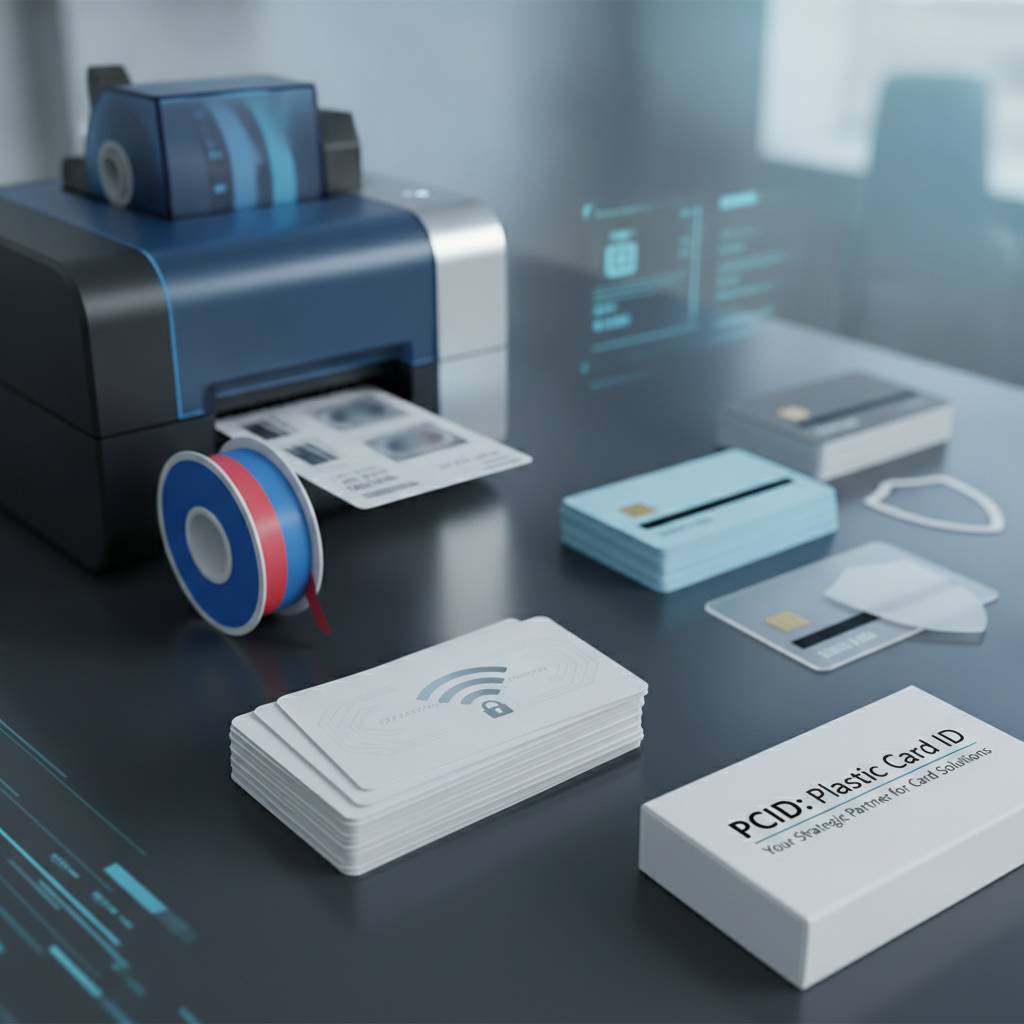 Blank RFID cards only become functional credentials when paired with the right issuance equipment. Plastic Card ID supplies a full lineup of card printers from Evolis, Zebra, and Fargo - the three brands that define professional card printing in the United States. Whether your program issues 50 cards a month or processes thousands in batch runs, there is a printer configuration precisely matched to your volume and encoding requirements.
Equally important are the consumables that sustain your program over time. Printer ribbons, cleaning kits, card sleeves, and card carriers are all stocked by CPE, eliminating the fragmented vendor relationships that slow down most in-house card programs. A single supplier relationship for cards, printers, and supplies is not a convenience - it is a strategic advantage that reduces errors, simplifies reordering, and ensures consistent quality across every batch.
Choosing the Right Printer for RFID Card Encoding
Not all card printers handle RFID encoding - it requires a printer model equipped with a contactless encoding module positioned to communicate with the embedded chip while the card passes through. Evolis Primacy and Zenius models with RFID modules, Zebra ZC series, and Fargo HDP5000 units are among the configurations Plastic Card ID recommends for organizations running RFID access card programs. Selecting a printer without encoding capability is a costly mistake for organizations that need to encode chips in-house.
For organizations that only print visual IDs and source pre-encoded blank RFID cards from Plastic Card ID, simpler print-only configurations work perfectly well. The key is aligning your printer specification with your actual workflow rather than over- or under-investing in equipment.
Ribbon Selection and Print Quality for Professional Credentials
The ribbon you use determines the visual quality, durability, and professional appearance of your finished cards. YMCKO ribbons (yellow, magenta, cyan, black overlay) are the standard for full-color ID cards with a protective topcoat. For cards that see heavy physical handling - access badges worn on lanyards daily - the overlay layer is the difference between a card that looks professional for two years and one that shows wear in two months.
Monochrome ribbons in black, blue, or white are cost-effective options for organizations printing text and barcodes only on pre-colored card stock. Plastic Card ID stocks ribbons for all major printer models and can advise on ribbon-to-card compatibility to prevent print quality issues before they occur. Call 800.835.7919 to discuss ribbon options for your specific printer model.
Cleaning Kits and Card Maintenance for Long-Term Program Health
A card printer is a precision device with tolerances measured in fractions of a millimeter. Dust, debris, and residue accumulate on print heads, rollers, and encoding surfaces over time. Regular cleaning with manufacturer-approved cleaning kits is not optional maintenance - it is the single most important thing an organization can do to protect its printer investment and maintain consistent output quality.
CPE supplies cleaning kits compatible with all major printer brands in the catalog. Establishing a scheduled cleaning routine - typically every 1,000 cards or at ribbon changes - prevents the gradual print quality degradation that leads to reprints, failed encodings, and eventually costly print head replacements.
RFID Access Card Solutions by Industry and Use Case
 Access control needs vary significantly by industry, and the blank RFID card solution that serves a boutique hotel is genuinely different from what a manufacturing plant requires. Plastic Card ID has spent 25 years working across verticals, building the product knowledge and inventory depth to support diverse programs without forcing clients into one-size-fits-all solutions.
From casino player cards that combine RFID with magnetic stripe encoding, to hospital staff badges that layer HF smart card access with printed photo identification, to university campus cards that handle dormitory access, dining, and cashless vending on a single credential - the applications are wide and the technical requirements specific. CPE matches the right card to the right application every time.
Corporate and Commercial Office Access Programs
Corporate access card programs range from small professional offices issuing 20-30 badges at a time to enterprise deployments managing thousands of employees across multiple facilities. Blank proximity and HF smart cards give HR and facilities teams full control over issuance timing, card design, and encoding without depending on outside vendors for every new hire or replacement card. The per-card cost at volume makes in-house programs dramatically more economical than outsourced credential printing.
Corporate programs frequently combine access control with visual ID, visitor management, and sometimes logical access to computer systems on a single card. Plastic Card ID supplies blank cards compatible with all major access control platforms including Lenel, Software House, Honeywell Pro-Watch, and Genetec environments.
Hospitality, Hotel Key Cards, and Event Credentials
Hotel key cards operate on RFID technology - most modern lock systems use MIFARE or similar HF protocols - and hotels that manage their own card inventory rather than ordering through lock vendors realize significant cost savings. Blank hotel key card stock is available in standard CR80 format, compatible with RFID lock encoding stations, and can be printed in-house with property branding, guest information, or promotional messaging.
Event venues, convention centers, and entertainment facilities use RFID access cards to manage tiered access, VIP areas, backstage credentials, and cashless concession programs. Clear and frosted card substrates add a premium aesthetic that matches the expectations of high-end events. Plastic Card ID handles event card programs from 500 cards to tens of thousands at a time.
- Hotel and resort key card programs - MIFARE compatible blank stock, in-house printable
- Convention and trade show credentials - RFID-enabled event badges with visual printing
- Casino player cards - Combination RFID and magnetic stripe for player tracking systems
- University campus cards - Multi-application smart cards covering access, dining, and vending
- Healthcare facility badges - Secure HF smart cards with printed photo ID for staff credentialing
- Industrial and manufacturing facility access - Rugged proximity cards for harsh environments
Healthcare, Education, and Government Applications
Healthcare facilities face some of the most demanding access control requirements of any vertical - controlled substance storage areas, pharmacy access, server rooms, pediatric wings, and operating suites all require reliable, secure, and auditable credential systems. MIFARE DESFire cards with AES encryption are the appropriate technology for high-security healthcare environments where access logging and credential integrity are regulatory requirements.
Universities and school districts managing thousands of students, faculty, and staff across sprawling campuses rely on HF smart cards that can be programmed for multiple applications simultaneously. Government agencies at local, state, and federal levels require credentials that meet FIPS 201 or similar standards - Plastic Card ID can advise on compliant card specifications for these environments.
Buyer's Guide - Frequently Asked Questions About Blank RFID Access Cards
Purchasing blank RFID cards for the first time - or transitioning from one card technology to another - generates a predictable set of questions. Getting clear answers before placing an order prevents the costly mistakes that plague organizations who treat RFID card purchasing as a simple commodity decision. The following questions represent what CPE hears most often from new and returning clients.
These answers reflect 25 years of real-world experience across thousands of access control deployments in every industry sector. If your specific situation is not addressed here, the team at Plastic Card ID is available to discuss your program requirements directly.
What Information Do I Need to Provide When Ordering Blank RFID Cards?
At minimum, you need to know your reader's operating frequency (125 kHz or 13.56 MHz), the chip type or card format your system uses (HID Prox, MIFARE Classic, MIFARE DESFire, etc.), whether you need pre-encoded or blank un-encoded cards, and your anticipated order quantity. Many buyers are unsure of their reader specifications - your access control system integrator or the documentation for your reader hardware will have this information.
If you are printing on the cards in-house, also note your printer make and model, since some RFID card constructions affect printability. CPE can cross-reference your printer model against the card stock to confirm compatibility before you commit to an order.
Can Blank RFID Cards Be Printed On With Standard Card Printers?
Most blank RFID access cards are designed for dye-sublimation printing and are fully compatible with standard CR80 card printers. The embedded antenna and chip do not affect print quality when the card substrate is manufactured to proper caliper specifications. The key variable is card flatness - an RFID card with an off-center or bulging chip area can cause feed jams or inconsistent print results in some printer models.
Cards supplied by Plastic Card ID meet ISO 7810 dimensional standards, ensuring consistent, reliable printing on all major printer brands in our catalog. When ordering RFID cards for a print program, always verify that your printer's feeder is configured for 30 mil card stock.
What Quantities Are Available and How Does Pricing Work?
Blank RFID card pricing scales with volume - a fundamental economic reality of card programs that rewards organizations who plan ahead and consolidate their purchasing. Small runs of 100-500 cards serve pilot programs and smaller organizations, while volume tiers at 1,000, 5,000, and 10,000 cards deliver progressively better per-card economics. Plastic Card ID supports programs at every scale, from a small office issuing 50 cards a month to enterprise deployments in the tens of thousands.
Pricing varies by card technology, chip type, and order volume. Proximity cards at 125 kHz are generally the most cost-accessible option. MIFARE DESFire cards command a premium reflecting their advanced chip capabilities. Request a current quote by contacting Plastic Card ID directly - volume pricing can make a meaningful difference in your program's annual operating cost.
Why Plastic Card ID Is the Right Partner for Your RFID Card Program
 There is no shortage of online card vendors willing to process a transaction. What is genuinely rare is a supplier with the product depth, technical knowledge, and long-term relationship orientation to function as a real strategic partner for your card program. Plastic Card ID has been that partner for over 100,000 customers across the United States - and the difference between a transactional vendor and a genuine partner shows up every time a question needs answering, a specification needs verification, or a program needs to scale quickly.
CPE does not just ship boxes of cards. The team engages with your program requirements, helps you navigate technology decisions, and ensures that what you order will perform exactly as intended in your environment. After 25 years and 50 million cards, that expertise is real, tested, and available to every client regardless of program size.
A Full Product Ecosystem Under One Roof
From blank RFID proximity cards and MIFARE smart cards to card printers, printer ribbons, cleaning kits, card carriers, and card mailing services - everything your access card program needs is available through a single supplier relationship. Consolidated purchasing eliminates the vendor fragmentation that creates reordering delays, compatibility confusion, and administrative overhead in card programs managed through multiple sources.
The catalog also extends to magnetic stripe cards in both HiCo and LoCo configurations, clear and frosted specialty cards, colored PVC stock, and luxury metal cards in stainless steel, brass, and gold for executive credential programs where card aesthetics carry organizational weight. Whatever your program requires, Plastic Card ID almost certainly stocks it.
Scalable Solutions From 50 Cards to Mass Production
A compelling feature of working with Plastic Card ID is the program's ability to scale without friction. Organizations that start with a modest 100-card pilot deployment and grow to a 10,000-card enterprise program do not need to change suppliers, renegotiate terms, or rebuild supplier relationships as their needs evolve. The same expertise and product quality that serves a small business serves a large institution - the volume simply adjusts.
This scalability matters especially for organizations in growth phases - new corporate facilities opening, expanding university campuses, hotel chains adding properties, or healthcare systems merging. Your card supplier should be able to grow with you, not become a bottleneck at exactly the moment when your access control program needs to perform at its best.
Reach Out and Start the Conversation Today
The best access card programs are built on good information and the right supplier relationship. If you are evaluating blank RFID cards for a new access system, replacing an aging proximity card stock, or expanding an existing program, Plastic Card ID is ready to help you make the right decisions from the start. Speak directly with a card program specialist who understands the technical landscape and can match your requirements to the right product configuration.
Call 800.835.7919 to discuss your blank RFID access card requirements, request a volume quote, or ask questions about card and printer compatibility. The conversation costs nothing - and the right advice at the beginning of a card program can save significant time, money, and operational headache down the road.
Ready to build a smarter, more secure access card program? Contact Plastic Card ID today at 800.835.7919 - your strategic partner in blank plastic cards for RFID access systems, supplying USA businesses with the technology, products, and expertise to run successful card programs at any scale.