Blank Plastic Card Supplier Checklist: What to Look For
Table of Contents []
- The Smart Buyer's Blank Plastic Card Supplier Checklist - Powered by Plastic Card ID
- Why the Supplier You Choose Defines Your Entire Card Program
- Decoding Card Specifications: What You Must Know Before Ordering
- The True Value Proposition of Blank Cards in Your Card Program
- Your Blank Plastic Card Supplier Checklist: 20 Questions to Ask Before Committing
- Specialty Card Solutions: When Standard Blank Cards Aren't Enough
- Common Mistakes on the Blank Plastic Card Supplier Checklist (And How to Avoid Them)
- Partner with Plastic Card ID - Your Complete Blank Plastic Card Supplier Solution
The Smart Buyer's Blank Plastic Card Supplier Checklist - Powered by Plastic Card ID
 Choosing a blank plastic card supplier sounds straightforward until you're staring at a catalog with dozens of card types, confused about HiCo versus LoCo magnetic stripes, wondering whether your printer is compatible, and realizing the vendor you almost chose doesn't actually stock what you need. The stakes are higher than most buyers expect. Whether you're outfitting 50 employee badges or launching a loyalty program for 10,000 retail customers, the supplier you pick shapes every downstream result.
This checklist-style guide exists because procurement mistakes in the plastic card space are painfully common - and almost entirely avoidable. Walk through each section, match what you read against what a potential supplier offers, and you'll make a decision you won't regret six months in when your card program is running at full speed.
| Card Type | Primary Use Case | Key Feature |
|---|---|---|
| Blank CR80 PVC | Employee ID, access, membership | ISO 7810 standard, 30 mil thickness |
| HiCo Magnetic Stripe | Gift cards, loyalty, key cards | High coercivity, data-resistant |
| LoCo Magnetic Stripe | Hotel keys, event access | Lower coercivity, easy encode |
| RFID / Proximity | Access control, contactless ID | Contactless read range |
| Smart Chip (MIFARE DESFire) | Campus, casino, secure access | Encrypted contactless data |
| Clear / Frosted PVC | Premium branding, VIP programs | Transparent or translucent finish |
| Metal Cards (Stainless, Brass) | Luxury membership, executive ID | Premium weight and appearance |
Why the Supplier You Choose Defines Your Entire Card Program
 Here's something that doesn't get said often enough: a card program is only as reliable as the supply chain behind it. You can design a beautiful loyalty card, launch a polished gift card campaign, or install a sophisticated access control system - and still watch it unravel because your supplier ran out of compatible stock, shipped the wrong magnetic stripe grade, or couldn't scale when your order volume doubled unexpectedly.
The difference between a transactional vendor and a true strategic partner shows itself in the details. Does the supplier know whether your card printer requires 30 mil cards or tolerates 20 mil? Do they stock HiCo and LoCo magnetic stripe cards separately and label them clearly? Can they ship within a timeline that matches your program launch date? These aren't luxury considerations. They are baseline requirements for any serious card operation.
Volume Flexibility: From 50 Cards to 50,000
Not every organization needs pallets of plastic. A local gym launching a membership program might start with 200 cards. A regional retail chain could need 15,000 gift cards for a holiday campaign. A supplier worth trusting handles both scenarios without penalizing you for scale. Volume pricing tiers should be clearly published, not negotiated under pressure.
The practical checklist item here is simple: ask for per-unit pricing at three different quantities - small, medium, and large. If the supplier hesitates, hides the numbers, or quotes wildly inconsistent margins, that tells you something important before you've committed to anything. CPE provides transparent volume pricing because the relationship matters more than a single transaction.
Card Type Coverage and Catalog Depth
A limited catalog creates ceiling effects on your program's growth. If your supplier only stocks white CR80 blanks and two magnetic stripe options, you're locked into a narrow design and functionality range. Programs evolve - a membership card today might need an RFID chip next year. Catalog depth isn't optional; it's future-proofing.
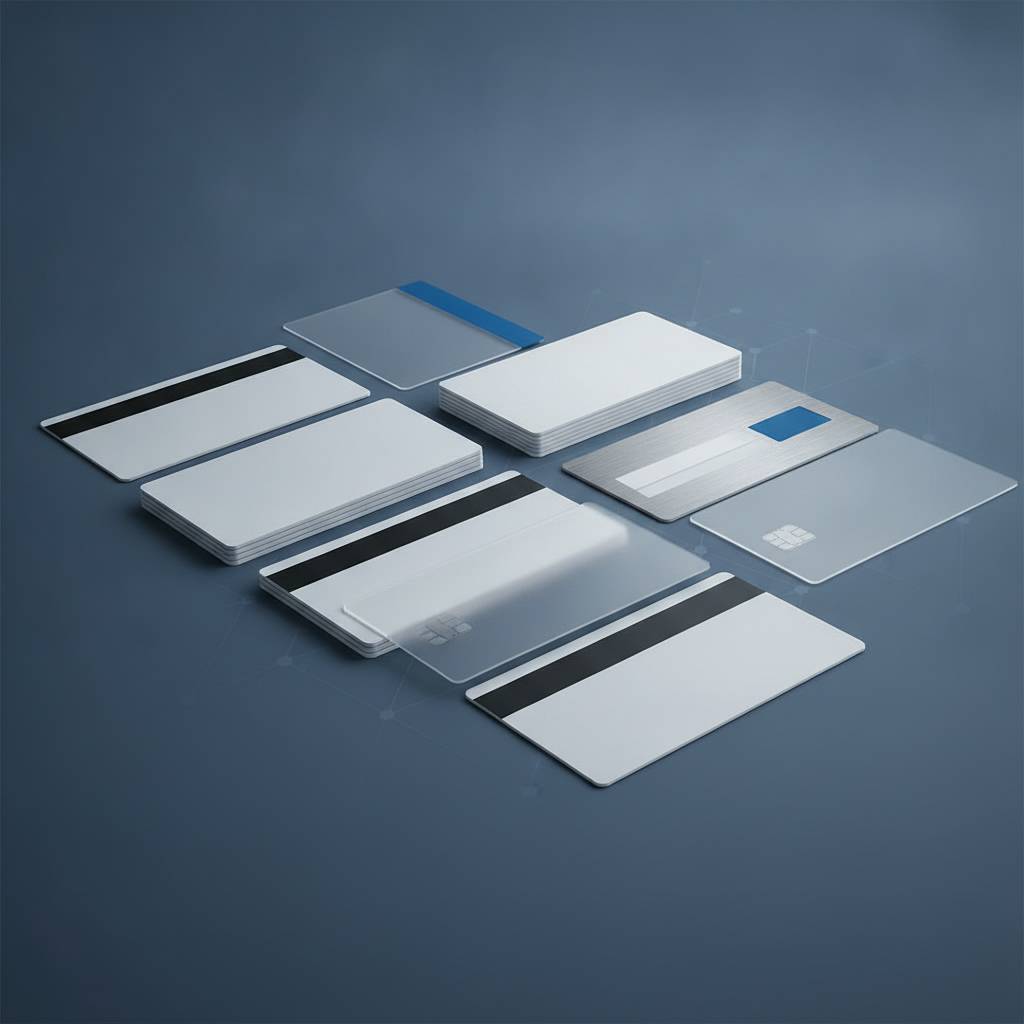
Look for suppliers who stock blank PVC in multiple finishes (white, colored, clear, frosted), both HiCo and LoCo magnetic stripe grades, RFID and proximity options, smart chip cards, and specialty formats like die-cut shapes or metal cards. The ability to source everything from one vendor reduces coordination complexity enormously.
USA-Based Stock and Reliable Fulfillment
Import delays, customs holds, and overseas shipping timelines have caused serious disruptions for organizations that sourced plastic cards internationally without understanding the risks. Domestic stock - warehoused and ready to ship within the United States - is a meaningful operational advantage. When your event is in three weeks or your employee onboarding batch is due Friday, lead time is everything.
Confirm that your supplier maintains domestic inventory rather than drop-shipping from overseas on demand. Ask about typical order processing times and whether rush orders are available. A supplier who has served over 100,000 U.S. customers and shipped more than 50 million cards has built logistics infrastructure worth relying on.
Decoding Card Specifications: What You Must Know Before Ordering
Most procurement errors in the blank plastic card space stem from specification mismatches. The wrong thickness cracks a card printer's rollers. The wrong magnetic stripe coercivity fails to encode properly. A card that's a millimeter too thick jams your ID card issuance system. Understanding the specs before you order is not optional - it is the baseline competency that separates successful card programs from expensive mistakes.

The ISO 7810 standard defines CR80 card dimensions at 3.375 inches by 2.125 inches at 30 mil (0.030 inches) thickness - the same dimensions as a standard credit card. This is the format your card printer almost certainly expects. Deviating from this without knowing what you're doing is how programs go sideways before they launch.
HiCo vs. LoCo Magnetic Stripe: A Practical Breakdown
High coercivity (HiCo) magnetic stripes operate at 2750 Oersteds and resist data corruption from everyday magnetic sources like bag clasps, refrigerator magnets, and proximity to other cards. HiCo is the right choice for gift cards, loyalty cards, and any card that will live in a wallet alongside other magnetic items for months or years. LoCo stripes operate at 300 Oersteds and are fine for short-term applications like hotel key cards that get wiped and reused.
A common and costly mistake: ordering LoCo cards for a gift card program because they're slightly cheaper per unit. The data corruption rate over time quietly destroys customer experience and forces reissuance - which eliminates any savings instantly. Ask your supplier explicitly which grade you're ordering, confirm it's labeled on the packaging, and verify it matches your card printer's encoder specifications.
RFID and Smart Card Technology: Matching the Right Chip to Your System
Contactless cards are not interchangeable. A 125 kHz proximity card will not work with a 13.56 MHz MIFARE reader. Compatibility between your cards and your access control or point-of-sale reader infrastructure is non-negotiable - and a good supplier will help you identify the right specification rather than just taking your order blindly. MIFARE DESFire cards offer encrypted, high-security contactless data exchange and are commonly used in campus environments, casinos, and secure corporate access systems.
Before purchasing any RFID or smart chip cards, get the exact frequency and chip specification required by your system manufacturer. Pass that specification to your card supplier and ask them to confirm compatibility. This two-minute conversation eliminates the risk of receiving an entire order of incompatible cards and waiting weeks for replacement stock.
Card Thickness, Finish, and Printer Compatibility
The 30 mil standard thickness works with virtually all direct-to-card and retransfer card printers. Specialty cards - composite PVC, clear cards, metal-core cards - may require printer-specific settings or are incompatible with certain models. Frosted and clear PVC cards behave differently under print heads and may need ribbon adjustments. Always cross-reference card specifications against your printer's accepted media list before placing a bulk order.
This is where a supplier who also sells card printers and ribbons has a genuine service advantage. They understand the full ecosystem, not just the cards in isolation. CPE stocks Evolis, Zebra, and Fargo printers alongside a complete range of ribbons and cleaning kits - meaning the compatibility conversation happens with someone who actually knows both sides of the equation.
| Attribute | HiCo (High Coercivity) | LoCo (Low Coercivity) |
|---|---|---|
| Coercivity | 2750 Oe | 300 Oe |
| Data Durability | High | Lower |
| Best For | Gift cards, loyalty, long-term use | Hotel keys, short-term access |
| Cost | Slightly higher | Slightly lower |
The True Value Proposition of Blank Cards in Your Card Program
 There's a quiet revolution in how businesses manage their card programs, and it centers on blank cards. Organizations that print cards in-house - using a desktop card printer loaded with blank CR80 stock - gain something that pre-printed custom cards can't offer: the ability to issue cards on demand, update designs without waste, and maintain control over every badge, credential, or loyalty card in circulation. That agility has real dollar value.
Retailers who switched from paper-based punch cards and gift certificates to plastic gift cards reported sales increases in the 35-50% range. The physical permanence of plastic - its weight in a wallet, its resistance to wear, its professional appearance - communicates something about the brand that paper simply cannot replicate. Loyalty cards that live in wallets get used. Paper cards get lost in junk drawers.
In-House Printing: Control, Cost, and Speed
The economics of in-house card printing favor organizations with ongoing issuance needs. A desktop card printer - an Evolis Primacy, a Zebra ZC300, a Fargo HDP5000 - combined with reliable blank card stock and ribbon inventory creates an issuance operation that costs a fraction of ordering pre-printed cards in small batches. The breakeven point arrives faster than most procurement teams expect.
Speed matters enormously in employee onboarding, event credentialing, and seasonal loyalty programs. With in-house printing capability and a standing inventory of blank cards, a new hire badge takes minutes. An event credential for a last-minute attendee registration is printed on the spot. No production queue, no minimum order quantity, no waiting.
Blank Cards as the Foundation of Scalable Programs
Starting small is smart. A nonprofit running a volunteer recognition program doesn't need 10,000 cards. A boutique hotel building a loyalty program might start with 500 cards a month. Blank cards allow any organization to begin at the right scale and grow without switching suppliers or redesigning their entire program infrastructure. The card itself is the constant; what gets printed or encoded changes as the program evolves.
This scalability is why organizations with serious card programs maintain a relationship with a supplier who understands their long-term trajectory - not just their current order. CPE has built exactly that kind of relationship with clients ranging from small businesses issuing 50 cards monthly to enterprises running card programs in the tens of thousands per month.
The Supplier Checklist Item Most Buyers Skip: Value-Added Services
Cards don't exist in isolation. They need ribbons for the printer. Cleaning kits to maintain print head longevity. Card carriers and sleeves for distribution. Sometimes they need to be affixed to mailers and sent directly to cardholders. A supplier who covers all of these needs under one roof eliminates a procurement headache that compounds over time.
Every time you source from a different vendor - ribbons here, cleaning kits there, card carriers from a third supplier - you multiply the coordination effort, the shipping costs, and the risk of compatibility gaps. A one-stop-shop supplier with depth in accessories is worth a meaningful premium over a card-only vendor with lower unit prices but no surrounding service infrastructure.
Your Blank Plastic Card Supplier Checklist: 20 Questions to Ask Before Committing
 Evaluating suppliers without a structured framework leads to decisions based on price alone - which is how card programs get into trouble. The checklist below gives procurement managers, office administrators, and operations leads a concrete evaluation structure that covers the dimensions that actually matter. Run every candidate supplier through these questions before you place your first order.
Some of these questions have simple yes/no answers. Others reveal the depth of a supplier's knowledge and commitment to your program's success. Pay attention not just to the answers but to how confidently and completely they're delivered. A supplier who hesitates on basic specification questions is not someone you want running a critical supply chain for your organization.
Catalog and Specification Questions
- Do you stock blank CR80 cards at the ISO 7810 standard 30 mil thickness?
- Do you carry both HiCo and LoCo magnetic stripe cards, clearly labeled by grade?
- Is your RFID and proximity card inventory organized by frequency (125 kHz, 13.56 MHz)?
- Do you offer smart chip cards including MIFARE DESFire?
- Are clear, frosted, and colored stock cards available for same-order mixing?
- Do you carry specialty formats - die-cut shapes, metal cards in stainless, brass, or gold?
Fulfillment and Operations Questions
Beyond the catalog, operational reliability is where supplier relationships are won or lost. A supplier who consistently ships accurate orders on time, communicates proactively about stock availability, and processes reorders without friction earns long-term loyalty - and deserves it.
- Where is your inventory warehoused, and are cards shipped domestically within the USA?
- What is your typical order processing and shipping timeline?
- Do you offer rush order options for time-sensitive programs?
- What are your volume pricing tiers, and are they published transparently?
- Can I order as few as 50-100 cards without minimum quantity surcharges?
- Do you support recurring standing orders for ongoing card programs?
Printer Ecosystem and Compatibility Questions
A supplier who sells only cards but has no knowledge of card printers is selling you half the solution. Ribbon compatibility, cleaning kit schedules, and card thickness tolerances vary by printer model and manufacturer. Buying cards from a supplier who also supports your printer brand means every component in your issuance process comes from a source that understands the full stack.
- Do you sell card printers from brands like Evolis, Zebra, and Fargo?
- Do you stock ribbons compatible with the printer models you sell?
- Can you confirm card compatibility with a specific printer model before I order?
- Do you carry card printer cleaning kits and accessories?
- Do you offer card affixing and mailing services for distribution programs?
- Can you supply card carriers and sleeves for packaged card distribution?
Specialty Card Solutions: When Standard Blank Cards Aren't Enough
Most card programs start with standard white CR80 blanks and grow into more sophisticated needs over time. But some programs - casino player programs, luxury hotel loyalty cards, corporate executive ID systems - require specialty formats from day one. Knowing what's available before you need it puts you in a position to upgrade your program without scrambling for a new supplier.
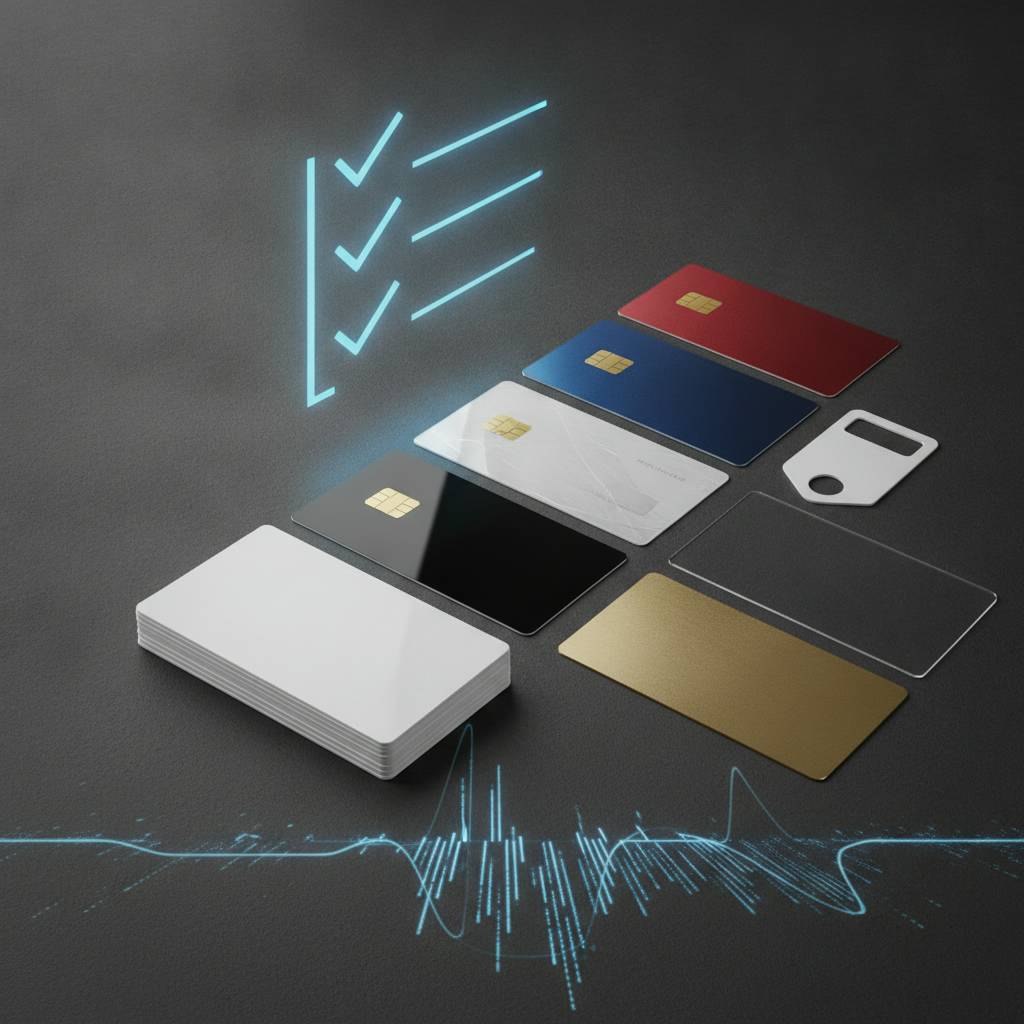
Specialty doesn't mean complicated to source. It means knowing which supplier has the depth to deliver - and that's a qualification you want confirmed before your program depends on it, not during a critical launch window when alternatives are limited.
Casino, Hotel, and High-Security Card Applications
Casino player cards carry unique requirements: they must withstand heavy daily handling, encode reliably across high-volume reader systems, and often support tiered loyalty structures that require specific chip or magnetic encoding protocols. Hotel key cards must demagnetize and re-encode hundreds of times without data degradation. Both applications demand suppliers who understand the technical requirements, not just the physical card format.
RFID smart cards with MIFARE DESFire encryption are increasingly standard in high-security environments - corporate campuses, government facilities, and hospitality properties where access control is multi-layered. Proximity cards at 125 kHz remain common in legacy access systems. Stocking both and understanding when each applies is a sign of genuine supplier expertise in the identity and access segment.
Clear, Frosted, and Custom Die-Cut Cards
Clear and frosted PVC cards have moved from novelty to mainstream in premium loyalty and VIP programs. They photograph beautifully, photograph distinctively in marketing materials, and communicate a tier of brand investment that white plastic cannot. When a cardholder can see through their loyalty card or feel the subtle texture of a frosted finish, the physical object itself reinforces brand premium positioning.
Die-cut custom shapes - cards that aren't rectangular - are used in event credentials, specialty promotional cards, and brand-forward programs where differentiation at the physical level matters. A key-shaped card for a hotel loyalty program. A rounded card for a wellness brand. These are not gimmicks; they're deliberate brand touchpoints that increase perceived value and card retention rates.
Luxury Metal Cards: Stainless Steel, Brass, and Gold
Metal cards occupy the top tier of the plastic card market in terms of perceived value and member status signaling. When an executive hands over a stainless steel membership card, or a VIP casino player receives a gold-finish player card, the physical object makes a statement that no paper or standard PVC card can come close to matching. The weight alone is communicative.
Stainless steel, brass, and gold-finish metal cards are available for organizations where the highest-tier member experience is a core part of the value proposition. They require specific handling, cannot be processed through standard card printer mechanisms, and come with correspondingly premium pricing - but for the right program and the right audience, the return on that investment is immediate and measurable.
Ready to move from evaluation to action? Contact Plastic Card ID to verify your card specifications and place your first order with confidence.
Common Mistakes on the Blank Plastic Card Supplier Checklist (And How to Avoid Them)
 Procurement professionals who've managed card programs for any length of time develop strong opinions about what goes wrong and when. The patterns repeat. The same specification mismatches, the same minimum order surprises, the same compatibility gaps between cards and printers show up across industries and organization sizes. Knowing them in advance is the simplest form of risk management available.
None of these mistakes are complicated in retrospect. They're all avoidable with a structured checklist approach and a supplier who asks the right clarifying questions before confirming your order rather than after shipping it.
Ordering by Price Alone Without Confirming Compatibility
The cheapest blank card is expensive if it jams your printer, fails to encode, or produces substandard print quality. Price comparison without specification verification is one of the most consistent sources of card program disruption. A $0.03 per-card savings that results in a reorder, a printer service call, and a delayed program launch costs far more than the "premium" supplier would have charged.
The checklist discipline here is straightforward: confirm your printer model, confirm the card specifications the printer manufacturer recommends, and verify with your supplier that their stock matches those specs before ordering. This takes five minutes and prevents scenarios that take weeks to resolve. CPE builds this verification into the ordering process because it protects both parties.
Ignoring Stripe Grade for Loyalty and Gift Card Programs
Ordering LoCo magnetic stripe cards for a gift card program is the single most common specification error in retail card procurement. The motivation is understandable - LoCo cards often price slightly lower per unit. But in a gift card program where cards may live in wallets alongside other magnetic cards, bags with metal clasps, and near speakers and electronic devices, LoCo data corruption is a real and recurring problem.
The resolution is always the same: confirm with your supplier that gift card and loyalty card programs require HiCo magnetic stripe cards at 2750 Oe. Put this in writing in your purchase order. Verify the packaging label before opening your first box. This single discipline eliminates one of the most expensive reissuance scenarios in the card program business.
Failing to Plan for Ongoing Supply Continuity
Card programs don't end. New employees join. Loyalty members need replacement cards. Event credentials need to be printed for next year's conference. Treating your blank card supplier relationship as a one-time transaction rather than an ongoing supply partnership creates unnecessary disruption every time you need to reorder. New suppliers need to be vetted. New specifications need to be confirmed. Pricing negotiated again.
Establishing a standing relationship with a supplier who knows your program specifications, your printer models, your volume patterns, and your delivery requirements transforms procurement from a recurring project into a managed, reliable supply chain. That's the relationship Plastic Card ID builds with every client across every scale of program - and it's available starting with your very first order by calling 800.835.7919.
Partner with Plastic Card ID - Your Complete Blank Plastic Card Supplier Solution
 Every item on the blank plastic card supplier checklist points toward the same conclusion: the supplier who combines catalog depth, specification expertise, domestic fulfillment, printer ecosystem knowledge, and genuine long-term partnership orientation is the supplier worth choosing. That combination is rare. It is what Plastic Card ID has built across more than 25 years and over 100,000 client relationships in the United States.
From the simplest order of white CR80 blank cards for an employee badge program to complex smart card specifications for a campus access control deployment, CPE has the stock, the knowledge, and the service infrastructure to support your program at every stage. Blank cards, magnetic stripe stock, RFID and smart chip cards, clear and frosted PVC, metal luxury cards, card printers, ribbons, cleaning kits, card carriers, and mailing services - all from one trusted source.
Don't let supplier uncertainty slow your card program down. Reach out to Plastic Card ID today and put the full weight of 50 million cards of experience behind your next order. Call 800.835.7919 now and speak with a card program specialist who will walk through your checklist with you, confirm every specification, and get your program moving with confidence.
Previous Page