Plastic Card Dimensions and Sizing Guide for Buyers
Table of Contents []
- Your Complete Plastic Card Dimensions and Sizing Guide - Brought to You by Plastic Card ID
- The CR80 Standard - The Format That Runs the World
- Card Thickness Variations - When to Go Thicker or Thinner
- Card Size Formats Beyond CR80 - CR79, CR100, and More
- Magnetic Stripe Specifications - HiCo vs. LoCo and Track Layout
- RFID and Smart Card Dimensions - Same Size, Different Technology
- Clear, Frosted, and Specialty Card Formats - Same Dimensions, Unique Impact
- Putting It All Together - Working With Plastic Card ID on Your Card Program
Your Complete Plastic Card Dimensions and Sizing Guide - Brought to You by Plastic Card ID
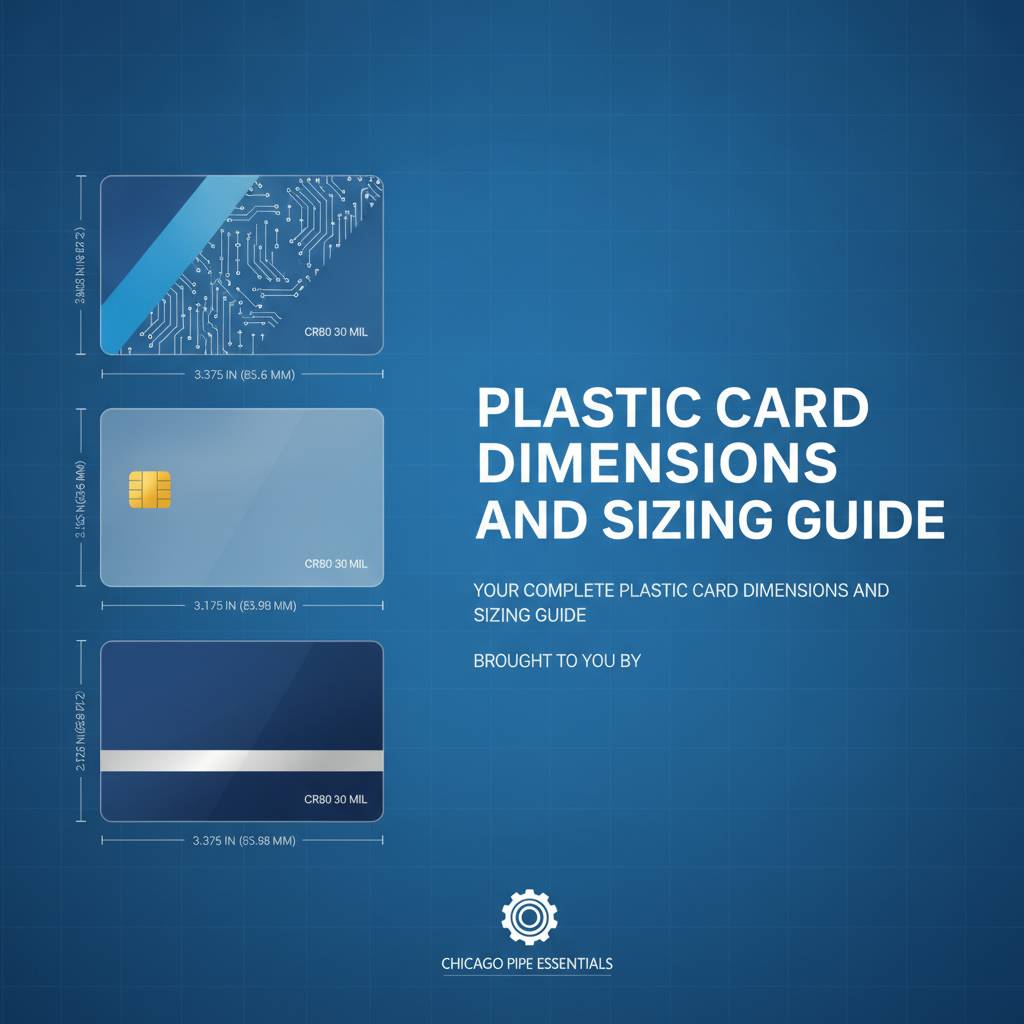 Walk into any wallet in America and you will find them - those slim, rigid rectangles that carry weight far beyond their physical size. Gift cards, membership badges, hotel keys, employee IDs. They all share something fundamental: a carefully standardized set of dimensions that makes them universally compatible, recognizable, and functional. Understanding plastic card dimensions is not just a technical detail. It shapes everything from your printer selection to your cardholder design to how your customers interact with your brand every single day.
Whether you are launching a loyalty program, issuing staff credentials, or building out an access control system, getting the sizing right from the start saves money, prevents headaches, and keeps your card program running without interruption. Plastic Card ID has spent over 25 years helping organizations across the United States navigate exactly these decisions - and this guide covers everything you need to know.
| Card Format | Dimensions (inches) | Dimensions (mm) | Common Use |
|---|---|---|---|
| CR80 (Standard) | 3.375" x 2.125" | 85.6 x 54 mm | ID, loyalty, gift, membership |
| CR79 | 3.303" x 2.051" | 83.9 x 52.1 mm | Adhesive-back hotel keys |
| CR100 | 3.88" x 2.63" | 98.5 x 67 mm | Oversized cards, specialty use |
| CR60 | 2.625" x 3.75" | 66.6 x 95.3 mm | Mini cards, specialty programs |
| Standard Thickness | 30 mil | 0.76 mm | All standard card types |
The CR80 Standard - The Format That Runs the World
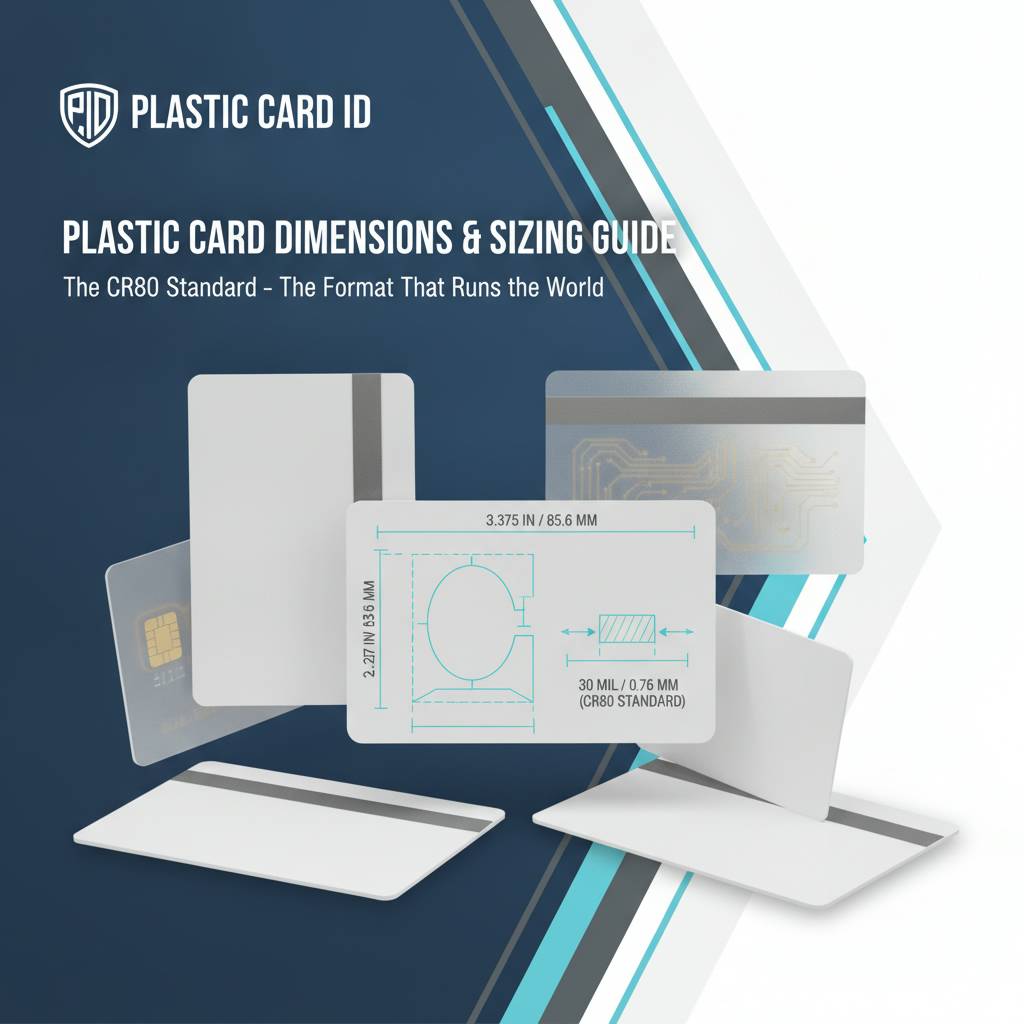 The CR80 format is, without question, the backbone of every plastic card program in existence. At 3.375 inches wide by 2.125 inches tall with a thickness of 30 mil (0.76 mm), it matches the ISO 7810 international standard. That alignment matters enormously. It means your cards will slide into every standard wallet slot, card holder, badge holder, and printer tray without modification, guesswork, or waste.
Businesses often underestimate how much standardization protects them. When a card is the wrong size, even slightly, it may jam in a printer, fail to read properly on a magnetic stripe reader, or simply look odd beside every other card a customer owns. The CR80 eliminates all of that friction. It is the format that rewards you for choosing it - consistently, reliably, and at scale.
Why ISO 7810 Compliance Matters for Your Program
ISO 7810 is the international specification that governs identification card dimensions. Compliance with this standard is not bureaucratic box-checking - it is the reason your employee badge works in the same badge holder as your colleague's access card across the country. Standardized sizing creates interoperability, and interoperability reduces cost and complexity at every stage of a card program.
When CPE supplies blank CR80 cards to clients, those cards are manufactured to meet this specification precisely. Tolerances are tight. Dimensions are verified. The result is a card that performs exactly as expected in any compliant reader, printer, or holder - the first time and every time after that.
Thickness: Why 30 Mil Is the Sweet Spot
Card thickness, measured in mils (thousandths of an inch), directly affects how a card feels in hand and how it performs in equipment. The standard 30 mil thickness is engineered for balance - rigid enough to project quality and durability, flexible enough to avoid cracking under normal use, and thin enough to stack and store efficiently at scale.
Thinner cards exist, and some programs use them for temporary credentials or short-run events. But for any program where longevity, perceived value, and equipment compatibility matter, 30 mil is the established answer. It is what card printers from Evolis, Zebra, and Fargo are calibrated for by default, and it is what customers expect to hold in their hands.
Contact Plastic Card ID for Standard Stock Orders
If you need CR80 blank cards in any quantity - whether 500 or 50,000 - Plastic Card ID has the inventory and the infrastructure to fulfill your order quickly. Programs ranging from 50 cards a month to mass production orders are handled with the same commitment to accuracy and speed. Reach the team directly at 800.835.7919 to discuss your requirements and get a fast quote.
Card Thickness Variations - When to Go Thicker or Thinner
While 30 mil is the universal standard, real-world card programs sometimes call for deviation - and knowing when and why makes all the difference. Thicker cards, often 40 mil or higher in specialty formats, communicate premium positioning. Luxury metal cards, for instance, are significantly heavier and thicker, producing a tactile impression that no standard PVC card can replicate. Thinner cards, sometimes used for short-term event passes or disposable credentials, reduce per-card cost but sacrifice the durability and feel that longer-term programs require.
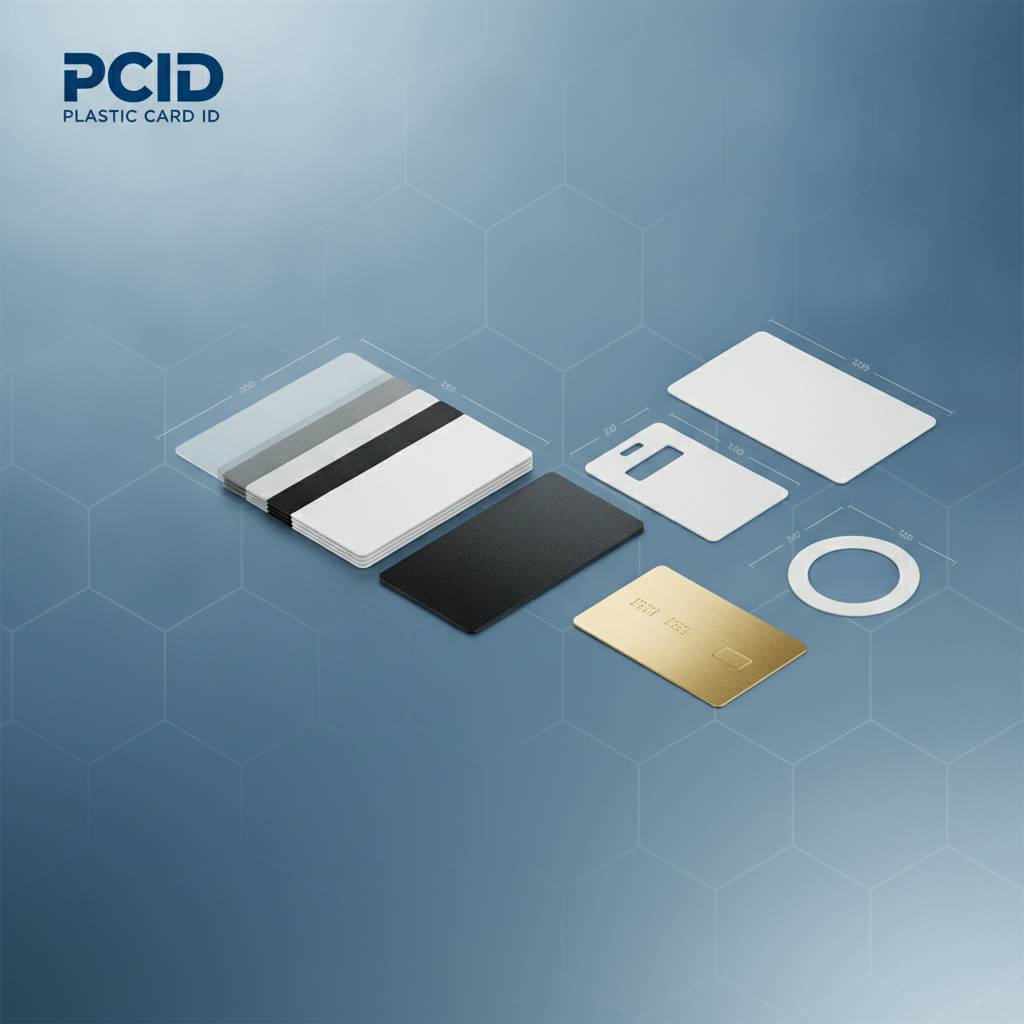
The key is matching thickness to purpose. A casino player card needs to survive heavy daily use, multiple reader passes, and years of wallet storage. A one-day event credential does not. Understanding this distinction prevents over-spending on short-term applications and under-investing in programs where card quality directly influences brand perception.
Standard 30 Mil Applications
For the vast majority of card programs - loyalty cards, employee IDs, membership cards, hotel key cards, gift cards, and access control credentials - 30 mil is the right answer every time. It is compatible with every major card printer on the market, including the full lineup available through CPE, from compact desktop units to high-volume industrial printers.
The consistency of 30 mil stock across such a wide range of applications simplifies purchasing, inventory management, and printer calibration for businesses that run multiple card programs simultaneously. One card stock. Many programs. Maximum operational efficiency.
Premium and Specialty Thickness Options
Luxury metal cards - available in stainless steel, brass, and gold formats - occupy a category entirely their own. These are not measured in mils the way PVC cards are, and they require entirely different fulfillment processes. They are chosen specifically because their weight and tactile presence communicate something that plastic simply cannot: exclusivity, permanence, and high-end brand identity.
Organizations issuing VIP membership cards, exclusive loyalty tiers, or premium employee recognition credentials increasingly turn to metal cards as a deliberate brand statement. The cost is higher per unit, but the impression they leave is measurably different - and in the right context, that difference drives real retention and engagement results.
Thin Cards for Short-Term Use Cases
Some scenarios genuinely do not require the full 30 mil standard. Temporary event credentials, single-use access passes, and trial membership cards for marketing campaigns may be printed on thinner PVC stock without compromising their intended function. These cards are typically not meant to survive years of wallet use - they are functional for a specific window of time and purpose.
The critical point is intentionality. Choosing a thinner card for legitimate short-term reasons is smart resource allocation. Defaulting to thinner stock to save a few cents on a long-term program is a false economy that degrades perceived value and leads to card replacement costs far exceeding any initial savings.
Card Size Formats Beyond CR80 - CR79, CR100, and More
 The CR80 dominates, but it is not the only format in play. Specific use cases call for specific sizes, and understanding the alternatives prevents costly mismatches between card format and card application. Choosing the wrong format can mean incompatibility with your reader hardware, your badge holders, or your fulfillment workflow - none of which are pleasant discoveries after an order has been placed.
The CR79 is slightly smaller than the CR80, measuring 3.303 by 2.051 inches. It exists primarily to accommodate adhesive-back hotel key card applications, where the card is designed to be mounted or handled differently than a standard wallet card. The CR100 is larger, at 3.88 by 2.63 inches, and is used for oversized specialty credentials and display applications. Each format has its niche, and Plastic Card ID carries inventory across these variations.
CR79: The Hotel Key Card Standard
Hotel properties and hospitality operations frequently encounter the CR79 specification when working with door access systems. The slightly reduced dimensions allow for adhesive backing applications common in certain property management and keycard delivery systems. If your property management system or door lock manufacturer specifies CR79, using CR80 stock instead will create equipment compatibility problems that are entirely avoidable.
Confirming card format specifications with your hardware vendor before placing a card order is a simple step that eliminates friction downstream. The CPE team can help you cross-reference card specifications with hardware requirements if any ambiguity exists.
CR100 and Oversized Formats
Oversized plastic cards serve a variety of specialty applications - promotional display pieces, custom die-cut formats, certain types of event credentials where visibility matters more than wallet compatibility. The CR100 format, at nearly four inches wide, creates a noticeably larger visual surface that stands out in a physical environment where standard-sized cards might get lost in a stack.
Custom die-cut shapes take this concept further, allowing organizations to create cards in virtually any form factor. Round cards, keychain-format cards, shaped promotional pieces - these fall outside standard CR sizing entirely but are absolutely available as specialty options. The trade-off is compatibility with standard printers and readers, so these formats are typically used for applications where the card's primary function is visual or promotional rather than encoded or swiped.
Choosing the Right Format for Your Application
- CR80 (3.375" x 2.125") - Standard loyalty, ID, membership, gift, and access cards; works with all standard printers and readers
- CR79 (3.303" x 2.051") - Adhesive-back applications, hotel key systems with specific hardware requirements
- CR100 (3.88" x 2.63") - Oversized promotional, display, or specialty credential applications
- Custom Die-Cut - Shaped promotional pieces, keychain cards, brand-forward specialty formats
- Standard Thickness (30 mil) - Any long-term, wallet-carried, or equipment-processed card program
- Luxury Metal - Premium VIP, executive membership, or high-end loyalty tiers where tactile impact drives engagement
Magnetic Stripe Specifications - HiCo vs. LoCo and Track Layout
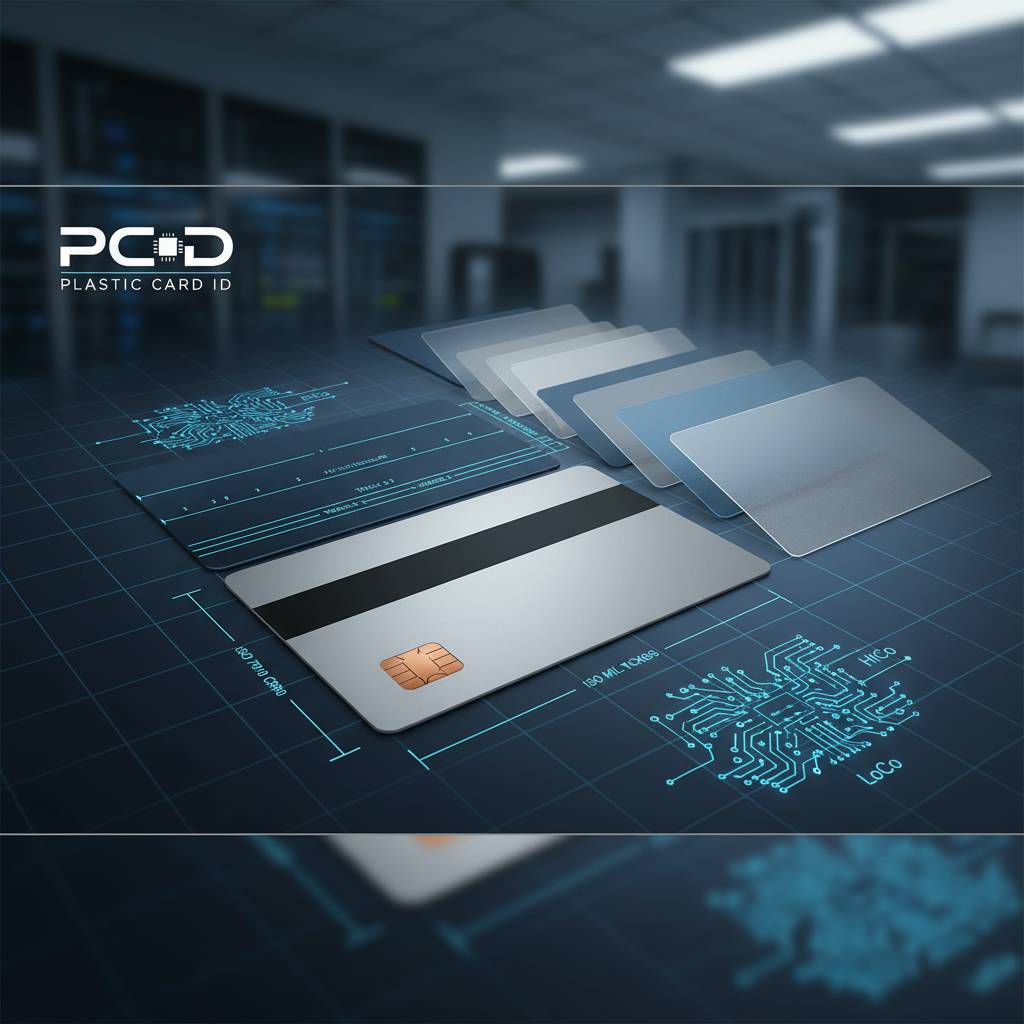 Adding a magnetic stripe to a CR80 card introduces a new layer of specification that must align with your reading equipment. The stripe runs along the long edge of the card back, positioned at a standardized location defined by ISO 7811. Magnetic stripe placement is not variable - it is fixed by the standard, which ensures compatibility with every compliant reader in the market. What does vary - and what matters enormously - is the coercivity of the stripe.
HiCo (high coercivity) stripes require a stronger magnetic field to encode and are significantly more resistant to accidental demagnetization from common sources like phone magnets or proximity to other cards. LoCo (low coercivity) stripes encode at a lower field strength and are more vulnerable to everyday demagnetization events. For most serious card programs, HiCo is the right choice.
HiCo vs. LoCo: A Direct Comparison
HiCo magnetic stripes, rated at 2750 Oe (oersteds), are the industry standard for cards that need to perform reliably over extended periods. Employee badges, loyalty cards, membership credentials, and access control cards all benefit from HiCo encoding because they are used repeatedly and stored alongside other items that generate low-level magnetic interference. HiCo cards simply last longer and fail less often - which translates directly into fewer re-issues, lower replacement costs, and better cardholder experience.
LoCo stripes, rated at 300 Oe, are typically reserved for applications with very short service life expectations - certain hotel key cards designed for single-stay use, for example, where demagnetization risk is low because the card will be discarded after checkout. Choosing LoCo for a long-term loyalty or access program is a specification error that will surface as reader failures and cardholder complaints.
Three-Track Magnetic Stripe Layout
The standard magnetic stripe contains three tracks, each with defined encoding capacity and purpose under ISO 7811. Track 1 holds up to 79 alphanumeric characters. Track 2 holds up to 40 numeric characters. Track 3 holds up to 107 numeric characters and is sometimes used for rewritable applications. Most commercial card programs use Tracks 1 and 2, with Track 3 reserved for specialized applications.
Understanding track layout matters when you are integrating cards with point-of-sale systems, access control readers, or loyalty program software. Encoding data on the wrong track, or encoding more data than a track can hold, produces read errors that are difficult to diagnose without understanding the underlying specification. CPE supplies both pre-encoded magnetic stripe cards and blank HiCo and LoCo stock ready for in-house encoding via a card printer.
Ordering Magnetic Stripe Cards
For organizations purchasing magnetic stripe cards through Plastic Card ID, both HiCo and LoCo options are available in standard CR80 format. Blank magnetic stripe cards are a popular choice for businesses that encode cards in-house using desktop printers, as they allow total control over card data without relying on third-party encoding services. Contact the team at 800.835.7919 to confirm the right stripe specification for your hardware and program needs.
RFID and Smart Card Dimensions - Same Size, Different Technology
One of the more elegant aspects of modern card technology is that RFID and smart chip cards conform to the same CR80 dimensions as standard PVC stock. The technology is embedded inside the card - an antenna loop printed or etched within the card body for RFID, a gold contact pad exposed on the card face for contact smart cards. From the outside, these cards are the same size as any other. The complexity is internal.
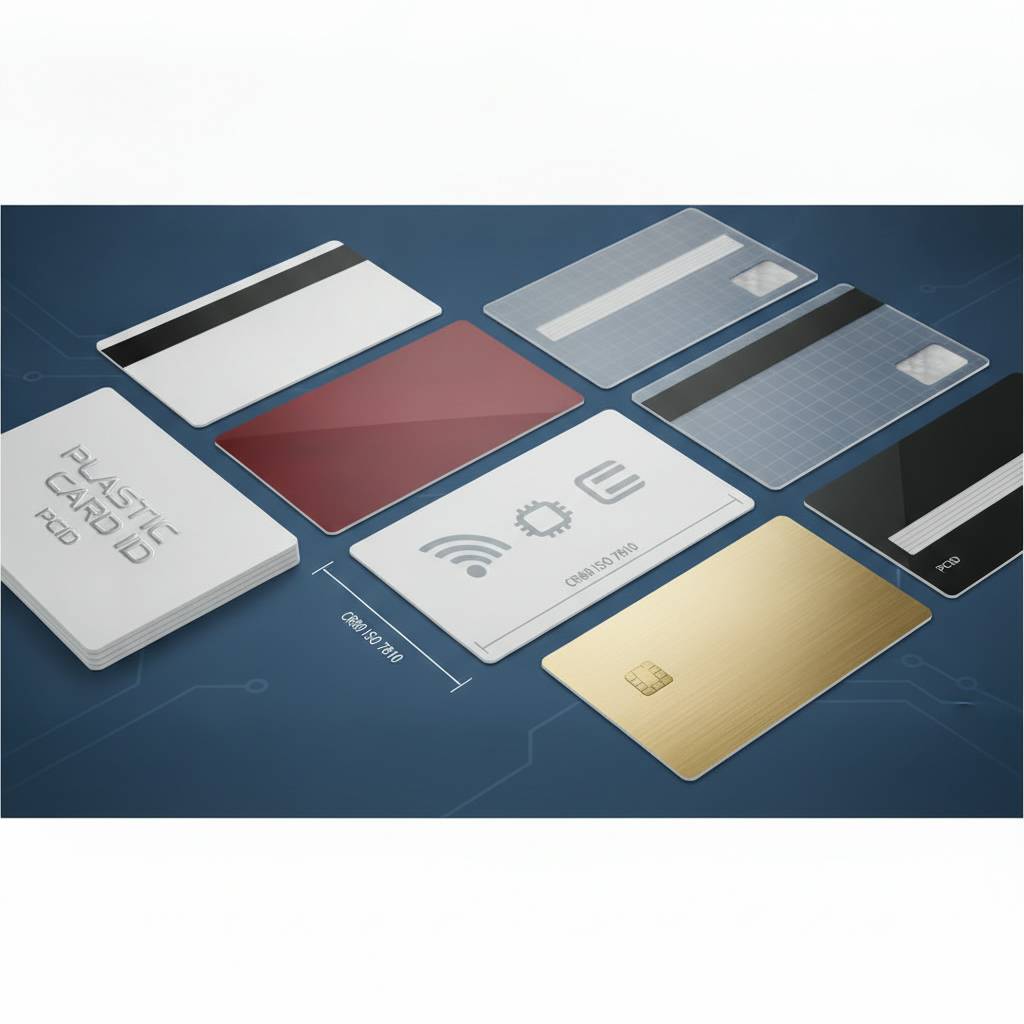
This dimensional consistency is enormously valuable for organizations that want to transition from a simple mag stripe card program to contactless or chip-based access control without changing badge holders, printer configurations, or cardholder habits. The card looks and feels the same. The technology inside has simply evolved.
Proximity Cards and RFID Frequency Standards
Proximity cards operate at 125 kHz and represent the most widely deployed contactless card technology in access control applications. They are passive devices - powered by the reader's radio frequency field, not by an internal battery - and are embedded within standard CR80 card bodies. Reading range is typically a few inches, which matches the tap-to-reader behavior most access control users expect.
Higher-frequency RFID cards, operating at 13.56 MHz, include technologies like MIFARE DESFire and offer significantly enhanced security features including encryption, mutual authentication, and sector-based data management. These are the cards used in high-security environments, casino player card programs, and enterprise access control systems where data integrity is non-negotiable.
Smart Chip Cards - Contact and Contactless
Smart chip cards with a visible gold contact pad conform to ISO 7816, which governs not just dimensions but the precise location and size of the chip contact pad on the card face. This standardization ensures that any ISO 7816-compliant reader can make contact with the chip regardless of which manufacturer produced the card. Contact smart cards are common in secure ID, government, and enterprise credential applications.
Contactless smart cards, including MIFARE DESFire variants, use an embedded antenna rather than a contact pad, allowing data exchange without physical connection to the reader. These offer convenience advantages in high-throughput access environments like office entry points, event gates, and transit systems where tap-and-go speed matters as much as security.
Matching Card Technology to Reader Specifications
- Always confirm whether your reader uses 125 kHz (proximity) or 13.56 MHz (HF RFID/smart card) before ordering
- MIFARE DESFire cards require compatible readers - not all RFID readers support DESFire encryption
- Contact smart cards require a reader with physical contacts, not a contactless pad
- Most modern access control systems specify the card technology they support in their hardware documentation
- When in doubt, provide your reader make and model to CPE and the team will confirm compatibility
Clear, Frosted, and Specialty Card Formats - Same Dimensions, Unique Impact
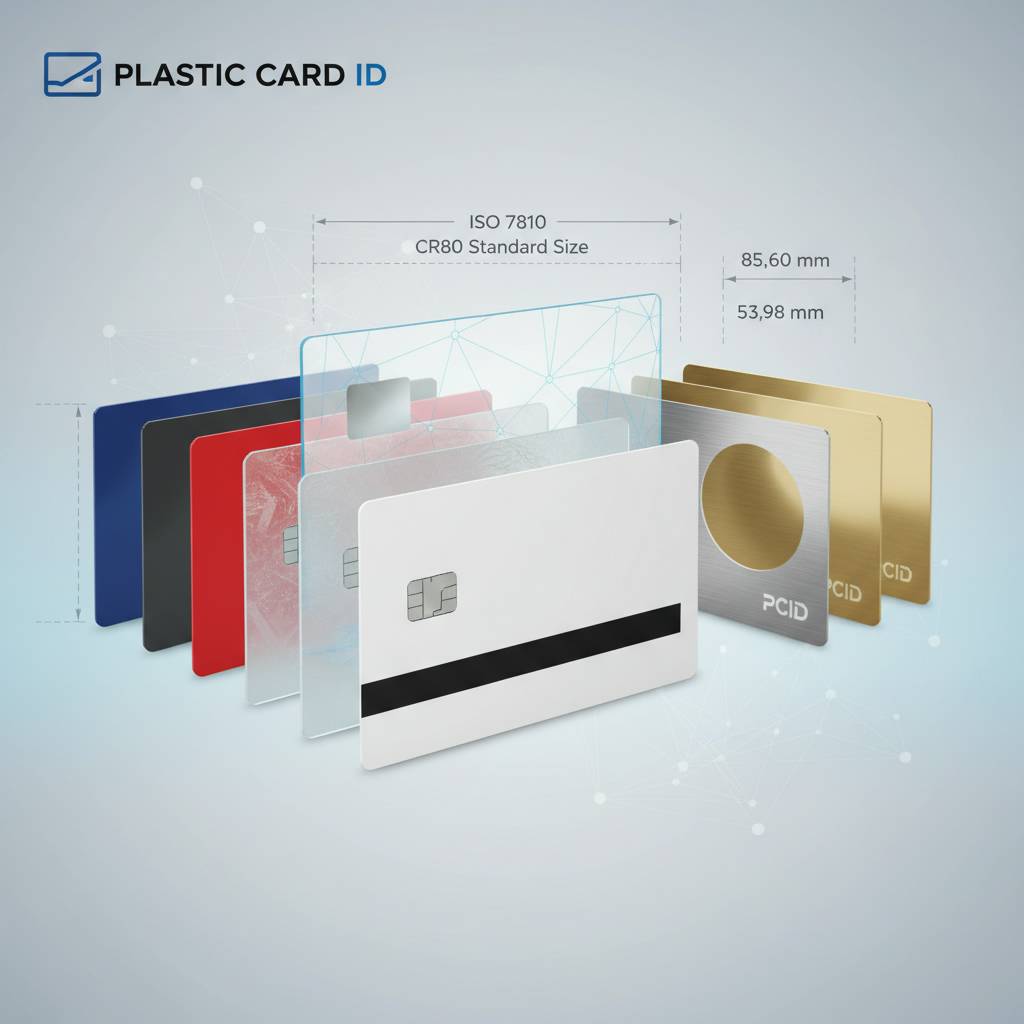 The CR80 standard does not limit you to opaque white PVC. Clear plastic cards, frosted cards, and custom-colored stock all conform to the same 3.375 by 2.125 inch format while delivering dramatically different visual results. Specialty card formats are increasingly used by brands that want their card to stop a customer in their tracks - a clear card sitting in a wallet generates curiosity and attention that a standard white card simply cannot match.
Frosted cards offer a translucent, textured appearance that interacts with printed designs in interesting ways - the frosting diffuses light differently than a clear or opaque surface, creating a soft, premium aesthetic that works particularly well for wellness brands, upscale retail loyalty programs, and boutique hospitality credentials. Colored stock cards, available in a range of base colors, allow for backgrounds that print-on-white designs can never replicate as cleanly.
Clear Plastic Card Applications
Clear cards are striking precisely because of what they reveal: the cardholder's hand, wallet contents, or the surface behind the card when it is displayed. When a design is printed on clear stock, the visual effect is unlike anything achievable on opaque material. Many brands use clear cards for their highest-value loyalty tiers, VIP credentials, and premium gift cards specifically because the card itself communicates differentiation before the recipient even reads it.
Printing on clear stock requires attention to ink opacity and color selection, as some colors appear differently over a transparent background than they do on white. Working with a supplier experienced in clear card production - as CPE is - prevents color surprises and ensures the finished card matches the design intent.
Custom Die-Cut Shapes and Non-Standard Formats
When a standard rectangle simply is not enough, custom die-cut cards allow organizations to punch out any shape from standard CR80 or larger card stock. Keychain-sized cards with punched hanging holes are popular for retail loyalty programs and gym memberships where wallet carry is impractical. Shaped cards - rounded corners pushed further, partial cutouts, logo-shaped outlines - create physical differentiation that sets a brand apart in any card holder.
The trade-off with die-cut and non-standard formats is always equipment compatibility. Cards that deviate significantly from CR80 dimensions will not pass through standard card printers, and custom die-cut shapes require encoding to happen before the cutting process or through specialized equipment. These are not barriers - they are simply planning requirements that Plastic Card ID is fully equipped to navigate.
Color Stock and Frosted Cards
Colored PVC stock - available in black, gold, silver, red, blue, and other base colors - changes the design equation fundamentally. Instead of printing a colored background onto white stock (which requires ink coverage across the entire card face), the base material itself carries the color. This produces deeper, more saturated background tones, reduces wear visibility on the card edges, and often creates a more premium finished appearance.
Black stock cards, in particular, have become a shorthand for premium positioning in many loyalty and membership programs. A black card with gold printing communicates something specific and powerful about a brand's positioning - and it does so before the cardholder reads a single word. For brands where the physical card is part of the marketing message, colored and specialty stock is worth serious consideration.
Putting It All Together - Working With Plastic Card ID on Your Card Program
 Dimensions, thickness, format, magnetic stripe specification, RFID frequency, chip type, material, and shape - the number of variables in a card program specification is substantial. But every one of those variables has a right answer for your specific application, and making the right call at specification stage saves money, time, and operational friction at every subsequent stage of the program's life.
Plastic Card ID has guided over 100,000 customers and fulfilled more than 50 million cards across every category described in this guide. That depth of experience means the team has encountered virtually every combination of requirements and every version of the specification questions you are likely to face. Programs that start with a conversation about specifications finish with better outcomes than those that start with assumptions.
From Blank Blanks to Fully Configured Programs
Blank CR80 cards give organizations total in-house control over their card program - print what you need, when you need it, at a lower per-card cost than pre-printed custom orders in many scenarios. For organizations with a card printer already in place, blank PVC stock is simply the most efficient path to a functioning credential, loyalty card, or membership card.
For organizations that want cards fully configured before delivery - pre-printed, encoded, affixed to card carriers, and mailed to cardholders - CPE offers end-to-end fulfillment services that remove the in-house production requirement entirely. The right model depends on your volume, your in-house capabilities, and your program cadence, and the team is equipped to help you evaluate both paths honestly.
Card Printers That Match Your Specifications
Getting card dimensions right means nothing if your printer cannot handle the stock you have chosen. The full lineup of Evolis, Zebra, and Fargo card printers available through Plastic Card ID covers the full range from compact desktop units for low-volume programs to high-output production printers for organizations issuing thousands of cards per month. Each printer has specific feed tray tolerances, ribbon compatibility requirements, and encoding options that must match your card specifications.
Purchasing cards and printers together through the same supplier eliminates the compatibility guesswork that arises when hardware and consumables come from different sources. CPE cross-references card stock specifications with printer feed tolerances as a standard part of the order process, ensuring that what you buy works together from day one.
Accessories, Supplies, and Long-Term Support
A card program is not a one-time purchase - it is an ongoing operational requirement with consumable needs that recur on a predictable schedule. Printer ribbons, cleaning kits, card sleeves, badge holders, lanyards, card carriers, and mailing supplies are all part of keeping a card program running smoothly over months and years. Sourcing all of these from a single supplier simplifies procurement, reduces vendor management overhead, and ensures supply chain reliability.
Plastic Card ID functions as a true one-stop shop for card programs of every scale - not just a card seller, but a long-term partner invested in keeping your program operational and effective. From the first spec conversation to the hundredth ribbon reorder, the relationship is built to last.
Ready to get your card specifications dialed in and your program running efficiently? The team at Plastic Card ID is ready to help - call 800.835.7919 today and let's build your card program the right way from the start.