Blank Magnetic Stripe Cards Explained: HiCo vs LoCo
Table of Contents []
- Blank Magnetic Stripe Cards Explained: What Every Business Should Know Before Buying
- What Coercivity Actually Means and Why It Matters
- HiCo Magnetic Stripe Cards: Built for the Long Haul
- LoCo Magnetic Stripe Cards: The Right Tool for the Right Job
- Blank CR80 Cards as the Platform for In-House Card Programs
- Specialty Magnetic Stripe Card Options and Advanced Configurations
- Frequently Asked Questions: Buying Blank Magnetic Stripe Cards
- Partner with Plastic Card ID for Your Magnetic Stripe Card Program
Blank Magnetic Stripe Cards Explained: What Every Business Should Know Before Buying
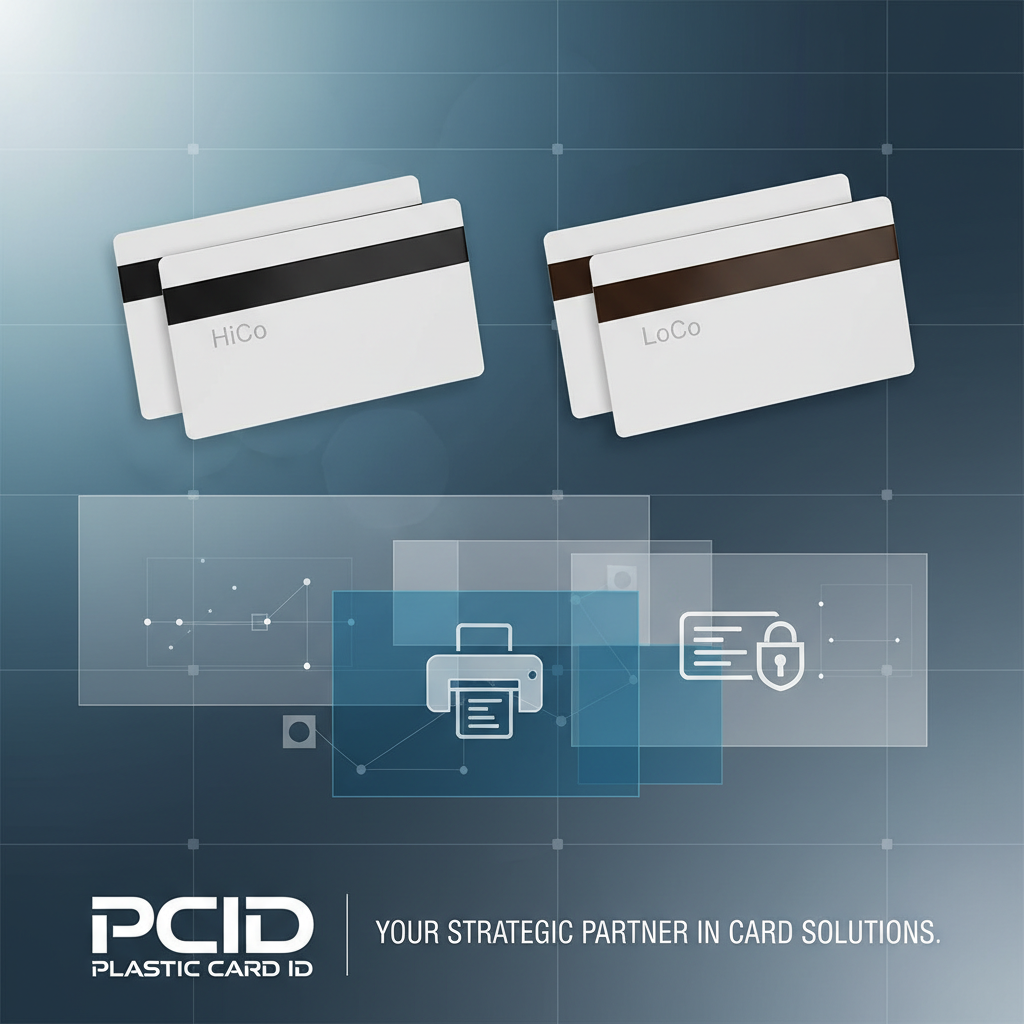 Walk into almost any hotel, gym, office building, or retail store and you will find a plastic card with a dark stripe running across the back. That stripe is doing real work - encoding data, enabling transactions, controlling access. Yet many businesses buying magnetic stripe cards for the first time have no idea there are two fundamentally different versions of that stripe, and choosing the wrong one can mean corrupted cards, failed readers, and a frustrating restart. Plastic Card ID has helped more than 100,000 customers navigate exactly this decision.
The difference between High Coercivity (HiCo) and Low Coercivity (LoCo) magnetic stripes sounds like an engineering footnote, but in practice it shapes everything from the durability of a hotel key card to the lifespan of a loyalty card living inside a wallet next to a smartphone. Getting it right the first time is not complicated once you understand what coercivity actually means and where each format excels.
| Feature | HiCo (High Coercivity) | LoCo (Low Coercivity) |
|---|---|---|
| Magnetic Resistance | High (2750 Oe) | Low (300 Oe) |
| Durability | Long-term, daily use | Short-term or low-frequency |
| Common Uses | Loyalty, ID, access control | Hotel keys, gift cards, event passes |
| Stripe Color | Dark brown/black | Lighter brown/tan |
| Encoder Requirement | HiCo-compatible encoder | Standard encoder |
| Relative Cost | Slightly higher | Lower |
What Coercivity Actually Means and Why It Matters
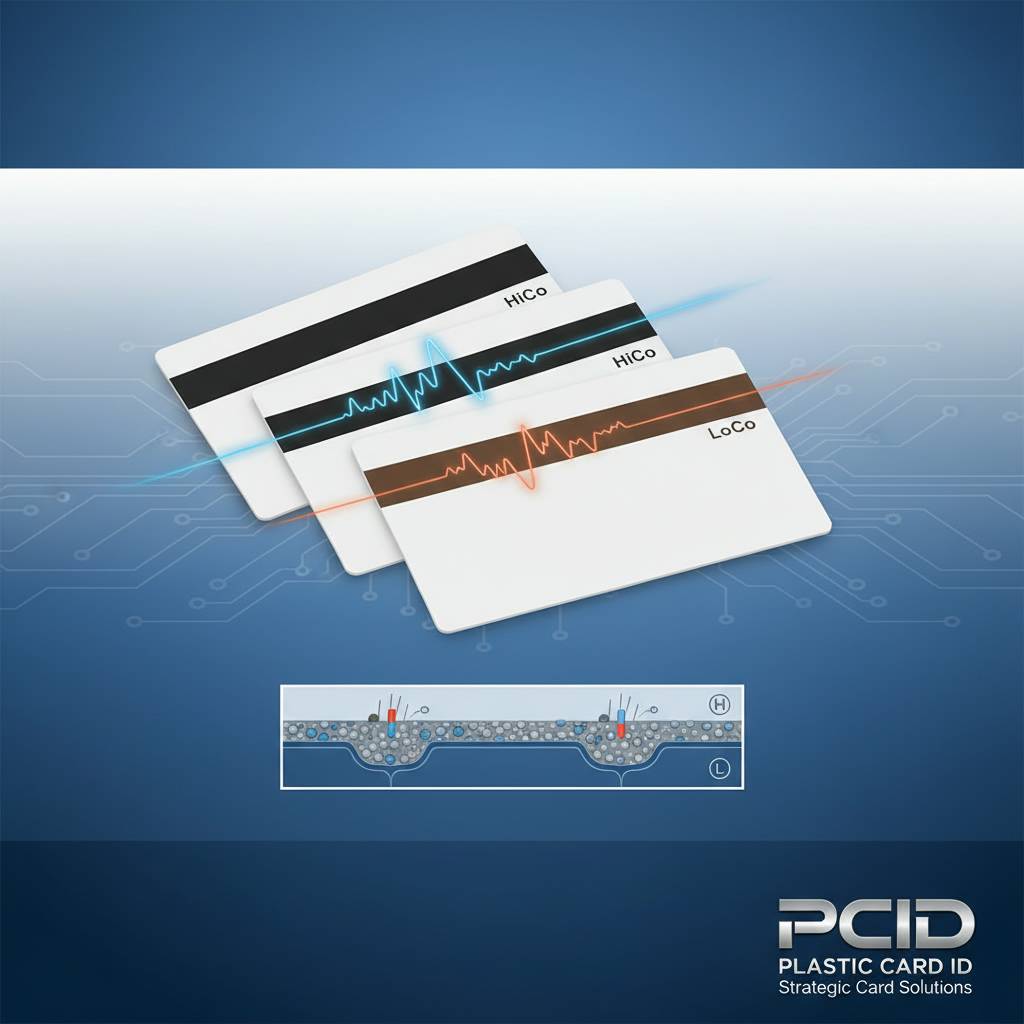 Coercivity is a measure of a magnetic material's resistance to demagnetization. In the context of a plastic card, it tells you how much magnetic force is required to write data onto the stripe and, just as importantly, how much stray magnetism it takes to accidentally erase it. A card with high coercivity holds its data tenaciously. A low coercivity card is easier to write but easier to corrupt.
Think of it like pencil versus pen. A LoCo stripe is the pencil - fast to write, easy to rewrite, but vulnerable to accidental smudging. A HiCo stripe is the pen - takes more effort to write, but the data stays put through daily handling, proximity to other magnetic fields, and years of wallet wear. For programs where cards are handed out once and returned in a week, LoCo makes sense. For anything meant to last, HiCo is the clear choice.
The Science Behind Magnetic Stripe Encoding
A magnetic stripe is made up of iron-based magnetic particles embedded in a resin layer applied to the card. When an encoder writes data, it arranges those particles in specific north-south orientations using a magnetic write head. The coercivity value, measured in Oersteds (Oe), defines how strong that magnetic field must be. HiCo stripes measure at approximately 2750 Oe; LoCo stripes sit around 300 Oe.
This matters practically because everyday magnetic fields - speaker magnets, magnetic clasps on bags, some smartphone cases - can reach 200-400 Oe. A LoCo stripe sitting in close contact with those sources can lose its data. A HiCo stripe barely notices. That difference is the entire reason the two formats exist: different use cases demand different tolerance levels.
How Tracks 1, 2, and 3 Factor In
Magnetic stripe cards typically carry one, two, or three data tracks running along the stripe. Track 1 holds up to 79 alphanumeric characters. Track 2, the most commonly used, holds up to 40 numeric characters. Track 3 is rarely used in commercial applications but supports up to 107 numeric characters. Your encoder must be programmed to write the correct track or combination of tracks your reader expects.
Blank magnetic stripe cards from Plastic Card ID are available pre-formatted for single-track or multi-track encoding, and they arrive unencoded so your organization controls exactly what data goes on them. This is a significant advantage for businesses running internal programs - you encode in-house, on-demand, without waiting on a third party for every batch update. Call 800.835.7919 to confirm which track configuration suits your card reader setup before ordering.
Stripe Color as a Visual Identifier
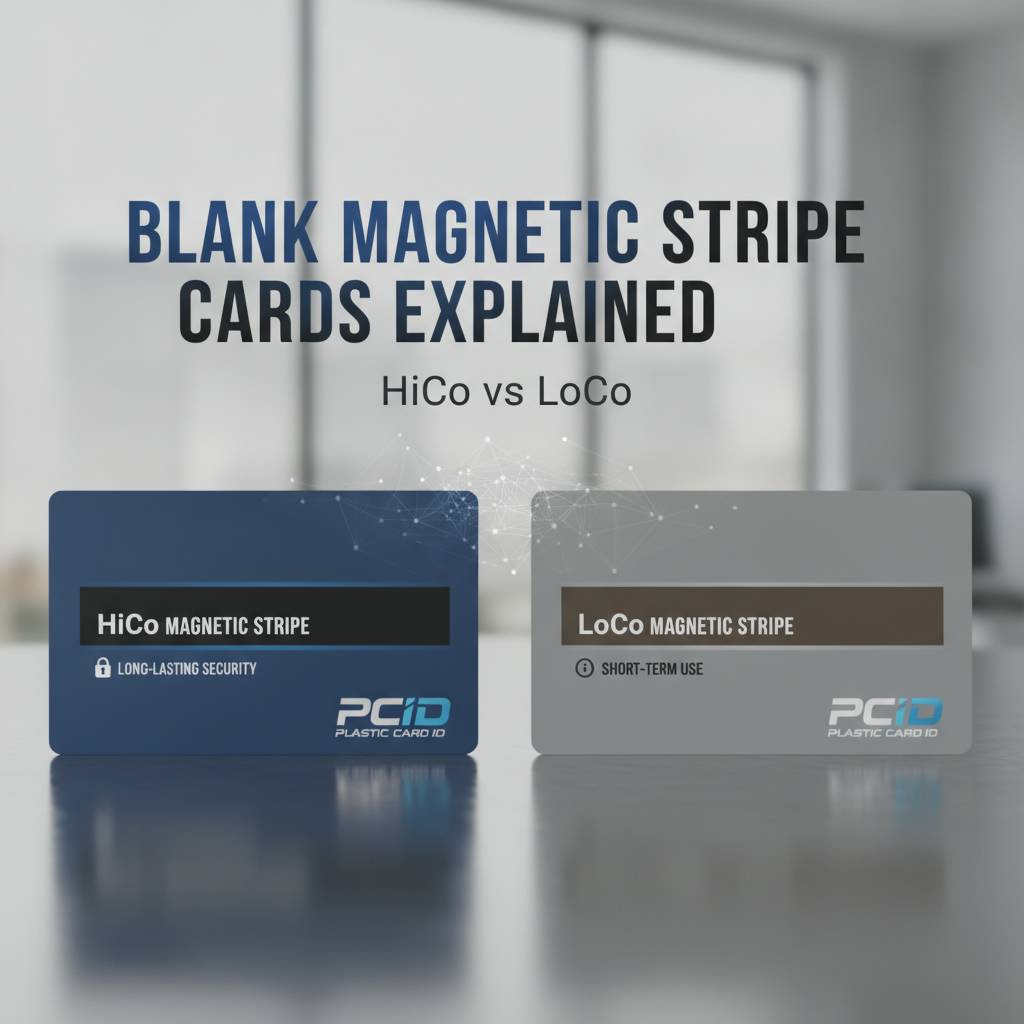
One quick and useful way to visually distinguish HiCo from LoCo cards is stripe color. HiCo stripes have a noticeably darker, richer brown-black appearance. LoCo stripes look lighter, more of a tan or medium brown. While this is not a foolproof method and you should always confirm coercivity specifications with your supplier, the color difference is a practical field check when sorting through mixed card stock.
Some manufacturers apply a glossy overcoat that makes visual inspection harder, but as a general rule the darker the stripe, the higher the coercivity. CPE ships cards with clear specifications on every order, so there is no guesswork about what you received. Organized card programs depend on this kind of reliability from order to order.
HiCo Magnetic Stripe Cards: Built for the Long Haul
High coercivity cards are the backbone of any card program where the card will be used repeatedly over a long period. Employee ID cards that are swiped or scanned dozens of times a week. Loyalty cards that travel in wallets through gym lockers and laundry cycles. Access control cards for facilities with hundreds of daily uses. These are the applications where LoCo cards fail and HiCo cards deliver.
Businesses that have made the switch from paper punch cards to HiCo plastic loyalty cards consistently report measurable gains in customer retention. The card feels substantial, it survives real-world conditions, and customers keep it. That physical presence in a wallet translates directly into return visits. Retailers who upgrade to plastic gift cards see sales increases in the 35-50% range, and a resilient HiCo stripe is a core part of what makes those gift cards work reliably over their full life cycle.
Ideal Applications for HiCo Cards
The strength of a HiCo card shows up most clearly in programs with high transaction frequency. Consider a fitness center issuing member access cards that members swipe at a turnstile twice a day, five days a week. Over a year that is 500-plus swipe interactions per card, often while the card is packed alongside keys, coins, and phone chargers. A LoCo card in that scenario would fail within weeks. A HiCo card handles it without complaint.
- Employee ID and access control cards used at secured facilities with daily badge-in requirements
- Retail loyalty cards that live in customer wallets alongside credit cards, transit passes, and payment fobs
- Membership cards for gyms, clubs, libraries, and professional associations
- Casino player cards that track points, comp rewards, and tier status across high-use gaming environments
- Student ID cards used for cafeteria, library, and building access at schools and universities
Each of these programs benefits from the durability premium that HiCo provides. The per-card cost difference between HiCo and LoCo is modest, but the cost of replacing a prematurely failed card -- including the administrative overhead, the customer friction, and the reprint expense -- is substantially higher. HiCo is the more economical choice over any program horizon longer than a few months.
Pairing HiCo Cards with the Right Printer
A critical detail that many first-time buyers miss: encoding a HiCo card requires a printer or standalone encoder with a HiCo-capable write head. Standard LoCo encoders will physically write data onto a HiCo stripe, but the data will be incomplete, corrupted, or unreadable because the write head simply cannot generate enough magnetic field strength to properly orient the particles. The card looks fine but the swipe fails.
Plastic Card ID carries a full lineup of card printers from Evolis, Zebra, and Fargo, and the team can match you with the right encoder configuration for your specific card stock. Many printers offer a switchable HiCo/LoCo encoder module, which gives organizations flexibility as their programs evolve. Getting this hardware match right from the start avoids one of the most common and frustrating setups errors in new card programs.
Ordering Blank HiCo Cards in Volume
Blank HiCo cards ship in standard CR80 format, the same size as a standard credit card, at 3.375 x 2.125 inches and 30 mil thickness, conforming to ISO 7810. This standardized dimension means they load into virtually every desktop card printer on the market without modification. Cards are available in white PVC stock or a range of pre-colored options, giving in-house design teams a clean canvas for any visual identity.
Volume pricing scales favorably, and organizations running programs of a few hundred cards per month will find that maintaining a supply of blank HiCo stock and encoding in-house is significantly more cost-effective than outsourcing print-and-encode to a third party each time. CPE supports programs at every scale, from 50 cards a month up to tens of thousands, and the blank card model gives smaller organizations the same operational control that enterprise programs enjoy.
LoCo Magnetic Stripe Cards: The Right Tool for the Right Job
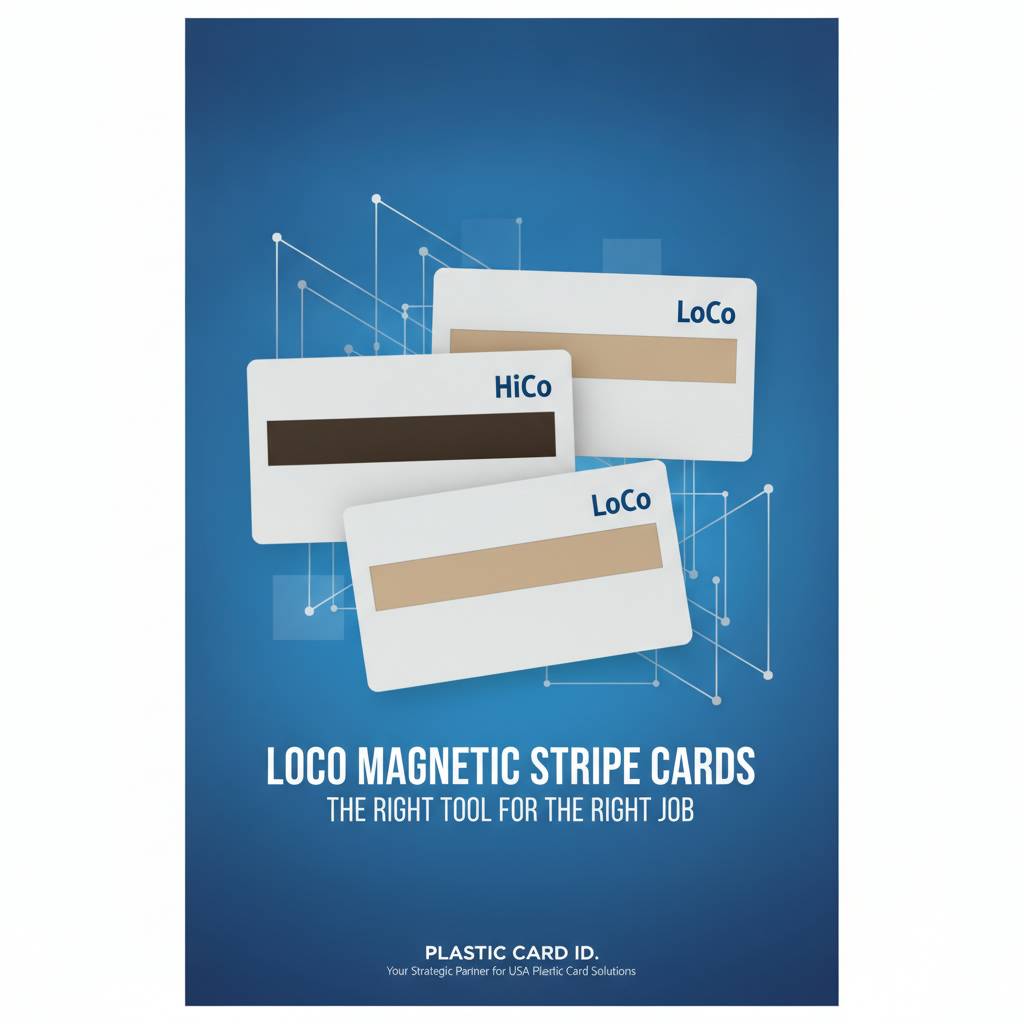 Low coercivity cards are not inferior -- they are purpose-built for applications where the card has a defined short lifespan or where the encoding happens at the point of use and is expected to be rewritten. Hotel room keys are the most iconic example. A guest checks in, the front desk encodes a room key with that guest's access privileges and checkout date, and when they leave, the card is collected and re-encoded for the next guest. That write-erase-rewrite cycle is exactly what LoCo is designed for.
The lower magnetic resistance of LoCo stripes means they can be written quickly with lower-power encoders, and they can be overwritten just as easily when the use case is complete. For single-use event credentials, temporary visitor passes, or prepaid parking tokens, this rewritability is a feature, not a liability. The key is matching the coercivity level to the actual use pattern of the card in your specific program.
Classic LoCo Use Cases
Hotel key cards are the most widely deployed LoCo application in the United States. Hospitality properties re-encode the same physical card stock hundreds of times before the cards are retired. Each encoding cycle assigns new access credentials tied to a specific room and checkout time. The speed and simplicity of LoCo encoding fits perfectly into a check-in workflow that needs to happen in under two minutes.
Short-duration event passes, transit tokens, temporary employee badges for contractors, and prepaid debit-style gift cards with a single redemption cycle are all natural fits for LoCo stock. When the card's value is consumed or the event ends, there is no expectation of long-term data integrity, so the lower magnetic resistance is irrelevant. Choosing LoCo in these cases keeps costs down without compromising performance.
Understanding the Rewrite Limitation
Even though LoCo cards can be rewritten, they are not infinitely rewritable. Repeated encoding cycles gradually degrade the stripe's particle alignment capability, and a LoCo stripe that has been re-encoded dozens or hundreds of times will eventually fail to hold a reliable signal. Hotel properties typically track card stock age and retire high-cycle cards on a schedule, replacing them with fresh stock before failures begin appearing in the field.
Organizations operating high-volume rewrite programs should factor this degradation curve into their card replacement budgets. Plastic Card ID can help estimate appropriate reorder intervals based on your average encoding frequency per card, ensuring your stock stays fresh and your card readers stay happy. This kind of operational partnership is what separates a strategic supplier from a simple box-ship vendor.
LoCo Pricing and Practical Budgeting
Blank LoCo magnetic stripe cards carry a modest cost advantage over comparable HiCo stock. For large hospitality operations managing hundreds or thousands of room keys, this per-card savings adds up meaningfully across an annual budget. The math shifts when you factor in replacement frequency -- a LoCo card used inappropriately in a high-wear loyalty program may be replaced three or four times over the same period a single HiCo card would have survived.
The smartest buyers evaluate total cost of ownership, not just unit price. A $0.05 per card difference in favor of LoCo looks attractive until you are reprinting and redistributing failed loyalty cards to frustrated customers every three months. Build your card budget around the card's actual operational life, not its initial sticker price, and the right coercivity choice usually becomes obvious.
Blank CR80 Cards as the Platform for In-House Card Programs
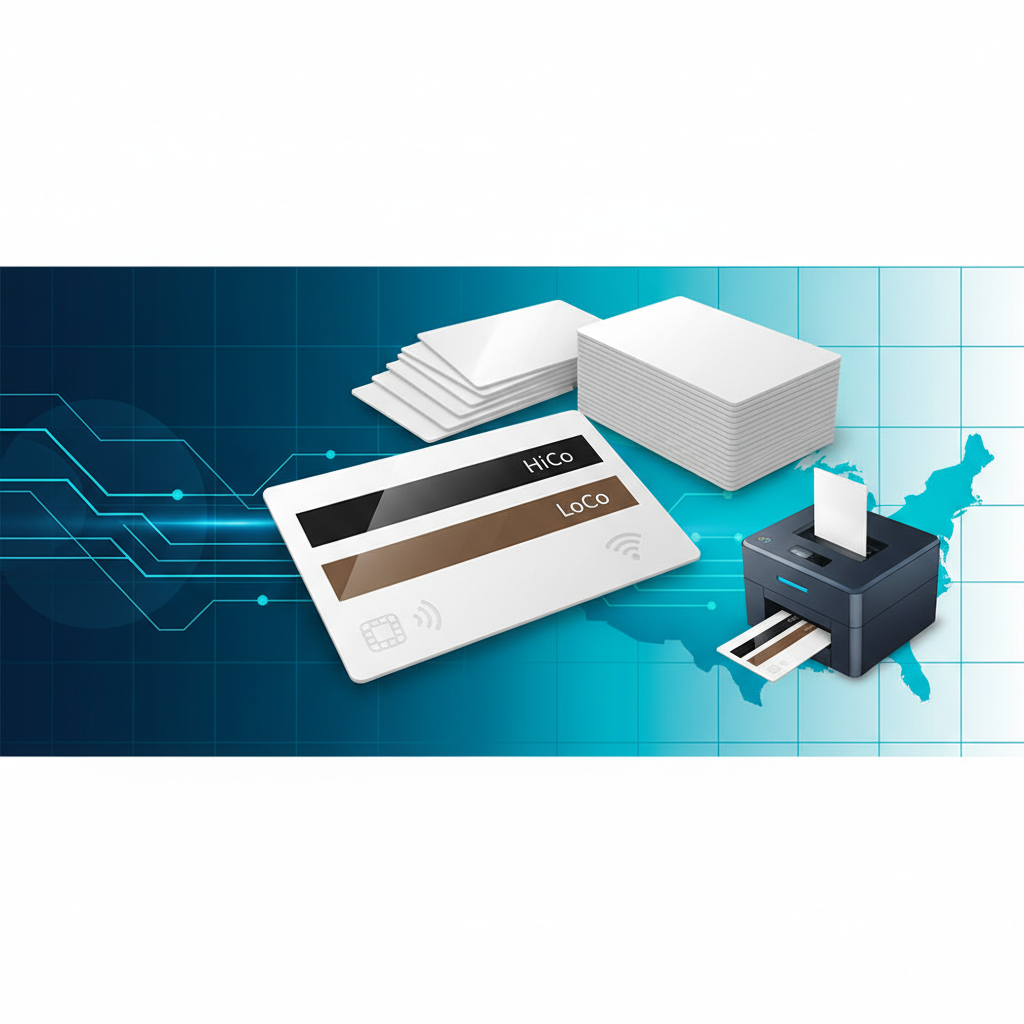 Whether you are choosing HiCo or LoCo, the blank CR80 card is the foundational format for in-house card production. The CR80 standard -- 3.375 x 2.125 inches, 30 mil thick, ISO 7810 compliant -- is universal. It works in every desktop card printer, fits every standard card wallet and badge holder, and is readable by every compliant swipe reader and slot reader in commercial use. There is no specialized tooling, no proprietary dimension, no compatibility guesswork.
Starting with blank stock gives organizations total control over both the visual design and the encoded data. Print a custom design on demand. Encode employee-specific data at the moment of issuance. Update your card artwork mid-program without discarding pre-printed inventory. The blank card model is operationally flexible in ways that pre-printed, pre-encoded bulk orders simply cannot match for organizations with evolving needs.
Designing for the Magnetic Stripe
When planning card artwork for a magnetic stripe card, designers need to account for the stripe's position on the card back. The ISO standard places the stripe at a defined location measured from the card's long edge, and printing designs that extend over or obscure the stripe creates read failures. Most card design software includes CR80 templates with the stripe zone marked as a no-print area. This is not complicated -- it just needs to be part of the design workflow from the start.
The front of the card is a full creative canvas. Full bleed color, logos, photo ID capability, security elements like UV printing, holographic overlaminates, and signature panels can all coexist with the functional stripe on the back. Blank white CR80 PVC cards provide the optimal base for direct-to-card thermal printing, which is what the Evolis, Zebra, and Fargo printers in Plastic Card ID's lineup are built to produce.
Printer and Supplies Ecosystem
A blank magnetic stripe card is only as useful as the printer and encoder combination you pair it with. CPE carries everything needed to build a complete in-house card production station: printers with integrated HiCo or LoCo encoders, YMCKO color ribbons, monochrome ribbons for single-color or black-only printing, cleaning kits to maintain print quality, and card carriers and sleeves for professional presentation at issuance.
Printer ribbon selection affects card quality significantly. Using the correct ribbon type and replacing it before it degrades prevents faded prints, banding artifacts, and inconsistent color across a badge batch. Cleaning kits -- typically consisting of cleaning cards and swabs -- remove the roller debris and dye sublimation residue that accumulate with heavy use. A well-maintained printer running quality supplies on proper card stock consistently produces professional-grade output.
Scaling Your Program Without Changing Your Workflow
One of the genuine advantages of the blank card model is how gracefully it scales. A small nonprofit issuing 50 membership cards a month uses the same CR80 blank HiCo stock, the same printer, and the same encoding workflow as a regional retailer issuing 5,000 loyalty cards a month. The process does not change; only the volume changes. That consistency means staff training stays simple and card quality stays uniform regardless of batch size.
When volume does grow to the point where in-house production becomes a bottleneck, Plastic Card ID can support the transition to higher-capacity production without disrupting the card program. The card format, the stripe type, and the encoded data structure all remain consistent -- the only change is the throughput. This scalability is a key reason so many organizations that started with small pilots have grown into long-term, high-volume customers.
Specialty Magnetic Stripe Card Options and Advanced Configurations
Beyond standard white PVC HiCo and LoCo stock, the catalog extends into specialty configurations that serve specific industry or aesthetic needs. Colored PVC card stock in black, blue, red, green, and other standard colors allows organizations to use card color as a visual identifier -- red for temporary visitors, blue for full-time staff, green for contractors, for example. This simple visual system reduces the cognitive load on security personnel at access points.
Clear and frosted plastic cards with magnetic stripes bring a premium visual quality that standard white PVC cannot match. Translucent materials create a distinctive look that stands out in a wallet and signals investment in the member or customer relationship. Luxury applications -- executive membership cards, VIP event credentials, upscale retail gift cards -- benefit enormously from the material differentiation that clear and frosted stock provides.
Combo Cards: Magnetic Stripe Plus Smart Chip or RFID
Many modern access control and loyalty systems are transitioning from magnetic stripe to contactless RFID or smart chip technology, but the transition rarely happens overnight. Combo cards carrying both a magnetic stripe and an RFID chip or smart chip allow organizations to run legacy readers and new contactless readers simultaneously during the transition period without issuing two separate cards to each cardholder.
MIFARE DESFire smart chip cards with a HiCo magnetic stripe on the back are a particularly common configuration in enterprise access control upgrades. The smart chip handles modern encrypted access transactions while the stripe maintains compatibility with older readers that have not yet been replaced. Plastic Card ID supplies these combo configurations and can help identify which chip technology is compatible with your access control management software.
Casino Player Cards and High-Frequency Environments
Casino player cards live in one of the most demanding card environments imaginable. They are swiped at gaming machines dozens of times per session, carried daily in wallets, and used across multiple property locations. HiCo magnetic stripe stock is the only appropriate specification for this application, and the casino industry has decades of operational data confirming this. Low coercivity cards in casino environments fail prematurely and generate unacceptable levels of player friction at the machine.
Beyond coercivity, casino player card programs often incorporate security features like UV-reactive printing, holographic overlaminates, and laser-engraved personalization to prevent counterfeiting and unauthorized duplication. These features layer onto the blank magnetic stripe card platform without changing the fundamental CR80 format. CPE supports casino card programs with both the card stock and the printer hardware needed to produce professional-grade player cards in-house.
Custom Die-Cut and Metal Card Options
Standard CR80 is not the only format available for magnetic stripe programs. Custom die-cut cards in unusual shapes -- key fobs, rounded squares, cards with notched corners or cutouts -- can carry magnetic stripes in the standard position as long as the stripe zone is preserved in the die-cut design. These specialty shapes command attention at point of distribution and create memorable brand impressions that standard rectangles rarely achieve.
Metal cards in stainless steel, brass, and gold are increasingly popular in premium membership and loyalty programs. A metal card with a magnetic stripe encodes and reads identically to its PVC counterpart, but the weight and feel communicate exclusivity in a way no plastic card can. For programs targeting high-value customers or members, the card itself becomes a tangible signal of the relationship's importance. Call 800.835.7919 to explore metal card specifications and minimum order quantities for specialty formats.
Frequently Asked Questions: Buying Blank Magnetic Stripe Cards
 First-time buyers of blank magnetic stripe cards often arrive with the same cluster of practical questions. The answers are straightforward once the underlying technology is clear, but getting them wrong at the procurement stage creates operational headaches that take time and money to unwind. The following covers the most common decision points.
How Do I Know Which Coercivity My Reader Requires?
Check the documentation for your card reader or access control system. Most reader specifications will explicitly state HiCo or LoCo compatibility, or they will list the Oersted range the reader is designed to work with. Readers rated for 2750 Oe are HiCo readers. Readers rated for 300 Oe are LoCo readers. Many modern readers are multi-coercivity and will read both, but you should confirm this before assuming compatibility.
If you are inheriting an existing card program and do not have access to the original equipment documentation, the visual test described earlier -- dark stripe for HiCo, lighter stripe for LoCo -- can help identify what stock is currently in use. When in doubt, CPE can help you work through the identification process based on your existing card samples and reader hardware model numbers.
Can I Use the Same Printer for Both HiCo and LoCo Cards?
Yes, if your printer includes a switchable or dual-mode encoder module. Many mid-range and professional card printers from Evolis, Zebra, and Fargo include this capability, allowing you to toggle between HiCo and LoCo encoding via software settings. This is particularly useful for organizations running multiple card programs with different specifications from the same production station.
Always confirm the encoder mode matches your card stock before starting a print run. Running HiCo cards through a LoCo-only encoder will produce cards that look perfect but fail at the reader. Running LoCo cards through a HiCo encoder will technically work, but you are applying more magnetic force than necessary and may slightly affect the stripe's rewrite longevity. Matching mode to stock is simply good practice.
What Is the Minimum Order Quantity for Blank Magnetic Stripe Cards?
Blank magnetic stripe cards are available in quantities that work for organizations of any size. Small nonprofits and independent businesses can order in quantities of 100 or 200 cards without penalty, while larger organizations can order in cases of 500, 1000, or more at volume pricing. There is no mandate to commit to massive quantities to access professional-grade blank card stock.
For organizations uncertain about how many cards they will actually need, starting with a conservative first order and reordering as the program grows is a practical approach. Because blank stock is not pre-printed or pre-encoded, there is no waste risk from design changes or program pivots -- unused blank cards remain usable indefinitely. Storing them in a cool, dry environment away from magnetic sources preserves their encoding integrity until they are needed.
Partner with Plastic Card ID for Your Magnetic Stripe Card Program
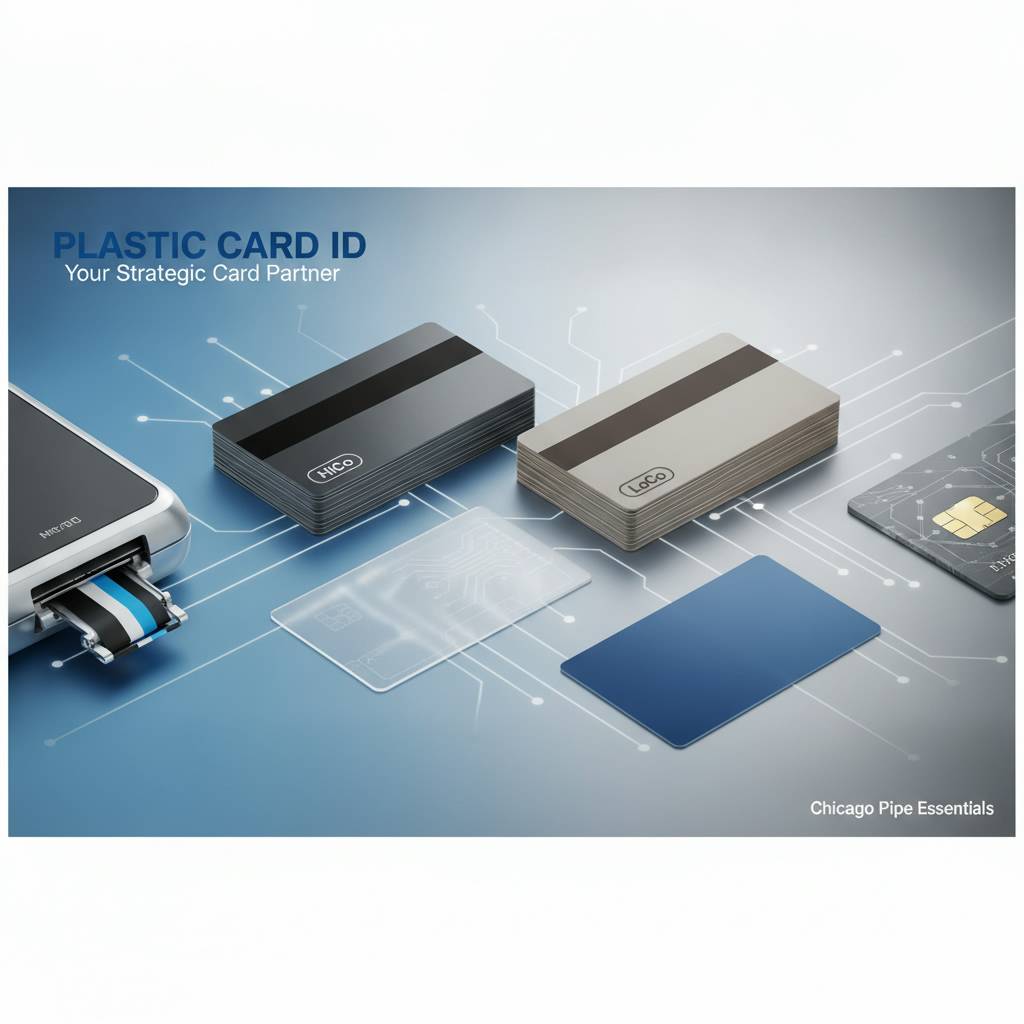 Twenty-five years and fifty million cards is a substantial body of operational experience. Plastic Card ID has worked through virtually every scenario that card program managers encounter -- the wrong coercivity ordered, the incompatible encoder discovered mid-rollout, the design that covers the stripe zone, the loyalty program that outgrew its original card stock. That experience translates directly into better guidance for new customers and smarter problem-solving for established ones.
The goal is not to sell you cards -- it is to help your card program succeed. That means asking the right questions before the order is placed: What readers are you using? What data needs to be encoded and on which tracks? How frequently will cards be swiped? How long should each card last? What design capabilities does your printing setup support? The answers to these questions determine the right coercivity, the right card stock, the right printer configuration, and the right supplies mix. Getting all of those elements aligned from the start is what CPE does best.
Full-Service Support from First Order to Full Scale
Whether you are launching a brand-new card program or optimizing one that has been running for years, the support structure at Plastic Card ID covers the full program lifecycle. New program consultations help organizations select the right card stock, encoder, printer, and supplies before the first card is printed. Ongoing supply relationships ensure consistent stock availability as programs scale. Technical support addresses encoding issues, printer performance questions, and card reader compatibility concerns.
Value-added services extend the card program beyond the card itself: card carriers for professional issuance packaging, protective sleeves for card longevity, card affixing and mailing services for programs distributing cards to remote members or customers. These services mean an organization can manage its entire card program through a single supplier relationship rather than coordinating across multiple vendors for different components.
Contact Plastic Card ID to Get Started
The best time to get the coercivity question right is before the first order, not after a failed deployment. 800.835.7919 connects you directly with a team that has answered this exact question for over 100,000 businesses and organizations across the United States. Whether your program is 50 cards a month or 50,000, the conversation starts in the same place: what does your program actually need?
Ready to build a card program that works from day one? Contact Plastic Card ID at 800.835.7919 and let one of the most experienced card supply teams in the country help you choose the right blank magnetic stripe card stock, encoding configuration, and printer setup for your specific application.