Blank Plastic Card Pricing Guide: Costs Explained
Table of Contents []
- Your Complete Blank Plastic Card Pricing Guide from Plastic Card ID
- What Actually Drives Blank Plastic Card Pricing
- Blank CR80 Cards: The Workhorse of In-House Card Programs
- Magnetic Stripe Card Pricing: HiCo vs. LoCo Explained
- RFID, Smart Chip, and Advanced Card Technology Pricing
- Card Printers, Ribbons, and Total Program Cost Calculation
- Buyer's Guide: How to Get the Best Blank Plastic Card Pricing
- Start Your Card Program with Plastic Card ID Today
Your Complete Blank Plastic Card Pricing Guide from Plastic Card ID
 Budgeting for a card program shouldn't feel like solving a mystery. Whether you're launching a loyalty program, replacing paper employee badges, or scaling up a membership card initiative, understanding blank plastic card pricing is the foundation of a smart procurement decision. And yet, most buyers come in without a clear picture of what drives cost - or where the real savings hide.
Plastic Card ID has been in the thick of this for over 25 years, supplying blank and custom plastic cards to businesses of every size across the United States. With more than 50 million cards sold and 100,000 customers served, the pricing intelligence here isn't theoretical - it's built on real programs, real volume tiers, and real results. This guide exists to make your buying decision faster, sharper, and smarter.
| Card Type | Typical Quantity Range | Estimated Price Range (Per Card) | Best For |
|---|---|---|---|
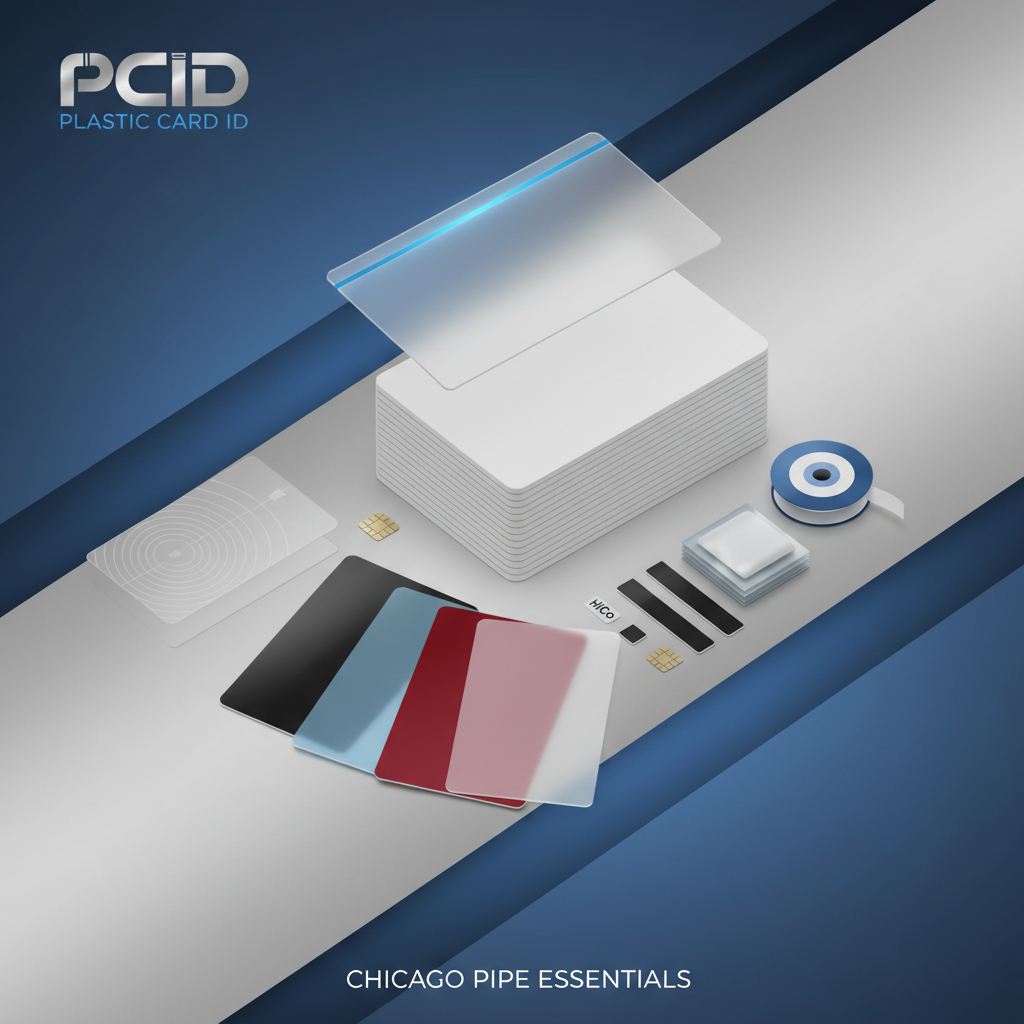
| Blank CR80 PVC Cards | 100 - 10,000 | $0.06 - $0.30 | ID badges, loyalty cards, memberships |
| Magnetic Stripe Cards (HiCo/LoCo) | 100 - 10,000 | $0.15 - $0.55 | Gift cards, hotel keys, access control |
| RFID / Proximity Cards | 50 - 5,000 | $0.75 - $3.50 | Access control, contactless systems |
| Smart Chip Cards | 50 - 5,000 | $1.20 - $5.00 | Secure ID, campus cards, casino programs |
| Clear / Frosted PVC Cards | 100 - 5,000 | $0.25 - $0.90 | Premium loyalty, VIP membership |
| Metal Cards (Stainless/Brass/Gold) | 25 - 1,000 | $4.00 - $15.00 | Executive membership, luxury branding |
What Actually Drives Blank Plastic Card Pricing
 Here's something that surprises first-time buyers: two orders for "blank plastic cards" can differ in price by 400% - and both quotes can be completely fair. The price you pay isn't arbitrary. It's a direct reflection of card specifications, order volume, card technology, and material choices. Understanding these levers puts you in control of your budget without sacrificing program quality.
Volume is the single most powerful pricing variable. Order 100 cards versus 5,000 cards of the same spec, and your per-unit cost can drop by more than half. This is why organizations that plan ahead - ordering seasonally or annually - consistently pay less per card than those making reactive, small-batch purchases. It's not about spending more; it's about buying smarter.
Card Material and Construction
Standard CR80 PVC cards - 30 mil thick and built to ISO 7810 specifications - are the industry workhorse precisely because they balance cost and performance so well. These are the cards that fit every wallet slot, every badge holder, every printer tray. They're durable, printable, and priced for volume programs without compromise.
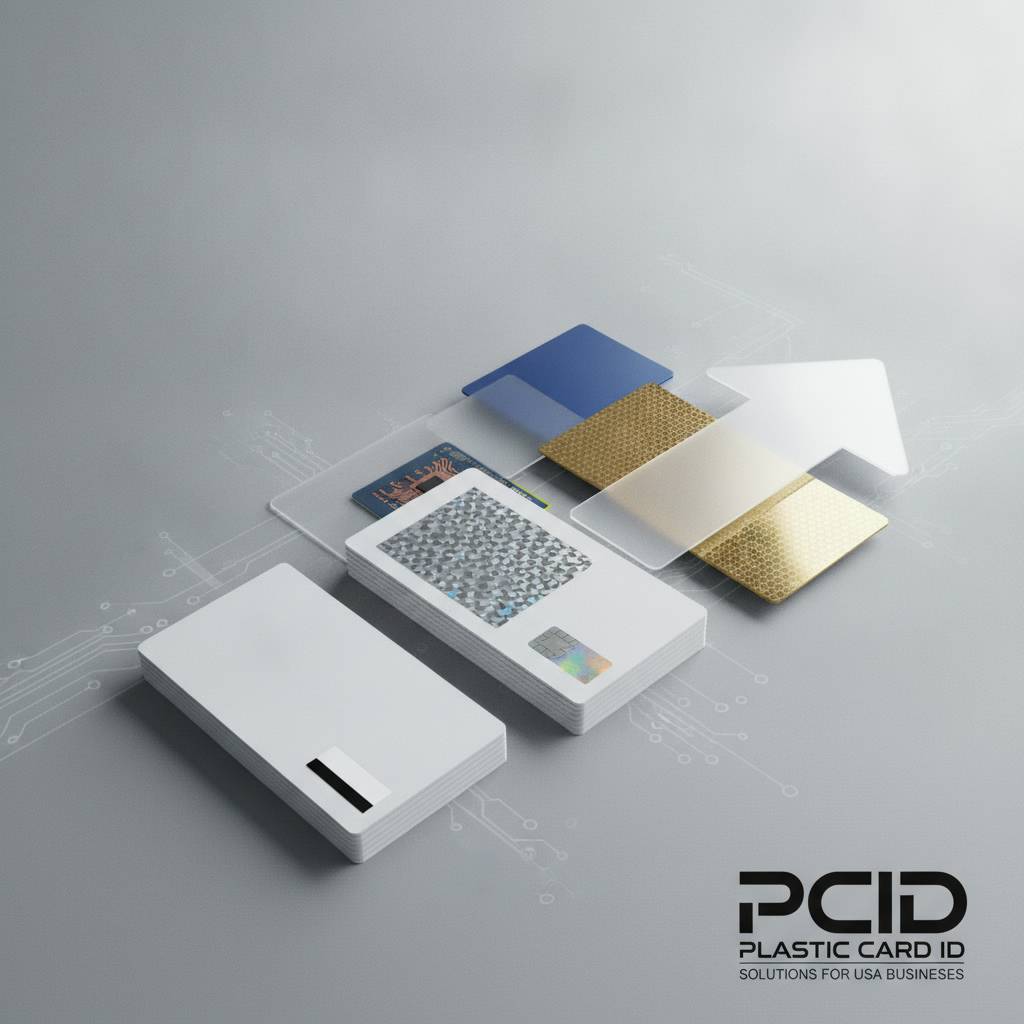
Step up to clear PVC, frosted finishes, or composite PVC-PET construction, and costs climb modestly - typically 30 to 60 percent above standard white stock - because specialty materials require different manufacturing processes. For programs where card aesthetics directly influence customer perception, that premium often pays for itself quickly.
Technology Embedded in the Card
A plain white card has no embedded components. Add a magnetic stripe, and you've introduced a functional layer with a material cost attached. Add an RFID chip or a contact smart chip, and you're now pricing a miniature electronic device embedded in a card-sized package. Each technology tier adds real cost - but also adds real capability.
HiCo magnetic stripes are preferred for high-security applications because they're harder to accidentally demagnetize. LoCo stripes cost slightly less and work fine for lower-security uses like retail gift cards. RFID options span a wide range: standard 125kHz proximity cards sit on the affordable end, while MIFARE DESFire chips for high-security applications command a premium. Know your system requirements before selecting a card tier.
Order Volume Tiers and Quantity Breaks
Most suppliers, including CPE, structure pricing in quantity breaks. A common structure might offer one price per card for 100-499 units, a lower price for 500-999, a steeper discount at 1,000-2,499, and the best rates above 2,500 or 5,000 units. These aren't arbitrary thresholds - they reflect real economies in production runs and fulfillment.
The practical takeaway: if you're placing an order near the top of a quantity tier, it may cost less per card to round up to the next break. Buying 475 cards when 500 unlocks a price break often means paying less total while receiving 25 extra cards. Always check the math at the margins of each tier before finalizing your quantity.
Blank CR80 Cards: The Workhorse of In-House Card Programs
CR80 is not just a measurement - it's a standard that makes your card universally compatible with every mainstream printer, every wallet, and every badge holder on the market. At 3.375 inches by 2.125 inches and 30 mil thick, these cards are the format the entire card industry has organized itself around. Choosing blank CR80 PVC as your base gives your organization maximum flexibility and minimum friction.
When you control the blank card, you control the program. Print what you need, when you need it. Update badge designs without ordering new stock. Encode cards on-demand. This is why organizations with ongoing card programs - HR departments, gyms, schools, event venues - consistently choose blank stock over pre-printed alternatives for everyday operations.
Pricing for Standard Blank White PVC Cards
At low quantities (100-249 cards), expect to pay somewhere in the $0.18-$0.30 per-card range for standard white blank CR80 stock. Mid-range orders of 500-2,500 cards typically land between $0.10-$0.18 per card. High-volume orders above 5,000 units can push per-card costs below $0.08, making the total program cost remarkably manageable even at scale.
These numbers assume standard white, 30 mil PVC with no magnetic stripe, chip, or other embedded features. They represent the floor of the blank card pricing spectrum - the starting point from which specialty features, finishes, and quantities will move your actual price up or down. Use them as benchmarks, not quotes.
Colored Stock Cards: What to Expect
Blank colored PVC cards - available in a wide range of solid colors - typically price at a modest premium over standard white stock, often in the range of 10-25% higher depending on color and quantity. Color-coded card programs are popular in access control (green for visitors, red for contractors, blue for staff), event management, and tiered membership programs.
Colored blank cards can eliminate the need to print background colors on every card, which extends ribbon life and reduces per-card print costs significantly. For high-volume programs where a single color differentiates a card tier, the math often favors colored stock over printing color onto white cards - worth calculating before placing your first large order.
Clear and Frosted PVC Cards
Clear and frosted cards occupy a distinct segment: they're priced higher than standard white stock but are chosen for programs where the card itself becomes part of the brand impression. Transparent cards in a loyalty or membership program signal that you've invested in the experience, and that signal has measurable value when customer retention is a program goal.
Per-card pricing for clear and frosted PVC blanks typically runs $0.25-$0.90 depending on volume, with frosted cards at the higher end due to more complex manufacturing. At 1,000-unit quantities, the premium over standard white stock is often less than $200 total - a modest investment for a significantly elevated card appearance.
Magnetic Stripe Card Pricing: HiCo vs. LoCo Explained
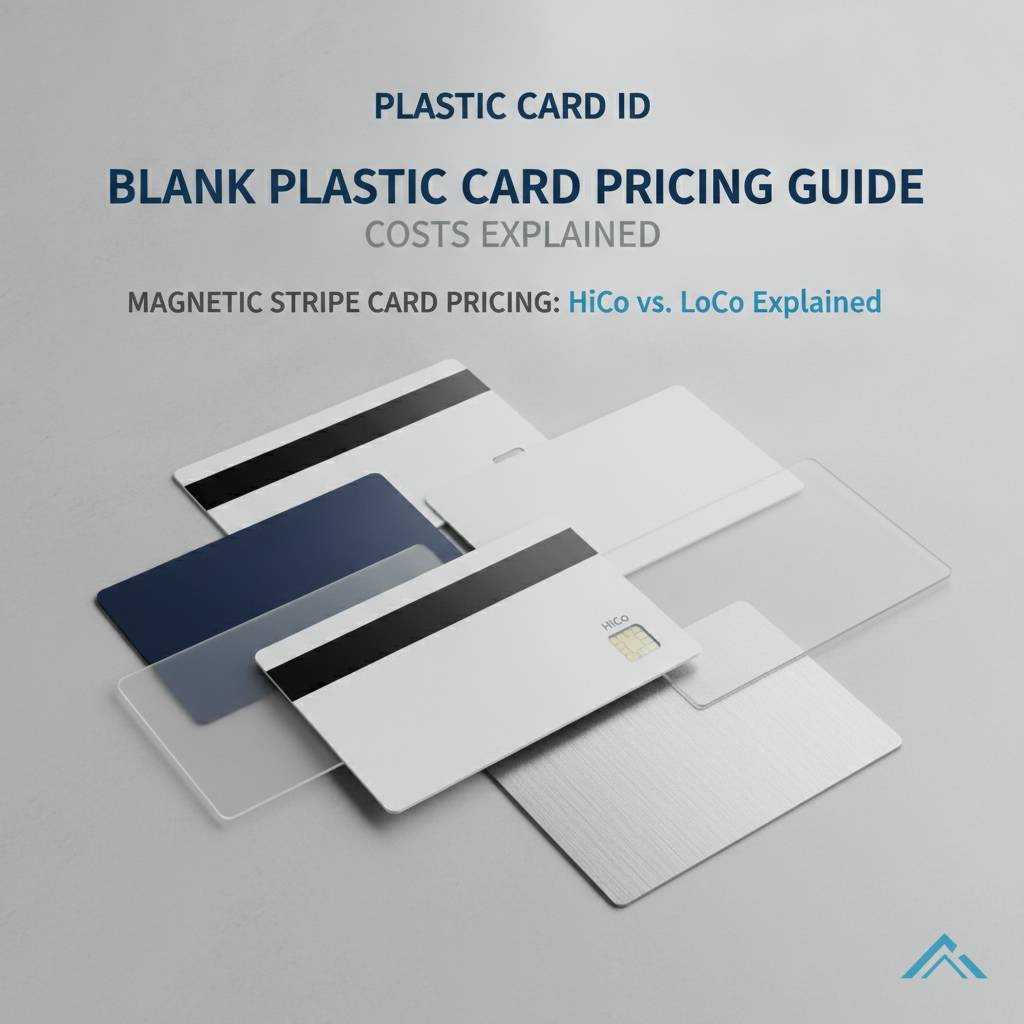 Magnetic stripe cards introduce the first technology premium in the blank card pricing spectrum, and it's one of the most misunderstood. The question isn't simply "how much more does a mag stripe card cost?" - it's "which stripe specification do I actually need, and what does that choice cost me over a full card program lifecycle?"
HiCo (High Coercivity) stripes require more magnetic energy to write and read, making them more resistant to accidental erasure from everyday magnetic exposure. LoCo (Low Coercivity) stripes cost slightly less but are susceptible to erasure from proximity to magnets - purse clasps, magnetic phone cases, and similar everyday items. For anything beyond very low-risk applications, HiCo is typically the right choice.
HiCo Magnetic Stripe Card Pricing
Blank HiCo magnetic stripe cards in standard CR80 format typically run $0.20-$0.55 per card depending on volume. At 500 cards, expect to pay toward the middle of that range. At 5,000 cards, pricing moves toward the lower end, and large-volume programs can sometimes negotiate further. The premium over plain PVC cards reflects the stripe material and manufacturing process, not a significant markup on technology.
HiCo stripe cards are the go-to for hotel key systems, access control programs, employee time-and-attendance systems, and any application where data integrity matters. Choosing HiCo up front costs pennies more per card and saves significant headaches - reprinted cards, frustrated users, and support calls - over the life of a program. It's consistently the right call.
LoCo Magnetic Stripe Cards and Where They Make Sense
LoCo stripe cards aren't a wrong choice - they're the right choice for specific applications. Retail gift card programs where cards are used once or a few times before being discarded, promotional card programs with a short lifecycle, or situations where the card spend volume makes the stripe cost savings genuinely meaningful: these are legitimate LoCo use cases.
Per-card pricing for LoCo blanks typically runs 10-20% below comparable HiCo cards at similar quantities. For a 10,000-card retail gift card program, that differential can represent $150-$300 in total savings - not trivial. For a 200-card employee badge program that lives in wallets for years, the savings aren't worth the risk of field demagnetization. Match the specification to the actual use case.
Contacting Plastic Card ID About Mag Stripe Orders
When you're ready to specify magnetic stripe cards, a quick conversation with the team can save time and prevent specification errors. Reach CPE at 800.835.7919 to discuss HiCo versus LoCo, stripe track configurations (tracks 1, 2, or 3), and whether your intended card program has any specific encoding requirements before you order blank stock that may not match your system's needs.
Getting the specification right the first time is especially important for magnetic stripe orders. Unlike plain PVC cards where a specification change only affects printing, a wrong mag stripe spec can mean replacing the entire batch. A five-minute call is a worthwhile investment before any significant magnetic stripe card purchase.
RFID, Smart Chip, and Advanced Card Technology Pricing
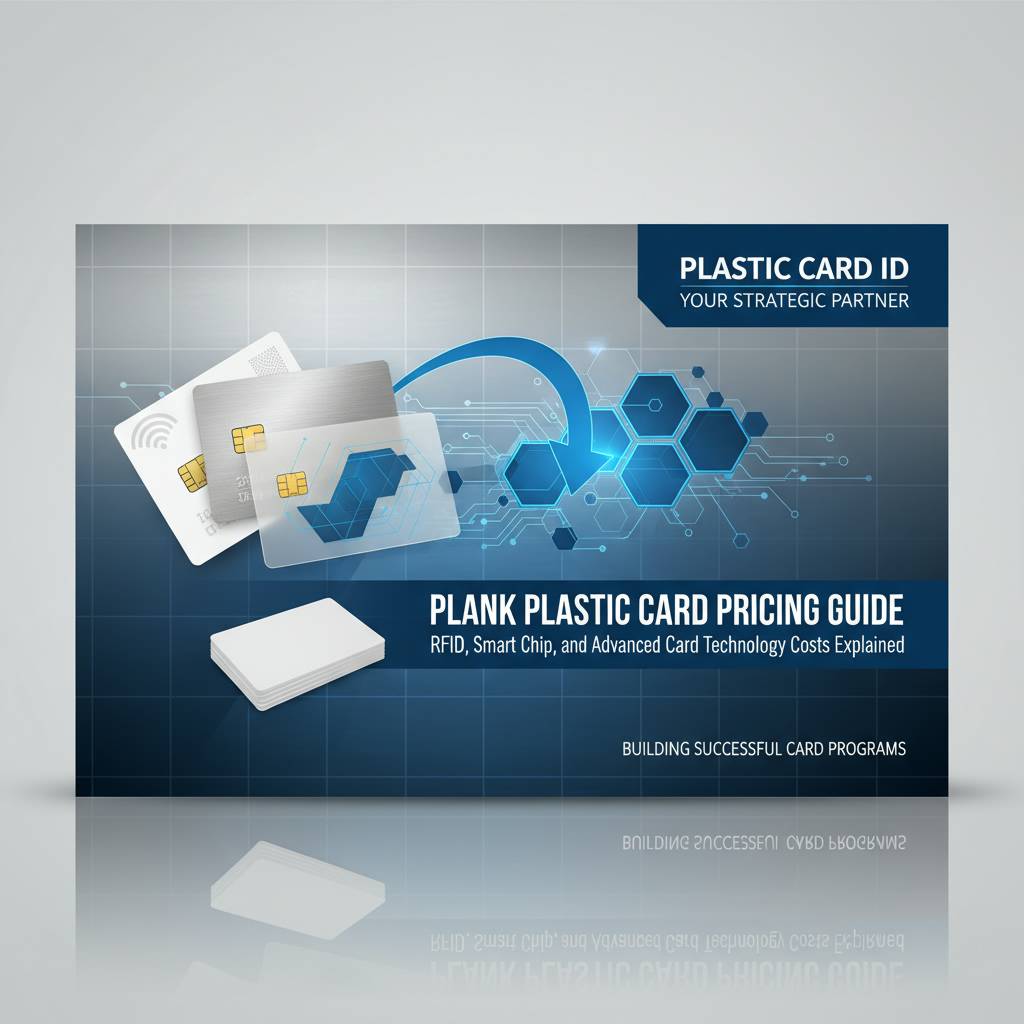 This is where blank plastic card pricing takes a meaningful step up - and where the value equation becomes most important to understand clearly. RFID proximity cards and smart chip cards contain embedded electronics: antennas, microchips, and in some cases cryptographic processing capability. These aren't accessories to the card; they're the functional core of what makes these cards work in access control, secure ID, and contactless transaction systems.
The price premium for these cards is real but frequently overstated in buyers' expectations. RFID proximity cards at volume are genuinely affordable for most organizational budgets, and the per-card cost of a contactless card program is almost always dwarfed by the cost of the access control system infrastructure it operates within. Pricing perspective matters.
Proximity Cards (125kHz) Pricing
Standard 125kHz proximity cards - used in the majority of commercial access control systems - are the most affordable RFID card type. At volume, these can price comparably to mid-tier magnetic stripe cards, often in the $0.75-$2.00 range per card depending on quantity and specific chip format. Common formats include HID-compatible and EM4100 chips, each with different system compatibility requirements.
These cards are frequently purchased blank because encoding typically happens at the access control system level, not at the card manufacturing stage. Buying blank proximity stock gives facilities managers and IT administrators the flexibility to provision cards on-site as employees join or access requirements change, without waiting for pre-encoded orders.
MIFARE and Smart Chip Card Pricing
MIFARE DESFire and other advanced smart chip technologies represent the top tier of blank card pricing for standard-form applications. These cards carry microprocessors capable of secure encryption and complex data operations, making them appropriate for casino player cards, campus ID systems, transit applications, and high-security enterprise access control.
- MIFARE Classic 1K cards: typically $1.00-$2.50 per card at moderate volumes
- MIFARE DESFire EV2/EV3 cards: typically $2.00-$5.00 per card depending on quantity
- Contact smart chip cards (ISO 7816): typically $1.20-$4.00 per card
- Dual-interface cards (contact contactless): typically $2.50-$6.00 per card
- Volume orders above 2,500 units consistently unlock the best rates across all chip card categories
Selecting the right chip technology for your system is critical - a MIFARE DESFire system cannot read a MIFARE Classic card and vice versa. Always confirm your reader infrastructure specifications before ordering smart card stock. The CPE team has the technical background to help you match card specifications to system requirements.
Specialty Cards: Clear, Die-Cut, and Metal
Luxury and specialty card formats occupy their own pricing category. Metal cards in stainless steel, brass, and gold finishes typically run $4.00-$15.00 per card at quantities from 25 to 1,000 units. These are for executive membership programs, VIP loyalty tiers, and brand-building applications where the card itself communicates exclusive status. At that price point, the card is doing marketing work that no paper alternative can replicate.
Custom die-cut shapes add a setup cost and per-card premium over standard CR80 blanks, but for event credentials or specialty marketing cards where visual impact matters, the investment is often strategically justified. Clear and frosted cards sit between standard PVC and specialty finishes in both price and visual impact - an accessible upgrade for programs wanting to step above commodity card aesthetics.
Card Printers, Ribbons, and Total Program Cost Calculation
A blank card is only half the story. For organizations doing in-house printing - which covers the majority of ongoing badge, loyalty, and membership programs - the card printer, ribbon costs, and consumables are significant components of total program cost. Understanding how blank card pricing interacts with printer economics gives a complete picture of what running an effective card program actually costs per card issued.
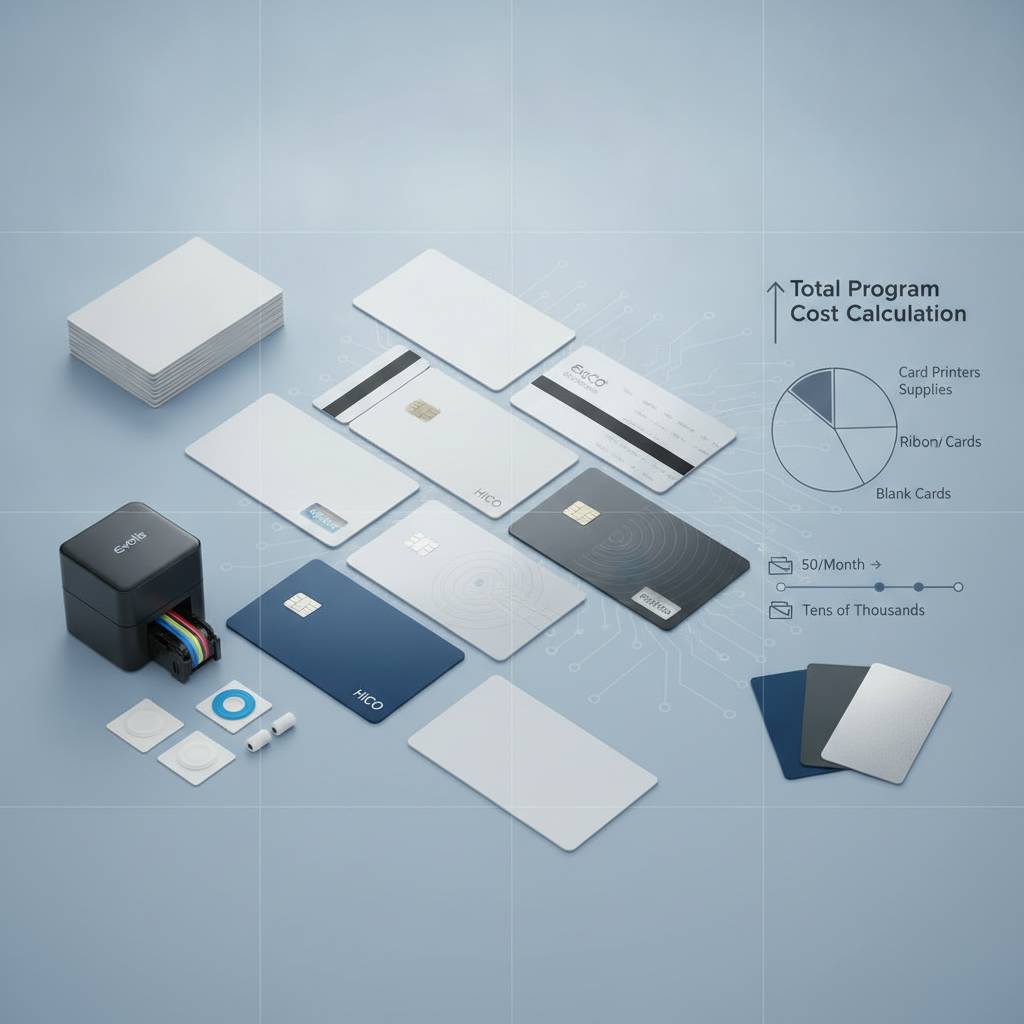
Plastic Card ID carries a full lineup of card printers from Evolis, Zebra, and Fargo, covering everything from compact desktop models for occasional badge printing to dual-sided production models for high-volume programs. Matching the right printer to your volume and card specifications is as important as getting your blank card pricing right.
Ribbon Cost and Its Impact on Per-Card Economics
Ribbon cost is one of the most underestimated variables in total card program budgeting. A standard YMCKO color ribbon for a desktop card printer prints approximately 200-300 cards per ribbon at a typical ribbon cost of $40-$90, translating to roughly $0.15-$0.45 in ribbon cost per card printed. Add that to your blank card cost and you have a real per-issued-card cost that matters at scale.
Monochrome ribbons cost significantly less - often $0.02-$0.08 per card - and are appropriate whenever full-color printing isn't required. For employee ID badges where a logo, name, and photo are printed, a color ribbon makes sense. For access cards that aren't personalized or are encoded but not printed, a monochrome ribbon or no ribbon at all may be the right choice. Program design decisions directly affect total per-card cost.
Cleaning Kits, Sleeves, and Card Carriers
Printer maintenance consumables - cleaning cards, cleaning kits, and rollers - extend printer life and maintain print quality. Neglecting printer cleaning is the leading cause of premature print head failure and streaky card output. Factoring a modest monthly cleaning kit cost into your program budget protects the much larger investment in your printer hardware.
Card sleeves, lanyards, and card carriers are separate line items that many program managers overlook until cards are already in hand. For employee badge programs, card holders and lanyards add $0.20-$1.50 per card issued depending on the style chosen. For loyalty or gift card programs, custom card carriers add a direct mail-ready packaging option that extends the card's marketing reach beyond the point of issuance.
Affixing and Mailing Services
Not every organization wants to handle the logistics of distributing cards internally. CPE offers card affixing and mailing services for programs where cards need to go directly to cardholders via mail. This is particularly valuable for membership renewals, loyalty program launches, and distributed workforce ID programs where centralizing the mailing function saves time and reduces operational complexity.
When calculating total program cost, include mailing as a line item if your distribution model requires it. Outsourcing card mailing to a fulfillment partner often costs less - in both dollars and staff time - than managing it internally at any scale above a few hundred cards per mailing cycle.
Buyer's Guide: How to Get the Best Blank Plastic Card Pricing
 Armed with the framework above, here's a practical checklist for getting your card purchase right the first time. These are the questions and decisions that separate organizations who run efficient, well-priced card programs from those who overpay or spec incorrectly and deal with the consequences later.
Five Questions to Answer Before You Order
- What is the card's primary function? Access control, loyalty, ID, gift card, membership? Function dictates technology requirements, which directly determines price tier.
- What is your actual annual volume? Not monthly minimums - annual total. Use that number to find the right quantity break and consider whether a single annual order beats multiple smaller orders economically.
- What system will the card operate in? Magnetic stripe readers, RFID readers, smart card terminals? Your reader infrastructure determines the card specification you need. Do not guess - confirm before ordering.
- Will cards be printed in-house or issued as blank? In-house printing requires matching cards to your specific printer's approved card stock list. Not all blank cards perform equally in all printers.
- How long will each card remain in service? Short-lifecycle cards (event badges, promotional cards) warrant different specifications than cards meant to last years (employee IDs, long-term membership cards).
Answering these five questions clearly before reaching out to any supplier - including Plastic Card ID - will cut your procurement time significantly and improve the accuracy of every quote you receive. The more precisely you can define your need, the better the pricing and specifications you'll get back.
Understanding MOQs and When to Push for Better Pricing
Minimum order quantities (MOQs) vary by card type. Standard blank PVC cards often have no meaningful MOQ - you can buy 100 and get a fair price. Specialty cards like RFID, smart chip, and metal cards often have practical minimums where sub-threshold orders carry a significant per-card premium. Knowing these thresholds helps you plan orders that hit optimal pricing levels.
The most overlooked pricing lever is timing. Organizations that plan card purchases ahead of program launches, rather than ordering reactively when stock runs out, consistently pay less per card. Rush orders, small emergency quantities between major orders, and reactive purchasing habits add cost that better planning eliminates entirely. Build a card inventory reorder point into your program management process.
Why a Supplier Relationship Matters More Than One-Time Price
The lowest per-card price on a single order isn't always the lowest total cost of a card program over time. A supplier who understands your program, remembers your specs, stocks your card types reliably, and provides accurate technical guidance prevents the costly errors that come from treating card procurement as a commodity transaction. Specification mistakes, incompatible card stock, and failed print runs cost far more than a few cents saved per card on a cheaper source.
CPE has built relationships with clients who have been ordering for a decade or more - because a supplier who knows your program doesn't need to be re-educated every time you place an order. That institutional knowledge has real value in any ongoing card program, and it's a direct outcome of working with a strategic partner rather than a faceless transaction vendor.
Start Your Card Program with Plastic Card ID Today
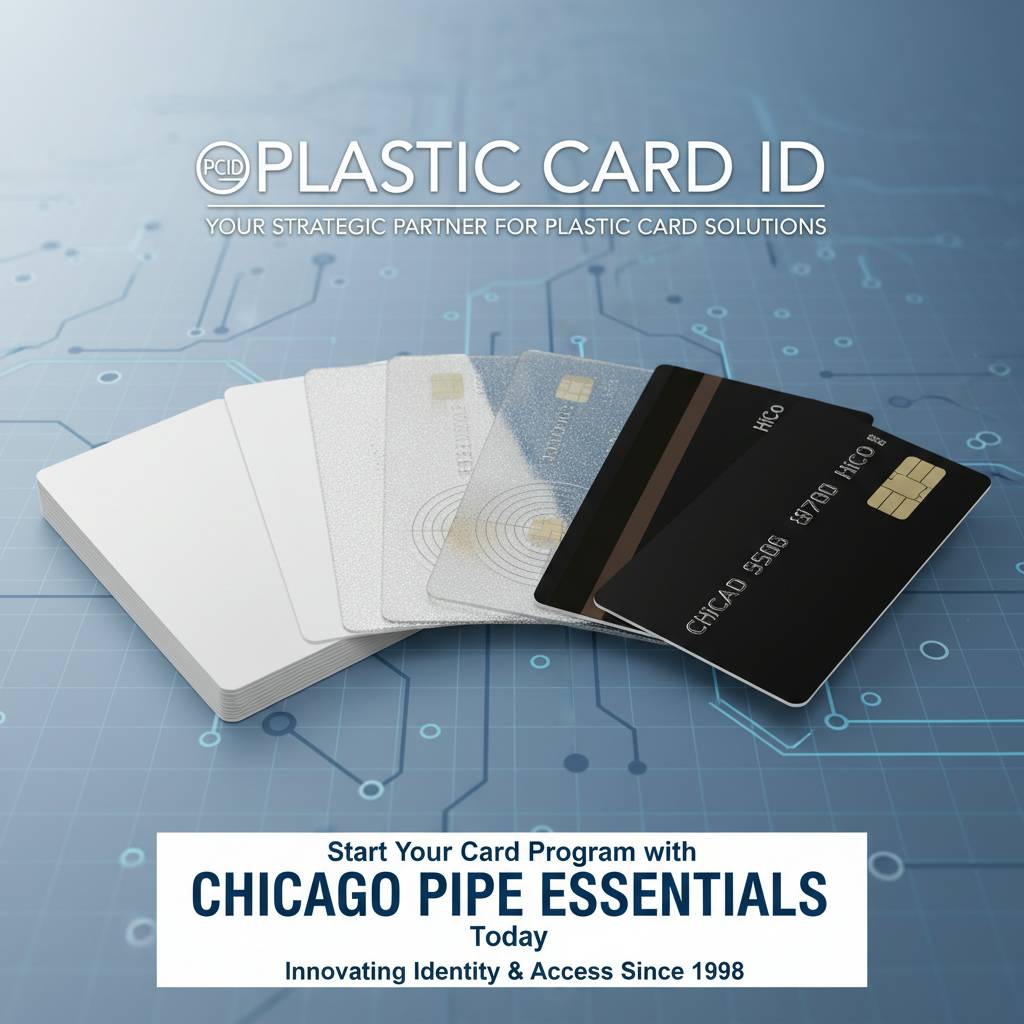 Whether you're pricing out your first 100 blank CR80 cards or planning a 50,000-unit annual loyalty card program, the right starting point is a clear understanding of what you need and a supplier who can match your specifications, budget, and timeline. That's exactly what Plastic Card ID has been doing for businesses across the United States for over 25 years - and what sets us apart from generic card commodity sellers.
From blank white PVC cards to MIFARE DESFire smart cards, HiCo magnetic stripe stock to luxury metal cards - every card type in this guide is available from one supplier, with volume pricing, expert specification guidance, and the fulfillment reliability that comes from 50 million cards of real-world experience. You don't need to piece together a card program from multiple vendors when one partner covers the entire range.
Call Plastic Card ID today at 800.835.7919 and speak directly with a card program specialist who can turn the pricing framework in this guide into a real quote for your specific program. The right card, the right spec, the right price - that's the Plastic Card ID commitment to every customer, every order, every time.
Previous Page