Blank Plastic Cards for Healthcare Worker IDs: Key Facts
Table of Contents []
- Blank Plastic Cards for Healthcare Worker IDs: Why Plastic Card ID Is the Partner Your Facility Needs
- The CR80 Standard: What Makes a Blank Card the Right Foundation
- Magnetic Stripe Cards for Healthcare Access and Time Tracking
- RFID and Proximity Cards for Secure Healthcare Environments
- Card Printers, Ribbons, and Supplies: Everything Your Program Needs
- Frequently Asked Questions About Healthcare Worker ID Card Programs
- Build a Reliable Healthcare ID Program Today with Plastic Card ID
Blank Plastic Cards for Healthcare Worker IDs: Why Plastic Card ID Is the Partner Your Facility Needs
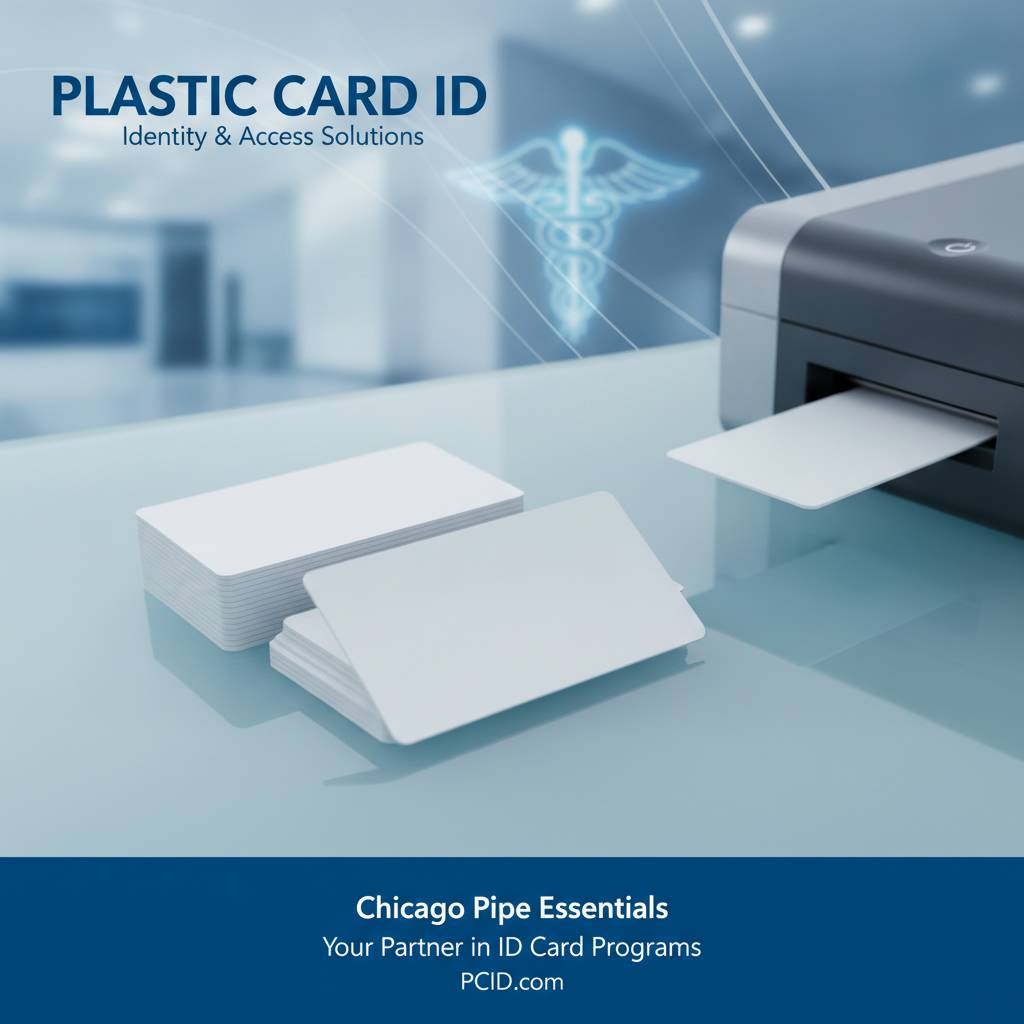 Walk into any hospital, clinic, urgent care center, or medical office and the first thing staff reach for when someone asks "who are you?" is a badge. That badge - small, durable, instantly readable - does something paper never could: it establishes professional credibility in a single glance. Blank plastic cards for healthcare worker IDs are the starting point for every well-run identity program in the medical field, and getting them right matters more than most administrators initially realize.
Plastic Card ID has spent over 25 years supplying plastic cards to businesses and organizations across the United States, moving more than 50 million cards to over 100,000 customers. Healthcare is one of the most demanding verticals they serve - and one where the quality of a blank card directly influences how effective your printed ID will be. When a card warps, fades, or fails a card printer feed, it is not just an inconvenience. It is a workflow problem in an environment where workflow problems carry real consequences.
Your healthcare ID program deserves a foundation built on proven materials. Whether you are badging five new hires a month or rolling out thousands of credentials across a multi-site health system, CPE has the blank card stock, printers, and supplies to make your program run without friction.
| Card Type | Common Use | Key Feature | Best For |
|---|---|---|---|
| Blank PVC CR80 | Staff photo ID badges | Printable surface, durable | Any facility size |
| Magnetic Stripe (HiCo) | Time and attendance, access logs | High coercivity, data retention | Active swipe environments |
| Proximity (RFID) Card | Door access, restricted areas | Contactless read, fast entry | Hospitals, labs, pharmacies |
| Smart Chip Card | Secure authentication | Encrypted data storage | High-security medical facilities |
| Colored PVC Stock | Department color coding | Instant visual differentiation | Large multi-department teams |
The CR80 Standard: What Makes a Blank Card the Right Foundation
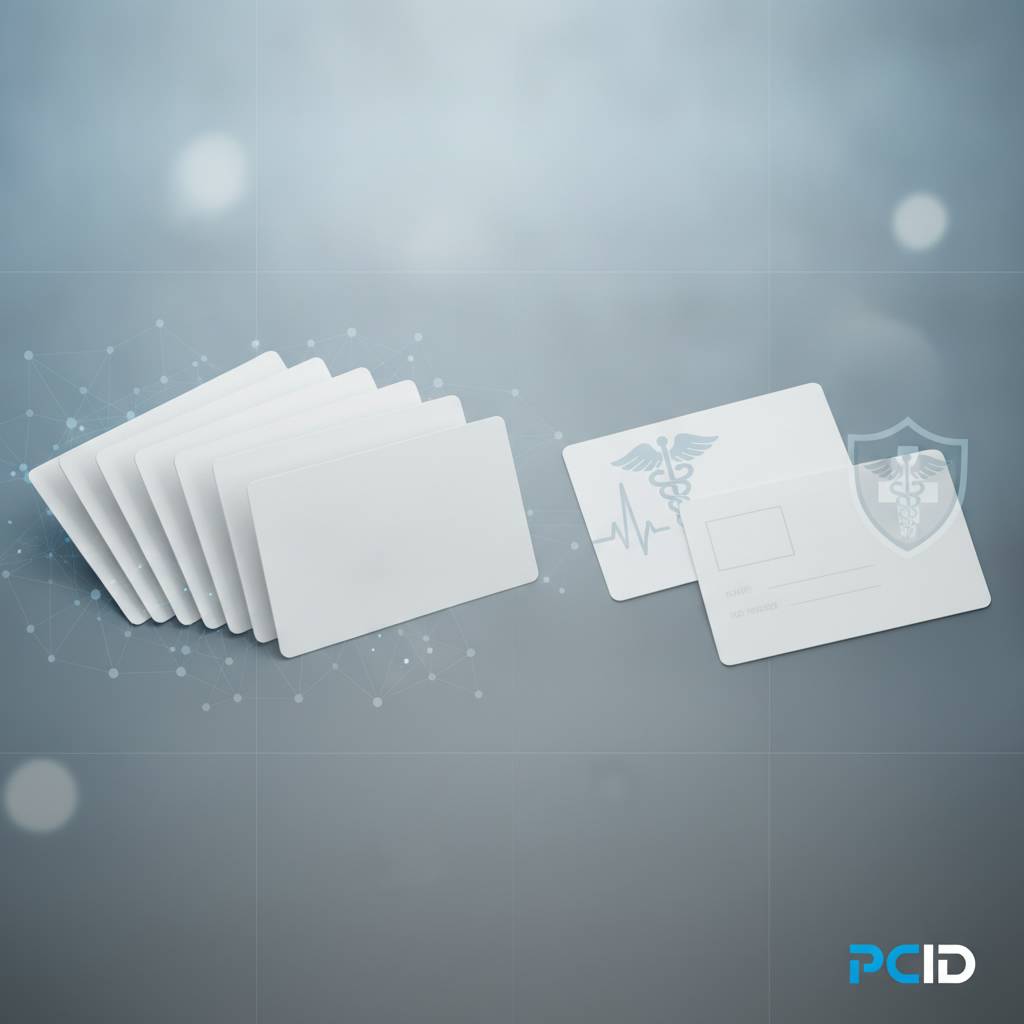 Not all blank cards are equal - and healthcare environments expose weak cards very quickly. The CR80 format, defined by ISO 7810, measures 3.375 inches by 2.125 inches at 30 mil thickness. That is the standard credit card size, and it is the standard for a reason: it is the exact size that fits every ID badge holder, card printer, and lanyard clip your facility already uses. Consistency in size translates directly to consistency in your credentialing operation.
Plastic Card ID supplies CR80 blank PVC cards that meet this ISO specification precisely. There is no guessing about compatibility. You order the cards, load them into your Evolis, Zebra, or Fargo printer, and you print. That simplicity is actually a significant operational asset for HR departments and security offices that badge staff continuously throughout the year.
Why Card Thickness Matters in Healthcare Settings
A 30 mil card is thick enough to survive the daily abuse of a clinical environment - repeated clipping and unclipping from badge reels, contact with surfaces, exposure to hand sanitizers and light moisture. Thinner cards warp, crack, or jam in card printers, creating waste and frustration. Thirty mil PVC is the professional standard, not a premium add-on.
Healthcare workers often wear their ID cards for eight to twelve hour shifts, clipping and unclipping them dozens of times. Cards that delaminate or bend under that stress generate replacement costs and, worse, create credentialing gaps when a badge is unusable between reprints. Quality card stock eliminates that problem at the source.
Print Surface Quality and Why It Affects Your Final Badge
A blank card is also a print substrate. The surface quality of a blank PVC card determines how sharply your printer lays down color, how cleanly text renders at small sizes, and whether photos print with accurate skin tones. A card with surface contamination or inconsistent coating will produce badges that look unprofessional - the opposite of the signal a healthcare organization wants to send.
CPE sources and supplies blank cards that are tested for printability across the card printer brands they sell and support. When you buy card stock and printer ribbons from the same source, you eliminate the compatibility guesswork that causes streaking, smearing, and color drift. That alignment is not accidental - it is how Plastic Card ID is structured to serve you.
In-House Printing Versus Outsourced Badging
Many healthcare organizations face a recurring decision: print badges in-house or send orders to an outside vendor. In-house printing with blank PVC cards and a desktop card printer gives you immediate turnaround - critical when a new nurse starts on Monday and needs a badge that morning. Outsourcing creates lead times that simply do not work in fast-moving staffing environments.
The cost comparison also favors in-house programs over time. A quality desktop printer costs $500-$1,800 depending on features, and blank CR80 cards are priced well below outsourced finished badges per unit. Over a year of continuous badging, the savings compound substantially while control and speed improve. Call 800.835.7919 to model the numbers for your specific facility size.
Magnetic Stripe Cards for Healthcare Access and Time Tracking
Many healthcare facilities run dual-purpose ID programs: the card identifies the employee visually and also interfaces with digital systems for time and attendance, access logging, or cafeteria accounts. Magnetic stripe cards make that possible without adding a second card to the lanyard. A single card can carry a photo ID on the front and a HiCo or LoCo magnetic stripe on the back - two functions, one credential.
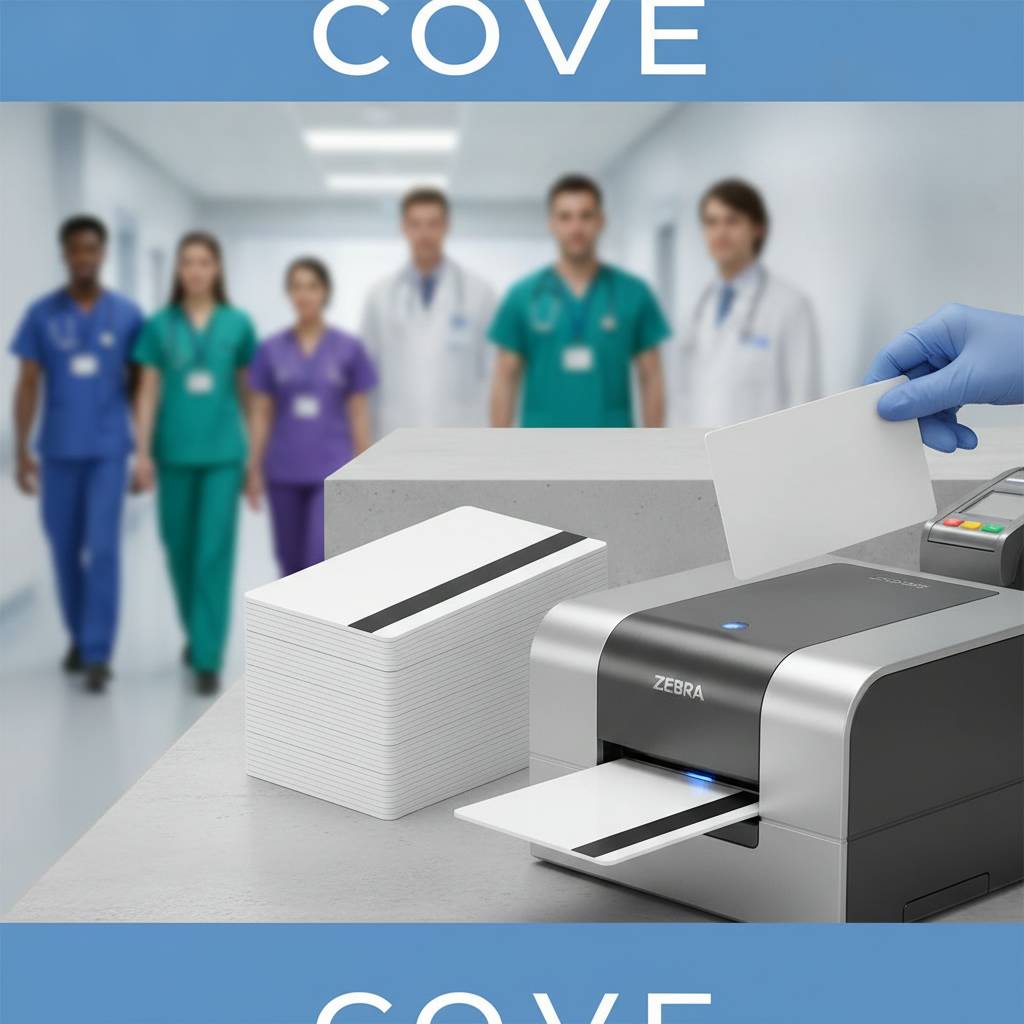
High coercivity (HiCo) magnetic stripe cards are the recommended choice for healthcare environments. HiCo stripes require a stronger magnetic field to encode, which means they are not accidentally erased by proximity to other magnetic objects - a real consideration in clinical settings where imaging equipment, magnets, and electronic devices are common. LoCo cards are suitable for lower-traffic applications but HiCo is the smart default for most hospital and clinic programs.
Encoding Your Magnetic Stripe Cards On-Site
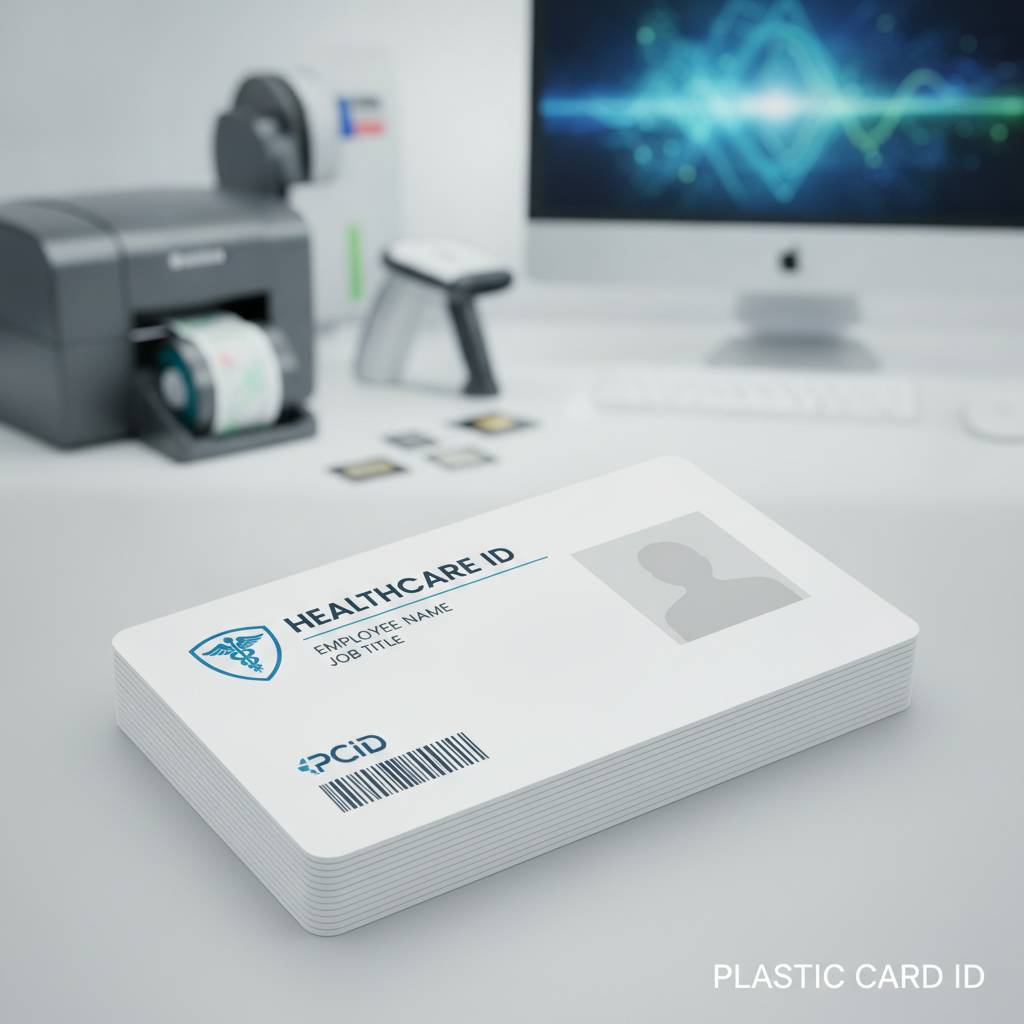
Several of the card printers Plastic Card ID carries - including models from Zebra and Fargo - include built-in magnetic stripe encoding capability. That means your HR or security team can print the photo, name, title, and department on the card while simultaneously encoding the employee's ID number onto the stripe. One pass through the printer does everything.
This capability drastically reduces the steps involved in issuing a new credential. No separate encoding station, no sending cards to another department. A complete, functional healthcare worker ID - visual and digital - comes out of a single desktop printer in under a minute. For busy HR teams managing high turnover and seasonal staffing, that efficiency is a genuine operational advantage.
HiCo vs. LoCo: Choosing the Right Stripe for Your Systems
The choice between HiCo and LoCo magnetic stripe cards should be driven by your existing card reader infrastructure. Most modern access control and time attendance systems are calibrated for HiCo cards, which operate at 2750 Oersteds. LoCo cards operate at 300 Oersteds and are typically used in lower-security environments like hotel keys or simple loyalty programs.
If you are unsure which stripe type your readers require, CPE can help you identify the right product before you order. Ordering the wrong stripe type means cards that your readers will not reliably process - a frustrating and preventable mistake. Getting it right the first time saves real money and real headaches.
Multi-Site Health Systems and Centralized Card Programs
Large health systems operating across multiple campuses or satellite clinics often struggle with credential consistency. When different sites print on different card stocks with different printers and different ribbon suppliers, badge quality varies - and that variation creates security and HR management challenges. A centralized blank card supply program through Plastic Card ID standardizes the material across every site.
Volume purchasing across multiple facilities can also unlock better per-card pricing. Plastic Card ID works with health systems of every scale - from a two-location regional clinic to a twenty-hospital network - structuring card supply programs that keep all sites stocked, consistent, and printing efficiently. That is the strategic partner difference that separates Plastic Card ID from generic online card suppliers.
| Specification | HiCo | LoCo |
|---|---|---|
| Coercivity | 2750 Oe | 300 Oe |
| Erasure Resistance | High | Low |
| Typical Healthcare Use | Access control, time tracking | Basic staff ID, low-security areas |
| Stripe Color | Black or brown | Brown |
RFID and Proximity Cards for Secure Healthcare Environments
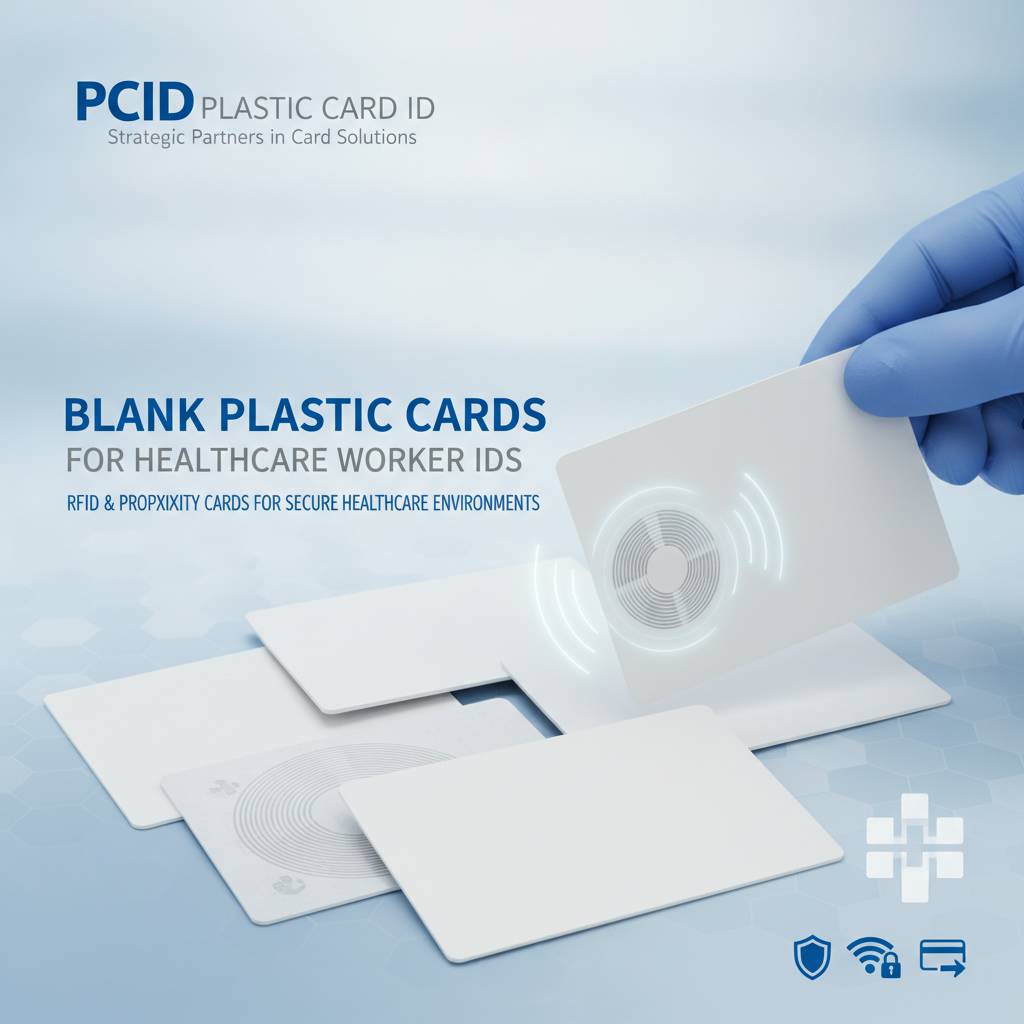 Modern hospitals and medical facilities increasingly rely on contactless credentialing. RFID proximity cards allow a staff member to wave their badge near a reader - no swipe, no contact, no fumbling with gloved hands - to unlock restricted areas, log into workstations, or authenticate access to medication dispensing systems. Speed and hygiene both matter in clinical settings, and proximity cards address both.
Plastic Card ID supplies a range of proximity and smart chip cards compatible with the access control systems most commonly used in healthcare facilities. From standard 125 kHz proximity cards to advanced MIFARE DESFire contactless smart cards, the catalog covers the full spectrum of contactless credentialing technology. Your facilities team can match card specifications to your existing reader infrastructure without having to source cards from multiple vendors.
Proximity Cards: Fast, Reliable, and Widely Compatible
Standard 125 kHz proximity cards are the most widely deployed contactless credential in healthcare access control today. They are compatible with readers from HID, Kantech, Lenel, and most other major access control platforms. The read range is short - typically two to four inches - which means the card must be deliberately presented, reducing accidental reads and unauthorized piggyback access.
For facilities already running proximity-based access control, blank proximity cards allow you to issue new credentials on-demand using your existing card printer and encoding equipment. No proprietary vendor lock-in, no minimum order requirements that don't fit your actual headcount. You order what you need, when you need it, through CPE.
MIFARE DESFire and High-Security Smart Cards
High-security areas within healthcare facilities - pharmacies, operating suites, data centers, biological specimen storage - often require more than a simple proximity credential. MIFARE DESFire smart cards offer encrypted, multi-application contactless credentials that can store authentication data securely and resist cloning attempts that weaker card technologies are vulnerable to.
These cards can also carry multiple applications on a single card - door access, logical access to computer systems, and other functions - reducing the number of separate credentials a staff member needs to carry. One card, multiple secure functions. For organizations managing complex access control architectures, this capability represents a significant simplification and security improvement.
Colored Card Stock for Department Identification
One of the underutilized tools in healthcare ID programs is colored PVC card stock. Issuing different card colors to different departments - blue for nursing, yellow for administration, red for security, green for facilities - creates an instant visual identification system that supplements printed role information. In a busy emergency department, the color of a badge communicates role before anyone reads a word.
Color-coded blank cards are available from Plastic Card ID in a range of standard colors. They print and encode the same as white PVC stock. The color shows through on any unprinted area of the card and can be incorporated into badge designs intentionally. It is a small detail with a large practical impact in fast-moving clinical environments where seconds and clarity both matter. Contact the team at 800.835.7919 to discuss colored card stock options for your facility.
Card Printers, Ribbons, and Supplies: Everything Your Program Needs
 A blank card program for healthcare worker IDs is only as functional as the printer used to produce the finished badge. Plastic Card ID carries desktop card printers from Evolis, Zebra, and Fargo - three brands that represent the full range of reliability, print quality, and feature sets available in the professional ID card printer market. Whether you need a single-side direct-to-card printer for a small clinic or a dual-side laminating printer for a large hospital system, the right hardware is in the catalog.
What makes Plastic Card ID particularly useful for healthcare buyers is that they supply printers, blank cards, ribbons, cleaning kits, and card accessories - everything from the same source. That means one account, one point of contact, and one vendor relationship to manage instead of five. For administrators who already juggle complex procurement systems, supply consolidation is a genuine quality-of-life improvement.
Matching the Right Printer to Your Badging Volume
A small private practice badging three to five employees per month has very different needs from a regional hospital badging hundreds of staff annually. Printer selection should account for monthly volume, whether single or dual-side printing is needed, whether encoding capability is required, and whether a laminator overlay is needed for added card durability.
- Entry-level direct-to-card printers (Evolis Badgy, Zebra ZC100): ideal for low-volume programs, straightforward photo ID needs, budget-conscious buyers.
- Mid-range single-side printers (Evolis Primacy 2, Zebra ZC300): suitable for medium-volume programs with encoding requirements and higher print quality standards.
- Dual-side printers with laminator (Fargo HDP6600, Zebra ZC350): designed for high-volume, high-durability programs where card longevity and security overlay are priorities.
- Encoding-capable models: many mid and high-range printers include magnetic stripe, proximity, and smart card encoding options as built-in or add-on modules.
Printer Ribbons and Cleaning Kits
Ribbon quality affects every badge your printer produces. Using the correct OEM or compatible ribbon for your specific printer model ensures accurate color reproduction, sharp text, and consistent output across every card in a batch. Generic ribbons that are not calibrated for your printer model can cause streaking, head wear, and inconsistent print quality - problems that compound over time and ultimately shorten printer life.
Plastic Card ID supplies printer ribbons matched to the printers in their catalog - Evolis, Zebra, and Fargo - so you are not guessing at compatibility. Cleaning kits are equally important: card printer heads are precision components that accumulate dust and debris over time, and a regular cleaning schedule using manufacturer-approved cleaning cards dramatically extends printer life and maintains output quality. Proper maintenance is the difference between a printer that lasts five years and one that fails in two.
Card Holders, Sleeves, and Badge Accessories
The printed badge is only part of the system. Healthcare workers need a way to wear and present their credential - badge reels, lanyards, rigid holders, and vinyl sleeves all play a role. Card sleeves protect printed cards from surface scratches, moisture, and the inevitable handling that happens in clinical environments. A sleeve can meaningfully extend the readable life of a printed badge.
Plastic Card ID offers card carriers, sleeves, and badge accessories as part of their supply catalog. Ordering accessories alongside card stock and ribbons means your program is fully outfitted from a single source. For organizations with specific badge holder requirements - heavy-duty reels for high-traffic use, for example - the team can help identify the right product. The details that protect your badge investment matter just as much as the badge itself.
Frequently Asked Questions About Healthcare Worker ID Card Programs
Healthcare administrators and HR managers who are building or upgrading a card ID program often have similar questions about what to order, how programs scale, and how to manage ongoing supply. The following answers address the most common points of confusion and help new buyers make confident, well-informed decisions.
If your specific question is not addressed below, the Plastic Card ID team is available to walk through your program requirements in detail. Decades of experience with healthcare and institutional ID programs means they have likely seen your situation before - and they know what works.
What Quantity Should I Order to Start?
Blank PVC cards are typically sold in increments of 100, 500, and 1,000 cards. For most small to mid-size healthcare organizations, a starting order of 500 cards provides enough stock to print current staff badges and handle replacements for a reasonable period without over-investing in inventory. Larger facilities with high turnover may find that 1,000-card orders reduce per-unit cost and reorder frequency to manageable levels.
Plastic Card ID supports programs from 50 cards a month to tens of thousands, so there is no order size too small to start with. The goal is to get your program running on quality materials at a quantity that makes operational sense. Starting right is more important than starting big.
How Long Do Printed PVC Healthcare ID Cards Last?
A properly printed CR80 PVC card, worn daily in a clinical environment and stored in a badge holder or sleeve when not in use, typically lasts one to three years before the print shows meaningful wear. Cards exposed to heavy chemical contact or extreme conditions may show wear sooner. Reprinting a card is fast and inexpensive with an in-house program - typically less than $1.00 per card in materials when you account for card stock and ribbon cost.
Laminator overlay options available on higher-end card printers can extend card life substantially by adding a protective film layer over the printed surface. For organizations where card replacement frequency is a cost and logistics concern, a laminating printer pays for itself relatively quickly in reduced reprint costs and staff time.
Can I Order Cards Pre-Encoded for My Access Control System?
Yes. Plastic Card ID can supply proximity and RFID cards that are pre-encoded to your specifications, or supply blank encoded cards that your own hardware encodes at print time. The right approach depends on your access control system's enrollment process and whether on-site encoding capability exists within your printer setup. Both paths are supported.
For facilities with complex access control architectures, working with Plastic Card ID to define the card specification before ordering eliminates compatibility problems downstream. One conversation upfront prevents weeks of troubleshooting later. Reach out to the team at 800.835.7919 to discuss your specific access control requirements.
Build a Reliable Healthcare ID Program Today with Plastic Card ID
 A healthcare worker ID program is not a one-time purchase - it is an ongoing operational system that requires consistent materials, reliable equipment, and a supply partner who understands what healthcare organizations actually need. That is exactly what Plastic Card ID has delivered to over 100,000 customers across 25 years: not just cards, but a complete, professionally supported card program infrastructure.
From blank CR80 PVC cards to magnetic stripe stock, proximity credentials, smart chip cards, colored card stock, card printers, ribbons, cleaning kits, and badge accessories - every element of a healthcare worker ID program is available through a single, experienced supplier. You do not need to piece together a program from five different vendors. You need one partner who knows what works and can supply it consistently.
Ready to build or upgrade your healthcare ID card program? Contact Plastic Card ID today at 800.835.7919 - the team is ready to help you get every detail right from the first card to the thousandth.
Previous Page