Blank Plastic Cards for Barcode Scanning: What to Know
Table of Contents []
- Blank Plastic Cards for Barcode Scanning - Plastic Card ID
- Why the Card Substrate Makes or Breaks Your Barcode Program
- Types of Blank Plastic Cards Available for Barcode Applications
- Barcode Symbologies and Print Technology - Matching Cards to Scanners
- Industries That Rely on Blank Plastic Cards for Barcode Scanning
- Scaling Your Barcode Card Program - From 50 to 50,000 Cards
- Everything Else Your Card Program Needs - Plastic Card ID
Blank Plastic Cards for Barcode Scanning - Plastic Card ID
 Barcodes have quietly become one of the most powerful tools in modern business operations - and the card they live on matters more than most people realize. Whether you are running a retail loyalty program, managing warehouse inventory, or credentialing staff across multiple locations, the substrate beneath that barcode directly affects scan reliability, card durability, and program success. At Plastic Card ID, blank plastic cards for barcode scanning are not an afterthought. They are a specialty.
With over 25 years in the business and more than 50 million cards shipped to customers across the United States, CPE has seen what works and what doesn't. Paper cards warp. Laminated stock delaminates. But a properly specified blank PVC card - smooth, dimensionally stable, printed in-house - scans cleanly, holds up to daily handling, and represents your brand with a polish that disposable alternatives simply cannot deliver.
| Card Type | Best For | Barcode Compatible | Thickness |
|---|---|---|---|
| Standard White PVC CR80 | Loyalty, ID, Membership | Yes - All Types | 30 mil |
| HiCo Magnetic Stripe PVC | Access Barcode Combo | Yes | 30 mil |
| Clear / Frosted PVC | Premium Branding Programs | Yes - With White Panel | 30 mil |
| Colored PVC Stock | Event and Department Sorting | Yes - Contrast Dependent | 30 mil |
| Combo Mag Stripe Smart Chip | Multi-Technology Programs | Yes | 30 mil |
Why the Card Substrate Makes or Breaks Your Barcode Program
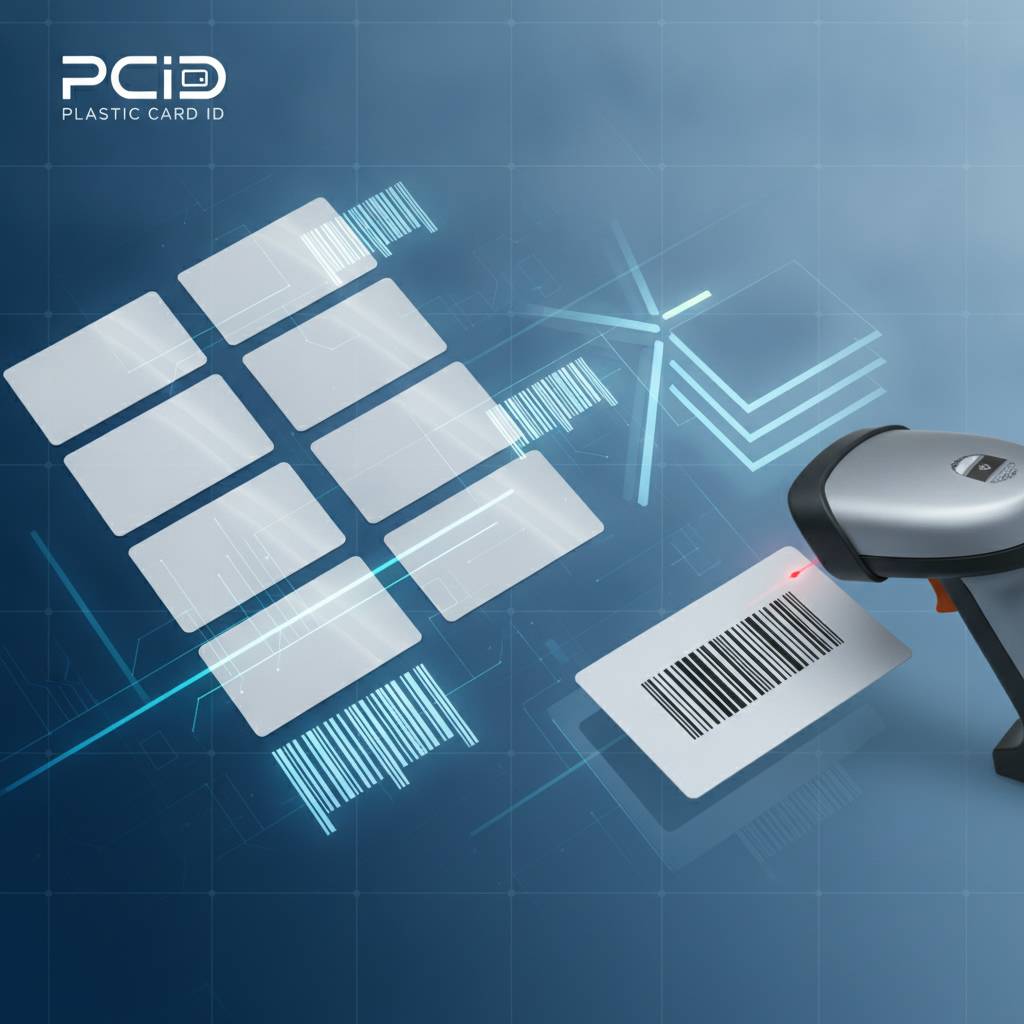 A barcode is only as reliable as the surface it sits on. Thermal card printers - the kind used with Zebra, Evolis, and Fargo systems - transfer ink and resin onto the card surface in precise micro-layers. A high-quality PVC card accepts that transfer cleanly, producing crisp edges and consistent density across every bar and space in the symbol. Inconsistency in the card surface means inconsistency in the printed barcode, and that translates to scanner errors at exactly the wrong moments.
This is not a theoretical concern. Businesses that switch from inkjet-printed paper cards to properly specified blank PVC often report immediate and dramatic improvements in point-of-sale scan rates, warehouse throughput, and employee checkout speed. The material upgrade is not cosmetic. It is operational. At CPE, this understanding informs every product recommendation made to clients managing barcode-dependent workflows.
CR80 Standard - The Industry-Proven Blank Card Specification
The CR80 format - 3.375 inches by 2.125 inches, 30 mil thickness - is the international standard under ISO 7810. Every major card printer on the market is designed around it. Choosing blank CR80 PVC cards ensures compatibility with your printing hardware, predictable performance in card holders and wallets, and consistent feeding through automated mailers and dispensers.
For barcode programs specifically, the smooth white surface of a standard CR80 PVC card is the gold standard. The uniformity of the surface finish allows even low-cost card printers to produce scannable barcodes consistently. Organizations that have tried to economize with off-specification card stock often discover their savings are erased by reprints, scanner failures, and staff time lost troubleshooting avoidable problems.
Surface Coating and Printability - What You Need to Know
Not all blank PVC cards are created equal. Surface coatings vary between manufacturers, and those variations affect how ink and resin bond to the card during the printing process. A card optimized for dye-sublimation printing will behave differently than one designed for direct thermal or resin thermal transfer. Choosing cards matched to your specific printer technology is essential for barcode quality.
Plastic Card ID stocks cards specifically selected for compatibility with the most widely used card printer brands in the United States. Whether your operation runs on Evolis Primacy, Zebra ZC300, or a Fargo HDP series printer, the blank cards available through CPE are sourced and tested with those machines in mind. This compatibility-first approach eliminates guesswork and reduces waste in your card production workflow.
Thickness, Rigidity, and Scan Consistency
Card thickness affects more than feel. A 30 mil PVC card maintains flatness through temperature changes, repeated handling, and long-term wallet storage in a way that thinner or composite substrates do not. Flatness matters for scanning because a warped or bowed card held at an angle to a fixed scanner creates read geometry errors - even if the barcode itself was printed perfectly.
The rigidity of standard PVC also resists edge curl, which is a common failure mode in paper and laminated paper cards exposed to humidity. For businesses in regions with significant seasonal humidity variation, this dimensional stability is not a luxury - it is a requirement for program reliability. Every card sold by Plastic Card ID meets or exceeds the dimensional tolerances established by the ISO 7810 standard.
Types of Blank Plastic Cards Available for Barcode Applications
Barcode programs are not monolithic. A hospital visitor badge program has different requirements than a retail gift card rollout or a warehouse access control system. Plastic Card ID maintains a comprehensive catalog of blank card types specifically because real-world programs demand real-world flexibility. Understanding which card type matches your use case is the first step toward building a program that actually works.
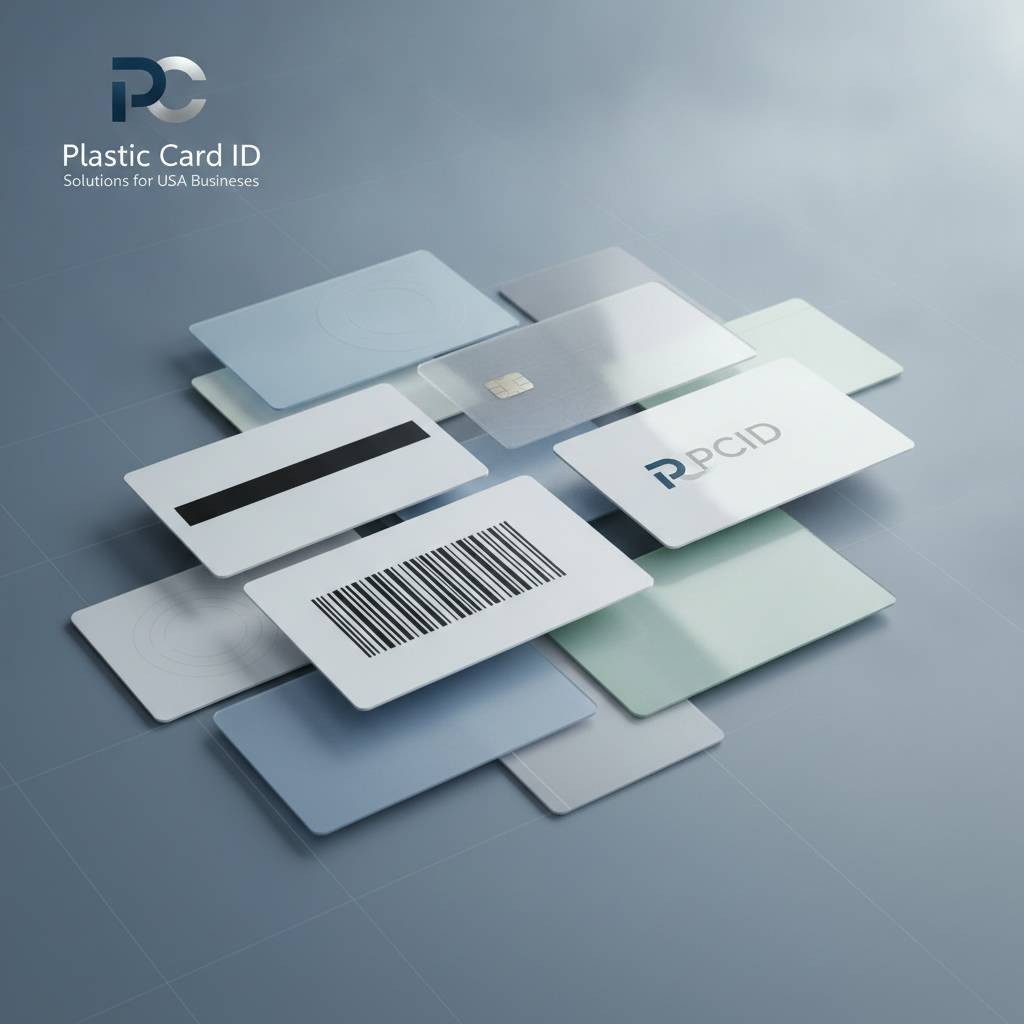
Selecting the wrong card type is one of the most common and most avoidable mistakes organizations make when launching or scaling a card program. A brief conversation with the team at CPE can prevent months of operational friction down the road. The depth of product knowledge built over 25 years and 100,000-plus customers is available to every client, regardless of order size.
Standard White PVC Blank Cards
The workhorse of the industry. Standard white PVC blank cards are compatible with virtually every card printer and every barcode symbology - Code 128, QR codes, PDF417, Code 39, DataMatrix, and more. The bright white surface maximizes contrast between printed bars and background, which is the single most important variable in barcode readability. These cards are available in quantities ranging from small starter packs to bulk pallets for high-volume programs.
For organizations running in-house card printing operations, standard white PVC blanks represent the lowest per-card cost while delivering professional results. The cards arrive ready to print - no preparation, no pre-treatment, no special handling required. What goes on the card is entirely under your control, from cardholder photos to variable barcodes to custom artwork and branding.
Magnetic Stripe Cards with Barcode Compatibility
Many programs benefit from combining barcode scanning with magnetic stripe encoding. A retail loyalty card, for example, might carry a printed barcode for quick visual scanning at point of sale while also holding encoded data on a HiCo or LoCo magnetic stripe for integration with back-end loyalty software. Plastic Card ID offers blank magnetic stripe cards in both HiCo (high coercivity) and LoCo (low coercivity) configurations.
- HiCo magnetic stripes are resistant to demagnetization and recommended for cards that will be stored near other cards, phones, or magnetic fields.
- LoCo stripes are suitable for short-duration applications like event credentials or temporary access passes.
- Both stripe types are fully compatible with standard thermal card printers equipped with magnetic encoding modules.
- Barcode printing is unaffected by the presence of a magnetic stripe on the card.
- Combo cards allow a single card to serve multiple verification and authentication functions simultaneously.
Clear, Frosted, and Colored PVC Options
Premium card programs sometimes call for something more visually distinctive than standard white PVC. Clear and frosted PVC cards create a striking, modern appearance that communicates quality and exclusivity. For barcode applications, clear cards typically require a white printed panel or background behind the barcode to maintain the contrast ratio required for reliable scanning. CPE can advise on the exact print specifications to achieve both the visual effect and the functional reliability you need.
Colored PVC stock - available in a range of pre-colored options - serves a different purpose: visual sorting and department coding. A hospital might issue green cards to staff, blue cards to contractors, and red cards to temporary visitors, with each color carrying a scannable barcode and the appropriate access level. Color-coded barcode cards reduce human error in credentialing workflows and add a layer of immediate visual verification that white cards alone cannot provide.
Barcode Symbologies and Print Technology - Matching Cards to Scanners
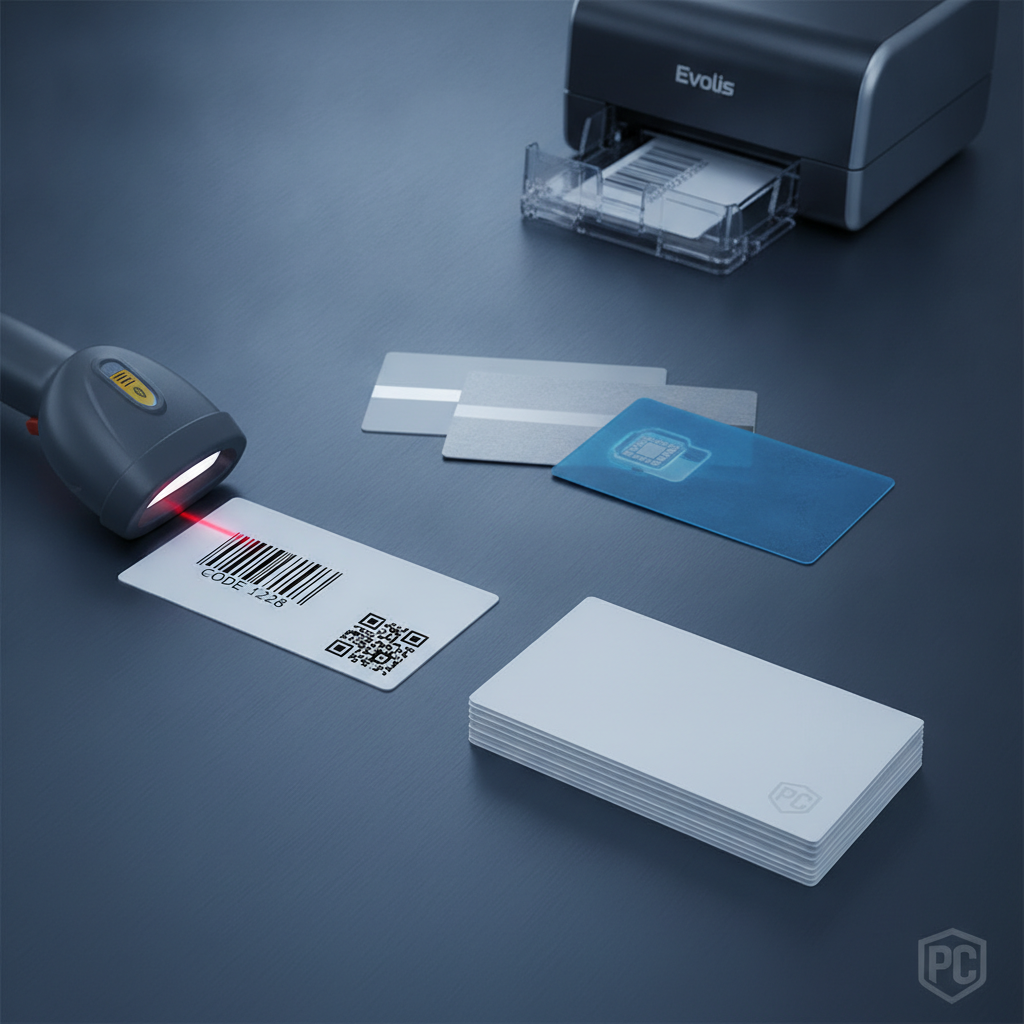 A blank plastic card is the beginning, not the end. The real magic happens at the intersection of card surface, printer technology, and barcode symbology selection. Getting all three right means your cards scan on the first pass - every time, under any lighting condition, with any compatible reader. Getting it wrong means frustrated staff, unhappy customers, and avoidable reprints.
Plastic Card ID has spent decades helping clients navigate exactly these decisions. From single-location small businesses printing 50 cards a month on a desktop Evolis printer, to enterprise operations running Zebra mid-range printers at multiple sites producing tens of thousands of cards, the technical guidance available through CPE is calibrated to the actual scale and complexity of your operation.
Linear vs. 2D Barcodes on Plastic Cards
Linear barcodes - Code 128, Code 39, Interleaved 2 of 5 - encode data in a single horizontal dimension and are read by most basic laser scanners. They are ideal for applications where scanner hardware is fixed, inexpensive, or already installed. Linear barcodes on properly printed PVC cards are highly reliable and have been the backbone of retail and inventory applications for decades.
Two-dimensional barcodes - QR codes, PDF417, DataMatrix - encode data in both dimensions, allowing far more information to be stored in a smaller physical footprint. They require an imaging scanner rather than a basic laser reader, but the added data capacity is essential for applications like event ticketing, employee ID with embedded access rights, or medical records linkage. 2D barcodes on PVC cards represent the direction most modern card programs are moving, and the blank cards from Plastic Card ID support both symbology types without modification.
Printer Selection for Barcode Quality
The card printer you choose has as much impact on barcode quality as the card itself. Evolis, Zebra, and Fargo each offer models suited to different production volumes and quality requirements. Resolution matters - a 300 dpi printer produces acceptable linear barcodes, but a 600 dpi printer produces noticeably sharper bars with cleaner edges, which translates directly to higher first-read rates on 2D symbologies.
Plastic Card ID supplies card printers across the full range of these brands and can match the right machine to your volume, budget, and barcode requirements. Buying the printer and the blank cards from the same source eliminates compatibility uncertainty and ensures you have a single point of contact when questions arise. The card ribbons and cleaning kits are also available through CPE, making the entire printing supply chain simple to manage.
Contact CPE for Technical Guidance
Choosing between card types, printer models, barcode symbologies, and encoding technologies is genuinely complex - especially when you are building a program from scratch or scaling an existing one. The team at Plastic Card ID is equipped to guide those decisions with specificity and experience. Call 800.835.7919 to speak directly with a specialist who understands barcode card programs from both the technical and operational perspectives.
No two programs are identical, and the guidance provided is always calibrated to the actual needs of the client - not a one-size-fits-all script. This is the kind of partnership that has kept over 100,000 customers returning to CPE for more than two decades.
Industries That Rely on Blank Plastic Cards for Barcode Scanning
 The applications for barcode-enabled blank plastic cards span virtually every sector of the American economy. From healthcare to hospitality, retail to education, the card-and-barcode combination solves real operational problems with elegant simplicity. Understanding how other industries deploy these solutions can spark ideas for your own program and help you anticipate requirements you might not have considered.
One of the most consistent observations from Plastic Card ID's 25-year history is that programs which start small and focused - a single-location loyalty card, a simple employee badge - often expand rapidly once leadership sees the operational results. Building the right card infrastructure from the beginning makes that growth smooth rather than disruptive.
Retail and Loyalty Programs
Retailers who make the switch from paper punch cards to plastic loyalty cards with printed barcodes consistently report significant revenue gains. The data is clear: plastic cards that live in wallets generate more repeat visits than paper alternatives that end up crumpled at the bottom of a bag or simply thrown away. The barcode enables seamless POS integration, automatic point accumulation, and data-driven customer insights that paper cannot provide.
Gift card programs represent another major retail application. Blank PVC cards printed in-house with custom gift card artwork and unique barcodes allow retailers to run a complete gift card program without the lead times and minimum orders associated with fully custom pre-printed cards. In-house printed gift cards on blank PVC are faster to deploy, easier to update, and less expensive at moderate volumes than outsourced alternatives.
Healthcare, Education, and Institutional ID
Hospitals, clinics, universities, and schools all share a common need: reliable, scannable identification that integrates with existing systems. A student ID card with a printed barcode and optional magnetic stripe can serve simultaneously as a library card, meal plan card, dormitory access credential, and campus event ticket - all from a single card printed in-house on blank PVC stock. The operational efficiency gains from card consolidation are substantial.
Healthcare visitor management systems frequently use barcode-equipped plastic cards to track who is in a facility at any given moment. Printed PVC visitor badges with scannable barcodes provide a level of accountability and documentation that paper sign-in sheets simply cannot match. The cards can be collected at exit, reprinted for the next visitor, or encoded with time-limited access parameters when combined with smart card technology.
Events, Hospitality, and Access Control
Event organizers and hospitality venues use barcode-enabled PVC cards for ticketing, VIP access, cashless payment within a venue, and attendee tracking. A music festival, corporate conference, or trade show can issue blank PVC cards pre-printed with unique barcodes to each registered attendee, enabling fast entry scanning and eliminating paper ticket fraud. The durability of PVC cards means they survive a full day outdoors without degrading to an unscannable state.
Hotel key cards represent a specialized intersection of access control and hospitality branding. While traditional hotel key cards rely on magnetic stripes or RFID, adding a printed barcode enables secondary functions like spa access, parking validation, or loyalty point accumulation - all managed through the same card. Plastic Card ID supplies hotel key card blanks ready for encoding and in-house printing to hospitality clients across the country.
Scaling Your Barcode Card Program - From 50 to 50,000 Cards
One of the most distinctive aspects of Plastic Card ID's approach is the genuine ability to serve clients at any scale without making smaller customers feel like an afterthought. An organization printing 50 cards per month gets the same product quality, the same technical guidance, and the same reliability as a national retailer running tens of thousands of cards per week. The infrastructure behind both programs is the same; only the quantities differ.
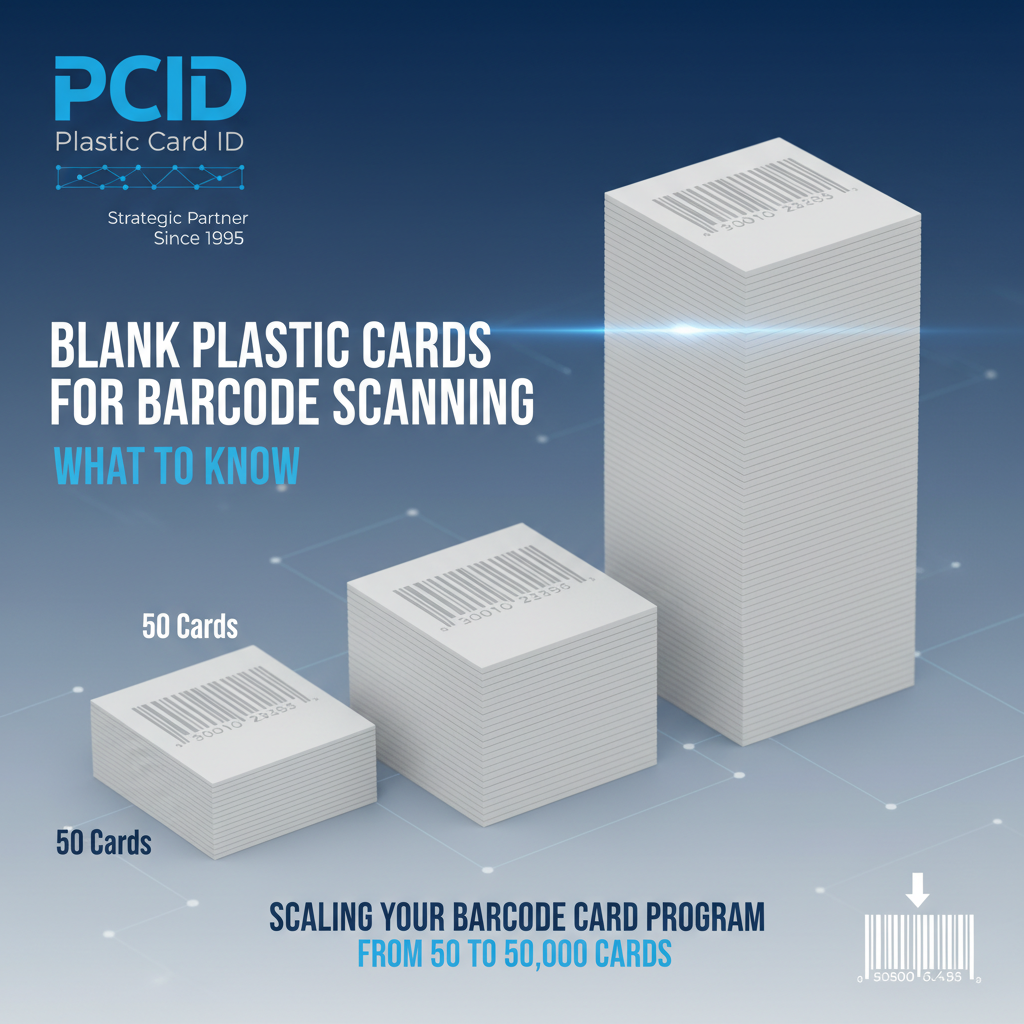
Scaling a card program is not simply a matter of ordering more blank cards. Printer capacity, ribbon consumption, card storage, and workflow design all need to evolve as volume grows. Planning for scale from the beginning prevents costly infrastructure gaps when growth happens faster than expected - and with well-designed card programs, it usually does.
Small-Volume In-House Programs
Organizations printing fewer than 500 cards per month are ideal candidates for desktop card printers like the Evolis Primacy or Zebra ZC100 paired with standard blank PVC card stock. These setups offer a low entry cost, compact footprint, and the flexibility to print cards on demand - one card or one hundred at a time. The per-card cost is higher than bulk production, but the control and flexibility more than compensate at small volumes.
For these programs, Plastic Card ID recommends purchasing blank cards in quantities of 500-1,000 at a time to balance per-card cost against storage requirements. Ribbons and cleaning kits should be stocked in proportion to card volume to avoid program interruptions. The CPE team can help calculate the right consumable quantities for any production rate.
Mid and High-Volume Production
Organizations producing thousands of cards per month graduate naturally to mid-range and high-capacity printers - the Zebra ZC300, Evolis Primacy 2, or Fargo HDP6600, for example. These machines feature higher duty cycles, faster print speeds, and options like inline encoding and lamination that make large-scale production practical. Blank card quantities at this level are typically purchased in cases of 500 or by the box of 1,000, with pricing that reflects the volume commitment.
At high volumes, card storage becomes a logistics consideration. Blank PVC cards should be stored flat, away from direct heat and humidity, in their original packaging until ready for use. Proper card storage at high volumes protects the investment in blank card inventory and ensures consistent print quality throughout a production run. Plastic Card ID can advise on storage best practices for any production environment.
Multi-Site and Enterprise Card Programs
Enterprise organizations running card programs across multiple locations have unique needs: consistent card stock across all sites, centralized procurement, and technical support that understands the scale of the operation. Plastic Card ID has supported multi-site programs across retail chains, healthcare networks, and university systems - each with its own complexity and its own set of requirements that evolved over time.
The ability to supply consistent blank card stock to multiple sites simultaneously - with the same quality specifications and the same pricing - is a core capability that enterprise clients consistently value in their partnership with CPE. Centralized ordering with distributed delivery is a standard arrangement for these accounts, and the logistics experience behind it reflects decades of managing exactly this kind of complexity.
Everything Else Your Card Program Needs - Plastic Card ID
 A barcode card program is more than just blank cards. The ribbons that go into the printer, the cleaning kits that keep it running, the card carriers and sleeves that protect finished cards in transit - every element of the supply chain affects the end result. Plastic Card ID functions as a true one-stop shop because the team understands that operational friction in any part of the supply chain creates problems for the whole program.
From the blank PVC card to the finished, sleeved, mailed credential, every component needed to run a complete card program is available through Plastic Card ID. Call 800.835.7919 today to speak with a specialist, discuss your barcode card program requirements, and discover why more than 100,000 businesses across the United States have trusted CPE with their card programs for over 25 years. Your program deserves a partner who has seen it all - and can help you build something that lasts.
Previous Page