UV Ink Printing on Plastic Cards Explained: A Full Overview
Table of Contents []
- UV Ink Printing on Plastic Cards - What Plastic Card ID Wants You to Know
- Security Applications Where UV Ink Printing Delivers Real Value
- Combining UV Ink with Other Card Security Features
- Practical Guide - Designing Cards with UV Ink Elements
- Frequently Asked Questions About UV Ink Printing on Plastic Cards
- Choosing the Right Card Program Partner for UV Ink Solutions - Plastic Card ID
UV Ink Printing on Plastic Cards - What Plastic Card ID Wants You to Know
 Most people ordering plastic cards think about color, finish, and size. What they rarely think about - until they need it - is what happens when you shine a UV light on the card. That single detail separates a standard plastic card from a card with serious, built-in security. UV ink printing is one of the most misunderstood features in the card industry, and it is also one of the most powerful tools available to businesses, institutions, and organizations running card programs of any scale.
Whether you are issuing employee ID badges, event credentials, membership cards, or loyalty cards, UV printing adds a layer that ordinary printing simply cannot replicate. It is invisible to the naked eye under normal lighting. It glows brilliantly under ultraviolet light. And it is extraordinarily difficult to counterfeit without specialized equipment. That combination - invisibility plus verifiability - is precisely why UV ink has become a staple security feature for serious card programs across the United States.
Plastic Card ID has spent over 25 years helping businesses understand not just what cards to order, but how to build card programs that actually work. UV ink printing is one of those features worth understanding deeply before you commit to a card design - and this guide is here to help you do exactly that.
What UV Ink Actually Is
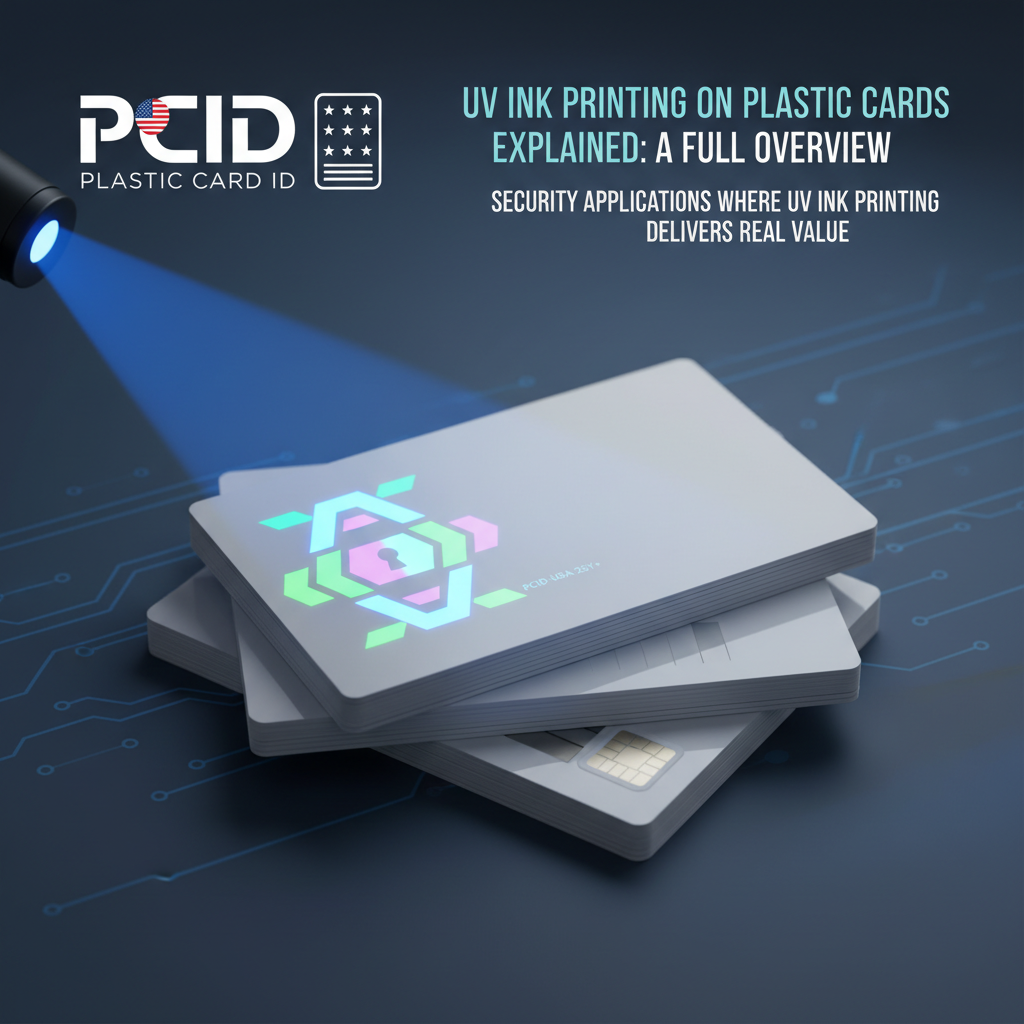
UV ink, sometimes called ultraviolet fluorescent ink, is a type of ink that contains phosphorescent compounds - materials that absorb ultraviolet light and re-emit it as visible light. Under standard indoor or outdoor lighting conditions, UV ink is either completely invisible or appears as a faint, translucent element depending on the formulation. The moment a UV light source (also called a blacklight) is applied, those compounds activate and glow, typically in shades of blue, green, yellow, or orange.
This is not the same as glow-in-the-dark materials, which store ambient light and emit it slowly in the dark. UV ink requires an active UV light source to become visible. The moment that light is removed, the ink returns to its invisible or near-invisible state. This distinction is what makes UV ink so effective as a covert security measure - it is only visible when you want it to be visible, by someone equipped with the right tool.
How UV Printing is Applied to Plastic Cards
UV ink can be applied to plastic cards through several methods depending on the volume, card type, and level of detail required. In professional card printing environments, UV ink is typically laid down as a separate ink layer during the offset or digital printing process. On a standard CR80 PVC card (the ISO 7810 format used for credit card-sized applications), this layer is applied either over or under the primary visible artwork.
Some card manufacturers apply UV ink through a silkscreen process, which works well for simpler designs - logos, text strings, or basic geometric patterns. More complex UV artwork, including micro-text or intricate patterns that mirror the card's visible design, requires digital UV printing equipment. The result in either case is a card that looks entirely normal under room lighting but reveals a hidden design element the moment a UV scanner or blacklight is used for verification.
The durability of UV ink on plastic cards is considerable. Properly encapsulated within a laminated PVC card construction, UV ink elements resist fading, scratching, and wear over the typical lifespan of a card - which, in a professional card program, often spans one to several years of daily handling.
Why Businesses Choose UV Ink Printing
The business case for UV ink is straightforward: visible security features can be photographed, copied, or mimicked. A holographic sticker can be peeled and transferred. A signature panel can be removed and replaced. A printed logo can be scanned and reproduced. UV ink introduces a covert layer that requires a specific tool to verify - a tool that forgers rarely anticipate being checked against. This asymmetry is the foundation of its security value.
Beyond pure security, UV ink printing carries a professional signal. Cards featuring hidden UV elements communicate to holders and to anyone verifying them that the issuing organization takes authenticity seriously. That signal matters in environments ranging from regulated industries and controlled-access facilities to entertainment venues and high-value membership programs. It says, without saying a word, that this card was built to be trusted.
| Feature | Standard Card Printing | UV Ink Printing |
|---|---|---|
| Visible Under Normal Light | Yes | No (covert) |
| Visible Under UV Light | No | Yes - glows brightly |
| Security Level | Standard | High - covert verification |
| Counterfeit Resistance | Moderate | Strong |
| Best Use Cases | General branding, loyalty | ID, access, events, membership |
| Cost Consideration | Standard per-card cost | Modest premium for added protection |
Security Applications Where UV Ink Printing Delivers Real Value
 Not every card program needs UV ink. A basic loyalty punch card replacement? Probably not. A membership card for a fitness studio with no access control? Maybe not. But once you introduce access control, identity verification, event credentialing, or any situation where the authenticity of the card affects the security of a physical space or privileged access - UV ink stops being optional and starts being essential planning.
The stakes of a counterfeit card vary wildly by application, and that variation should drive your decision. A counterfeit loyalty card costs you a discount. A counterfeit employee badge or event credential can compromise a facility, an event, or a person's safety. UV ink is cheap insurance against the latter category of consequences.
Employee ID and Access Control Badges
Employee ID cards are among the highest-value targets for forgery in any organization. A convincing fake badge can grant physical access to offices, server rooms, storage areas, or any zone where legitimate employees are cleared. UV ink printing adds a covert verification checkpoint that security personnel can use at any time - without any complex equipment beyond a small UV flashlight, which costs almost nothing to deploy at entry points.
For organizations using cards alongside proximity or RFID access control systems, UV printing provides a visible complement to the electronic authentication layer. Even if an electronic reader confirms a card's encoded data, a UV verification check can confirm the card's physical authenticity. Layered security is always stronger than single-point verification, and UV ink is one of the easiest layers to add.
Call 800.835.7919 to discuss how UV ink printing integrates with your existing employee badge program - whether you are issuing 50 cards or 5,000.
Event Credentials and Conference Badges
High-attendance events - conferences, concerts, trade shows, gaming tournaments, VIP experiences - face a persistent problem: ticket and credential fraud. UV ink printing on event badges and credential cards introduces a layer of on-site verification that is fast, reliable, and effectively impossible to replicate without the issuing party's production process.
Staff at entry points and security checkpoints can use UV flashlights to scan credentials in seconds. No app, no reader, no network connection required. The UV element either glows correctly or it does not - a binary pass/fail check that is as fast as any electronic scan. For events where badge types correspond to different access levels (general admission, speaker, exhibitor, backstage), UV ink can encode different glowing elements for each tier.
Casino and Gaming Player Cards
Casino player cards are among the most security-sensitive cards in commercial circulation. They are tied to financial rewards, player data, credit lines, and heavily regulated programs. UV ink is a standard feature in premium casino card programs precisely because of the financial exposure that comes with a counterfeit or tampered card in a gaming environment.
CPE works with gaming and casino operations across the United States, providing player cards with security features including UV ink, magnetic stripes (both HiCo and LoCo), and smart chip encoding. The combination of electronic data storage and covert UV verification creates a security profile that matches the seriousness of the application.
Hotel Key Cards and Hospitality Access
Hotel key cards operate in a uniquely challenging environment - they are handed to strangers, used multiple times per day, and frequently lost or left behind. UV ink printing on hotel key cards allows security staff to quickly verify whether a card presented at a secondary checkpoint (a business center, a rooftop lounge, an executive floor elevator) is an authentic issued card or a copy.
For hotel brands running tiered loyalty programs where different card types grant different property access, UV elements can differentiate loyalty tiers visually under UV light while the cards look identical under normal conditions. It is a subtle but effective tool for managing premium access without making distinctions visually obvious on the card face.
Combining UV Ink with Other Card Security Features
UV ink printing is powerful on its own. Combined with other card security and functionality features, it becomes part of a genuinely formidable card security architecture. Smart card programs do not rely on any single feature - they layer features strategically based on the sensitivity of the application, the verification workflow, and the technical infrastructure available at point-of-use.
Understanding how UV ink interacts with other features helps card program managers make better decisions about which features to combine and which are redundant or unnecessary for a given use case. CPE brings over 25 years of that kind of consultative thinking to every client conversation.
UV Ink and Magnetic Stripes
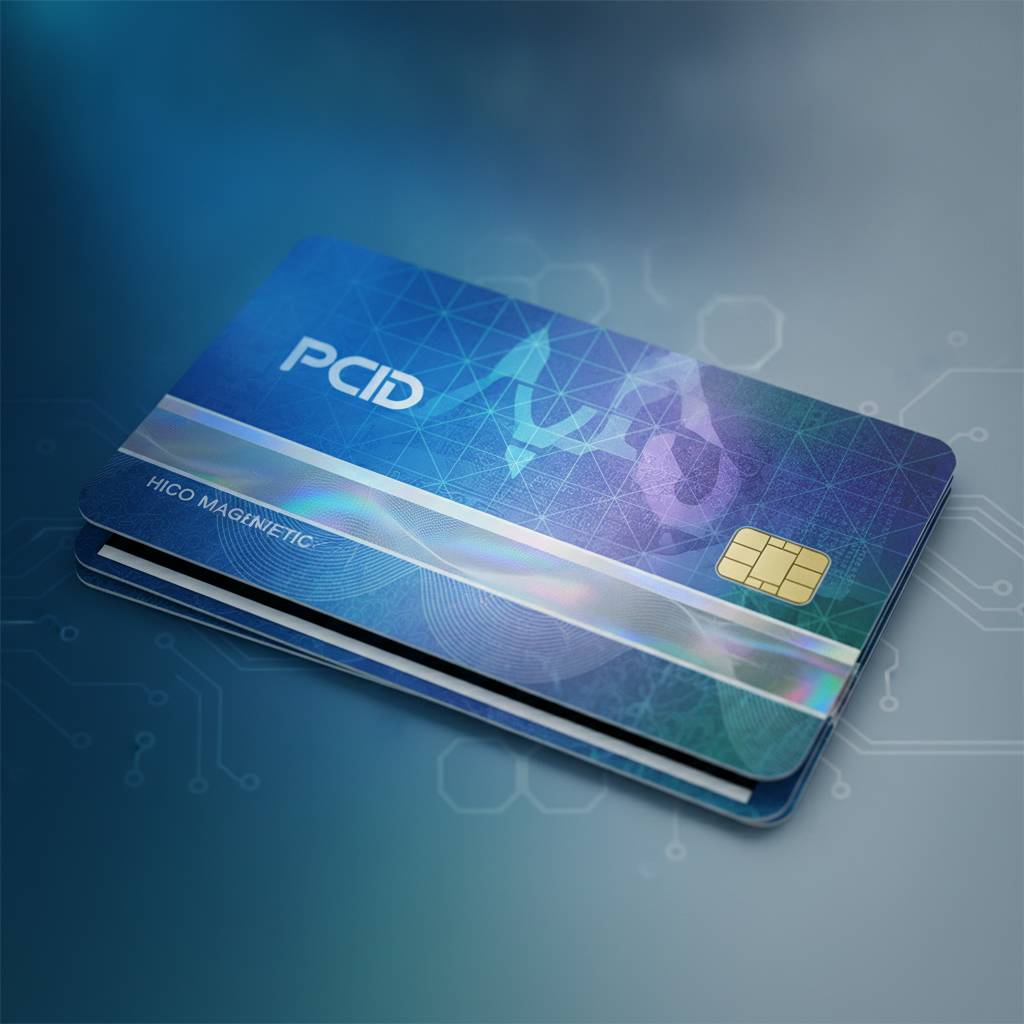
Magnetic stripe cards (available in both HiCo 2750 Oe and LoCo 300 Oe formulations) store encoded data that can be read by card swipe readers at point-of-sale terminals, access control panels, or loyalty program kiosks. UV ink adds a physical authentication layer that the magnetic stripe cannot provide on its own. A magnetic stripe can be cloned; a UV ink pattern cannot be copied without specialized production equipment.
For loyalty programs, gift card programs, and access systems using magnetic stripe cards, UV ink printing creates a two-factor card: the encoded data is verified electronically, and the physical card is verifiable visually. Together they create a verification profile that is far more resistant to fraud than either feature in isolation. The per-card cost increase is modest relative to the security improvement.
UV Ink and RFID or Smart Chip Cards
RFID proximity cards and smart chip cards (including advanced MIFARE DESFire configurations) provide electronic authentication through encrypted data exchange. These technologies protect against digital copying and replay attacks with impressive effectiveness. But they do not protect against physical card forgery - a fake card housing a genuine stolen chip is still a security problem.
UV ink on RFID and smart card bodies closes that gap. It provides a physical authenticity marker that complements the electronic security of the card's chip or RFID antenna. In high-security access control applications, this combination is increasingly considered a baseline rather than a premium upgrade. The cost difference between a plain RFID card and one with UV printing is small relative to the security outcome.
UV Ink on Clear and Specialty Card Stock
One of the more visually striking applications of UV ink is on clear or frosted PVC cards. These specialty card stocks already carry a premium aesthetic - translucent, clean, and distinctive. UV ink on a clear card is completely invisible under normal light (since the card is already translucent, there is no white base layer to hint at the presence of the ink). Under UV light, the glowing elements appear to float in mid-air, which is visually arresting and extremely difficult to replicate.
For luxury membership programs, VIP event credentials, or premium hotel key cards, the combination of clear card stock and UV ink printing produces a card that is genuinely difficult to counterfeit and visually extraordinary under verification. It is the kind of detail that elevates a card program from functional to impressive - which matters when the card itself is part of the brand experience.
Practical Guide - Designing Cards with UV Ink Elements
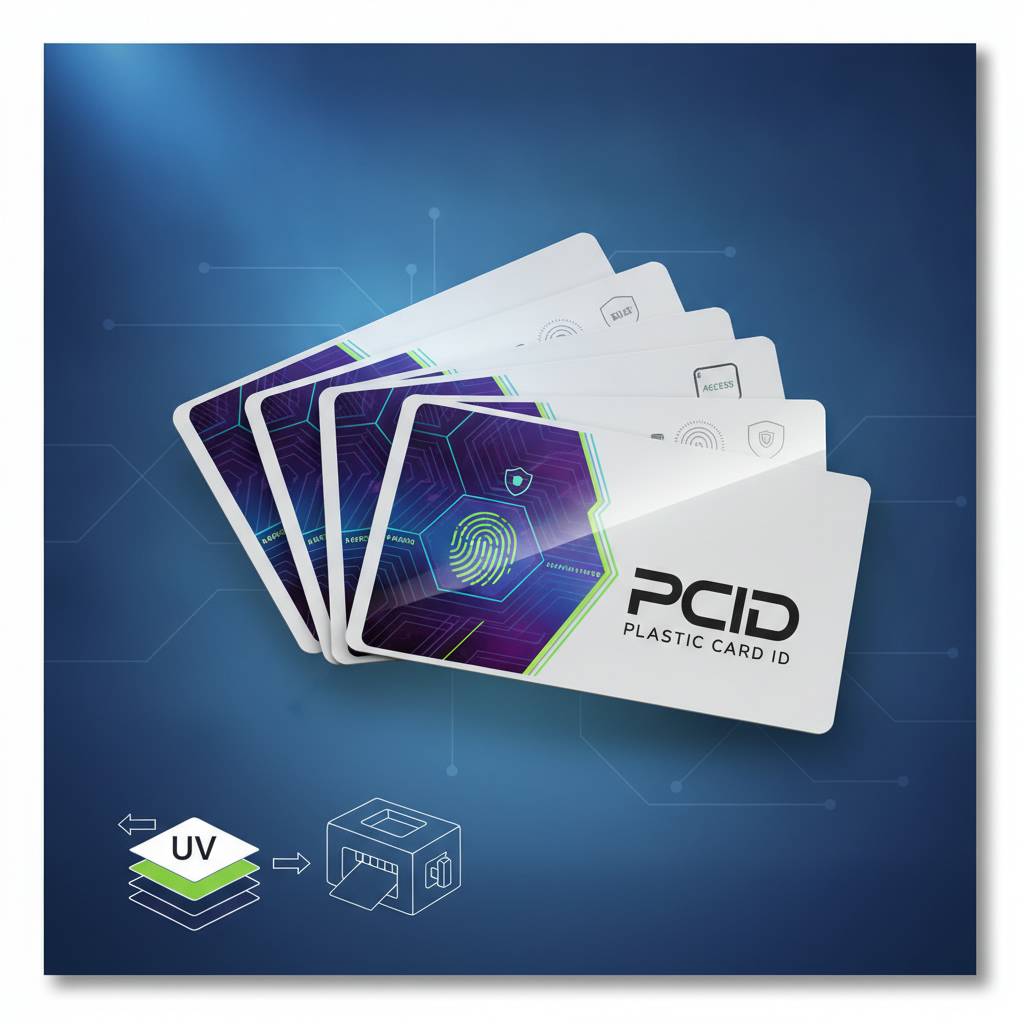 Understanding UV ink is one thing. Designing it into a card program effectively is another. The decisions you make during the design phase - what elements to render in UV ink, where to place them, how they interact with the visible design - determine whether the UV feature does its job well or becomes an afterthought that staff ignore. Good design thinking at this stage pays dividends every time a card is verified in the field.
What Design Elements Work Best in UV Ink
Not every design element translates equally well into UV ink. Fine text and detailed line art render beautifully in UV when produced through digital UV printing processes. Logos, serial numbers, repeating patterns, and unique identifiers all work well. Solid fills and large areas of UV ink are possible but less useful from a security standpoint - the more complex and unique the UV element, the more effectively it resists replication.
- Micro-text strings - small text readable only under UV that encodes issuer-specific information
- Logo echoes - a UV version of the organization's logo placed over or offset from the visible logo
- Sequential or unique numbering - UV-printed serial numbers that correspond to encoded magnetic or chip data
- Geometric security patterns - intricate background patterns similar to banknote security printing
- Tier or access level indicators - UV symbols that communicate different access levels under verification light
- Date or validity markers - UV-rendered expiry indicators invisible until checked by staff
UV Ink Placement and Layering Considerations
Where UV ink is placed on the card face relative to the visible design affects both its security value and its aesthetic integrity. UV elements placed over visible design areas can slightly affect the appearance of those areas under very bright light or direct sunlight - a subtle sheen or slight texture change may be perceptible. For maximum covertness, UV elements placed in areas of the card that carry minimal visible design (backgrounds, borders, the card reverse) are typically the most invisible under normal conditions.
Layering UV ink under a laminate overcoat - as opposed to applying it on top - provides additional durability and makes the UV element even harder to physically alter or remove without destroying the card. Most professionally produced UV ink cards for security applications use this under-laminate approach. It is worth specifying this when discussing your card order, since both approaches exist in the market and serve different needs.
Working with Your Card Supplier on UV Ink Specifications
The most important practical advice for organizations integrating UV ink into their card programs is this: discuss your verification workflow before finalizing your card design. The UV element on your card should match the UV light source your staff will use to verify it. Different UV wavelengths (365nm being most common in professional applications) activate different ink formulations at different intensities. Specifying the wrong combination means your security feature may appear faint or unconvincing under your actual verification conditions.
Plastic Card ID works through these specifications with clients as part of the card program design process - not as an afterthought. With over 100,000 customers and more than 50 million cards produced over 25 years, the consultative depth available through CPE is genuinely difficult to find elsewhere in the industry.
Frequently Asked Questions About UV Ink Printing on Plastic Cards
 Over decades of supporting card programs of every description, certain questions about UV ink printing come up consistently. The answers below represent the practical knowledge that helps card program managers make confident decisions - not just about UV ink, but about how it fits into a larger card program strategy.
Does UV Ink Affect Card Durability?
When properly applied and laminated, UV ink does not meaningfully reduce the lifespan of a plastic card. A well-produced CR80 PVC card with UV printing will perform through the same daily handling, wallet storage, and swipe or tap usage cycles as a card without UV ink. The UV compounds are stable, the laminate protects them from abrasion, and the PVC substrate holds everything together through the card's operational life.
Cards that are improperly produced - UV ink applied over laminate without a protective topcoat, or cards using off-spec PVC stock - may show UV element degradation faster. This is an argument for sourcing cards from a supplier with proven production standards and quality control, rather than going with the lowest-cost option available. The cheapest card is rarely the best card when security is the objective.
Can UV Ink Be Added to Cards Printed In-House?
This is a common question from organizations running in-house card printing programs with desktop card printers from brands like Evolis, Zebra, or Fargo. The answer depends on the specific printer model. Several professional card printer models support UV ink printing through dedicated UV ink ribbon panels or specialized ribbon configurations. The Evolis Primacy 2, for example, supports UV printing through specific ribbon configurations designed for this purpose.
For organizations interested in bringing UV printing in-house, CPE supplies the full printer lineup along with ribbons, cleaning kits, and the technical guidance to set up UV printing capability correctly. The per-card cost for in-house UV printing is higher in consumables than standard printing, but the control and flexibility it provides - printing UV elements on-demand, updating designs without minimum orders - can make it worthwhile for medium to high-volume programs.
Contact 800.835.7919 to discuss which printer and ribbon configuration supports UV ink printing for your card type and volume.
What Industries Use UV Ink Printing Most Frequently?
UV ink printing is most common in industries where card authenticity directly affects security outcomes. The applications are broader than most people realize:
- Corporate and government employee ID programs with controlled physical access
- Healthcare facility ID and patient card programs
- Casino and gaming player card programs
- Hotel and hospitality key card and loyalty card programs
- Higher education student ID and campus access cards
- Convention, trade show, and major event credentialing
- Premium membership clubs and private access programs
- Financial services firms issuing internal identification
The common thread across all of these is that the consequences of a fraudulent or counterfeit card are serious enough to justify the modest additional cost of UV security features. In every one of these industries, Plastic Card ID has supplied card programs with the features - UV and otherwise - that match the security requirements of the application.
Choosing the Right Card Program Partner for UV Ink Solutions - Plastic Card ID
UV ink printing is not a commodity feature you should trust to a supplier who treats it as a checkbox on an order form. It is a security feature that needs to be specified correctly, produced consistently, and integrated thoughtfully with your card design, your verification workflow, and your broader card program architecture. Getting it right requires a supplier who understands the feature at a technical level and has the production depth to deliver it reliably at volume.
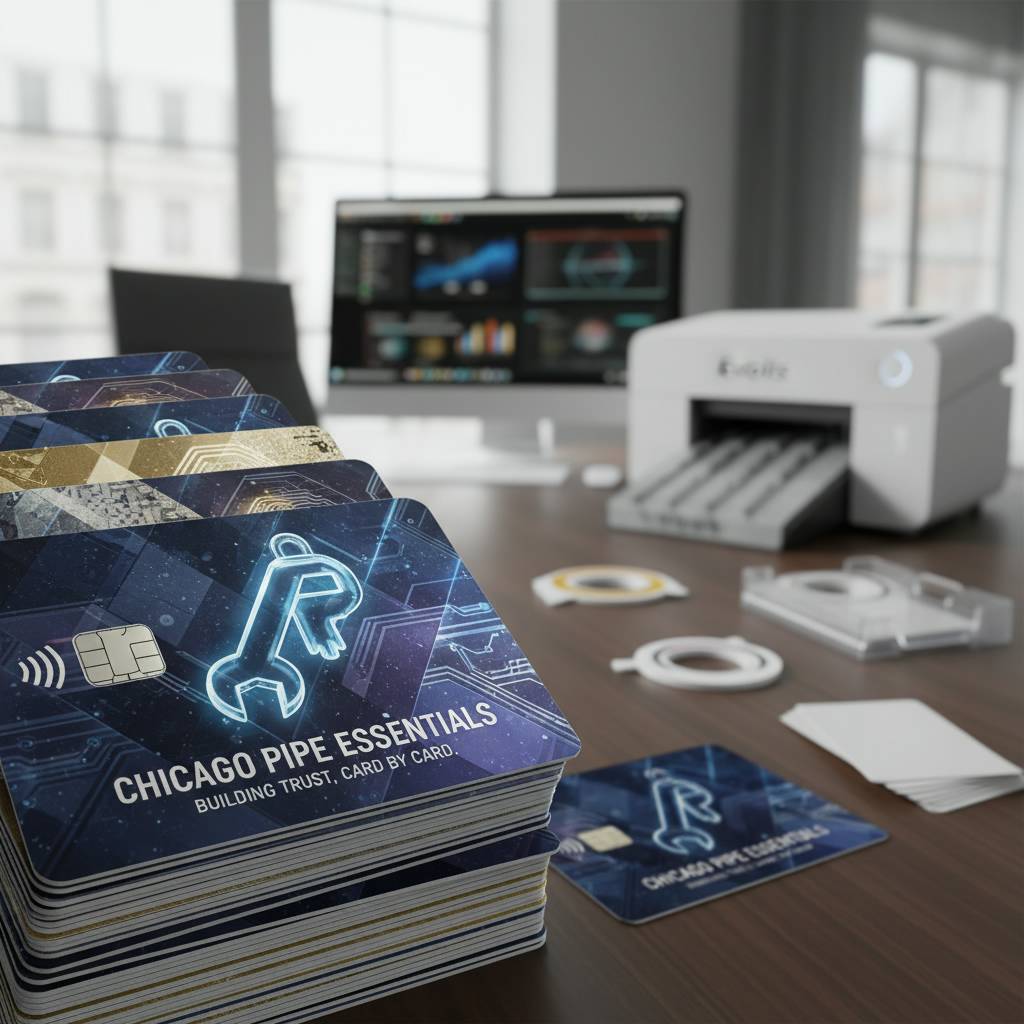
Plastic Card ID has built that capability over more than 25 years of supplying plastic cards to over 100,000 businesses and organizations across the United States. From blank PVC stock to fully custom cards with magnetic stripes, RFID, smart chips, UV printing, and specialty finishes, the depth of catalog and the consultative expertise available through CPE is designed to serve programs of every scale - from 50 cards a month to tens of thousands in a single run.
The Full Card Program Ecosystem
A card is only as useful as the infrastructure around it. Plastic Card ID supplies not just cards, but the full stack of products and services that make a card program run: card printers from Evolis, Zebra, and Fargo; printer ribbons and cleaning kits; card carriers, sleeves, and mailers; card affixing and mailing services for programs that send cards directly to cardholders. Every element of a successful card program is available from a single source - which simplifies procurement, reduces coordination overhead, and ensures compatibility across your card program components.
Whether your program is just getting started or you are scaling an existing program and adding security features like UV ink for the first time, the expertise and infrastructure at CPE is there to support that transition efficiently and correctly.
Scale, Pricing, and What to Expect
Card programs come in every size, and pricing for UV ink cards reflects the complexity of the order - card type, UV design complexity, quantity, and whether additional features like magnetic stripes or RFID are included. UV printing adds a modest premium over standard custom printing, and that premium decreases meaningfully at higher volumes. Organizations running high-volume programs can achieve a per-card cost that makes UV printing entirely routine rather than exceptional.
For context, custom plastic cards with UV printing and magnetic stripes for mid-volume programs typically fall in ranges that make them competitive with any professional card supplier in the US market. CPE has the production volume and supplier relationships to price competitively while maintaining the quality standards that serious card programs require. The combination of competitive pricing, genuine expertise, and reliable production consistency is the value proposition that has retained clients for years and decades.
Getting Started with Your UV Ink Card Program
The starting point for any new UV ink card program is a conversation about your use case, your verification workflow, your design assets, and your volume requirements. That conversation shapes everything else - the card substrate, the UV design approach, the printer choice if you are printing in-house, and the production specifications that ensure your UV elements perform correctly in the field.
Plastic Card ID makes that conversation easy. With over 25 years of production history, a catalog that covers every card type and feature combination, and a team that has helped over 100,000 customers build programs that work, the first call is the most valuable step you can take. Do not guess at UV specifications, printer compatibility, or security feature combinations when the expertise to get it right is a phone call away.
Ready to add UV ink printing to your plastic card program? Call Plastic Card ID today at 800.835.7919 and speak with a card program specialist who will walk you through every option, every feature, and every specification - so your cards do exactly what you need them to do, every time they are presented and verified.