Blank RFID Plastic Cards Guide: Types and Uses
Table of Contents []
- Your Complete Blank RFID Plastic Cards Guide from Plastic Card ID
- What Blank RFID Plastic Cards Actually Are
- The Full Catalog: What CPE Carries
- Applications Across Industries
- Buyer's Guide: Choosing the Right Blank RFID Card
- Loyalty and Membership Programs: RFID's Expanding Role
- Why Plastic Card ID Is the Right Partner for Your Card Program
Your Complete Blank RFID Plastic Cards Guide from Plastic Card ID
 Most businesses stumble into RFID card programs without a real map. They order the wrong frequency, wonder why their reader won't communicate, and end up with a drawer full of cards that don't work. This guide exists to change that. Whether you're setting up an access control system for a growing office, launching a loyalty program, or managing credentials for a large venue, understanding blank RFID plastic cards from the ground up gives you a serious operational edge.
Plastic Card ID has spent over 25 years supplying plastic cards to businesses across the United States - more than 50 million cards sold, more than 100,000 customers served. That depth of experience shows up in every recommendation here. This isn't theory. It's practical knowledge drawn from real card programs at every scale, from small nonprofits issuing 50 cards a month to enterprises running tens of thousands.
| Card Type | Frequency | Typical Range | Best For |
|---|---|---|---|
| 125 kHz Proximity | Low Frequency (LF) | Up to 6 inches | Basic access control, time-attendance |
| 13.56 MHz Smart Card | High Frequency (HF) | Up to 4 inches | Secure access, MIFARE, loyalty, hotel keys |
| MIFARE DESFire | 13.56 MHz HF | Up to 4 inches | High-security environments, casinos, enterprise |
| Blank CR80 PVC Card | No chip (plain) | N/A | Visual credentials, loyalty, ID, membership |
What Blank RFID Plastic Cards Actually Are
 A blank RFID plastic card isn't a mystery - it's a standard CR80-sized PVC card (the same dimensions as any credit card) with a radio frequency identification chip and antenna embedded inside the laminated layers. You can't see the chip without cutting into the card, but it's there, quietly waiting for a compatible reader to wake it up. The "blank" designation simply means no printing has been applied yet. Your organization controls what goes on the surface - a logo, a cardholder's name, a barcode, or nothing at all if it's purely a functional access token.
The versatility of these cards is genuinely remarkable. The same physical card format - 3.375 x 2.125 inches, 30 mil thick, ISO 7810 compliant - can serve as an employee badge, a hotel key, a casino player card, a membership credential, or an event pass depending entirely on how it's configured. That standardization is a feature, not a limitation. Every card printer on the market is built around the CR80 format, which means your investment in hardware stays relevant no matter how your program evolves.
The Anatomy of an RFID Card
RFID cards are built in layers. The outer PVC layers are what you see and print on. Sandwiched between them is a thin copper or aluminum antenna coil and a microchip connected to it. When a compatible reader emits a radio signal, the antenna harvests energy from that signal to power the chip - no battery required. The chip then transmits its stored data back to the reader in milliseconds.
This passive power design is why RFID cards are so durable and maintenance-free. There's nothing to charge, nothing to replace. A well-made RFID card from CPE can survive years of wallet wear, humidity fluctuations, and everyday handling without losing functionality. The PVC casing protects the delicate internal components from physical damage far better than any alternative material.
LF vs. HF: Choosing the Right Frequency
Low frequency cards at 125 kHz have been the backbone of access control systems for decades. They're simpler, more affordable, and compatible with the enormous installed base of proximity readers already deployed in offices and facilities around the country. If your building already has readers in place, there's a good chance they're 125 kHz, and a blank proximity card will slot right into your existing infrastructure.
High frequency cards at 13.56 MHz offer a meaningful security upgrade. They support encryption, mutual authentication, and larger data storage - capabilities that LF cards simply can't match. MIFARE Classic, MIFARE DESFire, and other HF protocols are the standard for applications where data security matters: multi-tenant office buildings, hospital staff access, university campuses, and casino gaming floors where player card integrity is non-negotiable.
Why "Blank" Is an Advantage, Not a Limitation
Ordering pre-printed cards from a third party every time you need a new batch creates delays, minimum order headaches, and design lock-in. Blank RFID cards flip that dynamic entirely. Your organization purchases cards in volume - saving significantly on per-card cost - and prints exactly what you need, when you need it, using an in-house card printer loaded with your current branding.
That flexibility compounds over time. A nonprofit issuing volunteer credentials can update their card design for a new season without ordering a whole new custom batch. A hotel can print a guest's name on a key card at check-in. An event venue can issue same-day credentials. The blank card is the raw material; your printer and your vision are what complete it.
The Full Catalog: What CPE Carries
The depth of CPE's RFID and smart card inventory reflects 25 years of listening to what businesses actually need. This isn't a commodity catalog assembled to fill a website. Each product category exists because real customers requested it, deployed it, and came back for more. Understanding what's available helps you match the right card to the right application without over-engineering your solution.
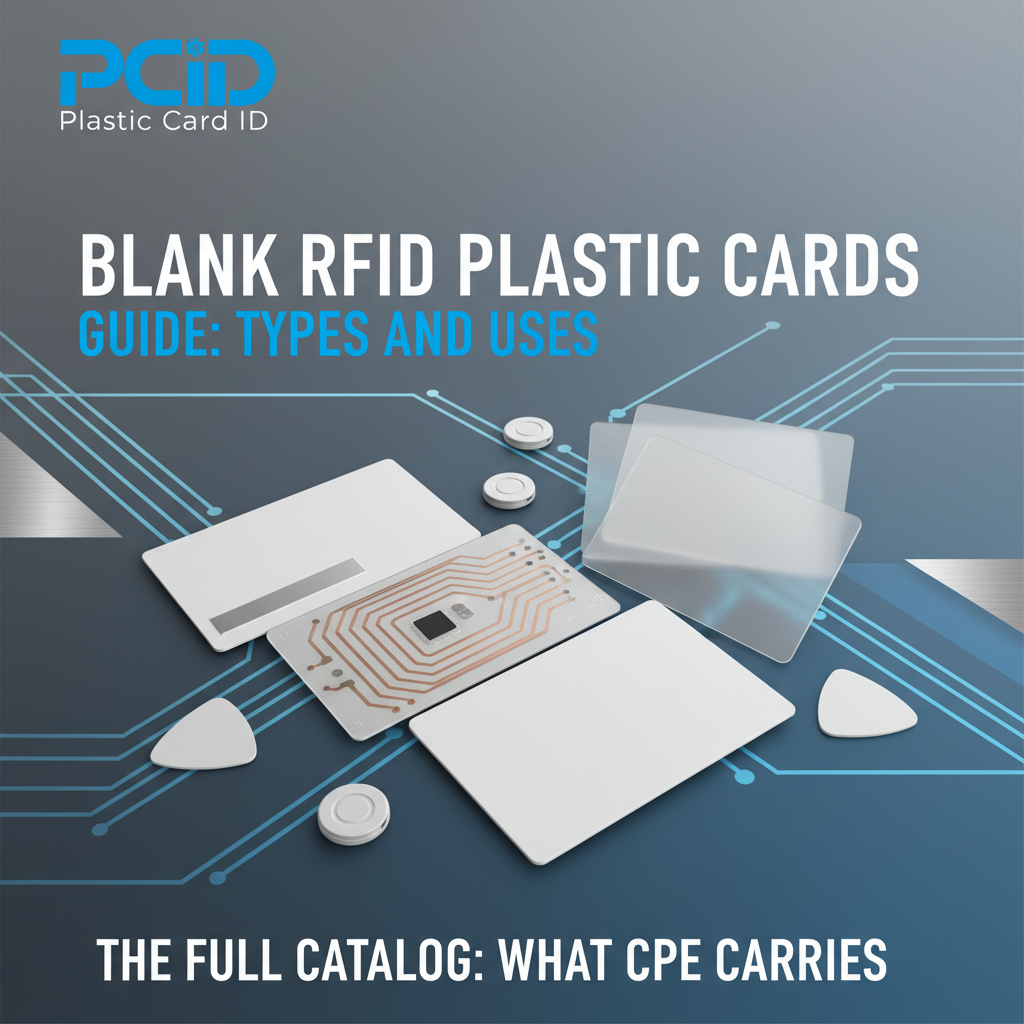
Beyond the cards themselves, Plastic Card ID operates as a genuine one-stop shop. Printer ribbons, cleaning kits, card carriers, protective sleeves, card affixing and mailing services - the infrastructure around your card program matters just as much as the cards. A loyalty card that arrives damaged in the mail, or a hotel key that demagnetizes because it wasn't sleeved properly, undermines the entire investment. The right accessories prevent those failures before they happen.
Proximity Cards (125 kHz)
125 kHz proximity cards are the entry point for most access control programs. They're compatible with the widest range of readers, require no special encoding beyond a facility code and card number, and come in blank format ready for your printer. For organizations running HID-compatible systems or similar installed infrastructure, these cards deliver immediate compatibility without system overhaul.
These cards are a staple for property managers, small-to-medium businesses, schools, and municipal facilities. The reader technology is proven, the cards are durable, and the cost per card stays low when ordered in appropriate volume. Call 800.835.7919 to discuss volume pricing and compatibility with your current access control hardware.
MIFARE and Smart Chip Cards (13.56 MHz)
MIFARE Classic cards offer segmented memory that makes them ideal for multi-application use cases - a single card that handles building access on one sector and canteen credits on another, for example. MIFARE DESFire cards step up the security profile dramatically with AES-128 encryption and mutual authentication, meeting the requirements of demanding enterprise and government applications.
Hotel key cards deserve special mention here. The contactless smart card format has become the industry standard for property management systems, replacing older magnetic stripe key systems in new builds and renovations. Blank smart cards allow hotel operations teams to encode room permissions on-site using standard card issuance software, giving front desk staff full control over every key issued.
Specialty Options: Clear, Custom Die-Cut, and Metal
Not every card program fits the standard white PVC rectangle. Clear and frosted plastic cards create a premium visual impression that stands out immediately in any wallet or credential holder. When RFID functionality meets a clear card format, the internal antenna becomes subtly visible - a detail that communicates technological sophistication to cardholders and observers alike.
Custom die-cut shapes and luxury metal cards in stainless steel, brass, and gold represent the premium tier of card programs - appropriate for VIP membership clubs, high-end casinos, exclusive loyalty programs, and any situation where the card itself is a brand statement. These are not novelties. They're serious tools for organizations that understand the psychology of perceived value.
Applications Across Industries
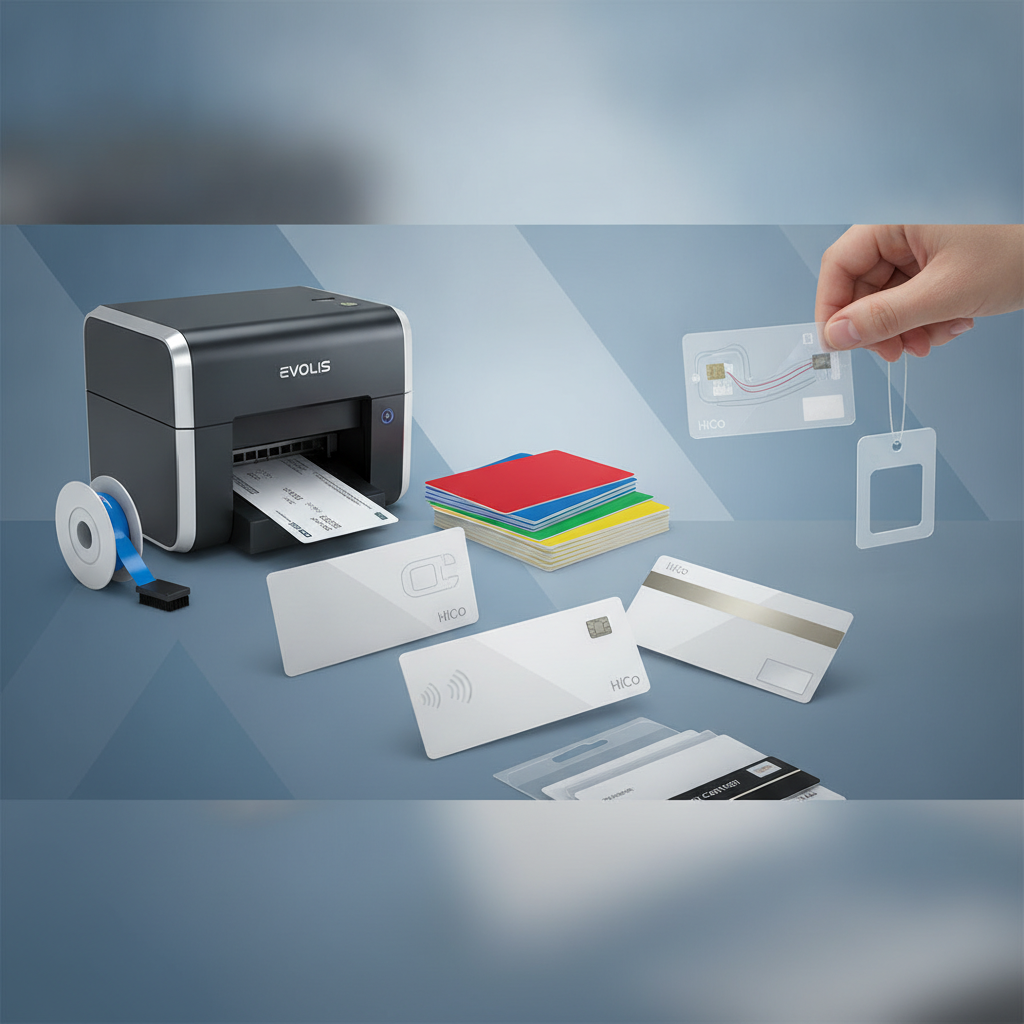 It would be tempting to draw a clean line between "access control cards" and "loyalty cards" - but in practice, the most sophisticated programs blur that boundary deliberately. A casino player card that tracks spending, unlocks floor access, and identifies the holder at multiple touchpoints is simultaneously an access credential, a loyalty instrument, and a marketing asset. Understanding how RFID cards serve each major industry helps you think beyond single-use deployments.
Corporate and Office Access Control
Employee badges built on blank RFID cards give HR and IT departments a single, manageable credential format. The same card can carry a printed photo ID on the surface and an RFID chip that controls door access at the hardware level. Onboarding a new employee means printing a card at the front desk and encoding access permissions in the same workflow - typically under three minutes from blank card to active credential.
Multi-site organizations appreciate that RFID-based access systems scale gracefully. Adding a new facility means adding readers and enrolling cards into the system - no proprietary card format to negotiate, no compatibility puzzle to solve when your cards are sourced from a consistent supplier like CPE.
Hospitality and Hotel Key Cards
The hotel industry was an early and enthusiastic adopter of contactless smart card technology, and for good reason. A guest's key card is their first physical touchpoint with a property - and its quality sends an immediate signal about the experience that follows. Flimsy, unreliable key cards that deactivate unexpectedly are a front-desk headache and a guest satisfaction liability.
Blank smart cards purchased in volume allow properties to maintain adequate inventory without over-committing to pre-printed stock that becomes obsolete after a rebrand. On-demand printing at check-in adds a personalization layer that budget properties and luxury resorts alike find valuable. The per-card economics favor volume purchasing significantly.
Casino Player Cards and Gaming
Casino player card programs are among the most sophisticated loyalty deployments in any industry. A blank RFID casino card needs to survive heavy daily handling, communicate reliably with slot machine readers and table game systems, carry multiple data layers for player identification and tier status, and look premium enough to reinforce the brand promise of the property. That's a demanding specification.
MIFARE DESFire cards are increasingly the chip of choice for gaming applications, given their security architecture and compatibility with modern gaming management systems. Plastic Card ID stocks these cards in blank format specifically for casinos and gaming clubs that encode and print on-site using their own issuance infrastructure.
Buyer's Guide: Choosing the Right Blank RFID Card
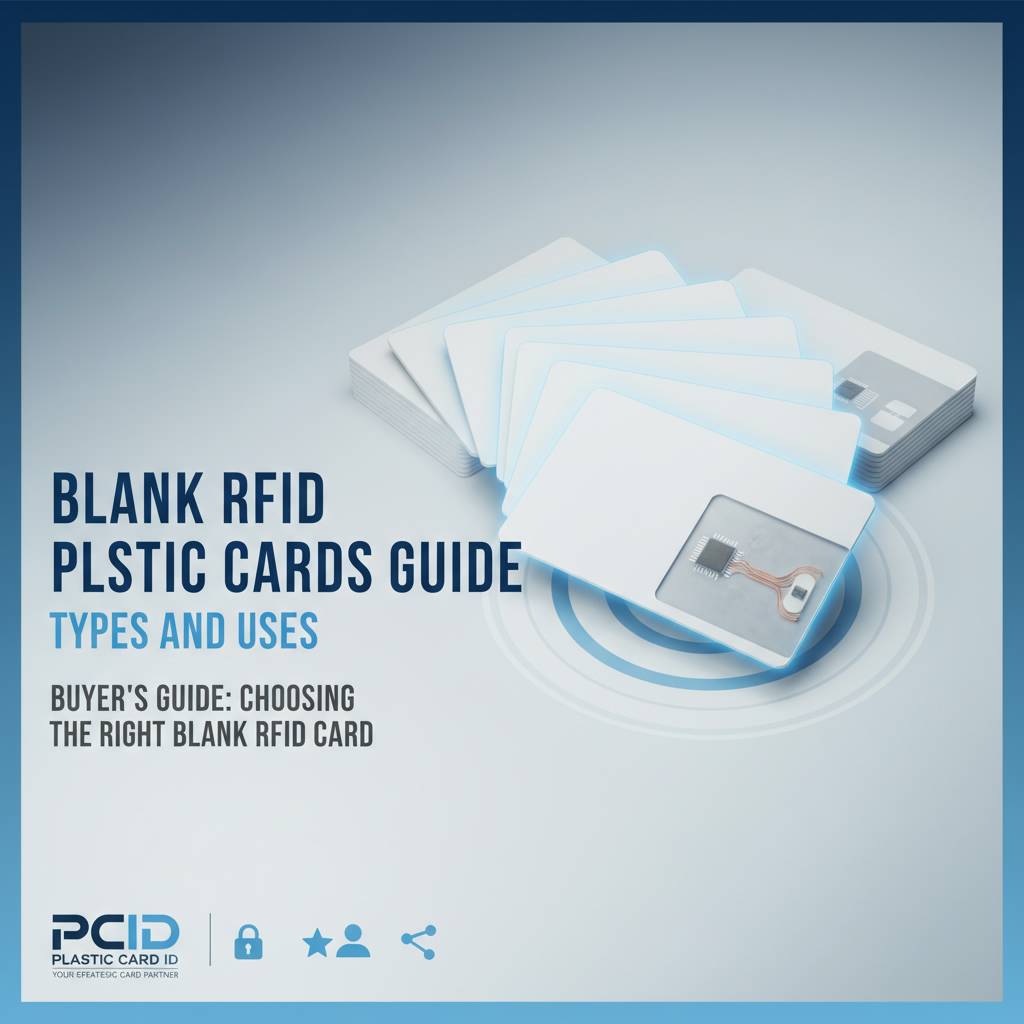 The single most common mistake buyers make is ordering by price alone without verifying compatibility. A 125 kHz card is useless in a 13.56 MHz system. A MIFARE Classic card won't function in a DESFire-only reader. Getting this right before you order saves real money and real frustration. Here's a structured framework for making the right call.
- Identify your reader frequency first. Check your existing hardware documentation or contact the access control vendor. Every decision flows from this.
- Determine your encoding requirements. Basic facility code and card number? Standard proximity is sufficient. Multi-application or encrypted data? You need HF smart cards.
- Assess your print needs. Purely functional cards with no printing can be ordered in higher volumes at lower cost. Cards that need photo ID printing require compatible printer ribbons and software.
- Calculate your volume bracket. Per-card pricing drops meaningfully at volume thresholds. Know your monthly issuance rate and project 12 months forward.
- Consider card durability requirements. High-traffic environments - casinos, transit, large venues - benefit from cards with overlay protection. Standard office programs typically don't need the premium.
- Decide on accessories upfront. Sleeves and card carriers protect your cards in transit and use. Cleaning kits extend printer life. Ordering these alongside your cards avoids gaps in your program launch timeline.
When in doubt, the team at Plastic Card ID has fielded every variation of this question imaginable. A quick conversation saves far more time than trial and error ever could.
Matching Cards to Card Printers
Not all card printers handle RFID encoding natively. Some models require a separate encoding module - an add-on that communicates with the card's chip during the print cycle. Evolis, Zebra, and Fargo all manufacture printers with RFID encoding capability, and Plastic Card ID carries the full lineup. Matching your cards to a compatible printer model from the start prevents the frustration of discovering a hardware gap mid-deployment.
Ribbon selection matters more than most buyers expect. YMCKO ribbons for full-color printing with overlay, KO ribbons for monochrome applications, and specialty ribbons for retransfer printers all produce different results on blank RFID card stock. If you're unsure which ribbon pairs with your intended card type, reach out directly - getting this combination right from day one is a straightforward problem to solve with the right guidance.
Volume Pricing and Program Scaling
Programs that start at 50 cards a month sometimes scale to 5,000 within two years. It's more common than most organizations expect. Buying infrastructure - a reliable card printer, a consistent card supplier, a logical encoding workflow - with scale in mind protects that investment. Switching card formats mid-program is painful; choosing the right format initially is far less costly.
Plastic Card ID serves programs at every scale, which means pricing conversations are grounded in reality rather than minimum order pressure. Whether you're issuing 100 RFID access cards for a small office or 25,000 loyalty cards for a regional retail chain, the pricing structure adapts to your actual volume. Call 800.835.7919 to get a straightforward quote.
Loyalty and Membership Programs: RFID's Expanding Role
The data on physical loyalty cards versus paper alternatives is consistent and compelling. Retailers who transition from paper punch cards to plastic loyalty cards routinely see measurable increases in program participation and per-visit spending. A plastic card in a wallet is a persistent reminder of the brand relationship. It signals investment - from the business to the customer - in a way that a paper stamp sheet simply cannot replicate.
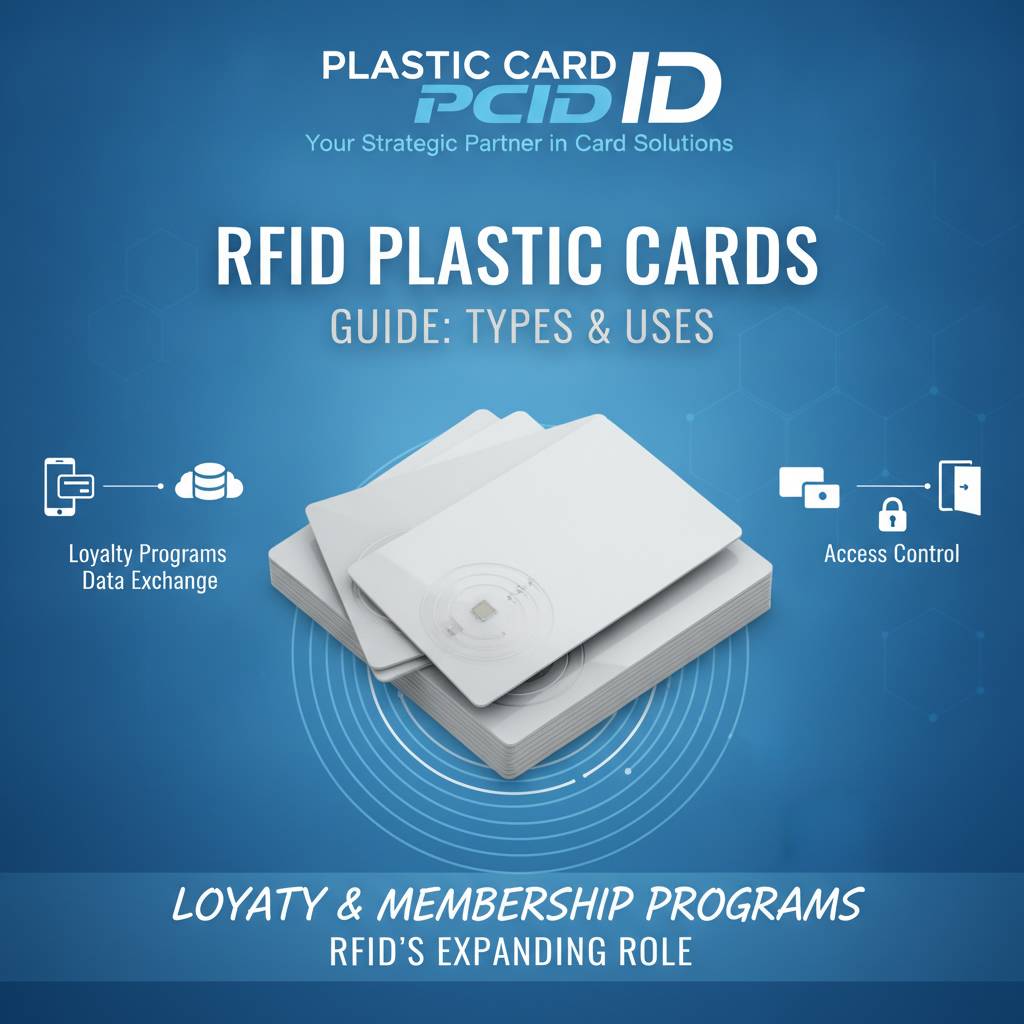
Adding RFID to a loyalty card elevates the experience further. Contactless tap-to-scan at checkout is faster than barcode scanning and feels premium to the cardholder. For busy retail environments, shaving two seconds per transaction across hundreds of daily interactions adds up to meaningful throughput improvement. The technology serves both sides of the transaction simultaneously.
Membership Cards for Clubs and Associations
Professional associations, fitness clubs, trade organizations, and private clubs all share a common need: a credential that communicates belonging and validates membership status at a glance. A well-designed, RFID-enabled membership card does both. It functions as an access credential at the facility level and as a visual membership marker in any context.
The legitimacy signal of a plastic card over paper is difficult to overstate. New members who receive a properly printed plastic card - especially one that looks and feels premium - immediately perceive greater organizational credibility. That perception translates directly into retention. People don't cancel memberships that feel substantial and real in the same way they abandon digital-only programs.
Event Credentials and Temporary Access
Large events - conferences, trade shows, gaming tournaments, private festivals - often require temporary access credentials that function reliably across hundreds or thousands of attendees. Blank RFID cards encoded and printed on-site using portable card printers give event organizers full control over credentialing workflows. VIP tiers, staff access, speaker credentials, and general admission can all live on the same physical card format with different encoding configurations.
Post-event, these cards don't have to be wasted. RFID cards can be wiped and re-encoded for future events, or they can serve as collectible souvenirs that double as loyalty instruments when the organization runs its next program. CPE works with event companies of every size to right-size card orders and avoid over-purchasing.
Why Plastic Card ID Is the Right Partner for Your Card Program
 The difference between a supplier and a strategic partner shows up most clearly when something goes wrong - or when you're trying to do something you've never done before. After 25 years and more than 100,000 customers, Plastic Card ID has encountered virtually every card program challenge imaginable. That experience is available to you from the first conversation, not just after you've become a long-term account.
The catalog breadth matters too. Blank PVC cards, RFID proximity cards, MIFARE smart cards, magnetic stripe cards in both HiCo and LoCo configurations, clear cards, colored stock, metal cards, card printers, ribbons, cleaning kits, sleeves, card carriers, mailing and affixing services - everything your card program needs is available from a single supplier who understands how all of it fits together. That coherence eliminates the coordination overhead of managing multiple vendor relationships.
Long-Term Relationships Over Transactional Selling
The economics of card programs favor long-term supplier relationships. Per-card costs decrease as volume increases. Knowing your supplier's inventory depth and lead times lets you plan procurement confidently. Having a contact who understands your program's history means you don't have to re-explain your setup every time you call. These advantages accrue over time and compound in ways that pure price comparison never captures.
Plastic Card ID has customers who have been ordering for over a decade - programs that started with a few hundred cards a month and grew into substantial operations. That continuity is not accidental. It's the result of treating every client's card program as worth investing in seriously, regardless of current order volume.
USA-Based Service for USA-Based Businesses
Every business and organization Plastic Card ID serves is based in the United States. That focus is intentional. Domestic shipping timelines, familiarity with US access control standards and card reader ecosystems, and the practical reality of supporting American businesses through the full lifecycle of their card programs - these are genuine advantages that offshore sourcing cannot replicate.
When your card program needs to scale quickly - a new location opening, an event coming up faster than expected, a printer that needs replacement ribbons urgently - having a domestic supplier with real inventory and real expertise on the phone makes the difference between a smooth operation and a stressful scramble.
Getting Started Is Simpler Than You Think
Many businesses delay starting a card program because they imagine it requires significant technical infrastructure. In many cases, it doesn't. A modest quantity of blank RFID cards, a desktop card printer, the appropriate ribbon, and an encoding workflow appropriate to your reader technology is often all it takes to launch a functional program. The barrier is lower than the complexity of the technology suggests.
The team at CPE can walk you through the full requirements based on your specific situation - reader hardware you already own, the volume you're planning, the design complexity you want - and help you build a starter kit that gets your program running without unnecessary expenditure. Asking the questions early is almost always cheaper than discovering gaps after you've committed to hardware and card inventory.
Ready to launch your blank RFID card program with confidence? Talk to the team that's helped over 100,000 businesses do exactly that.
Contact Plastic Card ID today at 800.835.7919 - and get expert guidance, competitive pricing, and a genuine partner invested in the success of your card program from day one.